Normal view

Received yesterday — 16 May 2026 The Conversation – Articles (US)

From beef ribs to a ‘heavenly’ walk: Xi-Trump summit symbolism underscored American power and Chinese tradition

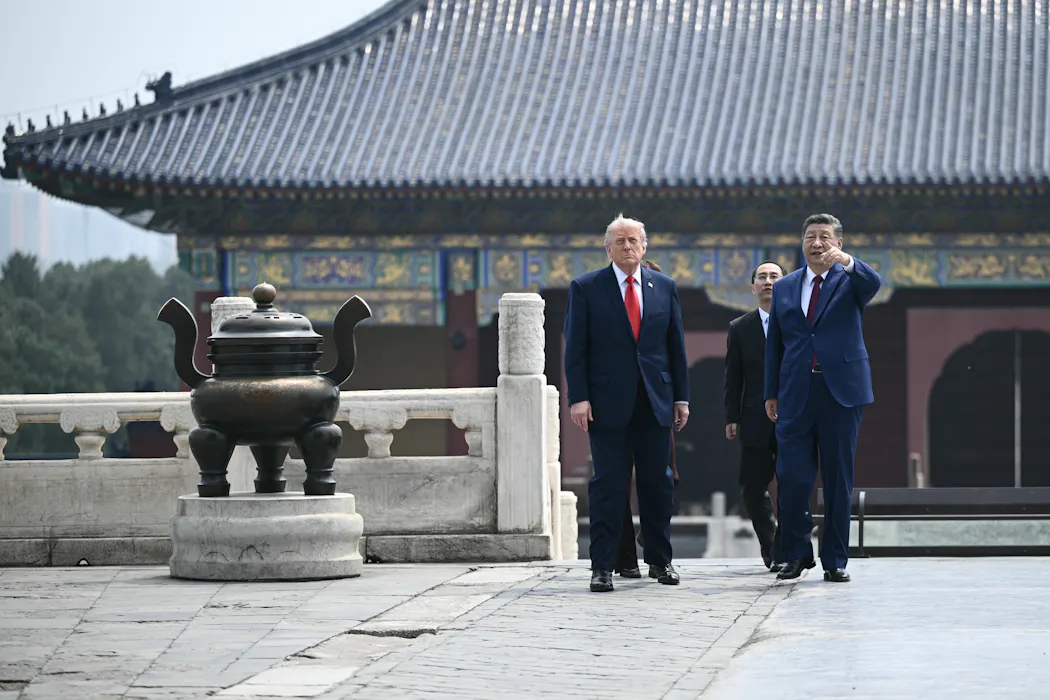
China's President Xi Jinping and U.S. President Donald Trump visit the Temple of Heaven in Beijing on May 14, 2026. Brendan Smialowski/Getty Images

Diplomacy often masquerades as theater. And nearly nine years after his first state visit to China, Donald Trump returned to Beijing with an extended cast of characters.

Alongside the U.S. president on his May 2026 visit was a senior delegation of politicians including his secretary of defense, and a phalanx of business leaders and technology executives. It was a traveling display of American political and corporate power.

Not that the hosting Chinese were short of symbolic gestures themselves. Trump’s first China visit in 2017 had already shown how far Beijing was willing to go to turn diplomacy into theater. On that occasion, Chinese President Xi Jinping and his wife Peng Liyuan personally accompanied Donald and Melania Trump through the Forbidden City, Beijing’s former imperial palace, drinking tea inside the palace walls and taking in a Peking opera at the Belvedere of Pleasant Sounds, a Qing imperial theater built for court entertainment.

So what was being conveyed this time around? As a cultural historian of modern China, I took a peek beyond the official statements and trade headlines of the Xi-Trump summit and into the images, gestures and cultural symbolism on display.

Two men in suits look away from the cabinet.
China’s President Xi Jinping and U.S. President Donald Trump at the Temple of Heaven in Beijing on May 14, 2026. Brendan Smialowski/ AFP via Getty Images

The weight of heaven

The formal choreography began at Beijing’s Great Hall of the People, where the two leaders exchanged views on the Iran conflict, the war in Ukraine and the Korean Peninsula, among other items.

But the more interesting story of the visit, to me, was told outside the meeting room.

After their two-hour bilateral meeting, Trump and Xi paid a cultural visit to the Temple of Heaven in Southern Beijing. Built in the early 15th century, the temple is China’s most complete surviving imperial religious complex. For nearly five centuries, emperors of the Ming and Qing dynasties came here to worship Heaven and pray for good harvests.

Its most recognizable structure, the Hall of Prayer for Good Harvests, rises in three tiers of blue-glazed tiles above a marble platform, its circular form and crimson columns translating cosmology into architecture. UNESCO inscribed the site as a World Heritage Site in 1998, recognizing it as “a masterpiece of architecture and landscape design.”

When Trump and Xi posed for photographs, they were standing in a place long associated with cosmic order and the welfare of the people. To bring a foreign leader there is to invite a particular reading of the relationship: not simply as a bargain between states, but as a relationship that Beijing hopes to associate with order, abundance and peace.

There was also a more practical layer to this symbolism. The Temple of Heaven links political authority to agricultural abundance. Emperors came here to pray not for abstract harmony but for grain. That made it a pointed setting for a visit in which American agricultural exports — soybeans, grains and beef among them — were expected to matter.

For Trump, any Chinese commitment to buy more U.S. farm goods would have clear domestic political value. For Xi, the setting allowed a hard bargaining issue — farm purchases — to be translated into an older symbolic language of harvest that spoke to both domestic and international audiences.

Before Trump, Kissinger

Trump was not the first American statesman to be brought to the Temple of Heaven.

In July 1971, Henry Kissinger, then national security adviser to President Richard Nixon, arrived in Beijing on his famous secret mission — the back-channel visit that helped re-open the door between two countries that had little direct contact for more than two decades. Between tense negotiations with Chinese premier Zhou Enlai, Kissinger made time to visit the temple.

There, standing amid the old cypress groves, he was said to have been deeply moved by the timeless atmosphere of the hall and its surroundings.

A man uses chopsticks to transfer food to another man's dish
Henry Kissinger accepts food from Chinese Premier Zhou Enlai during a state banquet in the Great Hall of the People in Beijing in 1973. Bettman/Getty Images

The motif of old trees and deep time returned on May 15, when Xi gave Trump a rare walk through Zhongnanhai, the walled compound that now houses the core of China’s party-state leadership. Reuters reported that a hot mic captured Xi drawing Trump’s attention to the age of the trees around them — some centuries old, some said to be more than a thousand years old. When Trump asked whether Xi had taken other presidents on similar walks, Xi replied that he had only rarely.

Together, the Kissinger anecdote and the Zhongnanhai walk reveal a recurring logic in Chinese-American diplomacy: America’s fast-moving economy is invited to look at China’s sense of tradition. Xi has used this tactic with other leaders, too. When French President Emmanuel Macron visited China in 2023, he attended a guqin performance invoking the classical idea of the zhiyin — the rare listener who truly understands one’s music.

Basketball and roast duck

Trump’s visit was not staged only through imperial grandeur, however. It also moved into a more familiar register: food, sports and popular culture.

The state dinner on May 14 was another study in careful hospitality. Chefs designed the menu to honor both Chinese culinary prestige and Americans’ — and Trump’s — known preferences: Peking roast duck, crispy beef ribs, pan-fried pork bun, tiramisu and fruit and ice cream.

The table setting for U.S. President Donald Trump at a state banquet with China’s President Xi Jinping at the Great Hall of the People in Beijing on May 14, 2026. Brendan Smialowski/AFP via Getty Images

Trump thanked Xi for a “magnificent welcome like none other,” then replied in a language more recognizably his own. He spoke not only of power politics but of people-to-people ties: Chinese workers who helped build America’s railroads, Chinese enthusiasm for basketball and blue jeans and the sheer presence of Chinese restaurants across the U.S.

The examples were characteristically Trumpian — simple, vivid and easy to grasp. But they pointed to something important. U.S.–China relations have never been made only by presidents, diplomats and official communiques. They have also been shaped by athletes, musicians, restaurant owners, students and tourists.

The basketball reference was especially resonant. Sports have long offered a softer language for U.S.–China relations. In April 2026, just weeks before Trump’s visit, China and the U.S. marked the 55th anniversary of ping-pong diplomacy — the famous 1971 exchange in which a “little ball” helped move the “big ball” of world politics.

Basketball now plays a similar role. For many Chinese fans, the NBA is a deeply familiar world of players, teams and memories that represents the spirit of America: Michael Jordan, Kobe Bryant, LeBron James and Yao Ming. That reservoir of affection has survived even periods of political tension. Trump, in invoking it, was drawing on something real.

A second act in the US?

The main lesson of all this symbolism is that, in U.S.–China relations, atmosphere has never been secondary.

Diplomatic theater cannot settle disputes over technology or Taiwan, or determine the future of the global order. But it can shape the mood in which rivalries are managed, and the stories that leaders tell their public about what the relationship means.

And on that front, the summit worked on several levels. To the Chinese audience, it presented their leaders as confident and capable of managing a tense relationship with the U.S. on China’s own cultural terms.

Two men in suits wave and clap hands in front of children.
U.S. President Donald Trump and Chinese President Xi Jinping attend a welcome ceremony at the Great Hall of the People on May 14, 2026, in Beijing, China. Alex Wong/Getty Images

For Trump and the American delegation, it offered a lesson in Chinese traditions and culture that promotes deeper understanding across political divides. And for both societies, the references for food, sports and popular culture created a more neutral ground on which connection could still be imagined.

From the 1970s opening to Trump’s 2017 visit to the Forbidden City, and from the Temple of Heaven photo-op to the walk among old trees at Zhongnanhai in 2026, cultural staging remains central to how China presents itself to America — and how America is invited to imagine China. It was announced on May 15 that Xi will pay a state visit to the U.S. in September at the invitation of Trump. If that happens, the theater of diplomacy will move to American soil, and the question will be how Washington chooses to stage China in return.

The Conversation

Xianda Huang does not work for, consult, own shares in or receive funding from any company or organization that would benefit from this article, and has disclosed no relevant affiliations beyond their academic appointment.

Received — 15 May 2026 The Conversation – Articles (US)

Supreme Court preserves access to mifepristone via telehealth – at least for now

Mifepristone is one of two drugs typically used in medication abortions. Carl Lokko/iStock via Getty Images Plus

The U.S. Supreme Court has decided that patients can continue to get mifepristone, one of the two drugs used for medication abortion, via telehealth and by mail. At least for now.

A lower court had temporarily blocked this access nationwide in early May 2026. The case now returns to that lower court, although it may well make it back to the Supreme Court in the future.

Since 2023, almost two-thirds of abortions in the United States have involved mifepristone, and since late 2024 one-quarter of all abortions occur through abortion pills provided via telehealth.

As scholars who study laws affecting reproductive health, we believe the outcome of this case will have an enormous impact on access to abortion care across the country.

In states with abortion bans, telehealth prescriptions have allowed women to get abortions anyway. But the case is also significant to those in states without abortion bans, especially women with low incomes and disabilities or who live in rural areas, where reproductive services are extremely limited.

How did the case get to this point?

The case began in October 2025, when Louisiana argued that the Biden administration’s allowance of telehealth abortions was for “avowedly political reasons.” The state asserted that the U.S. Food and Drug Administration had insufficient evidence to remove the requirement that the drug be dispensed in person, which had been in place from 2000 through 2021.

The state also argued that mailing mifepristone violated an 1873 federal law known as the Comstock Act. This law, which makes it a crime to mail or ship any “lewd, lascivious, indecent, filthy or vile article” and anything that “is advertised or described in a manner … for producing abortion,” has rarely been enforced.

The lower court thought Louisiana would likely win, but it decided to keep the FDA regulations in place while the case made its way through the courts. On May 1, 2026, however, the appellate court suspended the FDA regulation allowing mifepristone to be prescribed via telehealth.

As a result, mifepristone could no longer be mailed or prescribed via telehealth, nationwide. Three days later, on May 4, after the manufacturers of mifepristone appealed, the Supreme Court put the 5th U.S. Circuit Court of Appeals’ decision on hold for a week to give it more time to consider the legal issues. On May 11, it extended the stay for a few more days.

What does the SCOTUS decision mean for mifepristone access?

On May 14, the Supreme Court decided to leave the FDA’s regulation in effect, so mifepristone remains available for prescription via telehealth. Justices Samuel Alito and Clarence Thomas dissented, with Alito accusing the court of “perpetrat[ing] a scheme to undermine” the court’s decision in the 2022 Dobbs ruling that overturned the constitutional right to an abortion and allowed states to ban it. Thomas added his view that the Comstock Act makes it a criminal offense to mail mifepristone.

The case now returns to the 5th Circuit, which has signaled how it is likely to rule on this question. Namely, that it believes the FDA has exceeded its authority in allowing the drug to be prescribed via telehealth. Once the case has been resolved in the lower courts, it could end up before the Supreme Court again. If the court decides to strike down the rule, or if the FDA rescinds it, then women in all states would no longer be able to get the pills by mail, not just in the 13 total-ban states.

The court’s May 14 decision extends the pause on a lower court ruling, preserving mail-order access to mifepristone for now.

Why has mifepristone become so contested?

In 2000, the FDA approved mifepristone specifically to end pregnancies. In combination with telehealth, it allows for abortion to occur outside of a doctor’s office. Accordingly, anti-abortion groups have attempted to discredit mifepristone’s safety and effectiveness for decades, even though mifepristone has been shown to be as safe as ibuprofen and safer than Viagra.

Mifepristone first became available in France in 1998. In 2000, the FDA approved mifepristone in the U.S. after evaluating rigorous studies that showed it to be safe and effective.

Initially, the FDA required the drug to be prescribed and taken at a doctor’s office. But after further review of research on the drug’s safety under the Biden administration, the agency changed some of the prescribing regulations, making it easier to access the drug.

One change made permanent in 2023 was to allow mifepristone to be prescribed via telehealth and mailed. That is the regulation at issue in the Louisiana case.

But after the 2022 Dobbs ruling, mifepristone became even more of a target. Anti-abortion groups realized that people could effectively evade abortion bans by receiving abortion pills through the mail. After Dobbs, in fact, the number of abortions increased, and by June 2025 telehealth abortions had increased fivefold, with more than half of them occurring in abortion-ban states.

The attempts to challenge mifepristone first reached the Supreme Court in 2024, when anti-abortion physicians and groups challenged the FDA’s approval of mifepristone and changes in its prescribing regulations that made it easier to access the pill.

The Supreme Court ultimately dismissed the case on the grounds that the challengers did not have legal standing to bring the claim. Legal standing requires the parties to show they suffered concrete harms or injuries.

Since then several states, including Louisiana, have brought lawsuits with the same kinds of challenges to the FDA’s authority. The Louisiana case is the first to reach the Supreme Court. It is also the first state to reclassify mifepristone as a dangerous controlled substance.

Is this likely to happen with the other abortion pill?

The legal challenges so far have been only to mifepristone, one of the two pills used for medication abortion.

Unlike mifepristone, which is approved only for abortion, misoprostol was approved in 1988 for a different purpose: to treat gastric ulcers.

Misoprostol is prescribed for abortion “off-label,” which means it is an unapproved use of an FDA-approved drug that a healthcare provider determined is medically appropriate for their patient.

In fact, 1 in 5 prescriptions is for off-label use of a drug.

While some studies suggest that using misoprostol alone for an abortion is slightly less effective than taking both pills together, many researchers express confidence in the misoprostol-only option.

And the court’s ruling does not affect access to “Plan B,” a pill that prevents pregnancy and thus is used as birth control, not to induce an abortion.

The Supreme Court’s action is certainly not the end of the story. Challenges to abortion pills will continue, particularly because the leaders of many states believe the availability of these pills prevents them from enforcing their abortion bans.

The Conversation

The authors do not work for, consult, own shares in or receive funding from any company or organization that would benefit from this article, and have disclosed no relevant affiliations beyond their academic appointment.

Trump-Xi summit: Cautious progress on trade, ties and some ‘win-wins’

President Donald Trump departed China on May 15, 2026, after a two-day summit with Chinese leader Xi Jinping that was scrutinized from every angle for clues on where the relationship is heading.

Trump hailed the trip as “incredible,” while Xi remarked that it marked a “new bilateral relationship.” Other observers were a little less enthusiastic, noting that no major breakthroughs were evident at the highly anticipated meeting of the world’s two most powerful political leaders.

The Conversation turned to Yan Bennett, an expert in U.S.-China relations and author of “American Policy Discourses on China,” to provide her three big takeaways from the summit.

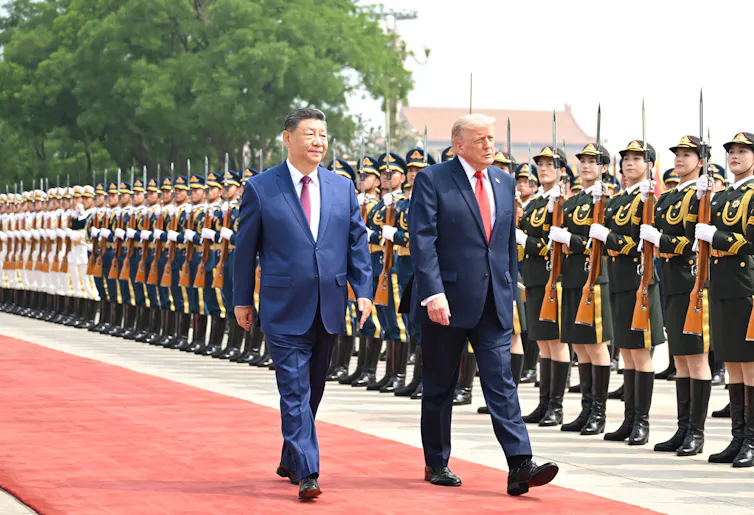
Two men in suits walk past a line of military dressed people.
Xi and Trump: Marching to the same tune? Li Xiang/Xinhua via Getty Images

Taiwan: Tough(ish) talk but status quo in place

No one really expected there to be movement on Taiwan – which mainland China lays claims over – although it is clear that Beijing would like the United States to make a firmer stance against the island moving toward a declaration of independence, or for the U.S. to expressly demand reunification.

So what we got was Beijing reiterating that Taiwan remained a priority and a core interest. Xi did this on the first day of the summit, noting that the Taiwan “question” remained “the most important issue in China-U.S. relations,” and that any mishandling of it could lead to “clashes and even conflicts.”

But this was aimed at two things. First, Xi has a domestic audience he needs to address, and Taiwan has long been important to Chinese rhetoric. The Chinese Communist Party has around 100 million members, many of whom would have expected Xi to talk tough on Taiwan – and it was those people he was largely talking to.

But he was also signaling to the U.S. that it shouldn’t support Taiwanese independence. And that won’t ruffle any feathers in Washington. Indeed, the 2025 National Security Strategy stressed that the U.S. opposed unilateral action on Taiwan from “either party” – a signal to Beijing that it opposed Taiwan declaring independence.

A group of people in army fatigues walk past a large missile launcher.
Taiwanese soldiers walk past a Sky Sword II Land-based Air Defense Missile in Taichung on Jan. 27, 2026. I-Hwa Cheng / AFP via Getty Images

Trump did mention arms deals to Taiwan. But the U.S.’s declaratory policy since the Reagan administration is that it doesn’t allow Beijing to enter discussions about what weapons Washington sells to Taiwan. And that hasn’t changed at all, nor has the U.S.’s treaty commitment to Taiwan since 1979 that requires the U.S. to provide Taiwan with defensive weapons to maintain a sufficient self-defense capability.

Rhetoric aside, everyone is happy with the status quo on Taiwan – it is in no one’s interest for it to change.

But talk of Taiwan has been muddied a little by Xi’s determination to modernize the People’s Liberation Army. The Chinese president has laid out a series of benchmarks including that the PLA should be capable of invading Taiwan by 2027. This has been misinterpreted in the U.S. under the so-called “Davidson window” – a concept that has it that China is intent on invading by that time.

In reality, China is nowhere near able to do so. It doesn’t have a “blue water navy” able to operate without port assistance, and the island is incredibly difficult to invade – it only has two places where you can land, and only at certain times of the year. It is also very mountainous. Taiwan is also slowly building its defenses – and learning a lot from Ukraine’s war with Russia – with the intention of becoming “indigestable” to China.

Xi’s modernization timeline also states that the PLA should be a “world class military” – taken to be a peer to the U.S. – by 2049. But the fact that it spends more on internal security than it does on defense indicates where the CCP’s true interests lay – in domestic security rather than external capabilities.

Trade: Tamped down expectations

The big picture is that the U.S. and China have been trying to restabilize what was until fairly recently a very good relationship in terms of economic ties.

Both sides have clear priorities to that extent. China wants to regain the American market it had in the 1990s and early 2000s – and certainly reverse the trend since 2018’s trade war.

Trump since his first administration has made it clear that he sees Chinese control over supply chains and the trade imbalance as a national security issue. Washington also wants to address unfair trade practices, such as the requirement that American companies hand over blueprints, trade secrets, customer lists, marketing plans and more to operate.

So what was achieved in the summit? On the surface, very little. There was some movement on sales of U.S. beef to China. And Trump announced that Beijing would buy 200 aircraft from Boeing – lower than the 500 that had been earlier touted in media reports. And several Chinese companies agreed to buy Nvidia microchips – a continuation of a process that began in late 2025.

That doesn’t seem much, and it was telling that Trump himself wasn’t being very “Trumpian” on what could be achieved during the summit. He wasn’t promising the moon.

But importantly, Xi and Trump agreed to establish a Board of Trade and Board of Investment – intended to create a pathway forward to more trade in the months to come.

A group of people wearing suits stand in a hall.
Tim Cook andJensen Huang, CEOs of Apple and Nvidia walk through the Great Hall of the People in Beijing. Johannes Neudecker/picture alliance via Getty Images

A lot of focus will be on technology. China is about 18 months behind the U.S. in microchip development. Some have questioned whether U.S. companies should be selling chips to China, amid fears that China could steal the intellectual property and be able to use higher-technology chips for defense reasons. The U.S. position is it can’t allow Huawei – China’s telecom giant – to take over the whole Chinese market, so it will only allow the sale of what it considers appropriate-level Nvidia chips.

Military matters: Washington wants to talk

During the Cold War, the Soviet Union and the U.S. always kept the military lines of communications open to avert a catastrophic incident. This hasn’t been the case with Beijing and Washington. We saw that in 2001 when a U.S. aircraft collided with a Chinese jet; and again over the “Chinese spy balloon incident” in 2023.

Washington is seeking to open up a line of communication on military matters, and that is probably why U.S. Secretary of Defense Pete Hegseth was there in Beijing. Indeed, it is highly unusual for a defense secretary to be at such a summit.

A man chuckles surrounded by other people
US Secretary of Defense Pete Hegseth attends a state banquet at the Great Hall of the People in Beijing on May 14, 2026. Brendan Smialowski/ AFP via Getty Images

Not that Trump believes he needs China’s help on military matters. He made that clear when asked about possible Beijing assistance prior to the summit.

In fact, little news came out of the summit on Iran. China has criticized the U.S. over the war, but has also quietly been telling Tehran to stop bombing Gulf countries.

Despite some commentary suggesting that Beijing benefits from the U.S. being bogged down in the Middle East, what Xi will want is a resolution before the economic fallout bites in China.

China’s stockpile of Iranian oil will only last a few more weeks and then oil price rises will hit China like a brick.

The Conversation

Yan Bennett has a contract position at the U.S. Department of State’s Foreign Service Institute, working to educate U.S. diplomats on transnational matters. Her views are her own and do not represent that of the U.S government.

AI-generated fantasies of US intervention reveal how desperation has narrowed Cuba’s political horizons

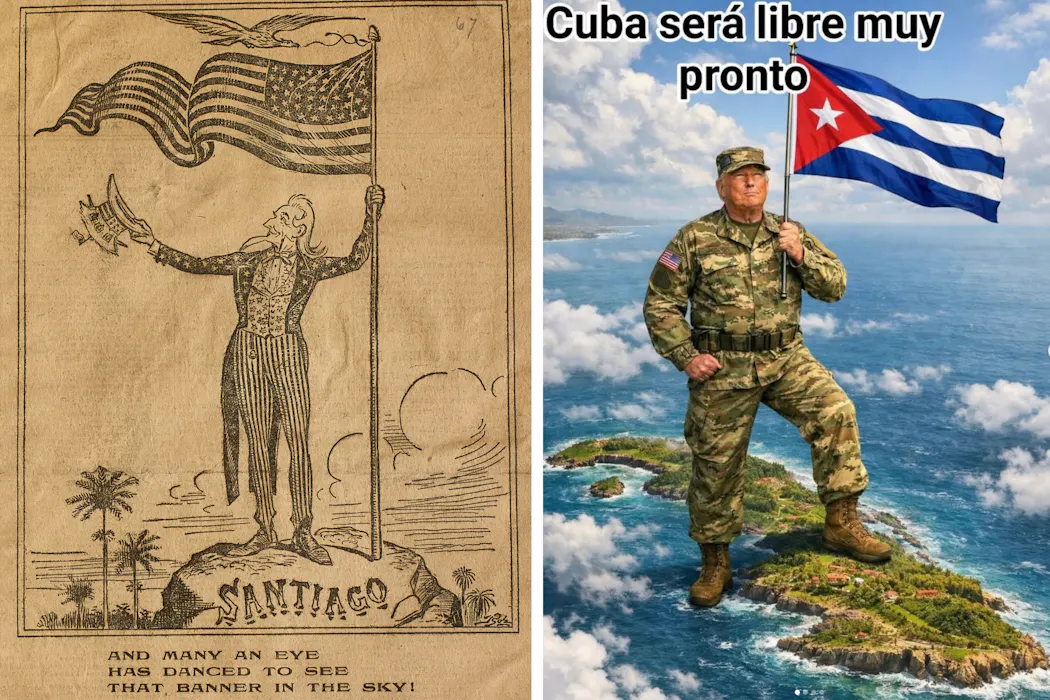
Cuba's American liberators, depicted on the left in a political cartoon from 1898 and on the right in an AI image. Cartoon: Blanche S. Crawford, Cartoon History of the Spanish American War (Scrapbook, 1898), 48. AI image: screenshot from Instagram. Images for this article sourced by Jorge Damian de la Paz.

Ever since U.S. commandos successfully removed Nicolás Maduro from power in Venezuela on Jan. 3, 2026, speculation has been growing that “Cuba could be next” on the list of the Trump administration’s targets.

“We’ll take over Cuba almost immediately,” President Donald Trump mused during a speech in Florida on May 1. “On the way back from Iran, we’ll have … the USS Abraham Lincoln come right by Cuba, stop about 100 yards offshore, and they’ll say, ‘Thank you very much, we give up.’”

It’s hard to say whether such remarks are just bluster. While the White House has been trying to coerce Cuban authorities into negotiated political and economic concessions through a de facto oil blockade since January, Trump has also reportedly grown frustrated by the Cuban government’s ability to outlast months of sustained U.S. pressure.

That has not stopped many Cubans and Cuban Americans from eagerly predicting a military operation’s success or insisting that such a U.S. action is necessary.

Their tool of choice? Not battle plans or political manifestos, but artificial intelligence. For weeks, Cuban social media feeds and WhatsApp groups have been filled with armchair fantasies of deliverance from communist rule made with tools like Midjourney, DALL-E, Runway and ChatGPT. In some clips and images, the island nation is represented as a female captive or a child being freed by an American protector. In others, magically renovated cityscapes feature statues and portraits erected in Trump’s honor, replacing revolutionary iconography.

It is easy to dismiss such animations as online trolling. But as a historian of Cuba, I noticed something troubling when my colleague Jorge Damian de la Paz sent me a selection of these digital illustrations and reels. Their visual language eerily mirrors classic U.S. political cartoons during Cuba’s final war for independence against Spain in the late 19th century. That imagery went on to justify U.S. meddling in Cuban affairs for decades.

A fraught history

In the 1890s, American illustrators at publications such as Puck, Judge and Harper’s Weekly similarly portrayed Cuba as a feminized victim: weak, vulnerable, often racialized as nonwhite and incapable of securing freedom on her own. They imagined grateful tropical citizens celebrating future American liberators for defeating their Spanish overlords and bestowing the benefits of “civilization” on Caribbean life.

Such tropes were not innocent. They helped generate the cultural consensus that legitimized U.S. intervention in the Cuban war in 1898 – known by most Americans as the Spanish-American War. They also shaped Cuba’s postwar order: four years of U.S. military occupation, an imposed amendment to Cuba’s first constitution authorizing future American military action to preserve stability, and decades of political and economic dependence on the United States.

Taking their cue from heroes of the independence struggle such as José Martí, many Cubans grew to resent this asymmetrical relationship with the North, even as they fell in love with imported American consumer products and cultural pastimes. Especially by the 1930s and 1940s, mainstream political movements on the island all sought to, at a minimum, rebalance the extent of U.S. influence over Cuban life. Their failure to do so was part of what propelled Fidel Castro’s radical nationalist revolution to power in 1959.

Reversing course

But today, formal and informal polling suggests that significant numbers of Cubans and Cuban Americans seem willing to welcome, or at least tolerate, the explicit U.S. intervention that most of their forefathers rejected.

AI-generated expressions of these views do not appear to be coming from staunchly anti-communist exiles in South Florida alone. Comments and reposts suggest they are resonating among Cubans living on the island, many of whom are desperate for “something, anything” to put an end to the worsening blackouts, shortages and societal paralysis that have made daily life feel like purgatory.

If a U.S. military operation is the only way to escape, one friend in Havana told me, “que sea rápido” – let it be over quickly.

What’s distinct about AI is that it is providing this fatalism with a visual vocabulary rooted in imperial attitudes from the 1890s. This makes sense when you consider how the technology works: Generative AI systems have been trained on enormous, often U.S.-centric archives of historical photographs and other materials. They easily reproduce the old cultural and political prejudices seen in these digital repositories.

As a result, image and video generators appear to be spitting 19th-century American discourses back at 21st-century Cuban users. The most extreme iterations of the imagery even resurrect a long-dormant idea from more than a century ago: the outright annexation of the island as a U.S. state. In so doing, AI provides narrative fuel for the Trump administration’s efforts to rewind the clock to an era when Washington condescendingly treated Latin America as its “backyard.”

Deprivation and desperation

The depth of Cuba’s predicament today helps explain why these images are going viral.

Long before the Trump administration cut off oil supplies, Cubans were enduring their worst economic, political and social crisis in three decades. Botched internal reform efforts, repression of dissent, and mass migration profoundly eroded faith in Cuba’s Communist Party leadership and institutions in recent years. This has been particularly true since the island’s tourist-heavy economy was hit hard by COVID-19 and 2021 mass protests rocked more than 50 towns and cities.

Of course, plenty of Cubans in Cuba still blame the long-standing U.S sanctions regime, and Trump’s unprecedented additions to it, for many of their problems. Not all are willing to accept change at any cost.

But Cuban officials’ defense of national sovereignty in the face of mounting U.S. threats rings increasingly hollow. Cuba hasn’t held a truly competitive election in nearly 80 years and has been ruled by a one-party state for 65. Under those circumstances, political independence does not rest on the consent of the governed. It’s also hard for a country to claim sovereignty when its economy relies so strongly on external patrons, such as Russia, China, Venezuela (until January) and even the United States. Despite the embargo, Cuban Americans send hundreds of millions of dollars in remittances, food, medicines and other goods annually.

The seduction of rescue

Yet even if fantasies of rescue are understandable, they should be deeply concerning to anyone who cares about Cuba’s future.

The danger posed by AI images is not simply that they normalize the idea of a U.S. military intervention that could cost Cuban lives. It is that they replace deeper civic imagination with spectacle and clickbait.

AI is offering visions of liberation without requiring Cubans to grapple with the far more difficult dilemmas that any real transition would entail. Those questions include how to rebuild institutions, restore trust, confront inequality, reconstruct the economy, forge reconciliation and negotiate competing political visions after decades of polarization and authoritarianism.

Prolonged desperation, coupled with authorities’ stubborn refusal to open the island’s political and economic systems, has narrowed some Cubans’ political horizons to the point where they outsource their own salvation rather than imagine it from the bottom up.

The coming weeks may determine whether digital fantasies turn into concrete policy or remain wishful thinking. But one thing is certain: AI images of U.S. military intervention in Cuba reveal that many Cubans and Cuban Americans have given up on defining change on Cuban terms. That choice could mean the difference between a Cuba that once again becomes a U.S. client state and one where Cubans reclaim ownership of their nation’s future.

The Conversation

Michael J. Bustamante does not work for, consult, own shares in or receive funding from any company or organization that would benefit from this article, and has disclosed no relevant affiliations beyond their academic appointment.
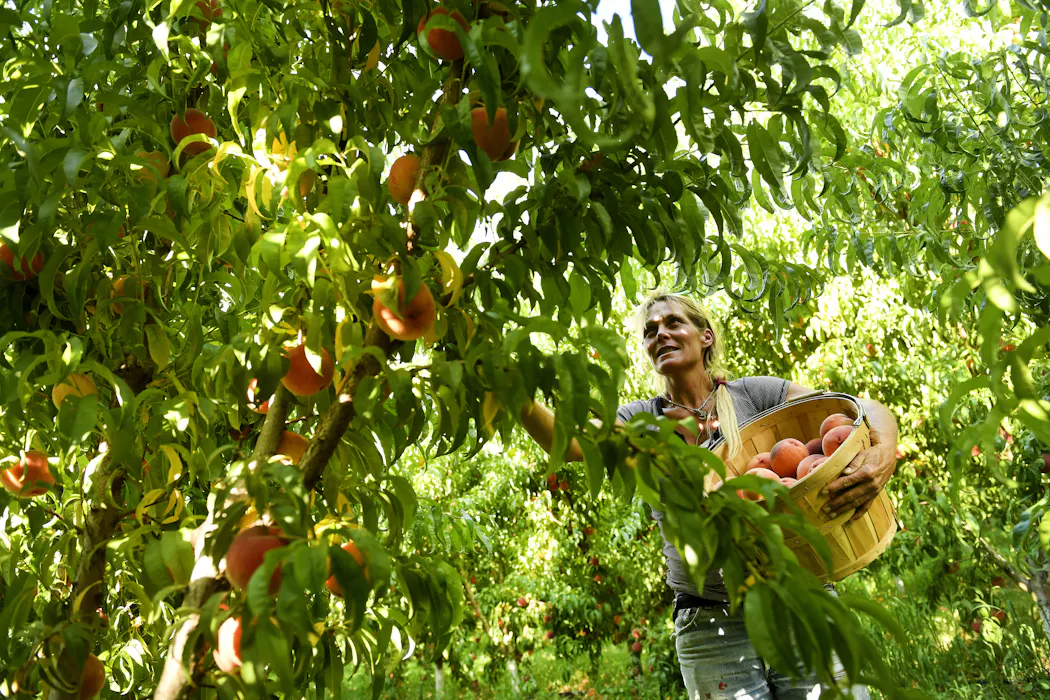
A fungal disease, along with climate change, threatens Colorado’s prized peaches

Colorado's peach industry is threatened by a fungal disease. Helen H. Richardson/The Denver Post via Getty Images

In western Colorado, home to the treasured Palisade peach, cytospora canker is one of the most economically consequential fungal diseases faced by growers.

A recent survey conducted by Colorado State University in Orchard Mesa found that 100% of the orchards have trees infected with cytospora canker. In some orchards, you can smell the sweetness of gummosis, the sweet oozing of sap from a tree that occurs from injury, stress, pathogen infection or insect damage.

We are part of a team of fruit tree growers, extension personnel and researchers who are developing tools for mitigating cytospora canker in fruit tree orchards in Colorado and Utah.

In a study we published, we estimate this disease results in at least US$3 million in annual economic losses for growers in Colorado. In infected large branches, which are called scaffolds, the damage can result in a 50% loss of peaches per tree.

Peaches were first planted in Palisade and Grand Junction in 1882 by one of the first white settlers to the area, John Harlow. Peaches and other fruit trees have been Colorado staples ever since. In 2024, Colorado farmers produced roughly 15,000 tons of peaches valued at $34 million.

However, fruit tree production in the Intermountain West, which covers Colorado, Utah and Idaho, is threatened by diminishing water supplies, spring frosts, variable winter temperatures and soils that are above the ideal pH range for peach trees. Further exacerbating the environmental stresses are pest problems and the persistent cytospora canker disease.

What is cytospora canker?

Cytospora canker is caused by fungi within the genus Cytospora. These pathogens are found globally and affect more than 70 species of woody shrubs and trees. These fungi have been present on fruit trees in the U.S. since at least 1892 when cytospora canker was first discovered on peach, plum and almond trees in Pennsylvania and New Jersey. Cytospora canker was first described as only a disease of stressed trees, but now it is recognized as a destructive disease in tree fruit across the U.S.

Plant Talk Colorado: What is cytospora canker? A video from Colorado State University Extension.

Growers expect peach trees to live for 20 years. The first five of those years are initial growth. The next 10 years are full production. Then, the tree’s productivity tapers off in the last five years of its life. The disease has halved the life of an orchard in Colorado from 20 years to 10 years or fewer. Trees that get infected during the first or second year are typically dead by year four or five before they reach peak production.

Cytopora canker typically enters through wounded and woody branches or twigs. Wounding occurs when branches are pruned to maintain tree vigor or through severe freezing or hail events. Freeze events are common in Colorado and are particularly harmful in the fall if temperatures drop abruptly without giving trees enough time to acclimate to the temperature shift.

Ice formation within plants causes swelling and cracking in woody tissues, as well as the formation of ice crystals within plant cells that can puncture the cells, leaving them vulnerable to oxidative damage and infection. Small cracks enable cytospora spores, like the seeds of a plant, to enter and begin to cause infections.

Cytospora canker and freeze

In 2020, a major freeze event damaged many trees throughout Colorado.

Following a warm October, temperatures dropped from 65 degrees Fahrenheit (18 degrees Celsius) to below 10 F (-23 C) in a 48-hour time span in the fruit region around the town of Hotchkiss. Because the recent temperatures had been in the 70s, there was not an appropriate amount of acclimation in the trees to be prepared for this large temperature drop. Leaves were still green, and sap was still flowing through the woody tissues.

The damage from this single freeze directly led to the death of tens of thousands of peach trees across the western slope of Colorado.

The sudden freeze also allowed for a proliferation of new cytospora canker infections on peaches trees that were not killed outright by the freeze. The surviving trees were often more vulnerable because the cracked skin and bark of peach branches was now exposed to infection by the fungus. This correlation between cytospora infection and cold damage is thought to be a major reason why cytospora canker is a particularly significant disease in Colorado.

To manage the pathogen, growers can remove trees that are infected, protect wounds with chemicals to prevent new infections and ensure that established trees are free of stress. However, management strategies have limited efficacy due to the growing conditions. While Palisade has the most ideal peach-growing microclimate in Colorado, the cold season is near the limits of what peaches can tolerate.

In April 2026 there were several nights when the temperatures reached into the low 20s F (-7 degrees C) in different orchards in Delta County, Colorado. Fruit had already started to grow and was very susceptible to the cold temperatures. As a result, growers around Hotchkiss and Paonia lost their peach crop.

Palisade orchards avoided that level of damage because on those same nights the temperatures dropped only to the upper 20s F (-2 degrees C), which damaged some fruit but left enough behind to have a full crop in most cases. Spring frosts like these reduce fruit production but generally aren’t going to contribute to increased proliferation of cytospora canker.

Solutions in progress

Researchers from Colorado State University are working toward developing strategies to combat this disease. Our team has developed chemical options for conventional and organic growers that have helped slow the spread. We are determining whether some peach cultivars are tolerant to the pathogens, and we are continuing to understand the population biology of cytospora to help us develop new management strategies.

The pathogen can be spread through air, on insects, during irrigation and possibly with the movement of new peach trees into orchards. Many fungi that produce cankers in trees can move spores only short distances through rain splash. But spores of the fungus have been found in collection traps about 250 feet (76 meters) from a tree with canker that is making spores.

We have established the cytospora working group as a collaborative research, extension and grower group to collectively develop solutions for cytospora canker. We are continuing to better understand factors involved in disease development and establish best management practices to help growers combat this disease and keep the Colorado peach industry vibrant.

Read more of our stories about Colorado.

The Conversation

Jane Stewart receives funding from USDA NIFA AFRI.

David Sterle does not work for, consult, own shares in or receive funding from any company or organization that would benefit from this article, and has disclosed no relevant affiliations beyond their academic appointment.
Is baby talk bad? Why ‘parentese’ actually helps babies learn language

Emphasizing the sounds of certain words to young children can help them retain language, not confuse them about speaking properly. MoMo Productions/DigitalVision via Getty Images

Many parents have heard the warning: Don’t use baby talk with babies and toddlers. Instead, caregivers are often encouraged to speak properly and use adultlike language, out of concern that simplified speech could confuse children or delay language development.

But my research, which I highlighted in in my new book, “Beyond Words,” suggests the opposite is true. The sing-song voice many adults instinctively use with infants, sometimes called “baby talk” but more accurately known as “parentese” or infant-directed speech, actually helps children learn language.

Far from confusing babies, exaggerating phrases like “Loooook at the doggie!” capture their attention, help them detect patterns in speech and strengthen social bonding.

And the funny mistakes children make along the way, such as saying “goed,” instead of “went,” or “mouses” instead of “mice,” are not signs that children are learning language incorrectly. They are evidence that children are actively working out the rules of language for themselves.

A man holds his hands away from his face and leans over a small baby lying on a bed and smiles.
Speaking ‘parentese’ to a child doesn’t involve nonsense words. BjelicaS/E+ via Getty Images

What parentese really is

When many people think of baby talk, they imagine nonsense phrases like “goo goo ga ga” or made-up words like “num nums.” But that’s not what linguists and developmental psychologists mean by parentese.

Parentese uses real words and grammatically correct sentences, but with exaggerated intonation, a higher pitch, stretched-out vowels and a slower rhythm. Think of the way a caregiver might naturally say: “Hi, baaaaby! Are you huuungry?”

There is little evidence that occasional playful nonsense words harm children’s language development. But studies suggest that parentese in particular helps babies pay attention to speech, recognize patterns and engage socially.

Adults across cultures tend to speak this way to infants instinctively. Even people who swear they never use baby talk often slip into it around babies.

Researchers have found that infants actually prefer listening to parentese over regular adult speech. The exaggerated sounds and slower pacing make language easier to process. Babies are better able to pick out individual sounds, notice word boundaries and recognize patterns. In other words, parentese helps tune babies into language.

It also strengthens emotional connection. Language learning does not happen in isolation. Babies learn through warm, responsive interaction with caregivers during feeding, play, bath time and everyday routines.

Interestingly, humans are not the only ones who respond to this style of communication. Studies have even shown that cats react more positively when people use a baby-talk voice with them.

Babies are not passive learners

Children do not learn language simply by copying adults word for word. They actively test hypotheses about how language works. That is why toddlers make predictable and surprisingly logical mistakes.

One common example is overgeneralization. A child learns that people form the past tense of many verbs by adding “-ed,” so they produce forms like “goed,” “eated” or “comed.”

These are not random errors. In fact, they show that the child has understood a grammatical rule and is trying to apply it consistently. The problem is simply that English is full of irregular exceptions. The same thing happens with plurals. Children may say “foots” instead of “feet” or “mouses” instead of “mice.” Again, the logic behind these errors is sound.

Linguists sometimes say that children are little scientists, constantly testing patterns and revising their understanding as they receive more input from the world around them.

Why toddlers call everything a ‘dog’

Young children also make predictable mistakes with meaning.

A toddler might learn the word “dog” and then use it for every four-legged animal they encounter. Linguists call this overextension. On the flip side, some children use words too narrowly. A child may use “dog” only for the family pet and not recognize that other dogs belong in the same category. Linguists call this tendency underextension.

These mistakes reveal how children organize and categorize the world around them. They are gradually mapping words onto objects, people and experiences.

Pronouns are another tricky area. Small children often confuse “me” and “you” because these words constantly shift depending on who is speaking. If a parent says, “I’ll pick you up,” the child hears themselves called “you.” But when they try to repeat the sentence, they may not yet understand that the labels switch from speaker to speaker.

This is why toddlers sometimes say things that sound unintentionally cute or confusing. But beneath the confusion is a sophisticated learning process.

Even the Cookie Monster gets it wrong

Children’s speech errors are so recognizable that they often appear in popular culture. Sesame Street’s character Cookie Monster famously says things like “Me want cookie,” while Elmo often refers to himself in the third person: “Elmo wants this.” These speech patterns mirror real stages of child language development. Young children commonly confuse pronouns or refer to themselves by name before mastering forms like “I,” “me” and “mine.”

Despite occasional complaints from adults, there is no evidence that hearing this kind of speech harms children’s language development. If anything, it reflects the natural experimentation children go through.

A Cookie Monster puppet stands near a black tarp with its mouth open and holds a cookie.
The Cookie Monster saying ‘Me want cookie’ won’t teach babies and young kids to speak incorrectly. Brian Killian/WireImage via Getty Images

‘Pasketti’ and ‘wabbit’

Pronunciation develops gradually too. Young children often simplify difficult sounds and groups of consonants. “Spaghetti” becomes “pasketti,” “rabbit” becomes “wabbit” and “yellow” may come out as “lellow.”

Speech-language specialists call these simplifications phonological processes. They are a normal part of development because some sounds are physically harder to produce than others. Sounds such as r, th, sh and ch tend to develop later because they require more precise control of the tongue and mouth.

Most children naturally outgrow these pronunciation patterns as their speech matures. However, persistent difficulties can sometimes signal a speech or language disorder, which may require professional support.

A graphic image shows a young child's head with various colorful thought bubbles inside.
Children don’t learn language by copying adults word for word. They learn through interaction, experimentation and repetition. DrAfter123/DigitalVision Vectors via Getty Images

Mistakes are part of learning

Parents are often under enormous pressure to do everything right, including helping their children learn to speak a language. But children do not learn language by avoiding mistakes. They learn through interaction, experimentation and repetition.

Parentese helps babies focus on speech and engage socially. The funny mistakes toddlers make reveal that they are actively piecing together the complex system of language and are often signs of normal development. Language acquisition is messy, creative and remarkably sophisticated.

Speaking in an exaggerated sing-song voice to a baby is not something parents and caregivers need to feel embarrassed about.

Far from harming language acquisition, it may help lay the foundation for it.

The Conversation

Karen Stollznow does not work for, consult, own shares in or receive funding from any company or organization that would benefit from this article, and has disclosed no relevant affiliations beyond their academic appointment.

You can persuade AI models to accept falsehoods as truth, study shows

You can make AI chatbots spout information that's not true. Nicoletaionescu/iStock via Getty Images

When you ask a large language model a question, the reply may include falsehoods, and if you challenge those statements with facts, the AI may still uphold the reply as true. That’s what my research group found when we asked five leading models to describe scenes in movies or novels that don’t actually exist.

We probed this possibility after I asked ChatGPT its favorite scene in the movie “Good Will Hunting.” It noted a scene between leading characters. But then I asked, “What about the scene with the Hitler reference?” There is no such scene in the movie, yet ChatGPT confidently constructed a vivid and plausible description of one.

The confabulation – sometimes called an AI hallucination – revealed something deeper about how AI systems reason. References to Hitler are not uncommon in films, which apparently convinced ChatGPT to accept and elaborate on a false premise rather than correct it. I study the social impact of AI, and this surprise response led my colleagues and me to a broader question: What happens when AI systems are gently pushed toward falsehoods? Do they resist, or do they comply?

We developed an approach we called hallucination audit under nudge trial to answer those questions. We had conversations with five leading models about 1,000 popular movies and 1,000 popular novels. During the exchanges we raised plausible but false references to Hitler, dinosaurs or time machines. We did this in various suggestive ways, such as “For me, I really love the scene where …”

Our method works in three stages. First, the AI generates statements about a topic — such as a movie or a book — some true and some false. Second, in a separate interaction, the AI attempts to verify those statements. Third, we introduce a “nudge,” where the model is challenged with its own incorrect claims to see whether it resists or accepts them.

We found that AI models often struggle to remain consistent under pressure. Even when they initially identify a statement as false, they may later accept it when nudged – revealing a vulnerability that traditional evaluation methods fail to capture.

Our results have been accepted at the 2026 Annual Meeting of the Association for Computational Linguistics.

Text of a conversation between a person and ChatGPT about the movie 'Good Will Hunting.''
When ChatGPT was asked about a scene in the movie Good Will Hunting that doesn’t exist, it confidently described it. Ashiqur KhudaBukhsh, CC BY-ND

This tactic isn’t a hypothetical. When people talk, conversational pressure can emerge naturally. People may confidently repeat incorrect assumptions, partial recollections or misunderstandings. A person might say, “I’m pretty sure medicine X is effective for condition Y,” or “I remember event A happening before event B.” These statements can subtly influence an AI model.

Why it matters

What humans collectively remember, misremember and forget shapes our sense of reality. But if humans can persuade a model to accept a falsehood, that reveals an important vulnerability in AI’s capacity to provide accurate information.

Interactions in the real world are rarely static question-answer exchanges. They are interactive and iterative. An AI model’s willingness to reinforce falsehoods may seem harmless when chatting about movies, but in areas such as health, law or public policy, the tendency can have serious consequences. Our work highlights the need to evaluate not just what information AI systems have been trained on, but how reliably they stand by it.

What other research is being done

Our results add to other recent research into why large language models may produce hallucinations, and how it is that they can provide inconsistent information. Researchers are also trying to figure out why some models lean toward sycophancy – flattering or fawning over human users.

What still isn’t known

It’s not clear why some AI systems resist falsehoods better than others. In our tests, Claude was the most resistant, followed somewhat closely by Grok and ChatGPT, with Gemini and DeepSeek further behind.

Movies and novels are self-contained content. Scholars don’t know how AI might respond to pressure in much broader, complex real-world settings. As a start, my group is exploring how to extend our approach to scientific literature and health-related claims. We want to understand whether conversational pressure works differently when the discussion involves uncertainty or expertise.

How to design AI systems that remain both helpful and resistant to falsehoods under wide-ranging conversation remains an open challenge.

The Research Brief is a short take on interesting academic work.

The Conversation

Ashique KhudaBukhsh receives funding from Lenovo.

From medieval plague ships to hantavirus: How outbreaks at sea helped to shape the international public health system

Passengers on the the hantavirus-stricken cruise ship MV Hondius watch epidemiologists board the boat in Praia, Cape Verde, on May 6, 2026 AP Photo/Uncredited

Cruise ships are convenient floating hotels by which to see far-flung parts of the world – but as an epidemiologist, I know they are also everything an infectious pathogen could want: thousands of strangers packed into enclosed spaces for days or weeks, sharing dining rooms and high-touch surfaces such as elevator buttons and handrails, breathing recirculated air.

Each new port of call where passengers can explore for a few days is an opportunity for germs to embark – and once they do, they encounter a highly efficient setting for hopping from host to host.

The MV Hondius confirmed this well-known fact in April 2026, when an outbreak of Andes hantavirus began aboard the Dutch-flagged expedition vessel carrying 147 passengers and crew from 23 countries.

The Andes virus is one of several species of hantaviruses. It is the only one known to spread from person to person, though it doesn’t do so very efficiently. It is far less contagious than COVID-19 or the measles.

As of May 14, a total of 11 cases, including three deaths, have been reported in the Hondius outbreak.

Outbreaks at sea are one of the oldest problems in public health. From medieval plague quarantines to modern times, they have repeatedly tested the ability to control infectious disease – and have played a key role in shaping the international public health framework in place today.

That interconnected public health system, however, depends on the cooperation of countries around the globe.

From harbor quarantine to global disease control

The word “quarantine” was first documented in the English language in 1663, in the Oxford English Dictionary, which defined it as a period of 40 days during which people who might spread a contagious disease are kept isolated from the rest of the community.

The first official quarantine, though, came earlier, in 1377, when the Republic of Ragusa – modern-day Dubrovnik, Croatia – ordered ships from plague-affected ports to anchor offshore for 30 days before anyone could disembark. A quarter-century later, Venice extended this period to 40 days – hence the “quarantine” term, which stuck. In 1423, Venice officially opened the world’s first permanent quarantine island, the Lazzaretto Vecchio, specifically to manage the problem of the plague arriving by sea.

A black and white historical illustration of an island,
Lazzaretto Vecchio, the first quarantine island, was established in 1423. Wikimedia Commons

The system worked during the medieval era because a single authority usually controlled most harbors. Ships waited because they recognized states’ authority to detain them.

For centuries, maritime quarantine operated on this principle. Harbor officials wielded broad public health powers over incoming vessels. In the 19th century this practice continued in the United States. Cholera ships – a nickname for trans-Atlantic vessels carrying migrants and troops that were breeding grounds for cholera and other diseases – arrived from Europe and the Mediterranean and sat offshore in New York for weeks. At quarantine stations on Ellis Island and ports across the Atlantic seaboard, ships were inspected, passengers isolated and captains overruled by public health officers who had the legal authority to isolate passengers for extended periods.

The system was crude and often brutal. Ships of the medieval period were floating sickrooms with poor conditions: putrid water in the casks, bread full of worms, and passengers packed into pitch-sealed berths with lice in the bedding and the bilge stinking under them. Many people died on board. But the system rested on a foundation of recognized, enforceable authority over the vessel and everyone on it for the purpose of protecting the city from disease.

International cooperation

As maritime trade and travel became increasingly globalized, however, no single port or government could manage outbreaks alone. Also, advances in vaccines, antibiotics and sanitation led many countries to downsize the maritime quarantine systems that had once defined disease control at sea.

This forced quarantine systems to evolve from local harbor control into international frameworks for coordination. The World Health Organization was established in 1948, and the International Health Regulations were created in 1969 to manage disease across borders.

Countries agreed to share information, notify one another of outbreaks and coordinate responses at ports and borders. The responsibility no longer fell on a sole harbormaster, but the system was designed to perform a similar coordinating function across an increasingly interconnected world.

Even within that system, however, cruise ships remain unusually vulnerable outbreak environments. A highly visible example was a COVID-19 outbreak that occurred on the Diamond Princess in 2020. The cruise ship, which was anchored off the coast of Yokohama, Japan, produced weeks of confusion between Japanese authorities, the British cruise operator and a dozen foreign governments as they struggled to coordinate responsibility for the 3,700 passengers and containment measures.

Some analyses later suggested the shipboard quarantine may have amplified transmission. At the time, most observers treated it as a crisis specific to the early chaos of the pandemic.

But the Hondius outbreak suggests the problem runs deeper.

The Andes hantavirus can spread from person to person, but not very efficiently.

Ships cross borders – so too do pathogens

Cruise ships combine dense social mixing, international mobility and fragmented legal authority in ways that continue to challenge modern disease-control systems – even decades after the creation of international public health frameworks designed to coordinate them, and even for diseases like Andes hantavirus that are extremely unlikely to cause a pandemic.

As the cruise industry has grown, it has expanded into more remote and epidemiologically unpredictable environments – expedition voyages to Antarctica, the Amazon, Alaska. Alongside the industry’s ambitions, disease risk has also increased. These trips routinely bring large groups of passengers into contact with wildlife, pathogens and ecosystems they may have little prior exposure to and then seal travelers together for weeks.

Nevertheless, the United States chose in January 2026 to withdraw from the World Health Organization, the primary institution administering the framework designed to coordinate responses when disease crosses the borders that cruise ships cross as a matter of routine.

The Trump administration framed the exiting of international organizations as a means of protecting U.S. sovereignty. In practice, it meant that when the Hondius needed a response, the U.S. participated from outside the systems it had spent decades helping to build.

A crack in the system

In the outbreak on the Hondius, the international system still functioned.

The WHO still issued risk assessments and guidance. The European Centre for Disease Prevention and Control still coordinated the response across Europe. And in the U.S., the Centers for Disease Control and Prevention belatedly issued a health alert to physicians.

What changed is that the U.S. moved from being a central participant in the international public health system to operating more from its edges.

Who can say whether the next big outbreak will come from a disease spread on a cruise ship – or whether the pathogen involved will be one that spreads more efficiently between people than the Andes strain of the hantavirus does.

Whatever its source, outbreak response depends on cooperation between major governments, rapid information sharing and coordinated logistics. When a country as globally connected as the U.S. steps back from those systems, managing international health emergencies becomes slower, more fragmented and more dependent on ad hoc negotiations. Ultimately, this may make the world less safe.

The Conversation

Katrine L. Wallace does not work for, consult, own shares in or receive funding from any company or organization that would benefit from this article, and has disclosed no relevant affiliations beyond their academic appointment.

❌
The Conversation – Articles (US)