SINGAPORE: Critics are once again prodding at the perennial hot-button issue of high ministerial salaries in Singapore, questioning whether the original rationale behind the country’s political pay system still holds weight after more than a decade without salary adjustments.
Singapore’s long-standing policy of paying ministers among the highest salaries of any elected politicians in the world has for decades been defended by the ruling People’s Action Party (PAP) as a necessary strategy to attract capable leaders, deter corruption and ensure strong governance in a small, resource-scarce nation heavily dependent on human capital.
Central to that argument has been the PAP’s repeated warning that Singapore could suffer a “brain drain” if political salaries were not kept competitive with the private sector.
Founding Prime Minister Lee Kuan Yew was one of the strongest and most consistent proponents of this philosophy. Throughout the 1980s, 1990s and 2000s, the late elder statesman argued that Singapore could not afford to lose talented individuals to multinational corporations, banks, law firms and large private-sector employers simply because government service paid substantially less.
In defending the ministerial salary framework introduced in the 1990s, Mr Lee repeatedly stressed that capable professionals in fields such as law, medicine, finance and corporate leadership would be reluctant to enter politics if doing so meant making an extreme financial sacrifice.
The PAP framed the issue not merely as one of fair compensation, but as a matter of national survival. Mr Lee argued that Singapore’s vulnerability as a small state with no natural resources meant that governing quality was especially critical, and unlike larger countries, Singapore could not easily absorb weak or mediocre leadership.
Over the years, PAP leaders have consistently maintained that lower salaries could lead to several risks, including talented Singaporeans choosing private-sector careers over public office, experienced officeholders leaving politics prematurely, and weaker candidates eventually entering government.
The “pay for talent” philosophy became deeply embedded within the PAP’s political ideology and was defended not just by senior ministers but also by rank-and-file MPs.
In 2007, then-Deputy Prime Minister Teo Chee Hean defended ministerial salary benchmarking by arguing that compensation would naturally factor into the decisions of high-performing professionals considering whether to enter politics.
“It is what a young man in his 30s or 40s” would weigh when deciding between political office and lucrative private-sector careers, he said at the time.
Four years later, PAP backbencher Lim Wee Kiak triggered one of the most controversial episodes in Singapore’s long-running debate over political pay.
Dr Lim was quoted in the Chinese press as saying that if the Minister for Information, Communications and the Arts earned “only” S$500,000 annually, it could create problems when dealing with media executives earning millions of dollars because they “need not listen” to the minister’s ideas or proposals. He added that “a reasonable payout will help to maintain a bit of dignity.”
The remarks sparked a major backlash online and quickly became emblematic of what many Singaporeans saw as an out-of-touch political elite, especially because they came shortly after the 2011 General Election, when concerns over rising living costs, inequality and stagnant wages were intensifying.
That election marked one of the PAP’s worst electoral performances since independence, with the ruling party losing an unprecedented eight parliamentary seats to the opposition. The political fallout eventually prompted the Government to convene an independent committee to review the ministerial salary framework.
The review led to sweeping changes. The committee recommended significant reductions to political salaries, revisions to bonus structures and the removal of pensions for ministers.
It also overhauled the benchmark used to determine salaries. Instead of pegging pay to the top earners in the private sector, the framework shifted to using the median income of Singapore’s top 1,000 citizen earners, with a 40 per cent discount applied to reflect what the Government described as the ethos of public service.
The PAP said this discount acknowledges that political office should still involve sacrifice, while ensuring salaries remain sufficiently competitive to attract individuals who might otherwise pursue lucrative careers elsewhere.
Under the current framework, an entry-level minister at the MR4 grade has a benchmark annual salary of around S$1.1 million, including bonuses, while the Prime Minister’s benchmark salary is approximately S$2.2 million a year.
Despite these reforms, the issue has remained politically sensitive over the years.
In 2018, another review committee recommended that political salaries be adjusted annually in tandem with benchmark movements, noting that benchmark salaries had risen by about 9 per cent since the framework was introduced.
The Government, however, decided against making any changes at the time, citing economic uncertainty and maintaining that the existing structure remained sound. Another review planned in 2023 was deferred due to global instability.
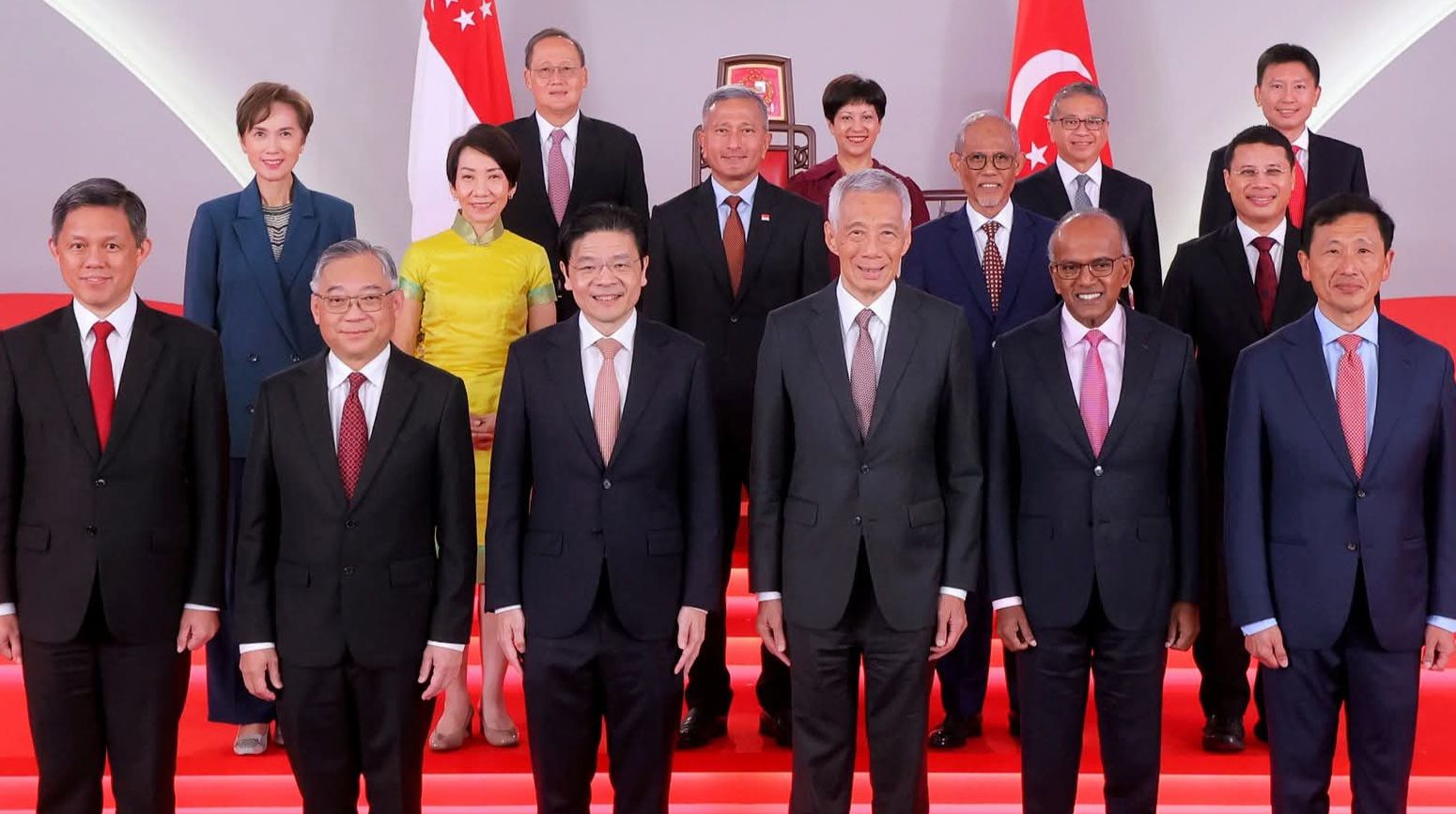
The debate has resurfaced this year after an eight-member committee was formed in January to once again review political officeholder salaries.
The committee was tasked with assessing whether salary levels remain appropriate under the current framework and recommending refinements to ensure its continued relevance.
Earlier this month, Minister Chan Chun Sing revealed that the committee had submitted its recommendations in April, but said the Government would defer consideration of the proposals until there is greater clarity on the economic impact of the ongoing Middle East conflict on Singapore.
“The Government recognises that the Middle East conflict is still ongoing, causing major economic uncertainties and clouding the outlook for Singapore,” said Mr Chan, who also serves as Defence Minister.
He added that the committee’s report and the Government’s response would be released “at the appropriate time”, allowing MPs to debate both together in Parliament.
Mr Chan and other PAP leaders have repeatedly stressed that ministers’ official salaries have remained unchanged since 2012 despite rising incomes in the private sector over the same period.
However, that argument has now fuelled a fresh wave of questions online. Some Singaporeans have begun asking whether the PAP’s long-standing justification for exceptionally high political salaries has effectively undermined itself.
Some critics online are questioning whether the feared “brain drain” was overstated to begin with, given the fact that ministers have remained in office for more than a decade without pay increases, despite the Government’s repeated warnings about talent retention and competitive compensation.
Others have sarcastically questioned whether, by the PAP’s own logic, Singapore should already have experienced a decline in leadership quality or an exodus of capable individuals from politics due to stagnant political salaries.
Asserting that high ministerial pay distances political leaders from ordinary Singaporeans and reinforces perceptions of inequality, especially since many political officeholders are not full-time MPs and hold their day jobs, some are asking the Government to launch a public consultation on the matter.
The renewed debate perhaps shows how ministerial salaries remain one of the most politically sensitive and symbolically charged issues in Singapore politics, touching not just on questions of governance but also public perceptions of fairness.
It remains to be seen how members of the public will respond to the recommendations of the latest pay review committee when their report is publicly released.
This article (Singaporeans revisit ministerial salary debate as PAP’s ‘brain drain’ warning faces scrutiny) first appeared on The Independent Singapore News.

 Login
Login