New “one piece” sandwich looks set to be another sell-out hit for the popular chain.
On “Sandwich Day” on 13 March, 7-Eleven completely revamped its sandwiches in Japan, and among them appeared a new, generously filled single-serve range known as the “Yokubari Sando” (“Greedy Sandwich“). This so-called “one piece” sandwich aims to deliver an overwhelming sense of filling and satisfaction at an affordable price point, and the newest addition to the range, announced today, does just that, with a
New “one piece” sandwich looks set to be another sell-out hit for the popular chain.
On “Sandwich Day” on 13 March, 7-Eleven completely revamped its sandwiches in Japan, and among them appeared a new, generously filled single-serve range known as the “Yokubari Sando” (“Greedy Sandwich“). This so-called “one piece” sandwich aims to deliver an overwhelming sense of filling and satisfaction at an affordable price point, and the newest addition to the range, announced today, does just that, with a surprising filling to boot.
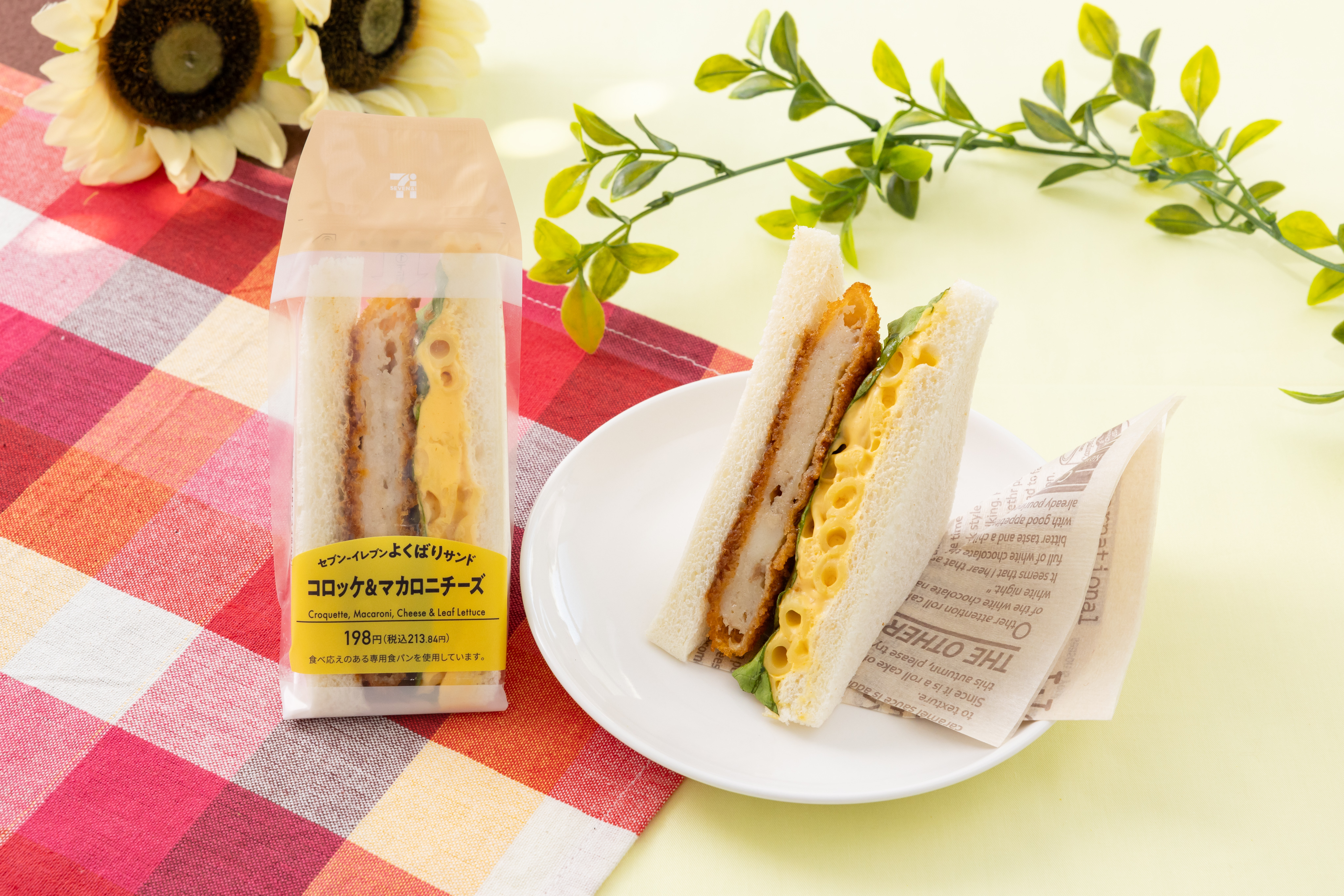
▼ Say hello to the Croquette & Macaroni Cheese.
Known as “Croquette, Macaroni Cheese & Leaf Lettuce” in English, this sandwich has been carefully designed to ensure you get all the fillings in every mouthful, from the first to the very last bite.
7-Eleven says it totally redesigned the shape of the croquette to suit the sandwich, developing a unique type of croquette that spreads all the way to the edges of the bread. With rich, creamy macaroni and cheese sandwiched inside, this pairing is said to create an exquisite combination that allows the texture and flavour of each ingredient to stand out, giving you an incredibly moreish and satisfying sandwich experience.
By selling sandwiches individually, instead of in pairs, the Greedy Sando line is able to deliver a much more generous filling, which is a genius marketing move by 7-Eleven, who faced criticism in the past for what many called its “paper tiger” sandwiches.
Judging by the immense popularity of the previously released Greedy Sando, which gave us colourful chocolate sprinkles and whipped cream, this new sandwich looks set to be a sell-out hit so keep an eye out for it at Seven-Eleven stores around Japan when it’s released on 27 May, priced at 214 yen (US$1.35).
Source, images: Press release ● Want to hear about SoraNews24’s latest articles as soon as they’re published? Follow us on Facebook and Twitter!
Lotte’s canned water makes its convenience store debut.
The first time you take a look at the drink section in a Japanese convenance store, you might be surprised by some of the packaging, specifically the things that you can buy in cans. Canned coffee and cocktails can be found in pretty much every convenience store in the country, and while not as common, canned teas aren’t all that shocking to see here either.
But even we were surprised to find out that 7-Eleven Japan now sells canned water
Lotte’s canned water makes its convenience store debut.
The first time you take a look at the drink section in a Japanese convenance store, you might be surprised by some of the packaging, specifically the things that you can buy in cans. Canned coffee and cocktails can be found in pretty much every convenience store in the country, and while not as common, canned teas aren’t all that shocking to see here either.
But even we were surprised to find out that 7-Eleven Japan now sells canned water.
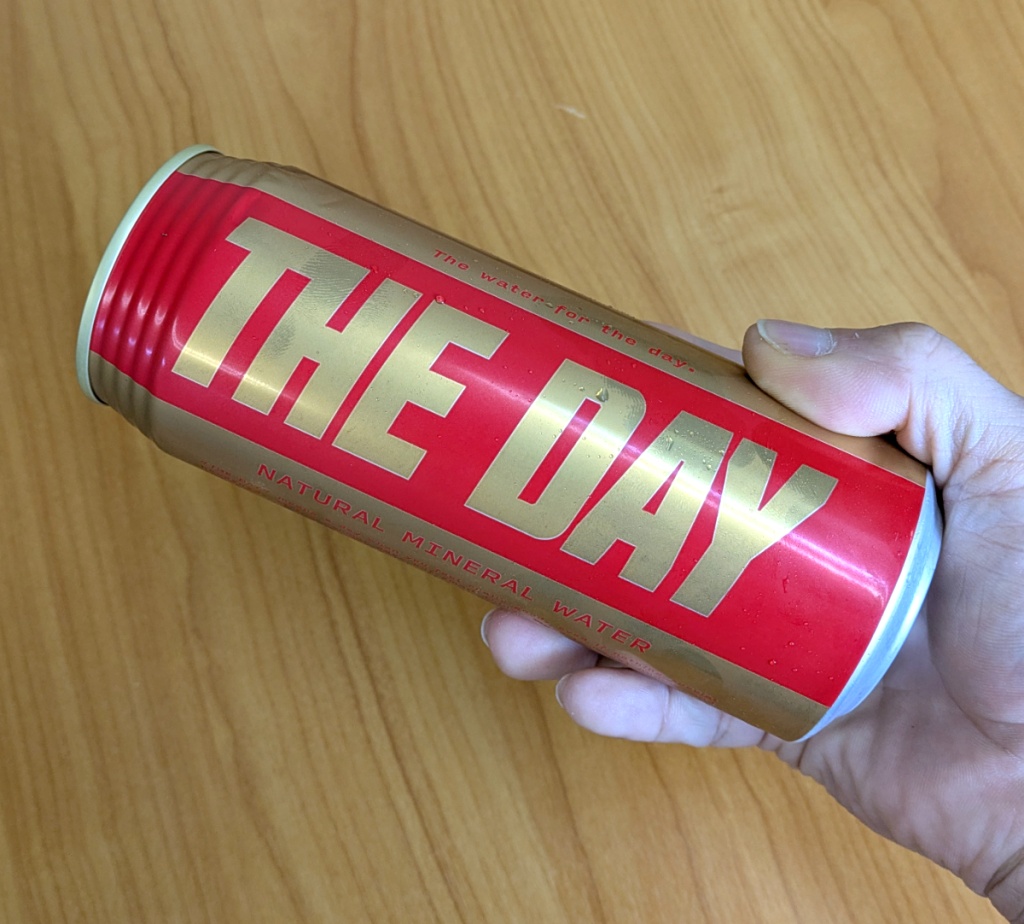
The Day is a brand of canned water from Lotte, who’s best known as a candy and snack food maker. They’re now in the water game too, though, and while the black-can The Day is carbonated, the red version isn’t.
▼ The Day went on sale through online shops and discount retailers in September, but just made its convenience store debut at 7-Eleven on May 5.
The visual design looks more like something you’d see for an energy drink or beer, and the contrast feels even more pronounced when you see The Day next to other brands of water, which tend to go with nature imagery and transparencies as their main visual motifs.
Lotte says they chose The Day’s name to symbolize its concept as “a water that lifts your spirts” and will give you a great day. There are no additional energy boosting chemicals or supplements added, though. The Day is simply canned natural mineral water, sourced from the town of Yaizu in Shizuoka Prefecture, according to the can’s text.
▼ And yes, we did accidentally drop this can on our way back from 7-Eleven, leading to the first time in our lives that we can say that we dented our water.
Once back in our taste-testing center, we cracked open the non-sparkling The Day for a comparison with Suntory’s Tennensui, one of Japan’s most popular bottled water brands.
Oddly enough, while the red-can The Day is supposed to be the non-sparkling variety, after we poured some into a glass we did still see some air bubbles. Not so many that we’d call it a full-on carbonated beverage, and this might just be a side-effect of the canning process, as opposed to an intentional design choice, but still, the water wasn’t completely still.
Taste-testing duties fell to our ace reporter Mr. Sato, and he says The Day’s mouthfeel is smooth, imparting a refreshing sensation as it glides down your throat. He reports no unpleasant metallic taste or aroma either, so while it feels unusual to be drinking water from a can, the flavor isn’t funny, and is perfectly satisfying.
But why has Lotte chosen to put The Day in cans, and not the plastic bottles that are the industry norm? In its press release, the company says it sees the day as “One answer to the needs of a new age of wellness,” and the choice of more easily recyclable aluminum seems to be an extension of that philosophy. The uniqueness factor probably doesn’t hurt either, as the packaging and design really do stand out against other brands of water. Lotte might also be hoping that the more substantial feel of a can helps position The Day as a premium product, and at a price of 158 yen (US$1) for a 480-mililiter (16.2-ounce) can, it is a little on the pricy side, as most other water brands are 140 yen or less for a 500-miiliter bottle.
There is one clear drawback to The Day being in a can, though, which is that once you pop the top, there’s no way to close it back up again. This isn’t an issue for coffee or alcoholic beverages, since they tend to be things where people drink the entire can shortly after opening it. Regardless of whether it started out hot or iced, coffee tends to taste significantly worse once it gets to room temperature, and beer and cocktails aren’t the kind of drinks most people go walking around with. A lot of people, though, buy a bottle of water while commuting to work or out on a walk, take a few sips, then put the cap back on so they can toss the bottle in their bag and have some more when they feel thirsty again a little later on.
By nature of being in a can, The Day doesn’t lend itself to that “I’ll have a little now, and then the rest later on” style of consumption, making it a much less convenient choice than its competitors. On the other hand, being locked into drinking the whole can once you’ve opened it does promote taking the time to mindfully hydrate, and with Japan’s cruelly hot kokushobi-level summer weather on the way, maybe that’s not such a bad thing.
We’re not sure if we can say greed is good, but it does look delicious.
Japanese convenience stores are not exactly the sort of places that inspire one to a philosophy of stoic minimalism. Each and every shelf and cooler case is packed with tempting treats, and while they may not necessarily be things we need to eat, they’re definitely things we want to, and the ease of access from Japan’s dense network of such shops makes them little open-24-hours palaces to quick gratification.
7-Eleven Japa
We’re not sure if we can say greed is good, but it does look delicious.
Japanese convenience stores are not exactly the sort of places that inspire one to a philosophy of stoic minimalism. Each and every shelf and cooler case is packed with tempting treats, and while they may not necessarily be things we need to eat, they’re definitely things we want to, and the ease of access from Japan’s dense network of such shops makes them little open-24-hours palaces to quick gratification.
7-Eleven Japan has been knowingly leaning into this with its Greedy Sandwich (or Yokubari Sandwich, it’s called in Japanese) series of decadently delicious sandwiches. The line started off with savory heavy-hitters like mincemeat cutlet and macaroni and salami sandwiches, but it’s recently expanded into desserts, which brings us to 7-Eleven’s newest offering: a sandwich of chocolate chips and whipped cream.
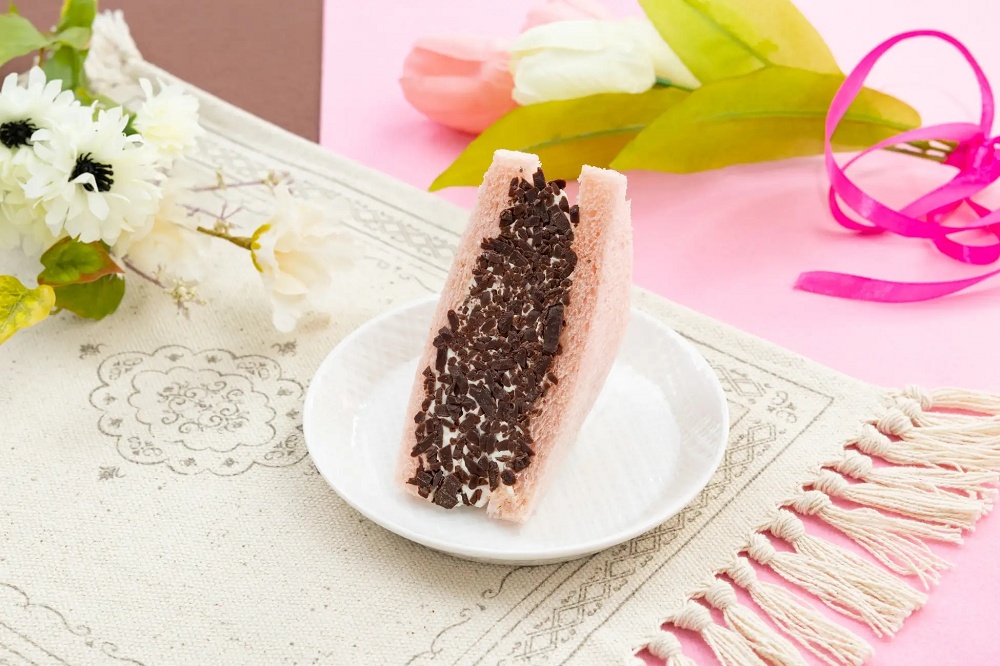
Actually, the official name of the Chocolate Chip and Whipped Cream Greedy Sandwich still doesn’t cover all of its indulgent wonders. Because even after putting a thick layer of whipped cream and chocolate chips between the sandwich’s slices of bread, 7-Eleven apparently took a look at it and thought “Yeah, but is there a way to give it even more chocolate?”, and then realized that they could by putting chocolate shavings all over the outward-facing surface of the cream.
Dessert members of the Yokubari Sandwich series also use special pink bread, like we saw in our recent taste test of 7-Eleven’s Chocolate Sprinkles and Whipped Cream sandwich. We’re going to have to wait a little longer before we can see how the Chocolate Chip and Whipped Cream sandwich compares, but we’re eager to find out after it goes on sale May 20 for 198 yen (US$1.30).
Getting more convenience store food for our yen is always a fun time, but this campaign is bordering on ridiculous.
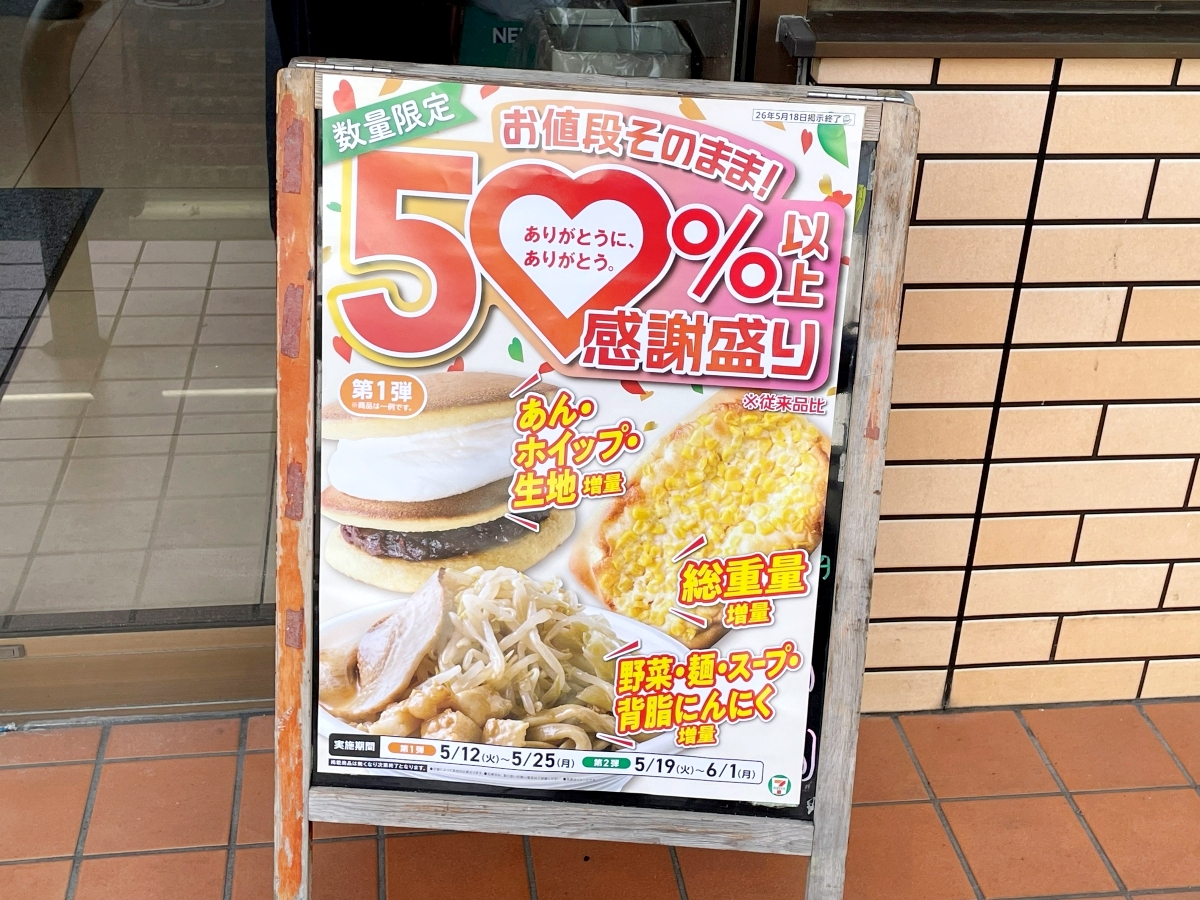
On 12 May, 7-Eleven Japan kicked off its its “Founding Anniversary Sale” by giving us over 50 percent more of some of our favourite products in the first phase of its so-called “Thank You Extra Large” series.
▼ We immediately visited our nearby 7-Eleven and managed to get our hands on four of the upsized products.
The products we procured were:
Corn & Mayonnaise (170.64 yen
Getting more convenience store food for our yen is always a fun time, but this campaign is bordering on ridiculous.
On 12 May, 7-Eleven Japan kicked off its its “Founding Anniversary Sale” by giving us over 50 percent more of some of our favourite products in the first phase of its so-called “Thank You Extra Large” series.
▼ We immediately visited our nearby 7-Eleven and managed to get our hands on four of the upsized products.
There are actually six products in the range, but despite visiting several stores to purchase the complete set, we were unable to find the following two items:
Flame-Grilled Pork Fried Rice (496.80 yen)
Fluffy Dorayaki with Red Bean Paste & Whipped Cream (213.84 yen)
This was probably a blessing in disguise, as the size of the four we had already looked like a lot of food. The ramen, in particular, produced under the supervision of award-wining Chiba-based ramen restaurant Chuka Soba Tomita., looked especially ginormous.
We decided to test this hefty beast first, popping it on the scales to reveal its true weight, which turned out to be…
▼… an astonishing 1,084 grams (2.4 pounds)!
As the container weighs about 23 grams, what we have here is more than a kilo of food, which is a great deal given that the price remains unchanged despite the 50-percent upsize. Although the pork fat is highlighted as an increased ingredient, it’s also said to have more vegetables, noodles, soup, and garlic, so we were curious to know how these extra ingredients would affect the taste.
▼ We popped it into the microwave, for 10 minutes at 500 watts, which is quite a long time for microwaveable food.
As it was heating, we felt slightly intimidated by the intense garlic smell that filled the room, and when we opened the lid we couldn’t quite believe the amount of food that lay before us.
The ingredients were so huge they made the container look tiny, and we began to wonder how we could eat our noodles without them spilling out everywhere.
Carefully lifting the char siu, we could see a huge pile of bean sprouts and cabbage beneath it, with the rest of the meal consisting of garlic, noodles, and pork fat.
With big noodle meals like this, locals make use of a special move called “tenchi gaeshi“, which literally translates as “heaven-and-earth flip“. This involves lifting the noodles from the bottom of the bowl and “flipping” them over the vegetables on top, to prevent them from getting soggy and to mix the broth, noodles, fat, sauce, and vegetables more evenly.
▼ Performing the “tenchi-gaeshi” mixing maneuver requires extra skill with this huge meal.
After carefully flipping heaven and earth, we were even more impressed at how much food was in the bowl, and when we took a sip of the broth, we were hit by the intensely powerful flavour of garlic and pork fat, which was absolutely delicious.
This was a high-quality meal, and the noodles were equally fantastic, providing just the right amount of chewiness to help round out the bold flavours.
The sheer volume was truly unbelievable, and nothing like what you’d normally see at a convenience store. It was so filling that by the end of the meal, we didn’t have any belly room for the other items we’d picked up.
▼ The vegetable sticks, with rice malt, miso and mayonnaise dip, would’ve been a nice way to cut through all the fat, but we just couldn’t fit them in.
The Egg Salad sandwich, or “THE Tamago” (“THE Egg”) as it’s called in Japanese, now contains three cut sandwiches instead of two, making it a great deal.
▼ And finally, the Corn & Mayonnaise bread has also been upsized, so it’s now almost twice as large as a smartphone.
The first phase of the campaign is scheduled to run from 12 May to 25 May, with the second phase bringing us a new line of upsized items from 19 May to 1 June. After receiving flack from customers who claimed that some convenience stores have been skimping on their offerings recently, there’s certainly no skimping with these campaign products, so hop in and try them while you can!

 Login
Login