
Normal view

  • ✇SoraNews24 Japan
  • Japanese convenience store challenge is only for those with extreme tastes Oona McGee
    Super Happy! Challenge gives us two unforgettable products that deserve a place in convenience store history. If you’re hungry and in the mood to try convenience store food, Lawson is the place to go right now as the chain is currently upsizing some of its most popular products for free. ▼ Popular items in the “Super Happy! Challenge” lineup include oversized versions of onigiri, sandwiches, and the Premium Roll Cake. In amongst the offerings are two surprises we weren’t expecting, and rather
     

Japanese convenience store challenge is only for those with extreme tastes

5 June 2026 at 03:00

Super Happy! Challenge gives us two unforgettable products that deserve a place in convenience store history.

If you’re hungry and in the mood to try convenience store food, Lawson is the place to go right now as the chain is currently upsizing some of its most popular products for free.

▼ Popular items in the “Super Happy! Challenge” lineup include oversized versions of onigiri, sandwiches, and the Premium Roll Cake.

In amongst the offerings are two surprises we weren’t expecting, and rather than being happy to see them, we had a hunch they might be too extreme for anyone’s liking.

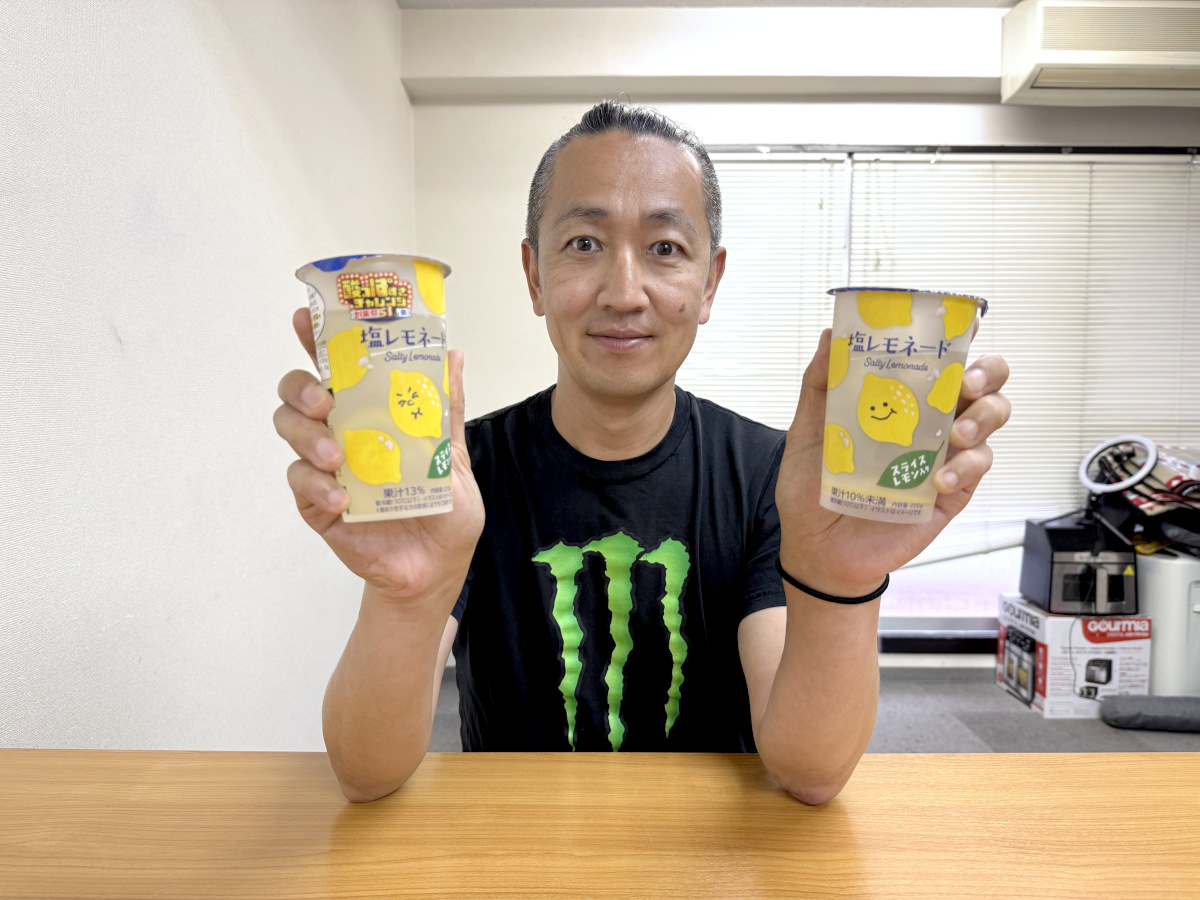
▼ The “Too Sour” Salted Lemonade (228 yen [US$1.43]) and the “Too Sweet” Drinkable Chilled Zenzai (298 yen).

According to Lawson’s official website, the Too Sour version of the chain’s Salted Lemonade contains twice as much lemon juice as the previous version, while the Too Sweet version of the Drinkable Chilled Zenzai is made with twice as much red bean paste as the original product.

▼ Zenzai is is a traditional Japanese sweet made from sweetened red beans and usually served with mochi (rice cakes).

Reading the descriptions alone, it’s hard to tell just how extreme these drinks really are, so our reporter P.K. Sanjun bought both the regular and upsized versions of each for a taste test back in the office.

▼ Starting with the regular Salted Lemonade, it wasn’t especially sour – in fact, it tasted more like a lightly salted lemonade than anything intensely citrusy.

Then he took a sip of the Too Sour Salted Lemonade

▼ Waaaaa!

P.K. could hardly get his words out, but when he finally unpuckered his lips he managed to say, “Wow. This stuff is unbelievable.

It wasn’t just that it was more sour – the entire flavor profile felt completely different. To try and describe it, P.K. says it’s like tasting the difference between water and tea and then tasting the difference between water and cola, which is where the Too Sour Lemonade sits. The taste, texture and intensity is on a whole other scale compared to the regular version.

It was so intense he couldn’t even finish the drink, so he moved on to the regular Drinkable Chilled Zenzai.

It had a pleasantly balanced sweetness that was fairly refined and P.K. had absolutely no complaints about the flavour. Then he took a sip of the Too Sweet Drinkable Chilled Zenzai

▼ Tooooooo sweeeeeet!!!!!!!!

The sweetness was absolutely relentless. It was the kind of sweetness that burns its way down your throat in an aggressive manner and it was so strong that P.K. dare not take another sip.

After trying the drinks, P.K. was surprised to find that in both cases, he actually preferred the original versions. They felt more balanced and, frankly, more enjoyable to drink.

P.K. gives both of these two thumbs down.

Although the drinks themselves were too extreme for P.K.’s palate, he was impressed by Lawson’s marketing. In choosing to go overboard with the sourness and sweetness levels, this campaign serves to highlight just how good the original versions are. It also proves that you really can have too much of a good thing, and so sometimes, just sometimes, upsizing your favourite products or flavours may not be all it’s cracked up to be.

Everyone’s palate is different, though, so if you’d like to test yours against the extreme ends of the spectrum, the drinks will be on shelves for a limited four-week period from 2 June.

Photos ©SoraNews24
● Want to hear about SoraNews24’s latest articles as soon as they’re published? Follow us on Facebook and Twitter!
  • ✇SoraNews24 Japan
  • Japanese convenience store Lawson launches new “mini supermarket” chain, L Minimart Casey Baseel
    Lawson opens its first “mini supermarket” in Tokyo. Lawson is one of Japan’s big-three convenience stores (the others being 7-Eleven and Family Mart), but Lawson itself has multiple sub-brands. For example, there’s also the budget-minded Lawson Store 100, with most items priced at 100 yen, and on May 28, the Lawson family expanded once again with the opening of L Minimart in Tokyo’s Kodaira district. L Minimart says its mission is to be a “mini supermarket,” which sounds like a bit of a contra
     

Japanese convenience store Lawson launches new “mini supermarket” chain, L Minimart

28 May 2026 at 15:28

Lawson opens its first “mini supermarket” in Tokyo.

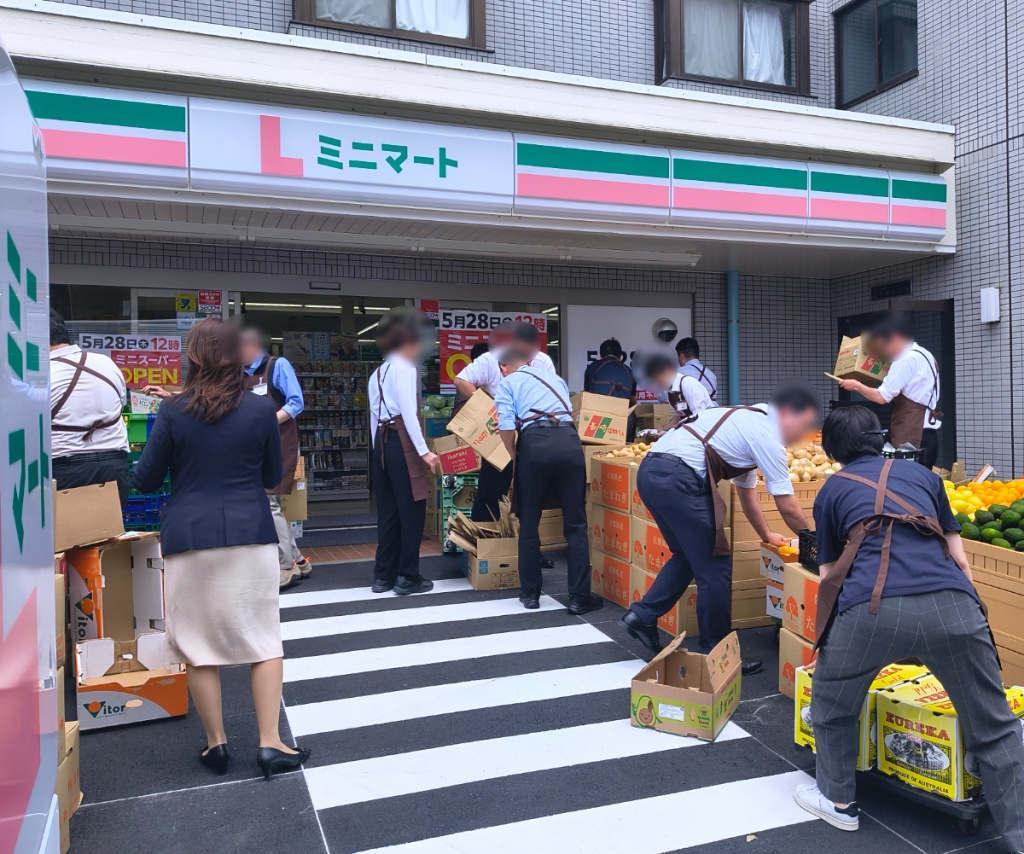
Lawson is one of Japan’s big-three convenience stores (the others being 7-Eleven and Family Mart), but Lawson itself has multiple sub-brands. For example, there’s also the budget-minded Lawson Store 100, with most items priced at 100 yen, and on May 28, the Lawson family expanded once again with the opening of L Minimart in Tokyo’s Kodaira district.

L Minimart says its mission is to be a “mini supermarket,” which sounds like a bit of a contradiction, doesn’t it? But Lawson believes there’s room for a new type of store in between convenience stores and supermarkets, with more fresh produce and ingredients than a standard Lawson would carry, but still offering more convenience and simplicity than a full-scale grocery store.

This first branch of the new L Minimart chain is about a 10-minute walk from the South Exit of Kodaira Station, and on opening day was scheduled to start welcoming shopper at noon. We rolled up at 11:15 to take a peek, and saw the staff busily taking care of their final preparations.

After killing some time wandering around the neighborhood, we came back at around 11:45, and were startled to see that in the 30 minutes we’d been gone, a line of some 70 people had formed!

We took a spot at the end, and as the time got closer and closer to noon, more and more people started showing up. By the time the doors opened, we estimate there were about 200 people waiting to get in.

But once they started letting people in, the line moved briskly, and it only took about 10 minutes for us to get to the front of it. Outside of the store were produce stands stocked with melons and kiwis…

…and there were more fruits and vegetables inside.

Looking around, we spotted lots of attention-grabbing yellow signs trumpeting especially low-priced items. Some of these were special discounts as part of the store’s opening sale (like 98-yen [US$0.65] bunches of bananas), and others were touted as everyday low prices, like tofu for as little as 49 yen a pack.

The meat section was far more expansive than anything you’d find at a regular convenience store, but L Minimart hasn’t forgotten its roots, as it has a very large selection of bento boxed lunches, sandwiches, salads, ready-to-eat-noodles, and onigiri (rice balls) as well.

The bento come in two price tiers, 499 or 399 yen, but with one exception. L Minimart has a Karaage Nori Ben (fried chicken and seaweed bento) that costs just 298 yen (US$1.95). At that price, it was too tempting to pass up, so we grabbed one for taste-testing, along with a few other items.

▼ The onigiri are also incredibly affordable, with seaweed-wrapped ones for 129 yen and non-seaweed ones for even less. It’s been years since major convenience store chains had prices this low.

▼ Five-kilogram (11-pound) bags of rice for 2,680 yen is also a glorious throwback to an era of more affordable groceries.

Don’t worry, L Minimart has sweets too. In addition to packaged cookies and cakes…

…they’ve also got a self-serve section of traditional Japanese desserts, like daifuku mochi dumplings, for just 100 yen each!

We also noticed that L Minimart sells packs of frozen meat. These aren’t always so easy to find in Japan, even at supermarkets, and look like they’d be very handy to keep on hand for meal prep.

As we mentioned above, we bought one of those ultra-affordable 298-yen karaage nori bento, and it turned out to also include a croquette, isobeage (tempura seaweed), and a bit of kimpira gobo (diced carrot and burdock root).

They all tasted good, but we have to admit that the portions were a little small. We didn’t feel ripped off, but in terms of how much food you get, this feels more like a fair price than a full-on bargain.

Of course, with the bento only costing 298 yen, there’s room to add something on the side, like an extra piece of the tasty karaage for 168-yen…

…or a 96-yen shio musubi (salted rice ball), made with delicious Koshiibuku rice from Niigata Prefecture, famed for having some of Japan’s best rice-growing farmland.

L Minimart takes another page from the supermarket playbook with rotating discounts for certain staples, and a calendar posted in the store showed the upcoming blocks of 10-percent-off days for eggs, natto, kimchi, and sandwich bread.

We came away happy from our shopping experience, and the huge crowd that L Minimart attracted on its first day shows there’s potential for a class of store between convenience stores and supermarkets (even L Minimart’s hours sort of split the difference between the two, as it’s open from 7 a.m. to 11 p.m. The Kodaira neighborhood is out in the suburbs of west Tokyo, but as major Japanese cities grow increasingly densely populated, we just might start seeing more stores like this that don’t need a large physical footprint in order to offer a full range of both groceries and ready-to-eat foods.

Shop information
L Minimart (Kodaira Nakamachi branch) / Lミニマート(小平仲町店)
Address: Tokyo-to, Kodaira-shi, Nakamichi 251 Excellence
東京都小平市仲町251エクセレンス
Open 7 a.m.-11 p.m.

Photos ©SoraNews24
● Want to hear about SoraNews24’s latest articles as soon as they’re published? Follow us on Facebook and Twitter!

  • ✇SoraNews24 Japan
  • Lawson opens a new mini supermarket, and the lucky bags can essentially stock your kitchen Elliot Hale
    You can haul back thousands of yen worth of ramen, rice, and snacks for a fraction of the price. Expanding its reach with additional sub-brands, one of Japan’s big-three convenience stores, Lawson, opened the doors to L Minimart, its first “mini supermarket”, on May 28 in Kodaira, Tokyo. Excited to learn more about what this new brand will entail, our Japanese-language reporter Mr. Sato joined the crowd of the roughly 200 people who wanted to be among the first to step through the store’s door
     

Lawson opens a new mini supermarket, and the lucky bags can essentially stock your kitchen

4 June 2026 at 17:30

You can haul back thousands of yen worth of ramen, rice, and snacks for a fraction of the price.

Expanding its reach with additional sub-brands, one of Japan’s big-three convenience stores, Lawson, opened the doors to L Minimart, its first “mini supermarket”, on May 28 in Kodaira, Tokyo. Excited to learn more about what this new brand will entail, our Japanese-language reporter Mr. Sato joined the crowd of the roughly 200 people who wanted to be among the first to step through the store’s doors on the day of its opening.

Mr. Sato arrived early enough that he was able to line up, peruse the store, and complete his shopping without any significant wait time or issues, but by the time he was wrapping up his visit, other prospective customers were being told that they would likely have a one-hour wait to enter.

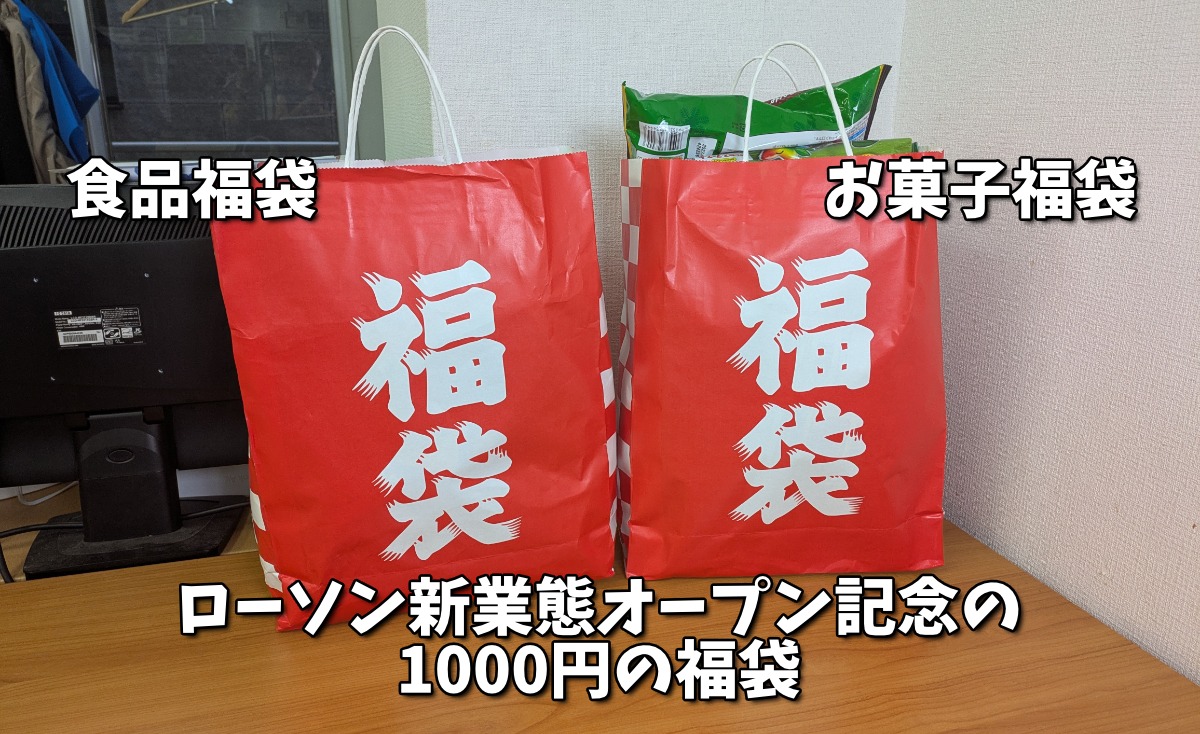
As Mr. Sato walked back from the store to the nearest train station (Kodaira Station), he couldn’t help but look down at some of his recent purchases. In commemoration of the opening, he discovered the store was selling two types of lucky bags, also known as fukubukuro: one full of food and the other stuffed with snacks, and both priced at 1,080 yen (US$6.76) per bag.

Longtime readers may be familiar with our annual report on the New Year’s fukubukuro that go on sale at all manner of stores in Japan, but they’re not an uncommon sight to see throughout the year too, particularly if the store is involved in some sort of celebration or campaign.

A lot of times when good deals like these crop up, the amount of bags that each customer can purchase is limited, so Mr. Sato was pleasantly surprised to find out that there were no official limits in place. However, he soon realized one of the unwritten limits: your arm strength.

▼ Mr. Sato only picked up one of each.

While the snack bag wasn’t so bad, the food one slowly began to feel like an iron block hanging at the end of his arm, leaving him to adjust his grip regularly, and making him pretty tired after the whole ordeal was over. He couldn’t help but wonder what it might be like for customers who are more advanced in age, and how they might struggle to haul their lucky bag back to their houses.

Arriving home, he quickly stepped on the scales for a base reading, before picking up the food lucky bag, filled with curiosity. How heavy was it exactly?

It turned out that the bag weighed an impressive 3.3 kilograms (7.3 pounds), so it was no wonder he was feeling a little drained.

Spreading out the contents of the bag, he discovered that there were a total of 15 items:

1.  Ciscorn Frost Cereal – 421 yen
2. Hakubaku Fragrant Barley Tea (52 bags) – 270 yen

3. Acecook Super Cup Sauce Yakisoba – 259 yen
4. Acecook Seaweed Ramen – 254 yen
5. Kyusyu Sanpodo Kurumeshi Ramen – 254 yen
6. Myojo Hyobanya Salt Yakisoba – 159 yen
7. Kyusyu Sanpodo Nagasaki Champon – 254 yen

8. Hachi Shokuhin Tappuri Carbonara – 226 yen
9. Hachi Shokuhin Tappuri Meat Sauce – 226 yen
10. Ajinomoto Marudorigara Soup – 400 yen
11. Mama Hayayude FineFast Four Minutes – 320 yen
12. House Shokuhin Curry-ya Curry (Medium Spice) – 130 yen

13. Sato no Gohan New Standard Microwaveable Rice – 307 yen
14. Sato no Gohan Microwaveable Rice – 200 yen
15. Ajinomoto Pure Select Rich and Tasty 65 Percent Calorie Cut Mayonnaise – 280 yen

Just a single fukubukuro contained food worth an impressive 3,960 yen, making for a saving of 2,880 yen.

The snack bag also contained 15 items:

1. Kameda Seika Kotsubukko Bitter Caramel Rice Snack – 216 yen
2. Lotte Pie no Mi Share Pack – 300 yen
3. Ginbis Shimi Choco Corn Matcha – 328 yen

4. Yamazaki Biscuit Chip Star Lightly Salted – 100 yen
5. Morinaga Seika Pote-long Salt Flavor – 110 yen
6. Pringles Consomme and Onion – 160 yen

7. Iwatsuka Seika Black Soybean Rice Crackers – 260 yen
8. Hizatsuki Shrimp Rice Crackers – 200 yen
9. Yamayoshi Seika Wasabeef Potato Chips – 160 yen
10. Nissin Coconut Sable Cookies – 162 yen
11. Kasugai Xylicrystal Milk-Mint Candies – 200 yen
12. Fujiya Ginza Kamadashi Cheesecake – 300 yen

13. Tohato Poteko Tasty Salt Flavor Potato Ring Snack– 173 yen
14. Koikeya Sour Mucho Chips Refreshing Plum Flavor – 140 yen
15. Oyatsu Company Baby Star Giant Ramen Scorched Soy Sauce Scented Festival Stall’s Grilled Corn Flavor – 152 yen

Totaling 2,961 yen, the whopping grand total of the food’s worth is 6,921 yen, which meant a saving of 4,761 yen.

Having paid just 2,160 yen for the two bags, the results were well worth the money spent.

While many people have likely missed out on the opportunity to go and purchase one of these lucky bags, it appears that L Minimart has plans to open more stores in the future, with one coming to Itabashi, Tokyo, on June 12, and another to Hiratsuka, Kanagawa, on June 26, so when one happens to open up near you, be sure to grab these lucky bags.

Store Information
L Minimart Kodaira Nakamichi-ten / Lミニマート 小平仲町店
Address: Tokyo-to, Kodaira-shi, Nakamachi 251, Excellence
東京都小平市仲町251エクセレンス
Open: 7:00 a.m.–11:00 p.m.

Related: L Minimart
Photos ©SoraNews24
● Want to hear about SoraNews24’s latest articles as soon as they’re published? Follow us on Facebook and Twitter!

  • ✇Colossal
  • Ornamental Carpets Release Wild Animals in Debbie Lawson’s Provocative Sculptures Kate Mothes
    Debbie Lawson is known for her large-scale sculptures of life-size animals cloaked in ornamental carpets. Starting with an armature of wire mesh, masking tape, and Jesmonite resin, she meticulously cuts and tucks Persian carpet around every limb, building a surface that looks unbroken. As if the animals have materialized from within the textiles and are temporarily frozen in a stage of metamorphosis, we encounter them on the verge of making a move. In the artist’s solo exhibition, In a Cow
     

Ornamental Carpets Release Wild Animals in Debbie Lawson’s Provocative Sculptures

13 May 2026 at 13:57
Ornamental Carpets Release Wild Animals in Debbie Lawson’s Provocative Sculptures

Debbie Lawson is known for her large-scale sculptures of life-size animals cloaked in ornamental carpets. Starting with an armature of wire mesh, masking tape, and Jesmonite resin, she meticulously cuts and tucks Persian carpet around every limb, building a surface that looks unbroken. As if the animals have materialized from within the textiles and are temporarily frozen in a stage of metamorphosis, we encounter them on the verge of making a move.

In the artist’s solo exhibition, In a Cowslip’s Bell I Lie at Sargent’s Daughters, she provokes “questions about the relationships between decoration and nature, craft and camouflage,” the gallery says. The title is a line from Shakespeare’s The Tempest, when the spirit Ariel sings about freedom and the carefree, even charmed connection to nature following his release from forced servitude to the sorcerer Prospero. Several of the works seen here, including “Wild Dog Sundown,” “Red Eagle,” and “Black Cougar,” are included in the show.

a detail of a large wall sculpture by Debbie Lawson made from ornamental woven carpet, with the silhouette of a dog lounging on the top of a small table in the center of it
“Wild Dog Sundown” (2025), carpet and mixed media, 92 1/2 x 61 3/4 x 24 3/4 inches

Lawson draws on the lineage of nature motifs in art, especially wildlife. She alludes to “the natural and animal forms hidden within decorative forms and patterns, from the frescoes of Pompeii to French Rococo moldings to Venetian stone carvings—the designs of William Morris and even the New York Public Library’s lions,” says a statement. Think clawfoot tubs, heraldic animals carved into hearths and other decorative interior elements, and the more modern form-meets-function works of Les Lalannes, which often incorporate birds and mammals into designs for benches and lamps.

The dialogue between art and decor parallels inherent tensions between interiors and the outside world—refinement and domesticity versus nature or indeed, the wilderness. Lawson also thinks about the gendered history of home life and craft, which has long been been associated with “women’s work.” This is deeply personal for the artist, as textile- and art-making go back generations in both her family and her hometown of Dundee, Scotland. She says, “I’m also thinking about women, including some of my near ancestors, so often confined by the constraints of the patriarchal society in which they/we lived, trapped in the daily grind and unable to pursue their own considerable creative talents or fully inhabit the world.”

Lawson’s camouflaged animals manifest from the backgrounds of carpets, emphasizing emergence itself. As these wild animals—leopards, cougars, bears, and more—are more clearly defined, they don’t break free from their patterns. Rather, they are indelibly characterized by the textile and can be clearly recognized for their unique individual traits. It’s not unlike how craft, especially textiles that were historically relegated to domestic settings and considered at least a notch or two below “high art,” has intently disrupted the art canon in recent decades.

In a Cowslip’s Bell I Lie continues through May 30 in New York. See more on Lawson’s Instagram.

a large wall sculpture by Debbie Lawson made from ornamental woven carpet, with the silhouette of an eagle flying out of the center
“Red Eagle” (2026), carpet, steel, and mixed media, 116 1/8 x 78 3/4 x 21 5/8 inches
a detail of a large wall sculpture by Debbie Lawson made from ornamental woven carpet, with a silhouette of a leopard walking in the center of it
“Arabian Leopard” (2024), carpet and mixed media, 63 x 90 1/2 x 13 3/4 inches
a sculpture by Debbie Lawson of a cougar covered in ornamental woven carpet
“Black Cougar” (2025), carpet and mixed media, 70 7/8 x 29 1/8 x 13 3/8 inches
a sculpture by Debbie Lawson of a monkey seated on a stool, covered in ornamental woven carpet
“Prospero” (2026), carpet and mixed media, 52 x 19 3/4 x 18 1/2 inches
a sculpture by Debbie Lawson of an alligator, coated in the pattern of an ornamental carpet, merging with the carpet itself
“Alligator” (2025), carpet and mixed media, 30 x 43 x 16 inches
a detail of a floor sculpture by Debbie Lawson of an alligator coated in the pattern of an ornamental carpet
Detail of “Alligator”
a detail of a large wall sculpture by Debbie Lawson made from ornamental woven carpet, with a silhouette of small elephant standing on the top of a small table in the center of it
“Red Cougar” (2025), carpet, table, and mixed media, 90 1/2 x 63 x 31 7/8 inches
a sculpture by Debbie Lawson of a leopard covered in ornamental woven carpet
“Gold Cougar” (2026), carpet and mixed media, 70 7/8 x 28 3/4 x 9 1/2 inches

Do stories and artists like this matter to you? Become a Colossal Member today and support independent arts publishing for as little as $7 per month. The article Ornamental Carpets Release Wild Animals in Debbie Lawson’s Provocative Sculptures appeared first on Colossal.

❌
Subscriptions