
Normal view

  • ✇Malay Mail - All
  • Google turns search into an AI concierge — and closes the door on outside websites
    MOUNTAIN VIEW, May 20 — Google on Tuesday showed off new plans to turn its famous search bar into an AI assistant that can book restaurants, track news and contact businesses – just by asking a question.After three years of struggling to keep up with ChatGPT, Google is racing to roll out artificial intelligence tools that build on its grip over online search.The company’s Gemini AI app now has 900 million monthly users, twice as many as last year. Its AI-powered
     

Google turns search into an AI concierge — and closes the door on outside websites

20 May 2026 at 01:19

Malay Mail

MOUNTAIN VIEW, May 20 — Google on Tuesday showed off new plans to turn its famous search bar into an AI assistant that can book restaurants, track news and contact businesses – just by asking a question.

After three years of struggling to keep up with ChatGPT, Google is racing to roll out artificial intelligence tools that build on its grip over online search.

The company’s Gemini AI app now has 900 million monthly users, twice as many as last year. Its AI-powered search feature, AI Mode, is also taking off, with a claimed one billion monthly users worldwide.

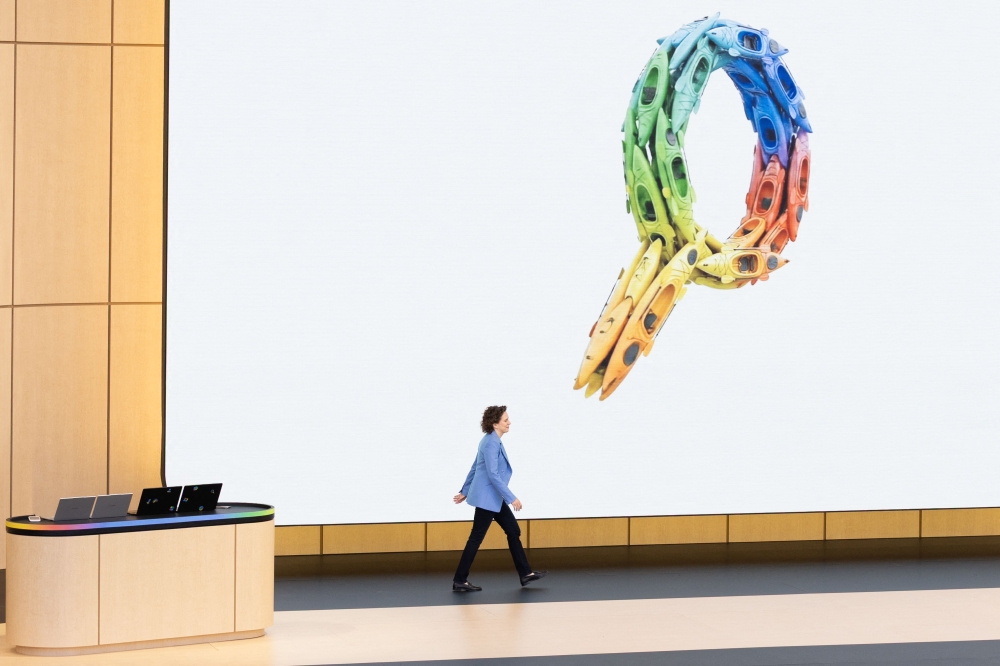
On Tuesday, at Google’s annual developer conference near its California headquarters in Mountain View, CEO Sundar Pichai unveiled the next step: Gemini Spark, a personal AI agent available starting next week for top-tier subscribers in the United States.

Google’s search engine will also get a new upgrade for US users this summer: always-on AI agents that can alert you to news, book activities, and manage shopping lists.

The changes to Google search, which the company said were its biggest in 25 years, will also see a widened search box to make room for more complicated queries people use for chatbots.

“I love how search has become less about individual queries and feels more like an ongoing conversation, giving users deeper insights and connecting you with the vastness of the web,” Pichai told journalists.

Many of the features ride a wave of “agentic” AI that has gripped Silicon Valley since Austrian developer Peter Steinberger in late 2025 launched OpenClaw – a platform that lets AI book flights, manage emails and build apps from chat prompts.

OpenAI hired OpenClaw’s creator earlier this year and the tech giants are now racing to bring agentic features to mainstream users, despite security concerns and the soaring computing costs that come with them.

To stay ahead of rivals Anthropic and OpenAI, Google on Tuesday also launched the latest version of its AI model, Gemini 3.5 Flash.

Google says it runs four times faster than top competing models – including Anthropic’s Claude Opus and OpenAI’s ChatGPT 5.5 – while performing at a similar level.

The model is now the default across the Gemini app, AI Mode search and other Google services. A more powerful version, Gemini 3.5 Pro, is expected next month.

Google also announced it was teaming up with OpenAI on one front: to help stop the spread of fake or manipulated content, the ChatGPT maker has adopted SynthID, Google’s tool for invisibly watermarking AI-generated images.

End of clicks?

Google’s growing AI features could spell trouble for news websites and online publishers.

By keeping users inside its own apps and tools, Google makes it less likely that people will click through to outside websites – cutting into their traffic and ad revenue.

Google searches already end 58 per cent of the time without users clicking on any website, according to a lawsuit filed against the company by Penske Media, which publishes the Hollywood Reporter and Rolling Stone.

In Europe, a major publishers’ group has complained to the European Commission, saying Google uses news content to fuel its AI summaries without paying for it.

France is the only major European country where AI Mode is still unavailable, and remains at the centre of a bitter fight between Google and French publishers.

However, Google’s legal troubles are not limited to Europe.

A US court found it guilty of illegally monopolising online search in 2024, and the company could still be forced to break up parts of its business.

The Justice Department in February appealed a ruling that had stopped short of making Google sell its Chrome browser.

A hearing is not expected until the end of the year at the earliest, or possibly 2027. — AFP


  • ✇Hong Kong Free Press HKFP
  • China’s DeepSeek releases long-awaited new AI model AFP
    Chinese startup DeepSeek released a new artificial intelligence model Friday, more than a year after it stunned the world with a low-cost reasoning model that matched the capabilities of US rivals. Chinese startup DeepSeek’s AI assistant. File photo: Kelly Ho/HKFP. DeepSeek-V4 “features an ultra-long context of one million words”, the company said in a statement on social media platform WeChat, hailing it as “cost-effective” in a separate announcement on X. The announcement came as Me
     

China’s DeepSeek releases long-awaited new AI model

By: AFP
24 April 2026 at 05:27
DeepSeek featured image

Chinese startup DeepSeek released a new artificial intelligence model Friday, more than a year after it stunned the world with a low-cost reasoning model that matched the capabilities of US rivals.

Chinese startup DeepSeek's AI assistant. File photo: Kelly Ho/HKFP.
Chinese startup DeepSeek’s AI assistant. File photo: Kelly Ho/HKFP.

DeepSeek-V4 “features an ultra-long context of one million words”, the company said in a statement on social media platform WeChat, hailing it as “cost-effective” in a separate announcement on X.

The announcement came as Meta said it planned to cut a tenth of its staff as it looks for productivity gains from the rest of the workforce while investing heavily in artificial intelligence. Reports said Microsoft was also looking to trim its ranks.

DeepSeek-V4’s context length, which determines how much input a model is able to absorb to help it complete tasks, “(achieves) leadership in both domestic and open-source fields across agent capabilities, world knowledge, and reasoning performance”.

A “preview version” of the open source model is now available, the company said.

DeepSeek-V4 is released as two versions, DeepSeek-V4-Pro and DeepSeek-V4-Flash, with the latter being “a more efficient and economical choice” because it has smaller parameters.

V4-Pro has 1.6 trillion parameters while the V4-Flash has 284 billion parameters, which refine models’ decision-making ability.

The model has also been “optimised” for popular AI Agent products such as Claude Code, OpenClaw, OpenCode and CodeBuddy, the statement said.

“In world knowledge benchmarks, DeepSeek-V4-Pro significantly leads other open-source models and is only slightly outperformed by the top-tier closed-source model, (Google’s) Gemini-Pro-3.1,” the statement added.

Hangzhou-based DeepSeek burst onto the scene in January last year with a generative AI chatbot, powered by its R1 reasoning model, that upended assumptions of US dominance in the strategic sector.

This so-called “DeepSeek shock” sparked a sell-off of AI-related shares and a reckoning on business strategy in what was also described as a “Sputnik moment” for the industry.

DeepSeek displayed on a laptop.
DeepSeek displayed on a laptop. Photo: Matheus Bertelli, via Pexels.

The chatbot performed at a similar level to ChatGPT and other top American offerings, but the company said it had taken significantly less computing power to develop.

However, its sudden popularity raised questions over data privacy and censorship, with the chatbot often refusing to answer questions on sensitive topics such as the 1989 Tiananmen crackdown.

At home, DeepSeek’s AI tools have been widely adopted by Chinese municipalities and healthcare institutions as well as the financial sector and other businesses.

This has been partly driven by DeepSeek’s decision to make its systems open source, with their inner workings public — in contrast to the proprietary models sold by OpenAI and other Western rivals.

“China-made large AI models spearheaded the development of the global open-source AI ecosystem,” Chinese Premier Li Qiang told an annual gathering of China’s top decision-makers last month.

The AI race has intensified the rivalry between China and the United States, and the White House on Thursday accused Chinese entities of a massive effort to steal artificial intelligence technology.

“The US has evidence that foreign entities, primarily in China, are running industrial-scale distillation campaigns to steal American AI,” science and technology chief Michael Kratsios said in a post on X.

“We will be taking action to protect American innovation.”

❌
Subscriptions