As LNG prices double amid the Hormuz blockade, Southeast Asia is ditching fossil fuel dependency for renewable energy — and building a regional grid to match.
As LNG prices double amid the Hormuz blockade, Southeast Asia is ditching fossil fuel dependency for renewable energy — and building a regional grid to match.
Wind turbines are a net positive for a sustainable society, but that doesn’t mean they don’t have an environmental impact. Apart from their material requirements, those giant, spinning blades can be lethal to unsuspecting winged animals like birds and bats. Although some reports dramatically overplay wind farms’ danger to flying species, there is no denying they can unintentionally kill anywhere from two-to-six birds and four-to-seven bats per megawatt every year. That may not seem like many fat
Wind turbines are a net positive for a sustainable society, but that doesn’t mean they don’t have an environmental impact. Apart from their material requirements, those giant, spinning blades can be lethal to unsuspecting winged animals like birds and bats. Although some reports dramatically overplay wind farms’ danger to flying species, there is no denying they can unintentionally kill anywhere from two-to-six birds and four-to-seven bats per megawatt every year. That may not seem like many fatalities, but every animal counts for an endangered species.
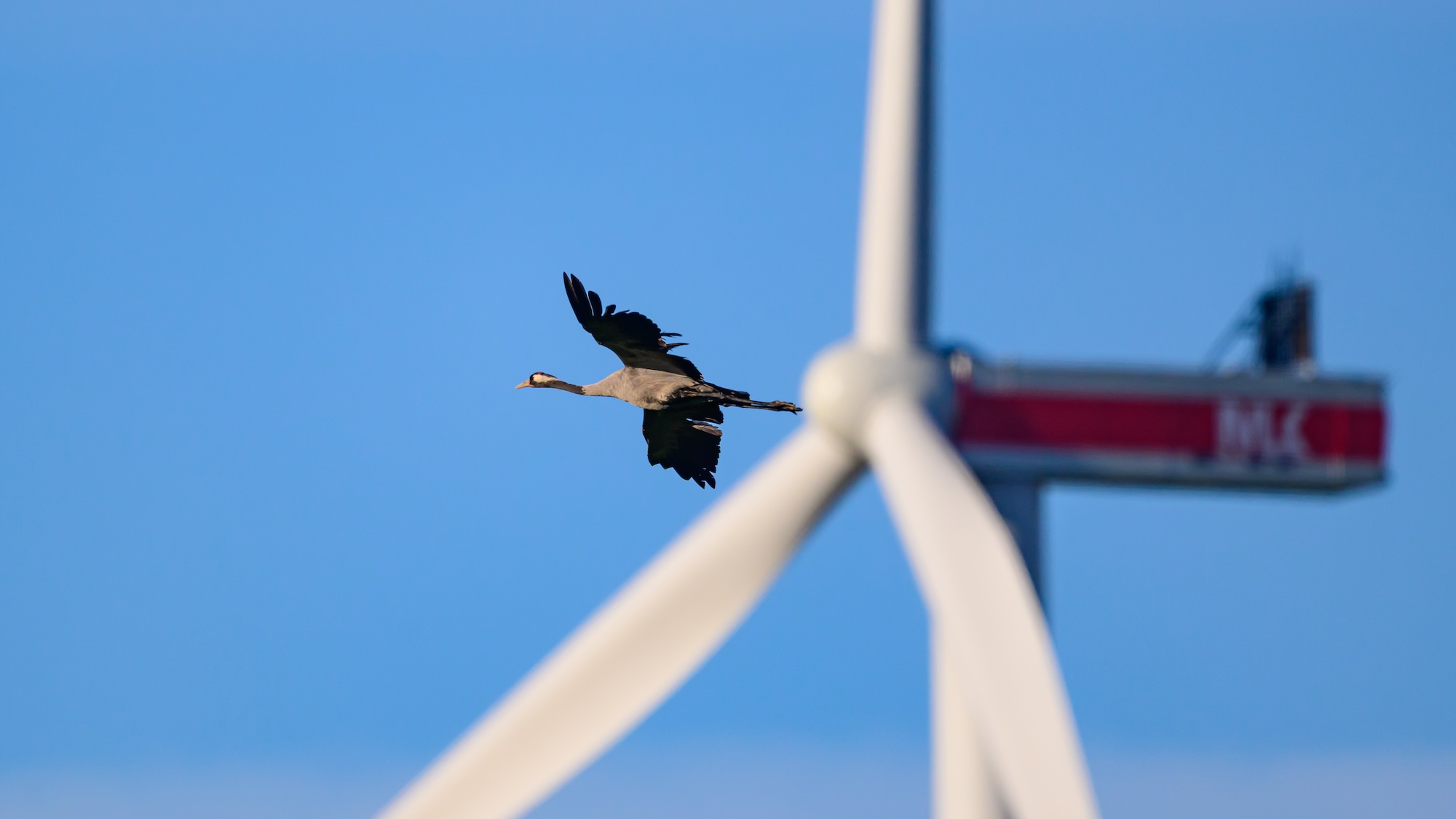
To lower these risks, engineers are devising new ways to make wind turbines more visible and avoidable. One potential solution may involve taking a cue from some of nature’s most dangerous creatures. According to a study published in the journal Behavioral Ecology, more bats and birds will steer clear of wind turbines when their blades are painted with colors similar to animals like venomous coral snakes and poison dart frogs.
A drone photograph of a wind turbine in southern Finland, digitally modified with a biologically inspired warning pattern under natural light conditions. Credit: Eric Lehtonen
“White blades, which are the most frequently used pattern around the world, turned out to be the worst option for birds,” Johanna Mappes, a University of Helsinki environmental scientist and study co-author, said in a statement. “This suggests that a relatively simple visual change could reduce bird mortality in connection with wind power.”
To test how birds respond to various turbine designs, Mappes and her colleagues placed test subjects in front of a video screen in a controlled laboratory environment. They then played clips of wind blades with multiple color palettes spinning at different speeds. These included turbines featuring classic white blades, one blade painted black, blades with red-and-white stripes, or blades with a newly designed, biomimetic red-black-yellow pattern.
“By using a touchscreen especially designed for birds, we can use games to explore their behavior and ecology by simulating real-world scenarios, without putting the birds at risk,” explained University of Exeter ecologist and study co-author George Hancock.
In nearly every trial, the birds were far more likely to approach white blades than any of the colored options. However, the test subjects were the most avoidant of the team’s novel, biomimetic striped blades.
“We’ve known for a long time that birds change how they respond to objects with warning colors, but to see such a large effect was remarkable,” Hancock added.
There is no way to completely prevent wind turbines from ever accidentally harming or killing animals. That said, the study’s authors believe a wider industry adoption of evolutionarily inspired color schemes could be an easy, cheap way to make the technology safer. They also suggest that similar approaches be developed for other human-made avian dangers like power lines and building windows.
“If the results are repeated in practical conditions in different countries and with different bird species, it could be a significant change for the entire wind power industry,” said Mappes.
Let’s face it, sunscreen is important to our health, but can really be a drag. Some feel greasy, they wear off after only two hours, and finding the right one can feel like a game of whack-a-mole. Certain ingredients can also pollute the planet’s critical coral reefs, so scientists around the world are looking to nature to create new formulas. Pollen could serve as an eco-friendly sunscreen solution, but there could be an even smaller source—bacteria. Escherichia coli, better known as E. coli, m
Let’s face it, sunscreen is important to our health, but can really be a drag. Some feel greasy, they wear off after only two hours, and finding the right one can feel like a game of whack-a-mole. Certain ingredients can also pollute the planet’s critical coral reefs, so scientists around the world are looking to nature to create new formulas. Pollen could serve as an eco-friendly sunscreen solution, but there could be an even smaller source—bacteria. Escherichia coli, better known as E. coli, may help create an ultra violet (UV) compound that can be used in sunscreens. The findings are detailed in a study published today in the journal Trends in Biotechnology.
To survive relentless sunlight in the open ocean, fish can make their own natural sunscreen with a UV-protective compound called gadusol. This rare molecular compound is found in the eggs of several fish species, but is scarce elsewhere in nature and not easy, efficient, or environmentally friendly to extract.
“We want to find a scalable and greener way to produce gadusol,” Ping Zhang, a study co-author and biochemist at Jiangnan University in China, said in a statement.
Zhang and the team turned microbes into mini chemical factories, instead of taking them from nature. To do this, they rebuilt a zebrafish’s pathway for making gadusol inside of an E. coli bacterium. They then tweaked the E. coli’s genetics and growing conditions. The alterations increased the gadusol yield by nearly 93 times—from 45.2 milligrams per liter up to 4.2 grams per liter. The lab-made compound is also showing promise in early UV-protection tests.
Producing gadusol through a microbial cell factory for sun protection. Image: Science Center for Future Foods, Jiangnan University.
“Achieving this level of production in the lab is very promising,” says Zhang. “It suggests that we may be able to meet future demand for natural sunscreen ingredients through microbial production.”
In other experiments, gadusol showed that it may offer more than just protection from the sun. It showed antioxidant activity comparable to vitamin C, suggesting that gadusol may help neutralize cell-damaging free radicals that can result from excess sun exposure.
These antioxidant properties also inspired a color-based screening test that allows researchers to quickly identify bacterial strains that produce more gadusol. When the gadusol neutralizes free radicals, a purple chemical signal turns yellow, indicating that it is producing more of the UV-protective compound
“Compared with traditional chemical analysis, this approach is more convenient, efficient, and economical,” added study co-author and Jiangnan University bioengineer Ruirui Xu.
While gadusol’s combination of UV protection and antioxidant activity could make it an attractive natural ingredient for future sunscreens, it won’t join your next beach day just yet. The study didn’t compare gadusol head-to-head with currently available sunscreens, or assess its long-term safety or large-scale manufacturing. Before it can hit store shelves, it will also require regulatory approval.
However, Xu believes that this is a starting point for using gadusol in practical applications. Based on current technology, he expects that some products using gadusol could appear on the market within two years.
“For small molecules with application potential, we hope people look beyond traditional extraction methods,” said Zhang. “Microbial cell factories are emerging as a greener and more sustainable way to bring laboratory discoveries into real-world use.”
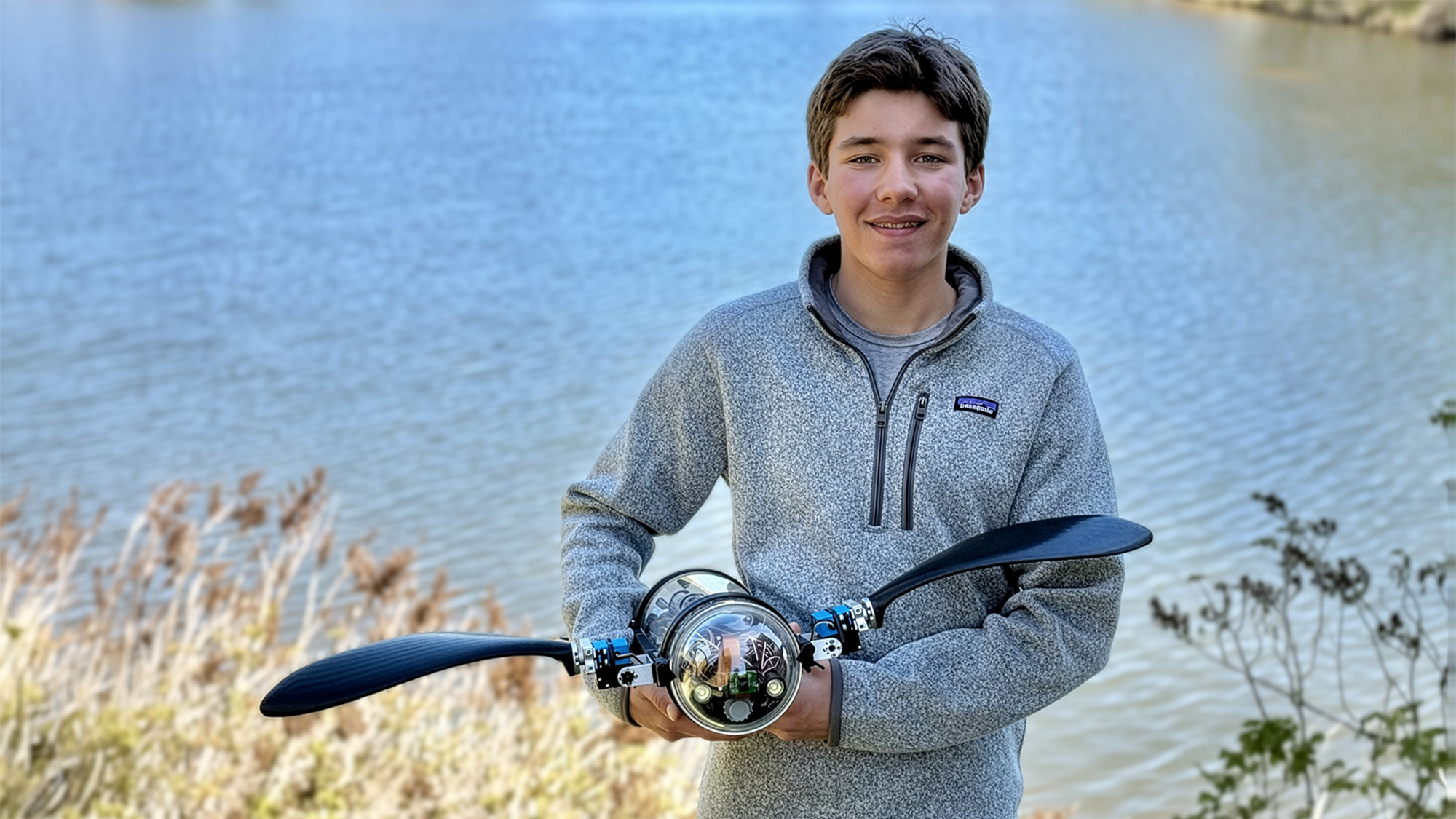
Fifteen-year-old Evan Budz was on a camping trip when he saw a snapping turtle that would become the impetus for an award-winning invention. As someone who loves hiking, canoeing, and just being outside, the Canadian high school student from Burlington, Ontario, had actively been looking for ways that he could go out and help the planet.
“My parents brought me up with the sort of principle that every place that I visit, I should leave it a bit better than I found it,” he says. So when Budz n
Fifteen-year-old Evan Budz was on a camping trip when he saw a snapping turtle that would become the impetus for an award-winning invention. As someone who loves hiking, canoeing, and just being outside, the Canadian high school student from Burlington, Ontario, had actively been looking for ways that he could go out and help the planet.
“My parents brought me up with the sort of principle that every place that I visit, I should leave it a bit better than I found it,” he says. So when Budz noticed the turtle swimming in some nearby waters, he knew that he’d found his next passion project: a bionic robot turtle that could help protect underwater environments.
How a turtle inspired an award-winning science project
“When I saw the snapping turtle, it was so graceful, fluidic, and generally non-disruptive” to its surroundings, says Budz. “I thought it’d be really interesting to go and try and replicate its natural swimming kinematics [basically the study of how things move]” in a robot.
Along with mimicking the fluid motions of a wild green sea turtle in the water, his autonomous device uses AI to monitor underwater ecosystems for ecological threats, such as invasive species and coral bleaching.
“Most current underwater technologies can produce things like noise from their propellers or very high-pressure water streams,” which can erode environments, he says.
However, by mimicking the motions of a sea turtle, Budz’s robot can move through the water innocuously, gathering vital data in a way that doesn’t stress marine life or damage delicate habitats. “I don’t want to harm the various places that I’m hoping to protect.”
High school student Evan Budz works on the flippers for his bionic turtle. Image: Evan Budz
How to build a robot turtle
To create his bionic turtle, Budz got to work studying the reptile’s locomotion. He watched videos of sea turtles swimming and talked with experts at his local aquarium, learning how the reptiles use their front flippers to propel themselves forward and their hind limbs for steering. He then used his 3D design and electronics know-how to plan a prototype in SolidWorks, a 3D Computer-Aided Design (CAD) and engineering software. From there, the high school student started creating his robot turtle’s 3D parts.
The robot has four flippers in total—with the larger front flippers providing its main propulsion and its smaller rear flippers used mainly for stability and changing direction, just like a real turtle. It also has a main acrylic tube “body” for housing its electronic components, which include a Raspberry Pi microcomputer. This runs AI models to detect environmental threats and records and transmits data. In addition, the bionic turtle navigates the water using various sensors. These include a GPS module for position tracking, allowing the robot to follow a predefined grid pattern.
Budz’s robot also has a front camera for “seeing” its surroundings, along with additional sensors on its exterior to help guide the autonomous reptile, offer depth control, and check for ecological hazards like microplastics and bleached coral.
Meet the Bionic Underwater Robotic Turtle, aka BURT
While not an official name, Budz has been calling his invention “BURT,” an acronym for “Bionic Underwater Robotic Turtle.” BURT maintains the same body-to-flipper-size proportions as a real-life sea turtle but is smaller overall, which allows it to move easily in different environments. It weighs about 11 pounds, though much of the robot’s weight is just added metal that allows it to sink down. This gives BURT an opportunity to monitor depths well below the water’s surface.
“To achieve neutral buoyancy in the water,” says Budz, “I needed the turtle to basically be heavier than the force of buoyancy that’s pushing it up.”
Budz did much of BURT’s testing in his grandparents’ backyard pool. Image: Evan Budz
BURT can swim for up to eight hours per charge on a lithium battery, though it also has a solar panel that can keep it going for even longer periods. Right now, Budz has BURT set up to swim at the typical speed of turtles (approximately 0.5 miles per hour). “If I do want it to swim faster, I can just change the flipper oscillation frequency,” meaning the rate of its flipper strokes.
Most of BURT’s testing has taken place in Budz’s grandparents’ backyard pool, which has a depth of just over eight feet.
“I basically went out and created a simulated coral reef setup using 3D models,” he says, programming the turtle to understand what coral bleaching and invasive species actually look like. “And the turtle then swims around them to simulate what it would do in a real-world environment.”
BURT is also set up to follow a predetermined search pattern, “so there’s no need for any sort of tether like you might find on a traditional underwater drone.” The bionic turtle scans its surrounding waters through its front-mounted camera, with all of the recorded data then feeding back into its Raspberry Pi microcomputer. According to the Budz’s testing, BURT has been able to detect replicated coral bleaching with 96 percent accuracy.
Budz tested BURT in Lake Ontario. Image: Evan Budz
BURT, the robot turtle, keeps getting smarter
Budz’s next step is to bring BURT into different environments to see how deep the robot can actually go. To deal with especially murky waters, he has installed lights on the front of the robot and added an ultrasonic transducer, which utilizes high-frequency sound waves to detect potential obstacles.
This year he’s even developed a new holographic imaging device, which he’s using to record the structural characteristics and shapes of tiny particles in waterways. He then uses a custom-trained neural network, which processes data in a way that’s similar to a human brain, to classify if each particle is a microplastic.
Although Budz built his robot as a labor of love, it’s since won some major awards, including first prize at the European Union Contest for Young Scientists, held in Latvia in 2025, and the Canada-Wide Science Fair, an annual science fair in which finalists qualify from approximately 25,000 competitors.
Budz’s goal is to have a fleet of these sea turtles that can be set out to detect ecological threats. “I’ve already looked at coral bleaching, invasive species, and microplastics,” he says, “but there are so many different places where this can be used.”
In The Workshop, Popular Science highlights the ingenious, delightful, and often surprising projects people build in their spare time. If you or someone you know is working on a hobbyist project that fits the bill, we’d love to hear about it—fill out this form to tell us more.
The groundbreaking experimental aircraft known as Solar Impulse 2 has met an untimely end. According to a National Transportation Safety Board report, the completely solar-powered plane crashed into the Gulf of Mexico during an autonomous test flight on May 4. While there were no injuries or fatalities, the wreck of the Solar Impulse marks an unfortunate end for one of the most impressive and inspirational planes in aviation history.
Solar Impulse was first conceptualized in 2003 by Bertrand
The groundbreaking experimental aircraft known as Solar Impulse 2 has met an untimely end. According to a National Transportation Safety Board report, the completely solar-powered plane crashed into the Gulf of Mexico during an autonomous test flight on May 4. While there were no injuries or fatalities, the wreck of the Solar Impulse marks an unfortunate end for one of the most impressive and inspirational planes in aviation history.
Solar Impulsewas first conceptualized in 2003 by Bertrand Piccard, the grandson of Swiss deep sea pioneer Auguste Piccard and the son of Jacque Piccard, the first person to reach the Mariana Trench. Piccard never intended the vehicle for commercial use, but instead envisioned it as a way to raise awareness for sustainable energy by building the first solar-powered plane capable of circumnavigating the globe. The first iteration, Solar Impulse 1, completed its inaugural test flight in 2009 followed by multiple additional trips over the next few years.
Construction on Solar Impulse 2 began in 2011. Even with a 232-foot wingspan that made it wider than a Boeing 747, the completely carbon-fiber frame ensured the plane only weighed about 5,100 lbs, making it about as heavy as a standard SUV. The 130-cubic-foot, nonpressurized cockpit included oxygen reserves and additional environmental equipment to enable a pilot to travel long distances at a maximum altitude of 39,000 feet. According to sUAS News, a total of 17,248 photovoltaic solar cells offered a peak power output of 66 kW to four electric motors and four lithium-ion batteries weighing nearly 1,400 lbs. Basic autopilot technology also allowed its sole occupant to sleep in 20 minute intervals.
Solar Impulse 2 made history in 2016 as the first fixed-wing, entirely solar-powered plane to circumnavigate the Earth. The feat was accomplished over the course of 16.5 months, with Piccard alternating piloting duties with Foundation co-founder André Borschberg and making 17 stops along the route. Solar Impulse 2 cruised at a ground speed between 31 and 62 mph, relying on the slower pace during evening portions of the trip.
In 2019, the Solar Impulse Foundation announced the sale of Solar Impulse 2 to Skydweller Aero for an undisclosed sum. The Spanish–American company’s plans were very different from the plane’s initial purpose. Instead of focusing on its solar capabilities, Skydweller hoped to pursue its military-related surveillance potentials, which included “carrying radar, electronic optics, telecommunications devices, telephone listening, and interception systems.”
After supplying numerous modifications, Solar Impulse 2 completed its first autonomous flight in Spain in 2023. The first entirely uncrewed, autonomous flight took place at Stennis International Airport near Bay St. Louis, Mississippi, the following year. At the time, Skydweller also confirmed its larger goal was to develop and supply a fleet of uncrewed, solar-powered planes capable of nonstop flight at latitudes between Miami (26°N) to Rio de Janeiro (23°S). These near-continuous operations would involve military and commercial contracts, allegedly at a much lower cost than current satellite options. The overhauled flagship aircraft reportedly crashed after losing power while flying over the Gulf of Mexico on May 4.
“We learned through social media about the crash of the Skydweller solar drone,” Piccard and Borschberg wrote in a statement provided to Popular Science. “The Solar Impulse team is saddened by the loss of an important technological flagship.”
Skydweller representatives did not respond to Popular Science at the time of writing. According to the Swiss news outlet SWI, part of Solar Impulse Foundation’s original sales contract with Skydweller stipulated the aircraft would eventually return to Switzerland for installation in the Swiss Museum of Transport in Lucerne.
“Very often when we speak of protection of the environment, it’s boring,” Piccard told Popular Science in 2013. “The first airplane [had] the technology of 2007. The second airplane [had] the technology of tomorrow.”
Renewable energy is the cornerstone of any sustainable society, but why limit your options to wind or solar installations? In the United States alone, over one million homes host a tiny, furry alternative power source without even realizing it. As a young YouTuber known as Flamethrower recently demonstrated, it’s time for hamsters to start pulling their weight around the house. Or, at the least, it’s time for them to start turning hamster wheels into miniature, makeshift turbines.
The idea ca
Renewable energy is the cornerstone of any sustainable society, but why limit your options to wind or solar installations? In the United States alone, over one million homes host a tiny, furry alternative power source without even realizing it. As a young YouTuber known as Flamethrower recently demonstrated, it’s time for hamsters to start pulling their weight around the house. Or, at the least, it’s time for them to start turning hamster wheels into miniature, makeshift turbines.
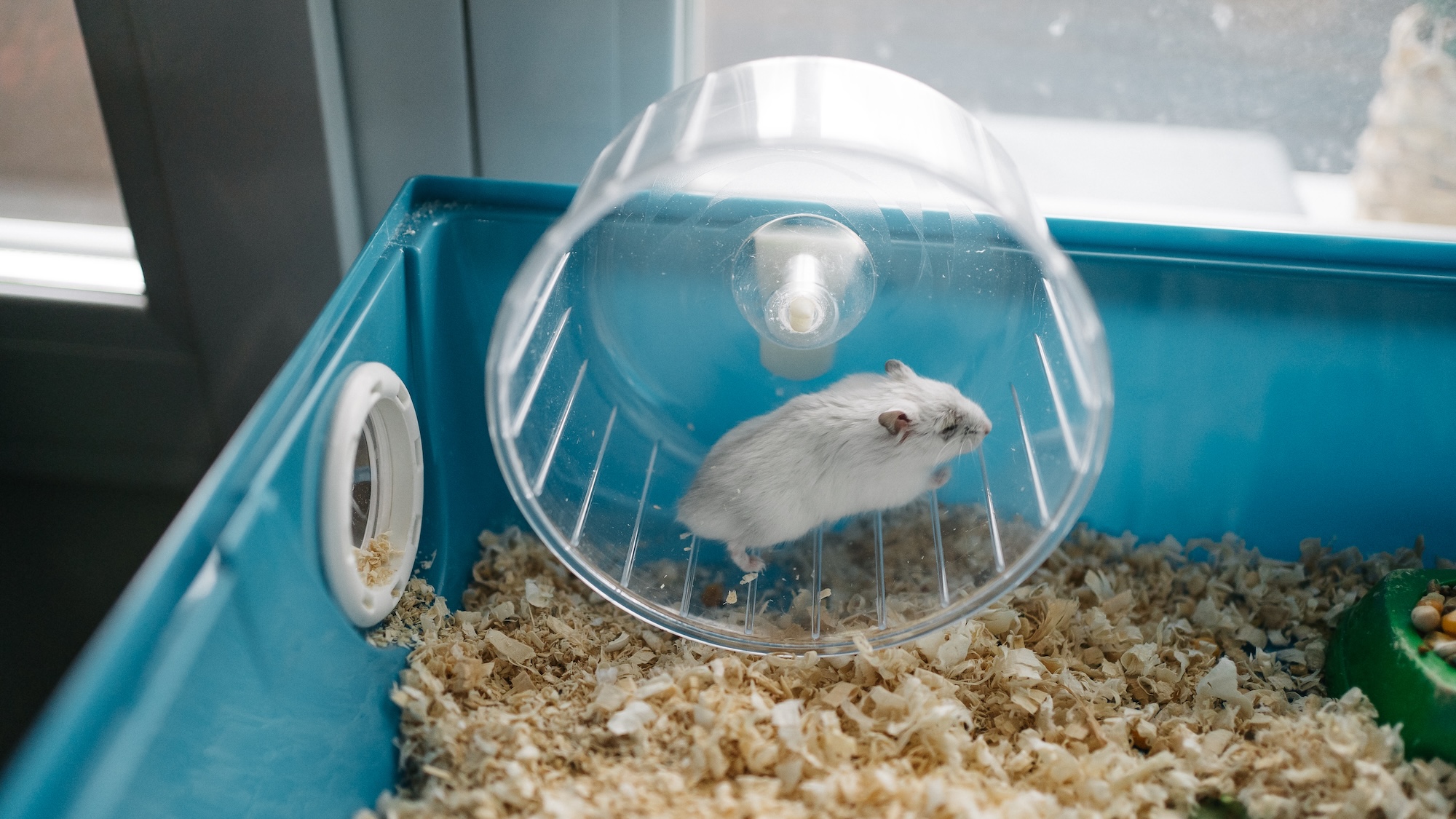
The idea came to Flamethrower after his brother received one of the tiny pets for his birthday. Although adorable, naturally nocturnal hamsters are often up at all hours of the night running on their little exercise accessories. While laying awake to the sound of a spinning, squeaky wheel, the amateur engineer realized how to make the best of an unexpectedly annoying situation.
“So what did I do? Exploit it for energy production, of course!” he declared in his recent video entry.
Turbines help generate most of the world’s energy, and their underlying principles are simple enough. Electricity funneled through wires to a motor will make it spin, but the reverse is also true—spin a motor, and electricity will generate through its terminals into battery storage. The fundamentals are basically the same whether a turbine spins thanks to steam, wind, or nuclear power. Or hamsters.
However, a hamster-powered turbine is not the easiest project to design. As the YouTuber explained, a 5 volt (V) DC motor hypothetically needs to spin at over 10,000 RPM to simply reach a smartphone’s standard 15 watt charging speed. Even if such a superpowered hamster existed, its speed would likely cause the motor to melt before it provided any juice to a battery—and therein lay another issue.
Batteries don’t only store energy—they are designed to provide electricity at a steady current when needed. However, a standard battery also must receive a higher voltage than it stores in order to amass any reserves.
Part of the solution came from a device known as an energy harvester module, which takes small voltages and amplifies them to an acceptable level for a battery. But the problem is that the amount of required voltage increases in direct proportion to the energy that’s being stored, meaning yet another unfeasible hurdle. The hobbyist ultimately relied on a system called maximum power point tracking (MPPT) to calculate the optimal input and output proportions for the energy harvester and a few other components.
All that potential energy is only as good as the battery that stores it, however. For this project, the YouTuber relied on lithium-ion cells salvaged from a broken electric scooter. Flamethrower hooked up his rig to the hamster wheel’s axis, then gave his brother’s pet the night to get its steps in. The next day, he attached his phone via a USB cable charging port to test the whole thing for the first time.
The initial setup worked flawlessly, although it charged at a snail’s pace. Naturally, he booted up his thermal camera nearby (who doesn’t own one?) to investigate any pain points in the system. It turns out the issue did have anything to do with the hamster wheel charger itself, but his outdated USB cable. After swapping that out with a newer replacement, phone charging sped up dramatically.
“And with that, my hamster’s life finally has a purpose,” the inventor declared.
As absurd as it appears, it’s hard to argue with such an ingenious source of free electricity. Hypothetically, the same idea could be adapted to basically anything in a house that spins mechanically, like a stationary bike. Then again, the whole point is to have the hamster do the work, not you. In any case, the YouTuber seems to be on to something here. The way Flamethrower tells it, the rodent may be more reliable than solar or wind energy.
“It’s supposed to be nocturnal but I’m starting to think it never sleeps,” he said.
In The Workshop, Popular Science highlights the ingenious, delightful, and often surprising projects people build in their spare time. If you or someone you know is working on a hobbyist project that fits the bill, we’d love to hear about it—fill out this form to tell us more.
Bioluminescence is everywhere in nature, but it puts on its biggest light shows underwater. In the deepest regions of the oceans, as much as 90 percent of all living creatures may possess at least some ability to shimmer thanks to cellular chemical reactions. However, the ethereal displays aren’t limited to these deep, dark waters. The cold blue glow from bioluminescent algae like Pyrocystis lunula is occasionally visible atop waves for other organisms to see.
Still, spotting these glimmers i
Bioluminescence is everywhere in nature, but it puts on its biggest light shows underwater. In the deepest regions of the oceans, as much as 90 percent of all living creatures may possess at least some ability to shimmer thanks to cellular chemical reactions. However, the ethereal displays aren’t limited to these deep, dark waters. The cold blue glow from bioluminescent algae like Pyrocystis lunula is occasionally visible atop waves for other organisms to see.
Still, spotting these glimmers is difficult for the naked eye. P. lunula only shines for a few milliseconds at a time when agitated. However, those lights could hypothetically remain illuminated for much longer if certain chemical switches are flipped on in the algae. The possibilities would be vast—suddenly, harmless organisms could replace environmentally toxic chemicals used to produce artificial glows, and even cut back on electricity usage for lights.
“This project was a moonshot idea,” University of Colorado Boulder civil engineer Wil Srubar said in a recent profile. “I was curious if we could create a world in which we don’t use electricity but rather use biology to produce light.”
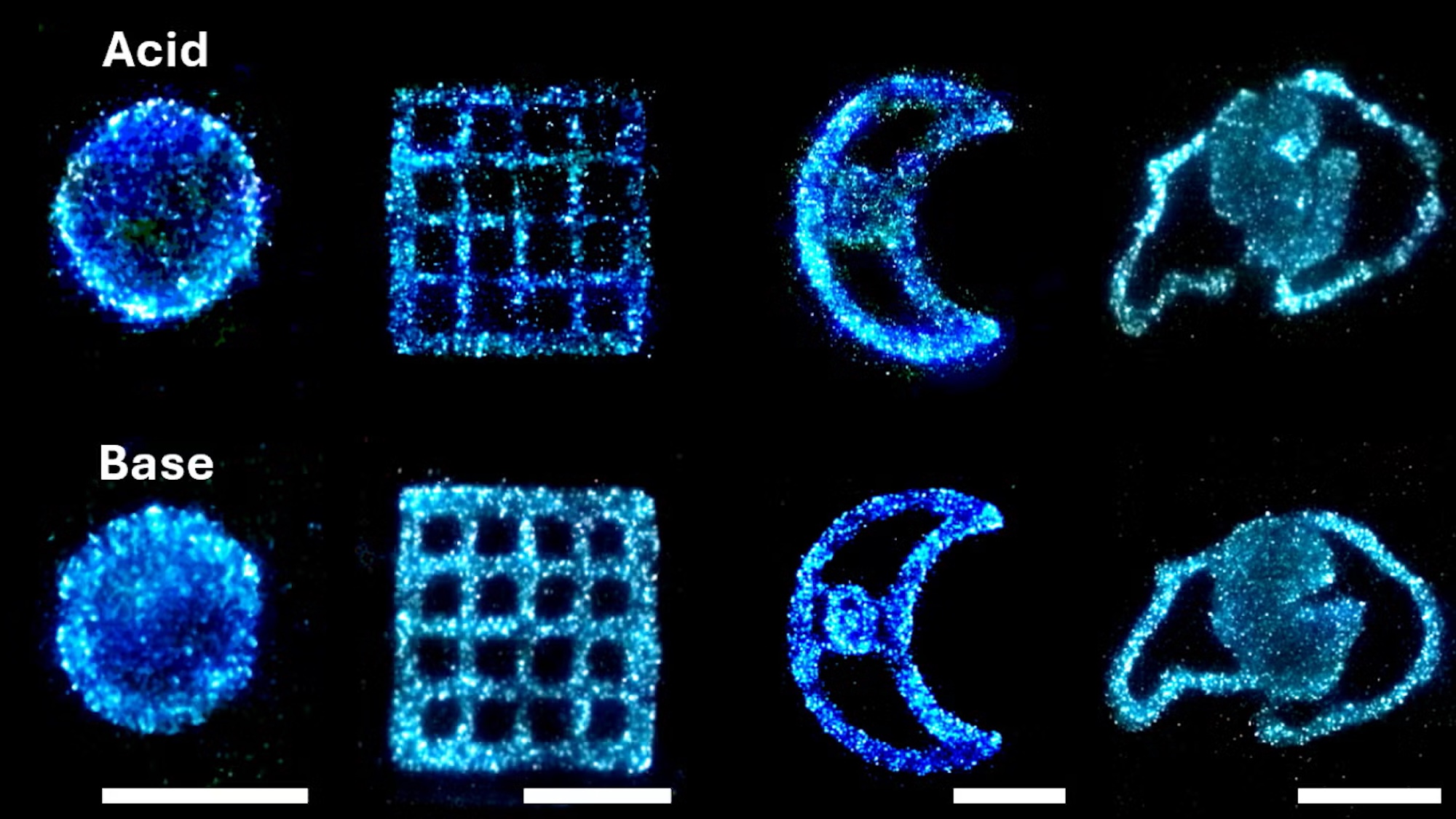
Drawing on previous research, Srubar and his colleagues assessed P. lunula’s bioluminescent response to basic and acidic compounds. They tested one acidic compound with a pH of 4 (similar to tomato juice) and a more basic compound with a pH of 10 (similar to hand soap).
Their results, published in the journal Science Advances, suggest algae could be part of a brighter, more sustainable future. In both cases, P. lunula began to shine. Acidic exposure made the algae glow brightly for up to 25 minutes, while the basic compound produced a shorter, more diffused light.
“It was a very exciting moment when we found the right chemical stimulant that allowed the light to stay on for a long time,” said engineer and study co-author Giulia Brachi. “This is the first time we have figured out how to sustain luminescence.”
The team took things even further from there. The engineers embedded the algae into various shaped objects made with naturally sourced, 3D-printed hydrogel. Because the acid and base solutions aren’t lethal to P. lunula, the organisms survived for weeks while constantly glowing. After four weeks, the acid-treated examples still retained 75 percent of their brightness.
According to the team, there are a range of uses for P. lunula. Autonomous robots and even space exploration equipment could produce battery-free light illuminated by the algae. If the algae responds to other chemicals, then it may show promise as a tool to test water quality or toxicity. What’s more, the photosynthetic algae doesn’t produce any carbon—it devours it.
“We’re storing carbon while we’re producing light, whereas conventionally, we emit carbon to light up spaces,” said Srubar. “This discovery really paves the way for engineering other living light materials and devices.”
Concrete is everywhere, and that’s a problem. Manufacturing the essential material accounts for around eight percent of annual global carbon dioxide emissions, making it one of the single biggest contributors to the climate crisis. Researchers are investigating all types of creative solutions to the issue, often by replacing ingredients with more eco-friendly alternatives.
Recent propositions include adding coffee grounds, bacteria, and even recycled diapers into the mix.But engineers at Purd
Concrete is everywhere, and that’s a problem. Manufacturing the essential material accounts for around eight percent of annual global carbon dioxide emissions, making it one of the single biggest contributors to the climate crisis. Researchers are investigating all types of creative solutions to the issue, often by replacing ingredients with more eco-friendly alternatives.
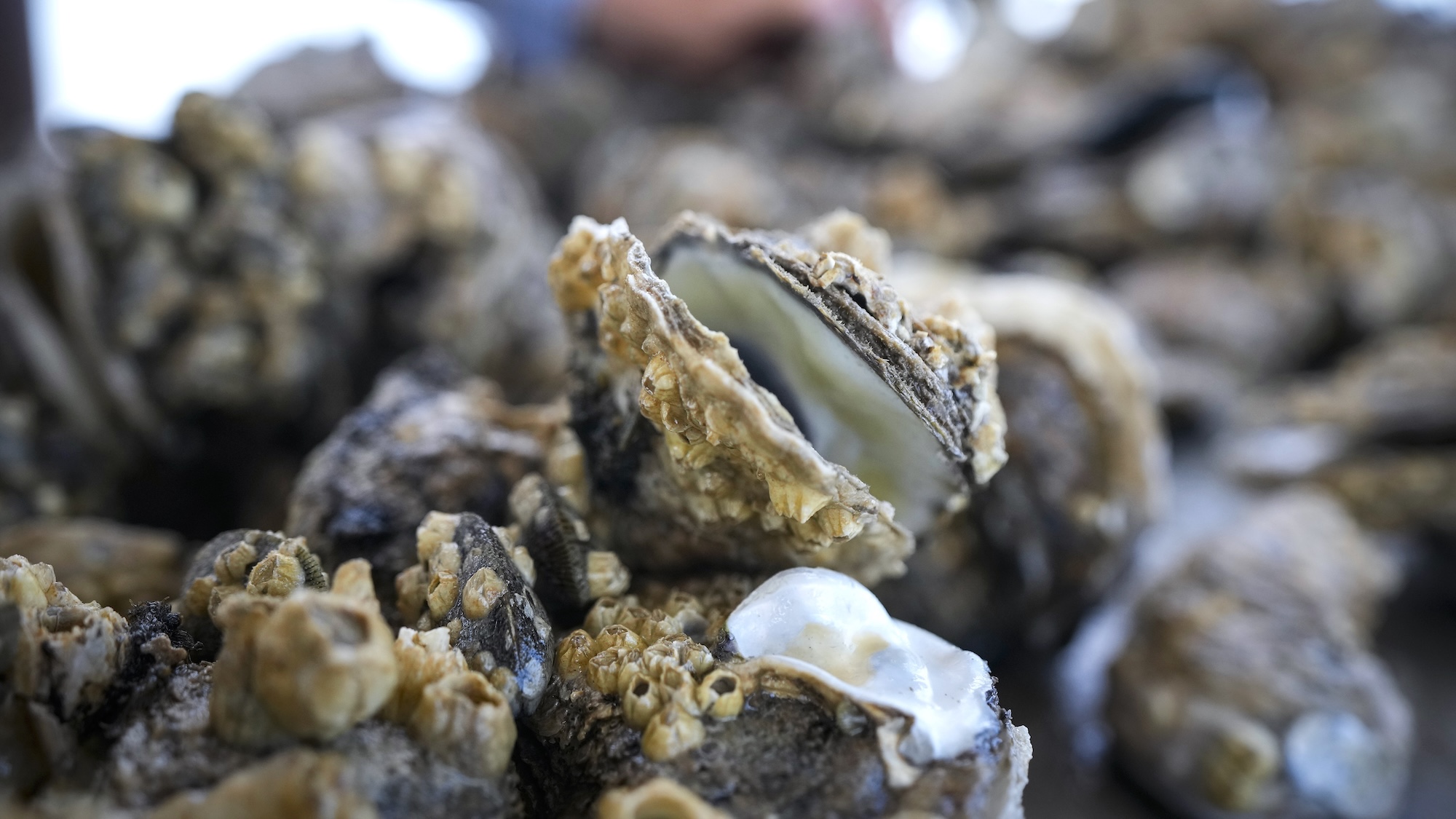
Recent propositions include adding coffee grounds, bacteria, and even recycled diapers into the mix.But engineers at Purdue University in Indiana think the answer can already be found in the natural world. According to a study recently published in the journal Chemistry of Materials, one solution may be swapping out the cement for shellfish.
“Oysters generate a natural cement. They use this material for attaching to each other when building reef structures,” chemist and study co-author Jonathan Wilker explained in a recent university profile.
Wilker has spent years examining the biological properties of oyster cement in hopes of recreating the sturdy adhesive for other applications. They have since learned that the bivalves bind together by producing the inorganic compound calcium carbonate—basically chalk. While calcium carbonate isn’t usually adhesive by itself, oysters also produce a small amount of stickier organic materials like phosphorylated proteins. This allows the shellfish to fuse together, even when saturated in water.
After breaking down the chemical composition of oyster cement, Wilker’s team recreated it in a laboratory. They then collected a bunch of limestone bathroom tiles, since their calcium carbonate is virtually identical to oyster shells. From there, they glued stacks of tiles together using their artificial, biomimetic cement. In nearly every stress test, the tiles broke before the bond itself.
Confident in their faux-oyster cement’s abilities, Wilker and colleagues finally tried combining a polymer from their creation into commercially available concrete mix. In lab tests, their oyster-inspired concrete was 10 times stronger while doubling its compressive strength. On top of all that, it also took less time to cure.
Wilker’s team plans to continue testing their patent-pending recipe. He notes that it’s not simply stronger. It’s even more eco-friendly when compared to most adhesives on the market.
“Most of the adhesives that you see at the hardware store are made of organic compounds, derived from petroleum,” he said. “There is so much more that we can learn from nature.

 Login
Login