Normal view

  • ✇Cartoon Research
  • Morty and Ferdie: Disney’s “Other” Nephews Sterling Dudley
    The most well-known nephews in the Disney canon are Donald Duck’s: Huey, Dewey, and Louie. The trio first made their debut in comic form on October 17, 1937. The following year, in 1938, the trio made their animated debut in the aptly titled Donald’s Nephews. Pretty cut and dry for some of Disney’s most iconic and long-lasting characters. Yet, the characters they were created to counterpart — Mickey’s two nephews — have a more intricate debut history. Morty and Ferdie are not defined by a single
     

Morty and Ferdie: Disney’s “Other” Nephews

9 June 2026 at 07:01

The most well-known nephews in the Disney canon are Donald Duck’s: Huey, Dewey, and Louie. The trio first made their debut in comic form on October 17, 1937. The following year, in 1938, the trio made their animated debut in the aptly titled Donald’s Nephews. Pretty cut and dry for some of Disney’s most iconic and long-lasting characters. Yet, the characters they were created to counterpart — Mickey’s two nephews — have a more intricate debut history. Morty and Ferdie are not defined by a single debut, but by a prolonged process of instability across media, where character is constructed, obfuscated, and re-established.

The duo first appeared on the September 18, 1932 Mickey Mouse Sunday strip. In their initial comic appearance, they are presented as children of a Mrs. Fieldmouse—then not explicitly identified as Mickey’s sister. Their initial appearance does not explicitly identify them as relatives of Mickey, yet this quickly becomes implied the following week on September 25 when they refer to Mickey as “Unca Mickey”. What this first Sunday page provides is a critical foundation exemplifying their core characteristics: mischief and havoc.

(above) The first strip featuring Mickey’s nephews, and (below) a panel from the September 25 panel with the first “Unca Mickey” reference.

Their havoc manifests metatextually as their antics overwhelm finer details of characterization, resulting in neither child being named until the October 30, 1932 Sunday page. This month-long interregnum sans naming reflects the instability of the duo’s early characterization. This is further emphasized within the comic panels as only one nephew is given a name—Mortimer Fieldmouse—leaving the other nephew unnamed.

Within the finer details of Disney lore, this name—Mortimer—is often associated with an earlier naming suggestion for Mickey himself. The suggestion came from Walt Disney’s wife, Lillian, at the same time that Walt was navigating the loss of his rights to Oswald and uncertainty over his own future. Metatextually, the presence of a Mickey relative named Mortimer reinforces the instability of character, and reminds readers that these stories exist within the early days of Mickey’s own rapidly defining world.

However, this page also gives some definition as it is the first instance of Mickey definitively referring to the duo as his nephews.

(above) October 30, 1932 strip featuring the first instance of a nephew being named.

Despite the comic strip clearing away initial ambiguity, more would implant itself into the Disney ecosphere with the 1933 cartoon short Giantland. The comics’ examples of a nephew duo are quite clear, but Mickey’s role as an uncle to mouse children would become more ambiguous.

This short opens with a large Mouse nibling group listening to Mickey read a bedtime story. The niblings call Mickey “Uncle Mickey,” but the short adds in further ambiguity by not identifying any of the children explicitly, thus making it unclear which are the two nephews present in the comics—or whether none of them are, and if Mickey might only be the niblings’ honorary uncle.

Interestingly, the Giantland cartoon would be adapted into a Sunday storyline that ran from March 11, 1934 until April 29, 1934. As a result of deriving elements from the pre-existing short, this comic strip storyline too has the ambiguous nature of which child is whom. Each Sunday would begin with Mickey telling his niblings about another part of the adventure against Rumplewatt the Giant. However these children—like in the cartoon—are never distinctively identified. Through background actions the audience can see more mischief being wrecked upon Mickey’s home, thus indicating that this quality befalls the numerous Mickey niblings.

Concurrent with Giantland’s release, the publisher David McKay introduced even more ambiguity when it published the “Mickey Mouse Story Book,” a repackaging of material from the 1931 book “Mickey Mouse Movie Stories,” consisting of images from 1930 and 1931 cartoons with alternative prose describing the plots. The cover exhibits Mickey—alongside a sleepy Pluto—reading a book to two unidentified mouse children.

The cover draws a connection to Giantland as it implies that the contents of the actual book—the aforementioned cartoon reuse—is what is being read to the children: a storytelling session similar to that in the Giantland cartoon. Since the interior of the physical book is repeated from 1931, however, it contains no framing devices, mentions, or references to the 1933 cover’s children audience. Thus this cover leads audiences to identify the duo as either Mickey’s nephews or two of the Giantland niblings, or both, making their relationship to Mickey somewhat vague once again.

(It must be noted that the “Mickey Mouse Story Book” bears only a 1931 copyright date, leading many in the past to presume the book was actually released in 1931—with its cover illustration thus representing the first appearance of mouse nephews anywhere. But as period newspapers and bookstore advertisements show, the “Story Book” was not actually released until late 1933; its 1931 copyright date refers only to the book’s interior contents, reprinted as they were from 1931.)

On June 16, 1934, Mickey’s nephews—presumed to be Morty and Ferdie, although never referred to by name—make a decisive return in the animated cartoon Mickey’s Steam Roller. This would be the duo’s first distinctive animated appearance as a duo sans any other unnamed mice children. Carrying over the common traits from the comics, the duo play and cause mischief throughout the short. The year 1934 also saw the instance of the original Orphan’s Benefit—remade in color in 1941—wherein Mickey and friends perform for many mice children. Though, based on the title, it can’t be assumed that these children are all Mickey’s relatives. However, it does continue to lean into the grey area of Mickey Mouse caring for or entertaining quantities of identical children.

The nephew duo would return to the Sunday strip again on March 31, 1935. Here, Mickey refers to them as “my nephews, Morty and Ferdie Fieldmouse!”, thus—for the first time—giving both boys distinctive names. In this newest appearance, they continue to delight in mischief, but they also foreshadow their more famous counterparts when interacting with Donald Duck.

Donald, not yet an uncle, is upset about being called one. Little does he know… (March 31, 1935).

The duo would serve as the prototypes for what would eventually become Donald’s nephews—both in messing with him and in how they caused disruption. On the Sunday page from April 7, 1935, the duo bait Donald into impressing them. Donald ends up overexerting himself, thus losing control and crashing a croquet ball into Mickey’s house. This encounter feels reminiscent of The Hockey Champ, wherein Donald’s hubris becomes his downfall as he attempts to one-up his nephews with his skills.

Before the year was up, the duo would return again on December 15, 1935. Within these appearances, the duo reinforce the role that they came to inhabit within the strip. As Disney historian David Gerstein puts it:

“By 1935 a satisfying middle ground was achieved, with Mickey portrayed less as a parent, more as a big brother.”

From this point on, the duo would appear at various intervals within the comics. However, when the duo appeared outside of the newspaper realm, these appearances continued to be more ambiguous, less defined, and lean into the larger nibling groups.

In one 1937 book entitled “Mickey Mouse and His Friends” a trio of mice niblings appear in a single image before a text adaptation of Mickey’s Elephant. Entire crowds of niblings—often, as before, identified as orphans—make further animated appearances in Gulliver Mickey (1934), Orphans’ Picnic, Mickey’s Circus (1936) and Pluto’s Party (1952). Morty and Ferdie themseves make another animated appearance in a blink-and-you-miss-it cameo in 1938’s Boat Builders; when a crowd assembles to watch the launch of Mickey’s, Donald’s, and Goofy’s boat, the duo can be seen climbing up a dock piling at the left of the shot..

Mickey’s nephews might not have stuck around as prominently as other recurring characters, but their early appearances were hugely influential. Their exact roles and status took time to become explicit, and the two would often fade out into ambiguous crowds of many mice children. Yet they helped to establish Mickey as an authority figure and companion to kids within his universe. Morty and Ferdie also acted as the prototype testing ground in small ways for their more popular counterparts: Huey, Dewey, and Louie.

Since the 1980s, the duo have made newer appearances in animation including as role players in 1983’s Mickey’s Christmas Carol, with Morty as Tiny Tim, and in 2017’s The Scariest Story Ever: A Mickey Mouse Halloween Spooktacular. The nephews have also remained recurring characters in comics from the 1930s up to the present day, logging hundreds of appearances annually around the world. Now as Mickey’s earliest stories come into the public domain each year , fans and readers alike have the opportunity to better understand Morty and Ferdie’s origin: not to see them as only static figures lost in the Disney vault, but for the influential voice that they are. The public domain also allows the creators to give the duo new creative expressions that were overlooked at their original inception. Plus, some enterprising person might even feign to name each and every nibling.


NOTES: As of 2026, all published Mickey Mouse cartoons and printed material from 1930 and before are in the public domain. In the course of researching this piece, I discovered that the Mickey Comics from 1931 through October 1935 were not renewed. The earliest renewal for the strip that I could locate was for the week dated November 18, 1935. These weekly renewals continued on from this date. The mentioned cartoons from 1932-1941 as well as the 1937 Donald Duck comic are still copyrighted until the end of the 95th year following their publication.

SOURCES:
Mickey Sundays; Original copyright and its renewal for 1937 Mickey Mouse and His Friends © 1 May 1937, code AA231977; renewal is © 28 May 1964, code R338799.

SPECIAL THANKS to David Gerstein and his input to this piece.

  • ✇Cartoon Research
  • “Snow White” in Nazi Germany Kris Reyes
    Have you ever wondered about how Walt Disney’s Snow White and the Seven Dwarves was brought to Germany? After all, the film is based on a German fairy tale, and it was released on the cusp of World War II. Surely, there would have been a German version. Well, it turns out there was a German dub that was intended to release in Germany in 1939. Unbeknownst to many, including the good folks at Disney, the cast they hired for the German dub had consisted entirely of Jewish exiles living in Amsterda
     

“Snow White” in Nazi Germany

2 June 2026 at 07:01

Have you ever wondered about how Walt Disney’s Snow White and the Seven Dwarves was brought to Germany?

After all, the film is based on a German fairy tale, and it was released on the cusp of World War II. Surely, there would have been a German version. Well, it turns out there was a German dub that was intended to release in Germany in 1939. Unbeknownst to many, including the good folks at Disney, the cast they hired for the German dub had consisted entirely of Jewish exiles living in Amsterdam. Not only that, but these actors had been some of the biggest names in the German film industry before the rise of the Nazis.

After Snow White and the Seven Dwarves premiered in the United States in 1937, Disney quickly moved to create 12 international versions of the film. It wasn’t difficult to secure distribution deals in most countries, but Germany proved to be a tough nut to crack. By 1938, all of the American owned studios had pulled up stakes and left the country due to rising political tensions. American movies could still be released in Germany, but they had to go through UFA, which was the German state-owned film distributor.

Nazi leader Adolf Hitler, and Propaganda Minister Joseph Goebbels, who directly controlled the movie industry in Germany, worked with Disney through UFA to try and secure a deal for Snow White. Hitler was a big fan of Disney, and Snow White was based on a German fairy tale, so he knew they had to show the movie in Germany. To Hitler, having the great Walt Disney adapt a German fairy tale as a feature length animated film was a great national honor. For Disney, going through the government of Germany took a lot more time than negotiating a deal with a traditional, privately owned studio. While they worked out a deal, Roy Disney flew to Amsterdam to oversee the production of the Dutch version of Snow White.

In Amsterdam, Roy Disney worked with local Dutch producer Max Tak, who hired director, actor, and comedian Kurt Gerron to direct the Dutch dub of Snow White. Since Gerron was fluent in German, he was asked if he could also direct a German dub of the film. Gerron was more than happy to take the job offer, as he was part of a community of German speaking actors who had recently moved to Amsterdam. There was one little detail that likely went unnoticed, however. Gerron and his community of actors were Jews from Germany who had fled to Amsterdam after Jews were banned from working in the German film industry.

Dora Gerson

From May 1938 to July 1938, Gerron directed both the Dutch and German dubs of the film. Featured in the cast for the German version were Dora Gerson as the Queen, Otto Wallburg as Doc, Kurt Lillien as Grumpy and Sneezy, Siegfried Arno as Happy, and Gerron himself played the Magic Mirror and Bashful. Each of these actors had been prominent in both film and live performances.

Dora Gerson was a German-Jewish actress who appeared in films alongside Bela Lugosi during the silent era. She had been married to film director Veit Harlan briefly in the 1920s, he would later go on to direct the antisemitic propaganda film Jud Süss in 1940. Gerson fled Germany for the Netherlands in 1936, and would eventually be caught and sent to Auschwitz with her husband and two children. The family was murdered at Auschwitz on February 14th, 1943.

Otto Wallburg was a prominent comedian and actor who performed in dozens of movies in the 1920s and 1930s. He appeared alongside Kurt Gerron in the 1931 comedy Bombs on Monte Carlo, also in 1931 he appeared in The Congress Dances, which was an international sensation. He escaped Germany for Austria in 1933, where he continued working in film until fleeing to France, and then finally the Netherlands. After the German invasion of the Netherlands in 1940, Wallburg was arrested and sent to the Westerbork transit camp, before he was killed at Auschwitz on October 29th, 1944.

Kurt Lilien was an actor who was most active between 1927 and 1933. During this time he appeared in a number of films, including Two Hearts Beat as One starring Lilian Harvey. Lilien also performed in the 1927 silent film The Most Beautiful Legs of Berlin alongside Kurt Gerron. He was killed at the Sobibor Concentration Camp in Poland on May 28th, 1943.

Of those who performed in Snow White, there is no one more historically significant than Kurt Gerron, himself. Unbeknownst to Disney at the time, Gerron had a reputation with the regime. To international audiences, Gerron was Marlene Dietrich’s manager in The Blue Angel, an UFA produced film about a professor who falls in love with a burlesque dancer. To the Nazis, Gerron represented the personification of Jewish excess. In his films, Gerron commonly played the part of the Jewish banker, lawyer, or any sort of greedy businessman. His appearance inspired many of the anti-semitic cartoons published in right-wing newspapers of the 1930s, and in 1940 his image would be used disparagingly in the propaganda film The Eternal Jew. Gerron was the image most German people had in their heads of what a Jew looked like.

Kurt Gernon

The final film directed by Kurt Gerron, long after his work on Snow White was behind him, was a propaganda film “praising” the conditions of the concentration camps. The film was called Thereseinstadt, and it was finished but never released. The Reich had intended to use his international fame to show the world that Jews weren’t being mistreated in concentration camps. Gerron believed producing the film would save him and his wife, but after the film was finished, the two were sent to Auschwitz where they were murdered on October 28th, 1944.

In late 1938, German filmmaker Leni Riefenstahl made a now-infamous trip to Hollywood to promote her documentary Olympia, about the 1936 Berlin Olympics. Riefenstahl was notorious for producing propaganda films for the Nazi party, so you could imagine her presence in Hollywood was about as welcome as a joke in an article about the Holocaust. Walt Disney was the only person in town willing to see her. He even gave her a tour of the Disney studios, showing her concept art and production materials from Fantasia, which was in production at the time. Riefenstahl had hoped to show Disney Olympia, but Disney’s projectionist had refused to screen it, as the projectionist union had taken a vocal stance against Riefenstahl.

It must be noted that Disney only welcomed her as part of negotiations for Snow White, and not because he had any positive feelings toward the Nazi regime. This didn’t matter to the rest of Hollywood, who decided that Walt Disney was an antisemite as a result. Whatever beliefs Disney privately held, this incident was purely business. Germany had the second biggest film market in the world at the time, so when you’re gambling your fortune on a film project, you want to make sure it gets seen in Germany.

Leni Riefenstahl directing

This was the absolute last chance Walt Disney had to sell Snow White to the Germans, but after Riefenstahl returned to Germany having felt slighted by Hollywood, the German government banned American films entirely. Goebbels was willing to make an exception for Snow White, but unfortunately, Kristallnacht, a nationwide pogrom against Jewish people, had occurred at the same time as Riefenstahl’s trip. Disney felt it better to abandon the sale altogether. Tensions in Europe were at a boiling point, and it just wasn’t worth the trouble.

While the German dub of Snow White and the Seven Dwarves wouldn’t see release in Germany, it would premiere in Switzerland in December 1938, as well as Hungary. It wouldn’t be shown publicly anywhere else until after the war, but when the Soviets raided the Reich’s film archive, they found four copies of Snow White. The English version was present, along with the French and Dutch versions, but curiously enough, they also had the German version. It’s been said that Hitler was a fan of the movie, even if they couldn’t show it in Germany, he certainly enjoyed watching it privately. There is no evidence that Hitler knew who starred in the German version, but as Hitler and Goebbels were both avid movie buffs, it wouldn’t be hard for them to pick out Gerron’s voice specifically.

After the war, the film would premiere in Austria in 1948, and finally make its way to Germany in 1950. Through the 1950s and 1960s, German audiences would become familiar with the 1938 version of Snow White, however, in 1966 Disney decided to create a new dub for Germany. This dub would then be replaced by another one in 1992 for the film’s home video release. Both the 1938 and 1966 versions would be sealed away in the Disney vault, not for any reason other than practicality. The latest dub in each language is typically the default version, and there’s no point in giving attention to earlier versions, unless there’s substantial fan outcry to see them.

Disney isn’t necessarily hiding some dark secret, in all likelihood they probably weren’t aware at the time. Had Roy Disney realized the cast he hired was made up of Jews, he most likely would have pulled the plug on the project. Not due to any antisemitism on his part, but because he was trying to sell this movie directly to Hitler. It’s not likely the Disney company were even aware of who dubbed the film in the years following the war when it started to be screened publicly. It was a one and done job where a group of actors were plucked off the streets and paid for a few days’ work.

So, how do we know who starred in the German dub? German-Jewish journalist Paul Marcus, otherwise known as PEM, had fled Germany early on in the 1930s and had started a personal newsletter reporting on Jewish actors and entertainers living in exile. One of these newsletters from 1938 detailed the production of both the Dutch and German dubs of Snow White. This newsletter is backed up by articles from local Amsterdam-based newspapers. It’s because of the underground resistance movement that we have this information today.

Sources

• “Walt Disney’s European Tour in 1935: Germany, Austria, and Switzerland.” The German Way, 4 May 2020, www.german-way.com/walt-disneys-european-tour-in-1935-germany-austria-and-switzerland.
• Giesen, Rolf, and J. P. Storm. Animation Under the Swastika. Jefferson, North Carolina, McFarland, 2012.
• Prisoner of Paradise. Directed by Malcolm Clarke and Stuart Sender. Menemsha Entertainment, 2002.
• “De Nederlandsche Versie van Walt Disney’s Sneeuwwitje.” Nieuwsblad van Het Noorden, 7 May 1938. ·“Hollands Sneeuwwitje Vóór de Zomer Klaar.” Zaans Volksbad, 19 May 1938, p. 14.
• Snow White Archive. “1938 German Dub of Snow White.” Filmic Light, 19 Nov. 2017, filmic-light.blogspot.com/2017/11/1938-german-dub-of-snow-white.html.
• Doherty, Thomas. “When Leni Riefenstahl Came to Hollywood.” The Hollywood Reporter, 23 Aug. 2021, www.hollywoodreporter.com/movies/movie-features/leni-riefenstahl-hollywood-1235001606.

  • ✇Cartoon Research
  • The 85th Anniversary of Disney’s “The Reluctant Dragon” Michael Lyons
    When The Reluctant Dragon debuted, the review in The New York Times stated that half of the movie “…is nothing more than a super de luxe commercial film showing Disney’s sumptuous new diggings out in San Fernando Valley.” Eighty-five years later, that half of the film is part of the charm of this different entry in the Disney movie catalog. The Reluctant Dragon is a live-action/animated feature that showcases charming animation alongside a tour of the Disney Studio lot, which now serves as a p
     

The 85th Anniversary of Disney’s “The Reluctant Dragon”

12 June 2026 at 07:01

When The Reluctant Dragon debuted, the review in The New York Times stated that half of the movie “…is nothing more than a super de luxe commercial film showing Disney’s sumptuous new diggings out in San Fernando Valley.”

Eighty-five years later, that half of the film is part of the charm of this different entry in the Disney movie catalog. The Reluctant Dragon is a live-action/animated feature that showcases charming animation alongside a tour of the Disney Studio lot, which now serves as a portal back in time.

With live-action directed by Alfred Werker, and animation directed by Hamilton Luske, Jack Cutting, Ub Iwerks and Jack Kinney, the film opens with a title card that announces what we’re about to see: “This picture is made in answer to the many requests to show the backstage life of animated cartoons. P.S. Any resemblance to a regular motion picture is purely coincidental.”

We then segue into live action, in glorious black-and-white, where we see the humorist Robert Benchley in his pool, shooting suction-cup arrows at fake ducks while his wife (played by Nana Bryant), lying near the pool, reads The Reluctant Dragon by Kenneth Grahame. She tells Benchley that he should pitch the idea of The Reluctant Dragon as a film to Walt Disney and drives him over to the studio, dropping him off for a meeting with Mr. Disney while she goes shopping.

As Benchley then wanders onto the lot, we get a glimpse inside the Disney Studio circa 1941.

Benchley is met by a very efficient tour guide named Humphrey (played by Buddy Pepper, who would later go on to a successful career as a songwriter of such songs as “Vaya Con Dios”). Benchley soon breaks away on his own, and heads into an art class, where a group of Disney artists including Wolfgang Reitherman, Eric Larson, Retta Scott, Jack Kinney and Ken Anderson, are sketching an elephant, who is the model in the room.

Florence Gill and Clarence Nash

Benchley then heads into the music department, where he watches Clarence “Ducky” Nash and Florence Gill recording as Donald Duck and Clara Cluck. The perturbed Humphrey meets back up with him, but Benchley breaks away again to go to the sound effects department.

Here, he meets up with an artist (Francis Gifford, one of several actors who portray studio employees alongside the actual artists) and watches sound effects and Foley artists add sounds to a cartoon featuring Casey Jr., the train. The conductor for the sound effects team is played by actor Frank Faylen (who would later play Ernie the cab driver in It’s a Wonderful Life and the father on TV’s Dobie Gillis).

After outrunning the tour guide again, Benchley ducks into the multiplane camera department. Here, the black-and-white in the film now segues to color.

Benchley meets Norm Ferguson to the dismay of Humphrey (Buddy Pepper). Click to enlarge.

Benchley peers through the top of the multiplane camera and observes animation of Donald Duck singing “Old MacDonald.” In the process, the audience gets a lesson on cels, backgrounds, and how an animated film is made (including input from Donald himself).

Next is the “Rainbow Room,” for a trip through the Ink-and-Paint Department (and a montage of different paint colors) as Benchley gets to see a cel of Bambi being painted.

He then passes through the Character Model Department, where, among the many sculptures, we see early versions of Captain Hook from Peter Pan and Si and Am from Lady and the Tramp, both of which were in production but wouldn’t reach theaters for over a decade.

Robert Benchley (center) with Frances Gifford (left) explore the Character Model Department. Click To Enlarge

While learning about the Character Model Department, the artists present a caricatured model/bust of Benchley to the humorist. He then wanders over to the Story Department, meeting up with the artists, one of whom is played by actor Alan Ladd, and they walk Benchley through the storyboard for their newest film, Baby Weems. Disney sketch artist and inbetweener John Dehner is seen sketching in this scene – Dehner would go on after this film to have a very successful career as an actor in radio, movies and television. He would return as an actor to Disney for the 1957 TV series Zorro (as the Viceroy) and as narrator for two shorts, Aquamania (1961, with Goofy) and The Litterbug (1961, with Donald Duck).

In the style of an “animatic”, essentially told using still storyboard drawings, Baby Weems tells the tale of an infant who is born able to speak and quickly becomes a worldwide sensation. This section itself caused a sensation among the artists in the animation industry – and it was not forgotten. It proved a charming, original animated film could work for an audience using only very limited movement, a technique that was used during the war to produce animation faster for military, educational – and later on, cartoons made for television.

After Weems, Benchley once again avoids Humphrey by ducking into a room where animators Ward Kimball and Fred Moore are working. Kimball sketches Goofy and flips the animation paper. On a Movieola, they then give Benchley a preview of Goofy’s latest cartoon, How to Ride a Horse.

After, Norm Ferguson animates Pluto for Benchley when Humphrey arrives, taking Benchley to see Walt, who is in the screening room.

Just as Benchley is about to pitch his idea for adapting The Reluctant Dragon, the house lights dim, and the projectionist starts to screen Walt’s latest finished cartoon short… The Reluctant Dragon.

The animated short tells the tale of a young boy (voiced by Billy Lee) who, after reading a book about dragons, encounters one (Barnett Parkett). However, this dragon isn’t fierce; he’s a gentle creature who wants to recite poetry and sing.

The boy becomes concerned when Sir Giles (Claud Allister), the famed dragonslayer, comes to town, but when the boy brings Sir Giles, who is an old man, to meet the dragon, it turns out that the knight enjoys poetry, as well.

The knight and dragon agree to stage a fake fight to satisfy the villagers.

After the animated film ends, The Reluctant Dragon concludes with Mrs. Benchley driving Robert home, scolding him for not getting the story to Walt sooner. Benchley responds in Donald Duck’s voice with a “Phooey!” and Donald’s famous squawking as the movie ends.

The animated segments in The Reluctant Dragon demonstrate the Studio’s artistic range during this time. The charming Baby Weems reveals the power of story, even with limited movements. How to Ride a Horse displays great cartoony action (especially in its slow-motion segment). The Reluctant Dragon shows how the Disney artists could craft well-designed characters and personalities in full animation.

And, while the behind-the-scenes segments at the Studio are staged, they are still fascinating to see this era in animation captured on film.

Celebrating its 85th anniversary this month, The Reluctant Dragon was released on June 27, 1941, during a challenging time at the Disney Studio. Pinocchio and Fantasia (both 1940) did not do well at the box office, and The Reluctant Dragon was made as an inexpensive, quickly produced film to generate some box-office revenue. Also, an animator’s strike had started the month before. When The Reluctant Dragon opened, a number of strikers picketed the film’s premiere.

In the years that followed, The Reluctant Dragon itself was shown as a standalone short on Disney’s weekly TV show and was also released in that format on VHS. The full-length feature would be shown on The Disney Channel and eventually released on DVD, as part of the Walt Disney Treasures collection. It’s actually available on blu-ray as a hidden Bonus Feature on a double bill release of Ichabod And Mr. Toad and Fun & Fancy Free. The full 1941 feature is also currently available on Disney+.

Since its debut, however, The Reluctant Dragon has faded from many discussions, and for Disney and animation fans, in particular, it deserves better. Leonard Maltin noted this in his book, The Disney Films: “The film does not really deserve such obscurity. It is an interesting footnote to Disney’s career, and, if only for Baby Weems, should be more widely shown.”

NOTE: For a deeper dive into the characterizations in “The Reluctant Dragon” short itself, please read a series of posts here by Esther Bley – here is part 1.

  • ✇Cartoon Research
  • The Disney Studio During WWII: “Donald Duck Joins Up” by Richard Shale Orrin Scott
    It’s Memorial Day in the United States as we pause to remember those who have lost their lives in the armed services and reflect upon the sacrifices they made. I was recently discussing with my Mom, my paternal Grandfather, Bill, who served in the Navy aboard the USS Gettysburg and USS Saratoga. He was stationed throughout the world serving as a ham radio operator and spent time in Trinidad, where he and my grandmother had my Father, and the South Pole amongst other stations during the Vietnam W
     

The Disney Studio During WWII: “Donald Duck Joins Up” by Richard Shale

25 May 2026 at 07:01

It’s Memorial Day in the United States as we pause to remember those who have lost their lives in the armed services and reflect upon the sacrifices they made.

I was recently discussing with my Mom, my paternal Grandfather, Bill, who served in the Navy aboard the USS Gettysburg and USS Saratoga. He was stationed throughout the world serving as a ham radio operator and spent time in Trinidad, where he and my grandmother had my Father, and the South Pole amongst other stations during the Vietnam War. He was one of my early childhood animation influences, memorably winning me a large Foghorn Leghorn stuffed animal at a family auction when I was quite little and we miss him.

Donald Duck Joins Up

A look at The Walt Disney Studio During WWII by Richard Shale

The Disney Studio famously became an extension of the American wartime effort in World War II creating educational and propaganda films for domestic and foreign distribution. In 1982, Richard Shale would publish an in-depth account for the productions made during the war effort in, “Donald Duck Joins Up: The Walt Disney Studio During World War II”.

Shale opens the book with a brief history of animation leading up to WWII, noting that Walt Disney was the catalyst for the development of the art form notably for both for sound, then Technicolor’s application. The success of early Disney shorts and “Snow White” allowed for Walt to became the public face of the development of the animation and in so doing secured himself as a trustworthy individual in the eyes of the public.

Leading up the war, the Disney Company was struggling. The war caused foreign markets to collapse leading to the loss of not only potential revenue, but already made investments in those now nonexistent markets. These problems, in addition to a costly strike – both in terms of lost personnel, cash, and ego – didn’t make the situation any easier.

While Walt had some experience with educational films back in Kansas, only as anti-Nazi sentiment began influencing Hollywood would Walt turn to The Lockheed Aircraft Corporation to co-produce Four Methods of Flush Riveting (1942) an educational film about the process of riveting. As the opening text scroll of the film lays out, “The following film uses a simplified technique developed by the Walt Disney Studio to demonstrate the quickest & cheapest method whereby the animation medium can be applied to national defense training.”

With film in hand, Walt Disney would meet with Canada’s National Film Board founder, John Grierson, who understood what Walt was attempting to accomplish. The two worked out a contract for four short films promoting audiences to invest in war bonds using The Seven Dwarves, The Three Little Pigs, and Donald Duck.

Shale describes the most widely seen film from this era as Donald’s The New Spirit (1942) in which Donald shows audiences how income taxes are paid and effect the war effort. This film was a product of the Walt Disney Studio and the US Treasury Department. Throughout the book, between correspondences between bookkeeper and brother, Roy Disney, we see a resistance to ensure that when dealing with the government to ensure that payroll was nearly and squarely no for profit. However, the use of any public taxes for any type of film became a subsequent public political squabble that resulted in much political fuss and hang wrong but littlensubstance. Regardless of any blowback that occurred it didn’t deter the US Secretary of Agriculture to enquire and develop a film about the importance of farmer for the war effort, and the Navy requesting their own educational films thereafter that.

A whole chapter is devoted to Disney’s trip to South America for a sponsored peace trip with the Office of the Coordinator of Inter-American Affairs, which serves as a fantastic primer to Ted Thomas, J.B. Kaufman and Didier Ghez’ Walt Disney & El Grupo in Latin America. Shale later discusses how this trip resulted in the successful Three Caballeros in 1944.

Shale discusses at length both Alexander Procofieff de Seversky’s book, Victory Through Air Power, and its influence over public discourse about the means to end the war, and also the uniqueness of Walt Disney adaptation of the book to film. Even amongst the pantheon of Disney adaptations it still stands out for it’s timeliness of its adaptation from print to film.

A further chapter talks on the challenges in attempting to develop a Gremlins film based off the first book by renowned writer Roald Dahl, which is wonderfully chronicled in Gremlin Trouble!: The Cursed Roald Dahl Film Disney Never Made by the late, Jim Korkis. The Disney Studios work designing various military branches insignia is also briefly touched on, but relative to the labor involved in animation, production history is summarized in a page or two.

The tenth and last chapter reflects on the unique position that the Disney Studio and the US Government served during the war and the financial stability that granted the studio to whether through the war and their prior financial woes. Time is also taken to analyze why the propaganda stands out amongst Disney’s peers, especially what was being produced at Warner Bros.

If there is one complaint about this book it’s that there is only one chapter dedicated to the titular topic, but the ongoing wartime output of theatrical shorts was, like the book points out, the least of concerns happening at the studio.

If you can track down a copy of this fairly difficult to find book, it’s worth it. The above review only covers the first half as the second half is full of footnotes, sources cited, filmographies of films published for public and military distribution, and a bibliographical reference for further study.

Please dive in and enjoy the complete Animation History Bibliography section of the Cartoon Research website. See you next month with another round up of animation book news and reviews!

  • ✇El País in English
  • The adult tribe that is transforming Disney: ‘Everything outside ceases to exist’ Eneko Ruiz Jiménez
    At 35, Daniel Pontón is what is known as a Disney adult. His fans crowd outside his home in Parla in Madrid where he lives with his fiancé. His passion for Disney is such that he is considering removing the bed from the guest room/museum to make way for the invasion of stuffed Disney toys. On the fluffy pillows, there are Mickey, Stitch, Jack Skellington, Olaf, Chip and Chop. The shelves and walls are also plastered with Disney images. All this memorabilia, and other collector’s items, such as p
     

The adult tribe that is transforming Disney: ‘Everything outside ceases to exist’

29 May 2026 at 19:46
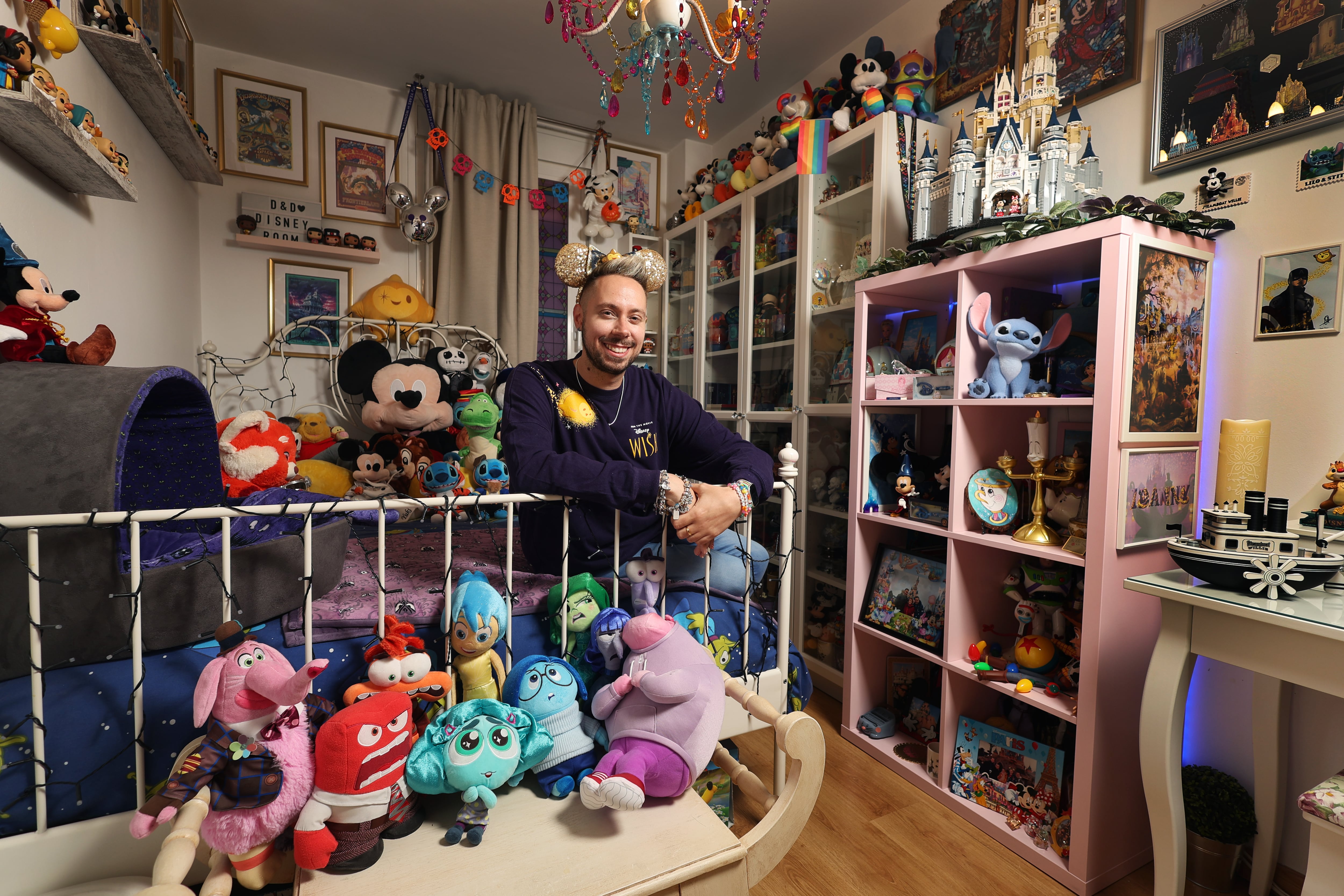
Disney influencer iDanny, at his home in Parla, Madrid.

At 35, Daniel Pontón is what is known as a Disney adult. His fans crowd outside his home in Parla in Madrid where he lives with his fiancé. His passion for Disney is such that he is considering removing the bed from the guest room/museum to make way for the invasion of stuffed Disney toys. On the fluffy pillows, there are Mickey, Stitch, Jack Skellington, Olaf, Chip and Chop. The shelves and walls are also plastered with Disney images. All this memorabilia, and other collector’s items, such as park keys, are mementos from his time browsing Disney stores and enjoying theme parks.

Seguir leyendo

The book 'Disney Adults', by A. J. Wolfe.Objects that the Disney influencer iDanny collects in his house in Parla.
❌
Subscriptions