Normal view

  • ✇Earth911
  • The Reasons “Wishcycling” Is Always a Bad Idea Earth911
    About one in four items Americans put in recycling bins does not belong there. This good-intentioned mistake leads to equipment damage, higher processing costs, contaminated bales that buyers reject, and injuries to workers who have to remove these items from conveyor belts. Recyclers call this hopeful but mistaken behavior wishcycling. This means putting a questionable item in the blue bin and hoping the facility will sort it out. Most facilities cannot do this, and the cost of trying has gone
     

The Reasons “Wishcycling” Is Always a Bad Idea

4 June 2026 at 07:10

About one in four items Americans put in recycling bins does not belong there. This good-intentioned mistake leads to equipment damage, higher processing costs, contaminated bales that buyers reject, and injuries to workers who have to remove these items from conveyor belts.

Recyclers call this hopeful but mistaken behavior wishcycling. This means putting a questionable item in the blue bin and hoping the facility will sort it out. Most facilities cannot do this, and the cost of trying has gone up sharply. An August 2024 EPA assessment estimates that the country needs $36.5 to $43.4 billion in investment by 2030 to modernize a recycling system strained by contamination. Understanding what wishcycling actually costs, and who pays for it, is the first step to stopping it.

What is Wishcycling?

Wishcycling is the practice of putting items into a recycling bin when you’re not sure they’re accepted, hoping the system will sort it out.

The term appeared around 2015 and is attributed to Bill Keegan, president of Dem-Con Companies, a Shakopee, Minnesota waste and recycling operator. Star Tribune columnist Eric Roper revisited the term in a 2017 follow-up documenting industry efforts to coordinate recycling education across haulers and municipalities. The behavior is older than the word. Bowling balls, garden hoses, propane tanks, and Christmas lights have been arriving at material recovery facilities (MRFs) for decades.

The main change has been the cost. In the early 2000s, U.S. MRFs accepted fewer types of materials and sent most contaminated materials overseas in bales.

After China’s National Sword policy took effect in 2018, the global market for dirty recycling collapsed. Research from the University at Buffalo found that the amount of plastic landfilled in the U.S. increased by 23.2% in the year China’s import bans began to take effect. Processors now have to clean material to a much higher standard if they want to export it, or pay to landfill it themselves.

The Contamination Numbers Have Stayed Stubbornly High

National contamination figures vary by methodology and region, but the picture is consistent: a meaningful fraction of every recycling load is material that shouldn’t be there. Industry estimates put the share of items placed in residential bins that are not actually recyclable at around 25%, with municipalities reporting rates from below 10% to above 40% depending on local rules and education. Waste Management, the country’s largest hauler, reported its average inbound contamination at just over 17% in recent years, down from a longer-running 25% average, which represents progress, but is still well above the under-5% threshold most end markets demand.

Capture rates tell the other half of the story. The Recycling Partnership’s 2024 State of Recycling report found that only 21% of U.S. residential recyclable material is actually recycled. Roughly 76% is thrown out by households as ordinary trash, and another 3% is lost at the MRF, where contamination, broken glass, and unsortable mixed material wash out of the system before it can be baled and sold.

In other words, most recyclables never make it to a recycler. The ones that do often come with extra items like pizza grease, plastic bags, garden hoses, food residue, batteries, or propane canisters, which compromise the load.

What Contamination Costs the System

Wishcycling affects the finances of every part of the recycling process.

At the MRF, processing a ton of single-stream mixed recyclables cost $129 per ton in Oregon in 2022, according to a Crowe LLP audit cited in the National Academies of Sciences, Engineering, and Medicine’s 2025 review of U.S. recycling. The same review says that after the National Sword contamination restrictions, Waste Management’s processing costs went up by about 15%, or roughly $13 per ton, across its 43 single-stream facilities. These costs include extra labor, optical sorters, screens, and slower processing when machines jam.

At the end of the process, contaminated bales sell for less, get downgraded, or are rejected completely. When a load is rejected, the MRF has to pay the landfill tipping fee instead of making a sale. The Environmental Research and Education Foundation’s 2024 tipping fee analysis puts the national average at $62.28 per ton, a 10% increase from 2023, which is the biggest year-over-year jump since 2022. In the Northeast, the average is even higher, around $80 per ton.

At the public level, municipalities and producers end up paying the bill. Oregon’s new producer responsibility program, which started in mid-2025, includes a contamination management fee that producers pay to MRFs. The fee is $341 per ton of eligible material for 2025 and 2026, rising to $432 in 2027. This shows that regulators recognize contamination has a cost, and that someone besides the MRF operator should pay for it.

The EPA’s August 2024 Recycling Infrastructure Assessment estimates that bringing U.S. recycling infrastructure up to a level that gives every household access to recycling on par with trash collection would require $36.5 to $43.4 billion in investment by 2030. That figure covers MRFs, packaging-specific recycling facilities, drop-off infrastructure, and composting and anaerobic digestion capacity. Reducing contamination is built into the agency’s assumptions; cleaner inputs are a precondition for the recovery gains the investment is meant to unlock.

The Human Cost: Recycling Workers Are Getting Hurt

Contamination is not just an economic problem. Items that do not belong in the recycling stream, such as propane tanks, lithium-ion batteries, medical sharps, broken glass, and plastic bags that tangle in screens, make sorting recyclables physically dangerous.

U.S. Bureau of Labor Statistics data released in January 2026 show that the injury rate for solid waste collection workers rose to 5.0 cases per 100 full-time-equivalent workers in 2024, up from 4.3 in 2023 and 4.7 in 2022. Workers at material recovery facilities were injured at a rate of 5.8 per 100 FTE — the highest the agency has reported for that category since at least 2020. For comparison, the rate across all private industry in 2024 was 2.3 per 100 FTE, the lowest since 2003. Sorting recycling is more than twice as dangerous as the average American job.

Fatalities show an even more serious side. The BLS counted eight MRF deaths in 2024, down from nine the year before, and 32 fatal injuries among solid waste collection workers, with 23 linked to transportation incidents. In 2024, refuse and recyclable material collection was the fifth-deadliest job in the country, behind only logging, fishing and hunting, roofing, and structural ironworking.

Lithium-ion batteries deserve a separate line. They are routinely placed in curbside recycling bins by residents who don’t know where else to put them, and they routinely catch fire when crushed by compactor trucks or sorting equipment. A 2024 report from the National Waste & Recycling Association and Resource Recycling Systems estimates more than 5,000 fires occur annually at U.S. recycling facilities, with the rate of catastrophic losses up 41% over the previous five years. The cost of insuring an MRF has climbed accordingly, driving recycling costs for citizens higher.

Why Wishcycling Persists

Three structural problems keep contamination rates high.

First, recycling rules are set locally, but packaging is made for the whole country. For example, a yogurt cup accepted in Seattle might be sent to landfill in Atlanta. The chasing arrows symbol and resin identification codes 1 through 7 show the type of plastic, not whether it can be recycled locally. According to a 2020 McKinsey survey cited in the National Academies’ 2025 report, two-thirds of U.S. consumers are confused by this difference.

Second, single-stream collection is convenient for residents and trucks, but it results in dirtier loads compared to dual- or multi-stream systems. Most U.S. municipal recycling programs now use single-stream collection, and the convenience that made it popular also allows more contamination.

Third, people often feel a strong moral urge to recycle, which can lead them to ignore instructions. A National Academies survey found that 78% of consumers check product labels to sort products correctly, and 82% trust the information on those labels. When labels are wrong or misleading, good intentions turn into contamination.

What You Can Do

Reducing wishcycling begins with individual choices at the bin, but it is most effective when combined with changes at the system level.

At the household level:

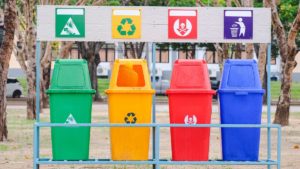
  • Look up your local recycling guidelines and post them where you sort. Use the Earth911 recycling search by ZIP code and material to find what’s accepted near you.
  • When in doubt, throw it out. One contaminated item can devalue an entire bale. A landfilled item costs the system less than a wishcycled one that has to be pulled out twice and sent to landfill anyway.
  • Follow four common-sense rules: keep recyclables empty, clean, dry, and loose. Do not bag recyclables. Do not leave food residue. Avoid putting in items that tangle, such as hoses, cords, string lights, or plastic bags.
  • Never put batteries, propane cylinders, electronics, or hazardous waste in curbside bins. Use a dedicated drop-off location. Most counties have hazardous waste collection days, and many retailers accept batteries.
  • Treat plastic bags and film separately. Most municipal MRFs can’t process them; grocery stores and big-box retailers often have collection bins for them at the entrance.

At the community and policy level:

  • Support extended producer responsibility (EPR) laws that shift the cost of packaging recyclability onto the companies that produce it. Several states have packaging EPR laws on the books; Oregon’s took effect in mid-2025.
  • Ask local officials whether your municipality publishes contamination data and whether it audits MRF inbound loads. Cities that measure tend to manage.
  • Push back on misleading recyclability labels. The Federal Trade Commission has been reviewing its Green Guides since 2022 but has not yet issued an update; public attention has been one of the main forces keeping the review going.

Wishcycling happens when good intentions meet a system that cannot handle them. The solution is not to try less, but to focus your efforts: learn what your program accepts, follow the rules even if it feels wasteful, and speak up about the policies that decide what gets made and labeled.in place.

The workers who sort our recyclables, the cities that pay for processing, and the bales that decide if material becomes a new product all depend on one thing: what you put in the bin.

Editor’s Note: Originally published on January 11, 2017, this article was substantially updated in June 2026.

The post The Reasons “Wishcycling” Is Always a Bad Idea appeared first on Earth911.

Years in the Making, Glass Imaging Is Delivering on its Promise to Transform Smartphone Photography

1 June 2026 at 15:30

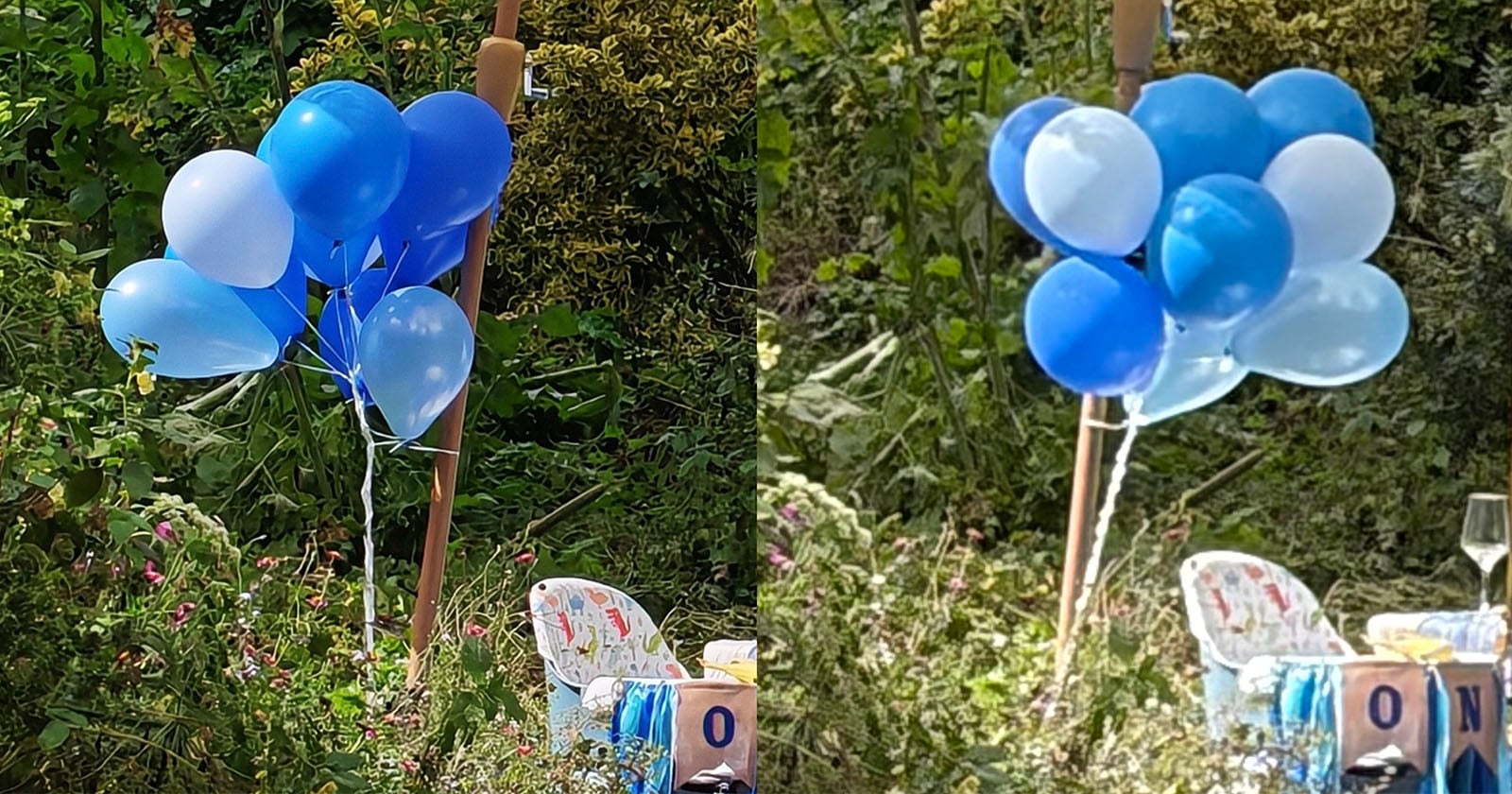
A bunch of blue and light blue balloons is tied to a stick outdoors amid greenery. Nearby are chairs, a baby-themed block, and a wine glass, suggesting a party or celebration in a garden setting.

Glass Imaging's impressive GlassAI Neural image signal processing (ISP) technology is heavily featured in the brand-new Honor 600 smartphone, promising to improve the zoom photography experience on the fancy new phone.

[Read More]

  • ✇TheHill - Just In
  • Multiple people injured in chemical-related implosion in Washington state Rachel Frazin
    Multiple people were injured in a “major” chemical incident in Washington state, according to a local fire department. Posts Tuesday morning from Washington’s Longview Fire Department indicated that it was responding following “an implosion involving a vat of chemical treatment product” at a Nippon Dynawave Packaging facility. “Multiple people” suffered injuries including chemical burns, but the extent...
     

Multiple people injured in chemical-related implosion in Washington state

26 May 2026 at 17:53
Multiple people were injured in a “major” chemical incident in Washington state, according to a local fire department. Posts Tuesday morning from Washington’s Longview Fire Department indicated that it was responding following “an implosion involving a vat of chemical treatment product” at a Nippon Dynawave Packaging facility. “Multiple people” suffered injuries including chemical burns, but the extent...

  • ✇Earth911
  • What Pet Waste Costs: The Litter, Bags, and Packaging Filling America’s Landfills Earth911
    Every year, Americans bury an estimated two million tons or more of used clay cat litter — clay that was strip-mined from the ground, trucked across the country, scooped once, used by a cat, and thrown away. It does not biodegrade, so it sits in the landfill essentially forever. And that is just the cat. Pets belong to the household waste stream, even though we rarely add them to the tally. About 94 million U.S. households keep a pet, and the roughly 68 million dogs and 49 million cats among the
     

What Pet Waste Costs: The Litter, Bags, and Packaging Filling America’s Landfills

26 May 2026 at 11:00

Every year, Americans bury an estimated two million tons or more of used clay cat litter — clay that was strip-mined from the ground, trucked across the country, scooped once, used by a cat, and thrown away. It does not biodegrade, so it sits in the landfill essentially forever. And that is just the cat.

Pets belong to the household waste stream, even though we rarely add them to the tally. About 94 million U.S. households keep a pet, and the roughly 68 million dogs and 49 million cats among them, according to the American Pet Products Association’s 2025 survey, generate three large and mostly invisible waste streams: cat litter, dog waste and the bags that carry it, and the packaging that food and treats arrive in. Each one carries a cost at the kitchen counter and a much larger one at the national scale.

The Clay Nobody Thinks About

Conventional clumping litter is sodium bentonite, a clay valued for the way it seals around moisture. Getting it out of the ground means strip mining, and industry estimates put U.S. clay mined for litter at roughly five billion pounds a year. A single cat works through about 28 pounds of clay litter a month — close to 336 pounds a year — and none of it breaks down once discarded.

The household cost is real too. Litter runs roughly $180 to $480 a year for one cat, and multi-cat homes multiply that spending into the thousands of dollars annually. Spread across roughly 49 million cats, litter alone is a multi-billion-dollar annual purchase, a recurring spend on a product whose useful life is measured in days and whose afterlife is measured in centuries.

Plant-based alternatives, such as corn, wheat, walnut sshells, recycled paper, or and even tofu, cut the mining and landfill burden, though they vary in price, dustiness, and clumping performance. The table below compares the common options on the dimensions that matter for waste.

Litter type Made from End of life Waste trade-off
Clay (clumping) Strip-mined sodium bentonite Landfill; does not biodegrade Highest mining and landfill footprint
Silica crystal Mined silica gel Landfill; inert Lighter per use, but still mined and landfilled
Plant-based (corn, wheat, wood, paper, tofu) Renewable crops or recycled fiber Compostable in principle — but not with cat feces Lowest extraction footprint; disposal still constrained by Toxoplasma risk

One caution applies across every type: cat feces can carry Toxoplasma gondii, so even a compostable litter should never be flushed or composted for a food garden.

A Million Bags a Day

America’s dogs produce an estimated 10.6 million tons of waste a year. The U.S. Environmental Protection Agency estimates that each dog generates about three-quarters of a pound a day and classifies pet waste as a nonpoint source of pollution. Left on the ground, it washes into storm drains, carrying pathogens and the nutrients that fuel algae blooms downstream

Then there is the bag. A study in the journal Environmental Pollution estimated that dog waste bags amount to roughly 415 billion worldwide each year, the equivalent of 0.76 to 1.23 million tons of plastic waste. Standard plastic bags can persist in a landfill for centuries, so the daily ritual of picking up after a dog quietly builds an enormous, near-permanent plastic stockpile that goes to landfills.

“Compostable” and “biodegradable” labels muddy the picture. Most municipal composting programs will not accept dog waste, so certified-compostable bags usually end up in the same trash stream as plastic bags, where landfill conditions do not break them down. In short, the label promises an outcome that the disposal system rarely delivers.

The disposal options that reduce harm are narrower than the marketing suggests. Flushing pet-safe waste, where local rules and septic systems allow it, routes the material to wastewater treatment rather than the landfill. In-ground pet-waste digesters can break down waste on-site for homeowners with yard space. Bagging and trashing remains the default for apartment dwellers, in which case a thin conventional bag and a premium compostable bag are typically sent to the same landfill.

The Pouch That Can’t Be Recycled

Food and treats arrive in some of the hardest-to-recycle packaging in the grocery aisle. The Pet Sustainability Coalition estimates that about 300 million pounds of pet food and treat packaging waste are generated by homes in the U.S. each year; more than 99% of it is landfilled.

The culprit is multilayer flexible packaging — pouches, treat bags, and kibble bags that fuse plastic, foil, and film into a single barrier that curbside systems cannot separate. Only about 2% of U.S. households have curbside access for film and flexible packaging, according to the Recycling Partnership, and material tossed in the wrong bin tangles sorting equipment at recovery facilities.

The picture is shifting. As of October 1, 2025, seven states had enacted comprehensive packaging extended producer responsibility laws — California, Colorado, Maine, Maryland, Minnesota, Oregon, and Washington — that move recycling costs onto producers. These regulations are already nudging brands toward easier-to-recycle mono-material bags. Store drop-off film programs and mail-in services for pouches and treat bags can fill some of the gap, but have not gained sufficient traction to make a substantial difference.

What You Can Do

Litter:

  • Switch to a plant-based litter, such as corn, wheat, walnut, or recycled paper, where it works for your cat, to cut both mining and landfill volume.
  • Buy larger packages to reduce packaging per pound, and scoop daily rather than dumping the whole box to stretch each batch. Never flush cat waste or compost it for edibles because of the Toxoplasma risk.

Dog waste:

  • Treat “compostable” bag claims with skepticism unless you have a pet-waste digester or a municipal program that actually accepts dog waste; otherwise, the bag and the waste both go to landfill.
  • Always pick up. Pet waste is a documented water pollutant, not fertilizer.

Packaging:

  • Check store drop-off bins for clean film, and use mail-in programs for pouches and treat bags. Look up local options with Earth911’s recycling search.
  • Favor brands moving to mono-material recyclable bags, and support packaging EPR laws that are already reshaping what shows up on the shelf.

The post What Pet Waste Costs: The Litter, Bags, and Packaging Filling America’s Landfills appeared first on Earth911.

  • ✇PetaPixel
  • Engaging With the Arts Slows Biological Aging Jeremy Gray
    Researchers in the United Kingdom found that people who engage with the arts biologically age more slowly than those who do not. These results echo others over the years that show a correlation between exercising creative muscles and improved health outcomes. [Read More]
     

Engaging With the Arts Slows Biological Aging

18 May 2026 at 16:10

A person with a light brown backpack stands in a white-walled gallery, looking at framed black-and-white photographs displayed on the walls. The floor has a geometric tile pattern.

Researchers in the United Kingdom found that people who engage with the arts biologically age more slowly than those who do not. These results echo others over the years that show a correlation between exercising creative muscles and improved health outcomes.

[Read More]

  • ✇Exploring Nature - Sheila Newenham
  • Patience is a Basket of Morels Sheila Newenham
    When it comes to morel mushrooms, I’ve spent more time looking than finding. Far more. With that in mind, I wasn’t optimistic when I wandered out this spring to check last year’s burn area for morels. Fifty acres burned last September. Local lore says that morels grow exceptionally well the first year after a fire. Burn scar morels grow in relationship with conifers lying dormant in the soil for decades, just waiting for this opportunity. The fire removes competition and feeds the soil, creating
     

Patience is a Basket of Morels

When it comes to morel mushrooms, I’ve spent more time looking than finding. Far more. With that in mind, I wasn’t optimistic when I wandered out this spring to check last year’s burn area for morels.

Fifty acres burned last September.

Local lore says that morels grow exceptionally well the first year after a fire. Burn scar morels grow in relationship with conifers lying dormant in the soil for decades, just waiting for this opportunity. The fire removes competition and feeds the soil, creating a nutrient-rich environment for the morel mycelium to fruit. With last summer’s fire so close, it’s easy for me to check it out.

As I enter the burn scar, there are no mushrooms on the first south-facing slope: no morels, no little brown mushrooms, nothing. I’m not surprised. Three-quarters of the way along the next slope, I see one. The tiniest little morel I’ve ever seen. Just the size of my thumbnail. I note the location and move on, excited that I was able to find one so small.
A few paces further, a pair is pushing next to a boulder. I will come back to this spot after a day or two of warm spring sunshine. The soil has to warm to about 50° for morels to start fruiting. That usually requires a combination of days in the 60s and nights in the 40s. It’s not been that warm at night yet.

Around the side of this same hill, the ground is covered with stalked bonfire mushrooms. Where they grow in the char, morels are likely to be. And there they are – tiny ones, but the more I look, the more I find.

My husband says, “They’re so small, how do you even find them?!?” Enthusiastically, I replied “I’ve been training my whole life for this!”

So now I know they really are there, and they prefer the pine needle-covered charred earth. I go back two warm days later. There are more, but still too small. Another two days and another doubling of the wrinkly coneheads pushing up.

And then, it rains.

This is just the thing to make them explode! I go back and fill my basket. Mushrooms have never tasted so good!

If you’re interested in purchasing or licensing any images you see here, please email me at SNewenham at exploringnaturephotos.com, and I’ll make it happen.

Subscribe here to receive an email whenever a new blog posts.

The post Patience is a Basket of Morels appeared first on Exploring Nature by Sheila Newenham.

❌
Subscriptions