The Israeli advance presents a challenge in the emerging deal to extend the Iran war ceasefire as Tehran wants any agreement to end fighting in Lebanon, too.
The Israeli advance presents a challenge in the emerging deal to extend the Iran war ceasefire as Tehran wants any agreement to end fighting in Lebanon, too.
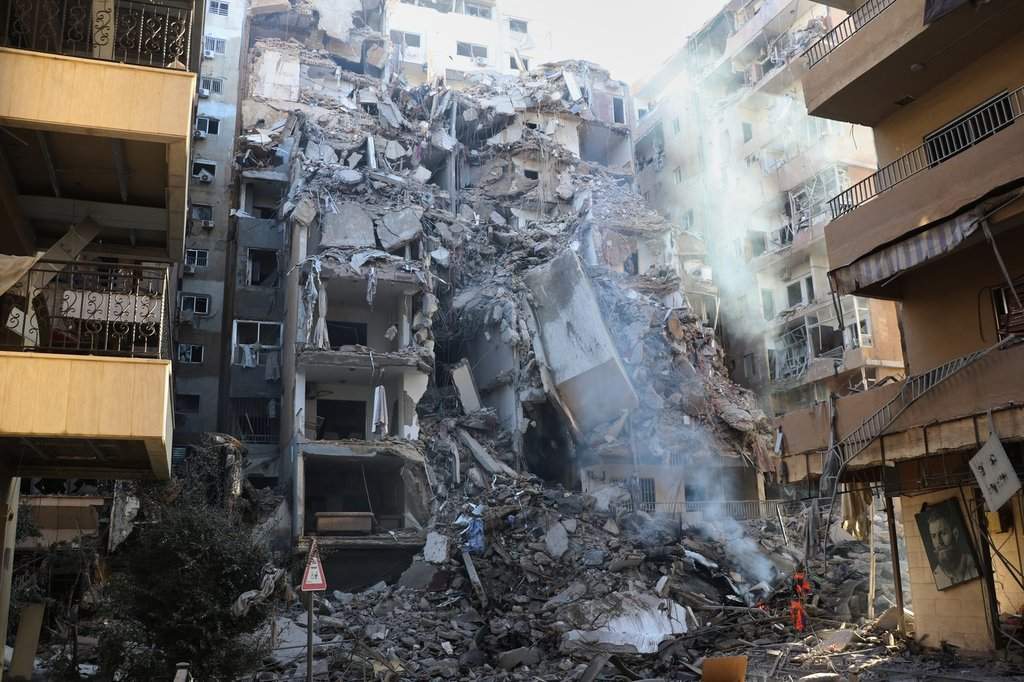
BEIRUT, June 3 — The war between Israel and the Iran-backed Hezbollah has devastated swathes of Lebanon, though a partial de-escalation agreement announced on Monday has averted renewed airstrikes on the capital Beirut for now.Israel seeks to end the threat posed by Hezbollah rocket fire and force the group to disarm but Iran wants an end to the Israeli campaign in Lebanon as part of any settlement with the United States to reopen the Strait of Hormuz.What are H
BEIRUT, June 3 — The war between Israel and the Iran-backed Hezbollah has devastated swathes of Lebanon, though a partial de-escalation agreement announced on Monday has averted renewed airstrikes on the capital Beirut for now.
Israel seeks to end the threat posed by Hezbollah rocket fire and force the group to disarm but Iran wants an end to the Israeli campaign in Lebanon as part of any settlement with the United States to reopen the Strait of Hormuz.
What are Hezbollah’s origins?
Iran’s Revolutionary Guards founded Hezbollah in 1982 during Lebanon’s 1975-90 civil war, part of Tehran’s effort to export its 1979 Islamic Revolution and fight Israeli forces that had invaded Lebanon in 1982.
Hezbollah runs its own social services, including schools and hospitals, and has solid backing among Lebanon’s Shiah Muslims.
Together with its ally, the Amal Movement, Hezbollah dominates the representation of Shiahs in Lebanon’s sectarian ruling system in parliament, the cabinet and other posts.
How did it become so powerful?
While other groups disarmed after Lebanon’s civil war, Hezbollah kept its weapons to fight Israeli forces occupying the predominantly Shiah Muslim south. It retained its arsenal even after Israel withdrew in 2000.
In 2006, during a five-week war, it fired thousands of rockets into Israel. The war erupted after Hezbollah crossed into Israel, kidnapping two soldiers and killing others.
Hezbollah’s arsenal grew after 2006. The US Central Intelligence Agency’s World Factbook said it was estimated to have as many as 150,000 rockets and missiles in 2020 and in 2022 was estimated to have 45,000 fighters.
Hezbollah’s veteran leader Hassan Nasrallah, killed by Israel in 2024, said the group had 100,000 fighters.
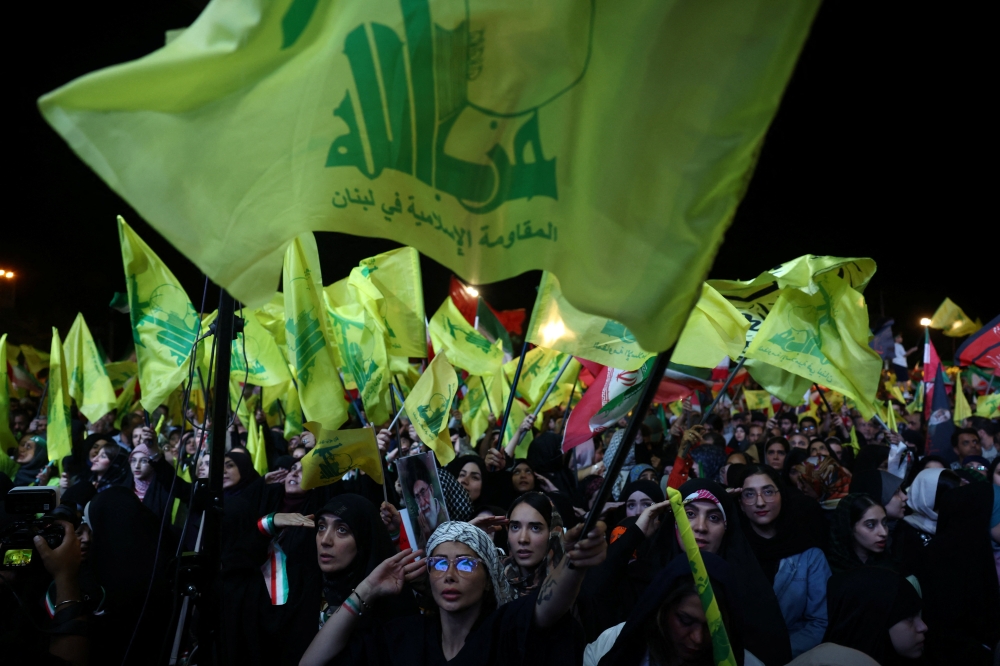
A woman holds an image of Iran's Supreme Leader, Mojtaba Khamenei, and a Hezbollah flag during a rally in Tehran June 1, 2026. — Majid Asgaripour/Wana (West Asia News Agency) pic via Reuters
How did it get involved in the latest war?
After the 2006 war, Hezbollah became involved in conflicts outside Lebanon as the spearhead of the Iran-backed “Axis of Resistance”.
It sent fighters to Syria to help then President Bashar al-Assad fight rebels, aided Iran-backed Shiah militias in Iraq, supported the Houthis of Yemen and deepened ties with Palestinian militant group Hamas.
After Hamas attacked Israel on October 7, 2023, Hezbollah opened fire on Israeli positions in the frontier region, declaring solidarity with the Palestinians.
They traded fire until September 2024, when Israel detonated thousands of booby-trapped pagers used by Hezbollah members, stepped up airstrikes that killed the group’s main leaders and sent troops into south Lebanon.
A ceasefire was announced in 2024 that was meant to halt attacks and see Hezbollah disarmed, but both sides accused each other of repeated breaches.
After Israel and the US attacked Iran on February 28 and killed Iran’s Supreme Leader Ayatollah Ali Khamenei, Hezbollah fired at northern Israel, prompting a major Israeli military campaign into Lebanon.
Israel has seized territory deep into south Lebanon, razing villages, displacing most civilians and establishing a military presence. Hezbollah has fired back with drones and rockets at Israeli forces and into northern Israel.
How badly hit has Hezbollah been?
In the 2024 fighting, Israel killed much of Hezbollah’s command and thousands of fighters and destroyed much of the group’s arsenal.
The toppling of Assad in Syria in December 2024 choked Hezbollah’s main supply route from Iran and tilted the regional power balance against it.
However, Iran’s Revolutionary Guards rebuilt much of Hezbollah’s military command, sending in its own officers and laying plans for the current conflict, Reuters has reported.
Since outright warfare resumed on March 2, Hezbollah has paid a heavy price with as many as several thousand of its fighters killed, according to internal casualty estimates from within the group.
What is Hezbollah’s role in Lebanon?
Hezbollah long had a decisive say over state affairs but was unable to get its way over the formation of the 2025 post-war government, which adopted a policy of establishing a monopoly on arms.
Lebanese have been at odds over Hezbollah’s arms for decades: opponents accuse it of dragging Lebanon into wars, supporters see its weapons as key to defending the country.
After the 2024 conflict, international and local pressure on Hezbollah to disarm grew, and Lebanon’s government began confiscating the group’s weapons in southern Lebanon.
But the group rejected disarming in full, saying it could lead to civil war. Its comments evoked memories of 2008, when Hezbollah fighters took over parts of Beirut in an armed conflict sparked by the government’s vow to take action against the group’s military communications network.
After the 2026 war erupted, the Lebanese state outlawed Hezbollah’s military activities but could do little to halt the fighting.
Terrorism designations
The United States holds Hezbollah responsible for suicide bombings in 1983 that destroyed the US Marine headquarters in Beirut, killing 241 service personnel, and a French barracks, killing 58 French paratroopers. It also blames Hezbollah for a suicide attack on the US Embassy in Beirut in 1983.
Lebanese officials and Western intelligence agencies have said groups linked to Hezbollah kidnapped Westerners in Lebanon in the 1980s. Referring to those attacks and hostage-taking, Nasrallah said in a 2022 interview they were carried out by small groups not linked to Hezbollah.
Western governments, including the United States, and Gulf Arab states, including Saudi Arabia, deem Hezbollah a terrorist group. Some, notably the European Union, have designated its military wing a terrorist group, drawing what critics say is an artificial distinction with its political wing.
Argentina blames Hezbollah and Iran for the bombing of a Jewish community centre in Buenos Aires in which 85 people died in 1994 and for an attack on the Israeli Embassy in Buenos Aires in 1992 that killed 29 people. Hezbollah and Iran deny any responsibility.
A UN-backed court convicted three Hezbollah members in absentia over the assassination of former prime minister Rafik al-Hariri, a Sunni Muslim politician killed in 2005 by a truck bomb in Beirut, along with 21 other people. Hezbollah has denied any role. — Reuters
EXCLUSIVE: Israeli director Ruthy Pribar returns to the Tribeca Film Festival with second film What is to Come next week and Deadline can reveal a first clip. Ronit Yudkevitch stars as Yehudit, a sheltered farmer’s wife who backs out of a suicide pact that leaves her husband dead. She flees the shame and hidden debts […]
EXCLUSIVE: Israeli director Ruthy Pribar returns to the Tribeca Film Festival with second film What is to Come next week and Deadline can reveal a first clip. Ronit Yudkevitch stars as Yehudit, a sheltered farmer’s wife who backs out of a suicide pact that leaves her husband dead. She flees the shame and hidden debts […]
The U.S.-Iran memorandum of understanding pairs the nuclear and Lebanon tracks, creating a situation where Hezbollah's rejection of the U.S.-brokered Lebanon ceasefire could halt nuclear diplomacy, as Iran has engineered the situation to use regional pressure as leverage in negotiations.
The U.S.-Iran memorandum of understanding pairs the nuclear and Lebanon tracks, creating a situation where Hezbollah's rejection of the U.S.-brokered Lebanon ceasefire could halt nuclear diplomacy, as Iran has engineered the situation to use regional pressure as leverage in negotiations.
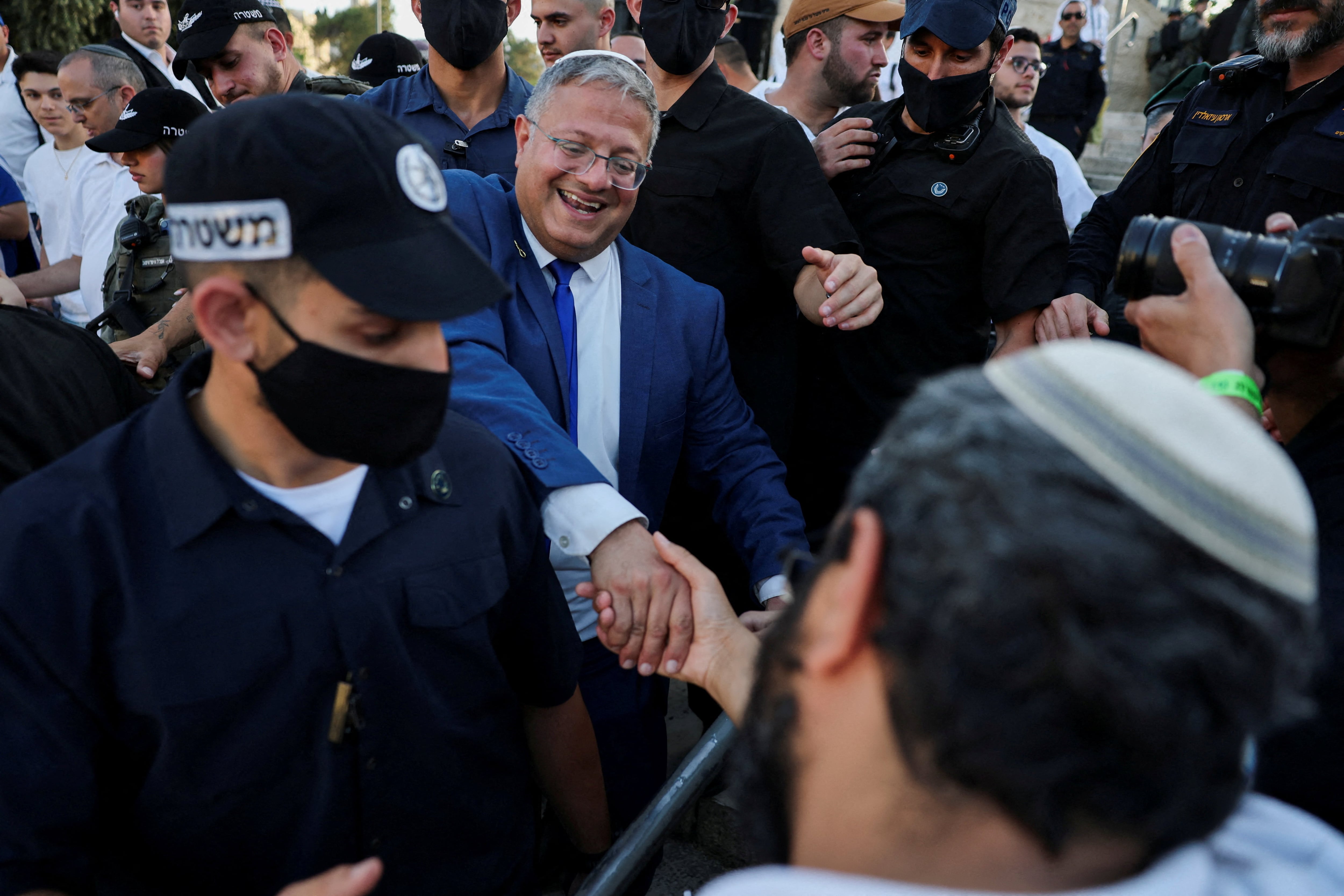
Israel’s National Security Minister Itamar Ben-Gvir remained defiant on May 20, undaunted by international protests triggered by images of him mocking Gaza Flotilla activists, who appeared in videos kneeling and handcuffed with their faces to the floor in the port of Ashdod. “Whoever comes to our territory to support terrorism and identify with Hamas, will receive harsh punishment,” he warned on social networks, after several Western countries, including Spain, Italy, the United Kingdom, Canada,
Israel’s National Security Minister Itamar Ben-Gvir remained defiant on May 20, undaunted by international protests triggered by images of him mocking Gaza Flotilla activists, who appeared in videos kneeling and handcuffed with their faces to the floor in the port of Ashdod. “Whoever comes to our territory to support terrorism and identify with Hamas, will receive harsh punishment,” he warned on social networks, after several Western countries, including Spain, Italy, the United Kingdom, Canada, and Germany, condemned Israel’s treatment of the activists, criticism that has even come from a handful of Israeli leaders. “We will not turn the other cheek,” Ben-Gvir railed.
Follow today’s news liveGet our breaking news email, free app or daily news podcastAlbanese says Australia still impacted by Middle East conflict ‘each and every day’The prime minister, Anthony Albanese, is now on the ABC News Breakfast couch. He said Australia remains concerned about the economic impact of the turmoil in the Middle East.Our job now is to demonstrate that we are a genuine and credible alternative to this terrible Labor government.He’s a great supporter of the party, he’s a great
Albanese says Australia still impacted by Middle East conflict ‘each and every day’
The prime minister, Anthony Albanese, is now on the ABC News Breakfast couch. He said Australia remains concerned about the economic impact of the turmoil in the Middle East.
Our job now is to demonstrate that we are a genuine and credible alternative to this terrible Labor government.
He’s a great supporter of the party, he’s a great supporter of Angus Taylor, I think this is a great opportunity. The Liberal party has always been what John Howard called the broad church: we like having different opinions.
We listen to everybody’s views, and we represent them.
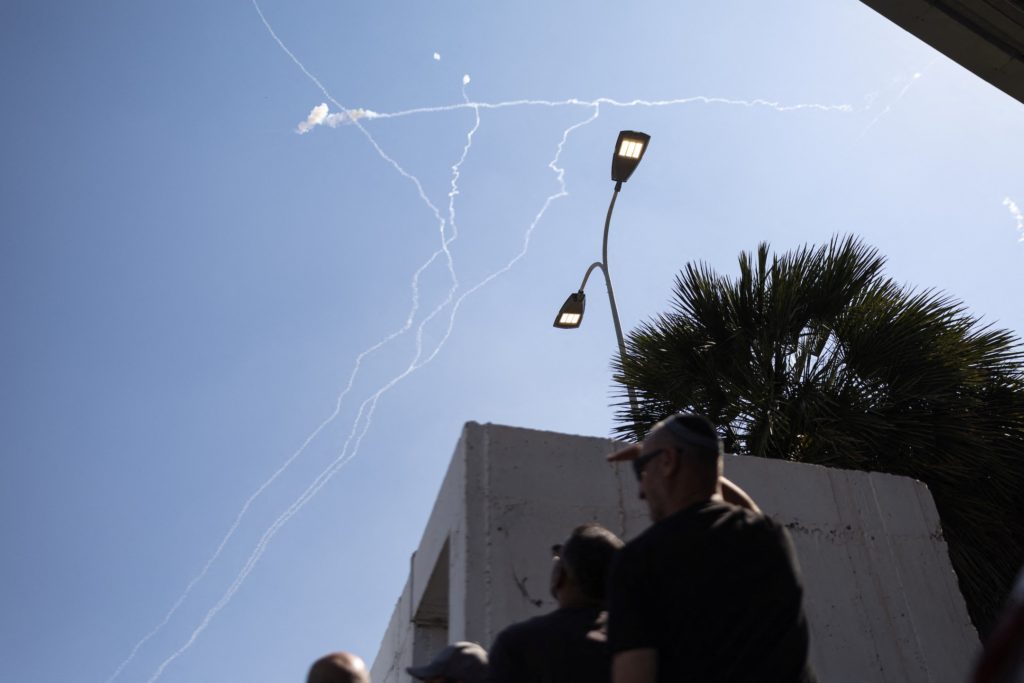
Israel and Iran traded long-range missile strikes for the first time since the ceasefire went into effect two months ago. Both countries appear to have agreed to stop their attacks, but not before sparking fears of a return to full combat in the region. Now, Trump and regional mediators are scrambling to salvage a deal to end the war with Iran. Ali Rogin reports.
Israel and Iran traded long-range missile strikes for the first time since the ceasefire went into effect two months ago. Both countries appear to have agreed to stop their attacks, but not before sparking fears of a return to full combat in the region. Now, Trump and regional mediators are scrambling to salvage a deal to end the war with Iran. Ali Rogin reports.
Ben Shapiro speaks during Turning Point USA's annual AmericaFest conference on December 18, 2025. | Olivier Touron/AFP via Getty Images
Just a few years ago, Ben Shapiro was the defining voice of right-wing media. His podcast sat near the top of the charts. Posts from the Daily Wire, his media company, routinely dominated the competition on Facebook. His team was even coming for Hollywood, putting out “anti-woke” comedies and an epic fantasy series that cost millions per episode.
All th
Ben Shapiro speaks during Turning Point USA's annual AmericaFest conference on December 18, 2025. | Olivier Touron/AFP via Getty Images
Just a few years ago, Ben Shapiro was the defining voice of right-wing media. His podcast sat near the top of the charts. Posts from the Daily Wire, his media company, routinely dominated the competition on Facebook. His team was even coming for Hollywood, putting out “anti-woke” comedies and an epic fantasy series that cost millions per episode.
All that feels like a distant memory now. Shapiro’s social media traffic has collapsed, as the Washington Post’s Drew Harwell recently reported; the Daily Wire has gone through multiple rounds of layoffs since 2025. The epic fantasy series flopped. Shapiro’s struggle to stay relevant is clear on his YouTube page, where you can find painfully forced videos of the pundit reacting to trending culture.
So what happened? Ryan Broderick, a longtime internet culture reporter who publishes the Garbage Day newsletter, has a succinct explanation: “The age-old problem with working at the racism factory! They eventually make a new racism that includes you,” he wrote in May.
To learn more about the Daily Wire’s decline, Today, Explained co-host Noel King spoke with Broderick about how Charlie Kirk’s murder precipitated a MAGA vibe shift that has left Shapiro out in the cold, the new media figures rising to replace him, and whether we will miss Shapiro once he’s gone. (We very likely will.)
Below is an excerpt of their conversation, edited for length and clarity. There’s much more in the full podcast, so listen to Today, Explained wherever you get podcasts, including Apple Podcasts, Pandora, and Spotify.
Explain your “racism factory” line, please.
It was a pithy way to describe what I think is happening to Ben Shapiro right now, which is that he’s found himself on the wrong side of a far-right vibe shift that’s happening.
The question of “Should American conservatives support Israel?” I think, has quickly become the deciding factor in canonizing the new wave of MAGA, or even post-MAGA conservatism in America. There’s a lot of creators on one side who say we should not be involved with Israel. They say that largely for antisemitic purposes, but also because they’re xenophobic and isolationists, but they know that this is a red line that they can go across.
Ben Shapiro cannot follow them there because he is an Orthodox Jew who supports Israel and is a fairly standard conservative, all things considered. And so this is among the many other problems that Shapiro is having right now in trying to hold his digital media empire together.
Alright, so Ben Shapiro’s on one side. As you said, he is unlikely to ever turn his back on Israel. On the other side are people who are going hard at Israel and have been since approximately, I don’t know, October 8, 2023. Who are they? Who are the players here?
The biggest one is Nick Fuentes. He is the de facto leader of this far-right splinter cell movement, the “Groypers.” He’s got a live stream that he’s on every single day, and he’s just the most vile kind of far-right personality you could imagine. But you also have more and more creators, I think, sensing this vibe shift and moving towards him.
Candace Owens was going so far as to even claim that Charlie Kirk was killed by Mossad. You also have Tucker Carlson, Megyn Kelly — a lot of these people I would sort of put in the camp of pretty run-of-the-mill conservative commentators who understand that Trump is not popular, and so they’re trying to feel out new territory there. And then you also have “manosphere” guys like Tim Dillon who have even started to kind of go against Israel.
It is this thing that is happening, and social media, I think, always prioritizes the newest, most taboo idea. And so this would be a new taboo that has been discovered by far-right commentators.
So in that camp of people, you have critics of Israel that run the gamut from Candace Owens, who seems kind of nutty, to Megyn Kelly, who often seems pretty straight. What do they all have in common? Is it just their criticism of Israel?
No, my read on this is that it all stems from Charlie Kirk, actually.
The MAGA movement is not one movement. It is not one ideology. The 2024 winning coalition was this weird mismatch of far-right live streamers, manosphere podcasters, neoconservatives and the TPUSA/Charlie Kirk kind of middle-of-the-road MAGA people. I think Charlie Kirk was very instrumental in holding a lot of this together, if only because it seemed like — to them at least — he was possibly a replacement for Trump.
I’ve read into it as the MAGA movement was trying to home-grow their own version of Trump. Charlie Kirk may have been that figure. He dies, and the whole thing starts to fall apart. And I have to give, unfortunately, some credit to Nick Fuentes here, who has always hated Charlie Kirk.
So Charlie Kirk is killed, and then these alliances form and they fracture and they reform and they refracture. What events of the last, say, eight months do we place in the post-Charlie Kirk’s assassination moment?
It’s a lot of reading the tea leaves of online discourse, I would say. But you know when the movement is working and when they’re all falling in lockstep with one another.
Sydney Sweeney’s jeans would be a good example of [that], or Cracker Barrel. They’ve been able to get this talking point to surface out of their DMs and into the general consciousness. And if you look back at the months immediately after Charlie Kirk’s murder, that hasn’t really been happening the same way. They’re not really working together. They’re fighting with each other a lot, and they’re also telling on each other.
These people are very messy. Even as we speak, Ashley St. Clair is on TikTok sharing secrets from inside the MAGA movement and going on Hasan Piker’s stream. All these guys are unfollowing each other and fighting with each other. And it’s a lot of right wingers who are super dependent on internet attention and monetizing internet attention, and they’re really, really nervous about the internet landscape the same way all digital media publishers are. I think that’s having a negative impact on the stuffiest of the digital media-era people. And Ben Shapiro is the stuffiest.
There is something else that I’ve been thinking about a lot, which is: Ben Shapiro, when he started out, he was so young, and it was like this young man that appealed to people who were much older because he was super well-spoken and he was pugnacious.
Now he just sort of seems old. He seems like he doesn’t really know what he should be doing on TikTok. He seems like he doesn’t really know who in the culture is relevant anymore. You could make the same argument about Tucker Carlson, even though he’s surviving, but he openly seems scared of Nick Fuentes.
Do you think that the guys that we were used to are now the old guys and they know it, and the young guys that are coming after them are worse?
I would say that Ben Shapiro from the very beginning was much better at talking to old people than talking to young people. And it seems like what he was doing was creating a digital media company that looked hip and cool to old people, who would then give him money and he would spend that money on advertising and sort of dominate Facebook and create this flywheel that allowed him to grow pretty quickly.
A lot of the weird preoccupations the Daily Wire has had with dominating Hollywood, for instance, feel very old to me. It feels like an 80-year-old conservative’s fever dream of what the internet could be. Just very strange stuff.
I think it’s only gotten stranger in the last year or two, because it also feels like the Trump movement has kind of moved beyond the need for someone like Ben Shapiro. In the era of DOGE and Project 2025 and ICE occupations [and] JD Vance/AI stuff, none of it feels like Ben Shapiro is really in the mix anymore.
Do you think we’re going to look back in a few years and miss Ben Shapiro for his sort of sobriety?
Yes. I think that when digital publishers on the right, in the early 2010s, began to really lean into the internet, they inadvertently connected American conservatism and by extension global conservatism with the sea changes and tides of internet discourse. And that’s always going to go towards the thing that feels the most dangerous and the most taboo, because that’s what’s most exciting on social media.
If you have every major conservative figure in America making money directly from the internet, there’s no real incentive for them to become more moderate. They’re going to be hitting themselves in the face with hammers and smoking meth and attacking people on the street and going full white nationalist, race-science Substack nonsense. We’re already seeing this. The days of Prager University or the Daily Wire trying to do a sensible conservative’s reaction to Cardi B’s “WAP” or whatever are just not going to come back.
Sen. Lindsey Graham (R-S.C.) on Monday voiced support for President Trump's proposal that Saudi Arabia, Qatar and other Gulf states join the Abraham Accords as part of the U.S. and Iran's negotiations to end conflict in the region. Graham called the expansion "simply brilliant" adding that it would result "in the most significant change in...
Sen. Lindsey Graham (R-S.C.) on Monday voiced support for President Trump's proposal that Saudi Arabia, Qatar and other Gulf states join the Abraham Accords as part of the U.S. and Iran's negotiations to end conflict in the region. Graham called the expansion "simply brilliant" adding that it would result "in the most significant change in...
US President Donald Trump is due to visit China on May 14-15, where he is expected to meet leader Xi Jinping, after delaying an earlier summit because of the Iran war.
US President Donald Trump (left) greets Chinese President Xi Jinping before a bilateral meeting at the Gimhae International Airport terminal, in Busan, South Korea, on October 30, 2025. Photo: The White House, via Flickr.
Here is what Beijing could be hoping to achieve:
What does China want?
Beyond diplomatic niceties
US President Donald Trump is due to visit China on May 14-15, where he is expected to meet leader Xi Jinping, after delaying an earlier summit because of the Iran war.
US President Donald Trump (left) greets Chinese President Xi Jinping before a bilateral meeting at the Gimhae International Airport terminal, in Busan, South Korea, on October 30, 2025. Photo: The White House, via Flickr.
Here is what Beijing could be hoping to achieve:
What does China want?
Beyond diplomatic niceties and behind closed doors, Beijing will be looking for small, concrete achievements, analysts said, but will stay “realistically pragmatic” given Trump’s unpredictable nature.
China wants a broad reset in ties but knows this would be unlikely, said Benjamin Ho from Singapore’s S. Rajaratnam School of International Studies.
Beijing and Washington had been locked in a blistering trade war in which US levies on many Chinese goods reached an eye-watering 145 percent.
The tit-for-tat escalation cooled off after Trump and Xi agreed in October to a one-year truce, with experts saying Beijing’s baseline goal for the upcoming meeting would be to extend that agreement.
“What China needs is for Trump to follow through on his promise to engage, with at least a few concrete outcomes discussed at the highest level,” said Yue Su from the Economist Intelligence Unit (EIU).
Beijing will be satisfied with “targeted” results such as limited tariff reductions that would justify a measured rollback of its own tariffs or export restrictions, she said.
What about the Iran war?
The topic of Iran will be “hard to avoid” in the Trump-Xi meeting, experts said, but “this is not a domain China is eager to engage deeply on”.
“The US is already raising pressure pre-summit on China by targeting its economic ties with Tehran,” said Lizzi Lee at the Asia Society Policy Institute.
Chinese Foreign Minister Wang Yi (right) and Iranian Foreign Minister Abbas Araghchi in Beijing on May 6, 2026. Photo: China’s Ministry of Foreign Affairs.
Trump warned last month he would hit China’s goods with a 50 percent tariff if it provided military assistance to Iran.
Beijing is a close partner of Tehran and has called US-Israeli strikes on Iran illegal, but it has also criticised Iranian attacks on Gulf countries and called for the Strait of Hormuz to be reopened.
However, China will not accept pressure from the United States to take action on Iran or Russia, over whom it “may have some influence but not decisive control”, the EIU’s Su said.
Beijing will also aim to avoid “additional complications” such as new US tariffs linked to China’s trade with Iran being introduced into an “already complex relationship”, Su said.
The Iran war will add “another layer of mutual pressure”, Lee said, but the real negotiating terrain remains in trade and investment.
What are China’s bargaining chips?
One of China’s key bargaining chips is its rare earths — metals crucial in the production of everything from smartphones to electric cars.
China’s dominance in the rare earths industry, from natural reserves and mining through processing and innovation, is the result of a decades-long drive.
It remains China’s strongest tool if meaningful concessions from the United States are needed, Su said.
Trump has shown that he “cares a lot about” rare earths, said Joe Mazur, a geopolitics analyst at Beijing-based consultancy Trivium China.
“I think that’s sort of something that the US doesn’t really have an answer to,” he said.
Mazur thinks that China is “going to line up… quick wins” before the visit, which may include buying more US agricultural products or Boeing jets.
China, he said, might hope “that will put Trump and his team in a positive frame of mind when they’re then discussing more complex, thornier issues”.
How has Beijing prepared?
China has hedged against instability brought about by Trump through diversifying trade towards Southeast Asia and the Global South, and strengthening regional ties, said the Asia Society’s Lee.
However, a lot of these measures, including diversification of energy imports, a push towards electrification and tech self-sufficiency, predate Trump’s second term, Mazur said.
“If this meeting goes exceptionally well, it’s not going to change the trajectory that China’s on,” he said.
“This push to America-proof the Chinese economy is going to continue, no matter what happens.”
Is China confident?
Beijing will enter talks “cautiously confident”, Lee said.
It believes it can absorb pressure better now and is more comfortable playing “a long game” than Trump, who is facing midterm election pressure, she said.
A visit to Beijing by Russian President Vladimir Putin is also on the cards, with Foreign Minister Sergei Lavrov — who met Xi in April — saying it would happen in the first half of this year.
A back-to-back visit would send the message that “just because he (Xi) had a good meeting with Trump, it doesn’t mean that Chinese support for Russia is going anywhere”, Mazur told AFP.
By Mary Yang with Tommy Wang in Hong Kong
Vacuum cleaners and vapes could get more expensive if the Iran war drags on for much longer, Chinese factory owners and traders warn, as the world’s manufacturing hub reels from “crazy” costs.
Weeks of US-Israeli strikes on Iran and the effective closure of the Strait of Hormuz have choked Asia’s oil supply, stymieing the production of plastic — derived from oil — across the region.
Employees work on the vacuum cleaner production line at the RI
Vacuum cleaners and vapes could get more expensive if the Iran war drags on for much longer, Chinese factory owners and traders warn, as the world’s manufacturing hub reels from “crazy” costs.
Weeks of US-Israeli strikes on Iran and the effective closure of the Strait of Hormuz have choked Asia’s oil supply, stymieing the production of plastic — derived from oil — across the region.
Employees work on the vacuum cleaner production line at the RIMOO Electrical Appliance Tech Company in Foshan, in southern China’s Guangdong province, on April 28, 2026. Photo: Pedro Pardo/AFP.
Manufacturing giant China has been comparatively sheltered from fuel shortages thanks to oil reserves and renewable energy, but local factories are picking up a ballooning raw materials bill.
“Basically, we’ve been losing money on all our orders,” said Bryant Chen, a manager at vacuum cleaner factory RIMOO in southern Guangdong province’s Foshan.
The price of plastic has risen roughly 50 percent since before the Iran war, Chen told AFP as workers behind him fastened suction tubes to metal tanks.
“The costs of the products that we are making are being very greatly affected,” the 42-year-old said, listing plastic, copper for the vacuum’s motor and raw materials in its power cords.
“Typically at this time we’d be entering peak season, but compared to the same period previously, shipment and production data aren’t very optimistic.”
Two hours away, plastic traders in storage hub Zhangmutou said price fluctuations were the worst they’ve seen in decades.
“It has never been this crazy,” said Li Dong, 46, who entered the industry two decades ago.
The plastic, rice-sized pellets he buys for local phone cases and EV battery factories jumped wildly in March, triggering days of panic that jammed the small town’s roads as factories rushed to stock up.
‘Mutual state of decline’
Exporters in Zhangmutou showed AFP a vast range of products their pellets would become, including drones and badminton birdies.
One trader sifted through pink, green and purple beads that she said would be moulded into e-cigarette casings sold in the Middle East.
The Iran war has hit plastic production even harder than bottlenecks caused by the Covid pandemic, when ships could not come and go from China, Li said.
Employees work at the Zhangmutou Plastic Raw Material Market in Dongguan, in southern China’s Guangdong province, on April 29, 2026. Photo: Pedro Pardo/AFP.
Some sellers cashed in on the plastic panic, he added, fighting to take advantage of surging costs.
Li said the price of plastic had dropped around 10 to 20 percent from its height, but he cautioned against further oil hold-ups.
“The factories we supply to will suffer the most because their direct costs will rise,” he said.
For exporters, the Middle East crisis has added to the hangover still lingering from Donald Trump’s sweeping global tariffs last year.
The US Supreme Court struck down those levies as illegal, but tolls on Chinese goods entering the US still sit at around 20 percent.
On the outskirts of Guangzhou, one garment factory owner lamented the chaos triggered by the US president’s trade war.
Overseas clients are afraid to place orders, while Chinese manufacturers cannot pin down changing costs.
“As a result, everyone is in a mutual state of decline,” garment boss Zhou, 55, said.
While 80 percent of his clients have returned, the fabrics scattered on his factory floor made into sweatpants headed for Europe and North America have risen 10 to 20 percent in cost due to the Middle East war.
As overseas orders dropped, seamsters went months without a job.
‘Tensions rise, orders disappear’
Migrant worker Jingjing returned to her hometown in Hubei province for two months, where she made half the 400 yuan (US$60) she now earns in Guangzhou’s garment factories.
“When tensions rise… orders suddenly disappear,” the 42-year-old said.
But this year she said she always has something to do.
Job-seeking labourers and recruiters from clothing factories on a street in an urban village in Guangzhou, in southern China’s Guangdong province, on April 27, 2026. Photo: Pedro Pardo/AFP.
In a damp back alley, Jingjing joined job-seekers milling about leisurely, haggling for higher wages while garment bosses perched on scooters brandished hiring signs, desperate for day labourers.
Chen, the vacuum factory manager, said he was “still worried” about surging shipping costs should the Iran war drag on.
“If shipping costs rise, it will cause the final costs for our customers to increase sharply,” he said.
They “will have no way to sell normally, because the costs are just too high”.
Chen said RIMOO plans to expand to other markets beyond the Middle East where around 60 percent of its customers are based.
“We are still optimistic,” he said. “The market demand still exists.”
But analysts warn the war’s impact on costs will be felt for months.
“The problem is all of these costs will filter through the supply chains for the rest of the year,” said supply chain consultant Cameron Johnson.
“The longer it goes on, that kind of cascades into much bigger problems, particularly if there’s not enough oil in general to run stuff.”
Democratic strategist David Axelrod said Monday night that President Trump's reported outburst at Israeli Prime Minister Benjamin Netanyahu on a phone call earlier in the day was justified. Trump reportedly slammed Netanyahu over the prime minister’s plan to attack Hezbollah targets in southern Beirut, an escalation of the war in Lebanon that prompted Iran to...
Democratic strategist David Axelrod said Monday night that President Trump's reported outburst at Israeli Prime Minister Benjamin Netanyahu on a phone call earlier in the day was justified. Trump reportedly slammed Netanyahu over the prime minister’s plan to attack Hezbollah targets in southern Beirut, an escalation of the war in Lebanon that prompted Iran to...

 Login
Login