Normal view

Lebanon’s president refuses to meet Netanyahu until war ends – as it happened

This live blog is now closed. For the latest, read more of our coverage on the Middle East conflict here.

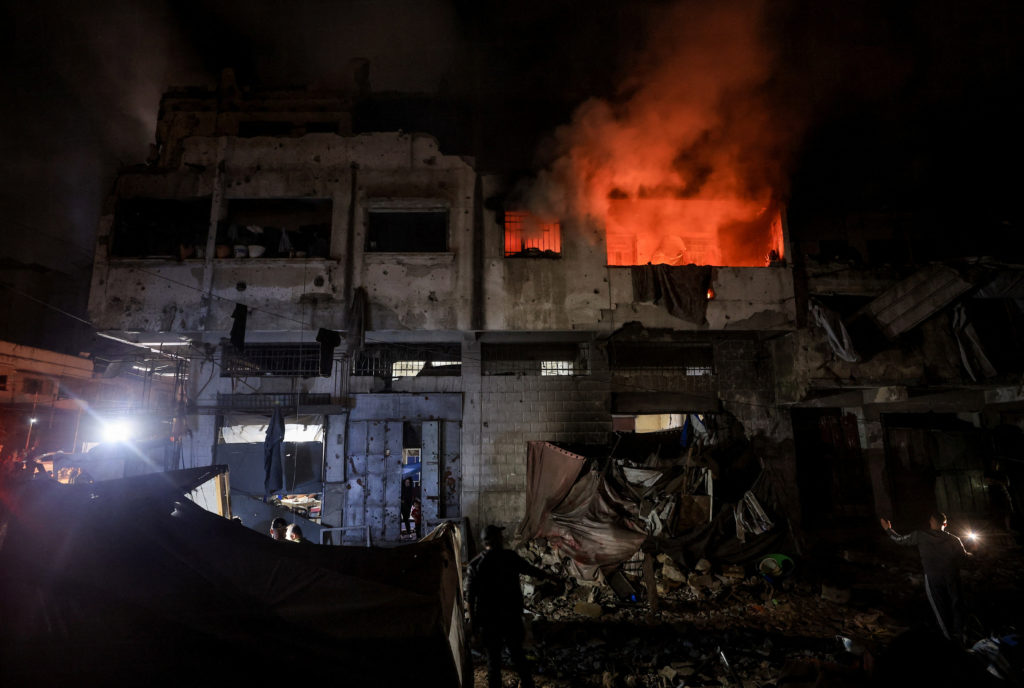
Iranian media is reporting that there were no immediate casualties following apparent Israeli strikes on the Karun petrochemical plant in Mahshahr, a city in Iran’s southwestern Khuzestan province.

According to the Fars news agency, Iran’s Revolutionary Guards said they responded to what they described as an American-Israeli strike on the Iranian petrochemical site by launching a missile attack on a similar plant in the northern Israeli city of Haifa.

Continue reading...

© Photograph: Naama Stern/Reuters

© Photograph: Naama Stern/Reuters

© Photograph: Naama Stern/Reuters

  • ✇Malay Mail - All
  • Israeli strikes kill 11 near Tyre after evacuation warning for southern Lebanese city
     TYRE, June 10 — Israeli airstrikes on the historic city of Tyre in southern Lebanon and surrounding areas killed 11 people yesterday amid an Israeli military warning for the entire city to evacuate.Israel’s army said its forces killed a gunman who had managed to infiltrate Israeli territory from Lebanon and opened fire on its troops.Lebanon’s state-run National News Agency (NNA) reported raids on more than a dozen other locations across the country’s south, as I
     

Israeli strikes kill 11 near Tyre after evacuation warning for southern Lebanese city

10 June 2026 at 00:41

Malay Mail


TYRE, June 10 — Israeli airstrikes on the historic city of Tyre in southern Lebanon and surrounding areas killed 11 people yesterday amid an Israeli military warning for the entire city to evacuate.

Israel’s army said its forces killed a gunman who had managed to infiltrate Israeli territory from Lebanon and opened fire on its troops.

Lebanon’s state-run National News Agency (NNA) reported raids on more than a dozen other locations across the country’s south, as Israel pressed on with its war against the militant group Hezbollah.

An Israeli strike near Tyre killed three people in the southern Lebanese city, the health ministry said, taking the death toll up to 11 in the region.

The strike also wounded nine people, including two women, the ministry added, further confirming an earlier toll of eight dead.

The action came despite a warning the day before from Iran that it would resume attacking Israel if it continued striking its neighbour.

Tehran insists that Lebanon must be part of any deal to end the wider Middle East war, which Hezbollah pulled Lebanon into by attacking Israel in support of its backer Iran.

Hezbollah urged Lebanese authorities to mend their relationship with the group’s backer Iran and benefit from Tehran’s support, days after Iran struck Israel in response to bombardment on south Beirut.

Last week Lebanon’s president and prime minister issued pointed calls for Tehran to stop interfering in their country’s affairs, after Hezbollah rejected a conditional ceasefire with Israel.

Residents fleeing 

An AFP correspondent saw residents of Tyre, including from the Christian quarter, fleeing and heavy traffic heading north after the Israeli warning.

Another correspondent in the coastal city of Sidon, further north, saw displaced people arriving from Tyre, some with belongings hastily strapped to the roofs of their cars.

Israel has repeatedly struck the city of Tyre since the latest war erupted with Hezbollah, following the militants’ rocket fire at Israel on March 2 to avenge the killing of Iran’s supreme leader.

But until yesterday, Tyre’s Christian quarter in the Old City—a small, picturesque area where displaced people had sought refuge—had been spared Israeli evacuation warnings targeting the rest of the city in the ongoing war.

“Urgent warning to the residents of the city of Tyre, including the Christian quarter, and the camps and surrounding neighbourhoods,” the Israeli army warning on X read, referring to several Palestinian refugee camps in the area.

“For your safety, we ask you to immediately evacuate your homes... and move north of the Zahrani River.”

“The neighbourhood is empty, some people are packing their belongings to leave, and others have already left... and only a few people remain,” municipal council member Walid al-Tawil said.

Most people left for Sidon or Beirut, he added.

The Zahrani River is around 30 kilometres (20 miles) north of Tyre. The Israeli army last month declared all areas south of the river “combat zones”.

Rising toll 

The NNA reported an Israeli strike on Tyre’s outskirts before the evacuation notice was issued, and further strikes on the city after the warning.

The health ministry earlier said the pre-warning strike killed at least eight people and wounded 32 others, with rescuers still searching rubble for survivors.

Hezbollah, the only Lebanese group that refused to surrender its arsenal after a civil war ended in 1990, has also kept up its attacks on Israeli troops who have invaded south Lebanon.

Last week, Israel’s military alleged that Hezbollah members were operating in Tyre’s Christian quarter and said it would warn people to leave if the group remained there.

An AFP correspondent said some people who had been sleeping in cars or tents at the edge of the quarter left for other parts of the city after that warning.

Lebanese authorities say Israeli attacks since March have killed 3,666 people and displaced more than one million others.

On the Israeli side, 29 soldiers and one civilian contractor have been killed in Lebanon, according to the army.

Neither side has respected a ceasefire first announced in mid-April. — AFP


Israeli attack on Tyre in Lebanon kills eight as evacuation ordered for Christian quarter

People flee historic district of ancient city after airstrikes hit residential areas and damage archaeological sites

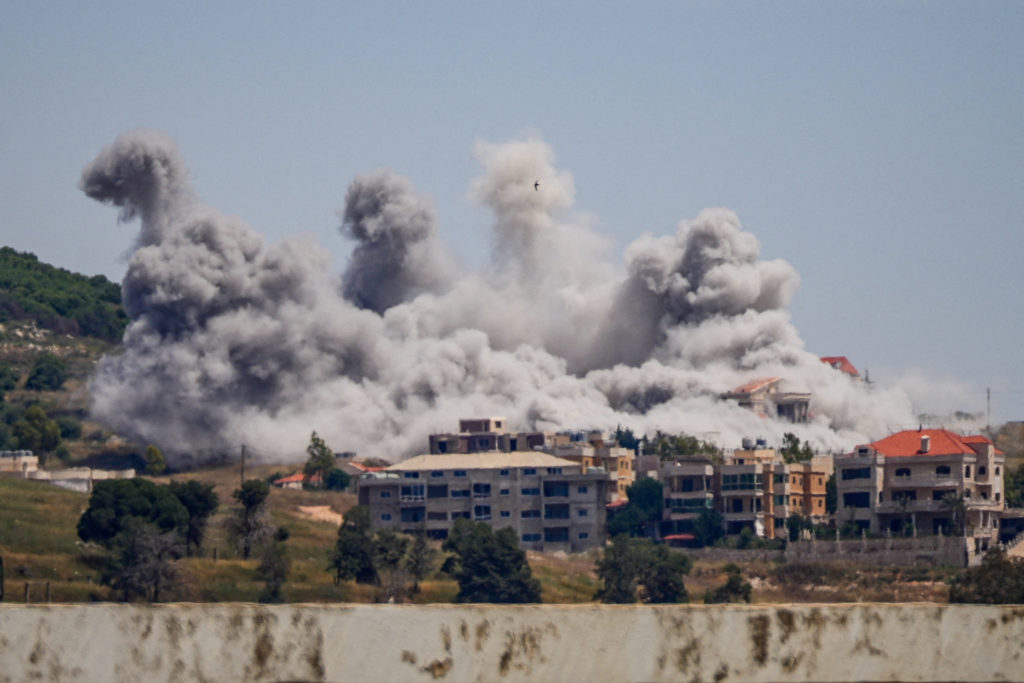
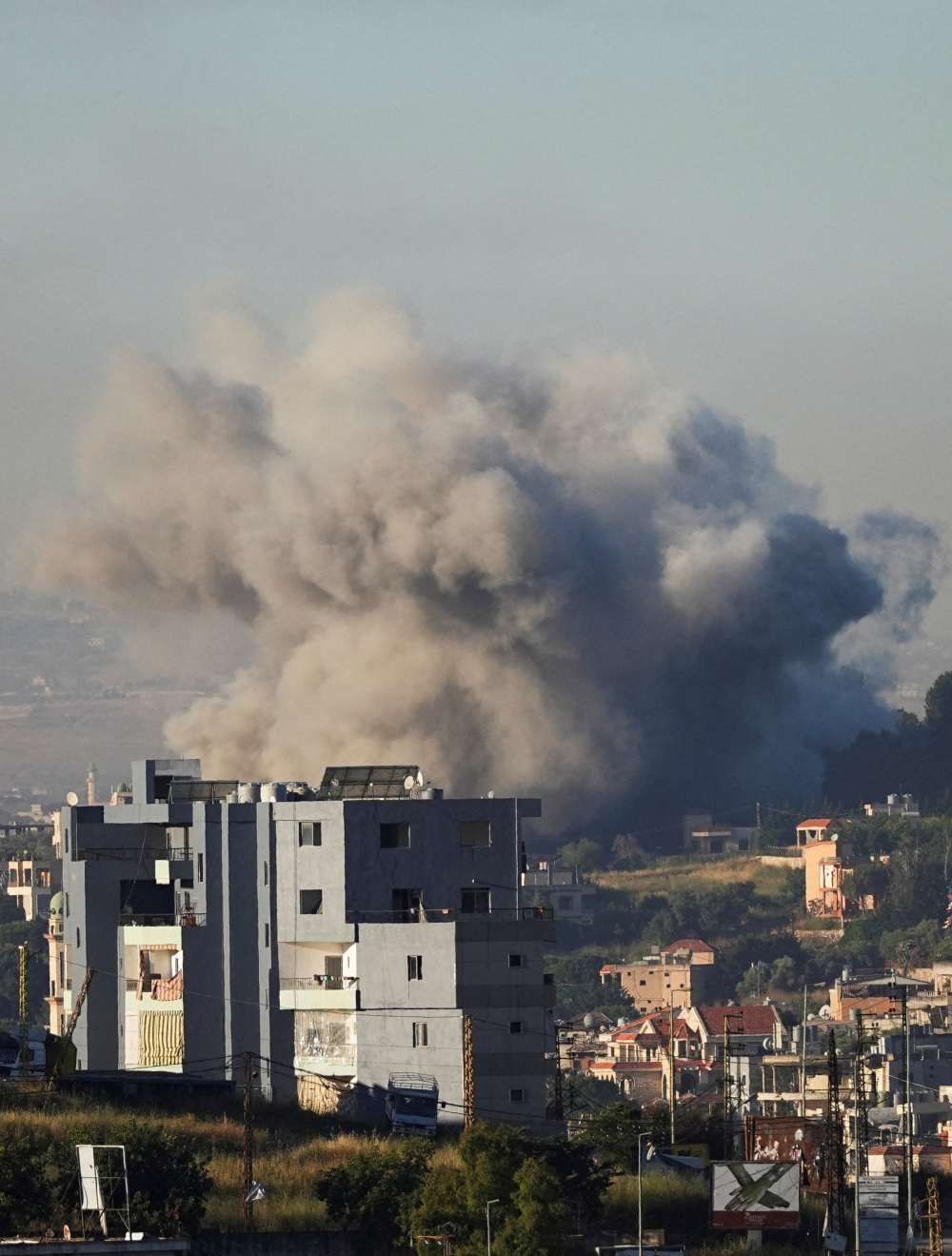
Israel has bombed the city of Tyre, killing eight and injuring at least 32 people, and struck dozens of other villages in south Lebanon as it issued forced evacuation orders for the historic Christian quarter of the ancient city for the first time.

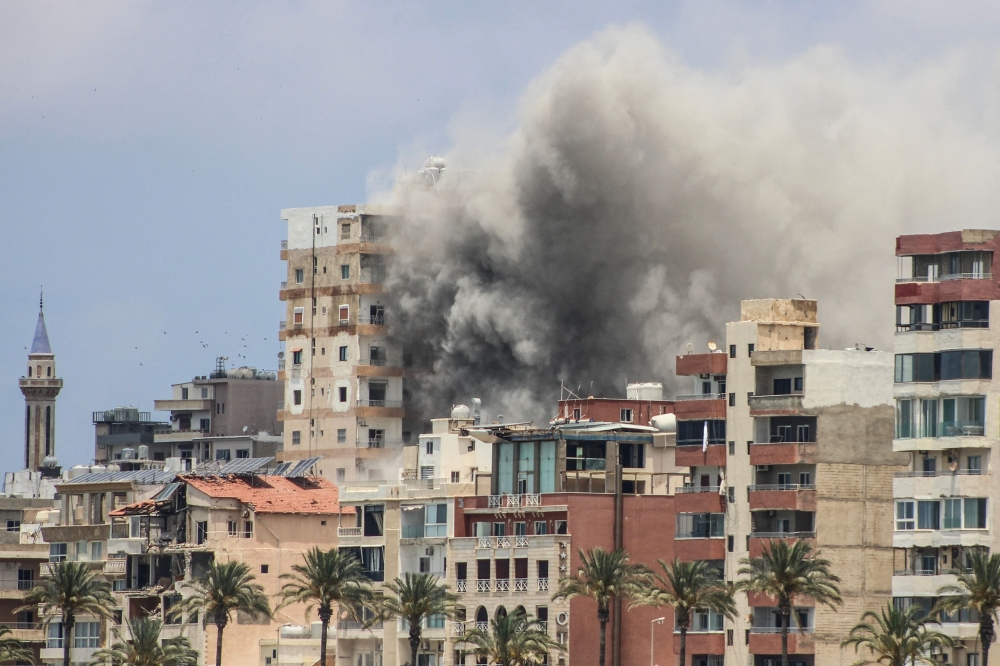
Israel struck the al-Masaken neighbourhood without warning on Tuesday morning, sending smoke plumes high above the city’s buildings and igniting fires. Further airstrikes were carried out across the city and a series of bombings hit Abbasieh, a village north of Tyre.

Continue reading...

© Photograph: Kawant Haju/AFP/Getty Images

© Photograph: Kawant Haju/AFP/Getty Images

© Photograph: Kawant Haju/AFP/Getty Images

  • ✇Malay Mail - All
  • ‘Everybody hates you now’: Trump’s ‘crazy’ rebuke undercuts Netanyahu at a critical moment
    Leaked Trump call exposes strains with NetanyahuEpisode dents Netanyahu’s image before electionFriction focuses on Lebanon strikes, war strategyAllies insist ties intact despite tensionsWASHINGTON, June 5 — Benjamin Netanyahu has long portrayed himself to the Israeli public as being uniquely adept in dealing with ‌Donald Trump, capable of winning and sustaining the US president’s backing.But an acrimonious phone call this week where the president called the prime
     

‘Everybody hates you now’: Trump’s ‘crazy’ rebuke undercuts Netanyahu at a critical moment

5 June 2026 at 11:21

Malay Mail

  • Leaked Trump call exposes strains with Netanyahu
  • Episode dents Netanyahu’s image before election
  • Friction focuses on Lebanon strikes, war strategy
  • Allies insist ties intact despite tensions

WASHINGTON, June 5 — Benjamin Netanyahu has long portrayed himself to the Israeli public as being uniquely adept in dealing with ‌Donald Trump, capable of winning and sustaining the US president’s backing.

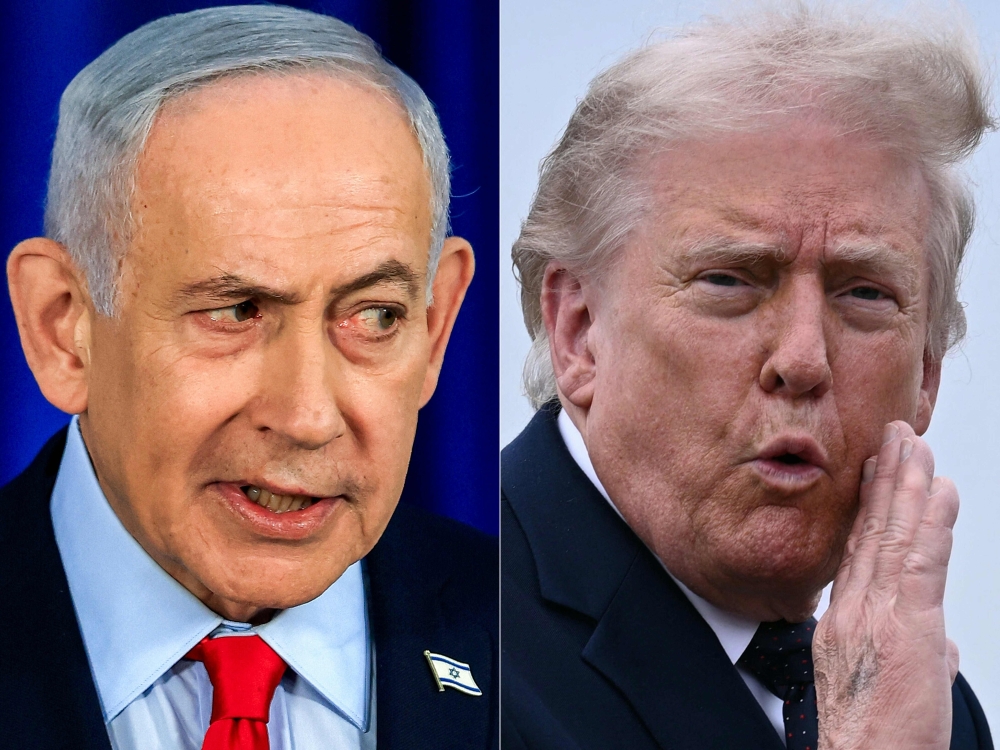
But an acrimonious phone call this week where the president called the prime minister “f***ing crazy”, first leaked to the media and later publicly confirmed by Trump himself, laid bare the strains that have at times emerged between the two leaders.

Israeli officials, speaking on condition of anonymity, acknowledged the call was among the most heated the premier has had with Trump. One of the officials said the leak had damaged Netanyahu politically ahead of this year’s national election.

The US website Axios broke news of the call on Monday, saying Trump had angrily confronted Netanyahu ‌over Israeli threats to resume air strikes on Beirut’s southern suburbs. “Everybody hates you now. Everybody hates Israel because of this,” Trump was quoted as saying.

The US president told Netanyahu not to target Beirut after Iran had warned that Israeli strikes in Lebanon were undermining talks to end the war, which began with joint US-Israeli attacks and which is deeply unpopular among Americans.

US-Israel differences ‘now very public’, says think-tank head

A senior Israeli official told Reuters that Netanyahu had made clear to Trump that any pause in Israeli plans to strike Beirut would only work if Hezbollah stopped hitting northern Israel. Trump was receptive to this position, the official said.

Following their call, Trump said Israel and Hezbollah had agreed to stop shooting each other, prompting accusations by Netanyahu’s political opponents, and some within his own government, that he had ceded Israel’s sovereignty to the US

“A total protectorate,” said opposition leader Yair Lapid, suggesting Netanyahu had put Israel in the position of an American client state.

Netanyahu, Israel’s longest serving prime minister, has repeatedly clashed with Republican and Democratic administrations. Yet, Israel has remained Washington’s closest Middle East ally.

Nimrod Goren, the president of Mitvim, an Israeli think tank, said “the differences are now very public”, unlike in the past when they were usually quietly managed behind closed doors.

Trump told the New York Post on Wednesday that he was “a little bit perturbed” by Netanyahu constantly attacking Lebanon, but added: “We’ve worked very well together.”

Trump’s decision to join Israel in striking Iran, not once but twice in the space of a year, appeared to mark a major victory for Netanyahu, who had spent decades urging Washington to use its military power to halt Tehran’s nuclear programme.

But Trump has also taken a series of steps that many in Israel have viewed as cutting against the country’s interests, including ending US strikes on Yemen’s Iran-backed Houthis, lifting sanctions on Syria’s President Ahmed al-Sharaa, and ordering a halt to Israel’s 12-day war with Iran ‌in June 2025.

Israel not directly involved in US-Iran peace talks

And while the United States and Israel jointly launched the campaign against Iran in February, Israel has not been directly involved in the US-Iran talks to end the war. Those negotiations have been conducted through Pakistan, ⁠a rare intermediary that has no formal diplomatic ties with Israel.

The wars with Iran and Hezbollah have been widely popular in Israel, including ⁠among supporters of Netanyahu’s political rivals, and much of the public wants the fighting to continue.

That stands in contrast to the US, where many voters -including members of Trump’s conservative base — ⁠oppose the war.

Trump has repeatedly said that the US was close to an agreement ⁠with Iran on ending the war. Tehran insists any deal include ⁠Israel halting attacks on its ally Hezbollah in Lebanon.

“We are basically being forced to stop,” said Israeli pollster Mitchell Barak. “We don’t have a say in this anymore.”

At the start of this year’s war with Iran, Netanyahu said that the Iranian government would be toppled, and its nuclear and missile programmes destroyed. He has also said that Hezbollah, which attacked Israel in March in support of Iran, must be disarmed in southern Lebanon. So far, none of these goals have been achieved.

Recent domestic polls have repeatedly shown that Netanyahu’s coalition government, the most right-wing in the ⁠country’s history, would fail to win a majority at the next election.

Netanyahu, Goren said, was working to accommodate Trump’s demands because the Israeli premier will need the president’s support closer to the elections, including a possible visit by the US leader to Israel. Before the war with Iran, Trump was widely expected in Israel to visit in April to be awarded the state’s highest civilian honour. He last visited in October.

Notion of Trump-Netanyahu rift overstated, ex-adviser says

But some Israelis were not comfortable with the extent that Trump appears able to influence Israeli military decisions, Goren said. In contrast, in the US, some Trump critics say that Netanyahu has outsized influence on US foreign policy.

Itamar Ben-Gvir, Netanyahu’s national security minister said yesterday that there are times when an Israeli leader must know how to say “no” even to the US president.

Nadav Strauchler, a former Netanyahu adviser, said the Israeli premier was counting on Trump’s support in the election.

“The way the war (with Iran and Hezbollah) will end will affect, more than anything, the result of the election.”

Trump has often lavished public praise on Netanyahu ⁠and has publicly lobbied Israel’s president to pardon the prime minister, who is on trial in Israel on corruption-related charges.

But Trump has also publicly emphasised how much, he says, Israel needs Washington, and has used expletives in the past when talking about Israel, including publicly saying last year that Israel and Iran “don’t know what the f*** they are doing.”

For his part, Netanyahu describes Trump as “the greatest friend Israel has ever had in the White House”, offering the kind of ⁠public praise that resonates with the Republican president, who is known to prize personal loyalty and validation.

Since the US and Israel opened the war with Iran, Netanyahu has at times said that he speaks with Trump almost daily, often characterising their relationship to the Israeli public as one between ⁠peers who make decisions together.

Asked about ⁠the call in an interview with CNBC on Wednesday, Netanyahu said that like in the “best of families” there at times had been “tactical disagreements” with the US president.

A US official told Reuters the phone call was one of several in which the president has been very direct with Netanyahu but that the two remain friends and close allies.

“Their conversations are pretty direct,” the official said.

The official, and another Israeli source briefed on the US-Israel relationship, dismissed any suggestion of a material change in the relationship between Netanyahu and Trump.

However, the Israeli source acknowledged that the leak of the call — and Trump’s subsequent confirmation of it — ‌was not helpful to Netanyahu ahead of an election that he is polling to lose.

 Strauchler, the former adviser to Netanyahu, said the perception of a rift with Trump was overstated and that the two leaders still appeared to remain aligned on most major issues.

But an abrupt end to the wars with Iran and Hezbollah, however, would pose a “huge problem”: for Netanyahu, he said, as many Israelis would see it as Trump having forced his hand.

“No one wants here to feel like we are another star on the (US) flag.  We want to feel independence,” Strauchler said. — Reuters

 

Israel and Lebanon agree to renew fragile ceasefire, create Lebanese security zones

4 June 2026 at 00:07
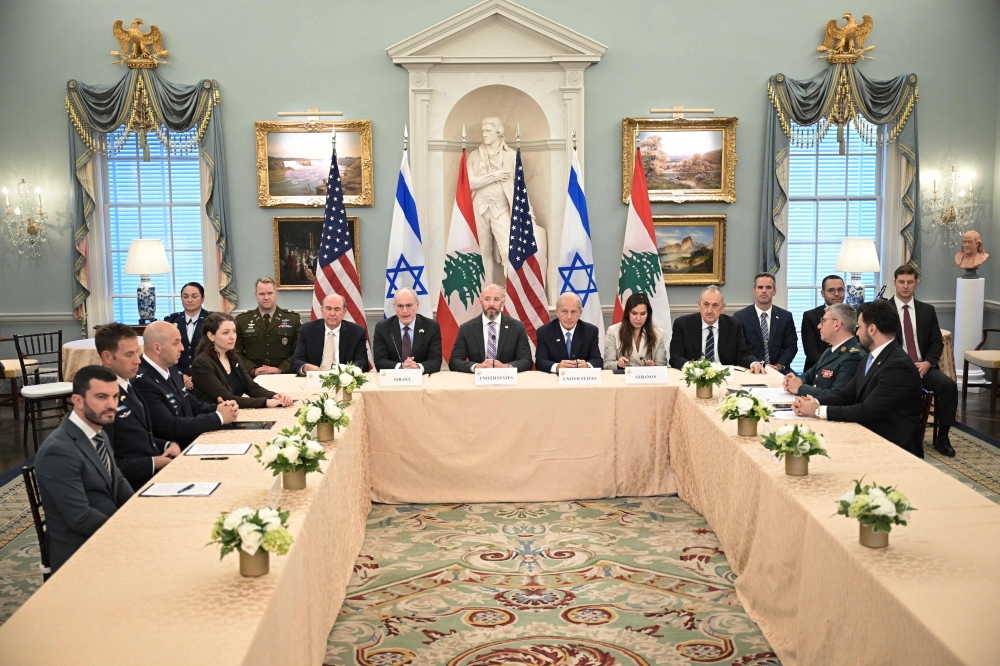
In a joint statement released after a fourth round of U.S.-mediated talks at the State Department, the two sides said the ceasefire "is contingent on a complete cessation of Hezbollah fire and the evacuation of all Hezbollah operatives" from areas south of the Litani River.

As Israel Steps up Air Strikes in Lebanon, Beirut’s Metropolis Cinema Forges Ahead With South Screens Festival That Oliver Laxe Will Attend

27 May 2026 at 15:23
As Israel steps up air strikes in Lebanon, Beirut’s beloved Metropolis Cinema – championed by Lebanese filmmakers as an indie cinema beacon amid bombings, despair and dysfunction – has announced it is forging ahead with the second edition of its South Screens (Écrans du Sud) festival. “In times shaped by war, silence, and uncertainty, we […]

  • ✇Malay Mail - All
  • MAF confirms Malbatt personnel safe after Lebanon mortar attack kills Spanish UN peacekeeper
    KUALA LUMPUR, June 5 — The Malaysian Armed Forces (MAF) has confirmed that all personnel of the Malaysian Battalion (Malbatt) 850-13 serving in southern Lebanon are safe and unaffected following a mortar attack on UNP 7-2, the Spanish Battalion (Spanbatt) position in the Eastern Sector, on Wednesday.In a statement today, the MAF said the incident, which occurred at 11.20pm local time, left three Spanbatt peacekeepers injured, while one of them was confirmed dead
     

MAF confirms Malbatt personnel safe after Lebanon mortar attack kills Spanish UN peacekeeper

5 June 2026 at 08:23

Malay Mail

KUALA LUMPUR, June 5 — The Malaysian Armed Forces (MAF) has confirmed that all personnel of the Malaysian Battalion (Malbatt) 850-13 serving in southern Lebanon are safe and unaffected following a mortar attack on UNP 7-2, the Spanish Battalion (Spanbatt) position in the Eastern Sector, on Wednesday.

In a statement today, the MAF said the incident, which occurred at 11.20pm local time, left three Spanbatt peacekeepers injured, while one of them was confirmed dead yesterday morning.

“The MAF extends its condolences to the family of the fallen Spanbatt peacekeeper and prays for the swift recovery of those injured,” the statement said.

The MAF reiterated its firm position that any form of attack, including indirect fire targeting peacekeeping forces, constitutes a serious violation of international humanitarian law and the United Nations Security Council Resolution 1701.

“As a tactical response to this development, the security and base protection profile of the Malbatt 850-13 contingent has been immediately elevated to the highest warning level (Status Level Red).

“All patrol movements have been temporarily suspended. The contingent is now operating under the strictest Standard Operating Procedure and defensive Rules of Engagement as stipulated by the Unifil Headquarters,” the statement said.

The statement added that the MAF, through the Joint Forces Headquarters, is continuously monitoring the operational situation to ensure the highest level of safety for Malaysian personnel carrying out their mandate in the conflict zone. — Bernama

  • ✇Malay Mail - All
  • Israel and Lebanon have a new ceasefire plan — but Hezbollah isn’t buying it
    BEIRUT, June 5 — Israel and Lebanon have agreed to implement a ceasefire that would require Hezbollah to stop firing, withdraw from near the border and would see Lebanon’s army deploy in new “pilot zones” in the area.The Iran-backed group has rejected the proposed arrangement, instead demanding a comprehensive ceasefire and the withdrawal of Israeli troops from Lebanon.AFP examines the agreement, announced in a joint statement after a fourth round of US-led talks
     

Israel and Lebanon have a new ceasefire plan — but Hezbollah isn’t buying it

5 June 2026 at 13:00

Malay Mail

BEIRUT, June 5 — Israel and Lebanon have agreed to implement a ceasefire that would require Hezbollah to stop firing, withdraw from near the border and would see Lebanon’s army deploy in new “pilot zones” in the area.

The Iran-backed group has rejected the proposed arrangement, instead demanding a comprehensive ceasefire and the withdrawal of Israeli troops from Lebanon.

AFP examines the agreement, announced in a joint statement after a fourth round of US-led talks between Israel and Lebanon in Washington on Wednesday.

South of the Litani 

According to the statement, the ceasefire is “contingent on a complete cessation of Hezbollah fire and the evacuation of all Hezbollah operatives” from south of Lebanon’s Litani River, which runs around 30 kilometres from the border.

Under a November 2024 ceasefire that sought to end a previous round of fighting between Israel and Hezbollah, the group’s fighters were supposed to withdraw north of the river and the Lebanese army was to dismantle the group’s military infrastructure in the area.

In January, the army said it had finished doing so — but weeks later, fighting erupted there once again when Hezbollah drew Lebanon into the Middle East war on March 2.

A Hezbollah official told journalists last month that the group had managed to send reinforcements and weapons to the area after the war began.

Israel’s ambassador to the United States, Yechiel Leiter, who was part of Wednesday’s talks in Washington, told reporters that “the first step is that the Hezbollah fighters, these terrorists who have come down to the south have to go back to the north”, saying they numbered more than 2,000.

“We will guarantee them safe passage as long as they leave,” he said.

“But after a certain amount of time — which is not very long — if they don’t make their way back to the north, then they know exactly what’s coming,” he added.

‘Pilot zones’ 

The agreement includes the creation of “pilot zones” where Lebanon’s army “will take exclusive control of the territory to the exclusion of all non-state actors”.

Lebanese Prime Minister Nawaf Salam said the army’s planned deployment in such areas was a tangible step that “does not prejudice our right to a full (Israeli) withdrawal, but brings us closer to it”.

Michael Young of the Carnegie Middle East Center think tank, in Beirut, said the plan “is full of pitfalls, full of potential problems and ambiguities”.

“But it’s the first serious plan... where they are addressing Hezbollah’s disarmament,” he told AFP.

Young said that allowing the army to take control of the pilot zones after Hezbollah’s withdrawal would avoid a confrontation between Lebanon’s military and the militants.

The plan implies US recognition “that a full-front assault on Hezbollah to disarm the militia is not a realistic option” for Lebanon’s army, he said.

‘Political decision 

Lebanese authorities, who have been under US and Israel pressure to disarm Hezbollah, took the largely symbolic step of banning the group’s military activities after it attacked Israel on March 2.

But they stopped there, in part fearing that the unity of the underfunded, under-resourced force, which counts some 80,000 personnel, could crack in case of a confrontation with the powerful Iran-backed group.

“The army won’t fight any domestic Lebanese component... it doesn’t want to start a civil war,” said retired Lebanese military general Khalil Gemayel, who once commanded forces south of the Litani.

“Disarming Hezbollah requires a political decision” as happened with other militias after Lebanon’s 1975-1990 civil war, he added. — AFP

Foreigner’s Guide to Gun shooting in Lebanon

By: sareen
2 February 2015 at 07:08

Foreigner’s Guide to Gun shooting in Lebanon

Not to mention that gun shooting also happens at births! But don’t forget, if there’s no rocket launched, then it’s a baby girl that was born. I swear we live in a zoo….
❌
Subscriptions