Normal view

  • ✇Malay Mail - All
  • State government moves to strengthen public transport ecosystem ahead of RTS debut
    JOHOR BAHRU, May 22 — RTS Operations Pte Ltd (RTSO) has described the Johor state government’s proactive and comprehensive plan to strengthen public transport ecosystem integration as a timely move ahead of the operationalisation of the Johor Bahru–Singapore Rapid Transit System (RTS) Link next year.RTSO chairman Datuk Khairil Anwar Ahmad said the initiative, which includes improvements to pedestrian connectivity, would help facilitate smooth passenger movement.H
     

State government moves to strengthen public transport ecosystem ahead of RTS debut

22 May 2026 at 12:17

Malay Mail

JOHOR BAHRU, May 22 — RTS Operations Pte Ltd (RTSO) has described the Johor state government’s proactive and comprehensive plan to strengthen public transport ecosystem integration as a timely move ahead of the operationalisation of the Johor Bahru–Singapore Rapid Transit System (RTS) Link next year.

RTSO chairman Datuk Khairil Anwar Ahmad said the initiative, which includes improvements to pedestrian connectivity, would help facilitate smooth passenger movement.

He said RTSO, as the operator of the RTS Link, welcomed and supported the initiative, which would provide a better travel experience for all users.

According to him, the RTS Link is more than just a rail connection between two countries, forming part of a broader mobility ecosystem that requires close coordination between infrastructure, transport networks and urban planning.

“We strongly encourage the state government’s continued commitment to ensuring Johor Bahru is operationally ready to support this historic and transformative cross-border service,” he said in a statement.

Khairil Anwar said RTSO was looking forward to continued collaboration with the state government and relevant stakeholders in efforts to strengthen traffic dispersal.

He said the collaboration would include supporting more comprehensive mobility planning through operational observations and passenger movement trends once the RTS Link begins operations.

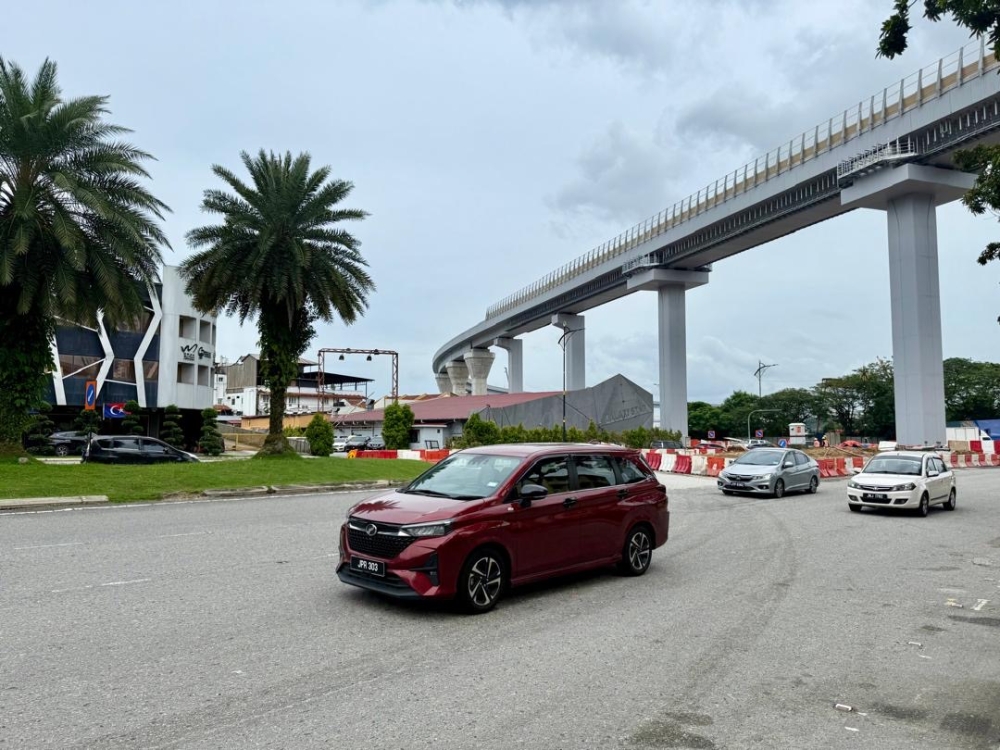
Johor Menteri Besar Datuk Onn Hafiz Ghazi, during a visit to the RTS Link project site at Bukit Chagar Station two days ago, said the state government was aware of public concerns over increased human and vehicle movement following its opening, particularly regarding traffic congestion in the city centre.

In this regard, he said several measures were being and would be implemented to address the issue, including strengthening pedestrian access through the construction of a pedestrian overhead bridge connecting the RTS Bukit Chagar Station with key areas in the city.

According to Onn Hafiz, the efforts include expanding the Park and Ride concept at strategic locations to reduce the number of vehicles entering the city centre, as well as structured traffic management measures, such as contra-flow lanes and upgrades to smart traffic lights. — Bernama

  • ✇Malay Mail - All
  • SpaceX wants a RM7t IPO valuation — Wall Street has questions
    NEW YORK, May 21 — Elon Musk wants to take SpaceX public — and he’s asking investors to believe the rocket and AI company is worth almost US$1.75 trillion (RM7 trillion).On Wall Street, not everyone is convinced.What does that number actually mean? SpaceX made US$18.5 billion in sales last year. Musk is asking investors to value the company at nearly 100 times that.To put it another way: even Apple, one of the most valuable companies on Earth, is worth about 11 t
     

SpaceX wants a RM7t IPO valuation — Wall Street has questions

20 May 2026 at 23:00

Malay Mail

NEW YORK, May 21 — Elon Musk wants to take SpaceX public — and he’s asking investors to believe the rocket and AI company is worth almost US$1.75 trillion (RM7 trillion).

On Wall Street, not everyone is convinced.

What does that number actually mean? SpaceX made US$18.5 billion in sales last year. Musk is asking investors to value the company at nearly 100 times that.

To put it another way: even Apple, one of the most valuable companies on Earth, is worth about 11 times its annual revenue, as measured by market capitalisation. Nvidia, the darling of the AI revolution, is worth 25 times.

The upcoming IPO — short for initial public offering, when a private company sells shares to the public for the first time — could be one of the biggest in history.

Ahead of the Wall Street liftoff, expected in mid-June, SpaceX backers say the company isn’t just a rocket business but rather the gatekeeper to space itself.

“SpaceX controls the rails and controls access to orbit,” said Chad Anderson, CEO of Space Capital, an investment firm that already owns a stake in SpaceX.

He argues we are only at the beginning of a decades-long space infrastructure boom worth hundreds of billions of dollars, from replacing aging satellites to building data centres in orbit.

The company’s satellite internet service, Starlink, is already generating most of SpaceX’s revenue and profit.

“If they can be the low-cost provider of Internet access to lots of people around the world, that can be an enormous source of revenue and profits,” said Jay Ritter, an IPO expert at the University of Florida.

And Musk has made clear he is thinking way bigger than quarterly profits  — out-of-this-world big.

“I need to make sure SpaceX stays focused on making life multiplanetary and extending consciousness to the stars,” he wrote on X in March.

“If SpaceX succeeds in this absurdly difficult goal, it will be worth many orders of magnitude more than the economy of Earth.”

Amazing or overvalued? 

Not so fast, say the sceptics.

When SpaceX absorbed xAI — Musk’s artificial intelligence company and the owner of social network X — in February, eyebrows went up on Wall Street.

Eric Jhonsa of Dutch Asset Corporation pointed to a broader problem: “AI startups with little or no revenue getting sky-high valuations.”

“Is this an amazing company or is it ridiculously overvalued? The answer is yes,” quipped Scott Galloway, a marketing professor at NYU Stern.

Geoff Robinson, a financial analyst, was more blunt: “If I read one more ‘expert’ take on the SpaceX IPO that ignores the laws of financial physics, I’m going to need an actual rocket to escape the nonsense. The communication around this deal needs a serious BS filter.”

Critics also raise more basic concerns: profit margins in the rocket launch business are thin, Starlink’s prices may be too high to win over the mass market, and it’s still unclear whether data centres in space are even a viable idea.

Kim Forrest, chief investment officer at Bokeh Capital Partners, argues that traditional financial math may simply not apply here.

“What people are really buying is the hope and dream of commercial space,” she said, “which is more than a dream. It’s a reality.”

But Ritter offers a note of caution.

“Lots of things have to go right in order for revenue and profits to grow to justify that valuation,” he said.

“And occasionally it happens — but most of the time, something doesn’t work out according to plan. And that’s where I’ve gotten concerned about SpaceX.” — AFP

  • ✇Malay Mail - All
  • Rockets, robots and rage-posts: Mapping Elon Musk’s sprawling empire as SpaceX eyes blockbuster IPO
    NEW YORK, May 20 — Elon Musk defines himself as an engineer trying to save humanity, while his critics call him a far-right showman who overpromises and underdelivers.Either way, he is the world’s richest person and the founder of some of the most high-profile companies on the planet.Here is a look at his business empire as his space and AI company SpaceX prepares to sell shares to the public for the first time.SpaceX, Starlink, xAISpaceX builds rockets and space
     

Rockets, robots and rage-posts: Mapping Elon Musk’s sprawling empire as SpaceX eyes blockbuster IPO

20 May 2026 at 13:00

Malay Mail

NEW YORK, May 20 — Elon Musk defines himself as an engineer trying to save humanity, while his critics call him a far-right showman who overpromises and underdelivers.

Either way, he is the world’s richest person and the founder of some of the most high-profile companies on the planet.

Here is a look at his business empire as his space and AI company SpaceX prepares to sell shares to the public for the first time.

SpaceX, Starlink, xAI

SpaceX builds rockets and spacecraft, and has become the dominant force in commercial space launches — regularly sending astronauts to the International Space Station and satellites into orbit.

Its Starlink division beams high-speed internet from space to users around the world.

Starlink now boasts more than nine million subscribers — a real commercial success, although critics have raised concerns about Musk’s willingness to restrict access for political reasons, including during the war in Ukraine.

SpaceX also absorbed Musk’s artificial intelligence company xAI — which makes the Grok chatbot — in an all-stock deal in February 2026, creating what was described as the largest corporate merger in history, with the combined entity valued at approximately US$1.25 trillion (RM5 trillion).

Whether that eye-popping valuation reflects reality or investor hype remains hotly debated. Musk’s surprise decision to lease out his Colossus data center in Memphis to rival Anthropic is seen as a possible sign that his ambitions for xAI are not being met.

Tesla

Tesla popularised electric vehicles and remains one of the most recognised car brands in the world.

It also develops solar panels and home battery storage systems, and is working on self-driving technology and humanoid robots — projects Musk has repeatedly promised are just around the corner, though timelines have often slipped by years.

One of Tesla’s most hyped products, the stainless-steel Cybertruck, has proven to be a commercial disappointment and the broader company has also hit turbulence.

2025 brought a sales slump that stemmed from increased competition globally and a consumer backlash against Musk’s political activities, including his financial support for President Donald Trump and his endorsement of Germany’s far-right AfD party.

Tesla is publicly traded and its stock is down around 20 per cent in the past year.

Musk ownership of Tesla peaked at around 20 per cent of the company in 2021 before he sold shares to buy Twitter, but he still firmly controls the company.

X (formerly Twitter) 

X — the platform formerly known as Twitter — is a social media site where users post short messages and videos, share news and debate politics.

Musk acquired it in October 2022 for roughly US$44 billion, rebranded it as X, cut a large portion of its staff, and loosened content moderation policies.

Advertisers fled in response, and the experiment is widely viewed as a failure that has turned the site into an echo chamber for Musk’s fans and his increasingly right-wing views.

After seeing its valuation decimated, the platform is now estimated to be worth roughly what Musk originally paid for it, based on the value given to shareholders when he folded the company into xAI — laying the groundwork for the SpaceX IPO.

Neuralink 

Neuralink is developing tiny computer chips that can be implanted in the human brain, with the stated goal of helping people with paralysis or neurological conditions communicate using only their thoughts.

In trials, patients have demonstrated thought-controlled cursor navigation and robotic arm manipulation — genuine breakthroughs, although ethicists and regulators have raised questions about privacy and long-term safety.

The Boring Company 

Frustrated by traffic, Musk founded The Boring Company in 2016, initially as a SpaceX subsidiary, with grand promises of transforming urban transportation through a network of underground tunnels.

The reality has been more modest. Its most prominent project — a tunnel beneath the Las Vegas Convention Centre — has drawn mixed reviews, with critics noting it amounts to a narrow underground road for Tesla cars rather than the revolutionary transit system Musk once envisioned. — AFP

  • ✇Malay Mail - All
  • ECRL training programme in China building Malaysia’s future rail workforce, says Loke
    LIUZHOU (China), May 20 — The East Coast Rail Link (ECRL) Industrial Skills Training Programme (PLKI-ECRL), conducted at Liuzhou Railway Vocational Technical College (LRVTC), is helping Malaysia develop a skilled workforce for the rail industry.Transport Minister Anthony Loke said students under the year-long operations and maintenance (O&M) programme are being exposed to China’s advanced rail expertise and technical capabilities.“We also hope this programme
     

ECRL training programme in China building Malaysia’s future rail workforce, says Loke

20 May 2026 at 10:27

Malay Mail

LIUZHOU (China), May 20 — The East Coast Rail Link (ECRL) Industrial Skills Training Programme (PLKI-ECRL), conducted at Liuzhou Railway Vocational Technical College (LRVTC), is helping Malaysia develop a skilled workforce for the rail industry.

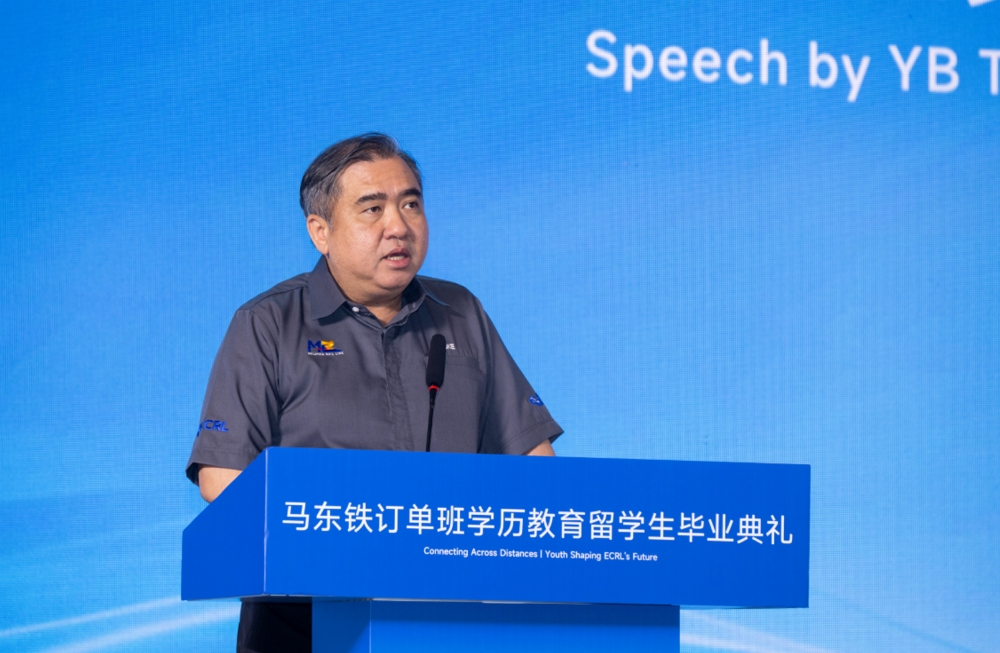
Transport Minister Anthony Loke said students under the year-long operations and maintenance (O&M) programme are being exposed to China’s advanced rail expertise and technical capabilities.

“We also hope this programme can continue in the long term because once the ECRL project begins operations, there will always be a need for continuous training and the recruitment of new workers over time,” he told reporters on the sidelines of the inaugural PLKI-ECRL O&M graduation ceremony here on Tuesday.

Loke also encouraged Technical and Vocational Education and Training (TVET) institutions in Malaysia to collaborate with LRVTC to help produce more skilled talent for the railway sector.

“Once they acquire the necessary skills and knowledge, they will be highly sought after not only by rail operators in Malaysia, but also internationally, as rail systems exist all over the world,” he said.

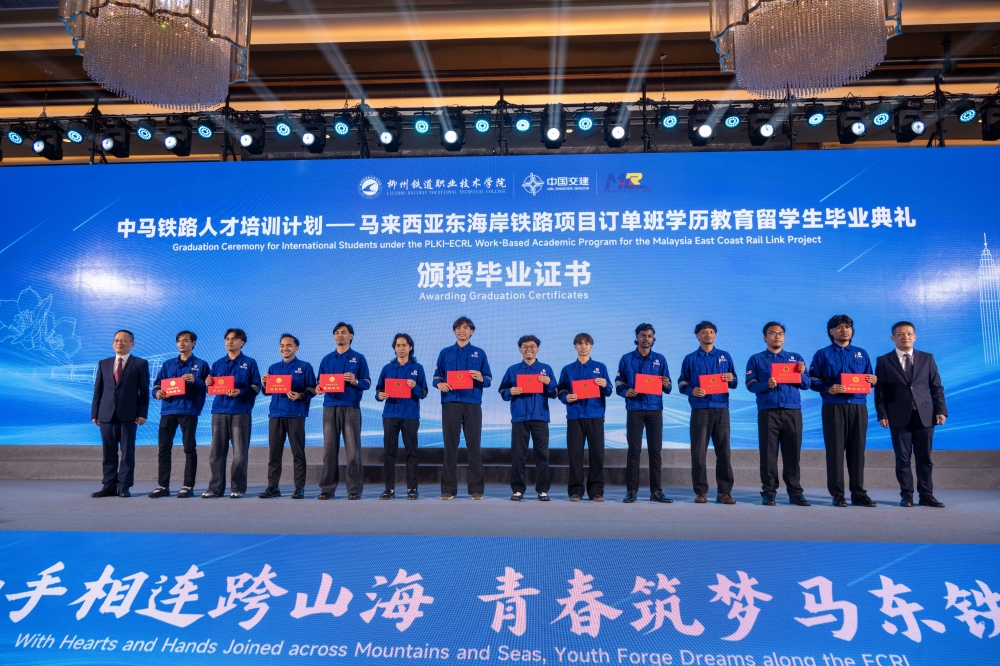
The ceremony, held at a hotel here on Tuesday, saw 66 trainees successfully complete the programme.

First PLKI-ECRL cohort completes training in China

They are part of 259 Malaysian trainees under the PLKI-ECRL programme currently undergoing various skills courses at LRVTC.

The trainees comprise 57 assistant station officers, 50 signalling technicians, 41 overhead line technicians, 19 Electric Multiple Unit (EMU) maintenance technicians, 41 locomotive and wagon maintenance technicians, and 51 assistant train driver trainees.

The PLKI-ECRL programme is jointly managed by Malaysia Rail Link Sdn Bhd and China Communications Construction ECRL Sdn Bhd.

PLKI-ECRL graduates ready for service

One of the graduates, Nur Shafika Diana Mohd Subky, 22, said the training posed unique challenges, particularly in handling technical equipment and rail signalling systems.

She said some assignments required physical strength as well as precision when operating switch machines and signalling control systems.

Despite the challenges, she described the programme as an excellent platform for young people to secure employment opportunities in the rail industry after graduation.

“This programme is good because once we complete our studies, we can immediately start working with them,” she said.

Another graduate, Adam Faris Sufian, 22, said that although they initially faced difficulties due to Mandarin being the medium of instruction, they remained committed to the training with support from instructors and Mandarin language classes.

“I am also proud because we are the first group sent here. I hope to contribute, even in a small way, to the country through the skills that I have acquired,” he said.

Railway Safety Warning Show Education lecturer Wu Yonggui said Malaysian students initially appeared shy upon arrival but gradually became more active and engaged during learning sessions.

“Between graduation and the start of their actual careers, they may require additional standardised training from the ECRL side.

“However, at this stage, graduates who have completed their studies are already qualified to serve as ECRL assistant station officers and are expected to demonstrate even better performance,” he said.

The PLKI-ECRL O&M programme is implemented through collaboration with Malaysian education and training institutions to source suitable trainees, particularly final-year diploma students and fresh graduates.

Training combines theoretical and technical classroom learning, hands-on practical sessions, workshop exposure and railway operational training.

LRVTC is a specialised vocational institution in Liuzhou, Guangxi, focusing on railway and transport-related education.

Liuzhou is about 255km from Nanning, the capital of Guangxi. — Bernama

  • ✇Malay Mail - All
  • First batch of Malaysian ECRL trainees graduate in China ahead of 2027 rail launch
    LIUZHOU (China), May 20 — A total of 66 Malaysian trainees graduated from Liuzhou Railway Vocational Technical College (LRVTC) on Tuesday, as part of the Batch 1 East Coast Rail Link (ECRL) Industrial Skills Training Programme (PLKI-ECRL) for Operations and Maintenance (O&M) Training.The PLKI-ECRL programme is owned by Malaysia Rail Link Sdn Bhd (MRL) and China Communications Construction ECRL Sdn Bhd.Transport Minister Anthony Loke said the graduates will be
     

First batch of Malaysian ECRL trainees graduate in China ahead of 2027 rail launch

20 May 2026 at 10:22

Malay Mail

LIUZHOU (China), May 20 — A total of 66 Malaysian trainees graduated from Liuzhou Railway Vocational Technical College (LRVTC) on Tuesday, as part of the Batch 1 East Coast Rail Link (ECRL) Industrial Skills Training Programme (PLKI-ECRL) for Operations and Maintenance (O&M) Training.

The PLKI-ECRL programme is owned by Malaysia Rail Link Sdn Bhd (MRL) and China Communications Construction ECRL Sdn Bhd.

Transport Minister Anthony Loke said the graduates will be absorbed into the ECRL workforce, marking an important transition from trainees to professionals in Malaysia’s railway industry.

He said the programme is part of a greater national effort, in which there are currently 259 Malaysian students undergoing training in Liuzhou, all dedicated to preparing for the O&M phase of the ECRL project.

“This reflects the government’s strong commitment to developing local expertise, ensuring that Malaysians are not just participants, but leaders in managing and operating our national rail infrastructure,” he said at the graduation ceremony of Batch 1 PLKI-ECRL O&M training programme. 

Meanwhile, MRL chief executive officer Datuk Seri Darwis Abdul Razak said the graduates will carry the responsibility of operating the ECRL safely, efficiently, reliably, and sustainably for the benefit of the rakyat and future generations.

“You (the graduates) are the pioneer workforce of the ECRL operation. You should be proud of the role you will play in shaping the future of Malaysia’s railway industry.

“The knowledge, technical skills, discipline, and valuable experience that you have gained here in China must be brought back to Malaysia and translated into excellence in your daily work,” he said. 

On the ECRL, Darwis said the project is progressing steadily, having achieved significant milestones across engineering, construction and system development, with overall progress reaching 93.66 per cent to date.

“The project is targeted to commence testing and commissioning activities in July 2026, marking another major milestone towards operational readiness,” he said. 

The ECRL project is slated to commence commercial operations in January 2027.

The PLKI-ECRL O&M programme is implemented through collaboration with various Malaysian education and training institutions to source suitable trainees, particularly diploma final year students and fresh graduates.

The training is conducted through a combination of theoretical and technical classroom learning, hands-on practical sessions, workshop exposure, and railway operational training. 

LRVTC is a specialised vocational institution in Liuzhou, Guangxi, that focuses mainly on railway and transport-related education.

Liuzhou is about 255km from Nanning, the capital of Guangxi. — Bernama


  • ✇Malay Mail - All
  • MCMC plans new telecom towers to boost internet coverage in Kelantan’s Felda Chiku 2
    GUA MUSANG, May 20 — The Malaysian Communications and Multimedia Commission (MCMC) has proposed the construction of new telecommunications towers in Felda Chiku 2 under the National Digital Network Plan (Jendela) to improve internet coverage and enhance service stability and quality.In a statement today, MCMC said the initiative was aimed at addressing residents' complaints over weak and inconsistent internet connectivity in the area.It said that although basic i
     

MCMC plans new telecom towers to boost internet coverage in Kelantan’s Felda Chiku 2

20 May 2026 at 04:55

Malay Mail

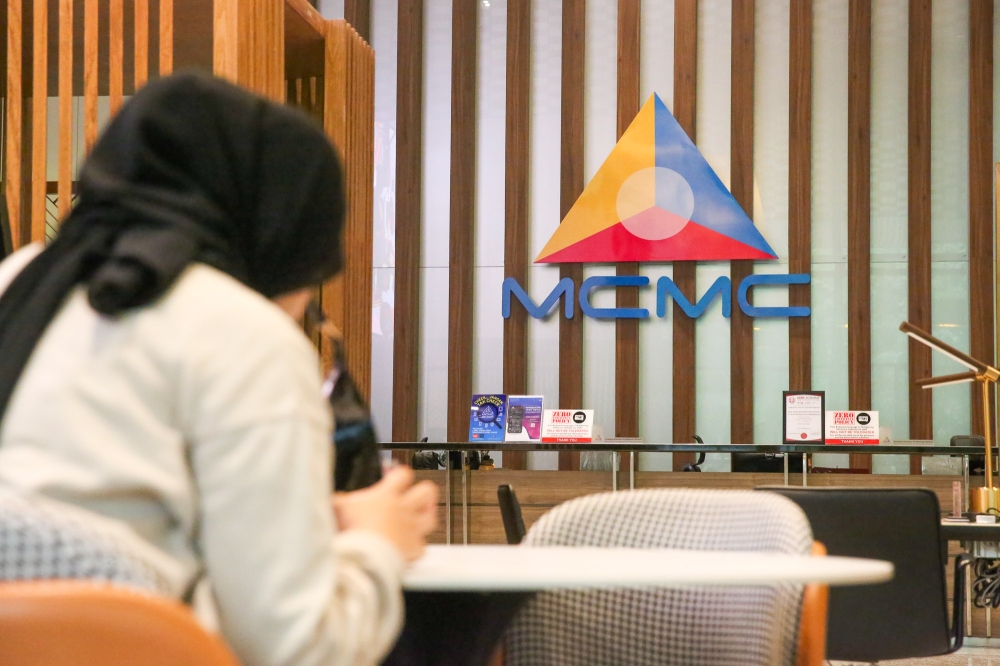
GUA MUSANG, May 20 — The Malaysian Communications and Multimedia Commission (MCMC) has proposed the construction of new telecommunications towers in Felda Chiku 2 under the National Digital Network Plan (Jendela) to improve internet coverage and enhance service stability and quality.

In a statement today, MCMC said the initiative was aimed at addressing residents' complaints over weak and inconsistent internet connectivity in the area.

It said that although basic internet infrastructure is available, monitoring found several locations to be blind spots requiring improvements in both coverage and service quality.

“Accordingly, MCMC has conducted telecommunications service quality tests at three locations identified by complainants to assess the actual coverage performance,” it said.

MCMC said the test results are being analysed in detail to determine the most appropriate follow-up measures to ensure a better user experience.

It added that the commission is also considering the installation of Starlink satellite internet devices as a temporary solution at locations to be identified later.

Meanwhile, Belia Felda Chiku 2 chairman Muhammad Zaidatul Azizi Mohd Zaidatul Azman said residents had been facing unstable internet coverage for the past three years.

He said about 200 households were forced to travel about one kilometre from their homes to obtain a stronger signal.

“Among the areas most affected are those around the mosque up to Gua Chiku 2. This has made it difficult for youths to carry out digital activities, including online learning and other daily tasks,” he said. — Bernama 

  • ✇El País in English
  • Iran offline: The longest internet shutdown ever imposed by a country Maryam Mirza
    Iran has been under a digital blackout for 80 days — the time that has passed since the United States and Israel launched their war against the Islamic Republic — decreed by the authorities for “security reasons,” preventing citizens from having normal access to the internet. This difficult-to-circumvent blockade is increasingly complicating daily life, making remote working impossible, cutting off communication, and severely limiting access to information in a country of 92 million inhabitants.
     

Iran offline: The longest internet shutdown ever imposed by a country

19 May 2026 at 18:12

Iran has been under a digital blackout for 80 days — the time that has passed since the United States and Israel launched their war against the Islamic Republic — decreed by the authorities for “security reasons,” preventing citizens from having normal access to the internet. This difficult-to-circumvent blockade is increasingly complicating daily life, making remote working impossible, cutting off communication, and severely limiting access to information in a country of 92 million inhabitants.

Seguir leyendo

© NurPhoto (NurPhoto via Getty Images)

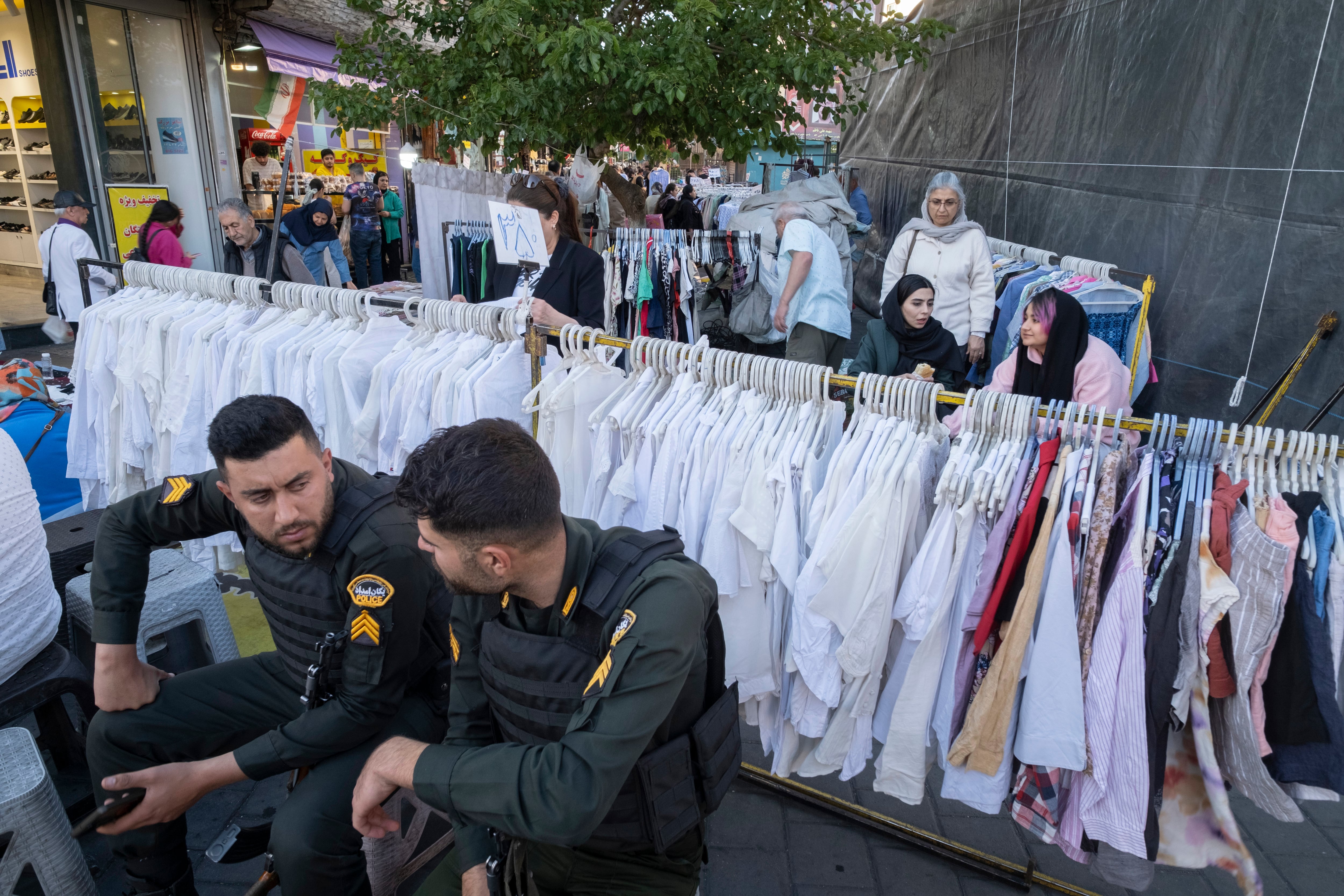
Two Iranian police officers chat with street vendors in downtown Tehran last April.
  • ✇Malay Mail - All
  • Elon Musk’s complicated love affair with China enters a new chapter
    BEIJING, May 15 — In China, Elon ‌Musk has been the object of love — and occasional loathing.The Tesla boss has been both lauded as a visionary and criticised by Chinese regulators and the public for the alleged bungling of customer complaints. In addition, the dominance of SpaceX and its Starlink satellite unit has raised the ire of the People’s Liberation Army. And as the gap between Tesla and its Chinese EV rivals narrows, Musk is at risk of losing prestige an
     

Elon Musk’s complicated love affair with China enters a new chapter

15 May 2026 at 00:50

Malay Mail

BEIJING, May 15 — In China, Elon ‌Musk has been the object of love — and occasional loathing.

The Tesla boss has been both lauded as a visionary and criticised by Chinese regulators and the public for the alleged bungling of customer complaints. In addition, the dominance of SpaceX and its Starlink satellite unit has raised the ire of the People’s Liberation Army. And as the gap between Tesla and its Chinese EV rivals narrows, Musk is at risk of losing prestige and influence.

Musk ‌is now among a group of more than a dozen CEOs and top executives accompanying US President Donald Trump to Beijing for a summit with Xi Jinping, along with Apple’s Tim Cook and Nvidia boss Jensen Huang.

The delegation largely consists of executives seeking to resolve issues with Beijing, and the world’s richest man is no stranger to the ups and downs of doing business with China.

Responding to reporters on his way out of the Great Hall of the People yesterday, Musk said he wants to accomplish “many good things” in China.

While Tesla is being hit by local electric vehicle makers on technology and price, the company - and Musk - remain influential in China. That is in part because Musk’s interests align with those of Beijing, said Kyle Chan, a fellow in Chinese technology at the Brookings Institution.

“When you look at Beijing’s tech priorities, many of them line up almost perfectly with Elon Musk’s,” Chan said, pointing to EVs, autonomous vehicles, AI and humanoid robots, as well as brain-computer interfaces and satellites.

Tesla’s self-driving technology is still considered the industry standard in China, Chan said.

EV maker Chery draws its inspiration from Tesla and Toyota, its chairman, Yin Tongyue, said in an interview with Reuters last month. Chery, which is now making inroads in Europe, aims to blend Tesla’s focus on innovation with Toyota’s obsession with quality, Yin said.

In 2018, Tesla ‌became the first foreign car company allowed to set up an automaking operation in China without a local partner.

It sold around 626,000 cars in China last year, making it the country’s fifth-largest automaker ⁠in terms of sales of EVs and plug-in hybrids, according to the China Passenger Car Association, an ⁠industry group. China accounted for around a fifth of Tesla’s revenue last year, according to company data.

Tesla’s focus on designing cars ⁠around battery performance and software is “definitely one of the biggest ⁠inspirations for many Chinese carmakers,” said Felipe Munoz, ⁠a veteran auto analyst.

During the pandemic, while traditional automakers were dealing with lockdowns and a shortage of semiconductors, Chinese firms hunkered down to study Tesla’s cars and work out their own versions of them, Munoz said.

However, Beijing has railed against other parts of Musk’s business empire. The near-monopoly that his SpaceX holds in lower-Earth orbit satellites, which provide cheaper and more reliable communications, and its importance in the ongoing conflict between ⁠Russia and Ukraine, have alarmed Beijing and spurred it to create domestic alternatives.

“The excellent performance of ‘Starlink’ satellites in this Russian-Ukrainian conflict will certainly prompt the U.S. and Western countries to use ‘Starlink’ extensively' in possible hostilities in Asia, said a September 2022 article co-written by researchers at an engineering university run by the People’s Liberation Army.

Global idol

While his X social media platform is banned in China, Musk has 2.3 million followers on China’s Weibo and has been feted on local social media as “a pioneer,” “Brother Ma” and a “global idol” during some past trips. Even Musk’s mother has become something of a celebrity in China.

His visit this week comes as he is looking to buy US$2.9 billion worth of equipment for manufacturing solar panels from Chinese suppliers, Reuters reported in March. That effort could now be complicated ⁠as China considers limiting exports of its most advanced technologies to the US

Tesla is also seeking clearance from regulators to expand adoption of its Full Self-Driving assistance system.

Musk has maneuvered carefully in China, as the world’s largest auto market and its massive supply chains remain essential to support his broad business empire across EVs, solar power ⁠and space programme.

In 2021, Tesla was forced to apologise to Chinese consumers for failing to address a customer’s complaints promptly. That came after an unhappy customer climbed atop a Tesla model at ⁠the Shanghai auto show ⁠to protest the company’s handling of her complaints about malfunctioning brakes, a moment that went viral on Chinese social media and sparked criticism in state media.

In 2021, Teslas were barred from entering military compounds due to security concerns over the cameras installed on the vehicles. That ban was only lifted after Musk visited China in 2024 and the auto industry association endorsed its data compliance.

Longer term, the biggest threat to Musk’s popularity in China could come ‌from the continuing rise of its homegrown auto industry.

“As Chinese companies catch up or even overtake Elon Musk’s tech empire, his stature in China may start to dim,” said Chang Yan, the founder of Supercharged, a popular blog on Weibo focused on EVs.

“But he will likely remain an icon among China’s tech industry for what he’s accomplished.”  — Reuters 

 

❌
Subscriptions