KUALA LUMPUR, May 24 — The current Covid-19 situation in Malaysia remains stable and has shown a significant downward trend compared to last year, with no deaths recorded so far this year.The Ministry of Health (MOH), in a statement today, said although neighbouring countries have recently reported an increase in cases, the number of Covid-19 cases in the country up to Epidemiological Week (EW) 19/2026 had declined by 12.6 per cent (9,682 cases) compared to the s
KUALA LUMPUR, May 24 — The current Covid-19 situation in Malaysia remains stable and has shown a significant downward trend compared to last year, with no deaths recorded so far this year.
The Ministry of Health (MOH), in a statement today, said although neighbouring countries have recently reported an increase in cases, the number of Covid-19 cases in the country up to Epidemiological Week (EW) 19/2026 had declined by 12.6 per cent (9,682 cases) compared to the same period last year.
“Although there was a 0.7 per cent increase (575 cases compared to EW18/2026), the situation remains under control.
“This is because the vast majority of reported cases only involve mild symptoms that do not require hospital treatment, and no Covid-19-related deaths have been recorded thus far this year,” the statement said.
The ministry said continuous genomic sequencing activities had also detected several new subvariants within the community, but the variants did not show any tendency to trigger a serious wave of infections.
“The ministry will continue to strengthen traveller screening at International Entry Points and cooperate with the Malaysian Border Control and Protection Agency (AKPS) in monitoring activities and public health preparedness to ensure early detection and immediate action can be implemented should there be an increased risk of Covid-19 transmission from abroad,” it said.
MOH said Covid-19 infections are now being managed under the category of common respiratory tract infections such as the common cold and influenza.
In this regard, the public is advised to continue practising self-healthcare measures, including maintaining hand hygiene, wearing face masks when symptomatic or in crowded areas, and obtaining vaccination protection.
“Vaccination is highly encouraged, especially for high-risk groups such as senior citizens, individuals with chronic illnesses, immunocompromised groups, and pregnant women to reduce the risk of infection complications.
“These vaccination services are available at selected government health clinics nationwide,” the statement said.
Recently, Singapore was reported to be monitoring a rise in Covid-19 cases after 12,700 cases were recorded for the week of May 10 to 16, compared to 8,000 cases in the previous week. — Bernama
On a spring night in 2023, Fung Hon-shing was driving on Fei Ngo Shan Road in Sai Kung when he discovered over a hundred newts that had been run over by vehicles. Some had died, while some were on the brink of death.
Fung Hon-shing films a Hong Kong newt walking on a road in Sai Kung on April 25, 2025. Photo: Kyle Lam/HKFP.
The striking scene deeply moved Fung, prompting him to crowd-fund around HK$300,000 to make a documentary about the life cycle of the Hong Kong newt.
The 33-year-o
On a spring night in 2023, Fung Hon-shing was driving on Fei Ngo Shan Road in Sai Kung when he discovered over a hundred newts that had been run over by vehicles. Some had died, while some were on the brink of death.
Fung Hon-shing films a Hong Kong newt walking on a road in Sai Kung on April 25, 2025. Photo: Kyle Lam/HKFP.
The striking scene deeply moved Fung, prompting him tocrowd-fund around HK$300,000 to make a documentary about the life cycle of the Hong Kong newt.
The 33-year-old is one of the few full-time ecological producers in Hong Kong, spending long hours in the countryside capturing footage of wild animals.
A graduate of the Department of Biology at the Chinese University of Hong Kong (CUHK), Fung once worked as a research assistant studying the distribution and habits of the Hong Kong newt (Paramesotriton hongkongensis).
But it was not the first time he had encountered the tailed amphibian.
Fung Hon-shing (front) and his colleague James Kwok hike to a stream in Tai Po with underwater filming equipment on July 9, 2025. Photo: Kyle Lam/HKFP.Fung Hon-shing shoots with underwater filming equipment at a stream in Tai Po on July 9, 2025. Photo: Kyle Lam/HKFP.
“I have known the species since I was a child, when my parents brought me to hike in the mountains near my home,” Fung said. “I discovered that newts can live in different habitats like streams, ponds or even drains. The adaptability of the newt impressed me.”
The creature belongs to a species that was first thought to be endemic only to Hong Kong – hence the name – but was later also found in Guangdong province.
In 2023, Fung, along with several other ecological photographers and videographers, formed a team to spend a year filming this unique salamander. They successfully captured the complete life cycle of the newts underwater – including courtship, fighting, mating, egg-laying, hatching, foraging, and migration – and made it into a 10-minute film, titled: Life (cycle) of the Hong Kong Newt.
The documentary was shortlisted for multiple film festivals in Hong Kong and overseas. It won the 2024 Nature Film of the Year award at the Singapore Nature Film Festival. That same year, the short film was also exhibited at an art gallery in Sham Shui Po, bringing the life of the unique creature to a wider public.
Hong Kong newts underwater. Photo: Fung Hon-shing.Hong Kong newt eggs underwater. Photo: Fung Hon-shing.
The Hong Kong newt – the only tailed amphibian in Hong Kong – has a black or brown back, and bright orange spots on its belly to warn predators of its toxicity. The orange dots also act as a fingerprint, meaning no Hong Kong newts share an identical pattern.
The species is listed as “near threatened” on the International Union for Conservation of Nature (IUCN) Red List and protected under Hong Kong’s Wild Animals Protection Ordinance.
Juvenile newts live in streams. Every April, adult newts migrate to woodlands to avoid the rapid currents of the rainy season. Fei Ngo Shan Road is one of the obstacles they must cross.
Fung collaborated with Professor Anthony Lau, a wildlife ecologist at Lingnan University, to conduct a study called “Hong Kong Newt Roadkill Survey Project,” published in July last year. According to the research, at least 1,427 newts were run over by vehicles between March and May 2024, with 870 of those deaths occurring on Fei Ngo Shan Road.
“After the results of this survey were announced, the Agriculture, Fisheries and Conservation Department (AFCD) contacted the Lingnan University team. Things are changing bit by bit, but the key is that it takes time,” Fung said.
A Hong Kong newt near a vehicle tyre on a road in Sai Kung on April 25, 2025. Every year during the rainy season, thousands of Hong Kong newts migrate to the forest, crossing the road, which becomes a roadkill hotspot. Photo: Kyle Lam/HKFP.A Hong Kong newt carcass lies on a road in Sai Kung on April 25, 2025. Photo: Kyle Lam/HKFP.Fung Hon-shing and his colleague James Kwok waiting for the right moment to film a frog species in Tai Po on July 9, 2025.Photo: Kyle Lam/HKFP.
In 2020, Fung and other wildlife filmmakers -Daphne Wong and James Kwok – founded Frigatefilms, which specialises in nature content. The production company mainly provides ecological filming and documentary services, collaborating with both the government and environmental organisations.
The producer describes his work as a way to atone for what humans have done to the environment, despite realising the impact of his projects may be limited.
“There is actually very little an individual can do in the face of climate change. Sometimes I make videos to explain why we need to conserve and why we should be more environmentally friendly, but as individuals, what we can do is rather limited,” he said.
Fung Hon-shing eats lunch in his car before filming in Sai Kung on April 25, 2025. Photo: Kyle Lam/HKFP.Fung Hon-shing shoots with underwater filming equipment at a stream in Tai Po on July 9, 2025. Photo: Kyle Lam/HKFP.
Apart from the Hong Kong newt, Fung’s projects cover freshwater fish, frogs, birds, and more. However, ecological filming often means returning empty-handed, and one does not always capture the desired footage.
Last winter, after filming a whole flock of black-faced spoonbills foraging, Fung set out again at five the following morning. He was accompanied by an HKFP photojournalist, who began following him in April last year.
As it turned out, there was only one black-faced spoonbill along the same coastline, which failed to provide any usable footage.
Yet, Fung had a level-headed response to the unlucky outcome. He explained that the speed of the rising tide was completely different from the day before, making the water level at the spot too deep for the spoonbills to stand and forage comfortably, so the birds sought out another location.
Fung Hon-shing edits videos in his studio in an industrial building in Tsuen Wan on January 16, 2026. Photo: Kyle Lam/HKFP.Chinese white dolphins swim in Hong Kong’s water. Photo: Fung Hon-shing.Black-naped terns. Photo: Fung Hon-shing.
Despite the unpredictability of his job, he savours every moment of it.
“I really enjoy filming in the wild,” he said. “For one thing, I get to set foot in many different countryside areas of Hong Kong, getting to know Hong Kong better and building many connections.
“Besides that, I can spend long periods in these habitats interacting with or waiting for species, which allows me to understand these creatures deeply. Finally, I can use images to explain the stories of these creatures to others and share them, so the filming process is quite enjoyable.”
Fung Hon-shing operates a drone in Yuen Long on November 18, 2025. Photo: Kyle Lam/HKFP.Migratory birds flock to wetlands in Yuen Long on November 18, 2025. Photo: Kyle Lam/HKFP.
Most people associate ecological documentaries with the African savannah, the Southeast Asian rainforests or the Arctic icy waters. However, Fung still wants to keep focusing on Hong Kong.
“I live in this place, and my daily observations and feelings all stem from Hong Kong’s ecology, so I want to use images to leave some records behind. It’s mainly a matter of emotional attachment rather than the diversity or uniqueness of the species,” Fung said.
“Because of the connection between this place and my own life, I want to try my best to capture more of the different facets of Hong Kong’s ecology.”
Fung Hon-shing drives to a remote shore in Yuen Long at 5am on March 25, 2026, to take pictures of migratory birds. Photo: Kyle Lam/HKFP.Fung Hon-shing at a remote shore in Yuen Long in the early morning of March 25, 2026, to photograph migratory birds. Photo: Kyle Lam/HKFP.Fung Hon-shing and a friend take photos of migratory birds at a remote shore in Yuen Long on March 25, 2026. Photo: Kyle Lam/HKFP.Black-faced spoonbills. Photo: Fung Hon-shing.Black-faced spoonbills. Photo: Fung Hon-shing.Fung Hon-shing waits to take photos of migratory birds in Yuen Long on March 25, 2026. Photo: Kyle Lam/HKFP.Fung Hon-shing and a friend wade through mud to photograph migratory birds at a remote shore in Yuen Long on March 25, 2026. Photo: Kyle Lam/HKFP.An egret standing on a mudflat in Yuen Long on March 25, 2026. Photo: Kyle Lam/HKFP.Fung Hon-shing on his bicycle in Sha Tin on May 5, 2026. Cycling is one of his hobbies. Photo: Kyle Lam/HKFP.Covered in mud, Fung Hon-shing walks back to his car after taking pictures in Yuen Long on March 25, 2026. Photo: Kyle Lam/HKFP.
The Biden administration spent almost a year crafting regulations to block U.S. adversaries from buying commercial data gathered from cell phones at the federal government's most sensitive locations.
The Biden administration spent almost a year crafting regulations to block U.S. adversaries from buying commercial data gathered from cell phones at the federal government's most sensitive locations.
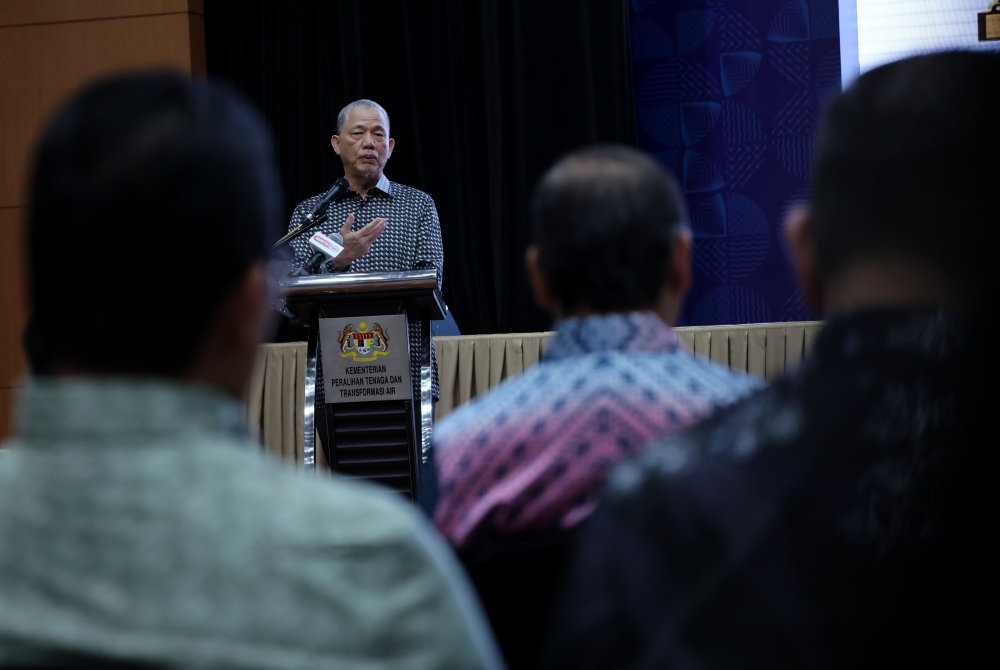
PUTRAJAYA, May 22 — The government has assured that electricity tariff protection will remain in place to ensure about 85 per cent of Malaysians are shielded from any impact, despite rising global energy costs expected to put pressure on prices and several economic sectors.Deputy Prime Minister Datuk Seri Fadillah Yusof, who is also Minister of Energy Transition and Water Transformation (PETRA), said domestic consumers using up to 600 kilowatt-hours (kWh) of elec
PUTRAJAYA, May 22 — The government has assured that electricity tariff protection will remain in place to ensure about 85 per cent of Malaysians are shielded from any impact, despite rising global energy costs expected to put pressure on prices and several economic sectors.
Deputy Prime Minister Datuk Seri Fadillah Yusof, who is also Minister of Energy Transition and Water Transformation (PETRA), said domestic consumers using up to 600 kilowatt-hours (kWh) of electricity per month would not be affected, although minor adjustments may apply to those exceeding the threshold.
“Our electricity cost structure guarantees that 85 per cent of the people will not be affected, and the government will maintain that protection,” he told reporters after attending PETRA’s monthly assembly, here today.
Fadillah said any anticipated increase would not involve a blanket electricity tariff hike, but would instead stem from global supply disruptions that have driven up logistics and supply chain costs.
He said consumers using more than 600kWh per month might face slight adjustments.
“There may be increases involving certain industries or sectors, but we are still evaluating the overall impact,” he said.
Earlier in his speech, Fadillah said Malaysia was also feeling the effects of global supply chain uncertainty and supply crises, but stressed that the government remained committed to addressing the challenges through a pragmatic approach prioritising public welfare.
He said the government’s main focus was to ensure a stable supply of essential needs, protect the public from excessive cost-of-living pressures and strengthen the country’s long-term economic resilience.
“Various measures, including targeted assistance, price controls, stronger energy security and strategic cooperation between the government, industry and the people, are being and will continue to be implemented.
“What is important is that we face this crisis with a spirit of togetherness,” he said.
Fadillah also reminded PETRA staff to uphold integrity, discipline and professionalism in carrying out their duties to preserve public confidence in the ministry.
“The people’s trust in the ministry depends on how we work, make decisions and uphold the image of the public service,” he said. — Bernama
BANGKOK, May 21 — Thailand’s consumer watchdog will file a civil suit against the local unit of Volvo Cars over battery-related fires in its EX30 model, a senior official told Reuters after a meeting between customers and the carmaker failed to reach an agreement.“The Office of Consumer Protection Board reached a resolution to file a suit for damages, including refunds,” Pradoemchai Bunchualuai, who chaired today’s meeting, told Reuters by phone.Pradoemchai, who
BANGKOK, May 21 — Thailand’s consumer watchdog will file a civil suit against the local unit of Volvo Cars over battery-related fires in its EX30 model, a senior official told Reuters after a meeting between customers and the carmaker failed to reach an agreement.
“The Office of Consumer Protection Board reached a resolution to file a suit for damages, including refunds,” Pradoemchai Bunchualuai, who chaired today’s meeting, told Reuters by phone.
Pradoemchai, who is an adviser to Thailand’s prime minister’s office, said the OCPB would run the civil suit on a case-by-case basis.
The decision to take court action follows two EX30 fires in the country this month, and adds to pressure on the Swedish carmaker as it tries to manage a global recall of its electric SUV.
Volvo Cars’ Thailand unit did not immediately respond to a request for comment about the suit. There are over 1,600 EX30s in Thailand.
A Volvo Cars spokesman had previously said that the incidents remain rare, with fires reported in 0.1 per cent of affected vehicles. Volvo Cars has issued notices to customers to not charge their battery beyond 70 per cent as an interim measure.
Pradoemchai said Volvo Cars had proposed battery replacements and the use of temporary vehicles for 90 per cent of those impacted and partial replacements for the rest, but that was not accepted by customers.
“Most consumers want a full refund and not battery replacements,” EX30-owner Tanchanok Nowsuwan, who attended the meeting, told reporters.
Reuters reported in February that Volvo would recall more than 40,000 EX30s and replace battery modules due to a defect that could cause packs to overheat and potentially catch fire. The Volvo Cars spokesman said the global recall has been reduced to 37,802 cars from 40,323. — Reuters
Following the successful ten-year run of the Ontario Reptile and Amphibian Atlas, Ontario Nature developed a Long-Term Monitoring Protocol (LTMP) to fill important knowledge gaps about Ontario’s common and at-risk snakes. Since 2019, we’ve expanded the LTMP from nine monitoring locations to over 60 sites across the province! We recently published a Story Map where you can learn all about this project and how to get involved.
The Long-Term Monitoring Protocol (LTMP)
Ontario Nature’s Long-Te
Following the successful ten-year run of the Ontario Reptile and Amphibian Atlas, Ontario Nature developed a Long-Term Monitoring Protocol (LTMP) to fill important knowledge gaps about Ontario’s common and at-risk snakes. Since 2019, we’ve expanded the LTMP from nine monitoring locations to over 60 sites across the province! We recently published a Story Map where you can learn all about this project and how to get involved.
The Long-Term Monitoring Protocol (LTMP)
Ontario Nature’s Long-Term Monitoring Protocol (LTMP) for snakes was launched in 2019. It uses standardized survey methods across a large geographic area to help improve our understanding of snake populations, detect changes over time, and guide conservation efforts. The LTMP brings together First Nations, scientists, landowners and volunteers to monitor snakes across the province, using plywood boards placed within snake habitat.
Sites conducting snake surveys using the Long-Term Monitoring Protocol. Sites in darker green have been part of the project for longer; sites in lighter green have joined the project more recently.
Help us monitor snakes!
You can participate in snake surveys as a volunteer or set up a new snake monitoring site! Many of the existing sites are monitored by volunteers and may be looking for more people to help with surveys. If you have access to land with suitable snake habitat, you could set up your own site with plywood boards, survey for snakes, and contribute data to our province-wide database.
Subscribe to receive transcripts by email. Read along with this episode.
The ocean provides half the oxygen we breathe, absorbs 30% of our carbon emissions, and helps control the planet’s climate. By 2030, it’s expected to support a $3.2 trillion Blue Economy. Yet 70% of proven ocean solutions, such as coastal resilience, coral restoration, and marine pollution cleanup, never move past the pilot stage. These projects often win awards and get media attention, but then stall because funding syst
The ocean provides half the oxygen we breathe, absorbs 30% of our carbon emissions, and helps control the planet’s climate. By 2030, it’s expected to support a $3.2 trillion Blue Economy. Yet 70% of proven ocean solutions, such as coastal resilience, coral restoration, and marine pollution cleanup, never move past the pilot stage. These projects often win awards and get media attention, but then stall because funding systems don’t connect working ideas with the cities, ports, and coastal areas that need them. Stewart Sarkozy-Banoczy, co-founder and ocean lead at Okhtapus, wants to change that. Okhtapus, named with the Persian word for the octopus, uses a model that links what Stewart calls “the three hearts” of successful projects: innovators with proven solutions, cities and ports ready to use them, and funders looking for solid projects.
Stewart Sarkozy-Benoczy, Cofounder and Ocean Lead at Okhtapus.org, is our guest on Sustainability In Your Ear.
The first Okhtapus Global Replicator will launch in 2026. It will bring groups of proven innovators to work on important projects in specific places, such as a single port city like Barcelona, where Okhtapus already has strong partnerships, or a group of Caribbean islands facing similar problems. The aim is to have enough successful projects that funders stop asking “where are the deals?” and start saying “we’ve got enough.” The platform focuses on late-stage startups and scale-ups, not early-stage ideas. Stewart calls these the “Goldilocks zone”—solutions that are proven enough to copy but still need funding and partners to grow. By combining several solutions for different locations, Okhtapus can offer investors portfolios that fit their needs and make a real difference in cities, ports, and island nations.
Stewart has spent 20 years working where climate resilience and policy meet. He was part of President Obama’s Hurricane Sandy Rebuilding Task Force, led policy and investments at the Resilient Cities Network, and is now Managing Director of the World Ocean Council. “Ten years from now, if this is done fast enough,” Stewart said, “we should have pushed hard enough on the funders and the system to change it. What we don’t know is whether we’ll get to the solution status fast enough for some of these tipping points.”
To find out more about Okhtapus, visit okhtapus.org.
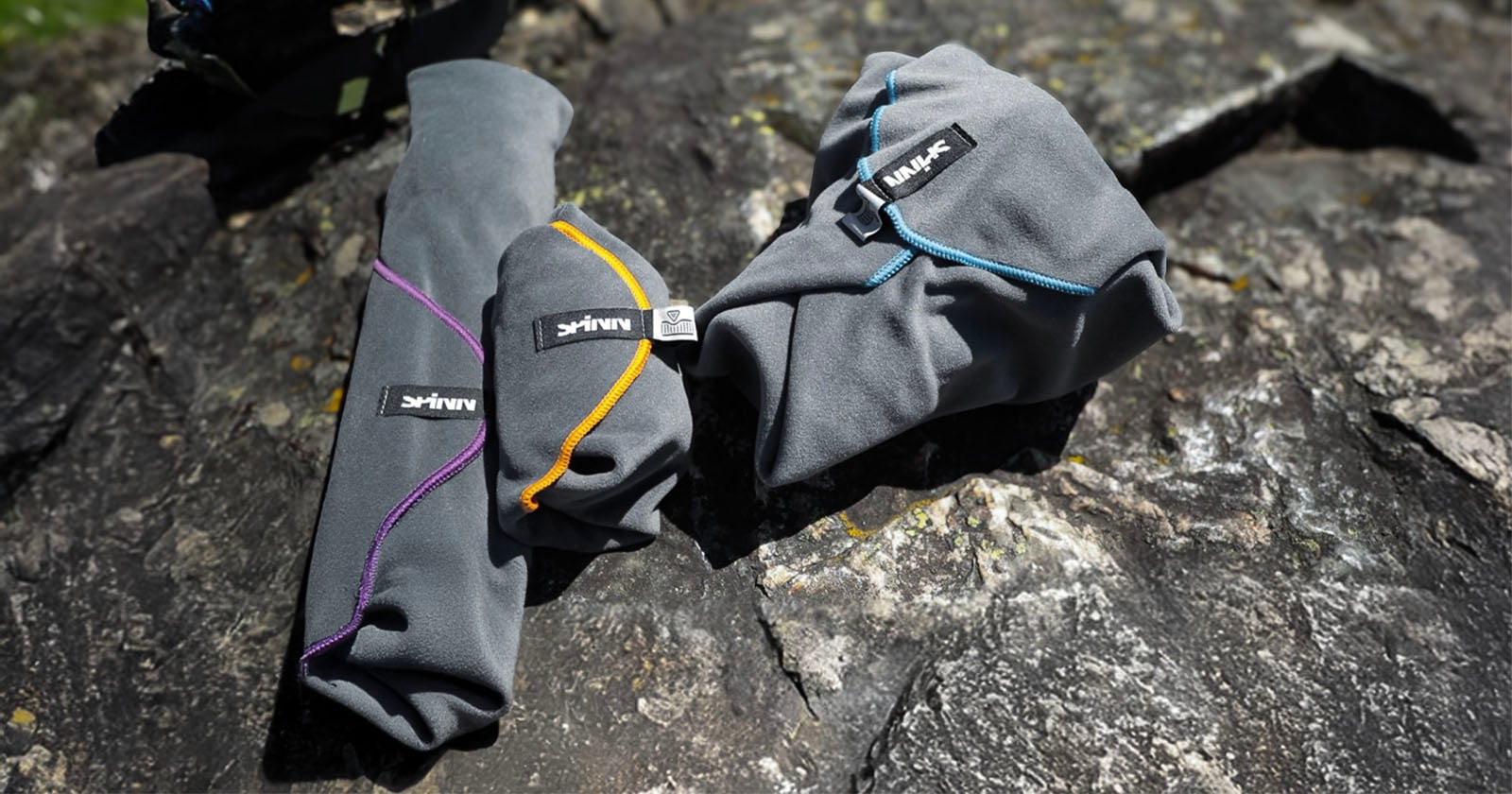
Taking good care of camera gear is something constantly playing on a photographer's mind, and the latest protective wraps from Spinn are designed to put minds at ease.
[Read More]
Taking good care of camera gear is something constantly playing on a photographer's mind, and the latest protective wraps from Spinn are designed to put minds at ease.

 Login
Login