Despite the ban on disposables, waste professionals say the mountain of discarded devices is a £1bn-a-year issue It is 2pm and Ana, 47, has just started the afternoon shift at the Suez recycling plant near Birmingham city centre, standing beneath a sign reading “Non-ferrous sorting station” with a bucket of vapes in front of her. Sorting and dismantling them is part of her job as a site operative.Recycling them is not simple. Each bucket holds between 40 and 50 devices, and over the course of a
Despite the ban on disposables, waste professionals say the mountain of discarded devices is a £1bn-a-year issue
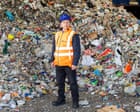
It is 2pm and Ana, 47, has just started the afternoon shift at the Suez recycling plant near Birmingham city centre, standing beneath a sign reading “Non-ferrous sorting station” with a bucket of vapes in front of her. Sorting and dismantling them is part of her job as a site operative.
Recycling them is not simple. Each bucket holds between 40 and 50 devices, and over the course of a shift, she gets through about half a bucket. Using a hammer, she has to smash each vape open, pry out the batteries and separate each component into a different container.
GEORGE TOWN, May 13 — Penang has significant potential to turn waste into new economic wealth by attracting high-technology foreign investments as a new driver of the state economy.Datuk Seri Reezal Merican Naina Merican (BN-Bertam) said the state government should therefore formulate a comprehensive green waste and high-technology e-waste master plan.“The e-waste recycling industry has strong potential as it involves the processing of valuable metals such as nic
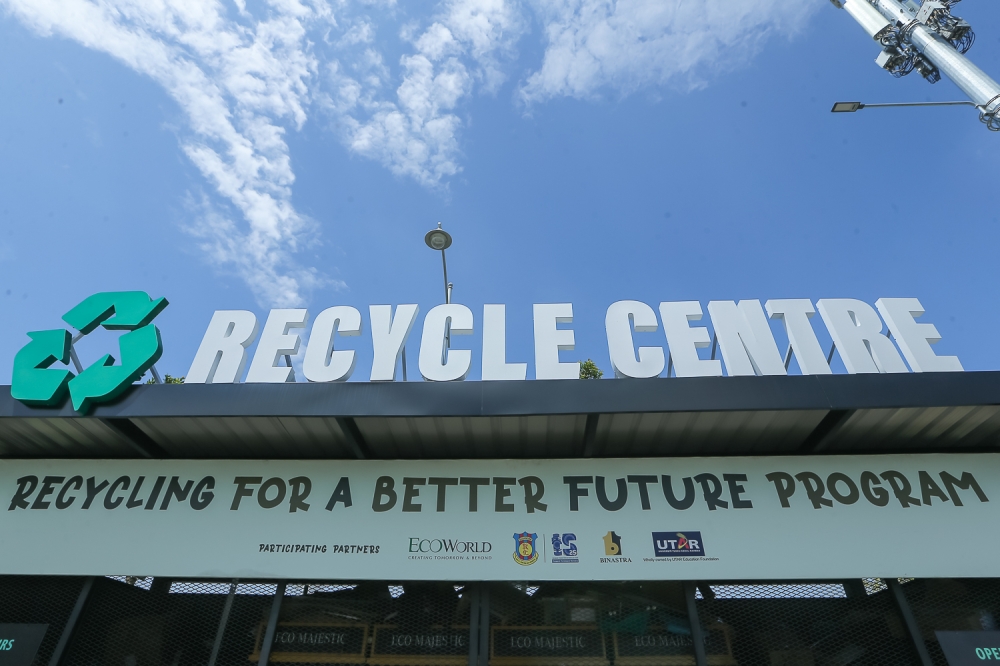
GEORGE TOWN, May 13 — Penang has significant potential to turn waste into new economic wealth by attracting high-technology foreign investments as a new driver of the state economy.
Datuk Seri Reezal Merican Naina Merican (BN-Bertam) said the state government should therefore formulate a comprehensive green waste and high-technology e-waste master plan.
“The e-waste recycling industry has strong potential as it involves the processing of valuable metals such as nickel, lithium and cobalt.
“In fact, seven of Malaysia’s 17 licensed companies are already operating in Penang, and this is an advantage that should be fully leveraged,” he said while debating the motion of thanks for the policy speech by Penang Yang Dipertua Negeri Tun Ramli Ngah Talib at the state legislative assembly sitting here.
Reezal Merican, who is also chairman of Malaysia External Trade Development Corporation, also stressed the importance of waste-to-energy (WTE) projects, which could help resolve solid waste issues while generating energy.
However, he said implementation would require careful planning and the full backing of Chief Minister Chow Kon Yeow and the state’s top leadership.
Reezal Merican said the matter was not merely an environmental issue, but a major economic opportunity that should not be missed, adding that the state government needed to act swiftly before Penang fell behind in the green and circular economies.
Meanwhile, he also proposed that the state government provide a one-off RM500 incentive to each padi farmer to help them cope with the recent sharp rise in agricultural input costs.
He said the proposal was aimed at easing the burden on farmers affected by rising prices of fertiliser, pesticides and other agricultural inputs.
“The state government could consider a one-off RM500 incentive for padi farmers to help them at this time. This is among the forms of direct support that can be implemented immediately,” he said.
He added that the agricultural sector, particularly padi cultivation, must continue to receive attention from the state government given its importance to the country’s food security. — Bernama
24. That is the average number of electronic devices sitting in a typical American home right now. Phones in drawers, tablets behind the TV, chargers without their devices, and devices without their chargers. Most of those products are headed for a landfill or a shipping container, not a recycler.
Electronics are the fastest-growing solid waste stream on the planet, and U.S. households are an outsize engine. The UN’s Global E-waste Monitor 2024 found that global e-waste reached a record 62 milli
24. That is the average number of electronic devices sitting in a typical American home right now. Phones in drawers, tablets behind the TV, chargers without their devices, and devices without their chargers. Most of those products are headed for a landfill or a shipping container, not a recycler.
Electronics are the fastest-growing solid waste stream on the planet, and U.S. households are an outsize engine. The UN’s Global E-waste Monitor 2024 found that global e-waste reached a record 62 million tons in 2022, which is up 82 percent since 2010, and is rising five times faster than electronics recycling capacity. Americans produce roughly 46 to 48 pounds of it per person per year. Most of those discarded devices contain materials worth real money and environmental harms worth understanding.
The 2022 e-waste pile contained an estimated $91 billion in recoverable metals, according to the United Nations, including roughly $19 billion in copper, $16 billion in iron, and $15 billion in gold. About $62 billion of that value was lost to landfills, incinerators, or unregulated dumping.
The materials don’t disappear; they just stop circulating. Mining companies extract more virgin gold and copper from the ground while millions of pounds of the same metals sit on shelves in junk rooms and lie fallow in landfills.
What’s Driving the Growth
The average U.S. smartphone replacement cycle has stretched to 3.64 years in 2024, according to Assurant; that’s up from under 3 years a decade ago, yet the underlying hardware can typically last 5 to 7 years with software support. That gap between when consumers upgrade and when the device actually fails is where most e-waste is born.
Behind the phones, a longer parade of devices is generating serious volume. Wearables, smart speakers, e-cigarettes, lithium-powered toys, and cheap rechargeable accessories now show up in municipal waste streams in quantities that did not exist a decade ago. The WHO documented more than 1,000 hazardous substances associated with informal e-waste recycling, including lead, mercury, and brominated flame retardants, all of which can leach from devices that are crushed or burned rather than processed properly.
What the U.S. Actually Recycles
The picture here is genuinely confusing, and reporting that pretends otherwise is wrong. The most-cited EPA estimate of consumer electronics recycling puts the U.S. rate at 38.5 percent, but that figure dates from 2018. More recent independent estimates put the actual U.S. rate closer to 15 percent, with global formal recycling at 22.3 percent in 2022. The gap between the two numbers reflects the difference between what enters a recycling program and what actually gets recovered as usable material.
The remainder follows three main paths. Some heads to U.S. landfills, where heavy metals contribute to leachate problems. Some is incinerated, releasing dioxins from PVC and other plastics. And roughly 90 percent of exported e-waste is processed in low- and middle-income countries, where informal recyclers — often including children — strip devices by hand or by burning. A systematic review in PubMed Central links e-waste exposure in children to reduced lung function, altered thyroid function, ADHD, and lower cognitive scores. None of that shows up on the product box when you buy it.
The Household Financial Picture
Households absorb the cost from two directions at once. They pay for new devices that replace working products, and they leave material value on the table when they discard what they own.
A reasonable estimate, using the per-capita value of unrecovered e-waste metals from the UN report and U.S. generation rates, puts the recoverable value sitting in the average American household’s old electronics in the range of several hundred dollars over a few years. That is metal the household paid for, embedded in devices the household paid for, and the household will not recover unless the device reaches a refiner that can extract it.
The cost on the other side — replacement spending — is easier to size at the industry level than the household level. The Consumer Technology Association puts U.S. consumer technology retail revenue at roughly $505 billion in 2024, which works out to nearly $3,900 per household when spread across the 131 million U.S. households tracked by the BLS Consumer Expenditure Survey. Even allowing for wide variation across income tiers, much of that spending replaces devices that were repairable or still functional.
Right to Repair Is Starting to Bite
The most consequential policy shift on e-waste in the past two years has been the spread of right-to-repair legislation. As of mid-2025, eight states have passed right-to-repair laws covering consumer electronics: New York, California, Minnesota, Oregon, Colorado, Maine, Washington, and Massachusetts. Oregon’s law, which took effect January 1, 2025, became the first in the country to explicitly ban “parts pairing,” the practice of using software to disable replacement components installed by independent shops.
These laws do not immediately reduce e-waste, but they change the economics. When manufacturers must supply parts, tools, and documentation to independent repairers, the cost of fixing a phone or laptop drops. When repair is cheaper than replacement, more devices stay in service. The Repair Association tracks more than 40 active bills across at least 20 states in 2025.
Extended Producer Responsibility (EPR) for electronics covers 24 states, but there is substantial variation in how well-funded and enforced those programs are. A patchwork is still better than nothing, but the absence of a federal framework means a device thrown away in one state may be treated as toxic and a device thrown away in another may end up in a regular dumpster.
What You Can Do
The interventions here are tiered, with very different impacts depending on where you can act.
At home:
Before replacing a device, check whether repair is feasible — battery swaps and screen replacements are the two most common smartphone failures and both are repairable.
Sell or donate working electronics rather than storing them. The Earth911 recycling search tool provides local options by ZIP code.
For batteries, including the lithium cells in earbuds, e-bikes, vapes, and power tools, use The Battery Network (formerly Call2Recycle), the North American battery stewardship program, which operates collection sites at most major retailers.
For phones specifically, manufacturer trade-in programs (Apple, Samsung, Google) and carrier programs typically capture more material than dropping a phone in a generic recycling bin, because the devices are tested for reuse first.
Buy refurbished when you can. Certified refurbished phones and laptops are typically 30 to 50 percent cheaper than new and have the same useful life.
In your community:
If your state hasn’t passed a right-to-repair law, ask your legislators why. The model bill from the PIRG Right to Repair coalition is a good starting reference.
Support EPR legislation that puts the cost of end-of-life management on manufacturers, not municipalities.
Push back on devices that are designed against repair — glued-in batteries, paired parts, and service-only components — by buying brands that score well on iFixit’s repairability index.
Individual household action on e-waste matters, but it is not where the leverage lives. Changing product designs and recycling policy, both of which are moving slowly in the right direction, is the path to a more sustainable electronics industry. Your household choices buy time and recover value while the larger system catches up.
On average, each American throws away about 81 pounds of clothing, shoes, and household textiles every year. That’s roughly a hamper full every month for each person. For a family of four, this adds up to over 320 pounds of textiles tossed or donated each year. Most people don’t realize how much they discard until they actually weigh it over a year.
The number comes from EPA’s most recent, 2018 sustainable-materials accounting, which puts U.S. post-consumer textile generation at roughly 17 milli
On average, each American throws away about 81 pounds of clothing, shoes, and household textiles every year. That’s roughly a hamper full every month for each person. For a family of four, this adds up to over 320 pounds of textiles tossed or donated each year. Most people don’t realize how much they discard until they actually weigh it over a year.
The number comes from EPA’s most recent, 2018 sustainable-materials accounting, which puts U.S. post-consumer textile generation at roughly 17 million tons and the recovery rate at 14.7 percent. While the EPA has discontinued its reporting, ThredUp’s 2025 Resale Report and the Apparel Impact Institute updates suggest per-capita generation has continued rising. Most of what falls inside that 14.7 percent is downcycled into industrial wiping rags or insulation, not turned into new clothing.
What “donating” actually does
The mental model in most American closets is that the donation bin is the recycling bin. It isn’t. Goodwill, Salvation Army, and the secondhand chains sell what they can on the resale floor, typically only 10 to 30 percent of the clothing they accept as donations. The rest is sold by the pound to textile graders, who export the higher grades to wholesale markets in West Africa, Eastern Europe, and Central America, bale the remainder as wiping rags or insulation feedstock, and landfill the rest.
That export pipeline is under pressure. Ghana, Kenya, and Chile have moved to restrict or refuse low-grade used-clothing imports, citing the volume of unsellable fast-fashion synthetics arriving contaminated and culturally mismatched. The January 2025 GAO report on textile recovery flagged the offshore-disposal pathway as structurally fragile and quietly subsidized by U.S. consumers who treat donation as absolution.
The amount of clothing waste is closely tied to price. Since 1995, clothing prices in the U.S. have dropped by over 30 percent, even as other costs have gone up. This is mainly due to ultra-fast-fashion brands like Shein and Temu. Many clothes, especially those made from polyester-spandex blends, aren’t made to last, be repaired, or recycled. They’re often thrown out after just six wears. According to McKinsey’s State of Fashion report, the average piece of clothing is now worn only seven to ten times before being discarded, much less than in the past.
The household bill
The value of clothing can change a lot, so it’s harder to put an exact dollar amount on waste compared to food. Still, the Bureau of Labor Statistics says the average U.S. household spends about $1,900 a year on clothes. If 30 to 40 percent of those clothes are thrown out within two seasons, that means a household is tossing $570 to $760 worth of new clothing every year.
The environmental impact of clothing is even bigger before it reaches your closet. The UN Environment Programme says fashion is responsible for 2 to 8 percent of global greenhouse gas emissions and 20 percent of industrial water pollution. Making just one cotton t-shirt uses about 2,700 liters of water, which is as much as one person drinks in two and a half years.
The policy lever finally arriving
For years, there were no rules holding clothing producers responsible for textile waste in the U.S. That changed with California’s SB 707, the Responsible Textile Recovery Act of 2024, which is the first law of its kind in the country. CalRecycle chose Landbell USA to run the program starting February 27, 2026. Brands selling clothes and household textiles in California will have to help pay for collection and processing, with requirements rolling out through 2030. Other states like New York, Massachusetts, and Washington are considering similar laws that would make clothing manufacturers cover the costs of fast fashion waste.
Fiber-to-fiber recycling — the missing technology piece — is moving, slowly. Circ, Syre, and Reju are at pilot or first-commercial scale. Renewcell, the most visible name in cellulosic recycling, filed for bankruptcy in early 2024 and has since been acquired and restarted as Circulose. Textile recycling technology is real, but the economics of the business still depend on virgin-fiber prices going higher, the development of a sorting infrastructure, and the kind of policy support SB 707 is now beginning to provide.
What You Can Do
At home and while shopping:
Focus on slowing down how often you buy new clothes, not just buying less. Choose better quality items and wear them for longer. If you double how long you wear each garment, you can cut its total emissions by about half.
Try to fix your clothes before replacing them. Local tailors, Repair Cafés, and repair programs from brands like Patagonia, Nudie Jeans, and Eileen Fisher can help you get more use out of what you already have.
Be honest when sorting your donations. Clean, up-to-date, and resaleable items should go to local thrift stores. Items that are stained or torn should go to textile-specific takeback bins at places like H&M or Madewell, where they can be properly processed.
Before putting anything in your curbside bin, use Earth911’s recycling search to find local textile drop-off locations by ZIP Code. Most curbside bins don’t accept clothing or textiles.
In your community:
Support textile extended producer responsibility (EPR) laws in your state. SB 707 is the example to follow, and the next few states to pass similar laws will help decide if this approach can grow.
Ask retailers to clearly label fiber content and recyclability. The EU will require digital product passports by 2027, and U.S. brands selling overseas will have to comply. Whether these labels appear in the U.S. depends on consumer demand.
Support and volunteer at local repair and reuse programs. Repair Cafés, Buy Nothing groups, and clothing swaps help reduce waste before it starts, which is the most effective way to make a difference.
UK was close behind, exporting 675,000 tonnes, with much of the waste sent to Turkey, Malaysia and Indonesia Germany was the world’s largest exporter of plastic waste in 2025 and sent more than 810,000 tonnes abroad, according to analysis of trade data carried out for the Guardian.The UK followed close behind, according to the analysis by Watershed Investigations and the Basel Action Network. It exported more than 675,000 tonnes, its highest level in eight years and enough to fill about 127,000
UK was close behind, exporting 675,000 tonnes, with much of the waste sent to Turkey, Malaysia and Indonesia
Germany was the world’s largest exporter of plastic waste in 2025 and sent more than 810,000 tonnes abroad, according to analysis of trade data carried out for the Guardian.
The UK followed close behind, according to the analysis by Watershed Investigations and the Basel Action Network. It exported more than 675,000 tonnes, its highest level in eight years and enough to fill about 127,000 shipping containers.
Forty thousand miles of plastic waste wash through the global ocean every year, enough to wrap the Earth at the equator. But walk into the right store, and you can personally shorten that pipeline by a few feet, returning a pair of worn sneakers, a dead laptop, or a piece of furniture destined for the dumpster.
Some retailers have built genuine end-of-life infrastructure for the products they sell — not just a PR line, but real systems with documented results. The seven below have the numbers to
Forty thousand miles of plastic waste wash through the global ocean every year, enough to wrap the Earth at the equator. But walk into the right store, and you can personally shorten that pipeline by a few feet, returning a pair of worn sneakers, a dead laptop, or a piece of furniture destined for the dumpster.
Some retailers have built genuine end-of-life infrastructure for the products they sell — not just a PR line, but real systems with documented results. The seven below have the numbers to back it up, updated for 2026.
Patagonia
Patagonia’s Worn Wear program remains one of the most comprehensive take-back systems in retail apparel. In 2025, customers made more than 137,000 trade-ins — almost 71,000 of them from return and warranty claims — and the online Shop Used feature launched in September 2024 has expanded the secondhand market significantly. Items deemed wearable are cleaned, repaired, and resold through Worn Wear; those beyond repair enter a recycling pipeline.
On the material innovation side, Patagonia partnered with Eastman in 2024 to process 8,000 pounds of pre- and post-consumer clothing waste through molecular recycling — breaking apparel down to chemical building blocks for reuse as new fiber. The brand has also moved aggressively on materials: by fall 2025, over 90 percent of Patagonia’s fabrics were recycled, organic, or traceable. Its 2025 Work in Progress Report disclosed that reducing hang tags by over 40 million pieces has avoided 170,000 pounds of packaging waste. The structural challenge — mechanically recycling blended fabrics — remains unsolved at industrial scale, and Patagonia acknowledges it openly.
Apple
Apple’s trade-in and recycling program sent 15.9 million devices to new owners through refurbishment schemes in 2024 alone. Devices that cannot be refurbished are processed by Daisy, Apple’s disassembly robot, which can now break down 36 models of iPhone into discrete components to recover aluminum, copper, rare earth elements, and other materials. A second robot, Dave, disassembles Taptic Engines to recover rare earth magnets, tungsten, and steel.
The material-recovery numbers are striking. In 2024, 24 percent of all materials shipped in Apple products came from recycled or renewable sources, up from 10 percent in 2019. Recycled aluminum accounted for 71 percent of the aluminum Apple purchased. The company avoided 6.2 million metric tons of greenhouse gas emissions by using recycled and low-carbon materials in 2024, according to its 2025 Environmental Progress Report. Apple has also surpassed 99 percent on its 2025 goal to use 100 percent recycled rare earth elements in all magnets and 100 percent recycled cobalt in all Apple-designed batteries. Customers can drop devices off at any Apple Store or ship for free.
Best Buy
Best Buy has collected 2.7 billion pounds of electronics and appliances since launching its recycling program in 2009, making it the nation’s largest retail collector of e-waste. The program accepts most consumer electronics at more than 1,000 stores regardless of where items were purchased, collecting more than 400 pounds of product every minute stores are open.
The program has expanded: a mail-in recycling service now lets customers without easy store access ship old tech in purpose-built boxes. A home haul-away service launched for customers who cannot transport large items. Best Buy requires all recycling partners to comply with rigorous environmental management standards and holds them to regulatory compliance and responsible workforce practices. TVs and monitors carry a $25 fee; most other electronics — phones, laptops, tablets, cables — are accepted free.
Nike
Nike’s original Reuse-a-Shoe program launched in 1995 to recycle worn athletic footwear into Nike Grind material for surfaces and new products has evolved into the Recycling + Donation (RAD) service, now available globally.
The program accepts athletic footwear and apparel from any brand and inspects each item to determine donation or recycling eligibility. Wearable items go to nonprofit partners including Soles4Souls for redistribution to communities in need; worn-out footwear is ground down into Nike Grind, which goes into playground surfaces, running tracks, and new Nike products.
Part of Nike’s Move to Zero initiative, targeting zero carbon and zero waste across the supply chain, the Participating stores accept shoes of any brand — athletic footwear only; no cleats, boots, or sandals. Nike also runs Nike Refurbished, which cleans and resells gently worn or slightly imperfect footwear and apparel at select factory and community stores, extending product life before material recovery.
Staples
Staples pioneered national retail recycling in 2007 as the first U.S. retailer to offer a universal e-waste takeback program. Today the program accepts over 50 types of materials including computers, printers, phones, cables, batteries, crayons, and coffee machines from any brand. Since 2021, Staples has recycled 7,000 tons of e-waste and 19 million ink and toner cartridges, helping HP reach a milestone of 1 billion cartridges recycled.
Staples’ Easy Rewards program currently gives members 500 points (equivalent to $5 back) per month for tech recycling. Ink and toner cartridge recycling earns $2 per cartridge for members spending at least $30 on ink over the previous 180 days, up to a monthly limit. Staples uses certified recyclers whenever possible, and recycled toner material gets routed into road construction aggregate. The company accepts electronics in-store at customer service desks at all U.S. Staples locations.
IKEA
Furniture is the United States’ largest category of discarded household goods, with Americans throwing away approximately 12 million tons of it each year. IKEA’s Buyback & Resell program addresses the problem at the point of sale: customers fill out an online form, receive a value estimate, and bring gently used IKEA furniture to any participating store in exchange for store credit. Items that pass inspection enter the As-Is section for resale; those that cannot be resold are recycled under IKEA’s zero-waste-to-landfill policy.
The U.S. program now runs in 33 stores and, as of 2025, accepts more than 5,000 product types, including tables, chairs, storage units, lamps, and kids’ furniture among many. Globally, IKEA’s circular initiatives contributed to a 24.3 percent reduction in the company’s climate footprint while revenue grew 30.9 percent. Sofas, mattresses, and modified products are not accepted. IKEA Family members currently receive 50 percent more in store credit through May 2026.
REI
REI’s Re/Supply program sold nearly 1.4 million items of used outdoor gear in 2024, double the volume from 2019. The program accepts trade-ins of gently used REI-brand and name-brand gear including backpacks, sleeping bags, tents, and apparel. Members receive store credit; items are inspected, cleaned, and resold at a discount. Selling a used item through Re/Supply emits at least 50 percent less carbon than selling a new equivalent, even accounting for shipping, cleaning, and remerchandising.
REI also became the first major U.S. retailer to reach 90 percent operational waste diversion, achieving zero-waste certification in 2024 that audited and independently verified — ahead of Walmart and Target. Three of its distribution centers hold TRUE Zero Waste certification. In 2024, about 52 percent of the polyester and 45 percent of the nylon in REI Co-op products came from recycled sources. REI also charges brand partners a recycling fee to discourage individual plastic poly bags, and the majority of brands it carries have eliminated them as standard practice.
Read a transcript of this episode. Subscribe to receive transcripts.
What we call waste is really just misallocated feedstock—raw materials waiting to be cycled back into the next generation of products and packaging. According to research by the World Economic Forum and United Nations Development Programme, the circular economy could unlock $4.5 trillion in new global value by 2030, and investors are racing to capture part of that opportunity. Meet Elizabeth Blankenship-Singh, Director of Inn
What we call waste is really just misallocated feedstock—raw materials waiting to be cycled back into the next generation of products and packaging. According to research by the World Economic Forum and United Nations Development Programme, the circular economy could unlock $4.5 trillion in new global value by 2030, and investors are racing to capture part of that opportunity. Meet Elizabeth Blankenship-Singh, Director of Innovation at Overlay Capital, an Atlanta-based alternative investment firm whose Waste and Materials Fund is backing both early-stage materials innovators and later-stage recycling operations with established infrastructure. Overlay’s strategy involves investing in innovation and implementation simultaneously—in both startups and established companies—to accelerate progress across multiple layers of the circular economy. It offers a window into where smart money sees the materials transition heading.
Elizabeth Blankenship-Singh, Director of Innovation at Overlay Capital, is our guest on Sustainability In Your Ear.
Elizabeth explains that sortation is the biggest bottleneck at the materials recycling facilities (MRFs) your garbage and recycling are sent to after curbside collection. The U.S. is simultaneously the world’s leading exporter of scrap aluminum and the number one importer of finished aluminum, because we’ve lacked domestic sorting capacity. Overlay has invested in companies like AMP Robotics, which recently closed a 20-year contract with SPSA, a southeastern Virginia municipal authority, to sort all recyclables from four to five cities using AI-driven systems. When you fix sortation, she says, you trigger a domino effect: recycling rates climb, landfill life extends, and margins improve as higher-purity materials command premium prices.
Overlay’s portfolio also includes next-generation materials companies united by a common thesis: they must be better, faster, cheaper, and more sustainable than what they replace. Cruz Foam converts chitin from shrimp shells into compostable packaging foam. Simplifyber uses cellulose to create biodegradable soft goods through 3D molding, bypassing traditional textile manufacturing entirely. Terra CO2 just closed a $124 million Series B to scale low-carbon cement technology that could cut into concrete’s 8% share of annual global CO2 emissions. Each uses abundant, waste-derived feedstocks and has achieved or is on a clear path to price parity with incumbents.
In a converted 18th-century chapel on the grounds of Yorkshire Sculpture Park, a strange form creeps through openings in the architecture. One can imagine its clipper- and knife-footed tendrils scurrying across the floor as it spills from an upper aperture and even slithers around part of the building’s exterior. Its otherworldly genesis is at the hands of Nicola Turner, known for her monumental, contorted textile installations that often surge from structures and public spaces.
Turner’s s
In a converted 18th-century chapel on the grounds of Yorkshire Sculpture Park, a strange form creeps through openings in the architecture. One can imagine its clipper- and knife-footed tendrils scurrying across the floor as it spills from an upper aperture and even slithers around part of the building’s exterior. Its otherworldly genesis is at the hands of Nicola Turner, known for her monumental, contorted textile installations that often surge from structures and public spaces.
Turner’s solo exhibition, Time’s Scythe, comprises forms made of recycled wool and horsehair, which she hand-stitches inside of mesh to create the bulging, knotted forms. “This is Turner’s first large-scale installation to use pale wool and creates a different energy to her dark sculptures, moving away from their more melancholic character,” the gallery says.
Time’s Scythe continues through September 27 in Wakefield. If you go, check out LR Vandy’s provocative exhibition, Rise, which also continues into September. See more on Turner’s Instagram, and for more twisting, creature-like forms, might also enjoy the work of Kate MccGwire.

 Login
Login