
Normal view

‘We suffer together, we laugh together’: Singaporeans share what their workplace culture is really like

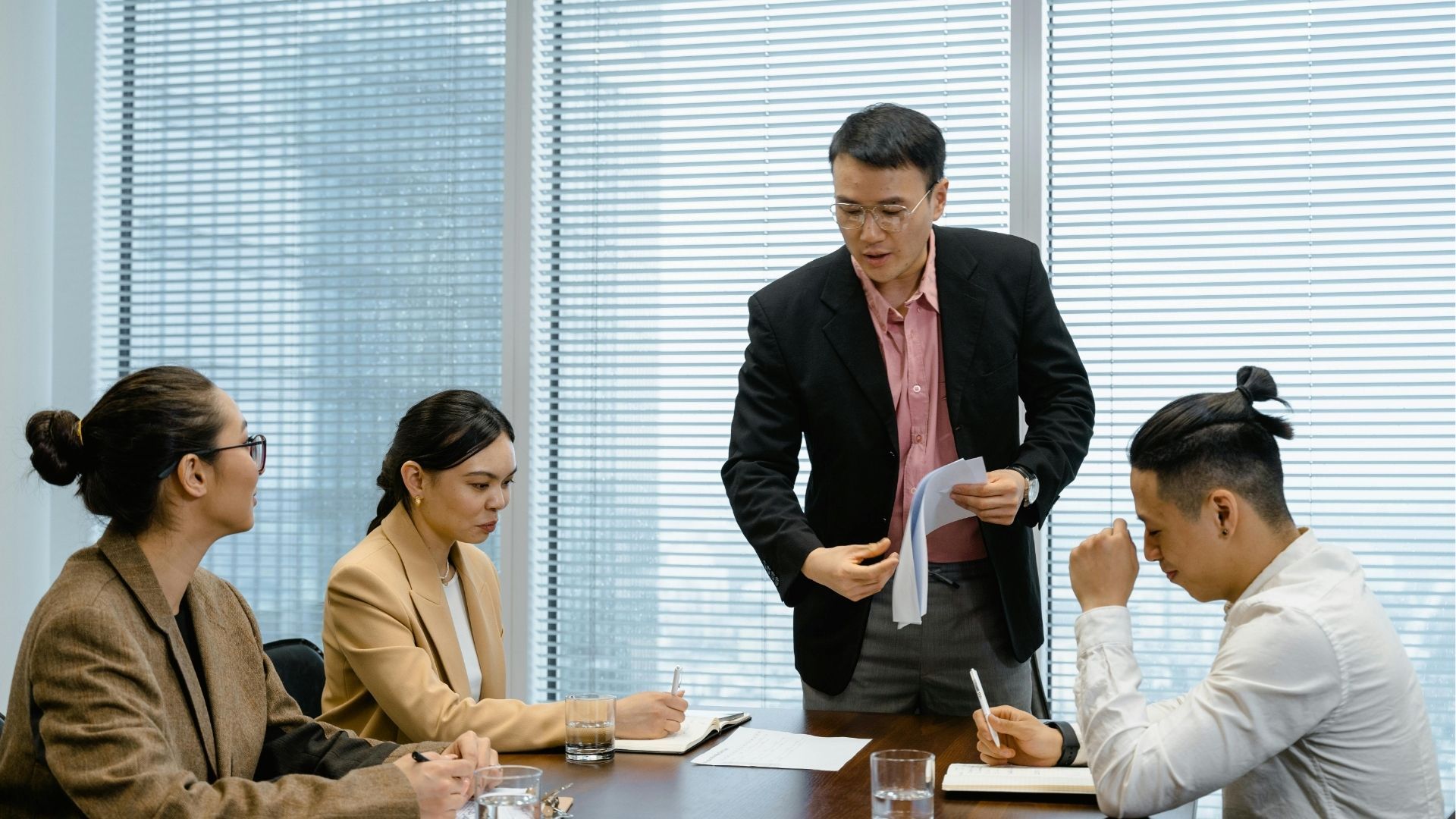
SINGAPORE: Workplace culture can seriously shape how people feel about going to work every day. Some offices feel like everyone is suffering together as a team, while others feel more like survival mode, where colleagues keep to themselves and quietly compete with one another.

On Reddit, one Singaporean shared that his current workplace has a very “we suffer together, we laugh together” kind of energy. Even though the workload can get intense, he said people still step in to help each other.

“There’s banter, shared pain, and a sense that nobody is trying to throw you under the bus just to look good,” he wrote.

“It is not perfect, obviously, but at least it feels like people are on the same side.”

He compared it to a previous workplace where the environment felt much colder and more transactional. Despite regular team-building activities organised by HR, he said there was never any real connection between colleagues.

Curious if others felt the same way about their own workplaces, he asked: “How wholesome or toxic is your workplace?”

The question quickly got many Singaporeans sharing their own office experiences.

One commenter recalled how a machine in their department once broke down, forcing everyone to do the work manually. Instead of pushing blame around, the entire team stayed late together to finish everything.

Another Redditor replied: “If no blame game had gone around and if everyone all did their part, then it’s pretty wholesome!”

Others described workplaces that were not especially close-knit, but still comfortable enough to work in.

One person shared, “If someone asks for help we help each other out, but some days I’ll barely say hi to my colleagues. We sometimes have lunch together, though. Very cordial overall and I’m pretty happy about it.”

Not everyone had positive experiences, however.

One commenter claimed their workplace generally functioned well until someone was viewed as incompetent or socially awkward, after which gossip and mocking would start behind the scenes.

Several Redditors also said workplace culture usually reflects whoever is leading the team.

“It all depends on who is on top,” one commenter wrote.

“If the person is chill, then most likely the workplace will be wholesome, but if it’s those stern kind, it is every man for himself.”

At the same time, some people admitted they believe a certain level of toxicity exists in almost every workplace anyway.

Reading through the comments, one thing became pretty clear — many workers care less about flashy company culture campaigns and more about whether the people around them make stressful days easier or harder to get through.

This article (‘We suffer together, we laugh together’: Singaporeans share what their workplace culture is really like) first appeared on The Independent Singapore News.
  • ✇The Independent Singapore News
  • Gen Z worker says older colleagues start late and expect juniors to ‘cover’ for them Yoko Nicole
    SINGAPORE: Gen Z workers are constantly getting called out online by older generations for supposedly being “difficult” and “hard to work with.” Some even call them “lazy” and “entitled.” So one young worker was left pretty shocked after joining a company where, according to them, it was actually the older staff who seemed to be slacking off the most. On Tuesday (May 12), the Gen Z employee shared in an online forum that the older generation in their workplace “has a worse work ethic” than they
     

Gen Z worker says older colleagues start late and expect juniors to ‘cover’ for them

SINGAPORE: Gen Z workers are constantly getting called out online by older generations for supposedly being “difficult” and “hard to work with.” Some even call them “lazy” and “entitled.”

So one young worker was left pretty shocked after joining a company where, according to them, it was actually the older staff who seemed to be slacking off the most.

On Tuesday (May 12), the Gen Z employee shared in an online forum that the older generation in their workplace “has a worse work ethic” than they do.

According to the post, some older colleagues only start work at 10 a.m., 11 a.m., or even 12 p.m. The worker also claimed that certain project managers regularly skip meetings for projects they are meant to lead, then ask younger colleagues to attend on their behalf just to collect information for them.

On top of that, the employee said their bosses often hand out tight one or two-day deadlines, while taking weeks to complete their own tasks.

“People my generation do it too, but isn’t the older generation supposed to be better?” the worker wrote.

They added, “I’m ’97, so technically Gen Z. I’m supposed to be the generation people flame for bad work ethic, right?”

Wondering whether this was just a problem at their company or something more common in Singapore workplaces, the employee asked others for their thoughts.

“Is it just me, and should I change companies, or is it a whole SG thing?” they asked. “I thought we’re all supposed to be working very, very hard ‘cause we might lose our jobs tomorrow?”

“I believe this is a work culture thing”

In the comments section, one user who identified themselves as a millennial said their generation faced the exact same kind of criticism when they first entered the workforce.

“I’m a millennial, we were flamed just as badly as you were when we first got to working age,” they wrote. “This is just an old people’s mindset. Change companies; you’ll not get far where you are.”

Another commenter felt the problem was not really about age at all, but more about a lack of accountability within the workplace.

“This is not the norm for older or younger generations. What you described seems like a severe lack of accountability. Build up your portfolio and find better opportunities.”

A third user shared a similar case, writing, “A ’97 worker here, the older generations always show up early [in our office], but they don’t work very well. No clear documentation. No clear action items. Zero communication, max confrontation. Low efficiency, low professionalism, sometimes an embarrassment that we don’t want to show to clients.”

Several others, however, came to the defence of older workers. 

One user chimed in, saying, “Fellow ‘97 here too, and the older colleagues in my company have a wonderful work ethic, but I’ve also worked in companies where people had not just a bad work ethic but also horrible manners, EQ, and human decency. I believe this is a work culture thing.”

Another explained, “Older people are hired and kept not because of raw output, but experience and knowledge. Before I judge others, I usually try to understand that not every meeting needs the person in charge or chair to be there, especially if they are just coordinating.” 

They added, “And the most important thing about them replying to you weeks later is whether that action actually blocked a company goal—not yours, but the company’s. If not, they are well within their rights to plan their time such that they still meet KPIs without jumping on everything at once.”

In other news, a frustrated jobseeker is questioning whether some companies are abusing the hiring process by getting applicants to do what feels like “free work” through lengthy interview assignments, only to ghost them afterwards.

In a post on the r/askSingapore forum, the individual asked fellow Singaporeans how they can tell if a company is genuinely hiring or simply making candidates do unpaid work under the guise of a job application.

Read more: ‘Some assignments take a week’ — Jobseeker asks if companies are exploiting applicants for free work

This article (Gen Z worker says older colleagues start late and expect juniors to ‘cover’ for them) first appeared on The Independent Singapore News.

‘Singaporeans aren’t less ‘hungry’… maybe we’re just tired’: Reddit user says Singaporeans are growing tired of burnout culture

SINGAPORE: A 42-year-old recruiter, Ms Shulin Lee, has come under heavy fire online after comments she made during CNA’s Deep Dive podcast rubbed many Singaporeans the wrong way.

In the interview, she claimed that some companies she has worked with “are letting go of Singaporeans in favour of hiring people in Malaysia, Vietnam, Philippines, not because they’re necessarily more skilled, but because they are a lot hungrier.”

Unsurprisingly, her use of the word “hungry” quickly became the focus of criticism.

Across social media, many users slammed the remarks as “tone deaf,” “insensitive,” and overly dismissive of the struggles local workers already face. Some felt the comments painted Singaporeans as lazy or entitled, simply because they are no longer willing to tolerate endless overtime, constant stress, and stagnant pay without questioning it.

Others argued that refusing to work punishing hours for lower salaries does not make someone “less hungry.” If anything, they said, it just means workers today know their worth and are less willing to romanticise burnout in the name of loyalty.

In a separate Reddit post, another Singaporean shared their own take after watching clips of the interview. Rather than agreeing that locals are becoming less driven, the user argued that Singaporeans “aren’t less hungry” but “simply tired.”

According to the post, many people grew up watching their parents work themselves to the bone, staying in the office until late at night, sacrificing family time, health, and personal happiness, only to end up retrenched anyway, despite years of loyalty.

They added that when younger workers today ask for things like work-life balance, fair pay, or reasonable boundaries, they are suddenly labelled “not hungry,” as though wanting a life outside work automatically means lacking ambition.

“Is Singapore really becoming ‘less hungry?’” They added. “Or are people finally rejecting burnout culture?”

“What makes her think that we Singaporeans are not hungry?”

In the discussion thread, one Redditor responded: “I just think it’s because we’re not in survival mode or we don’t wish to be in that mode anymore—and! that’s!! Okay!!!”

Another commented, “Less hungry is such a stupid take, man. Less hungry compared to who/what? Less hungry compared to foreign talents (FT)? The same FT doing the same role can buy bungalows, land, and cars back in their home country. We can barely afford a BTO/resale.”

A third added, “Honestly, I feel that the comment she made is like an insult to us Singaporeans. Don’t you think so? What makes her think that we Singaporeans are not hungry? She thought we all stay in Singapore for free?”

“All of us have monthly bills to pay, we all still need to work and put food for the family on the table, so that we all can survive.”

Read also: Singaporeans returning after 10+ years overseas share biggest reverse culture shocks: ‘MRT used to be empty at 3pm, now it’s always crowded’

This article (‘Singaporeans aren’t less ‘hungry’… maybe we’re just tired’: Reddit user says Singaporeans are growing tired of burnout culture) first appeared on The Independent Singapore News.

‘Sick colleagues keep working from home’— Foreign worker wonders if it is a norm in Singapore to work while feeling ill

SINGAPORE: Are employees in Singapore ever really off the clock anymore? One foreign worker recently shared their surprise over what they felt was an oddly common workplace habit in the city-state: continuing to work remotely despite being sick.

In a post on the r/askSingapore forum, the worker said they relocated to Singapore a “few months ago to join a new company” and have since noticed a recurring pattern among their colleagues. Whenever someone falls ill, instead of taking medical leave completely, they simply shift to working from home.

According to the poster, employees would inform their boss that “they had a fever or were feeling unwell,” yet would still log in and continue handling their tasks remotely. They also noted that they had never seen managers explicitly encourage sick employees to rest and fully take the day off.

“Upon joining the company, there were no set days of sick leave, but employees could take time off wherever needed for health reasons,” the foreign worker wrote. “Now I am worried if I ever take medical leave, it will be frowned upon. Is this a common practice in Singapore?”

“Some people just don’t want their work to pile up”

In the comments section, many Singaporean Redditors said that this is actually pretty common, especially now that remote and hybrid work setups have become normalised.

They shared that, in many workplaces, employees usually only take full medical leave when they are seriously ill or too unwell to function properly. For milder illnesses like coughs, sore throats, or slight fevers, working from home has become the preferred option.

One user explained, “There’s sick, and there’s SICK. Depending on your work culture and your boss, if you’re just mildly ill (flu, cough, whatever), it’s actually more responsible to work from home so that you don’t spread the germs. Colleagues will generally understand if you’re not as productive for a day or two while you recuperate.”

“When you’re REALLY ill, the kind that needs you to be knocked out by drowsy meds, that’s what you really need your MC for, as you’d likely be out of action for a couple of days. Hope that makes sense.”

Another wrote, “I mean, there are some days where I’m sick but just a cough and sore throat. I can still physically work, but I don’t want to be spreading germs all over the office. So I WFH instead. That way, I don’t need to use medical leave, and the company doesn’t lose out on productivity since I’m still working. Win-win.”

A third commented, “It’s the norm now. When I was down with Covid and took 5 days of MC, I still got tasked with work while at home.”

A fourth remarked, “I guess some people just don’t want their work to pile up. Which is why they still work from home even when they’re sick.”

Still, not everyone agreed that this was an expected workplace culture. A few Redditors said they had never experienced this in their own companies and felt employees should simply rest when they are sick.

One added, “Not common. Just might mean that the company is undermanned, but they are trying their best not to inconvenience others, maybe?”

In other news, a frustrated software engineer took to social media to share that the firm he works for, which he hinted is an “infamous three-letter local IT company,” has been assigning him non-technical work for the past two years.

“I have not learned ANYTHING technical; every project I’m put on is just me doing PowerPoint and admin work,” he wrote on the r/singaporejobs forum. “Yet, I am expected to OT on weekends and even till midnight due to the sheer amount of work there is to do. It seems like the horror stories about this company are true.”

Read more: ‘I’m just doing powerpoints and admin work’: Software engineer frustrated over non-technical workload at company

This article (‘Sick colleagues keep working from home’— Foreign worker wonders if it is a norm in Singapore to work while feeling ill) first appeared on The Independent Singapore News.
‘We are not in school anymore’: Employee upset over being reported for using phone during work hours

SINGAPORE: An employee expressed her frustration online after discovering that someone had complained about her phone usage during office hours, even though she insists her work performance has never been affected.

Sharing the incident on the r/singaporejobs forum, the employee said that she has been working in a “typical corporate office” for over a year, where the workforce is largely made up of older staff. 

She noted that “a lot of people are above 40,” with only about 10 per cent of employees in their 20s like herself.

She then explained that she consistently “finishes whatever work she has by the end of the day.”

However, because she finds it difficult to stay focused for long, uninterrupted periods, she tends to alternate between work and briefly checking her phone throughout the day.

During slower periods, she also uses her phone to reply to messages or scroll through social media.

Despite this, she was recently flagged by someone outside her department, who allegedly monitored her behaviour and reported it to her supervisor.

“I recently got a note from my direct boss saying that someone not from my department has been monitoring me and reported that I use my phone too much,” she wrote.

Caught off guard by the complaint, she questioned whether such scrutiny is normal in the workplace.

“Is this normal? How often do you guys use your phones at work? We are not in school anymore. Why is my using my phone bothering someone else who has 0 work relations with me?”

“Precisely, you are not in school anymore. So act like it.”

In the comments, several Singaporean Redditors said that phone use is still generally frowned upon in more traditional office settings, even if the employee is getting all their work done.

One user pointed out that even if a direct supervisor is fine with short phone breaks, other colleagues may not be.

“There will be other people around the office who will find an issue with it. Unfortunately, that’s just how typical toxic corporate culture is.”

Another shared that in some workplaces, there’s this unspoken expectation to always look busy.

“You’re expected to ‘pretend to work’ when you don’t have work,” they wrote. “God forbid that you be doing work that doesn’t look like work too. Someone actually reported me before for ‘surfing’ when I was actually searching for sales leads.”

A third added, “Because the expectation at work is to work. Not to scroll social media. What the other generation does is that they mingle and gossip instead in their free time. It’s just more socially acceptable. The same for how smokers can take smoke breaks but non-smokers can’t take phone breaks. It’s just how society is for now.”

Meanwhile, some commenters advised the post author to manage her short attention span by taking brief pantry or toilet breaks, or walking around occasionally to stretch her legs during the workday.

On the other hand, a few people were more critical and felt the employee didn’t really see why others might view the behaviour negatively. 

One wrote, “Precisely, you are not in school anymore. So act like it. You’re at work. Not paid to leisurely sit there on the company’s time to chit-chat on the phone or scroll social media. If you have so much free time at work, it means your workload is too little or your job is unnecessary.”

They continued, “What’s your point of bringing up age groups? You are younger, so phone usage is the norm, and people should accept it? Those in their 40s probably have more personal tasks to do on their phones than waste time doom scrolling or stalking influencers like you, yet they aren’t using company time to do so, or smart enough to be discreet.”

In other news, a Singaporean jobseeker has shared online that he feels rather “hopeless” after being unable to secure a job despite lowering his salary expectations to around S$3,000 to S$3,500.

Posting on the forum singaporejobs on Monday (May 4), the 26-year-old described the job market in the city-state as “brutal.”

Read more: ‘SG current job market feels brutal’: Singaporean applicant with S$3.5k salary expectations says he’s losing hope after 8 months of job hunting

This article (‘We are not in school anymore’: Employee upset over being reported for using phone during work hours) first appeared on The Independent Singapore News.

  • ✇The Independent Singapore News
  • When comments on Malaysia’s public holidays cross the line into disrespect Nick Karean
    MALAYSIA: A foreign boss has come under fire after allegedly name-calling Malaysian staff in a group chat and complaining about the number of public holidays they enjoy in the country. The comments are largely seen as being disrespectful to the host country. The comment, which has since gone viral on Threads and was reposted by Singapore’s No.1 personal finance podcast, The Financial Coconut, on TikTok and Instagram, shows the boss writing: “These pigs rest so much” and “1 month 10 days off.” Th
     

When comments on Malaysia’s public holidays cross the line into disrespect

28 April 2026 at 12:02

MALAYSIA: A foreign boss has come under fire after allegedly name-calling Malaysian staff in a group chat and complaining about the number of public holidays they enjoy in the country. The comments are largely seen as being disrespectful to the host country.

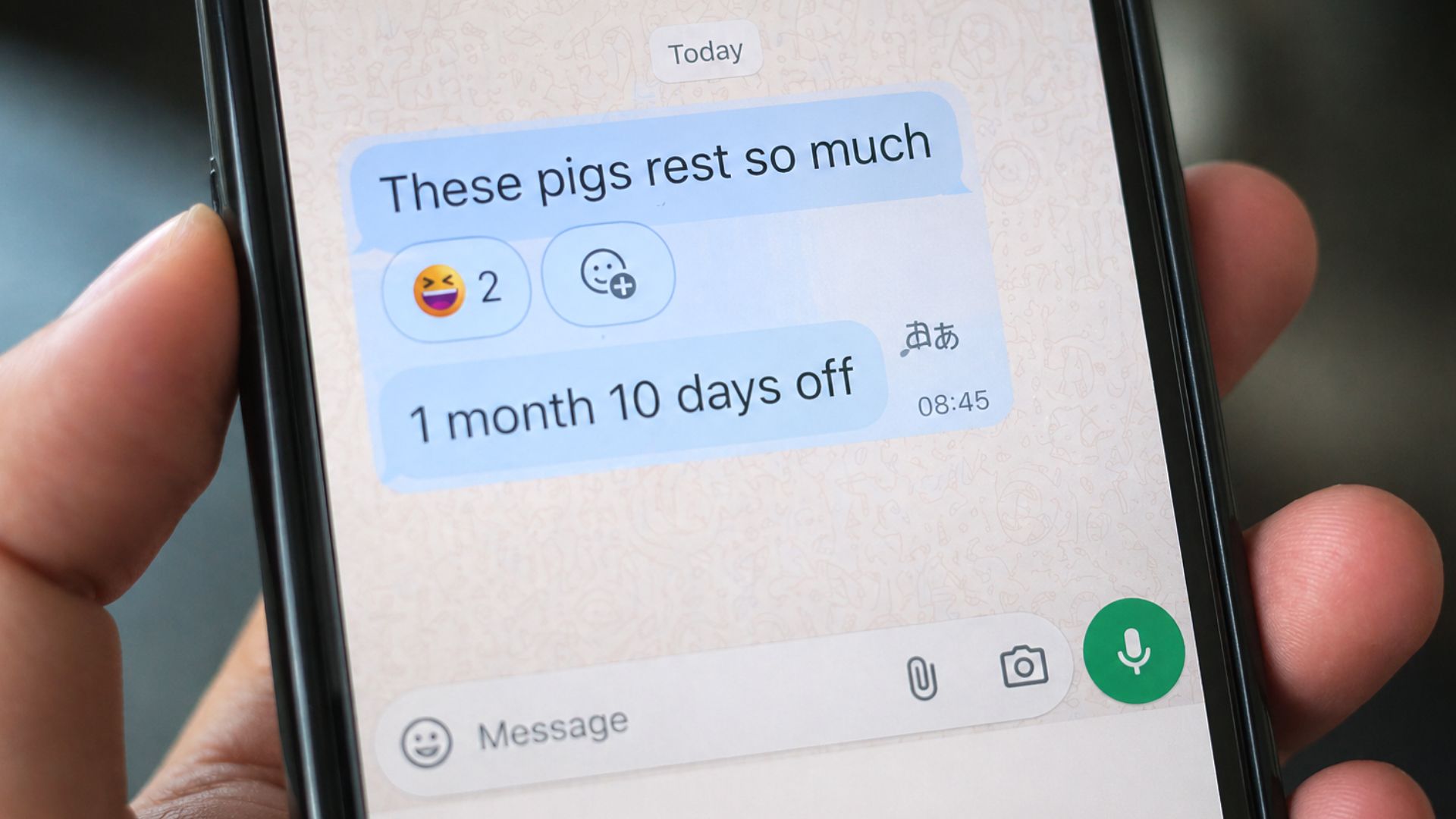
The comment, which has since gone viral on Threads and was reposted by Singapore’s No.1 personal finance podcast, The Financial Coconut, on TikTok and Instagram, shows the boss writing: “These pigs rest so much” and “1 month 10 days off.”

The boss’s comment in the post drew strong reactions online as many saw it as disrespectful. Others said it revealed deeper attitudes about work culture in the region.

“If your boss says this in a group chat, how would you feel?”

The original Threads post was shared in Malay with a question: “If you work for an international company and then your boss says this in a group chat, how would you feel? Context: Malaysia has many public holidays.”

‘These pigs rest so much’ - Foreign boss says about Malaysian staff and public holidays: ‘1 month 10 days off’
@akid.ahmad/Threads

That question resonated with many, and according to The Financial Coconut, the negative comment cut deeper beyond workplace rudeness. It pointed to a long-standing stereotype about Southeast Asians being “lazy” or lacking drive.

The podcast explained that such views date back to colonial times, when workers in the region were often labelled “indolent” to justify low wages and harsh labour systems. It added that these ideas didn’t disappear as they continue to show up today in modern language, such as complaints about “too many holidays” or assumptions about productivity.

“When someone says that, they’re echoing a colonial script,” the commentary noted, pointing to issues like salary, power, control and working conditions.

“So when a foreign boss in Malaysia calls his team ‘pigs’ for using public holidays, it’s not just unprofessional, it drags in a whole history where Southeast Asians are only seen as ‘good workers’ if they sacrifice rest… and family time to fit someone else’s business model.”

Online reactions: “Yes, well-rested pigs perform better!”

Reactions online ranged from anger to sarcasm and humour. One witty commenter even responded with: “Yes, well-rested pigs perform better! 🐷

Others took a more serious tone and said rest days and public holidays are part of labour rights, not signs of laziness.

Some also pointed out that Malaysia’s public holidays reflect its multicultural society, with different religious and cultural observances across the year.

When productivity is judged by hours worked, instead of outcomes delivered

The incident has reopened the usual debate in Southeast Asia: how work is measured, and who defines “hard work.”

For many, the issue is not about the number of holidays, but respect. Calling staff “pigs” crosses that line. It undermines morale and signals a lack of cultural awareness, especially in international teams. It also raises an important question: should productivity be judged by hours worked, or by outcomes delivered?

In Singapore and across the region, this conversation is becoming more relevant as companies push for better work-life balance while staying competitive.

Public holidays are how societies choose to live, work and rest

Good management always starts with respect for their staff, and cultural context matters—so does how leaders speak to their teams.

Public holidays are not a flaw in the system. They reflect how societies choose to live, work and rest. If anything, a well-rested workforce is more often effective. And a boss who understands that will get more out of people than one who reduces them to insults.

This article (When comments on Malaysia’s public holidays cross the line into disrespect) first appeared on The Independent Singapore News.

❌
Subscriptions