Normal view

From oversight to coercion: How authoritarian governments are twisting AI safety to get tech companies to fall in line

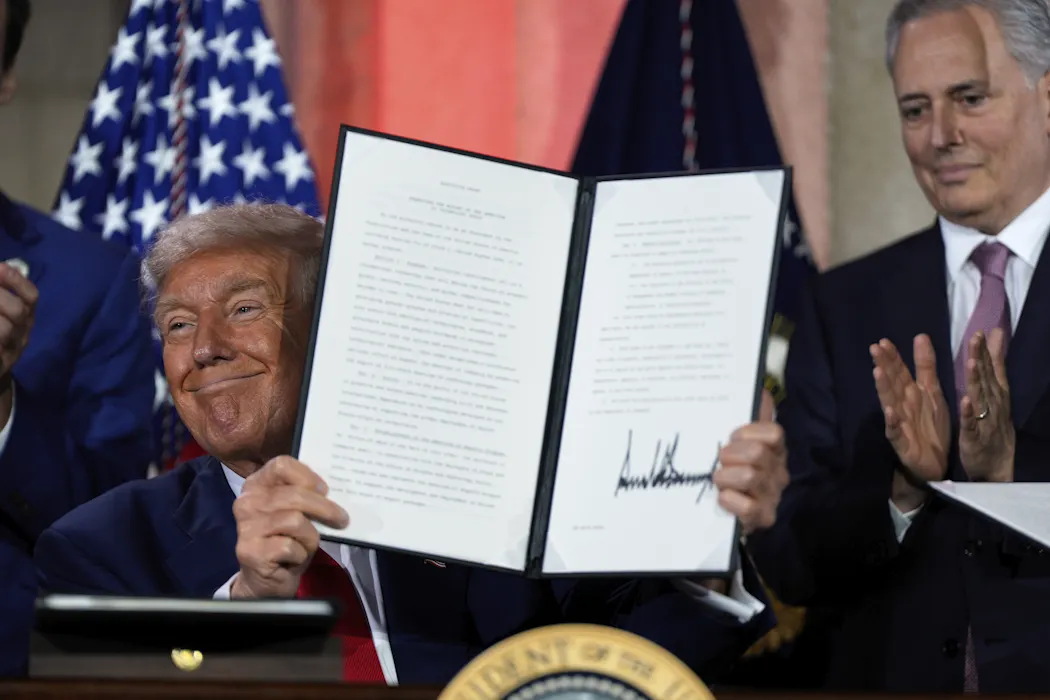
President Trump's 2025 executive order about 'woke AI' put the tech industry on notice about aligning with the administration's views. AP Photo/Julia Demaree Nikhinson

When researchers founded Anthropic in 2021, they said the race to build powerful AI was moving too recklessly. They inserted detailed safety measures into their products and marketed their commitment to safety as the corporate quality that distinguished them from competitors – notably OpenAI, the rival company they had left. In March 2026 that reputation was tested when the Trump administration declared that Anthropic was a supply chain risk.

The company had refused to remove built-in safeguards that prohibited domestic surveillance and autonomous weapons from products it had supplied to the Pentagon. President Donald Trump ordered the federal government to stop using Anthropic and its large language model, Claude, labeling the company a national security risk. Within hours, OpenAI made a deal to be the Pentagon’s supplier instead.

Despite Anthropic’s apparent stand, during its clash with Trump the company quietly scrapped the binding principles in its main safety policy. Several weeks earlier, Anthropic’s head of safeguards research had resigned, warning that “the world is in peril.” And a week after the Pentagon officially banned Claude, the U.S. military was still using the technology to select and target sites to bomb in Iran.

As a philosopher studying the rule of law and democracy, I’ve found that authoritarian governance of technology often does not involve direct censorship. Instead it delegitimizes the intended protections, poisoning any external regulation and even voluntary self-regulation that deviates from the regime’s goals or values.

The Trump administration, which follows the authoritarian playbook, has argued that AI safety standards and user restrictions are ideological impositions rather than sound engineering decisions. The “Preventing Woke AI” executive order of July 23, 2025, didn’t change what companies are allowed to do with their products. By by attaching the “woke” label to basic ethics protections, the administration made those protections politically costly to maintain.

The Brennan Center, a legal policy and advocacy organization, has documented how AI ethics is being redefined through contract negotiations. In these cases, the government weaponizes terms such as “biased” to disqualify companies that maintain civil rights protections from competing for federal contracts.

The prisoner’s dilemma

A single U.S. Defense Department AI contract can be worth billions of dollars. It can also provide access to data no private company could otherwise have and unlock further government work. Companies that maintain the ethics guardrails risk ceding ground to competitors that don’t.

When OpenAI moved in to take the Pentagon work, CEO Sam Altman told his board of directors the move looked “opportunistic and sloppy.” But he said the company took it anyway, because admitting that an action looks bad is different from being willing to fall behind.

Donald Trump talking to AI leaders at the White House.
President Donald Trump and OpenAI CEO Sam Altman speak during a Jan. 21, 2025, news conference during which Trump announced an investment in AI infrastructure. Andrew Harnik/Getty Images

This situation reflects the classic prisoner’s dilemma. If Anthropic maintains safety provisions and OpenAI strips them away, OpenAI gets the contracts and the future advantage. If both companies maintain the provisions, digital protections might survive. But because neither company can be certain the other will hold the line – and because being left behind is not a good option – the rational choice is to discard safety measures.

These circumstances differ from a standard market race to the bottom in one key respect: The trap of having to strip away guardrails isn’t an accident of competition; it’s being maintained by the government through incentives.

Palantir didn’t wait to be caught in this trap. The data analytics company was founded by Peter Thiel and run by Alex Karp, who spent years denouncing “woke” Silicon Valley. Palantir built its business model around government surveillance and military data infrastructure. While Palantir has said it is committed to privacy and civil liberties, critics contend that the company is dismantling those protections. The company’s stock has surged under the Trump administration, its contracts have expanded, and it now has a front-row seat where AI policy is being written. Palantir solved the prisoner’s dilemma by defecting first.

It’s important to note that the dissolution of safety teams across the industry, such as OpenAI’s Superalignment team and Microsoft’s ethics unit, isn’t the result of anyone deciding to abandon safety. What I see in analyzing the different companies’ actions is a pattern: an accumulation of collective, incremental compromises that quietly reorient the definition of safety away from the public and toward the state. The resulting harm and risks fall on everyone whose lives are shaped by AI systems.

Redefining safety to serve the government

Across government contracts and policy documents, I have also observed that the original definition of AI-related safety has shifted from protecting the public toward making systems controllable for the state. The “anti-woke” framing accelerates this shift: Once ethics requirements are characterized as ideological rather than technical, removing them can be framed not as a safety reduction but as a correction.

This shift does not require bad faith from the companies. Safety teams are still doing rigorous work. The companies are not lying when they describe their safety commitments. Those commitments are now simply oriented toward the government rather than the public.

The case for stronger AI regulation assumes that a government constrains commercial entities on behalf of the public. But blacklisting a company for maintaining civil rights protections, and then banning the military deployment of its AI hours later, shows that the federal government in this instance enables the harm that regulation is meant to prevent.

Expanding regulatory authority over AI companies does not necessarily protect citizens. Safety regulations – intended to constrain corporate power – in authoritarian regimes become tools to coerce compliance.

The Conversation

Michael Gregory does not work for, consult, own shares in or receive funding from any company or organization that would benefit from this article, and has disclosed no relevant affiliations beyond their academic appointment.

Upcoming telescopes could shed light on dark matter – astronomers are looking for these ‘fingerprints’ of the elusive substance

Dark matter makes up a large proportion of galaxies like the Milky Way, but scientists are still figuring out what it is. RubinObs/NOIRLab/SLAC/NSF/DOE/AURA/B. Quint, CC BY

NASA’s plans to return astronauts to the Moon through the Artemis program and ultimately send humans to Mars highlight just how far space exploration has come. Yet while the Moon and Mars remain compelling destinations filled with scientific mysteries, looking beyond our solar system raises even deeper questions about the universe itself.

Among the biggest of those mysteries is matter – the substance that makes up everything around us. Surprisingly, most of the matter in the universe is invisible, and astronomers still do not know what it is.

Physicists estimate that about 85% of all matter is made of something we cannot see, touch or directly detect. This elusive substance is known as dark matter. It doesn’t emit light like stars or galaxies. The only reason scientists know it exists is because of its gravity.

Galaxies rotate too fast to be held together by just the matter that can be seen. Light bends more strongly than expected as it travels through space. Galaxies within clusters fly past one another much faster than they should based on their visible mass alone.

Based on data from across the cosmos, scientists keep coming to the same conclusion: There is something out there that cannot be seen, but whose presence is unmistakable. It’s a question that has intrigued astronomers like us for more than 50 years.

So what is dark matter, and why does it matter?

A missing piece of the cosmic puzzle

Everything in our everyday world is made of atoms, which are combinations of protons, neutrons and electrons. These particles form stars, planets, people and everything you see.

Dark matter, scientists believe, is fundamentally different. It is likely made of entirely new kinds of particles yet to be discovered. Understanding what those particles are would fill a major gap in the scientific understanding of physics. But the importance of dark matter goes far beyond particle physics.

Dark matter played a crucial role in shaping the universe. Shortly after the Big Bang that kicked off the birth of the universe, it acted as a kind of gravitational scaffolding, helping ordinary matter clump together to form the first galaxies and stars. Even today, it acts as the invisible glue that holds galaxies together.

In other words, without dark matter, the universe as you know it might not exist.

Looking for invisible matter

Because dark matter does not emit light, scientists must search for it indirectly. One promising approach is to look for the signals it might produce when its particles collide and destroy each other through a process known as annihilation.

This idea may sound exotic, but it has a familiar analogy. In medical imaging, devices such as positron emission tomography scanners, or PET scanners for short, detect radiation produced when particles of antimatter – positrons – annihilate with electrons, which are normal matter.

Antimatter is just a form of matter made of particles that have the same mass as ordinary matter, but opposite charges and quantum properties. The annihilation signals in PET scanners allow doctors to map cancerous tissues inside the human body.

Scientists hope something similar could happen with dark matter. If dark matter particles annihilate with each other, they may produce high-energy radiation called gamma rays. These gamma rays could act as fingerprints, revealing where dark matter is concentrated and its properties.

As astrophysicists who study gamma rays, we and our collaborators use space-based telescopes to search for these signals.

A diagram showing a web of energy
Visualization from the Aquarius Project, a high-resolution cosmological dark matter simulation. The image shows the dark matter structure on both large cosmological scales, left panel, and on the scale of the Milky Way. Volker Springel/Virgo Consortium, The Aquarius Project

A mysterious signal at the heart of our galaxy

One of the most powerful tools for this search is NASA’s Fermi Large Area Telescope, known as Fermi-LAT, which has been observing the gamma-ray sky since 2008. Gamma rays are the most energetic form of light, and they are produced by some of the universe’s most extreme phenomena.

For years, Fermi has detected an unexplained glow of gamma rays coming from the center of the Milky Way. Based on gravitational observations such as galaxy rotation curves, stellar motions, and the bending of light, combined with cosmological simulations, astrophysicists expect this region to be extremely rich in dark matter, making it an intriguing place to look for annihilation signals.

Could this glow be evidence of dark matter?

Possibly. But there’s a complication: The center of our galaxy is also crowded with more conventional astrophysical gamma ray sources, such as rapidly spinning neutron stars, which are produced from the collapse of massive stars. These objects can produce gamma rays that mimic the expected signal from dark matter.

At the moment, scientists cannot say for certain what is causing the emission. The signal could be a breakthrough, or it could be something more ordinary.

Clues from smaller galaxies

To help resolve this mystery, researchers also study much smaller systems, known as dwarf galaxies, which orbit the Milky Way. These galaxies contain dark matter but relatively few other sources of gamma rays, making them cleaner environments to search for dark matter-related signals.

So far, no definitive detection has been made.

However, an analysis published in March 2024 led by our team at Clemson University found hints of a signal emerging from these dwarf galaxies, and updated results collected since have supported these findings.

Using the latest Fermi-LAT data, combined with an updated census of dwarf galaxies and improved estimates of their dark matter content, we searched for faint gamma-ray signals across the population of dwarf galaxies. This led us to uncover an excess of gamma rays that earlier studies had also hinted at. The more data we’ve collected, the more significant the excess appears to become.

The evidence is not yet strong enough to claim a detection of dark matter, but it is intriguing. The properties of this signal are also consistent with what scientists see in the center of the Milky Way. If both signals share the same origin, the case for dark matter would grow stronger.

An illustration of the Fermi telescope in orbit over Earth. It looks like a metal box with two solar panels protruding off either side.
The Fermi spacecraft surveys the sky searching indirectly for dark matter. NASA's Goddard Space Flight Center/Chris Smith (USRA/GESTAR)

The next decade could be decisive

Confirming a dark matter signal will require more data and better instruments working together.

Future observations from the Fermi-LAT will continue to improve the sensitivity of these searches. Additionally, new facilities such as the Vera C. Rubin Observatory in Chile, are expected to discover more dwarf galaxies for researchers to study.

Another key mission is NASA’s Compton Spectrometer and Imager, or COSI, scheduled for launch in 2027. COSI will offer a new view of the gamma-ray sky and could help clear up several longstanding mysteries. Among these mysteries is yet another unexplained bright glow from the center of the galaxy, produced when electrons and positrons annihilate, just as in PET scans.

An illustration of a telescope which is cylindrical with a solar panel off on its side.
The COSI telescope will study antimatter in the galaxy. COSI artist's concept, above — Northrop Grumman Systems Corporation

Despite discovering the annihilation signal more than 50 years ago, scientists still don’t know where these positrons are coming from. By mapping this emission in unprecedented detail, COSI could help reveal what’s producing the glow, and whether it might be connected to dark matter and other unexplained signals in the Milky Way.

These efforts, along with many other ongoing searches, may help determine whether scientists are truly seeing the fingerprints of dark matter or something else entirely.

As humans push further into space, from the Moon to Mars and beyond, new worlds wait to be discovered. In parallel with the new age of space exploration, with each new observation, scientists may be getting closer to answering one of the most fundamental questions in physics.

The Conversation

Marco Ajello receives funding from NASA.

Christopher Karwin receives funding from NASA.

Baloch insurgency: Suicide bombs and uptick in violence threaten Pakistan, regional security

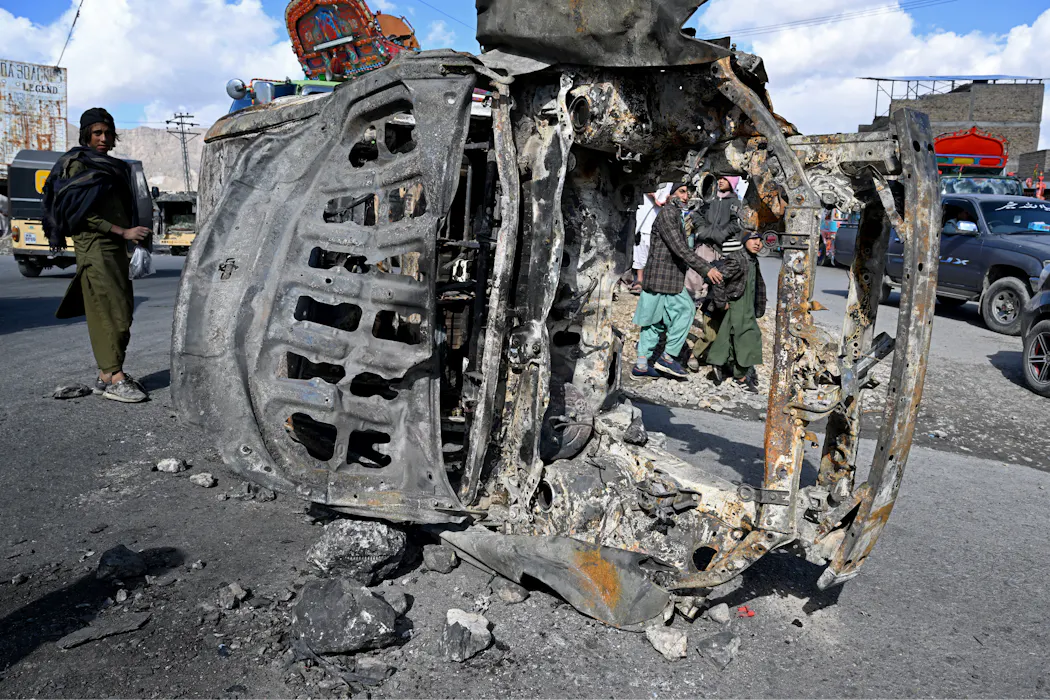
The aftermath of an attack by Baloch separatists in Quetta, Pakistan, on Feb. 1, 2026. Banaras Khan/AFP via Getty Images

In the space of 10 days in late April 2026, insurgents in Pakistan purportedly carried out 27 attacks in the country’s southwest province of Balochistan, killing at least 42 military personal. Then, on May 11, authorities announced that a suicide bombing plot on the capital, Islamabad, had been foiled. Authorities arrested a girl over the incident – a nod to militants’ increasing use of young Baloch women to carry out attacks.

These incidents represent the latest flaring up of a long-running insurgency in Pakistan’s largest province and home to around 15 million people.

For a rundown of what you need to know about the Baloch insurgency and groups involved, The Conversation turned to Amira Jadoon and Saif Tahir, experts on militant and terrorist organizations currently researching such groups’ operational activities and strategic messaging in Afghanistan and Pakistan.

What is the Baloch insurgency about?

Pakistan’s southwestern province of Balochistan has long been the site of resistance and armed movements involving Baloch, an ethnic group of an estimated 8 million to 10 million people that straddles parts of Pakistan and Iran.

Their insurgency is rooted in both contemporary and historical grievances. Its origins trace back to the contested annexation of the princely state of Kalat in 1948, months after the partition of British India into India and Pakistan, and the resulting confrontations between Baloch tribal leaders and the newly formed Pakistani state.

While the insurgency long remained a low-level struggle framed around Baloch marginalization and economic exploitation, it turned violent in the early 2000s with the rise of militant factions, including the Balochistan Liberation Army, or BLA, in 2000 and the Balochistan Liberation Front, or BLF, which was revived in 2004 under current leader Allah Nazar Baloch decades after its 1964 founding. The insurgents’ goals vary, from greater autonomy and control over the province’s natural resources to full independence.

Baloch militants generally cast their emergence as a nationalist rebuttal to the Pakistani government’s long-standing narrative, which states that the unrest is driven by a handful of tribal chiefs resisting development rather than a broad-based movement.

In practice, the contemporary insurgency has expanded well beyond its tribal base, and Baloch militant groups have invested heavily in strategic communications that directly challenge the Pakistani state’s framing.

Today, Baloch militants’ propaganda targets the local educated youth, including women. They play on existing grievances over enforced disappearances, state repression and resource extraction. Balochistan is home to significant deposits of copper, gold, natural gas and coal, including at the Reko Diq mine, one of the world’s largest undeveloped copper and gold reserves. Yet the province remains Pakistan’s poorest.

Baloch militants’ efforts are designed to broaden the insurgency’s appeal, adding an urban, middle-class layer to what was once a primarily tribal revolt that casts itself as a struggle to defend the Baloch “motherland” and achieve national liberation.

The Baloch insurgency has emerged as one of Pakistan’s most consequential internal security challenges. In 2025, the BLA claimed 521 attacks and 1,060 security-force fatalities, though independent monitoring records substantially fewer attacks, at around 254 events, in Balochistan over the same period.

Two Baloch militants’ operations bookend the recent escalation. In March 2025, BLA fighters hijacked the Jaffar Express – a heavily used passenger train connecting Quetta, the capital of Balochistan, to Peshawar in northwestern Pakistan – holding more than 350 passengers in a 30-hour siege. In April 2026, the group announced a new naval wing, the Hammal Maritime Defence Force, following its first maritime attack on a Pakistan coast guard vessel near Jiwani, in Gwadar district.

These tactical innovations have been reinforced by deliberate efforts at broadening the support base for Baloch separatism. The 2018 formation of Baloch Raji Ajohi Sangar, an alliance of Baloch militant groups, and the 2020 entry of the non-Baloch Sindhudesh Revolutionary Army, a Sindhi separatist group based in neighboring Sindh that has extended Baloch militants’ operational reach into Karachi, signal an expanding ethno-regional coalition aimed at broadening the geographic and ideological scope of the insurgency.

Why the uptick in violence now?

Four converging factors explain the recent escalation.

First, the Pakistani state’s crackdown on peaceful political space in recent months has accelerated social discontent. Following the March 2025 Jaffar Express attack, prominent Baloch rights defender Mahrang Baloch was arrested under anti-terrorist laws, while three protesters were shot dead at a peaceful sit-in in Quetta.

As nonviolent avenues close, aggrieved civilians become more receptive to Baloch militants’ recruitment narratives.

Second, Baloch militants have acquired U.S. weapons left behind in Afghanistan during the 2021 withdrawal, including M4 and M16 rifles fitted with thermal optics. Recent reports have linked the arms used in the Jaffar Express attack directly to abandoned U.S. stockpiles in Afghanistan.

Third, militant operational collusion has deepened between the Balochistan Liberation Army and the Tehrik-i-Taliban Pakistan, the latter ranked by the Institute for Economics and Peace as the world’s fastest-growing insurgent group in 2024.

Despite the groups’ divergent ideologies, the cooperation appears to have produced clear tactical convergence, including town takeovers, the use of suicide bombings, and sniper and ambush tactics.

Finally, Baloch groups have excelled in the effective use of social media to influence and recruit educated young people, including women.

A man in a gun stands in the middle of a street.
A policeman stands guard near the blast site in Quetta after an attack by Baloch separatists on Jan. 31, 2026. Adnan Ahmed/AFP via Getty Images

The BLA’s elite Majeed Brigade has formalized a women’s wing, and the use of female suicide bombers has now spread across multiple Baloch factions. At least five known cases have been reported since 2022.

The deployment of women is strategic: Female operatives present a softer public face and yield both reputational and tactical benefits, evading security profiling, expanding target reach and amplifying media impact.

Has the insurgency been affected by the Iran war?

Tehran’s destabilization creates new tactical space for insurgents. Ethnic Baloch communities straddle the Pakistan-Iran border, and the BLA already maintains a presence in Iran’s Sistan and Baluchestan province.

The “Greater Balochistan” narrative promoted by Baloch nationalists, which envisions the reintegration of Baloch lands across both states, is gaining traction on the Iranian side. Moreover, weaker border enforcement gives militants greater freedom to move, recruit and coordinate.

Cross-border trade flows have dropped sharply since the war in Iran began, but the disruption is more likely to expand than to shrink Balochistan’s illicit economy over time. As state enforcement weakens on both sides of the border, the cross-border fuel and narcotics smuggling networks that Baloch militants tax and target are likely to expand further.

The cross-border problem had already escalated to interstate confrontation. In January 2024, Iran and Pakistan exchanged tit-for-tat strikes on Baloch militant groups operating across their shared border.

Counterterrorism coordination between the two countries remains modest, and attacks have continued, including the killing by militants of Pakistani migrants inside Iran as recently as April 2025.

With Iran’s stability weakening, these dynamics are likely to deepen, potentially raising tensions between Islamabad and Tehran over separatists in the future.

How are Pakistan-US relations affected?

The Baloch insurgency is now also an increasingly important focus of a warming U.S.-Pakistani relationship.

In August 2025, the U.S. State Department designated the BLA and its Majeed Brigade as foreign terrorist organizations – a move Islamabad had long pressed for.

Months later, the U.S. Export-Import Bank approved US$1.3 billion for the Reko Diq copper-gold project in Balochistan, its single largest critical minerals investment to date.

The current insurgency directly contests Pakistan’s capacity to deliver security in Balochistan. The Reko Diq mine lies in the same district where Zareena Rafiq, a BLF-affiliated female suicide bomber, struck a base of Pakistan’s federal paramilitary force on Nov. 30, 2025.

Further, in April 2026, a BLF commander declared that the group would target all foreign companies operating in Balochistan, regardless of country of origin.

Yet the present alignment between the U.S. and Pakistan is transactional: Its durability depends on Pakistan delivering on counterterrorism, mediation with Iran and mineral access.

Meanwhile, absent a counterinsurgency approach that addresses the underlying political and social drivers of the Baloch insurgency – including state repression, political marginalization and resource grievance – the broader U.S.-Pakistan reset is unlikely to deliver the stability its investments require.

The Conversation

The authors do not work for, consult, own shares in or receive funding from any company or organization that would benefit from this article, and have disclosed no relevant affiliations beyond their academic appointment.

Baloch insurgency: Suicide bombs and uptick in violence threaten Pakistan, regional security

The aftermath of an attack by Baloch separatists in Quetta, Pakistan, on Feb. 1, 2026. Banaras Khan/AFP via Getty Images

In the space of 10 days in late April 2026, insurgents in Pakistan purportedly carried out 27 attacks in the country’s southwest province of Balochistan, killing at least 42 military personal. Then, on May 11, authorities announced that a suicide bombing plot on the capital, Islamabad, had been foiled. Authorities arrested a girl over the incident – a nod to militants’ increasing use of young Baloch women to carry out attacks.

These incidents represent the latest flaring up of a long-running insurgency in Pakistan’s largest province and home to around 15 million people.

For a rundown of what you need to know about the Baloch insurgency and groups involved, The Conversation turned to Amira Jadoon and Saif Tahir, experts on militant and terrorist organizations currently researching such groups’ operational activities and strategic messaging in Afghanistan and Pakistan.

What is the Baloch insurgency about?

Pakistan’s southwestern province of Balochistan has long been the site of resistance and armed movements involving Baloch, an ethnic group of an estimated 8 million to 10 million people that straddles parts of Pakistan and Iran.

Their insurgency is rooted in both contemporary and historical grievances. Its origins trace back to the contested annexation of the princely state of Kalat in 1948, months after the partition of British India into India and Pakistan, and the resulting confrontations between Baloch tribal leaders and the newly formed Pakistani state.

While the insurgency long remained a low-level struggle framed around Baloch marginalization and economic exploitation, it turned violent in the early 2000s with the rise of militant factions, including the Balochistan Liberation Army, or BLA, in 2000 and the Balochistan Liberation Front, or BLF, which was revived in 2004 under current leader Allah Nazar Baloch decades after its 1964 founding. The insurgents’ goals vary, from greater autonomy and control over the province’s natural resources to full independence.

Baloch militants generally cast their emergence as a nationalist rebuttal to the Pakistani government’s long-standing narrative, which states that the unrest is driven by a handful of tribal chiefs resisting development rather than a broad-based movement.

In practice, the contemporary insurgency has expanded well beyond its tribal base, and Baloch militant groups have invested heavily in strategic communications that directly challenge the Pakistani state’s framing.

Today, Baloch militants’ propaganda targets the local educated youth, including women. They play on existing grievances over enforced disappearances, state repression and resource extraction. Balochistan is home to significant deposits of copper, gold, natural gas and coal, including at the Reko Diq mine, one of the world’s largest undeveloped copper and gold reserves. Yet the province remains Pakistan’s poorest.

Baloch militants’ efforts are designed to broaden the insurgency’s appeal, adding an urban, middle-class layer to what was once a primarily tribal revolt that casts itself as a struggle to defend the Baloch “motherland” and achieve national liberation.

The Baloch insurgency has emerged as one of Pakistan’s most consequential internal security challenges. In 2025, the BLA claimed 521 attacks and 1,060 security-force fatalities, though independent monitoring records substantially fewer attacks, at around 254 events, in Balochistan over the same period.

Two Baloch militants’ operations bookend the recent escalation. In March 2025, BLA fighters hijacked the Jaffar Express – a heavily used passenger train connecting Quetta, the capital of Balochistan, to Peshawar in northwestern Pakistan – holding more than 350 passengers in a 30-hour siege. In April 2026, the group announced a new naval wing, the Hammal Maritime Defence Force, following its first maritime attack on a Pakistan coast guard vessel near Jiwani, in Gwadar district.

These tactical innovations have been reinforced by deliberate efforts at broadening the support base for Baloch separatism. The 2018 formation of Baloch Raji Ajohi Sangar, an alliance of Baloch militant groups, and the 2020 entry of the non-Baloch Sindhudesh Revolutionary Army, a Sindhi separatist group based in neighboring Sindh that has extended Baloch militants’ operational reach into Karachi, signal an expanding ethno-regional coalition aimed at broadening the geographic and ideological scope of the insurgency.

Why the uptick in violence now?

Four converging factors explain the recent escalation.

First, the Pakistani state’s crackdown on peaceful political space in recent months has accelerated social discontent. Following the March 2025 Jaffar Express attack, prominent Baloch rights defender Mahrang Baloch was arrested under anti-terrorist laws, while three protesters were shot dead at a peaceful sit-in in Quetta.

As nonviolent avenues close, aggrieved civilians become more receptive to Baloch militants’ recruitment narratives.

Second, Baloch militants have acquired U.S. weapons left behind in Afghanistan during the 2021 withdrawal, including M4 and M16 rifles fitted with thermal optics. Recent reports have linked the arms used in the Jaffar Express attack directly to abandoned U.S. stockpiles in Afghanistan.

Third, militant operational collusion has deepened between the Balochistan Liberation Army and the Tehrik-i-Taliban Pakistan, the latter ranked by the Institute for Economics and Peace as the world’s fastest-growing insurgent group in 2024.

Despite the groups’ divergent ideologies, the cooperation appears to have produced clear tactical convergence, including town takeovers, the use of suicide bombings, and sniper and ambush tactics.

Finally, Baloch groups have excelled in the effective use of social media to influence and recruit educated young people, including women.

A man in a gun stands in the middle of a street.
A policeman stands guard near the blast site in Quetta after an attack by Baloch separatists on Jan. 31, 2026. Adnan Ahmed/AFP via Getty Images

The BLA’s elite Majeed Brigade has formalized a women’s wing, and the use of female suicide bombers has now spread across multiple Baloch factions. At least five known cases have been reported since 2022.

The deployment of women is strategic: Female operatives present a softer public face and yield both reputational and tactical benefits, evading security profiling, expanding target reach and amplifying media impact.

Has the insurgency been affected by the Iran war?

Tehran’s destabilization creates new tactical space for insurgents. Ethnic Baloch communities straddle the Pakistan-Iran border, and the BLA already maintains a presence in Iran’s Sistan and Baluchestan province.

The “Greater Balochistan” narrative promoted by Baloch nationalists, which envisions the reintegration of Baloch lands across both states, is gaining traction on the Iranian side. Moreover, weaker border enforcement gives militants greater freedom to move, recruit and coordinate.

Cross-border trade flows have dropped sharply since the war in Iran began, but the disruption is more likely to expand than to shrink Balochistan’s illicit economy over time. As state enforcement weakens on both sides of the border, the cross-border fuel and narcotics smuggling networks that Baloch militants tax and target are likely to expand further.

The cross-border problem had already escalated to interstate confrontation. In January 2024, Iran and Pakistan exchanged tit-for-tat strikes on Baloch militant groups operating across their shared border.

Counterterrorism coordination between the two countries remains modest, and attacks have continued, including the killing by militants of Pakistani migrants inside Iran as recently as April 2025.

With Iran’s stability weakening, these dynamics are likely to deepen, potentially raising tensions between Islamabad and Tehran over separatists in the future.

How are Pakistan-US relations affected?

The Baloch insurgency is now also an increasingly important focus of a warming U.S.-Pakistani relationship.

In August 2025, the U.S. State Department designated the BLA and its Majeed Brigade as foreign terrorist organizations – a move Islamabad had long pressed for.

Months later, the U.S. Export-Import Bank approved US$1.3 billion for the Reko Diq copper-gold project in Balochistan, its single largest critical minerals investment to date.

The current insurgency directly contests Pakistan’s capacity to deliver security in Balochistan. The Reko Diq mine lies in the same district where Zareena Rafiq, a BLF-affiliated female suicide bomber, struck a base of Pakistan’s federal paramilitary force on Nov. 30, 2025.

Further, in April 2026, a BLF commander declared that the group would target all foreign companies operating in Balochistan, regardless of country of origin.

Yet the present alignment between the U.S. and Pakistan is transactional: Its durability depends on Pakistan delivering on counterterrorism, mediation with Iran and mineral access.

Meanwhile, absent a counterinsurgency approach that addresses the underlying political and social drivers of the Baloch insurgency – including state repression, political marginalization and resource grievance – the broader U.S.-Pakistan reset is unlikely to deliver the stability its investments require.

The Conversation

The authors do not work for, consult, own shares in or receive funding from any company or organization that would benefit from this article, and have disclosed no relevant affiliations beyond their academic appointment.

❌
Subscriptions