
Normal view

  • ✇Latin America Reports
  • ‘Invisible damage’: Report on violence against animals in Colombia conflict Cristina Dorado Suaza
    Bogotá, Colombia – On April 20, the Special Jurisdiction for Peace (JEP) – Colombia’s transitional justice mechanism – released a report on the violence suffered by animals in the context of the armed conflict.  The JEP’s report, conducted in partnership with the University of Essex, found that an animal is killed or injured every 30 minutes due to the armed conflict. Animal rights activists say the release represents a step forward in publicizing the often invisibilized violence inflicted
     

‘Invisible damage’: Report on violence against animals in Colombia conflict

Bogotá, Colombia – On April 20, the Special Jurisdiction for Peace (JEP) – Colombia’s transitional justice mechanism – released a report on the violence suffered by animals in the context of the armed conflict. 

The JEP’s report, conducted in partnership with the University of Essex, found that an animal is killed or injured every 30 minutes due to the armed conflict.

Animal rights activists say the release represents a step forward in publicizing the often invisibilized violence inflicted upon animals in war.

The report was developed through the construction of a database using 237 national, regional, and local media outlets, and 600 X accounts belonging to social and environmental organizations, as well as State entities and multilateral organizations.

Based on the information collected, they made an individual categorization referring to domestic animals, and a collective one referring to species, that is, wild animals. In this context, 100,252 domestic animals faced violence and 44 species are at imminent risk of extinction as a result of the armed conflict.

Thirty-two percent of the recorded cases involving animals were directly linked to military actions, including armed confrontations, ambushes, and attacks. The impacts were not distributed evenly across the territory; there are regions where armed conflict, illegal economies, and environmental richness converge, intensifying the harm. For example, Antioquia is the department with the highest concentration of species threatened by the conflict.

“We realized that most cases involved incidents such as accidents with landmines, anti-personnel mines, ambushes against the public security forces, harassment of the public security forces, and armed confrontations. These were some of the situations in which animals were killed or injured. They were also affected by forced displacement,” Laura Ojeda, a researcher on the JEP’s Investigation and Prosecution Unit who contributed to the report, explained. 

Forced abandonment was one of the most documented forms of harm identified in the report, largely because it was closely tied to the victimization of caregivers within the dynamics of the conflict. 27% of the recorded cases — corresponding to approximately 900,000 animals — involved forced abandonment.

The report also identified nine ways in which animals were used throughout the armed conflict: as means of transportation; as devices to detonate explosive artifacts; as instruments to inflict pain and suffering – torture –; as sentinels for rapid alerts; as surveillance tools; in practices of bioterrorism involving zoonotic diseases; as propaganda tools; as amulets or part of esoteric rituals; and as a means to intimidate communities and extort payments from business owners and farmers.

Visibilizing animal suffering

The report comes as part of the JEP’s efforts to recognize the environment within its processes of justice, truth, and reparation. This release, the third in a series of three, is the first to focus on the specific forms of violence suffered by animals. 

“It is part of a strategy to recognize all forms of life that have been victims of the armed conflict in Colombia,” Ojeda told Latin America Reports.

For Senator Andrea Padilla of the Green Alliance (Alianza Verde) party, the report represents a major step forward for animal rights. 

She notes that harm to animals is usually addressed as a collateral issue, as damage to property under a framework of harm to human assets.

“Animals have always been excluded from any moral consideration, from any legal consideration, even from news coverage,” the senator told Latin America Reports.

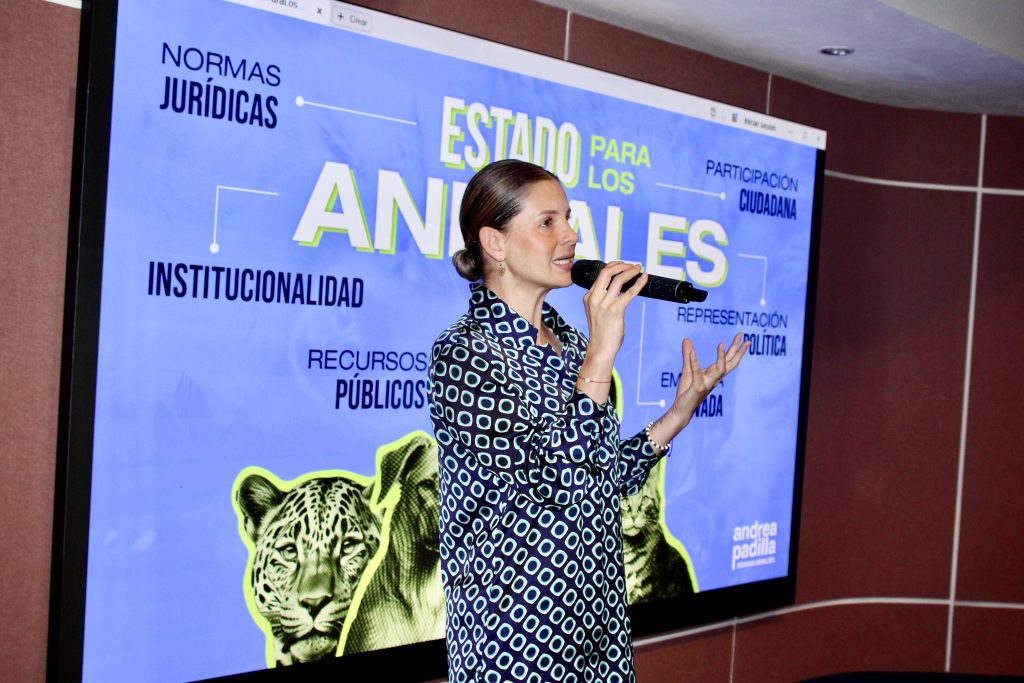
Senator Andrea Padilla delivers a speech on animal rights. Image credit: @andreanimalidad via X

The team behind the report faced the challenge of shifting the narrative away from the legal framework which refers to animals only as part of the natural environment.

Instead, it adopted a “differential” approach from natural sciences, in collaboration with La Enredadera & co, a scientific outreach collective.

For Luis Carlos Posso, anthropologist and member of the collective, the report represents an exception to the “unavoidable anthropocentrism permeating the law.”

Senator Padilla highlighted the animal rights implications:  “I believe it is only fair that sentient beings capable of emotions, affection, and social, moral, and emotional lives are also considered as affected by the conflict.”

Padilla added that understanding the impact of the conflict on animals deepens the appreciation of the human toll of violence.

“When we understand that there are bonds of affection there, family bonds that are abruptly broken by war, we can also see the conflict in a deeper way — that is, we can understand the deepest forms of harm being caused,” said the senator.

Animals as victims of the armed conflict

In addition to detailing the harms inflicted upon animals, the report proposes various reparative measures. These include habitat restoration, veterinary care in conflict zones, public veterinary care networks, the inclusion of animals in memory and truth processes, protection measures for at-risk species, and conservation initiatives.

However, there is still a long way to go before animals can be fully recognized as victims.

“Legally they are not things, but they are also not rights-holders. If they are not rights-holders, they cannot be recognized as victims,” explains Ojeda.

Colombian law recognizes animals as sentient beings, and laws such as the Ángel Law reflect significant progress in their rights. Currently, there is a bill advancing in congress that seeks to historically and legally recognize animals and ecosystems as victims of the internal armed conflict, prohibiting their use as instruments of war and ordering their essential reparation. This is Bill No. 012 of 2025, led by Senator Esmeralda Hernández of the Pacto Histórico party.

Senator Padilla explained that the success of the legal changes will depend on whoever is elected as the next president. 

“Undoubtedly, this report holds great value. It not only offers another perspective on the armed conflict, but also explicitly incorporates animals into the analysis of war, harm, and peace,” said Senator Padilla. She added that animals must be involved in reparations processes, insisting, “peace must include animals, or it will not be complete.”

This article originally appeared in The Bogotá Post and was re-published with permission.

Featured image description: Parrot in a tree.

Featured image credit: Piqsels.

The post ‘Invisible damage’: Report on violence against animals in Colombia conflict appeared first on Latin America Reports.

  • ✇Latin America Reports
  • ‘Invisible damage’: Report on violence against animals in Colombia conflict Cristina Dorado Suaza
    Bogotá, Colombia – On April 20, the Special Jurisdiction for Peace (JEP) – Colombia’s transitional justice mechanism – released a report on the violence suffered by animals in the context of the armed conflict.  The JEP’s report, conducted in partnership with the University of Essex, found that an animal is killed or injured every 30 minutes due to the armed conflict. Animal rights activists say the release represents a step forward in publicizing the often invisibilized violence inflicted
     

‘Invisible damage’: Report on violence against animals in Colombia conflict

Bogotá, Colombia – On April 20, the Special Jurisdiction for Peace (JEP) – Colombia’s transitional justice mechanism – released a report on the violence suffered by animals in the context of the armed conflict. 

The JEP’s report, conducted in partnership with the University of Essex, found that an animal is killed or injured every 30 minutes due to the armed conflict.

Animal rights activists say the release represents a step forward in publicizing the often invisibilized violence inflicted upon animals in war.

The report was developed through the construction of a database using 237 national, regional, and local media outlets, and 600 X accounts belonging to social and environmental organizations, as well as State entities and multilateral organizations.

Based on the information collected, they made an individual categorization referring to domestic animals, and a collective one referring to species, that is, wild animals. In this context, 100,252 domestic animals faced violence and 44 species are at imminent risk of extinction as a result of the armed conflict.

Thirty-two percent of the recorded cases involving animals were directly linked to military actions, including armed confrontations, ambushes, and attacks. The impacts were not distributed evenly across the territory; there are regions where armed conflict, illegal economies, and environmental richness converge, intensifying the harm. For example, Antioquia is the department with the highest concentration of species threatened by the conflict.

“We realized that most cases involved incidents such as accidents with landmines, anti-personnel mines, ambushes against the public security forces, harassment of the public security forces, and armed confrontations. These were some of the situations in which animals were killed or injured. They were also affected by forced displacement,” Laura Ojeda, a researcher on the JEP’s Investigation and Prosecution Unit who contributed to the report, explained. 

Forced abandonment was one of the most documented forms of harm identified in the report, largely because it was closely tied to the victimization of caregivers within the dynamics of the conflict. 27% of the recorded cases — corresponding to approximately 900,000 animals — involved forced abandonment.

The report also identified nine ways in which animals were used throughout the armed conflict: as means of transportation; as devices to detonate explosive artifacts; as instruments to inflict pain and suffering – torture –; as sentinels for rapid alerts; as surveillance tools; in practices of bioterrorism involving zoonotic diseases; as propaganda tools; as amulets or part of esoteric rituals; and as a means to intimidate communities and extort payments from business owners and farmers.

Visibilizing animal suffering

The report comes as part of the JEP’s efforts to recognize the environment within its processes of justice, truth, and reparation. This release, the third in a series of three, is the first to focus on the specific forms of violence suffered by animals. 

“It is part of a strategy to recognize all forms of life that have been victims of the armed conflict in Colombia,” Ojeda told Latin America Reports.

For Senator Andrea Padilla of the Green Alliance (Alianza Verde) party, the report represents a major step forward for animal rights. 

She notes that harm to animals is usually addressed as a collateral issue, as damage to property under a framework of harm to human assets.

“Animals have always been excluded from any moral consideration, from any legal consideration, even from news coverage,” the senator told Latin America Reports.

Senator Andrea Padilla delivers a speech on animal rights. Image credit: @andreanimalidad via X

The team behind the report faced the challenge of shifting the narrative away from the legal framework which refers to animals only as part of the natural environment.

Instead, it adopted a “differential” approach from natural sciences, in collaboration with La Enredadera & co, a scientific outreach collective.

For Luis Carlos Posso, anthropologist and member of the collective, the report represents an exception to the “unavoidable anthropocentrism permeating the law.”

Senator Padilla highlighted the animal rights implications:  “I believe it is only fair that sentient beings capable of emotions, affection, and social, moral, and emotional lives are also considered as affected by the conflict.”

Padilla added that understanding the impact of the conflict on animals deepens the appreciation of the human toll of violence.

“When we understand that there are bonds of affection there, family bonds that are abruptly broken by war, we can also see the conflict in a deeper way — that is, we can understand the deepest forms of harm being caused,” said the senator.

Animals as victims of the armed conflict

In addition to detailing the harms inflicted upon animals, the report proposes various reparative measures. These include habitat restoration, veterinary care in conflict zones, public veterinary care networks, the inclusion of animals in memory and truth processes, protection measures for at-risk species, and conservation initiatives.

However, there is still a long way to go before animals can be fully recognized as victims.

“Legally they are not things, but they are also not rights-holders. If they are not rights-holders, they cannot be recognized as victims,” explains Ojeda.

Colombian law recognizes animals as sentient beings, and laws such as the Ángel Law reflect significant progress in their rights. Currently, there is a bill advancing in congress that seeks to historically and legally recognize animals and ecosystems as victims of the internal armed conflict, prohibiting their use as instruments of war and ordering their essential reparation. This is Bill No. 012 of 2025, led by Senator Esmeralda Hernández of the Pacto Histórico party.

Senator Padilla explained that the success of the legal changes will depend on whoever is elected as the next president. 

“Undoubtedly, this report holds great value. It not only offers another perspective on the armed conflict, but also explicitly incorporates animals into the analysis of war, harm, and peace,” said Senator Padilla. She added that animals must be involved in reparations processes, insisting, “peace must include animals, or it will not be complete.”

This article originally appeared in The Bogotá Post and was re-published with permission.

Featured image description: Parrot in a tree.

Featured image credit: Piqsels.

The post ‘Invisible damage’: Report on violence against animals in Colombia conflict appeared first on Latin America Reports.

  • ✇Latin America Reports
  • Delcy Rodríguez dismisses Maduro Defense Minister Vladimir Padrino Cristina Dorado Suaza
    Medellín, Colombia – Venezuela’s interim president Delcy Rodríguez announced the dismissal of Vladimir Padrino as Minister of the People’s Power for Defense of Venezuela today, a long-term Nicolás Maduro ally.  “We thank G/J [General in Chief] Vladimir Padrino López for his dedication, his loyalty to the homeland, and for having been, throughout all these years, the foremost soldier in the defense of our country,” Rodríguez wrote on X. In his place, the president designated general Gustavo
     

Delcy Rodríguez dismisses Maduro Defense Minister Vladimir Padrino

18 March 2026 at 22:55

Medellín, Colombia – Venezuela’s interim president Delcy Rodríguez announced the dismissal of Vladimir Padrino as Minister of the People’s Power for Defense of Venezuela today, a long-term Nicolás Maduro ally. 

“We thank G/J [General in Chief] Vladimir Padrino López for his dedication, his loyalty to the homeland, and for having been, throughout all these years, the foremost soldier in the defense of our country,” Rodríguez wrote on X.

In his place, the president designated general Gustavo González López – a veteran officer with experience in security and intelligence – as the new Minister of Defense. González will be heading two key bodies: the Presidential Guard and the General Directorate of Military Counterintelligence (DGCIM).

Padrino had been Maduro’s trusted man for ten years, appointed to head the ministry in October 2014, making him one of the longest-serving ministers in Venezuela. 

Padrino was also an important figure during the failed coup d’état against Chávez in April 2002. He remained loyal to the Chávez regime and refused to join the uprising while he commanded an armored unit stationed at Fuerte Tiuna, Caracas.

In her statement, Rodríguez also said she is confident Padrino will take on his new responsibilities with the “same commitment and honor” that characterized his trajectory and career. She did not specify what his role will be going forward.

Padrino’s removal was part of a broader cabinet reshuffle, with Rodríguez replacing the Minister of Housing and Habitat, the Minister of Electric Energy, the Minister of Public Works, the Minister of Transport and the Minister for the Social Process of Labor.

Featured image description: Delcy Rodriguez.

Featured image credit: Government of Russia via Wikimedia Commons

The post Delcy Rodríguez dismisses Maduro Defense Minister Vladimir Padrino appeared first on Latin America Reports.

❌
Subscriptions