
Normal view

A mass killing in the Philippines sparks rare scrutiny over counterinsurgency violence – but no wider reckoning

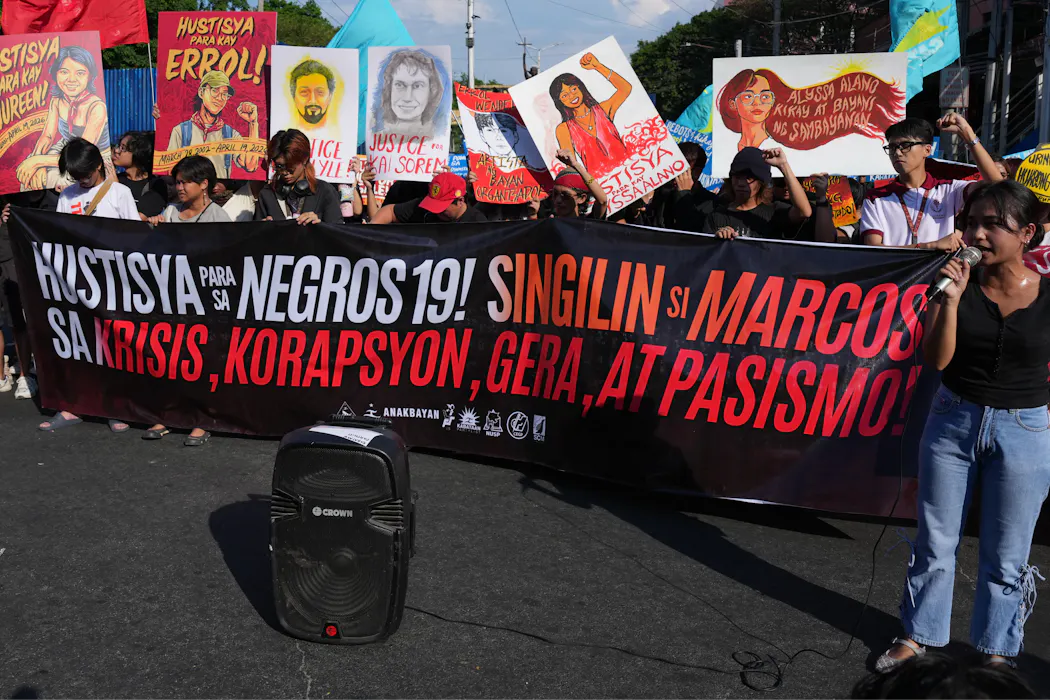
Activists hold a banner that reads 'Justice for Negros 19!' during a protest in Manila, Philippines, on April 28, 2026. AP Photo/Aaron Favila

For nearly 60 years, the Philippine government’s war against the insurgent New People’s Army, or NPA, has rumbled on with little accountability in Manila and scarce scrutiny abroad.

That seemed to change on April 19, 2026, when 19 people were killed by Philippine troops in Toboso, Negros Occidental, the Western Visayas region of the country.

As a scholar of political violence in the Philippines, what I found notable was not only the volume of death but also the intensity of public reaction.

For a media ecosystem that seldom reports on the atrocities of the counterinsurgency, this episode has drawn weeks of political scrutiny. Congress members, Catholic bishops and the country’s Commission on Human Rights have all condemned the killings.

Foreign groups, such as the ASEAN Parliamentarians for Human Rights and the largest communications union in the U.S., the Communication Workers of America, have also raised alarm, noting that among those killed were a community journalist and two Filipino American activists.

Such attention to the army’s alleged brutality is important because it is rare; impunity has long been both a motivation and outcome of extrajudicial killings.

But the coverage of the Toboso killings has also revealed an ongoing obstacle to achieving full accountability: a media and public narrative that grieves victims selectively.

Responding to Toboso

According to officials, all of those killed in a series of clashes were combatants of the NPA, a Maoist guerrilla group that seeks to seize political power from Manila. But a recent fact-finding mission carried out in Toboso by civil society groups found at least six of those killed were civilians. The mission also alleges that evidence was planted and bodies were desecrated.

The army blasted the findings as “time-worn propaganda” peddled by the NPA.

On social media especially, many Filipinos have either lambasted the army’s lack of restraint or the NPA’s negligence in exposing civilians to danger.

In an essay for news site Rappler, criminologist Raymund Narag noted that some people were quick to assign blame “not to the gun that fired, but to the bodies that fell. The dead, especially the students and journalists, are accused of choosing their fate. They went to a ‘hotbed of communism,’ we are told.”

American right-wing media and think tanks, such as The Daily Wire and The Manhattan Institute, echoed this view.

Selective grief

Despite the noise, there is a through line in much of this coverage: It highlights certain casualties over others. Nineteen people were killed, but media attention has largely focused on just a handful: University of the Philippines student leader Alyssa Alano, journalist RJ Nichole Ledesma and Filipino American activists Kai Sorem and Lyle Prijoles.

There has been considerably less commentary regarding the other civilians killed: student Maureen Santuyo, community researcher Errol Chen, local resident Roel Sabillo and two unnamed minors. And almost nothing has been said of the 10 NPA recruits killed alongside them.

One wonders why some victims have drawn more attention or, put differently, why others haven’t. In the words of a friend of Santuyo on Facebook, it banishes some of the victims into a category of “others.”

One way of understanding this selective grief, I believe, is to see Toboso as part of a long history in the Philippines of normalizing violence against peasant movements for their purported militancy. In 2025, some 390 people were killed in state-related violence, according to researchers at the University of the Philippines. More than half were civilians.

The deaths of student leaders, journalists and Americans register as shocking due to their perceived higher profile. Even if they knew the risks to their lives, the media narrative goes, they are not the usual fatalities: NPA members and predominantly poor, rural civilians caught up in the violence.

Decades of repression

The selectivity of who is grieved helps clarify the particularly strong public reaction now.

After all, the counterinsurgency against the NPA is the longest-running in the world. It is what journalist Sheila Coronel called the Philippines’ “forever war.”

The NPA formed in 1969 as the military arm of the Communist Party of the Philippines, embracing a Maoist focus on rural peasants and guerrilla warfare. With assassinations and ambushes as its trademark tactic, the NPA was perceived as the chief security threat under longtime dictator Ferdinand Marcos Sr. and then reformist President Cory Aquino in the 1980s.

Every administration since the Marcos dictatorship has directed particular attention to the island of Negros, which has seen considerable NPA activity because of the area’s chronic struggles over land rights. Under Aquino’s “total war” policy, the army declared Negros a priority area, a designation that continued in the 2000s under President Gloria Macapagal Arroyo.

Yet for critics of this militarized approach, the army has done less to tame rebellions than to terrorize the island’s peasant communities. Rights groups have documented at least five mass purges of farmers and activists since 1985, making Negros the Philippines’ “massacre capital.”

During the years of right-wing populist President Rodrigo Duterte, attacks were especially rife. From 2016-19, rights group Karapatan tracked 250 extrajudicial killings, 10 disappearances and 450,000 evacuations due to military operations. Such scale was made possible by the government’s National Task Force to End Local Communist Armed Conflict, which Duterte created in 2018.

Counterinsurgency today

The task force continues to be active under the current government of Ferdinand Marcos Jr.

Earlier this May – as the Philippines used its chairship of ASEAN to broker peace talks between Thailand and Cambodia – Amnesty International revealed dozens of rights violations across rural Luzon, the most populous island in the Philippines.

Indeed, counterinsurgency operations have only grown under Marcos and been vigorously supported by the U.S. government and military. That support from Washington is the latest instance of a decades-old alliance that grew in the early 1950s and blossomed in particular during the first Marcos presidency.

Despite the recent killings, public confidence in the Armed Forces of the Philippines remains high, sitting at 76% as of May 25, 2026. According to Octa Research, the firm that organized the survey, “The (military’s) consistently high trust and performance ratings reflect the public’s continuing demand for competent, professional, and apolitical institutions that deliver effective public service.”

Reckoning with Toboso

In response to the Toboso killings, lawmakers and civil society groups have called for an independent investigation. Legal scholar Ross Tugade suggests a more proactive Commission on Human Rights. Such are hefty goals for a government that is thinly resourced, decentralized and prone to corruption scandals.

The truth is that reckoning with the killings requires more than overcoming institutional weakness. For me, the greater task lies in fully acknowledging the violence and all its victims.

The Conversation

Patrick Peralta does not work for, consult, own shares in or receive funding from any company or organization that would benefit from this article, and has disclosed no relevant affiliations beyond their academic appointment.
Racial gerrymandering may be here to stay

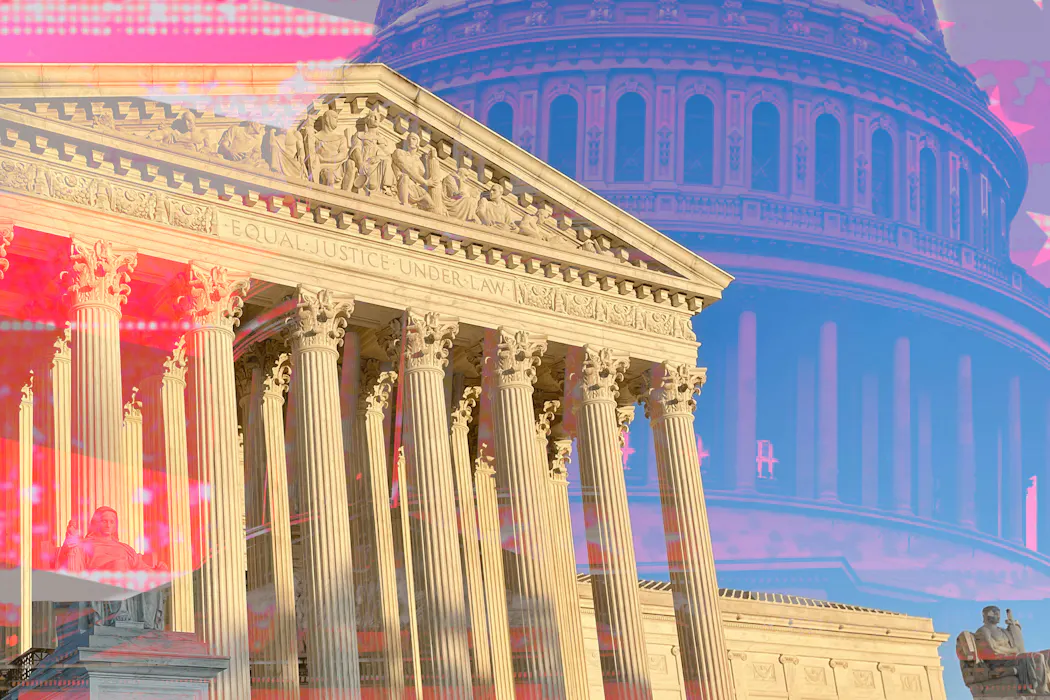
A recent Supreme Court decision is sparking a major push for partisan redistricting. Douglas Rissing, iStock/Getty Images Plus

The outrage was swift and severe when the U.S. Supreme Court, by an ideologically divided 6-3 vote, recently struck down Louisiana’s majority Black congressional district as an unconstitutional racial gerrymander. Critics lambasted the court for gutting the Voting Rights Act, the federal law that had until recently garnered strong bipartisan support and had ensured Black political representation in the South for more than half a century.

Many analysts see Jim Crow-era disenfranchisement of Black voters on the horizon.

Whether Louisiana v. Callais will wreak this kind of havoc remains to be seen, although some Southern states have already begun to redraw their legislative districts, aiming to ensure Republican control. Several Black legislators – all Democrats – are expected to lose their seats in the upcoming midterm elections. Democrats are threatening to retaliate with their own redistricting plans.

Because of a 2019 decision by the court, such political gerrymanders, where a legislative district is crafted to ensure partisan control, cannot be challenged under federal law. Both parties had taken full advantage of that ruling.

Prior to the Callais ruling, however, legislators had to be sure that when they sought partisan control of a district, they did not excessively dilute the voting power of minority residents. Multiple lawsuits had challenged political gerrymanders on exactly these grounds.

After Callais, that guardrail is gone. Indeed, lest they provoke the same type of litigation faced by Louisiana, state legislators must now ignore the race of voters altogether. From here on out, gerrymandering is fine, but only if it’s race-neutral.

This does not mean, however, that the race-blind mapmaking process envisioned by the Supreme Court majority will manifest. Based on our recently published research, it may, in fact, be just the opposite.

Race, we found, is – at least in the South – a more reliable predictor of how someone will vote than their party identification. And that makes race, we believe, a potentially irresistible lure for those designing congressional districts.

Three men in suits with the one on the left, who is Black, swearing an oath with his right hand raised.
In 1972, Andrew Young, left, was the first Black person to be elected to Congress from the deep South since Reconstruction. AP Photo

Race a more reliable predictor

We are both political scientists – one of us an expert on Congress and national elections and the other a constitutional law and Supreme Court scholar. In Southern states, race and political party overlap significantly, with the vast majority of Black voters favoring Democrats and most white voters favoring Republicans. And in our study, we document that in this region, mapmakers actually have an incentive to take race into account when conducting a political gerrymander.

Political gerrymandering is the process of drawing electoral districts to favor one party over another. In most states, the responsibility for drawing districts rests with the state legislature. Thus, the party that controls state legislatures very often controls elections – at both the state and congressional level.

The goal of partisan redistricting is to maximize the chance that candidates from that political party will win elections. Our study shows that using both the race and party of voters to redraw districts, rather than just party alone, better ensures partisan advantage.

The research we conducted was motivated by a claim made by Justice Samuel Alito in another recent racial gerrymandering case decided by the Supreme Court, Alexander vs. South Carolina NAACP. He argued in the court’s majority opinion that when drawing districts to favor one party, mapmakers would need to look only at voters’ party affiliation – their race would be irrelevant to ensuring partisan control.

It is a straightforward, seemingly sensible claim. It is also wrong.

Our study uses an original dataset of precinct-level election results in South Carolina from 2010 to 2020 to explore how well a precinct’s racial and partisan composition before redistricting predicts how it votes over the following decade.

What we found reveals a more complicated picture than Alito – and the subsequent Callais decision – presumes.

A precinct’s Democratic and Republican vote share prior to redistricting was the strongest predictor of future election results. But there are two problems with relying on only such partisan data when gerrymandering a district.

First, our analysis showed that roughly a quarter of a precinct’s voters in the next election did not follow what the partisan data predicted – a sizable amount, given the supposed ease of gerrymandering by party.

Second, precinct election results are surprisingly volatile. Our analysis shows that the effect of preredistricting partisanship varies with election cycles, national conditions, gradual changes in party coalitions and other factors. A precinct that leaned Republican in the election before redistricting may vote very differently in a midterm wave year when the president is unpopular, precisely the type of election coming in November.

By comparison, the analysis shows that voters’ race is a more reliable predictor than their party of how they will vote in the next election. Consequently, it seems that, at least in Southern states, legislators have a genuine, data-driven incentive to use racial data when drawing partisan districts.

A man with white hair and glasses who looks stern and is pointing at someone not in the photo.
Republicans in South Carolina want to draw a new congressional map, and it could eliminate the district that has for decades elected Democrat Jim Clyburn. Kevin Wolf/AP Photo

Will race still affect political gerrymanders?

Consider this redistricting scenario: South Carolina’s Republican-led legislature wants to flip the state’s lone Democratic congressional seat – long held by prominent African American U.S. Rep. Jim Clyburn – for the 2026 midterms. A simple approach is to identify those who voted for Donald Trump in 2024 and then just redraw the district to add enough of those voters to ensure Republican control.

The plan backfires, however. Not only does Clyburn hold his seat, but a neighboring district also elects a Democrat. What went wrong?

Simply put, the legislature failed to realize that past partisan returns are an imperfect predictor of future voting behavior.

A heavily Democratic area that is predominantly Black will vote Democratic far more consistently than a heavily Democratic area that is predominantly white. Two precincts that look identical on a partisan map can behave very differently at the ballot box. And a legislature that fails to take this into account has taken an unreliable route to partisan advantage.

If Republican legislators want to oust Democratic officials, the most reliable route is to oust from a district the minority Democratic voters who would have elected them.

This is not to suggest that legislators should use race in this way. It certainly smacks of racism and echoes the type of electoral machinations used during Jim Crow. But that analogy is not exactly on point. The approach we identified targets the power of Black voters not because they are Black, but because they are such reliable Democrats.

To many, that may be a difference that makes no difference. More litigation over gerrymanders is inevitable. If litigants can demonstrate that race was a “predominant” factor that “drove” redistricting, or that mapmakers purposefully attempted to diminish the power of Black voters because of their race, legal liability can still follow.

Voting rights advocates should be aware of the temptation legislators may have to let race affect their political gerrymanders.

Perhaps minority voters are as free from invidious discrimination as Alito’s majority opinion in the Callais case suggests. This does not mean, however, that those charged with ensuring all voters are fairly represented in American democracy will be colorblind. Our findings show that race could easily remain embedded in the political gerrymandering landscape, despite vehement claims to the contrary.

The Conversation

Jordan Ragusa has served as an expert witness in racial gerrymandering litigation, most notably in Alexander v. South Carolina State Conference of the NAACP. He also serves on the advisory board of Charleston Civil Rights and Civics (C3), an educational non-profit that fosters civic engagement and civil rights awareness among high school students

Claire B. Wofford does not work for, consult, own shares in or receive funding from any company or organization that would benefit from this article, and has disclosed no relevant affiliations beyond their academic appointment.

❌
Subscriptions