
Normal view

The EU measures media freedom country by country, but cross-border risks remain overlooked

Europe has spent years building effective tools to measure media pluralism within its member states. This made sense because newspapers, broadcasters, regulators, ownership structures and public service media were organised within national borders.

But the media environment is changing. News is now distributed through global digital platforms, and its provision is not necessarily mediated by professional journalists. Information is shaped by algorithms, exposed to foreign information manipulation, and increasingly summarised and generated by AI assistants.

The result is a mismatch. Europe faces a plurality of risks to media pluralism that are European in scale, but it still mainly assesses them from national perspectives.

National media systems still matter. Media law, journalists’ safety, ownership, public service media and political pressure vary sharply across countries. Any serious assessment must continue to examine conditions at national level. But if major risk factors operate across borders, through global platforms and AI mediation, Europe also needs to treat them as European risks.

What Europe already has

For more than a decade, the Media Pluralism Monitor (MPM) has provided a common framework for assessing risks to media freedom and pluralism.

This scientific project of the Centre for Media Pluralism and Media Freedom at the European University Institute has become a trusted resource for understanding the complex factors that shape the media ecosystem.

Media pluralism is often invoked as a democratic principle, but the Monitor helped turn it into something that can be systematically assessed. It has made risks visible, comparable and politically harder to ignore.

Its value lies not only in the final risk scores, but in the method behind them.

The MPM brings together legal, economic and socio-political evidence through a structured set of indicators, local expert assessment, primary and secondary data, peer review and a transparent risk-scoring methodology. It therefore does more than rank countries. It identifies where risks arise, whether from weak legal safeguards, concentrated market structures, pervasive political interference, polluted online environments or insufficient social inclusion.

This has allowed the MPM to become more than an academic tool. It has created a shared European vocabulary for discussing media pluralism and has entered the EU’s democratic oversight architecture.

Since 2020, the European Commission’s Rule of Law Report has used MPM results in its media pluralism pillar.

Precisely because this framework has been successful, in the present chaotic technological transition, it raises a further question: should Europe continue to assess media pluralism only by looking at national systems?

Since 2014 the Centre for Media Pluralism and Media Freedom (CMPF) has been using the Media Pluralism Monitor (MPM) to assess the risks for media pluralism across the EU.

How the European Media Freedom Act changes the equation

Most provisions of the European Media Freedom Act (EMFA) became applicable in August 2025, marking a turning point. The Act recognises that media freedom and pluralism are no longer only national matters.

Its articles set essential conditions in the field of media for a well-functioning internal market and for liberal democracy across the European Union.

If Europe now has a common legal framework for media pluralism and media freedom, it also needs the capacity to assess whether that framework is working at European level.

Article 26 of the EMFA points in this direction, requiring monitoring of media markets, concentration, foreign information manipulation and interference, online platforms, editorial independence and state advertising.

But measuring these only as national phenomena, as the MPM already does year after year, may now be insufficient.

An “EU average” says several important things about general risk across member states. But it does not tell us whether Europeans can access reliable information about EU and global affairs across borders.

It does not show whether language barriers still confine citizens within national silos. Nor does it reveal how platforms or AI interfaces affect the visibility of public-interest journalism. Above all, it does not account for the fact that while media ownership concentration is very high at national level, concentration of digital intermediaries is even higher at national, European and global level.

Finally, it does not capture the full impact of foreign information manipulation and interference. Such interference moves through common digital infrastructures, targets European political debates and exploits the fragmentation of Europe’s information space. These are not national risks repeated 27 times. They are European systemic risks.

What a European media monitor should measure

Europe therefore needs a second layer of monitoring: not a replacement for national assessment, but a key complement.

A European Media Pluralism Monitor should focus on risks that emerge across Europe’s shared news and information space.

It should ask whether citizens can access plural and reliable news about European affairs beyond their domestic media sphere. It should assess whether language barriers are being reduced through translation, subtitling, multilingual publishing and AI tools, or whether they still prevent common debates. It should examine how public-interest journalism, especially about Europe, appears on platforms and AI interfaces.

A European monitor should also measure dependency. Many publishers rely on a few digital intermediaries for traffic, audience reach and advertising revenue. This affects journalism’s sustainability and may disproportionately weaken smaller and local media. Furthermore, the choices made by AI providers when training their models might affect not only the economic sustainability of media by using media content without paying for it, but also content diversity by privileging more widespread languages and larger media markets.

It should also look at mobile EU citizens, border communities and transnational audiences. A citizen living outside her country of origin may not fit neatly into a national media system. The same is true for people in border regions or following politics in more than one language.

Finally, such a monitor should examine whether EU safeguards produce real convergence in practice across member states. Formal compliance is not enough. The question is whether European rules concretely improve journalism and citizens’ access to information.

Measuring the European public sphere

None of this implies that Europe is becoming a single media system. It remains linguistically diverse, politically uneven and institutionally layered.

But that is precisely why an additional and complementary European layer of analysis, coordinated and incorporated within the MPM, is now necessary.

If Europe’s information space is fragmented, asymmetrical and only partially integrated, those features and their evolution should themselves become objects of measurement.

What is not measured is often not governed. With the EMFA, Europe has adopted a common framework for media freedom. But law alone does not guarantee protection. The European Union should now develop the tools to understand whether media pluralism is protected not only within member states, but also whether the conditions for a healthy European public sphere are improving or deteriorating across its shared information space.


The Media Pluralism Monitor is a project co-funded by the European Union.


A weekly e-mail in English featuring expertise from scholars and researchers. It provides an introduction to the diversity of research coming out of the continent and considers some of the key issues facing European countries. Get the newsletter!


The Conversation

Pier Luigi Parcu ne travaille pas, ne conseille pas, ne possède pas de parts, ne reçoit pas de fonds d'une organisation qui pourrait tirer profit de cet article, et n'a déclaré aucune autre affiliation que son organisme de recherche.

What is driving Europe’s pro-Russian supporters and their stance on the Russo-Ukrainian conflict?

Russia’s full-scale invasion of Ukraine in February 2022 sparked the most significant military conflict in Europe’s post-Second World War history. While European public opinion is overwhelmingly pro-Ukrainian, significant segments of Europe’s population hold ambivalent or even outright pro-Russian positions. As public support is key to providing military and financial assistance to Ukraine, we wanted to understand why some Europeans are sympathetic to the aggressor.

Our study considers that pro-Kremlin positions could come from four main sources:

  • Economic interests

  • Ideology

  • Partisan alignment

  • Disinformation

We analysed data from two academic surveys from late 2023, spanning nearly 30,000 respondents and eighteen European countries.

The surveys asked respondents whom they considered responsible for the war and whom they wanted to win. In practice, answers to those two questions are strongly correlated, and vary substantially across countries. For example, support for a Russian victory is virtually absent in Poland, but approaches 20% in Slovakia.

Partisan alignment and disinformation

Our statistical analyses indicate that the strongest predictor of Europeans’ position on the war in Ukraine is the proximity of respondents’ preferred political party to the Kremlin.

The closer a party’s ties, as assessed by academic experts from the CHES project, the more likely its supporters are to favour Russia over Ukraine.

While the data does not allow us to fully determine the underlying mechanism, the results suggest that partisan alignment is the most likely explanation. Those who support Russia do not care too much about the war, but they align with their preferred party’s rhetoric.

The second strongest correlate of Kremlin-aligned narratives is exposure and vulnerability to disinformation.

Pro-Russian views are over-represented among those who consume alternative channels for political news and believe in conspiracy theories. For example, those who mainly consume political news from social media and messaging applications and subscribe to the view that the Covid-19 pandemic was orchestrated by national governments, are 40% less likely to wish for Ukraine’s victory compared to those who consume traditional media and do not believe in conspiracy theories.

The third, though weaker, source of pro-Russian attitudes is ideology: cultural conservatism and authoritarianism.

Respondents who favour strong leaders and question minority rights are more likely to sympathise with the Kremlin. By contrast, economic interests exert little to no effect. Despite fears among analysts that rising energy costs in the aftermath of the invasion could sway public opinion against Ukraine, those who report having suffered during the energy crisis are not more likely to support the Kremlin.

The need to moderate public discourse and combat disinformation

Our results highlight the importance of top-down processes, whereby pro-Russian attitudes primarily reflect signals shared by pro-Kremlin politicians and disinformation spread by alternative sources of political news.

Much of the surprising support for the aggressor does not seem to stem from some ideological affinity or economic interests, but from the information and interpretation that circulates within political systems.

Countering Russia’s influence thus requires assertive moderation of public discourse and robust efforts to combat disinformation. These imperatives contrast with governments’ attitudes in many EU member states.

For example, the current Andrej Babiš’s cabinet in the Czech Republic has renounced any anti-disinformation measures.

In Slovakia, Prime Minister Robert Fico has echoed pro-Russian narratives himself.

These examples highlight a central challenge: efforts to counter disinformation are ultimately constrained by domestic political incentives.

Where political elites amplify or tolerate pro-Kremlin narratives, public attitudes are likely to follow. Strengthening resilience to disinformation ultimately depends on political leadership that is committed to defending the integrity of the information environment.

This article is published on behalf of all the authors of the original study: Filip Kostelka, Martín Alberdi, Max Bradley, Toine Fiselier, Alexandra Jabbour, Nahla Mansour, Eleonora Minaeva, Silvia Porciuleanu, and Diana Rafailova.

The Conversation

Filip Kostelka ne travaille pas, ne conseille pas, ne possède pas de parts, ne reçoit pas de fonds d'une organisation qui pourrait tirer profit de cet article, et n'a déclaré aucune autre affiliation que son organisme de recherche.

Ebola, hantavirus… how eroding global health cooperation could threaten worse crises ahead

The recent Ebola and hantavirus outbreaks, respectively in the Democratic Republic of Congo and Uganda, and on a cruise ship in the Atlantic Ocean, remind us that the next health crisis is never far away. They also illustrate the World Health Organization’s key role in global coordination and the importance of international cooperation for more effective responses.

The WHO declared the Ebola outbreak a “public health emergency of international concern”, raising a global alert that the outbreak may require “a coordinated international response”. In the hantavirus case, it supported medical care, evacuations, and risk assessment, which, together with cooperation among numerous countries, have been crucial for implementing an effective response. Yet the very conditions that would allow for a timely and effective alert and response are eroding.

According to our research, this threatens worse crises in the future.

In January, the US, which was the WHO’s biggest funder, formally completed its exit from the global health agency. A few weeks later, in March, Argentina’s exit was finalised.

Other countries, including Hungary and Israel, have publicly signalled they may leave.

These withdrawals are occurring in a broader retreat from aid.

Major Western donors such as the US, the UK, and the EU have enacted significant cuts: the US shut down USAID, until recently the world’s largest aid agency, creating a global funding gap of $54 billion more than six times Somalia’s GDP; the UK is reducing aid from 0.5% of GNI in 2021 to 0.3% in 2027; and the EU is reallocating €2 billion from aid funds to ‘other priorities’.

WHO had to reduce its 2026-27 budget by $1.1 billion (a 21% cut), on top of a previous 30-40% drop in global health aid from 2023 to 2025. To make things even worse, funding cuts have been particularly substantial for aid allocated to institutions and civil society.

Dismantling USAID, for example, has generated estimated reductions of 100% in civil society aid and 97% in good governance aid in its portfolio. Hence, besides direct aid cuts in health, core sectors for public health provision have also been hit hard.

One recent study predicts that the USAID shutdown could result, overall, in over 14 million extra deaths by 2030.

But some experts argue that weaker cooperation and aid cuts will ultimately help the world become more prepared to tackle health crises.

According to one expert, African countries have quickly demonstrated resilience, finding various ways to adapt to funding cuts. This view of aid cuts as an opportunity is also reflected in discussions among some practitioners. “We have decided that we have to think bigger”, stated one NGO leader.

We fear this optimism is misplaced: evidence from Covid-19 suggests the opposite.

International cooperation and institutional quality – understood as a combination of state capacity, legitimacy, and authority – were key factors in how Global South countries responded to the pandemic.

Low capacity created challenges for effective responses, but mere high capacity (i.e., greater state ability to get things done) was no guarantee of success: this typically also required state legitimacy and authority – crucial ingredients for transforming capacity into positive outcomes.

International cooperation further provided latent capacity through cross-border collaboration and coordination.

Weaker cooperation and aid cuts risk reducing institutional quality and international cooperation – the two key factors for better pandemic responses in the Global South.

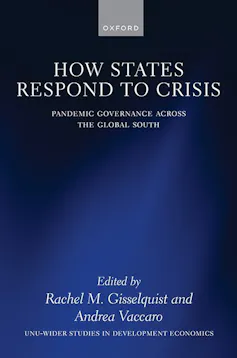
Instead of increasing resilience, these trends are thus more likely to undermine preparedness for future health emergencies. Case studies from our book How States Respond to Crisis (Oxford University Press, 2025) show this more in detail.

How States Respond to Crisis – Pandemic governance across the Global South, Rachel M. Gisselquist and Andrea Vaccaro (Oxford University Press) UNU-WIDER

Covid-19 responses across the Global South reveal uneven preparedness

The Philippines, Nicaragua, and Tanzania illustrate the consequences of weak legitimacy and authority.

In these countries, political leaders used the pandemic to consolidate authoritarian power by further repressing political opposition, manipulating mortality data, or denying the crisis outright, with deleterious public health outcomes.

Vietnam, by contrast, shows how legitimacy and authority can compensate for limited capacity. State authority allowed the country to promptly adopt strong public health measures, while legitimacy, especially at the local level, fostered citizens’ compliance with these measures.

The state’s central government’s clear vision of ‘people’s safety first’, which was accepted as the national consensus, as well as its rules on quarantine, social distancing, and movement between provinces, free testing and treatment, and support for people in quarantine centres and affected by the pandemic were widely understood and followed by local governments and people. This helped Vietnam contain the first waves of Covid-19 at relatively low levels of infection and made a robust economic recovery possible, building public trust in government. This high level of trust, in turn, made the government’s responses more effective.

Ghana underscores the importance of international cooperation. While not considered as a high-capacity country, during the pandemic, Ghana managed to act more effectively than expected, thanks to residual capacity acquired through cross-border collaboration and experiences with past health crises. For example the Africa Centres for Disease Control and Prevention (Africa CDC) quickly activated its emergency coordination mechanisms, developed a joint strategy – drawing on technical expertise and experience with past epidemics – to improve domestic detection and containment, and helped in increasing the continent’s testing labs from 2 to 43 just in a few weeks.

What were the key takeaways?

Lessons from how Global South countries responded to Covid-19 tell us that a combination of institutional quality and international cooperation are crucial for successful crisis response.

State capacity made effective responses easier, while legitimacy and authority increased citizens’ compliance and political trust. International cooperation, in turn, facilitated cross-border coordination and allowed countries to share resources and expertise, improving domestic ability to respond to the pandemic beyond what states could do on their own.

Dismantling global health cooperation and reducing aid will not advance any of these factors. Rather, they are likely to erode preparedness for health crises.

While it is still possible to revert the dismantling of global health cooperation and shrinking aid, we must prioritise a long-term strategy over short-term political considerations.

Resources allocated to aid have never been colossal – e.g. Official Development Assistance (ODA) has rarely been greater than 1% of GDP for any country. It is short-sighted and counterproductive, for countries both in the Global South and Global North, to run down structures that have proven their ability to facilitate better public health responses.


A weekly e-mail in English featuring expertise from scholars and researchers. It provides an introduction to the diversity of research coming out of the continent and considers some of the key issues facing European countries. Get the newsletter!


The Conversation

Rachel M Gisselquist a reçu des financements de UNU-WIDER.

Andrea Vaccaro ne travaille pas, ne conseille pas, ne possède pas de parts, ne reçoit pas de fonds d'une organisation qui pourrait tirer profit de cet article, et n'a déclaré aucune autre affiliation que son organisme de recherche.

From Schuman's post-war declaration to the EU today, the Historical Archives unpack how Europe came together

The Historical Archives of the European Union (HAEU) in Florence is home to a wealth of public documents and records of decisions issued by EU institutions along with artefacts illustrating pro-European movements and initiatives led by prominent personalities that helped shape the EU as we know it today. May 9 is Europe Day which celebrates the European Union’s founding values of unity, solidarity, democracy, human rights and shared prosperity. This year marks the 76th anniversary of Robert Schuman’s historic declaration. In 1950, the birth of a union of coal and steel was at the centre of the vision of a united Europe backed by the governments of France, West Germany, Italy, the Netherlands, Belgium and Luxembourg.

Dieter Schlenker is the Director of the Historical Archives of the European Union at the European University Institute (EUI) in Florence which is now in its 50th year and has grown into a thriving community centred around interdisciplinary research and public engagement. We asked him to walk us through the archives that retrace the history of the European Union and its institutions, and the trajectory of the EUI from its conceptual beginnings in the post-war period to its consolidation as an international centre for research and intellectual exchange.


The Conversation: The historical archives provide the public with a written memory of the European integration process since the early 1940s. What is available to visitors, and which resources would be of particular interest to researchers?

Dieter Schlenker: The HAEU has received over the last 40 years more than 300 holdings that comprise almost 1 million paper files stored at Villa Salviati on 10 kilometres of dedicated roller shelving. During the Open day on May 9 visitors will have the unique opportunity to discover archival documents, artefacts and materials in various forms, in a high security, climate-controlled environment that is normally closed to the public. Almost 1.000 visitors will be invited to take a tour through the Villa and the Archives on the open day. They will be accompanied by a professional archivist who will explain the mission and holdings of the archives and show them a selection of documents including the authentic copy of the Maastricht Treaty, historical letters, notes, photos and even objects that belonged to European politicians and EU officials, plus a selection of media formats for audio-visual and digital archives that have become obsolete (magnetic tapes, floppy disks, CDs, etc), and which show the volatility of modern archives and the challenge of preserving and maintaining them so they remain accessible to the general public.

A behind the scenes presentation of The Historical Archives of The European Union (Florence, Italy) on the history of the European Union, which promotes public interest in European integration and enhances transparency in the functioning of EU Institutions.

Researchers can consult the archives in the reading room at Villa Salviati from Monday to Friday. Approximately 40% of the hard copies of the archives have been digitised, so they are available online in the archives database. The holdings comprise the archives of EU institutions, such as the European Commission, the Council and the European Parliament along with a unique collection of archives from other highly relevant European organisations, such as the European Space Agency, the European Free Trade Association, and the European Cultural Foundation. The HAEU is also home to the archives of various European movements and associations, and political groups in the European Parliament. Finally, more than 100 personal papers have been deposited by important European political figures, from pioneers, such as Alcide De Gasperi and Altiero Spinelli, through to Commission Presidents, such as Jacques Delors and Romano Prodi, and numerous Commissioners and Members of European Parliament.

How are the archives organised, and what are visitors most drawn to?

D.S.: Visitors can discover the physical infrastructure and how the numerous archives are stored in different rooms, in boxes and files, organised according to where they originate from and by the type of archive. They also get to see the complex coding and classification systems in place that facilitate the storage and retrieval of the documents. Guided tours also allow visitors to see documents on display and extended photo collections that are mounted on the walls, and can ask questions about their conservation and access conditions, the history and context of the creation of the documents and the people featured on the photos.

Monetary policy or EU expansion, what significant moments are captured in the archives?

D.S.: The Historical Archives of the European Union’s mission is to collect and provide the broadest possible archival legacy of European integration and European Union in a single location. This is why many different topics of European history since World War II can be studied on the basis of numerous original primary sources. These reach from the first pro-European federalist movements emerging during WWII, the important Congress of The Hague 1948 that led to the creation of the Council of Europe in Strasbourg, the whole negotiation process of the Schuman Plan and the European Coal and Steel Community, then all the policies and actions taken by the Commission created by the Rome Treaties in 1957, all plenary and committee sessions of the Parliament, the Council and European Council meetings, the various enlargments, all procedure files of the European Court of Justice, etc. All EU documents are opened to the public after a 30-year period and shipped here to Florence by the respective institution for public access, which is why the documentation currently available approximately goes up to the mid-1990s.

How are the archives used and which documents have proven to be the most thought-provoking for academic research?

D.S.: The archives provide such a large base for research that the points of view, research interests and findings change all the time. More than 120 researchers register every year at the archives reading room and conduct 1.000 research sessions. The output reaches from the first works on European integration, mostly biographic studies on the founders, such as the works of Raymond Poidevin on Robert Schuman and the Biography of Jean Monnet by François Duchêne, or institutional history, such as Dirk Spierenburg’s book on the High Authority of the European Coal and Steel Community. Today, historical research covers practically all different areas of European policies, and we may highlight the many diverse publications produced by the members of the European Union Liaison Committee of Historians that also edits the Journal of European Integration History (JEIH), or mention the current EUI Chair on European integration history, Emmanuel Mourlon-Druol, who works on European Monetary Union.

The HAEU also hosts the historical archives of the European Space Agency including the records of the continent’s earliest major efforts to develop a space programme, what are the highlights on display?

D.S.: The European Space Agency in Paris decided to entrust the HAEU with their historical archives in 1989 and revised the deposit contract in 2020 to deepen cooperation and set focus on digital access, data protection and information security. This included the archives of the forerunner organisations ELDO and ESRO and therefore provides researchers with thousands of paper files documenting all aspects of European ambition in space since the early 1960s. These archives provide unique insight into the various joint European satellite, earth observation and human space flight projects of the past 60 years.

Looking back at the archives, what insights do we gain about European identity today? What values still stand and how are they reflected in visitors’ feedback?

D.S.: Looking at the recently published catalogue commemorating the 40th anniversary of the archives, we can see how all the many facets of European cooperation and integration are covered and referred to in the archival holdings preserved in Florence. It offers a fascinating trip back in time. Certainly, the documents on a peaceful and democratic post-War Europe expressed by those resisting against the Nazi and Fascist regimes provide a highly visionary humanistic picture of a united Europe, while the later negotiations on European treaties, policies, enlargements and external relations become much more multi-faceted, detailed, technical and concern very concrete political, economic and social arguments.

Nonetheless, the fascination of how it all started in Hour Zero in 1945 as a vision of peace, democracy and solidarity remains very strong until today. Visitors often refer to the founders of the European Union and their foresight and long-term vision securing peace amongst European states since 80 years, which is particularly important as visitors are rather worried about the present and future of Europe in a multipolar globalised world.

Interview by Carly Lock, Journalist at The Conversation Europe & The Conversation France.


A weekly e-mail in English featuring expertise from scholars and researchers. It provides an introduction to the diversity of research coming out of the continent and considers some of the key issues facing European countries. Get the newsletter!


The Conversation

Dieter Schlenker ne travaille pas, ne conseille pas, ne possède pas de parts, ne reçoit pas de fonds d'une organisation qui pourrait tirer profit de cet article, et n'a déclaré aucune autre affiliation que son organisme de recherche.

❌
Subscriptions