Normal view

  • ✇National Herald
  • Bengal govt’s sweeping gag order on officials sparks democracy concerns Kunal Chatterjee
    A political storm is building in West Bengal after the state government imposed sweeping restrictions on government employees, with critics accusing the BJP-led administration of imposing a bureaucratic gag order that threatens free expression, transparency and democratic accountability.At the centre of the controversy is a new conduct framework that sharply curtails what government employees can say, write or discuss publicly — not only in their official capacity but, critics argue, even as pri
     

Bengal govt’s sweeping gag order on officials sparks democracy concerns

21 May 2026 at 14:13

A political storm is building in West Bengal after the state government imposed sweeping restrictions on government employees, with critics accusing the BJP-led administration of imposing a bureaucratic gag order that threatens free expression, transparency and democratic accountability.

At the centre of the controversy is a new conduct framework that sharply curtails what government employees can say, write or discuss publicly — not only in their official capacity but, critics argue, even as private citizens.

The rules, introduced through Circular No. 139-CS issued by chief secretary Manoj Agarwal on 19 May and reinforced by a 20 May implementation order from the Department of Personnel and Administrative Reforms (P&AR), took immediate effect across departments, district administrations and police authorities.

Under the guidelines, government employees — including IAS officers, WBCS officials, police personnel and staff of autonomous bodies — are prohibited from speaking to media, sharing official information or participating in privately organised media events without prior government approval.

The restrictions extend much further than routine confidentiality rules. Officials are barred from writing articles, contributing to publications, appearing on radio shows or podcasts, or publicly criticising the state or Central governments. The order also cautions employees against remarks that could affect relations between the Centre and the state, other states, or foreign governments.

Critics say the language is unusually expansive, vague and vulnerable to misuse. One civil servant, speaking on condition of anonymity, said confidentiality requirements are a normal feature of government service, but argued the Bengal order goes far beyond standard conduct rules.

“Complete prohibition.”
The phrase echoes through this circular like a WARNING - not to protect governance, but to ENFORCE SILENCE upon Govt employees across #Bengal.

No speaking to the press.
No writing articles.
No participating in media programs.
No criticism of the… pic.twitter.com/nTVWxkuWVX

— Abhishek Banerjee (@abhishekaitc) May 21, 2026

“We are generally expected to maintain confidentiality regarding sensitive information. Yet the Bengal government’s order appears unusually broad because it extends restrictions to personal writing, public discussion and even indirect criticism of government policies,” the official said.

The phrase “complete prohibition”, repeatedly used in the circular, has become a focal point of criticism because it suggests an absolute ban rather than a narrowly tailored disciplinary framework.

Trinamool Congress national general-secretary Abhishek Banerjee mounted one of the sharpest attacks on the policy, calling it evidence of an authoritarian mindset.

Reacting on social media, he said the repeated invocation of “complete prohibition” exposed an administration more interested in enforcing silence than maintaining institutional discipline. “The message is clear — think only as instructed and speak only when permitted,” he wrote.

Banerjee accused the Suvendu Adhikari-led government of institutionalising fear within the bureaucracy and replacing transparency with enforced obedience. According to him, the measures are not about protecting sensitive information but about suppressing dissent and preventing critical voices from emerging within the administrative system.

“When a government cannot tolerate criticism, it starts silencing voices. That is not strength; it is the strangulation of democracy,” he said.

1/2
Because there is so much debate on press freedom in #India. This becomes significant.

In #Bengal under the new #BJP govt a circular was issued on May 19 - signed by the CS that effectively meant -

There is press freedom but government officials don’t have the freedom to… pic.twitter.com/OyRAa6NrFr

— Tamal Saha (@Tamal0401) May 21, 2026

The order has also triggered wider constitutional concerns. Political analyst Sujit Chatterjee said the restrictions raise difficult questions about the balance between service discipline and fundamental rights. “While government employees do not enjoy unlimited freedom of expression in official matters, they are still citizens with fundamental rights under the Constitution,” he said.

Critics fear the rules could create a chilling effect inside the administration, discouraging officials from speaking candidly, raising concerns internally or exposing wrongdoing.

The curbs on articles, public discussions and media appearances could also weaken public policy discourse, opponents argue, noting that serving and former administrators have historically contributed significantly to debates on governance and institutional reform.

Particular concern has centred on the clause barring comments that may affect Centre–state relations. Opponents argue the wording is so broad that almost any critical observation could potentially be construed as damaging inter-governmental relations.

Sources within Nabanna have defended the move as an administrative safeguard aimed at preventing unauthorised disclosures and maintaining discipline within the state apparatus.

Some officials argue the restrictions are especially necessary during a politically sensitive transition period, citing concerns that officers perceived as aligned with the previous Trinamool dispensation could leak confidential plans or internal disagreements.

Supporters of the policy maintain that government employees hold positions of public trust and cannot function as political actors. In their view, discipline, confidentiality and institutional neutrality are indispensable to effective governance.

But the breadth and tone of the order have ensured that the debate has moved beyond routine service rules into a larger argument over civil liberties, administrative control and the limits of state authority.

The controversy has now emerged as a major flashpoint between the ruling BJP government and the opposition TMC, with political observers viewing Banerjee’s aggressive response as an early sign of a broader confrontation over democratic rights and bureaucratic freedom in Bengal’s evolving political landscape.


  • ✇National Herald
  • Beyond cricket: How Eden Gardens gave 1,500 children a night of belonging Kunal Chatterjee
    The boy had never seen a night like this before.For years, 12-year-old Raju had grown up in the narrow lanes of Kolkata’s red-light district, where darkness arrives early and hope often disappears before midnight. Cricket, for him, meant catching glimpses of matches on television sets placed inside crowded tea stalls or listening to excited voices spilling out from nearby homes. Eden Gardens was a place he knew only through stories.But on Sunday night, as the floodlights illuminated the iconic s
     

Beyond cricket: How Eden Gardens gave 1,500 children a night of belonging

25 May 2026 at 09:42

The boy had never seen a night like this before.

For years, 12-year-old Raju had grown up in the narrow lanes of Kolkata’s red-light district, where darkness arrives early and hope often disappears before midnight. Cricket, for him, meant catching glimpses of matches on television sets placed inside crowded tea stalls or listening to excited voices spilling out from nearby homes. Eden Gardens was a place he knew only through stories.

But on Sunday night, as the floodlights illuminated the iconic stadium and nearly 60,000 voices erupted around him, the child sat frozen in wonder. His eyes widened as giant screens flashed, music thundered through the stands, and the Kolkata Knight Riders walked onto the field to face Delhi Capitals in what became KKR’s final IPL match of the season.

For the first time in his life, he was inside Eden Gardens.

“I thought the stars had come down to earth,” he whispered softly to a volunteer sitting beside him.

Raju was among nearly 1,500 children and individuals with special needs, visual impairments, autism and vulnerable social backgrounds who were brought to the stadium free of cost through an initiative led by Kolkata Police inspector Subrata Das, officer-in-charge of the city police’s Dial 100 emergency response unit.

What unfolded inside Eden Gardens on Sunday went far beyond cricket. It became an evening of dignity, inclusion and joy — and for many children, a memory powerful enough to outshine years of hardship.

Das spent weeks coordinating with organisations, police personnel and volunteers after KKR extended around 1,500 tickets for the match.

“The objective was simple — no child should feel excluded from experiences that bring happiness and create memories. Witnessing the joy on their faces made every effort worthwhile,” Das said.

Kids enjoy the KKR match in Kolkata.

Throughout the evening, police personnel took on roles far beyond crowd management. Officers held the hands of autistic children while guiding them carefully through the noisy galleries. Several escorted visually impaired boys to toilets and food counters. Others helped wheelchair-bound visitors navigate ramps and crowded passages.

Inside the lower tier of the D Block, the atmosphere felt unlike a regular IPL evening. Blind students from Narendrapur clapped in rhythm with the Eden roar, responding to every wicket and boundary through sound, vibration and commentary from friends beside them. Autistic children waved KKR flags with unfiltered excitement, while children from shelter homes shouted themselves hoarse as chants echoed through the stadium.

For many guardians, the experience was deeply emotional.

The mother of a non-verbal autistic child said she had spent days preparing her son for the visit by showing him photographs and videos of Eden Gardens.

“He looked back at me with a spark in his eyes after watching the videos. When he finally entered the stadium and saw the lights and the ground, he was spellbound,” she said.

Autism Society West Bengal representative Sudip Kanti Ghosh said many of the children had never imagined entering a venue like Eden Gardens.

“This is a unique initiative. Our children are super excited. We had shown them videos beforehand, but when they reached the venue and saw the stadium for real, they could not believe it,” he said.

Among those invited were around 100 visually impaired individuals, many of whom regularly follow IPL commentary on mobile phones. Society for the Welfare of the Blind principal Biswajit Ghosh said the invitation meant the world to the students.

“Our boys follow cricket passionately. But experiencing Eden Gardens in person was unimaginable for many of them. They may not see the match like others do, but they feel the excitement through the sound and atmosphere,” he said.

As Delhi Capitals lost their first wicket, the famous Eden roar exploded across the stadium. The visually impaired students instantly jumped up in celebration along with everyone around them.

A teenage boy from Future Hope, who captains a cricket team run by the organisation, summed up the night simply:

“This was a completely different experience for me.”

Several NGOs and organisations joined hands to make the initiative possible, including Child In Need Institute, The Hope Foundation, Autism Bengal, Future Hope and the Blind Cricket Association of Bengal.

Dilip Bose of Child In Need Institute (CINI) said many children came from backgrounds where dreams are often restricted by poverty.

“Our children never get opportunities like this. They always dream of seeing their cricket heroes in person. Yesterday, that dream became real,” he said.

For Subrata Das, however, the evening carried a meaning beyond recognition or organisation.

“It comes from within,” he said quietly when asked how he managed such an enormous effort alongside his police duties. “I feel blessed to be able to do this.”

By the end of the night, KKR’s playoff hopes had faded after Rajasthan Royals defeated Mumbai Indians elsewhere.

But inside Eden Gardens, none of that seemed to matter.

Because while one cricket season may have ended, hundreds of children who had spent much of their lives battling exclusion, silence, darkness or abandonment returned home carrying something they rarely receive from society — the feeling that they belonged.

  • ✇National Herald
  • Old faces, regional discontent, new aspirations: Bengal cabinet expands Kunal Chatterjee
    The first major expansion of chief minister Suvendu Adhikari's BJP government in West Bengal has brought together a diverse mix of ministers, ranging from veteran politicians and former journalists to teachers, doctors, farmers and even a former domestic worker. While BJP supporters have welcomed the expansion, it has also triggered debate over controversial appointments and questions of regional representation.Among the most discussed names is Arjun Singh, who has been inducted as a cabinet min
     

Old faces, regional discontent, new aspirations: Bengal cabinet expands

1 June 2026 at 16:07

The first major expansion of chief minister Suvendu Adhikari's BJP government in West Bengal has brought together a diverse mix of ministers, ranging from veteran politicians and former journalists to teachers, doctors, farmers and even a former domestic worker. While BJP supporters have welcomed the expansion, it has also triggered debate over controversial appointments and questions of regional representation.

Among the most discussed names is Arjun Singh, who has been inducted as a cabinet minister. A powerful figure from the Barrackpore industrial belt, Singh has switched parties several times during his political career. After leaving the Trinamool Congress for the BJP in 2019, he was elected to Parliament, before returning to the Trinamool and then rejoining the BJP ahead of the 2024 Lok Sabha polls.

Opponents have often accused him of political opportunism, and he has been linked to several confrontations and controversies in the deeply polarised politics of Barrackpore. Despite this, the BJP continues to regard him as one of its most influential non-Bengali leaders in southern Bengal.

However, one of the most surprising omissions from the expanded cabinet is that of Ratna Debnath, MLA from Panihati. Her exclusion has triggered considerable discussion within political circles because she was widely seen as one of the most symbolic faces of the BJP's campaign in the Assembly elections.

Graphic: PTI

Another appointment drawing attention is that of Swapan Dasgupta. The former journalist and Rajya Sabha member is widely seen as one of the BJP's intellectual faces. While respected by many within the party, he has remained a polarising figure because of his outspoken commentary and strong ideological positions.

Jagannath Chatterjee, another cabinet minister, has also generated discussion in Bengal's political circles. A former journalist who entered politics in 2021, he is closely associated with the RSS and represents the BJP's ideological core. His elevation reflects the growing influence of RSS-linked leaders within the state government.

The inclusion of Arup Kumar Das, a close associate of the Adhikari family from Kanthi, has prompted opposition parties to question whether political loyalty influenced cabinet selection. Supporters, however, cite his background as a respected educator and his electoral success in Purba Medinipur.

While the BJP leadership has highlighted the cabinet's social diversity, discontent has emerged from parts of the Darjeeling Hills. Despite the BJP winning all five Assembly constituencies in Darjeeling district, no representative from the hill communities has been given a cabinet berth.

This has disappointed sections of hill residents and political observers, who argue that the region has consistently backed the BJP in both parliamentary and Assembly elections.

Many in the hills believe a Nepali-speaking leader from Darjeeling or Kalimpong should have been included in the ministry. The absence of representation from Kalimpong has been particularly noted, especially as North Bengal as a whole secured significant representation. Several BJP supporters in the hills have expressed concern that the region's contribution to the party's electoral success has not been adequately recognised.

Despite these concerns, the BJP has underscored North Bengal's prominence in the new cabinet. Nine ministers now come from the region, including cabinet ministers Manoj Oraon, Deepak Barman and Shankar Ghosh. Party leaders say this is the highest level of representation North Bengal has received in a state government in recent decades.

Perhaps the most striking story from the expansion is that of Kalita Majhi, the newly elected MLA from Ausgram. Until recently, she worked as a domestic helper in Guskara to support her family. After joining the BJP in 2014 and contesting elections twice, she has now become a Minister of State. BJP leaders have celebrated her rise from poverty to public office as an example of social mobility and grassroots politics.

Another notable inclusion is Dibakar Gharami from Sonamukhi. Born into a farming family, he continues to work in his fields despite being an MLA. His promotion has been welcomed by many who see him as a representative of rural Bengal.

Biraj Biswas, the MLA from Karandighi, has also drawn attention. At around 30 years old, he is among the youngest members of the cabinet. A lawyer and former student leader, his rise reflects the BJP's attempt to promote younger faces within the government.

The cabinet expansion took place on Monday at Lok Bhavan in the presence of Governor R.N. Ravi. The ceremony began with the singing of Vande Mataram and the national anthem. Thirty-five ministers took oath, including 13 cabinet ministers, three ministers of state with independent charge and 19 ministers of state.

With the expansion, the strength of the BJP government in West Bengal has risen to 41 ministers, including Adhikari and the five ministers sworn in earlier. Portfolios are expected to be finalised following discussions at Nabanna.

  • ✇National Herald
  • Bengal’s power changes, but does its political culture? Kunal Chatterjee
    West Bengal is once again confronting painful questions about political violence, intimidation and the abuse of power — this time under a new BJP government that rose to power by condemning precisely those practices during the Trinamool Congress years.For more than a decade, opposition parties, activists and ordinary residents accused sections of the TMC organisation of building a political culture where fear and loyalty often went hand in hand. Allegations ranged from post-poll violence and ext
     

Bengal’s power changes, but does its political culture?

22 May 2026 at 14:02

West Bengal is once again confronting painful questions about political violence, intimidation and the abuse of power — this time under a new BJP government that rose to power by condemning precisely those practices during the Trinamool Congress years.

For more than a decade, opposition parties, activists and ordinary residents accused sections of the TMC organisation of building a political culture where fear and loyalty often went hand in hand. Allegations ranged from post-poll violence and extortion rackets to land grabbing, intimidation of opposition workers and the protection of local strongmen.

The violence following the 2021 Assembly election remains one of the darkest episodes in recent Bengal politics. Human rights groups, BJP workers and several victims alleged attacks on homes, sexual violence, forced displacement and assaults against opposition supporters after the TMC returned to power. The BJP repeatedly accused the Mamata Banerjee government of failing to act against those responsible.

Banerjee consistently denied that violence was state-sponsored and accused the BJP of exaggerating incidents for political gain. Yet cases linked to post-poll violence, corruption and extortion involving local TMC leaders have continued to surface in court proceedings and police investigations.

Residents in several districts also complained for years about what became known locally as the 'cut-money' culture, where party-linked middlemen allegedly demanded payments for welfare benefits, construction work and local contracts. Critics accused sections of the TMC machinery of controlling civic tenders, transport syndicates and local police networks.

Families affected by political violence continue to speak publicly about their experiences. CPI(M) worker and election candidate Sabina Yasmin, whose 12-year-old daughter Tamanna Khatun was killed during unrest linked to the Kaliganj by-election, said her life and family "stand as living proof” of the insecurity ordinary people faced. Her remarks resonated with wider public frustration over recurring political clashes.

Now, less than two weeks after the BJP formed Bengal’s first BJP government under chief minister Suvendu Adhikari, familiar anxieties are resurfacing.

Several districts have already witnessed post-election clashes, arson, shootings and allegations of retaliatory attacks between rival political groups. At least four people were reportedly killed in violence after the election results.

Among the most shocking incidents was the killing of Chandranath Rath, a close aide of Adhikari, who was shot dead in Madhyamgram days after the results. BJP leaders described it as a “targeted assassination” and state BJP president Samik Bhattacharya called it a “planned political killing” intended to destabilise the state.

Adhikari, while appealing for calm, acknowledged Bengal’s long history of political revenge. “Politics of revenge has harmed Bengal for years,” he said, urging supporters not to retaliate.

But even as the BJP condemns post-poll violence, opposition leaders and civil society groups accuse sections of the party’s cadre of adopting some of the very methods the BJP criticised under TMC rule. Reports from parts of Kolkata, Khejuri, North 24 Parganas and other districts include allegations of intimidation, attacks on opposition workers, forced defections and vandalism of party offices.

The BJP leadership itself appears alert to that perception. Bhattacharya recently warned workers against what he called the “Trinamool-isation” of the BJP, reportedly instructing them not to seize opposition offices or become involved in extortion networks and syndicate politics. “There should be no repeat of the politics Bengal has suffered,” Bhattacharya said while urging restraint after post-poll clashes.

Concerns have also emerged over aspects of the new administration’s approach to policing and citizenship. The BJP government recently announced a drive to identify and deport suspected illegal Bangladeshi immigrants, with Adhikari declaring authorities would “detect, delete and deport” infiltrators. Critics fear such language could deepen communal tensions in sensitive districts.

Adhikari has also faced criticism over recent remarks concerning Muslims and Bangladesh. The TMC accused him of using inflammatory language and “hate speech”, allegations he rejected.

Meanwhile, former TMC leaders and local organisers claim they are being selectively targeted through police cases and raids under the new administration. Jahangir Khan, an erstwhile TMC MLA, approached the Calcutta High Court alleging fear of “coercive action” and politically motivated investigations.

For many residents, the change in government has not necessarily meant the disappearance of fear. Families in several affected areas reported fleeing their homes after clashes between rival groups. Others described a familiar post-election pattern: local political loyalties shifting rapidly after the change in power.

One resident in North 24 Parganas told reporters: “Earlier they carried TMC flags. Now the same people carry BJP flags. But the fear for ordinary people remains the same.”

Political analysts warn that Bengal risks falling into a familiar cycle in which one dominant political system is merely replaced by another. The concern, they argue, is not only who governs, but whether the entrenched structures of local intimidation, patronage and political retaliation remain untouched.

  • ✇National Herald
  • Bengal: Eid cattle crackdown triggers economic distress, issue moves to court Kunal Chatterjee
    Ahead of Eid-ul-Adha, growing opposition to West Bengal’s tightened livestock slaughter enforcement has centred not only on religious concerns but on what traders, farmers and political leaders describe as an unfolding economic crisis affecting thousands of livelihoods.With cattle markets disrupted, animals going unsold and bank liabilities mounting, Hindu cattle sellers, Muslim buyers and workers linked to the livestock economy say a long-standing rural trade network is under severe strain just
     

Bengal: Eid cattle crackdown triggers economic distress, issue moves to court

20 May 2026 at 14:32

Ahead of Eid-ul-Adha, growing opposition to West Bengal’s tightened livestock slaughter enforcement has centred not only on religious concerns but on what traders, farmers and political leaders describe as an unfolding economic crisis affecting thousands of livelihoods.

With cattle markets disrupted, animals going unsold and bank liabilities mounting, Hindu cattle sellers, Muslim buyers and workers linked to the livestock economy say a long-standing rural trade network is under severe strain just before one of the busiest festival seasons of the year.

The controversy has also reached the Calcutta High Court. Petitions challenging the new livestock slaughter guidelines have been filed by Trinamool Congress (TMC) leaders, including Mahua Moitra and Akhruzzaman. Although the hearing was scheduled for Wednesday, 20 May, it was deferred after the state sought an adjournment, with the matter now likely to be taken up on Thursday.

The West Bengal unit of the Communist Party of India (Marxist–Leninist) Liberation has also sought urgent judicial intervention against the BJP-led state government's move to invoke the West Bengal Animal Slaughter Control Act, 1950, to allegedly restrict ritual livestock sacrifice.

Speaking outside the court, Moitra argued that the notification would inflict heavy economic losses on poor households across communities. “It is not merely the Muslim community that will be affected; many Hindu traders also earn their livelihood by selling cattle during Eid-ul-Adha,” she said.

Invoking Section 12 of the law, she added: “Legal sanction exists for this. We have requested permission, only for this year and specifically for the festival period, to allow the slaughter of buffaloes or oxen while excluding cows.”

Although the West Bengal Animal Slaughter Control Act dates back to 1950, traders say earlier administrations rarely enforced it stringently. For decades, cattle trade operated openly, especially around Eid-ul-Adha, when demand for animals rises sharply due to the Islamic practice of qurbani.

Many Hindu cattle traders, particularly from the Goala or Gopa community, depend on cattle rearing as a primary source of income. Families run dairies, sell milk and paneer, and traditionally sell ageing or non-milch cattle during festival periods. Traders say they often take bank loans months in advance to purchase livestock and fodder in preparation for the Eid market.

That economic cycle, they say, has now been thrown into disarray. “Why is the BJP not allowing us to sell our cows to Muslims? Muslims never harm us. They did not say anything like this before the elections. Why is the BJP stopping us from trading with them? Give us poison then,” said Prakash Rai, a Hindu cattle trader.

Another trader from the Goala community, Dipa Ghosh, questioned how families would survive financially. “How can we repay the banks? What will we do with these animals now? We have no sheds to keep them,” she said.

Community leaders and researchers say the relationship between Hindu sellers and Muslim buyers has historically been driven by economic interdependence rather than communal identities. Muslim buyers create strong seasonal demand during Eid, while the cattle economy also sustains workers in transport, meat processing, leather production and livestock markets.

According to reports from the sector, stricter enforcement measures and abattoir closures have already caused financial hardship for working-class households, particularly among Dalits and lower-caste Hindus employed in cattle-linked industries.

The latest enforcement drive followed notices issued around 13 and 14 May by the BJP-led state government under chief minister Suvendu Adhikari. Authorities said they were implementing the existing 1950 law and a 2018 Calcutta High Court order, maintaining that cattle and buffalo slaughter without proper certification remained illegal and punishable.

Police officials said agencies had been instructed to intensify action against illegal cattle transportation and unauthorised slaughter. However, legal experts noted that the law requires fitness certification from municipal authorities and veterinary officers, not 'birth certificates' for cattle.

The debate intensified after BJP MLA Rekha Patra reportedly intercepted a cattle transport vehicle in Hingalganj and demanded birth certificates to prove the cows were over 14 years old. “If anyone is found transporting cows illegally, we must catch them and ask them to show the birth certificates of the cows,” she said.

Critics ridiculed the demand, arguing that no functional cattle birth certification system exists in the state and questioning how ordinary farmers could produce documentation that had never previously been issued.

Traders and farmers say obtaining official livestock paperwork is itself a difficult process involving online applications, veterinary verification, inspections, identity documents and fees. Many rural households lack reliable internet access, digital literacy or routine veterinary services.

Filed petition via MLA Jb. Akhrurzamman for exemption under Section 12 of Animal Slaughter Act, 1951 for Eid al-Adha. Apart from Muslims, huge numbers of Hindus involved in dairy, cattle rearing & trade risk economic doom due to last- minute orders. pic.twitter.com/JSMSVTC7Yw

— Mahua Moitra (@MahuaMoitra) May 20, 2026

Dr Subir Das, a veterinary doctor who runs a clinic on Kolkata’s outskirts, said cattle ownership patterns rarely match the documentation demands now being discussed.

“I have treated hundreds of cows during my career. Very few cattle are kept by owners for more than 10 years. Most farmers usually sell their cows after they have bred four or five times and once milk production declines. In most cases, veterinarians check the animal’s health condition and rely on the age stated by the owner,” he said.

The uncertainty has reportedly discouraged many Muslim buyers, some of whom fear inspections, legal complications or harassment. In several markets, traders claim Muslim customers have refrained from purchases altogether.

Religious leaders including Maulana Shafique Qasmi and Maulana Shabbir Misbahi have urged worshippers to comply with regulations and, where necessary, opt for goats or sheep instead of cattle for qurbani.

Political leaders across parties have also raised concerns about the economic fallout. ISF leader Naushad Siddiqui said both Hindu and Muslim traders were facing acute financial distress and called for increasing the number of veterinary doctors at panchayat level to enable legal certification before Eid.

Meanwhile, minister Dilip Ghosh defended the enforcement measures, saying the objective was to curb illegal slaughter and cattle smuggling rather than target any community.

But traders argue that a system that functioned for generations under previous Left Front and Trinamool administrations has been abruptly disrupted.

For many rural families, they say, the issue extends beyond politics or religion. With cattle unsold, maintenance costs rising and loan repayments looming, uncertainty surrounding the trade has placed livelihoods under growing pressure ahead of one of the year’s most important festival periods.

💾

  • ✇National Herald
  • Aide’s murder throws focus back on mystery deaths around Suvendu Adhikari Kunal Chatterjee
    The murder of Chandranath Rath, executive assistant to BJP leader and outgoing leader of opposition in the Bengal Assembly Suvendu Adhikari, triggered a fierce political slugfest in West Bengal on Thursday, 7 May. As the BJP accused the Trinamool Congress of orchestrating a “revenge killing” for the recent Assembly election defeat, the controversy also brought renewed attention to the mysterious deaths of three other close associates of Adhikari over the past decade.Smarting from their humiliati
     

Aide’s murder throws focus back on mystery deaths around Suvendu Adhikari

7 May 2026 at 16:15

The murder of Chandranath Rath, executive assistant to BJP leader and outgoing leader of opposition in the Bengal Assembly Suvendu Adhikari, triggered a fierce political slugfest in West Bengal on Thursday, 7 May. As the BJP accused the Trinamool Congress of orchestrating a “revenge killing” for the recent Assembly election defeat, the controversy also brought renewed attention to the mysterious deaths of three other close associates of Adhikari over the past decade.

Smarting from their humiliating defeat in the Assembly elections, the BJP alleged, TMC leaders had hired assassins to target Adhikari, who defeated three-time chief minister Mamata Banerjee from the Bhabanipur constituency in Kolkata by a margin of over 15,000 votes.

TMC leaders, while condemning the killing, denied the allegations, claiming that the party had little to gain from the assassination. Rath’s family members, however, alleged that he possessed sensitive information relating to corruption in the outgoing government, illegal sand mining operations, criminal syndicates and various financial scams.

They further claimed that Rath was privy to politically sensitive information and was therefore silenced. Others believe the killing was intended as a warning to Adhikari, who is considered one of the frontrunners for the chief minister’s post.

An emotional Adhikari said, “His only crime was being the personal assistant to Suvendu Adhikari.” Describing the murder of his aide on Wednesday evening as “cold-blooded” and “premeditated”, he claimed that for the past two or three days, a vehicle bearing a fake number plate had been moving around the area. “Had I not defeated the chief minister in Bhabanipur, perhaps this young man would still be alive today,” he added.

He also appealed for calm. “I appeal to all BJP workers and supporters across the state: please do not take the law into your own hands,” he said.

At Rath’s ancestral home in Kulup village in East Medinipur, grief quickly gave way to fury. His 69-year-old mother Hasirani Rath alleged that her son had been murdered as an act of political revenge. Fighting back tears, she said, “Those who were in power have carried out what they threatened.”

Referring to inflammatory campaign rhetoric during the election period, she remarked, “Now that we have come to power, those who made those fiery speeches have fulfilled their threats.” It is widely believed that her remarks were directed at TMC MP Abhishek Banerjee.

BJP leader Arjun Singh alleged police complicity in the murder. He claimed the attackers appeared to have tracked Rath through technological surveillance and added, “Nowadays reconnaissance is technology-driven. Mobile phones can easily be tracked.”

The murder has also revived political controversy surrounding the violent deaths of three other aides of Adhikari since 2013, two of them coming while he was still a trusted lieutenant of Mamata Banerjee in the TMC.

In 2013, Adhikari’s former political secretary and personal assistant, Pradip Jha, was found unconscious on Strand Road in Kolkata and later died in hospital. Although the post-mortem cited asphyxiation linked to alcohol consumption, serious questions arose after his mobile phone disappeared and cash was reportedly missing from his wallet. His family alleged murder, but the case remained unresolved.

Five years later, in 2018, Adhikari’s long-serving bodyguard Shubhabrata Chakraborty was found with gunshot wounds inside police barracks opposite Adhikari’s residence in Kanthi. The death was initially described as a suicide, but Chakraborty’s wife later alleged murder and demanded a CID investigation. No arrests have been made in that case either.

In 2021, another aide of Adhikari, Pulak Lahiri, was found dead under suspicious circumstances. His family members alleged foul play, but the case was eventually buried.

“After the death of his bodyguard in 2018, police had received a complaint from his wife against Suvendu Adhikari, following which a CID investigation was initiated. But due to a court order, the investigation could not proceed as the court granted immunity to Adhikari,” TMC sources said.

The sources, speaking on condition of anonymity, further claimed that the timing of Rath’s assassination suggested that someone wanted Adhikari’s past to come under scrutiny and thereby damage his prospects for the state's top post.

Was Rath killed because of what he knew? Was the murder prompted by personal or political rivalry? Were financial dealings behind the brutal targeted killing? Why do mysterious deaths continue to surround individuals closely associated with Adhikari? Several such questions remain unanswered even as the state grapples with retaliatory violence, road blockades and inflammatory speeches.

  • ✇National Herald
  • Suvendu Adhikari aide shot dead in Madhyamgram; BJP, TMC trade charges Kunal Chatterjee
    Madhyamgram was shaken on Wednesday late night after Chandranath Rath, the personal assistant of BJP leader Suvendu Adhikari, was shot dead in what police believe was a planned attack near Doharia in North 24-Parganas. Rath, a former Indian Air Force (IAF) man from Chandipur in East Medinipur, had long been part of Suvendu Adhikari’s inner circle and had continued to work with him even after Adhikari moved from the Trinamool Congress to the BJP.Police said Rath was travelling in a Scorpio vehicl
     

Suvendu Adhikari aide shot dead in Madhyamgram; BJP, TMC trade charges

7 May 2026 at 03:13

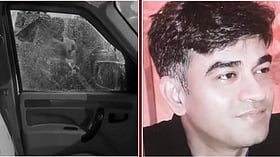
Madhyamgram was shaken on Wednesday late night after Chandranath Rath, the personal assistant of BJP leader Suvendu Adhikari, was shot dead in what police believe was a planned attack near Doharia in North 24-Parganas. Rath, a former Indian Air Force (IAF) man from Chandipur in East Medinipur, had long been part of Suvendu Adhikari’s inner circle and had continued to work with him even after Adhikari moved from the Trinamool Congress to the BJP.

Police said Rath was travelling in a Scorpio vehicle when motorcycle-borne attackers intercepted the car and opened fire at close range. The driver of the vehicle was also injured and is now receiving treatment in Kolkata, while Rath was declared dead after being rushed to a private hospital. Investigators have also seized a vehicle linked to the case and said the number plate appears to be fake.

Suvendu Adhikari reached the hospital soon after the attack, and several BJP leaders and workers gathered there through the night. Among those present were Union Minister Sukanta Majumdar, Arjun Singh, Samik Bhattacharya, Agnimitra Paul, Rudranil Ghosh, Kaustav Bagchi, Shankar Chatterjee and Vijay Ojha. Outside the hospital, BJP supporters staged protests and blocked parts of the area, demanding immediate action.

The BJP quickly turned the killing into a political attack, with senior leaders openly pointing fingers at Chief Minister Mamata Banerjee and her nephew Abhishek Banerjee.

The Trinamool Congress condemned the murder and demanded a CBI investigation under court supervision. In its statement, the party said it “Strongly condemn the brutal murder of Chandranath Rath” and also referred to the deaths of three TMC workers in post-poll violence, while insisting that political killings have no place in a democracy. The statement also said, “We demand a proper investigation so that those responsible are brought to justice.”

BJP leader Arjun Singh alleged that the killing was executed with precision by trained assailants, claiming it appeared to be the work of a “professional assassin”. He further alleged that a staff officer linked to Abhishek Banerjee was involved in the incident.

#WATCH | North 24 Parganas, West Bengal | The car of BJP leader Suvendu Adhikari's PA Chandra being taken from the spot where he was shot dead near Madhyamgram, last night. pic.twitter.com/2vIhpqTK43

— ANI (@ANI) May 7, 2026

#WATCH | North 24 Parganas | An eyewitness says, "Just as Chandra's car crossed mine, it suddenly stopped mid-way and a bike-borne person came and started shooting on the left side of the car... The person seemed to be an expert... He fled immediately... It seemed that this was… https://t.co/0kAKzKZ5yW pic.twitter.com/R8i1dZkIxF

— ANI (@ANI) May 6, 2026

BJP spokesperson Sankudeb Panda also said the murder was pre-planned and suggested that the attackers had carried out proper reconnaissance before striking. He said, “This was not random. Someone watched his movements and acted only after planning everything carefully.”

The party leaders have also accused elements linked to the Trinamool Congress of being behind the attack, with some workers even naming Rathin Ghosh, the newly elected TMC MLA from Madhyamgram.

Senior police officer and West Bengal DG, Siddinath Gupta, visited both the crime scene and the hospital. He said “A four-wheeler used in the crime had been seized, that the registration plate is suspected to be fake, and that bullets and spent cartridges have been recovered from the spot.”

Gupta said, “An investigation is underway, and we are examining CCTV footage. At this stage, we cannot disclose further details.” Police sources say the attack appears premeditated, with evidence suggesting Rath may have been followed before being intercepted.

Rath’s wife, speaking to police officials, expressed her anguish in stark terms and demanded, “I know I will never get my husband back. But I want to know who did this. I want justice.”

Chandranath Rath’s background had long tied him to the world of politics. Born in Chandipur on 11 August 1984, he studied at Rahara Ramakrishna Mission before joining the Indian Air Force, and later left service after 18 years.

He then worked in the corporate sector before becoming Suvendu Adhikari’s personal assistant, first in the Water Resources department and later in the BJP leader’s office after Adhikari became Leader of the Opposition. His mother, Hasi Rath, was also active in local politics and later joined the BJP, reflecting the family’s long political association.

The killing has left the political atmosphere tense, with BJP workers alleging a wider conspiracy and police racing to establish the exact sequence of events. For now, one thing is clear: Chandranath Rath’s death has become the latest flashpoint in Bengal’s bitter political battle.

  • ✇National Herald
  • Is Trinamool Congress heading for a split? Whiffs of ‘operation Shinde’ in Bengal Kunal Chatterjee
    With the budget session of the West Bengal assembly starting on 8 June 2026, a split in the legislature party of Trinamool Congress appears imminent. Following reports that only 20 of the 80 elected TMC MLAs turned up to attend a meeting of MLAs, the party was forced to expel two MLAs, Ritabrata Banerjee and Sandipan Saha, on Monday. Both MLAs were named by chief minister Suvendu Adhikari and lauded for complaining to the Assembly Speaker that their signatures on a letter signed by Abhishek Bane
     

Is Trinamool Congress heading for a split? Whiffs of ‘operation Shinde’ in Bengal

2 June 2026 at 10:08

With the budget session of the West Bengal assembly starting on 8 June 2026, a split in the legislature party of Trinamool Congress appears imminent. Following reports that only 20 of the 80 elected TMC MLAs turned up to attend a meeting of MLAs, the party was forced to expel two MLAs, Ritabrata Banerjee and Sandipan Saha, on Monday. Both MLAs were named by chief minister Suvendu Adhikari and lauded for complaining to the Assembly Speaker that their signatures on a letter signed by Abhishek Banerjee were forged.

The letter addressed to the speaker was apparently to claim the position of leader of the Opposition in the assembly for party veteran Sobhandeb Chattopadhyay. According to one version assembly officials found discrepancies between signatures on the documents submitted and those recorded during the oath-taking of newly elected MLAs. The Assembly Secretariat subsequently lodged a complaint, leading to a CID investigation.

Ritabrata Banerjee and Sandipan Saha have claimed that signatures collected during an earlier party meeting were later used in the documents submitted, which they considered unethical and improper. The two MLAs subsequently approached the assembly speaker with their complaints. It is not clear why it was necessary to forge signatures of the two MLAs or how many signatures were genuine. However, once the chief minister publicly confirmed names of the two TMC MLAs as whistle blowers, TMC was left with no option but to expel them in a bid to contain the damage.

Ritabrata Banerjee, a former MP who had earlier been expelled by the CPM for anti-party activities, claimed sources in the BJP, had been encouraged to split the party and become the LoP himself. The ‘rebels’ are said to have met in a city hotel and claimed to have the support of between 30 and 50 MLAs. They are looking to mobilise sufficient number of MLAs to stake their claim to be the ‘real TMC’ and enable the speaker to allot them the position of the LoP.

The BJP, observers have been quick to suggest, would like to weaken Mamata Banerjee and implicate her and her loyalists in multiple cases. But the party does not want, they believe, the former chief minister to vacate entirely the opposition space. If TMC is totally decimated, they argue, the void may be filled by the Left Front and the Congress. Adding two factions of the TMC in this opposition space would suit the BJP by dividing the opposition’s space.

Speaking on a Facebook Live session, the TMC chairperson Mamata Banerjee criticised opportunists seeking to abandon the party after enjoying the privileges when the party was in power. She sought to

put up a brave face and asserted that TMC is not a party of leaders but of workers. "Leaders may be afraid, but party workers are not. They became MLAs and MPs because the party gave them ticket. The moment the party faces a setback, some people begin making arrangements elsewhere. If anyone thinks they can destabilise the Trinamool Congress, they are mistaken," she warned.

In a pointed comment seen as directed at Ritabrata Banerjee, she added, "It was a mistake to give tickets to such people. We trusted them, gave them opportunities and responsibilities. Today they are repaying that trust with betrayal." Her loyalists like Kunal Ghosh described the duo as "traitors" who chose to attack their own party less than a month after being elected on its symbol. "If they had so many objections, why did they contest the election on a Trinamool ticket? Internal issues should be discussed within the party, not used as weapons against it," Ghosh said sharply.

"Some are being threatened, some are being tempted. But Trinamool Congress cannot be broken so easily. Our real strength lies with our workers and supporters," she added.

Mamata Banerjee loyalists point out that Ritabrata Banerjee had been photographed chatting with Suvendu Adhikari at Banga Bhawan in New Delhi during Adhikari’s thanksgiving visit to New Delhi before being sworn in. They allege that Banerjee explored the possibility of joining the BJP but was encouraged to

remain within the TMC legislative party and attempt to secure the post of Leader of the Opposition for himself.

TMC insiders admit differences over the choice of the Leader of the Opposition. While a section of the MLAs reportedly favoured Kunal Ghosh for the role because of his aggressive style and ability to counter the BJP inside the assembly, others felt that his perceived proximity to TMC national general secretary Abhishek Banerjee could create discomfort among some legislators.

The party leadership settled on Sobhandeb Chattopadhyay, a veteran politician respected across factions. One senior legislator said, "Sobhandeb-da is not tainted by controversy and is someone who can speak to everywhere. He has the experience and stature to keep the legislative party united." Others acknowledge concerns regarding his age and health. "Nobody questions his integrity or political experience. The only concern is whether his physical condition will allow him to handle all the demands of the leader of the Opposition's role," a party source said.

The CID investigation has meanwhile expanded, with Abhishek Banerjee being summoned in connection with the matter. Abhishek did not appear on the scheduled date, citing illness, and has reportedly sought additional time.

  • ✇National Herald
  • As new government takes office in Bengal, Mamata calls for grand anti-BJP alliance Kunal Chatterjee
    For the first time in West Bengal’s political history, the Bharatiya Janata Party (BJP) has formed the government in the state, marking a dramatic shift in Bengal politics after the 2026 Assembly election results.On Saturday, Suvendu Adhikari was sworn in as the new Chief Minister at the historic Brigade Parade Ground in Kolkata. The ceremony drew senior BJP leaders, party workers and supporters celebrating what the party described as a “historic mandate for change”.Alongside Suvendu Adhikari, s
     

As new government takes office in Bengal, Mamata calls for grand anti-BJP alliance

9 May 2026 at 13:44

For the first time in West Bengal’s political history, the Bharatiya Janata Party (BJP) has formed the government in the state, marking a dramatic shift in Bengal politics after the 2026 Assembly election results.

On Saturday, Suvendu Adhikari was sworn in as the new Chief Minister at the historic Brigade Parade Ground in Kolkata. The ceremony drew senior BJP leaders, party workers and supporters celebrating what the party described as a “historic mandate for change”.

Alongside Suvendu Adhikari, several BJP leaders also took oath as ministers, including Dilip Ghosh, Agnimitra Paul, Ashok Kirtania, Nisith Pramanik and Khudiram Tudu.

Senior BJP leaders described the victory as the beginning of a “new era” for West Bengal. Suvendu Adhikari said the government would work for “development, law and order, and democratic governance” across the state. BJP leaders also claimed that people had voted for “change after years of political violence and corruption”.

According to BJP sources, the remaining cabinet ministers are expected to take oath on Monday, 11 May, at Lok Bhawan, where Governor R. N. Ravi is likely to administer the oath. The new government’s first cabinet meeting is expected to be held at Nabanna shortly afterwards.

There is also strong speculation that Tapas Roy could become the next Speaker of the Assembly. BJP MLAs are expected to take oath later next week.

The BJP secured a victory in the Assembly elections, winning 207 of the 293 seats. The Election Commission of India reported that the BJP received 45.84 per cent of the vote share, while the All India Trinamool Congress secured 40.80 per cent. The Congress won two seats, the CPI(M) one seat, the ISF one seat and the AJUP two seats. Re-polling in Falta will be held on 21 May.

However, even as the BJP celebrated its rise to power, former Chief Minister Mamata Banerjee launched a sharp political counterattack from her residence in Kalighat during Rabindra Jayanti celebrations honouring Rabindranath Tagore.

Standing before a portrait of Tagore, Mamata Banerjee appealed to all anti-BJP political forces — including Left and far-Left parties — to unite against the BJP government.

She declared, “A thunderbolt of terror is striking from all directions. I urge all political parties, student and youth organisations, and NGOs to come together and form an alliance. Our primary adversary is the BJP.”

In another significant remark, she said, “Whether Left, far-Left, or any national party — wherever you may be — come, let us join forces. The enemy of my enemy is my friend.”Her statement is being seen as a major political signal, especially given the long-standing rivalry between the Trinamool Congress and the Left Front in Bengal politics. Reacting to her appeal, CPI(M) state secretary Mohammed Salim quoted Tagore and said: “When life runs dry, come like a stream of When life runs dry, come as a stream of compassion.”

Mamata Banerjee also accused the BJP of unleashing “post-poll terror” across the state. She alleged that Trinamool workers were being attacked and intimidated following the election results. According to her, “outsiders” had been brought into Bengal to spread fear and violence.

She further claimed that disturbances had taken place outside both her residence and the home of Abhishek Banerjee. Mamata alleged that BJP supporters attempted to disrupt Rabindra Jayanti events and that decorators were pressured not to provide chairs, tents or sound systems for the programme at Kalighat. “We had to arrange everything ourselves. We even had to buy stools this morning,” she said.

The Trinamool chief also accused the administration of withdrawing her security and internet access after the BJP came to power. She claimed that she had suddenly stopped receiving calls and messages before discovering that her internet services had allegedly been disconnected.

At the same time, Mamata Banerjee continued to question the legitimacy of the election outcome. She claimed that although the Trinamool had not lost the elections, “we were defeated through manipulation”. She insisted that “the truth will come out in the days ahead”.

The Trinamool supremo also revealed that several opposition leaders from across India had contacted her after the results. She named Sonia Gandhi, Rahul Gandhi, Mallikarjun Kharge, Uddhav Thackeray, Tejashwi Yadav, Akhilesh Yadav, Hemant Soren and Arvind Kejriwal as leaders who had expressed solidarity with her.

Meanwhile, the Trinamool Congress has announced the creation of a relief fund to support party workers allegedly affected by post-election violence. Senior TMC leader Kalyan Banerjee is expected to oversee legal matters related to these cases.

The developments signal the beginning of an intense new political chapter in West Bengal. While the BJP begins its first term in power in the state with a large majority, Mamata Banerjee appears determined to reposition herself as the central figure of a wider anti-BJP opposition movement at the national level.

  • ✇National Herald
  • Bengal: BJP sweeps Falta, but Left’s rise from ashes is bigger political signal Kunal Chatterjee
    The BJP’s landslide victory in the Falta Assembly by-election on Sunday may not have surprised many observers. The more consequential political development to emerge from the South 24 Parganas contest was the CPI(M)’s return as the principal opposition force in the constituency — another indication that the Left, after collapsing to zero seats in the 2021 Assembly elections, may be slowly rebuilding political ground in Bengal.While BJP candidate Debangshu Panda crossed 1.37 lakh votes to secure
     

Bengal: BJP sweeps Falta, but Left’s rise from ashes is bigger political signal

24 May 2026 at 12:49

The BJP’s landslide victory in the Falta Assembly by-election on Sunday may not have surprised many observers. The more consequential political development to emerge from the South 24 Parganas contest was the CPI(M)’s return as the principal opposition force in the constituency — another indication that the Left, after collapsing to zero seats in the 2021 Assembly elections, may be slowly rebuilding political ground in Bengal.

While BJP candidate Debangshu Panda crossed 1.37 lakh votes to secure an emphatic victory by a margin of more than 1 lakh votes, the CPI(M)’s second-place finish drew considerable attention. For the first time since 2016, the Left finished runner-up in an Assembly contest in Falta, with its candidate polling more than 38,000 votes and remaining in second position throughout counting.

For a party that had drawn a blank in the 2021 Assembly elections, the showing is being viewed by political observers as an important symbolic and organisational breakthrough. Coming after the Left’s recent success in Domkal, the Falta outcome is likely to intensify discussion over whether sections of Bengal’s anti-Trinamool electorate are once again becoming receptive to the CPI(M).

The Congress, meanwhile, remained far behind the main contenders, polling fewer than 10,000 votes. The figures underlined how the contest had largely narrowed into a BJP–Left battle amid the collapse of the Trinamool campaign.

The biggest setback, of course, came for the Trinamool Congress, which slipped to fourth position in a seat that falls within the Diamond Harbour parliamentary constituency represented by Trinamool general-secretary Abhishek Banerjee. Candidate Jahangir Khan had publicly announced two days before polling that he was effectively distancing himself from the contest. However, because the deadline for withdrawing nominations had already passed, his name remained on EVMs.

Despite the absence of any major campaign by senior Trinamool leaders and visible internal disarray, the party still secured more than 7,000 votes. Political analysts say this reflects the continuing loyalty of a section of Trinamool’s traditional grassroots support base, even amid organisational weakness and public infighting.

The Falta AC repoll counting today exposes glaring inconsistencies. By 3:30 pm in the afternoon today all 21 rounds were completed. On 4th May, till the same time, only 2- 4 rounds had taken place. The country deserves an explanation from the ECI.

Although more than 1000…

— Abhishek Banerjee (@abhishekaitc) May 24, 2026

The by-election had become contentious after allegations of intimidation, electoral malpractice and EVM tampering during the initial polling process. Complaints included claims that opposition polling agents were harassed and that BJP symbols on EVMs had been covered with tape. Following the controversy, the Election Commission ordered a re-poll under heavy security arrangements.

The re-poll was widely viewed as calmer and more closely monitored, with opposition parties arguing that the final outcome reflected voter preferences in a freer electoral environment.

The BJP celebrated the result as evidence of expanding public support in Bengal. Reacting to the party’s sweeping victory, West Bengal chief minister Suvendu Adhikari launched a sharp attack on Trinamool and Abhishek Banerjee’s much-publicised 'Diamond Harbour model'.

In a lengthy social media post, Adhikari wrote: “The infamous ‘Diamond Harbour’ model has transformed into the ‘Trinamool’s haar baar (defeat)’ model.”

Adhikari also accused the Trinamool of functioning as a “mafia company” and alleged that the party had long relied on intimidation, syndicates and misuse of state machinery to retain power.

Without naming Abhishek Banerjee directly, he referred to him as a “parachuted-in general” who had “stifled the voice of democracy”. He further argued that earlier electoral outcomes in the constituency had not reflected genuine public opinion and that the re-poll had exposed Falta’s “real political mood”.

Trinamool rejected the BJP’s interpretation of the result. Senior leader Kunal Ghosh described the outcome as unfortunate and alleged that the party’s candidate had been targeted by the election machinery. Abhishek Banerjee also questioned the credibility of the counting process, alleging “serious irregularities” and demanding an explanation from the Election Commission regarding the speed at which counting rounds were completed.

He further claimed that Trinamool workers had been driven out of their homes in recent days and alleged that opposition polling agents had previously been removed from counting centres while BJP representatives remained inside.

Despite the sharp political exchanges, the Falta by-election appears to have altered the conversation around Bengal’s opposition politics. The BJP’s commanding victory will dominate headlines, but the longer-term political takeaway may lie elsewhere. After being reduced to zero seats in 2021, the CPI(M)’s return to second place suggests that the Left is beginning, slowly and unevenly, to reclaim space in Bengal’s electoral landscape.

  • ✇National Herald
  • West Bengal gears up for ‘result day Holi’ as surging Abir sales reflect electoral buzz Kunal Chatterjee
    As West Bengal awaits the counting of votes on 4 May, an unusual but telling trend has emerged across the state—an unexpected surge in the sale of Abir, the coloured powder typically associated with Holi. From Siliguri in North Bengal to Burrabazar in Kolkata, traders and manufacturers report a sharp rise in demand, driven not by a festival but by political anticipation.In North Bengal, where the first phase of voting has already taken place, speculation over the outcome has translated into bris
     

West Bengal gears up for ‘result day Holi’ as surging Abir sales reflect electoral buzz

2 May 2026 at 10:05

As West Bengal awaits the counting of votes on 4 May, an unusual but telling trend has emerged across the state—an unexpected surge in the sale of Abir, the coloured powder typically associated with Holi. From Siliguri in North Bengal to Burrabazar in Kolkata, traders and manufacturers report a sharp rise in demand, driven not by a festival but by political anticipation.

In North Bengal, where the first phase of voting has already taken place, speculation over the outcome has translated into brisk business for abir sellers. While demand exists for multiple colours, traders say saffron and green powders—associated with major political parties—are dominating sales. Interestingly, in some pockets green has begun to edge ahead, though the broader picture remains mixed.

Sudipta Bhowmik, a manufacturer in Siliguri, explained that demand for abir usually drops after Holi, but this year has been different. “We had almost stopped production after the festival,” he said. “But suddenly, with the election results coming up, demand shot up again. We are now producing both saffron and green abir, and it is becoming difficult to keep up.”

From Siliguri, consignments are being dispatched across North Bengal, covering districts from Cooch Behar to Malda, as well as the hill regions. According to traders, both major parties are stockpiling abir in preparation for victory celebrations.

At Bidhan Market in Siliguri, vendor Kamal Saha noted a significant change in buying behaviour. “People are not buying small packets anymore,” he said. “They are buying full sacks worth 500 rupees and even saying they might need more. Green is selling, but saffron demand is unusually high. We have not seen this in earlier elections.”

A similar trend is visible in other districts. In Bankura, trader Raju Kundu reported strong sales despite rising prices. “Saffron abir is selling the most,” he said. “Green is also moving well, but there is almost no demand for red. Prices have gone up, yet people are still buying in large quantities.”

Another trader, Bapi Das, offered a slightly broader view. “Both green and saffron are selling the most,” he said. “But we should also remember that the upcoming Haribol Mela is adding to the demand.”

Across multiple markets, one pattern is clear—red abir, once commonly associated with earlier political trends, has seen a steep decline in demand. Traders consistently report minimal interest in the colour this season.

In Kolkata’s Burrabazar, the state’s largest wholesale market, green abir appears to be leading in terms of bulk stocking. Merchants have filled their warehouses with sacks of green powder, anticipating strong demand if the ruling party performs well.

Raghunath Sanyal, a colour merchant, said, “We have stocked mostly green abir. It seems that is what people expect will be needed. We have kept some saffron and red, but in smaller quantities.”

Retailers from various districts have already begun purchasing from Burrabazar in anticipation of post-result celebrations. One trader from Bardhaman said he planned to buy multiple sacks of green powder, expecting demand to rise further.

The surge in abir sales is not limited to traders. Political workers of the TMC, themselves have started preparing early. In several areas, including Uttarpara, supporters have already begun symbolic celebrations, playing with green coloured powder days before the results are announced.

Leaders have also contributed to the atmosphere of anticipation. Party organisers have urged workers to stock up on colours and prepare for celebrations, reinforcing the sense that the result day could resemble an out-of-season Holi.

Manufacturing hubs in Tamluk, East Medinipur, are also witnessing an unusual revival. Factories that typically operate only during the Holi season have reopened to meet the sudden demand. Production is now running at full capacity, focusing largely on green and saffron powders.

Factory owner Sadhan Chandra Guria said, “We will only know which colour wins on the day of the results. But I believe green will be in highest demand, so we have focused entirely on producing that.”

Despite the heavy speculation, traders admit that uncertainty remains. Different regions show different trends—some report saffron leading, others say green is ahead. What is clear, however, is that the scale of preparation is unprecedented.

As 4 May approaches, the state is not only preparing for a political verdict but also for a spectacle of colour. Whether it is green or saffron that dominates the streets will depend on the final results. Until then, markets continue to buzz, factories run at full pace, and West Bengal waits—ready to celebrate, whichever way the mandate goes.

  • ✇National Herald
  • Bengal polls: VVPAT slips found near Noapara, Mamata holds meeting at home Kunal Chatterjee
    Hundreds of VVPAT slips were found about 10 km from Garulia in West Bengal's Noapara Assembly segment under the Barrackpore Lok Sabha constituency on Sunday evening, triggering political tension on the eve of counting for the state's just-concluded Assembly elections. The slips reportedly carried stamps of the CPI(M) and the state's ruling TMC, with very few for BJP.TMC candidate Trinankur Bhattacharya accused the BJP and Election Commission of India (ECI) of undermining the electoral process an
     

Bengal polls: VVPAT slips found near Noapara, Mamata holds meeting at home

3 May 2026 at 15:49

Hundreds of VVPAT slips were found about 10 km from Garulia in West Bengal's Noapara Assembly segment under the Barrackpore Lok Sabha constituency on Sunday evening, triggering political tension on the eve of counting for the state's just-concluded Assembly elections. The slips reportedly carried stamps of the CPI(M) and the state's ruling TMC, with very few for BJP.

TMC candidate Trinankur Bhattacharya accused the BJP and Election Commission of India (ECI) of undermining the electoral process and demanded an explanation, alleging attempts to favour the BJP. CPI(M) candidate Gargee Chatterjee said party workers found the slips and informed the police, alleging that officials forcibly removed them despite objections. She added that the matter would be reported to the ECI.

BJP candidate Arjun Singh visited the site, questioned how the slips were dumped, and demanded a police seizure list. He warned that if EVM counts do not match VVPAT slips, results from the booth should be withheld, alleging a conspiracy involving the TMC and election officials.

The development comes as political tensions mount across the state ahead of vote counting across 293 Assembly constituencies on Monday, 4 May.

#WATCH | North 24 Parganas | West Bengal Assembly Elections 2026 | VVPAT slips allegedly from booth number 29 of ​​Noapara Assembly were found discarded in Subhashnagar of Ichapur Nilganj Panchayat of Madhyamgram Assembly, a day before the vote counting was scheduled in the… pic.twitter.com/BRWS3aRMdT

— ANI (@ANI) May 3, 2026

West Bengal chief minister Mamata Banerjee has urged her party workers to remain vigilant and avoid complacency, with the TMC leadership making it clear that every stage of the counting process will be closely monitored.

On Sunday evening, Banerjee convened a meeting at her residence with counting agents, councillors and ward presidents from the Bhabanipur Assembly constituency in south Kolkata. The meeting followed a virtual session held a day earlier, where she and TMC national general-secretary Abhishek Banerjee addressed party leaders and candidates across the state.

According to party sources, the chief minister is keen to “leave no stone unturned” and ensure that workers remain alert until the final results are declared. One ward president, speaking on condition of anonymity, said, “Despite the virtual meeting on Saturday, she called us to her home not just to boost us up but also give us some last-minute tips. Though we have done homework all through the year, a last-minute revision is always helpful. TMC will form the government beyond doubt.”

However, the leader also hinted at underlying concerns, adding that the margin of victory would be significant. “The question of the margin of seats and the actual seat numbers matter. Otherwise, there might be restlessness and horse-trading after the results are out,” he said.

VVPAT slips from the Noapara constituency were found scattered on the streets of Barasat. The CPI(M) has already lodged a formal complaint with the Election Commission regarding this matter. https://t.co/IhMywEtkVR pic.twitter.com/wsIaMsQmuE

— Supti kanjilal (@KanjilalSupti10) May 3, 2026

Bhabanipur remains one of the most closely watched constituencies in the state, as Banerjee faces off against leader of opposition and state BJP leader Suvendu Adhikari. The contest has drawn particular attention as it mirrors the high-profile 2021 battle in Nandigram in Purba Medinipur district, where Banerjee was defeated by Adhikari after alleged irregularities during counting.

Voting in Bhabanipur was held on 29 April during the second phase of the elections. Ahead of counting day, both major parties have intensified preparations, holding meetings with their respective workers and counting agents. Adhikari, too, held an urgent meeting with BJP workers at the party’s office in Bhabanipur on Saturday.

Meanwhile, concerns about the integrity of the counting process have led to heightened tensions across the state. Both TMC and BJP have expressed fears of potential manipulation, particularly at strong rooms where electronic voting machines (EVMs) are stored. Addressing these concerns, state chief electoral officer Manoj Agarwal said, “We are fully prepared for the counting process; there will be no disruptions.”

Special election observer Subrata Gupta dismissed allegations of tampering, stating, “There is absolutely no possibility of any vote theft.” He added that authorities are reviewing arrangements around counting centres, including crowd control and potential victory processions.

To strengthen oversight, the ECI has appointed 431 counting observers across the state, excluding the Falta constituency. North 24 Parganas has the highest number, with 49 observers covering 33 constituencies, while Alipurduar has the fewest, with six observers for five constituencies.

Amid the political activity, civil society groups have also stepped in. The Desh Bachao Ganamancha continued its sit-in protest for a second day in Kolkata, demanding transparency in the counting process and safeguards against alleged EVM manipulation. Demonstrators gathered on Jawaharlal Nehru Road, voicing concerns over the political climate and accusing the BJP of divisive politics.

Speakers at the protest also questioned the neutrality of the ECI. The demonstration was attended by several intellectuals, artists and public figures, reflecting broader public anxiety ahead of the results.

As counting day approaches, the atmosphere across West Bengal remains tense, with political parties, officials and citizens awaiting an outcome that could significantly shape the state’s political future.

❌
Subscriptions