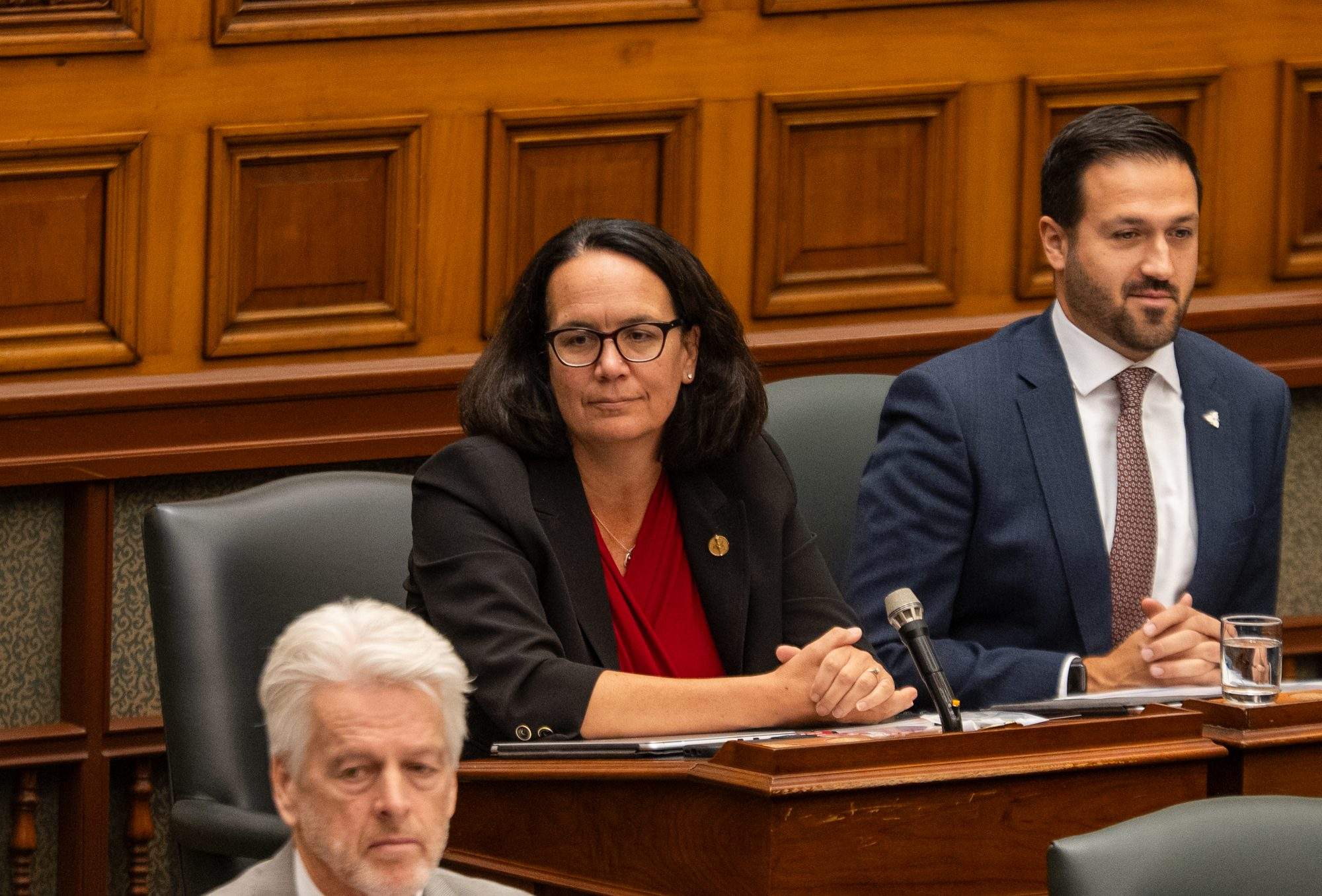
Records show Ford's penchant for private travel took off immediately after winning the 2025 provincial election campaign, during which his party chartered planes to Washington D.C.
Records show Ford's penchant for private travel took off immediately after winning the 2025 provincial election campaign, during which his party chartered planes to Washington D.C.
The provincial party is holding its third leadership race in seven years after two successive leaders failed to gain a seat at Queen's Park, leading to their resignations.
The provincial party is holding its third leadership race in seven years after two successive leaders failed to gain a seat at Queen's Park, leading to their resignations.
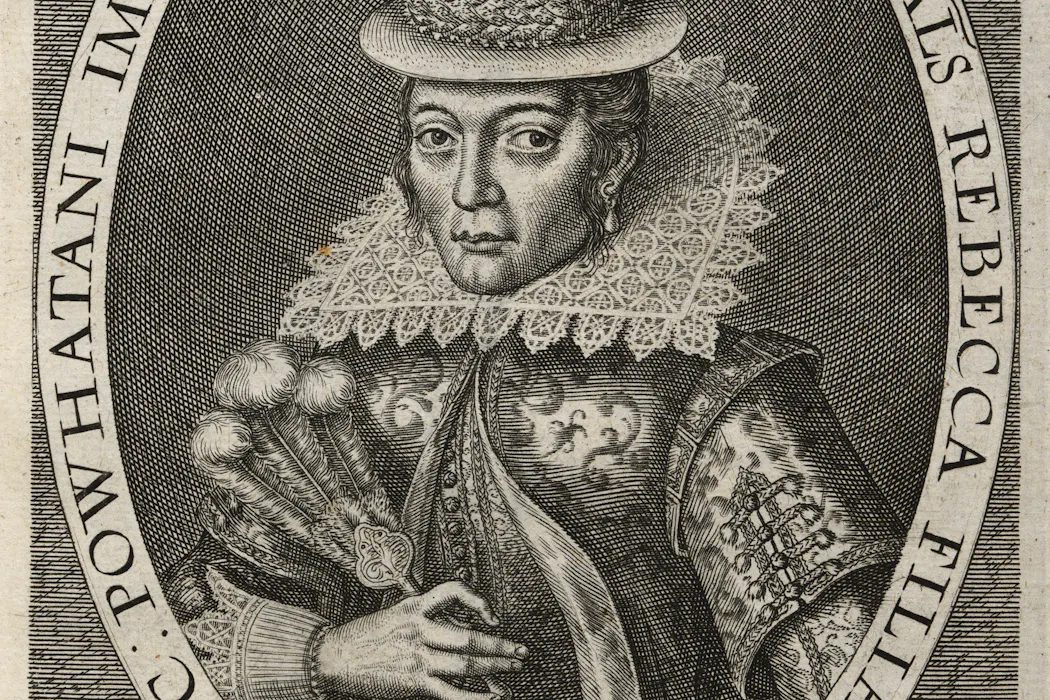
Simon van de Passe's 1616 engraving of Pocahontas is the only known portrait made during her lifetime. National Portrait Gallery/Wikimedia CommonsThanks to the Walt Disney Company, Pocahontas may be the most famous Native American who lived in the 17th century. The animated film version of her early life included her speaking with a willow tree, befriending animals, singing about “the colors of the wind,” and being caught up in an ill-fated romance with Captain John Smith.
The 1995 film created
Thanks to the Walt Disney Company, Pocahontas may be the most famous Native American who lived in the 17th century. The animated film version of her early life included her speaking with a willow tree, befriending animals, singing about “the colors of the wind,” and being caught up in an ill-fated romance with Captain John Smith.
The 1995 film created an enduring visual image of Pocahontas, and contained some details drawn from the historical record, though plenty is pure fiction. Smith was, in fact, one of the English colonists who arrived in Jamestown, Virginia, soon after its founding in 1607. Pocahontas’ father Wahunsonacock – whom colonists and Disney called Powhatan – was the paramount chief of the Powhatans, who lived in communities along the edges of Chesapeake Bay and its tributaries.
Only one portrait of Pocahontas from her lifetime exists – a sharp contrast with the Disney-drawn image most Americans know. And it speaks volumes about how the English saw colonization.
Powerful family
As I describe in my 2026 book, “Contested Continent: The Struggle for North America, c. 1000 to 1680,” Wahunsonacock was the most consequential political figure in early Virginia, the land Powhatans knew as Tsenacommacah. Through personal alliances and shrewd stratagems, he controlled perhaps 30 communities along the shores of Chesapeake Bay and its tributaries.
In 1613, the English took Pocahontas captive during a conflict known as the first Anglo-Powhatan War. After obtaining his daughter’s freedom in 1614, Wahunsonacock approved her marriage to John Rolfe, who played a leading role in the colony’s tobacco economy, and she converted to Christianity. Sometime between 1615 and 1617 she gave birth to their son, Thomas.
Pocahontas in England
Two years after the marriage, Pocahontas and Rolfe sailed to England, where she played a leading role in her father’s diplomatic mission.
During her stay in London, which included meeting King James I, Pocahontas sat for a portrait by the artist Simon van de Passe. Her clothing and pose echoed portraits of other elite English women of the era. The image emphasizes her tall stovepipe hat, ample lace collar, a dress with detailed embroidery or brocade, and a pearl earring dangling from her left ear.
In addition to her English clothing, Pocahontas holds either a feather fan, common for an upper-class woman at the time, or a quill pen. Since Europeans considered literacy a crucial marker of civilization, either object would highlight English hopes that Indigenous Americans could rapidly embrace the colonists’ culture.
Power of art
The engraving of Pocahontas was not the first image of Native peoples of the mid-Atlantic coastline circulating in England. Illustrations in one widely reprinted book played a crucial role in convincing the English to establish settlements in North America.
In the late 16th century, advocates of English colonization understood that descriptions of North America could make foreign territory more enticing to potential migrants. They wanted to demonstrate to English men and women that they could create profitable economies and coexist with Native peoples.
The title page of the 1590 edition of Theodor de Bry’s ‘A Briefe and True Report of the Newfound Land of Virginia.’Livinncary/Wikimedia Commons, CC BY-SA
Some promoters recognized that watercolor images painted in 1585 by the artist John White depicting the Carolina Algonquians of the Outer Banks could perhaps generate interest – and investments. The promoters, who had ties to leading figures in the English court as well as to printers, also saw the benefits of an in-depth study of the region by the young English mathematician and writer Thomas Harriot, “A Briefe and True Report of the Newfound Land of Virginia.” In 1590, the promoters worked with the Flemish printer Theodor de Bry to produce an illustrated version, which contained engravings based on White’s paintings.
The volume described Carolina Algonquians’ practices and enumerated commodities that could be extracted for profit. Some of the Native Americans depicted in these pages are clad with only a deerskin loincloth. Some of the women wear skirts but not tops.
To Europeans bred on the idea that clothing an entire body was a marker of civilization, these Alqonquians’ appearance was significant. People who colonizers considered “savages” were often depicted nude, like the Tainos whom Christopher Columbus encountered a century earlier. English men and women reading the book about the Algonquians, on the other hand, saw them as a people who would, under the right tutelage, adopt English-style culture – including Protestant Christianity.
“Some religion they have alreadie,” Harriot wrote in “A Briefe and True Report,” “which although it be farre from the truth, yet being as it is, there is hope it may been the easier and sooner reformed.”
To make the point that Native Americans could be converted to European culture, the engravers added depictions of ancient Britons, allegedly based on an old chronicle. Three of these images of Picts depicted them as nude, bearing tattoos more extensive than the Algonquians’. These individuals are also portrayed as more violent: A Pict man holds a head still dripping blood, with another head at his feet, while a Pict woman brandishes spears and a broadsword.
Reality check
When Pocahontas sat for Van de Passe, his portrait did more than create a resemblance of the young woman, who would die the following year, soon after leaving London – felled either by disease or, as a Virginia tribe’s oral history suggests, poison.
Like the images popularized by Harriot’s book, her portrait suggested that Native Americans would soon embrace English ways. Pocahontas herself, as the words on the engraving noted, had become Rebecca Rolfe after her marriage. In his writings, her husband celebrated her conversion to the Anglican faith. The proof of the model of cultural conversion seemed to be on plain view in the portrait.
Pocahontas’ father died in 1618. Four years later, the Powhatans launched a rebellion against English colonists. On March 22, 1622, under the direction of a war captain named Opechancanough, they killed approximately one-fourth of the colonists in Virginia. The English labeled the violence a “barbarous massacre” and launched a war of vengeance, which included a mass poisoning of Powhatans in 1623 – an action that the English at the time knew violated the emerging law of war.
Seeing Pocahontas poised on a chair, wearing an elegant hat and holding a quill pen, the English had assumed that Native Americans would embrace the colonizers’ ways. March 1622 proved them wrong.
This article has been updated to correct the description of the object Pocahontas holds in Simon van de Passe’s engraving.
Peter C. Mancall has received funding from the Huntington Library, the National Endowment for the Humanities, and the Mellon Foundation.
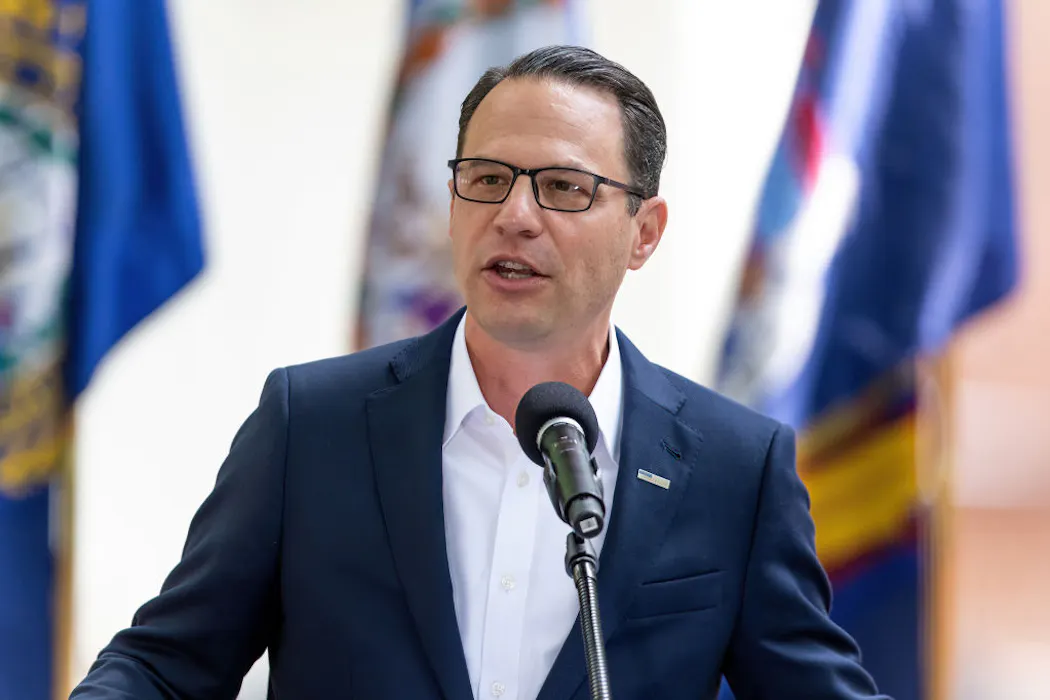
Pennsylvania Gov. Josh Shapiro is suing Character.AI to stop its chatbot from posing as doctors. Gilbert Carrasquillo/GC Images via Getty ImagesIn May 2026, Pennsylvania Gov. Josh Shapiro’s administration filed suit against Character Technologies Inc., the company behind the popular chatbot platform Character.AI. A state investigation found that a chatbot character named “Emilie” claimed to have a medical degree, seven years of practice and a Pennsylvania medical license – and was providing user
In May 2026, Pennsylvania Gov. Josh Shapiro’s administration filed suit against Character Technologies Inc., the company behind the popular chatbot platform Character.AI. A state investigation found that a chatbot character named “Emilie” claimed to have a medical degree, seven years of practice and a Pennsylvania medical license – and was providing users with a fabricated license number. As of April 17, 2026, the chatbot had accumulated approximately 45,500 user interactions on the platform. The suit was filed by Pennsylvania’s State Board of Medicine.
Gretchen Chapman is a professor of behavioral decision research at Carnegie Mellon University in Pittsburgh, where she studies how people evaluate expertise and make decisions. As AI-powered tools increasingly enter healthcare settings – and as courts begin to grapple with the consequences – her research offers a timely way to understand why we trust these systems, when that trust breaks down, and who bears responsibility when it does.
Why might someone respond differently to a medical error depending on whether it was made by a human or an AI?
Research has examined the phenomenon of “algorithm aversion,” or the reluctance many people have to trust an AI system, even when the automated system makes fewer overall mistakes than a comparable human expert. One reason for this aversion is that people tend to be more forgiving of human mistakes than of AI mistakes. This is partly because some AI errors are the sort of mistakes that human experts are quite unlikely to make.
For example, we may find it outrageous when an AI erroneously claims to have a medical license or offers to write a suicide note for a depressed person because we feel quite confident that those particular errors could have been avoided if a human expert rather than an AI had been consulted.
Forty years ago, psychologist Hillel Einhorn argued that we need to “accept error to make less error,” meaning that even the most accurate system will produce some errors. Of course, some errors are more costly than others. People are willing to accept that even good doctors make mistakes. What they’re not willing to accept is a mistake that no competent and ethical doctor would ever make – such as claiming to have credentials they don’t have.
Why are people so willing to trust AI chatbots with medical advice?
Work from my research group builds on previous scholarship on perceived expertise. When people do not have direct access to the qualifications of a potential expert, they tend to rely on superficial identifying cues, such as whether the person wears a lab coat, uses scientific jargon or speaks with great confidence. Such cues are indicative of actual expertise in many settings, but it is also easy for a nonexpert, such as an AI chatbot, to assume the confidence and use jargon to signal qualifications they do not actually have.
What makes a title or credential so convincing – even when it belongs to a chatbot?
An expert is someone with an unusually deep understanding of a specific subject. Experts are commonly identified by their level of training or qualifications, such as holding a medical degree. Thus, credentials and titles are embedded in the very definition of expertise. Consequently, claiming a credential is a forceful way to present as an expert. Thankfully, this is also a tactic that is easily fact-checked, as we know that AI agents cannot gain medical licenses.
Ordinary people can’t be expected to scrutinize every piece of information they receive. Instead, our minds use mental shortcuts, such as trusting someone with a credential, because those cues are usually reliable.
Although it might be fairly easy to realize that an AI cannot earn a medical degree, other identifying cues are less easily vetted. For example, checking that the medical evidence cited by an AI comes from an actual scientific article takes more time. What makes our minds so good at processing information quickly is also what makes us easy to mislead. When your mind is wired to trust a credential automatically, it doesn’t stop to ask whether that credential is real.
Who is responsible when an AI system gives bad medical advice?
Determining culpability is already complex when a human expert gives bad advice. In addition to the expert herself, her employer – such as a hospital – could bear responsibility. Even the patient could be responsible, depending on how they used the advice – for instance, if they interpret an off-handed comment in a nonprofessional context as official medical advice.
Human medical experts carry malpractice insurance in part because this question is so fraught. The situation is even more complicated for AI systems because the AI agent itself cannot be legally responsible. The developers are responsible for ensuring reasonable safeguards and accuracy. Institutions are responsible for vetting new systems before adopting them, and for getting appropriate insurance. And users are responsible for adhering to guidelines about how the systems are to be used.
Tell us about your own research on health chatbots here in Pittsburgh.
Pittsburgh is not just a research hub but an active testing ground for these technologies in real clinical settings.
Carnegie Mellon University, where I work, houses the AI Institute for Societal Decision Making, funded by the U.S. National Science Foundation, which focuses on public health as one key use case.
One project at the institute entails developing a maternal health chatbot that allows pregnant women to receive answers to their questions in real time. Accuracy and safety guardrails are essential considerations in its development. The stakes are high: A pregnant woman who receives inaccurate information about symptoms, medications or warning signs could delay seeking care at a critical moment.
Pittsburgh’s two major hospital systems are already rolling out AI tools across their facilities to use for imaging and diagnosis, monitoring patient safety, and administrative work such as charting.
Virtually every living thing on Earth, from Patagonian penguins to newborn human babies, has been touched by the synthetic chemicals known as per- and polyfluoroalkyl substances, or PFAS. In fact, you would be hard pressed to find a sample of human blood, tissue or breast milk without detectable levels of at least one type of PFAS.
Making matters worse, researchers are continually uncovering links between human exposure to PFAS and poor health outcomes, including a weakened immune system, a hei
Meanwhile, thousands of PFAS have not been studied and have no regulation or oversight. In many cases, there is no monitoring data on their presence in consumer products, water and food.
As an expert in chemical pollution, I have studied a wide range of synthetic and natural chemicals that can have harmful health effects for humans and wildlife. A major focus of my current research is tracing PFAS from their initial source – including consumer products, contaminated food and water, and the air – to their resulting fingerprint in an organism’s blood and tissues.
By following the journey of how PFAS move into the bodies of living things – including people – scientists like me are working to improve safety recommendations and usage guidelines for these chemicals. First, though, we need to understand how these complex chemical mixtures are transformed as they accumulate in the body.
What are PFAS?
PFAS are a large class of organic chemicals – meaning molecules that contain carbon atoms – that have fluorine atoms added to them. This fluorination allows PFAS to aggregate on surfaces in ways that are desirable for many applications.
PFAS are commonly called forever chemicals because of their astonishing persistence – due to the strong chemical bonds between carbon and fluorine, they don’t break down easily. This durability is desirable for manufacturers, as materials made with PFAS can function for a long time without degrading.
However, persistence becomes problematic when PFAS leach or evaporate out of products and into the surrounding environment. PFAS can remain in drinkingwater sourcesand in sediment for decades to centuries.
What happens when PFAS are absorbed and accumulate in the body?
When someone is exposed to PFAS, it leaves a unique pattern of chemical contamination – what researchers call a PFAS fingerprint – in their blood. Studying these PFAS fingerprints enables scientists to learn about sources of PFAS exposure and how they differ among people who live in different places, have different jobs and use different products, among other factors.
But to be able to use these PFAS fingerprints, researchers first need to understand how specific exposures contribute to someone’s PFAS fingerprint over time. The composition of this fingerprint is different from the mixture of chemicals someone was initially exposed to, as some PFAS accumulate in blood to a greater extent than others. Without understanding how a PFAS mixture is distorted and changed in the body, it’s very difficult to know what sources were major contributors to a person’s lifelong PFAS exposure.
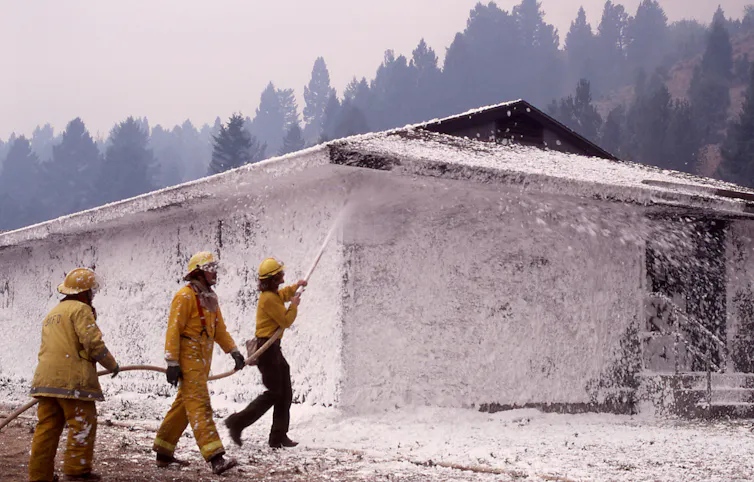
For example, firefighters and military service members use aqueous film-forming foams that contain hundreds of poorly studied PFAS. These are soapy, sudsy materials that form a film over fire and starve it of oxygen. They’re commonly used in emergencies, such as airplane crashes, train wrecks, vehicle fires or any other fire involving fuels.
Many firefighters and first responders who have used these foams are now grappling with serious health problems, including cancer, and many have wondered whether PFAS contributed to their illness.
A clearer understanding of the PFAS fingerprint that would be expected in someone’s blood after years of using these foams could help determine whether they are a unique source of the PFAS accumulating in their blood.
PFAS in the body
Fingerprints at the scene of a crime are often a major clue leading detectives to the perpetrator. When it comes to identifying sources of PFAS contaminating human bodies, however, researchers like me aren’t always so lucky.
For one, PFAS are typically present at low concentrations in the environment but can build up to higher levels in the body. For example, people drinking water containing PFOS will typically have levels 50 to 100 times higher in their blood than were measured in the water. This is because the body’s rate of PFOS uptake exceeds its rate of excretion.
But not all PFAS will increase in blood to the same degree. PFAS that are more likely to bind to biological components, such as proteins and fats, will more readily accumulate in the body. As the mixture of chemicals in drinking water, for example, continues to accumulate in the body, these types of more bioaccumulative PFAS, such as PFOS, will make up a higher proportion of the fingerprint than other types. This distortion complicates my and other scientists’ job, since we need to be able to predict how much each PFAS accumulates in the body to estimate how these chemicals will change in the body.
On top of predicting which PFAS will accumulate in the body and which will be excreted, researchers also have to contend with a person’s metabolism, the process by which chemicals – including some PFAS – are biologically transformed by the body.
Although the chemical structure of PFAS may change in the body, the resulting chemical is usually still a PFAS: a highly fluorinated molecule. After entering the body, many types of PFAS used in different products can be transformed over days to years, while the highly fluorinated backbone of the molecule remains intact. By these processes, many different PFAS eventually transform into just a few highly persistent PFAS. For example, many distinct PFAS containing a PFOS backbone can ultimately change to PFOS in the body.
Once these distinct PFAS have all become the same common chemical, it may be impossible to identify how a person was initially exposed.
Protecting yourself from PFAS
Despite all the complexities of PFAS research, researchers are making progress toward better understanding how these thousands of chemicals accumulate and transform in the body. Studying real products that contain complex PFAS mixtures can help researchers get closer to finding biomarkers that can pinpoint a PFAS source in a person’s blood.
There are also a number of commercial laboratories that offer drinking water and blood testing for some common PFAS. But it’s important to remember that these tests don’t capture the whole picture of your PFAS fingerprint. Scientists like me are still hard at work capturing many more PFAS that have been overlooked.
Carrie McDonough receives funding from the Toxic Exposure Research Program (TERP) and NIH.

 Login
Login








.png)


