Normal view

How cuts to CDC are dismantling its capacity to protect Americans’ health

People protest recent layoffs outside the main campus of the Centers for Disease Control and Prevention in Atlanta on April 1, 2025. Elijah Nouvelage via Getty Images

Since the Trump administration took office in January 2025, the workforce at the Centers for Disease Control and Prevention has weathered uncertainty and change.

Mass firings, communication freezes, political interference in the CDC’s scientific mission and a revolving door of leaders have created a challenging work environment for the CDC’s employees.

I’m a public health researcher who studies how working conditions affect employee health and well-being. I also worked at the CDC from 2012 to 2020. Given the turmoil imposed on the CDC workforce since Inauguration Day, I worked with a team of researchers at Michigan State University to conduct an anonymous survey of more than 600 CDC workers.

We found a CDC workforce concerned by a declining ability to achieve the agency’s public health mission, a shrinking and overworked staff and wide-ranging effects that threaten Americans’ health.

CDC’s mission is to protect and improve the health of Americans, which it fulfills by preventing, detecting and controlling disease. CDC also staffs a pool of public health experts who are rapidly deployed to respond to public health emergencies – including disease outbreaks – worldwide. The cuts to CDC put these functions in jeopardy.

Key CDC posts empty as Ebola outbreak grows

As an explosive Ebola virus outbreak takes hold in Central Africa, infectious disease experts are questioning the U.S. government’s ability to effectively respond to public health emergencies following the cuts to the CDC and foreign aid, as well as the U.S. withdrawal from the World Health Organization.

The CDC remains without strong leadership at a critical point in the outbreak response.

In August 2025, Health and Human Services secretary Robert F. Kennedy Jr. fired CDC Director Susan Monarez after she refused to accept political interference with the agency, causing multiple senior CDC leaders to resign in protest. Almost one year later, the CDC’s top leadership positions remain vacant. The agency has no director, principal deputy director, chief of staff or chief medical officer to lead employees through a complicated emergency response.

But in our survey, we were most interested in knowing how this administration’s changes have affected CDC’s rank-and-file workforce, who are on the front lines of protecting Americans’ health.

Survey: CDC workers say emergency response is eroding

Between February and April 2026, our team distributed our anonymous survey through employee and alumni groups, LinkedIn and professional networks. We received responses from 433 current and 191 former CDC employees who had left since January 2025; 95% were federal employees and the rest contractors or other nonfederal workers.

The survey questions asked how the second Trump administration’s changes have affected their day-to-day work.

In June, we presented our initial findings at the annual meeting of the Council of State and Territorial Epidemiologists as we prepare for publication in an academic journal.

More than 99% of CDC employees we surveyed – 604 out of 605 – said that the administration’s changes to the CDC reduced its capacity to respond to a public health emergency.

For example, during the 2014–2016 Ebola virus outbreak, the CDC sent its public health professionals – including me – on more than 3,000 deployments to West Africa to control the outbreak. But today, in the midst of another growing Ebola outbreak, deep cuts to the CDC workforce mean that the agency may no longer have sufficient personnel to deploy at the same capacity if needed.

Americans are already seeing this in the CDC’s response to ongoing measles outbreaks in the U.S. Public health experts note that the CDC’s communication with the public about the outbreaks has been confusing and sparse, which they attribute to the cuts.

Losses to the CDC workforce

The CDC is home to a specialized public health workforce tasked with responding to the nation’s most important health problems.

Since January 2025, the CDC has lost just over a quarter of its federal employee workforce. More than 1,000 employees were fired after their positions were eliminated, with hundreds remaining on administrative leave due to a court order preventing their firing. Resignations, retirements and contract nonrenewals have further shrunk the workforce.

“We have the same amount of work,” wrote a CDC manager whose work unit was particularly hard-hit by staff losses, “but it is not possible to do all of it with half the staff.”

Among the current CDC workers we surveyed, 85% said they were burning out.

These cuts and challenges have made CDC employees pessimistic about the agency’s future. Of the current CDC employees we surveyed, 1 in 5 have decided to leave, further straining CDC’s resources. The vast majority who left voluntarily – 95% – told us they left mostly or entirely because of changes implemented by the current administration.

“The anti-vaccine, anti-science stance of this administration meant that I could no longer in good conscience continue to work there given the type of work that I did,” a former CDC manager explained.

Similar reasons were given by senior CDC leaders and scientists who resigned in protest since January 2025, citing budget cuts, scientific censorship and political interference with the CDC’s public health mission as the reasons they resigned.

The CDC’s nonscientific workforce was also hard-hit, with the Department of Health and Human Services eliminating CDC’s digital media teams, offices handling Equal Employment Opportunity complaints and Freedom of Information Act requests, and much of human resources and acquisitions. In our survey, 94% of CDC employees said that under this administration, it became harder to do their job.

Cuts to chronic disease and injury prevention

Although the CDC’s responses to infectious disease outbreaks like hantavirus or Ebola virus tend to dominate headlines, much of the agency’s day-to-day work focuses on chronic disease and injury prevention.

Chronic diseases are the No. 1 killer of Americans, and injuries are the No. 1 killer of American children.

Despite Kennedy’s assertions that his administration will focus on preventing chronic disease, he has quietly shuttered many of the CDC’s chronic disease and injury prevention programs, including those dedicated to improving women’s health, preventing violence and injuries, tracking infertility, reducing tobacco use and promoting healthy aging.

President Donald Trump’s fiscal year 2026 budget proposed eliminating the CDC’s chronic disease and injury prevention programs entirely. The final funding bill rejected these cuts.

Since January 2025, the CDC has lost more than a quarter of its workforce.

We asked current and former CDC employees in chronic disease and injury prevention programs what happened to their work unit under this administration. Only three of 142, or 2%, said their work unit remains fully operational and able to meet its public health mission.

We asked everyone we surveyed if they thought Americans will die because of the administration’s changes to the agency; 95% said yes.

Cuts to CDC ripple through the country

Many of the CDC’s functions are invisible to the general public, making it easy to hide the extent to which the agency has been damaged.

In addition to responding to public health emergencies and preventing disease, the CDC plays a vital role in sustaining the nation’s public health infrastructure. About 80% of the CDC’s domestic budget goes to fund public health programs run by state, territorial, tribal and local partners, directly protecting health in local communities.

Health departments around the country are now grappling with sudden cuts to the federal funding that sustains their health data collection and health promotion activities.

I believe that current and recent CDC employees have the best view of how the administration’s cuts are affecting the agency. Their observations warn of a U.S. government losing its ability to protect the nation’s health.

The Conversation

Candice Johnson has received funding from the Centers for Disease Control and Prevention for unrelated work. She is a former CDC employee.

As America approaches its 250th anniversary, The Federalist remains an indispensable guide to understanding the constitutional system and the nation’s enduring independence

Without the series of essays known as The Federalist, the U.S. Constitution might never have been ratified. wingedwolf, iStock/Getty Images Plus

More people are talking about the Declaration of Independence now than they likely have for decades, largely because of the festivities, exhibits, historical commemorations and other public events associated with the upcoming 250th anniversary of American independence.

But even as they discuss the historical meaning, purpose and ideas of the declaration, they should remember that independence was only the first step in becoming a nation.

Despite laying out the purposes of the new nation, the declaration did not say what kind of government the new United States should have. That discussion was left for later debates, leading first to the Articles of Confederation and then, ultimately, to the Constitution.

Yet, fully understanding the Constitution requires referring to the another crucial founding-era document: The Federalist, known to many as The Federalist Papers. Without it, the Constitution may not have been ratified, and it has helped guide American government and law for the past 2½ centuries.

A political cartoon from 1788 showing columns, each labeled after a state, being placed upright by a hand extending from a cloud, labeled 'United they stand - divided fall.'
An early Federalist political cartoon from the Massachusetts Centinel, Jan. 16, 1788, in which the standing pillars are states that have ratified the Constitution. Library of Congress

Drive for ratification

Under the Articles of Confederation, adopted by the Continental Congress in late 1777, the national government was exceptionally weak, unable to levy taxes or tariffs or enforce treaty obligations. Moreover, the states often abused their authority, both over their own citizens and with regard to each other. For example, states would often impose tariffs on each other’s goods, even if those goods were moving only from Virginia to Maryland and vice versa, thereby inhibiting the development of a national market and hamstringing internal trade.

The Constitution sought to correct these problems by creating a much stronger national government able to protect itself from national security threats, both foreign and domestic, and secure liberty at the same time.

Those supporting ratification adopted the name Federalists on the idea that they supported strengthening the national government, which was often described as a federal union. Their opponents, who sought to defeat the Constitution’s ratification, were then dubbed the Anti-Federalists, much to the latter’s consternation.

While there were a variety of Federalist authors writing to support the Constitution during the ratification debates in 1787-88, the essays of The Federalist were specifically co-authored by Alexander Hamilton, James Madison and John Jay under the collective pseudonym “Publius.”

The practical political purpose of the essays was to convince New York to ratify the Constitution. Nine states had to ratify to put the Constitution into effect, yet it was recognized that without key states such as New York, Virginia, Massachusetts and Pennsylvania, the Constitution – and more broadly the union – could not survive.

Thus, even though 10 states ratified before New York, enabling the Constitution to go into effect, New York’s ratification remained essential.

Each of The Federalist’s 85 essays – 51 by Hamilton, 29 by Madison and five by Jay – were addressed “To the People of the State of New York.” Nearly all were published in New York newspapers as op-eds, with some republished in other states. They were meant to be read and thought about by an interested and educated public, as the authors understood the importance of public opinion not simply to the ratification process but to any democratic system.

Ratifying the Constitution was the immediate goal of The Federalist. But in making their arguments, the authors went further, addressing fundamental questions of politics by laying out the political theory that underlies that Constitution.

In short, The Federalist sits at the intersection where theory meets practice.

Advancing political science

In “Federalist 1,” Hamilton breaks down major issues to be considered in deciding whether to adopt the Constitution: the utility of the union; the defects of the Articles of Confederation; the need for energetic government; how the Constitution is analogous to the New York constitution; how the Constitution will preserve liberty and prosperity; and how the Constitution creates a republican government. Such a republican government is defined by Madison in “Federalist 39” as a government with powers derived from the people and administered by representatives for a period of time.

Reflecting the political debate, however, the authors had to be flexible with their writing plans as they responded to the arguments made by their Anti-Federalist opponents.

Yet, even in that dynamic environment, there are two consistent themes that contribute to The Federalist’s timelessness.

The first theme revolves around what Hamilton in “Federalist 9” calls “the science of politics.” Hamilton and Madison frequently address the ideas of past political philosophers and the traditional assumptions of what republics were supposed to look like.

This is most evident in “Federalist 10” where Madison overturns the long-held belief, articulated most clearly by the French philosopher Montesquieu and embraced by the Anti-Federalists, that republics needed to be small to preserve liberty.

Madison shows that, on the contrary, it was a large republic that could best deal with the problem of factions and preserve liberty by preventing any faction from gaining a majority, thereby providing “a republican remedy for the diseases most incident to republican government.”

Similarly, in “Federalist 70,” Hamilton explains that a single strong executive is not inherently monarchical and antithetical to republican government, but rather is essential to a republic’s proper operation. “Energy in the Executive is a leading character in the definition of good government,” he wrote.

The Federalist advanced political science itself, changing the conception of what a republic was and could be.

An almost 250-year-old portion from a newspaper column, entitled 'The FEDERALIST. No I.'
A section from Federalist No. 1, published in New York on Oct. 27, 1787, by the Independent Journal, also known as The General Advertiser. Library of Congress

Accounting for self-interest

A second theme is the recognition of how human motivations interact with institutions.

Past philosophers, such as Aristotle, emphasized the necessity of virtue in both the people and their rulers, and Montesquieu argued that virtue was the defining principle of republics.

But Hamilton and Madison, focusing more on historical experience than theory, emphasized the need for institutions to account for the self-interested behavior of officeholders.

This emphasis is evident at the very beginning when Hamilton asserts in “Federalist 1” that a clean debate on the merits of any public proposal “is a thing more ardently to be wished than seriously to be expected,” and that some people will be driven by personal interests.

In “Federalist 51,” Madison provides the clearest articulation of this view with his famous statement, “Ambition must be made to counteract ambition. The interest of the man must be connected with the constitutional rights of the place.”

In their view, it is not enough to rely on the virtue of officeholders. But we can arrange our institutions in such a way that our low, base, self-interested human nature may be channeled to ultimately serve a higher public good.

This is not, however, to say that The Federalist is a cynical work.

Enlightened statesmen not always at the helm

In “Federalist 55” Madison points out that “there are other qualities in human nature which justify a certain portion of esteem and confidence.”

That optimistic statement is followed by his observation, “Republican government presupposes the existence of these qualities in a higher degree than any other form.”

Republics rely on the people having some measure of public virtue to work. The key insight Madison brings out is that such higher qualities alone cannot be relied upon.

The institutions created by the Constitution are set up to be functional, but they are also built to account for the kind of human beings who will inhabit them. As Madison succinctly put it in “Federalist 10”: “Enlightened statesmen will not always be at the helm.”

Thomas Jefferson called The Federalist “the best commentary on the principles of government which ever was written.” It remains the most systematic and important exploration of our constitutional system.

As Americans celebrate the 250th anniversary of American independence, it is worth reflecting on the institutions that have facilitated the endurance of that independence. You can find no better guide to that reflection than The Federalist.

The Conversation

Jordan Cash does not work for, consult, own shares in or receive funding from any company or organization that would benefit from this article, and has disclosed no relevant affiliations beyond their academic appointment.

How does your body lose weight? An obesity doctor explains why one size doesn’t fit all in weight loss

Each person's body has a different sweet spot for weight that it tries to maintain. Francesco Carta fotografo/Moment via Getty Images

For decades, people have been told that their weight problems can be solved by math: Calories in, calories out. If weight were a simple math equation, more people would likely be the weight they desire. But it is much more complicated.

There are several theories as to why it is difficult to lose weight. Some focus on genetics and metabolism while others claim environmental and social factors are more important. But which of these theories is correct, if any? Are people destined to be the weight their genetics, metabolism or environment dictate?

I am a diabetologist and physician specializing in obesity medicine. Understanding what’s known and uncertain about these theories can help you potentially overcome your own biology to change your weight.

Set point weight

The concept of set point weight has been around since the 1950s. It suggests that the body has a regulatory system that defends a predetermined level of adipose tissue – commonly called fat – it maintains by changing hunger cues and energy expenditure. That predetermined fat level is governed by genetics, physiology and environmental factors.

This idea is supported by observations that after weight loss, appetite is increased and energy expenditure decreased until weight is restored. In theory, this process prevents the body from starving, even with significant weight loss. One study found that hormones that cause hunger remain elevated and hormones that promote fullness are suppressed for at least 62 weeks after weight loss, and even after regaining weight.

A related concept called metabolic adaptation seems to influence energy balance, although the evidence for this effect in people is less clear. This process refers to a reduction in energy expenditure beyond what is predicted by changes in body composition. In other words, as you lose weight, you burn fewer calories than expected for someone at that same weight who has not undergone recent weight loss.

Three diagrams depicting how body fat levels send signals to the brain to either increase or decrease energy intake and expenditure, which in turn shapes energy balance
The set point weight model posits that the body has a predetermined level of fat that it works to maintain. When fat levels are at that set point (A), energy intake and expenditure is held in balance. When fat levels exceed that set point (B), the brain sends signals to reduce energy intake and increase expenditure. Conversely, when fat levels fall short of that set point, the brain sends signals to increase energy intake and decrease expenditure. Speakman et al./Disease Models and Mechanisms, CC BY-NC-SA

Metabolic adaptation manifests as an increase in appetite and a decrease in resting metabolic rate, which is the energy you burn to sustain background processes such as heartbeat, temperature regulation, respiration and digestion, even if you lie in bed all day. In metabolic adaptation, resting metabolic rate decreases after approximately 5% weight loss. The energy burned from exercise decreases after around 10% weight loss.

This means that as a person loses weight, the amount of energy used for the background processes to stay alive decreases. Furthermore, a person must increase exercise as they lose weight to see continued weight loss. So the more weight a person loses, the harder it is to lose more.

This decrease in energy expenditure may persist for years after weight loss, as was seen in a study of participants in the TV show “The Biggest Loser.” However, some studies have found metabolic adaptation to not be as significant as once thought.

There are several strategies to overcome set point weight and the metabolic adaptation expected with weight loss. Bariatric surgery – a procedure for weight loss – appears to alter set point weight, reducing hunger without decreasing energy expenditure and patients rarely become underweight. GLP-1 and similar medications may not affect metabolic adaptation while reducing weight. Nutritional strategies include increased protein intake, decreasing glycemic load and increasing high-fiber foods, although evidence for the effectiveness of these tactics varies.

Set point suggests your body has one set weight it likes to stick at and will adjust your metabolism and appetite in order to move you toward and keep you at it.

Settling point model

An alternative theory to set point weight is called settling point. This model proposes that weight regulation occurs through passive feedback without biological control. Rather than the body actively controlling weight through changes in hormones, this theory suggests that body weight is a result of your habits and surroundings.

Three diagrams of a lake filling with rain and water flowing out in varying volumes, followed by a diagram depicting how energy input influences body energy stores, which is mutually influenced by energy expenditure
The settling point model can be thought of as rain – or energy – falling down hills into a lake (A), where the volume of water flowing out of the lake is determined by the amount of water flowing into it. Increased rainfall results in increased water flowing out of the lake (B), and vice versa (C). Speakman et al./Disease Models and Mechanisms, CC BY-NC-SA

The settling point is defined as where body weight stabilizes because energy intake equals energy expenditure. This is determined by the physical and metabolic costs of maintaining body mass. People with more body mass expend more energy due to the increased energy needed to move and maintain a larger body. Therefore, people living in a larger body would have larger food intake needs.

Settling point may sound like the old “calories in, calories out” model, but it also considers environmental and societal influences. Think of it as an open window. The room may warm from the sunlight during the day, then cool down overnight. Over time, the room will tend to hover around the same temperature. The temperature isn’t fixed but will naturally settle based on the weather, insulation and airflow. It may be colder in the winter and warmer in the summer.

Now let’s apply this concept to a person. If you have a job where you are on your feet all day and eat home-cooked foods most of the time, your weight might be stable. If you switch to a desk job and start eating more calorie-dense foods and larger portions, your weight may increase until it becomes stable again. In both scenarios, your weight eventually stabilizes at different settling points based on your current set of circumstances.

However, the settling points theory fails to explain biological and genetic aspects of weight.

Dual intervention point model

The dual intervention point model integrates both set point weight and settling point. This theory proposes an upper and lower threshold that define the boundaries of each person’s “acceptable” body weight, called the zone of indifference. The lower threshold is the point where starvation is prevented while maintaining all biological and metabolic needs.

Within the zone of indifference, settling point concepts prevail: The body will adapt to energy and environment. But when body weight falls below the lower threshold, it triggers physiological mechanisms to defend against further weight loss and prevent starvation. The body’s hormonal systems increase appetite and reduce energy expenditure.

Line graph depicting body weight or body fatness (y axis) over time (x axis)
The dual intervention point model posits that environmental and social conditions drive the body towards weight loss (A) or weight gain (B) to stay in a zone of indifference. Reaching the upper threshold of the zone (C) leads the body to resist further weight gain until that pressure lets up, leading to weight loss (D). The body will similarly resist further weight loss at the lower threshold. Speakman et al./Disease Models and Mechanisms, CC BY-NC-SA

When body weight rises above the upper threshold, biological mechanisms should theoretically engage to prevent further weight gain. Researchers have documented this process in numerous studies in animals, hypothesizing that this is most likely due to the increased risk of predation from weight gain. Animals with more fat are targeted or can’t get away from predators. However, this process isn’t always seen in people and there is weaker evidence supporting it.

The dual intervention point model also suggests that the zone of indifference varies widely between individuals. This would account for why some people maintain a relatively stable weight and others have greater variation over time. Some may recognize this as the old struggle of “losing the same 10 pounds over and over again.”

Additionally, the drifty gene hypothesis proposes that the upper threshold for the body to intervene has gradually drifted upward as people moved into safer, more stable environments. The evolutionary pressure to maintain a lean physique for survival, such as avoiding predators like a hungry lion, has largely disappeared.

Which theory holds the most weight?

So which theory of body weight regulation is correct? The answer is none of them fits real world experiences exactly. But there seems be to a difference between how your metabolism responds to active weight loss compared to weight maintenance, so how to approach each goal may be different.

Decreasing food intake seems to be the most beneficial for attaining weight loss. Conversely, exercise seems to be key for weight maintenance.

Overall, the big takeaway is that weight balance is complex. It isn’t a simple math problem to solve. Adequate medical care for overweight and obesity encompasses nutrition, exercise, sleep, stress and other factors that influence weight. Changes in these factors can be combined with medication or surgery to achieve a sustained reduction in weight.

Weight loss is often not linear, and plateaus are expected. Each case is individual, and one size – or theory – does not fit all.

The Conversation

Kim Pfotenhauer is a consultant for Novo Nordisk and on an advisory board for Boehringer Ingelheim.

America’s musical founding father: ‘Liberty songs’ by a self-taught singer and tanner helped fuel the Revolution

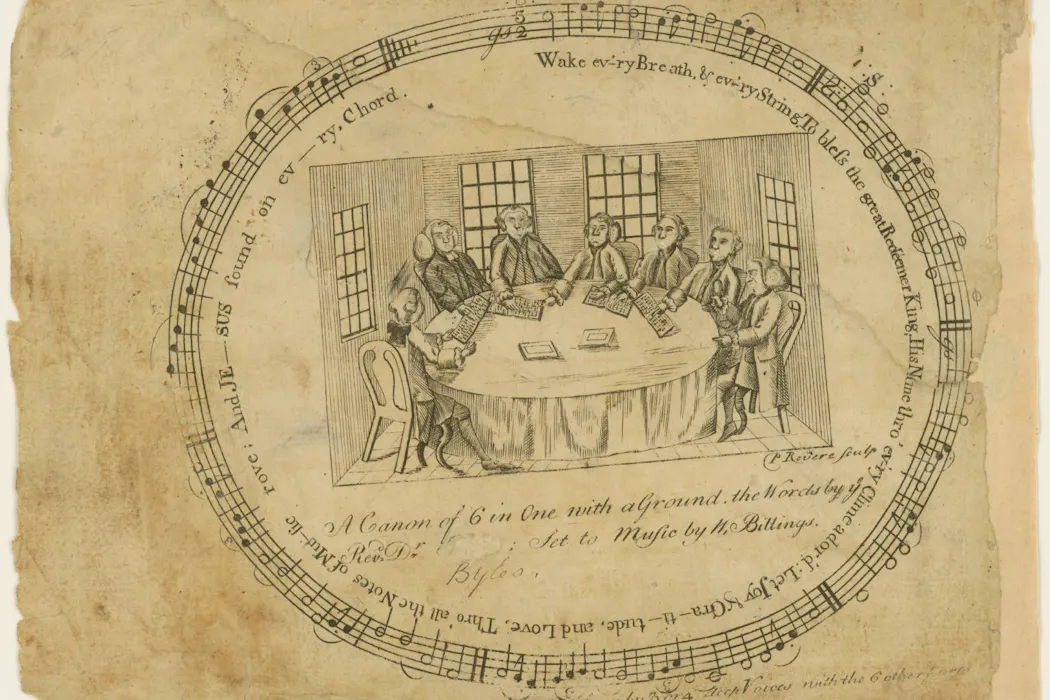
Paul Revere made the engraving used in the frontispiece of 'The New-England Psalm-Singer,' a tune book William Billings published in 1770. John Carter Brown Library via Wikimedia Commons

As July 4, 2026, approaches, Americans will be paying more attention than usual to events of 1776: the year the American Colonies declared their independence from Great Britain. Public historians, including filmmaker Ken Burns, have tried to offer a more inclusive view of the American Revolution, highlighting lesser-known patriots. But figures such as Thomas Jefferson, John Adams, George Washington and Benjamin Franklin will undoubtedly get the lion’s share of attention on the 250th anniversary.

One important character who rarely makes it into the limelight is the pioneering composer William Billings, who lived in Boston at the time of the Revolution. Billings is widely considered America’s first noteworthy composer, publishing six tune books and writing some 340 choral works – some of which are still sung today.

Apprenticed at 14 as a leather tanner, he learned music in his spare time and became a renowned teacher of singing schools, which taught basic elements of music so people could sing hymns more confidently. He also became a staunch supporter of independence, one of the Boston “Whigs” who spearheaded the American Revolution.

A black and white illustration of an enormous, leafy tree that towers over the white house next to it.
William Billings owned a tannery near the Liberty Tree in Boston, a rallying point for revolutionaries. AC8 Sn612 825h, Houghton Library, Harvard University via Wikimedia Commons

I have been studying Billings for 25 years now and always find more of interest about him – so interesting, in fact, that I wrote a historical novel about him. He was a colorful character with a voracious appetite for snuff and an unforgettable appearance. As music historian Nathaniel Gould wrote in 1853, Billings was “blind with one eye, one leg shorter than the other, one arm somewhat withered, with a mind as eccentric as his person was deformed.”

‘Liberty songs’

Billings was a friend of Samuel Adams, the revolution’s great agent provocateur, and sang regularly with him. He likely knew Paul Revere, who is credited with engraving the frontispiece to Billings’ first tune book, “The New-England Psalm-Singer,” published in 1770.

That was the year of the Boston Massacre, when British soldiers fatally shot five civilians. The event was one of several incidents that eventually triggered the conflict later known as the Revolutionary War. Billings did not serve in the military, probably because of his disabilities. His contribution to the independence movement was his music.

A tune from his first collection, “Chester,” is one of Billings’ best known, for which he also wrote words:

The Foe comes on with haughty Stride;
Our troops advance with martial noise,
Their Vet’rans flee before our Youth
And Gen’rals yield to beardless Boys.

That was not the only Billings song with a revolutionary message.

Lamentation Over Boston” adapted a Hebrew psalm about the Judeans’ exile in Babylon: “By the Rivers of Watertown we sat down & wept,” he wrote, referring to a town a few miles west, “when we remember’d thee O Boston.” Billings’ lyrics cast Britain as the oppressive Babylon: “For they that held them in Bondage/ Requir’d of them to take up Arms against their Brethren.” It may be the very first American protest song.

William Billings is far from a household name today, but he wrote several of the Revolution’s ‘liberty songs.’

In 1778 Billings published “Independence: The States, O Lord”, again writing music and words:

The States, O Lord, with Songs of Praise shall in thy Strength rejoice,
And Blest with thy Salvation raise To Heav’n their cheerful voice….
And all the Continent shall sing: Down with this earthly King, No King but God.

There’s some evidence these songs had national reach.

“The words stirred the patriotic heart, and with their striking melodies were sung at home and by the choirs, and especially in the military camps,” Louis F. Benson wrote about Billings’ music in his 1915 study “The English Hymn.” “The New England soldiers learned the words by heart, and every fifer the tunes, and carried them to whatever part of the country duty called them.”

Billings’ pieces were only a handful of the hundreds of what John Adams called “liberty songs” circulating in the Colonies. Most of them were less pious than what Billings composed. “Some of the outrageously ribald songs would have horrified polite society,” according to historian Bruce C. Daniels, author of “Puritans at Play.” “Dozens of them made metaphorical reference to England as a whore.”

HBO’s 2008 miniseries on John Adams’ life shows a group singing ‘Chester.’

Struggle after Independence

The peak of Billings’ career was during the 10 years after the Declaration of Independence. Two years before, he had met Lucy Swan while leading a singing school in Stoughton, Massachusetts. They got married the same year and went on to have a large family. In 1780, they moved into a nice house on Boston’s fashionable Newbury Street.

In the late 1770s and 1780s Billings published four tune books, including arguably his most important, “The Singing Master’s Assistant.” He also tried his hand at writing prose and even served briefly as editor of The Boston Magazine before being fired, apparently for his poor taste. He published a grisly tale about a clan of incestuous cannibals from Scotland.

At some point, he seems to have given up leather tanning. But by the 1790s Billings was reduced to working as a street cleaner and hog wrangler. He had to mortgage his house. Lucy died in 1795, leaving William to single-parent their six children – including a daughter, also named Lucy, born three years earlier.

A faded image shows a musical score arranged in concentric circles, which cherubs and open books drawn around the edges.
The frontispiece of William Billings’ final tune book, ‘The Continental Harmony,’ which was published in 1794.

American musical tastes had changed. Billings’ rough-hewn “fuguing” songs, a style with vigorous counterpoint between the different voice parts, were no longer in fashion. Formally trained singing instructors competed for students in Boston.

And Billings was unable to secure copyright for his compositions. Before the Revolution, he succeeded in having a bill to protect his first tune book passed by the Massachusetts legislature. The Tory governor refused to sign it, however, perhaps due to Billings’ associations with patriots like Samuel Adams. In any event, several of his pieces were reprinted in other collections, and he was paid nothing.

When Billings died in 1800, he was buried on Boston Common in an unmarked grave. But his music was kept alive by shape-note singers, a style of musical notation that caught on in the 1800s and helped preserve older, sacred songs. Billings’ music played at least a small part in uniting American colonists well enough to defeat the powerful British military.

The Conversation

David W. Stowe does not work for, consult, own shares in or receive funding from any company or organization that would benefit from this article, and has disclosed no relevant affiliations beyond their academic appointment.

Why Kevin Warsh might still prove to be an independent Federal Reserve chair

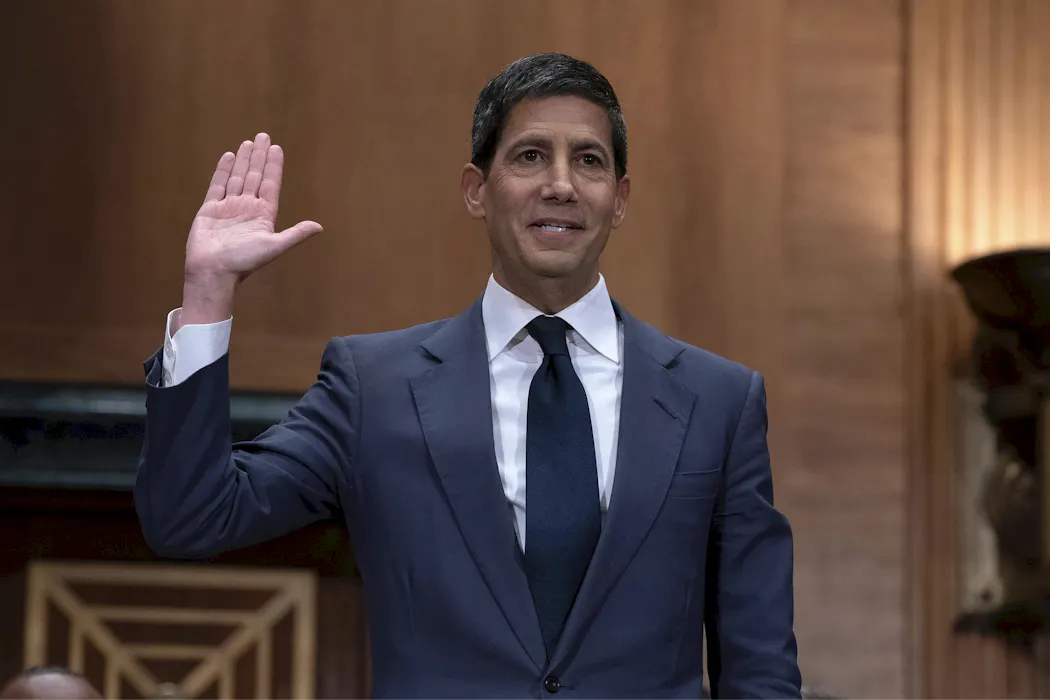
The nomination of Kevin Warsh as Federal Reserve chair is reviving a debate about Fed independence. AP Photo/Jose Luis Magana

Kevin Warsh is now likely to secure Senate approval on May 13, 2026, as the next Federal Reserve chair – and become arguably the most powerful central banker in the world. But when Warsh appeared before the Senate Banking Committee for his confirmation hearing in April, one punchy question underscored the dilemma that Warsh, lawmakers and the Fed all face:

“Are you going to be the president’s human sock puppet?” asked Republican Senator John Kennedy of Louisiana.

On one level, the question reflects President Donald Trump’s intense pressure on the central bank to cut rates, with current Chair Jerome Powell often the target of his ire. But it also points to Warsh’s own inconsistency on inflation.

Earlier in his career, he was a “hawk,” pushing for interest rate hikes to curb inflation and opposing the novel crisis management authorities that the Fed took on after the 2008 financial meltdown. Now, Warsh supports the interest rate cuts that Trump has exhorted as a way to juice growth.

Warsh has also come under fire for his deep ties to the financial sector, where he once worked. Lawmakers such as Democratic Senator Elizabeth Warren of Massachusetts have cited the potential conflict of interest posed by his undisclosed assets, even though in theory they’ll be divested as part of Warsh’s arrangements with the government’s ethics watchdogs if he becomes chair.

As scholars who study central banks and the politics of finance, we understand why concerns about Warsh’s credibility have persisted. But perhaps counterintuitively, we also believe that once he’s confirmed, his finance background could reinforce his prior hawkish leanings, leading to more independence from Trump on inflation and interest rates.

Is past prologue?

If confirmed as chair, as expected, Warsh and his colleagues on the Fed’s policy-setting committee would wield enormous power. Not only does the central bank set the benchmark rate that determines short-term lending, but the Fed also oversees a US$6.7 trillion balance sheet, mostly in government bonds, that partially affects longer-term borrowing costs. Guided by its mandate to control inflation, the Fed’s decisions impact everything from grocery prices to mortgage rates.

Along with Warsh’s prior stints in government and on the Fed’s policymaking board as a governor, he worked for the investment firm Morgan Stanley and the hedge fund Duquesne Capital. In those positions, Warsh advanced his career in an industry that has long preferred hawkish Fed policies, even at the cost of job growth: Wall Street is generally “conservative” in that it favors lower inflation and higher interest rates on grounds that those policies can support bigger bank profits and higher prices for bank shares, while reducing the risks brought by disinflation policies.

While serving as a Fed governor in the aftermath of the 2008 financial crisis, Warsh’s comments reflected this outlook. He talked extensively about inflation being a “choice” – that is, the result of poor policy decisions, rather than broader structural forces.

He also questioned the Fed’s massive bond purchases, which were meant to stimulate the economy and reduce high unemployment by pushing long-term borrowing rates lower. The Fed revived those bond buys during the pandemic recession, while waiting too long, in the eyes of many economists, to hike rates once inflation began rising in 2021.

More recently, Warsh has focused his criticism on the central bank’s “bloated” balance sheet as well as its inflation record. Those legacies, along with the stimulative government spending under President Joe Biden, prompted Warsh to warn in February 2022 that “extraordinary excesses in monetary and fiscal policy caused the inflation dragon to resurface after 40 years of dormancy.”

A red-and-blue 'For Sale' sign stands in front of a foreclosed home in Las Vegas in the early days of the great financial crisis, on Feb. 8, 2008.
The 2008 financial crisis and housing meltdown prompted the Fed to take unprecedented steps to intervene in the economy. AP Photo/Jae C. Hong

Which Warsh will show up?

Given that long record, many Fed watchers looked at his turnaround in the second Trump administration with some skepticism. When he was a finalist for the nomination to chair the central bank in summer 2025, he told CNBC that the Fed’s hesitancy to cut rates – which was already drawing Trump’s wrath – was “quite a mark against them.”

“The specter of the miss they made on inflation, it has stuck with them,” he added. “So one of the reasons why the president … is right to be pushing the Fed publicly is we need regime change in the conduct of policy.”

Warsh’s rhetorical shift has led many to ask whether he can reconcile his responsibilities with political pressure. But the worsening inflation outlook for both the U.S. and world, driven by spiking oil prices, may force his hand regardless.

The spike in oil prices from the Iran war, in particular, has economists raising their inflation forecasts for the U.S. At his last Fed meeting as chair, Powell indicated that the central bank could be a long way off from lowering rates given inflation concerns. The Bank of England and the European Central Banks are also bracing for possible rate hikes if inflation doesn’t ease.

Wearing safety helmets, Jerome Powell and Donald Trump look over a document of construction cost figures during a visit to the Federal Reserve headquarters on July 24, 2025.
In 2025, President Donald Trump ramped up pressure on Federal Reserve Chair Jerome Powell to cut interest rates and attacked the Fed for construction cost overruns at its Washington headquarters. AP Photo/Julia Demaree Nikhinson

Trump ramp ups the pressure

For his part, Trump has used unprecedented means to bend the Fed since returning to office.

Those tactics include trying to fire Fed Governor Lisa Cook and threatening to fire Powell – who just announced he will stay on as a governor on the Fed’s board after his chairmanship ends. Those kinds of pressure tactics – which effectively seek to restaff the Fed’s leadership with more members favoring interest rate cuts – are more often seen in countries like Turkey or Argentina.

So why do we believe that Warsh won’t be the “human sock puppet” some fear?

In our view, it’s his background in finance that leads us to think he’ll be able to resist political pressure once on the job. After all, when Powell was appointed by Trump during his first term, he had also worked in that sector – and he has demonstrated independence from both Trump and Biden.

This is not just a theory. Political scientist Chris Adolph has identified a pattern in which Wall Street is the “shadow principal” of the central bankers who shuffle in and out of the financial sector. Similarly, economist Adam Posen has described finance as the interest group with the most prominent lobbying role over monetary policy.

In practical terms, this means that Warsh has long been steeped in ideas about inflation that have traditionally held sway over the financial sector, and he may well be more open about these preferences once confirmed. Moreover, he’s likely to return to finance once his term at the Fed ends. Together, we believe these factors may give Warsh the intrinsic motivation and enough incentives to resist overt political pressure from the president.

Of course, being too beholden to Wall Street is also a risk, as pointed out by Warren and others. The Fed is meant to support Wall Street in times of crisis – and even more so since the 2010 Dodd-Frank reform. However, the Dodd-Frank Act also asked the Fed to monitor risks to the entire financial system by supervising and regulating financial institutions. That requirement requires the Fed to prevent crises, not just bail out Wall Street when a crisis hits.

As it happens, the Fed today is quietly but surely moving to water down the rules put in place after 2008 – a deregulatory shift that Warsh strongly supports.

Fed independence from government, as a matter of law and of norms, is deeply important for the health of the U.S. economy. And Warsh’s rhetorical shifts on monetary policy raise serious questions about its fate under his chairmanship. Senators have been right to push him as a nominee on this matter. However, the Fed also faces pressure from the finance industry, often pulling policy in the opposite direction. As such, we believe that Warsh’s professional history in finance may bolster his autonomy from Trump on rates once he’s confirmed.

This article was updated to add date of Warsh Senate confirmation vote.

The Conversation

The authors do not work for, consult, own shares in or receive funding from any company or organization that would benefit from this article, and have disclosed no relevant affiliations beyond their academic appointment.

Who are hospital ethics consultants, and why should you care?

End-of-life decisions can be complicated, and ethics consultants may help families and care teams navigate them. LPETTET/E+/Getty Images

Imagine the following scenarios:

A surgeon prepares to amputate a patient’s foot to save his life, but the patient refuses the procedure. His decline in thinking and memory raises doubts about his ability to consent, and he has no family or friends to help with the decision.

A 17-year-old declines a liver transplant, while her mother insists on going forward with the lifesaving surgery.

Siblings stand divided at the bedside of their 85-year-old mother with dementia, one rejecting a feeding tube, the other calling it a basic human necessity.

I am a hospital ethics consultant, and these are the kinds of situations my colleagues and I regularly encounter. Yet many people are unaware that hospital ethics consultants even exist – or that they can ask for one.

Who are hospital ethics consultants?

Healthcare ethics consultants are trained to help patients, families and clinicians navigate difficult medical decisions.

They could be called in situations where healthcare staff struggles with providing procedures such as cardiac resuscitation that are unlikely to benefit the patient and might even cause more pain and suffering. They could also be called when it is unclear who has authority to consent for a patient’s care, or when end-of-life decisions are complicated and resources are limited – such as ICU beds and ventilators during COVID-19.

Ethics consultants come from a range of disciplines: physicians, nurses, social workers, chaplains, lawyers and philosophers who have specialized training and experience in clinical ethics. Since 2018, ethics consultants are increasingly pursuing formal certification through the American Society for Bioethics and Humanities.

What is their origin?

The modern field of bioethics emerged from the 1947 Nuremberg Doctors’ Trial, where Nazi physicians were prosecuted for conducting brutal medical experiments on imprisoned people.

This led to the 1947 framework outlining ethically acceptable human research called the Nuremberg Code, written by a panel of American judges. The 1979 Ethical Principles and Guidelines for Protections of Human Subjects of Research, called the Belmont Report, followed the Nuremberg Code. The Belmont Report turned the ethical ideals of respect for persons, beneficence – to do good – and justice into a regulatory framework to protect vulnerable and marginalized medical research participants in the U.S.

In the 1980s, many of these ethics protections moved from the research lab to the patient bedside. During this time, lifesaving technologies such as the ventilator, dialysis machine and organ transplantation created new, difficult ethical questions: When should life support end? Who decides? And what happens when there aren’t enough resources?

A series of court cases and laws expanded patients’ rights, with the Patient Self-Determination Act, a 1990 law which upheld patient rights to refuse or accept medical treatment, marking the key turning point.

A ventilator connected to a patient shows vital readings on a blue screen in a hospital room.
Lifesaving technologies have revolutionized medicine, but they also raise ethical questions about who receives care when resources are scarce. Jackyenjoyphotography/Moment via Getty Images

High-profile court cases exposed the ethical dilemmas around end-of-life care and patient self-determination. The 1976 case, In re Quinlan, involved Karen Ann Quinlan, a young woman in a persistent vegetative state whose family sought permission from the court to withdraw her ventilator.

Following In re Quinlan was the 1990 case, Cruzan v. Director, Missouri Department of Health, which affirmed that adults have the right to refuse life-sustaining treatment.

Both cases became touchstones for how ethics consultants and care teams navigate the life‑and‑death decisions that have become routine in an era of life‑sustaining technology.

Today, most hospitals have some formal process for addressing ethical concerns in patient care.

What do ethics consultants actually do?

A member of the healthcare team usually requests an ethics consult when they face conflict or uncertainty about the care of a patient. Patients and families can also request an ethics consultation, but in reality, few know this option exists or feel empowered to use it.

The ethics consultant’s first task is to gather as much information as possible from everyone involved to understand the full context of the case. Importantly, ethics consultants do not make treatment decisions; they assist the people who do.

Imagine a loved one with advanced dementia who is in the intensive care unit with respiratory failure and is on a ventilator. The physician believes further treatment will prolong suffering; the family is not willing to let him go.

An ethics consultant would be called by the family or healthcare team to slow things down, provide space to reflect, and help navigate the situation. The ethics consultant will often meet with everyone involved to ensure that all voices are heard and that the patient’s wishes remain central to the discussion.

As part of the ethics review, the ethics consultant would draw on their knowledge of policies, laws and ethical precedent about withdrawing life-sustaining treatment to provide some guardrails for the situation. In this case, a legal guardrail might be that the physician cannot remove the ventilator without the family’s consent.

Rather than making a decision, the ethics consultant would then outline the ethical options available from which the patient, family, and healthcare team can choose.

Why are ethics consultants a valuable resource?

Ethics consultants are trained to help people work through not just the medical facts, but the deeply human questions beneath them: What counts as an acceptable quality of life? How do we weigh hope against suffering? How can we know what a patient would want if they cannot speak for themselves?

In these moments, decisions can feel urgent and heavy, and communication can easily break down. Ethics consultants don’t take decisions away from patients or families, and they don’t replace the role of clinicians. Instead, they help ensure that everyone understands the situation, that different perspectives are heard and that the conversation stays grounded in the values and goals of the patient.

They also bring something that families often don’t realize they need until tensions rise: a calm, measured presence. By clarifying misunderstandings, naming sources of conflict and guiding difficult conversations, they help families and care teams find a way forward together.

The choices may still be painful – and there may be no perfect answer – but with the right support, those decisions can feel more thoughtful, more shared and more aligned with what matters most.

The Conversation

Jennifer McCurdy does not work for, consult, own shares in or receive funding from any company or organization that would benefit from this article, and has disclosed no relevant affiliations beyond their academic appointment.

❌
Subscriptions