
Normal view

Govt taps military retirees to fill shortage of bus, lorry drivers and aviation technicians

4 June 2026 at 07:20

Malay Mail


PUTRAJAYA, June 4 — The government is turning to retired military personnel to help address labour shortages in the transport sector, including as lorry and bus drivers as well as skilled workers in the aviation maintenance industry, under a new collaboration between the Transport Ministry (MOT) and Defence Ministry (Mindef).

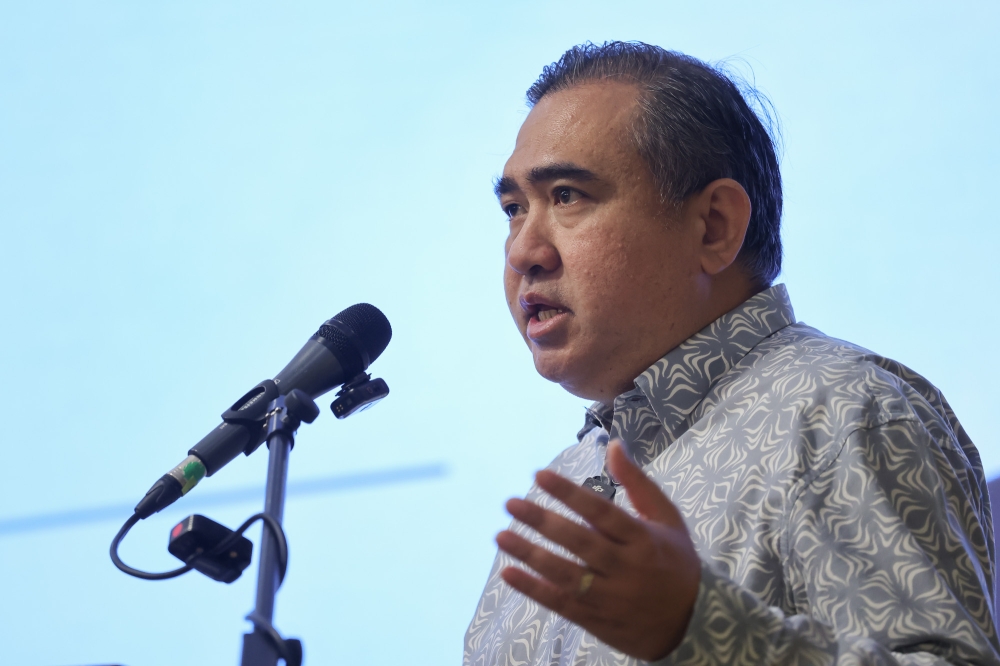
Speaking at the signing of a strategic Technical and Vocational Education and Training (TVET) cooperation agreement between the two ministries today, Transport Minister Anthony Loke said agencies and companies under MOT had committed to offering 3,208 job opportunities in the ports, logistics, bus transportation and rail sectors.

“That is why agencies and companies under MOT have come forward to support this initiative by providing nearly 3,208 job opportunities in the ports, logistics, bus transportation and rail sectors,” he said in his speech.

Loke said the collaboration reflected the government’s commitment to ensuring members and veterans of the Malaysian Armed Forces (MAF) could continue contributing to national development after completing their military service.

He said military personnel possessed qualities highly valued by employers, including discipline, integrity and resilience, as well as experience working in environments that require strict compliance with safety standards.

At a joint press conference later with Defence Minister Datuk Seri Mohamed Khaled Nordin, Loke said the initiative would also help address manpower shortages across various segments of the transport industry.

“Today we are focusing on the logistics sector, truck and bus drivers, where we are facing significant shortages. We do not have enough bus and truck drivers,” he said.

“This platform can provide opportunities for them to become truck and bus drivers. There are also other sectors that urgently require manpower, such as ports.”

Loke said there was considerable overlap between the skills developed in military service and those needed in civilian transport industries.

“The skill sets that we need in the transport sector already exist among military retirees because they drive multiple heavy vehicles in the forces,” he said.

He pointed in particular to opportunities in the aviation maintenance, repair and overhaul (MRO) industry, which he said was expanding rapidly.

“Many Air Force personnel possess aerospace MRO skill sets. In the defence sector they work on fighter jets, while in the civilian industry they can work on private jets and commercial aircraft,” he said.

Loke said growing airline fleets and increasing investment in business aviation facilities would drive demand for skilled workers in the sector.

“When there is an urgent need for skilled workers, military retirees are the quickest group that can meet that demand,” he said.

“Because they already have those skill sets.”

He added that military retirees would require only limited additional training before entering the civilian workforce.

The transport minister also announced measures to simplify the conversion of military driving licences into civilian licences, allowing former military drivers to enter the logistics industry more easily.

“Obtaining a Class E licence costs between RM4,000 and RM5,000. Under this programme, we will allow direct conversion,” he said.

Loke explained that military personnel currently hold driving licences issued under the Armed Forces system, which cannot be used after retirement.

He said those participating through the Armed Forces Ex-Servicemen Affairs Corporation (Perhebat) would be able to convert eligible military licences into civilian licences at no cost.

Khaled said the initiative was important as about 5,000 military personnel retire each year, with more than 4,000 of them aged around 40 and still capable of contributing to the workforce.

“It would be a loss if they did not work or participate in the country’s economic activities,” he said.

Khaled said many retirees still had young families to support despite receiving pensions.

“Even if they receive RM2,000, RM3,000 or RM4,000 in pension, they still have young families. They have children who need to be raised,” he said.

He added that Perhebat had shifted its approach to focus on matching military retirees with industries facing actual labour shortages.

“Previously, Perhebat provided training programmes that did not meet industry needs. Industries had vacancies in certain fields, but Perhebat was providing training in areas that were not aligned,” he said.

“Today we are bypassing that process.”

Under the programme, retiring military personnel will undergo a six-month transition period before leaving service, during which they may be attached to participating companies for training while continuing to receive their government salaries.

Khaled said the arrangement would allow retirees to secure employment immediately after retirement while continuing to receive their pensions.

“Then when they get a job, the company pays them and they also receive their pension,” he said.

As part of the initiative, Perhebat also signed memoranda of understanding with 10 transport-sector agencies, companies and industry associations, including Malaysia Rail Development Corporation, Infinity Logistics & Transport, MMC Port Holdings, Westports Malaysia and Pan Malaysia Bus Operators Association, to expand training and employment opportunities for retiring and former military personnel.
 

Ong Kian Ming suggests ‘warlords’ influenced Skudai seat controversy involving Marina Ibrahim

3 June 2026 at 09:22

Malay Mail

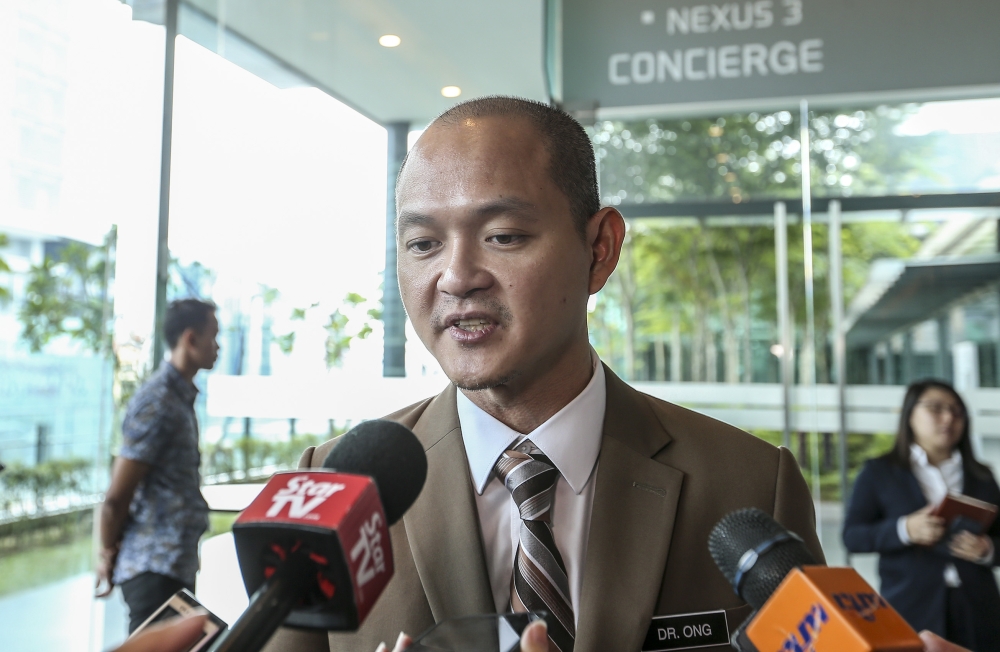
KUALA LUMPUR, June 3 — DAP’s Ong Kian Ming today suggested that local party “warlords” may have been among the factors behind the controversy surrounding Marina Ibrahim’s decision not to defend her Skudai seat in the upcoming state election.

In a lengthy Facebook post, Ong said he believed there were broader considerations behind the proposal for Marina to leave Skudai and contest the more challenging Tiram seat in Pasir Gudang.

“I suspect there were other factors at play including certain ‘warlords’ in Skudai/Iskandar Puteri who wanted the Skudai seat for themselves or someone close to them,” he wrote.

Ong was commenting on the ongoing debate over Marina’s decision after the first-term assemblyman announced last week that she would not seek re-election and was stepping away from frontline politics.

The former Bangi MP also disclosed that Marina was not initially the preferred choice for Skudai when DAP was planning its candidate lineup ahead of the 2022 Johor state election.

According to Ong, there were originally plans to field current Bangi MP Syahredzan Johan in the Iskandar Puteri parliamentary seat, which was expected to be vacated following DAP veteran Lim Kit Siang’s retirement from frontline politics.

Under that arrangement, he said, it would have been difficult for the party to field two Malay candidates — one for Parliament and another for the state seat — within the same area.

He said circumstances changed after he informed party leaders of his intention to vacate the Bangi parliamentary seat in favour of Syahredzan.

“When the party leaders knew of my intention to vacate the Bangi parliament seat, the opportunity to field Marina in Skudai came into the picture,” he said.

Ong also argued that DAP’s practice of moving leaders from safe seats to more challenging constituencies is a long-standing strategy used to expand the party’s reach.

He cited party veterans and leaders including Lim Kit Siang, Lim Guan Eng, Liew Chin Tong, Nga Kor Ming and Teo Nie Ching as examples of those who left relatively secure seats to contest in more challenging areas.

At the same time, Ong praised Marina for choosing not to engage in internal manoeuvring to retain her seat.

He said the Skudai assemblyman could have delayed announcing her decision until candidate selections were finalised, potentially placing pressure on party leaders to retain her.

“She probably could have gotten her way to remain in Skudai because it would have looked bad on the party to ‘push out’ a young and capable Malay assemblyman.

“But kudos to her for making a principled decision not to contest rather than to leave the party leadership in a difficult position,” he wrote.

Ong also defended Johor DAP chairman Teo Nie Ching, rejecting suggestions that she had acted with ill intent in proposing Marina’s move to Tiram.

“I do not think that Nie Ching bore any malice towards Marina in suggesting that she move to the difficult state seat of Tiram in Pasir Gudang to contest there,” he wrote.

The remarks come after a reported offer of a position in a statutory body to Marina following her decision to leave electoral politics.

Ong defended the proposal, saying such appointments are a common way for former elected representatives to continue serving the public.

He cited several examples, including Johor DAP vice-chairman Sheikh Omar Ali, who chaired the Malaysian Pineapple Industry Board after losing his state seat in 2022 before later being appointed a senator.

Former Selangor executive councillor Ean Yong Hian Wah was also appointed chairman of the Port Klang Authority after stepping aside from electoral politics, he noted.

“I think that the offer for a position on a statutory board to Marina was made with good intentions by Nie Ching. This is a way to ensure that someone like Marina continues to serve the people of Johor and Malaysia in a different capacity,” he said.

Johor DAP has accepted Marina’s decision not to defend Skudai, while Teo has denied claims that Marina was offered a position in a government-linked company, saying discussions instead involved a role in a statutory body focused on welfare matters.


‘Why should I campaign for you again?’: At first meeting since MP resignation, Setiawangsa residents look to Nik Nazmi for answers

11 June 2026 at 01:26

Malay Mail

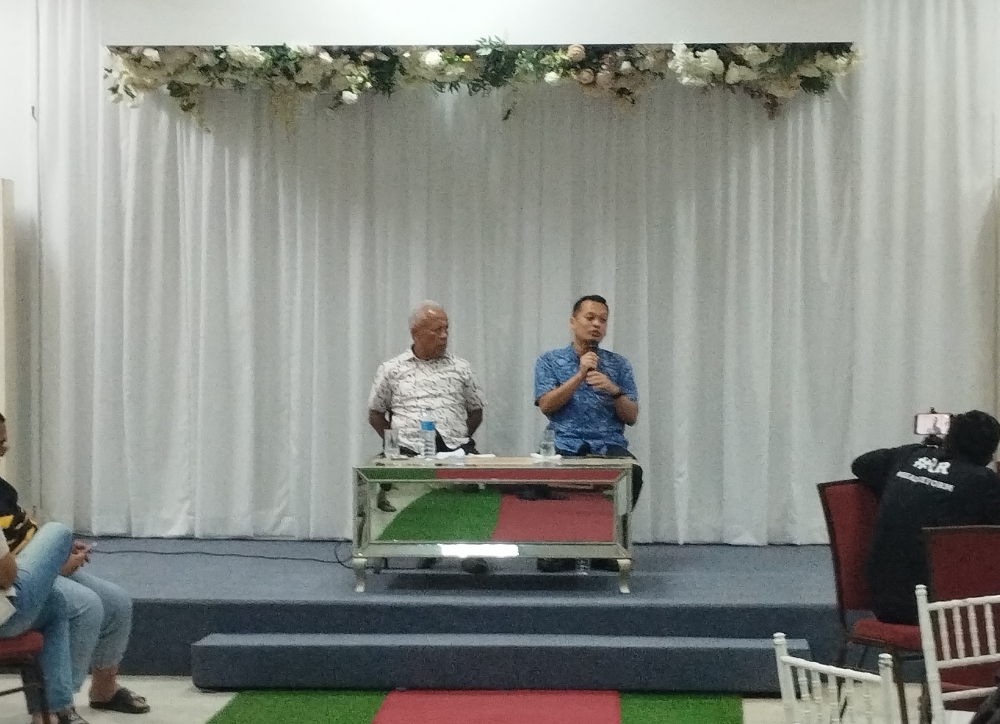
KUALA LUMPUR, June 11 — In Setiawangsa last night, a resident stood up at a dialogue session to complain about abandoned cars in Seksyen 6, Wangsa Maju. Another wanted roads resurfaced. Others asked about a proposed development near Bukit Dinding.

For nearly an hour, the discussion sounded much like any meeting between voters and their elected representative.

There was only one difference.

Nik Nazmi Nik Ahmad is no longer the MP for Setiawangsa.

Yet at his first dialogue with residents since resigning the seat last month, many in the audience still turned to him as though he remained the person responsible for solving their local problems.

The former natural resources and environmental sustainability minister listened patiently as residents raised the kind of complaints familiar to any constituency service centre, from abandoned vehicles left to rust along neighbourhood roads to patchy road surfaces and concerns over development near Bukit Dinding.

One resident, Razif from Seksyen 6, sought Nik Nazmi’s help over abandoned vehicles that he said had become an eyesore.

“Some of these vehicles have been there for so long that trees are growing out of them. There is a lorry, a Perodua Kancil and even a Mercedes among them,” he said.

Nik Nazmi responded much as he might have before stepping down, explaining the legal complications surrounding abandoned vehicles and promising that his office would follow up with Kuala Lumpur City Hall (DBKL) on the issues raised.

“To the people of Setiawangsa, my office in Sri Rampai remains open in the same location. We continue to handle issues involving DBKL, the Social Welfare Department, Baitulmal and other agencies. We still go down to the ground and engage with the community. The only difference is that I no longer hold the official status of an MP,” he said.

The scene captured the unusual position Nik Nazmi now finds himself in: no longer a lawmaker, no longer in government, but still trying to speak to the voters who had sent him to Parliament.

Three weeks ago, Nik Nazmi became one of two elected representatives — alongside Datuk Seri Rafizi Ramli — to voluntarily vacate a parliamentary seat.

His resignation followed several eventful months.

In May last year, he failed to retain the PKR vice-president post, having already lost the Setiawangsa division chief position in the party elections a month earlier.

Shortly afterwards, he resigned from the Cabinet, saying he wanted to take responsibility for his defeat.

Almost a year later, Nik Nazmi left PKR altogether alongside former economy minister Rafizi. Both subsequently resigned their parliamentary seats, arguing that voters should be allowed to decide whether they still deserved a mandate after leaving the party under whose banner they had been elected.

The two have since joined Parti Bersama Malaysia, a political party positioning itself as an alternative to both the ruling coalition and the opposition bloc.

But last night’s session was less about party strategy than the immediate question now facing Nik Nazmi in Setiawangsa: whether voters who once saw him as their MP would still accept him as their representative without the title.

Some residents used the session to express disappointment over his decision to resign.

Tengku Syahrizal, a Setiawangsa resident, compared holding a parliamentary seat to raising a child.

“Holding the position of MP is like holding your own child. You shouldn’t let it go, but you did,” he told Nik Nazmi.

Another resident, Rozita, urged him not to repeat the move if he were re-elected in future.

“If you contest, win and become MP again, don’t resign. Unless the people themselves remove you.

“I am frustrated and disappointed that you resigned as the Setiawangsa MP. If you stand again and win, please do not resign,” she said.

Syahrizal told the former Selangor executive councillor that he had seen visible improvements in Setiawangsa during Nik Nazmi’s tenure and wanted to know what would convince him to campaign for the former MP again at the next election.

“I hope you will continue serving as our representative here, but what are the prospects? What would persuade me to campaign for you once more?” he asked.

In response, Nik Nazmi said his pitch to voters was straightforward.

“My proposition is simple: I want to pursue genuine reform and meaningful change at the national level. Am I idealistic? I don’t know. But since my youth, I have taken this path because of my ideals. If my goal had been wealth, power or luxury, I would never have chosen it.

“That is how I justify this decision to myself and how I sleep at night. It was not an easy decision, but I pray that it was the right one,” he said.

Not everyone in the room disagreed with the resignation.

One resident, who said he had lived in Setiawangsa for more than three decades, told the gathering that he supported Nik Nazmi’s decision, arguing that the former PKR leader had acted according to principle.

The resident said voters should focus less on party labels and more on whether an individual could carry out the responsibilities entrusted to them.

Still, much of the evening returned to the same question, asked in different ways: why leave the seat, and why should voters follow him again?

Nik Nazmi told residents that relinquishing the seat was not easy after two terms as Setiawangsa MP and two terms previously as a Selangor assemblyman.

But he said remaining in office after taking a fundamentally different position from the party under whose ticket he had been elected would have been difficult to justify.

“Had I remained in government, there would have been many constraints. It would have been like remaining married to someone you no longer trust. That would not have been fair, especially while continuing to draw a salary.

“So I chose to step away and present my own vision for the future and my agenda for the next phase.

“Ultimately, I leave it to the people of Setiawangsa to decide whether what I am fighting for remains relevant,” he said.

The former minister also used the session to explain the frustrations that eventually pushed him out of government.

While coalition politics inevitably involved compromise, he said some reforms had stalled not because of resistance from coalition partners but because of reluctance within his own political camp.

Among the issues he cited were judicial reform, institutional accountability and the separation of the attorney general’s and public prosecutor’s roles.

The discussion occasionally drifted beyond neighbourhood concerns.

Residents asked about his new political party, the country’s political direction and even the timing of the next general election.

When one attendee asked whether he knew when Malaysians would next head to the general polls, the room erupted in laughter.

“That one, I need to call Datuk Seri Anwar Ibrahim,” Nik Nazmi replied in jest.

It was one of several moments that lightened an otherwise pointed exchange between a former MP and residents still deciding whether to see him that way.

The dialogue session was the first of two town hall meetings Nik Nazmi is holding with Setiawangsa residents, with the second scheduled for next Wednesday in Sri Rampai.


❌
Subscriptions