Normal view

  • ✇National Herald
  • ‘Anti-Adivasi mindset’: Rahul Gandhi attacks BJP-RSS over tribal rights NH Political Bureau
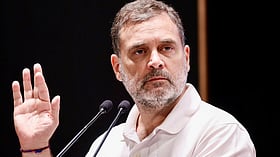
    Leader of Opposition in the Lok Sabha Rahul Gandhi on Wednesday launched a sharp attack on the Bharatiya Janata Party (BJP) and the Rashtriya Swayamsevak Sangh (RSS), accusing them of promoting an “anti-Adivasi mindset” and attempting to weaken tribal rights over land, forests and water.Speaking at the Adivasi Professionals Conclave 2026 organised by the Adivasi Congress at Indira Bhawan, Rahul Gandhi alleged that the ruling establishment is systematically working to deprive tribal communities o
     

‘Anti-Adivasi mindset’: Rahul Gandhi attacks BJP-RSS over tribal rights

4 June 2026 at 03:18

Leader of Opposition in the Lok Sabha Rahul Gandhi on Wednesday launched a sharp attack on the Bharatiya Janata Party (BJP) and the Rashtriya Swayamsevak Sangh (RSS), accusing them of promoting an “anti-Adivasi mindset” and attempting to weaken tribal rights over land, forests and water.

Speaking at the Adivasi Professionals Conclave 2026 organised by the Adivasi Congress at Indira Bhawan, Rahul Gandhi alleged that the ruling establishment is systematically working to deprive tribal communities of their constitutional protections.

“The BJP-RSS mindset is against Adivasis,” Rahul Gandhi said, adding that there is an active effort to take away their rights over natural resources.

He claimed that Adivasis are the “original custodians of India”, describing them as the country’s deepest cultural and historical foundation. The Congress leader began his speech by paying tribute to tribal icon Birsa Munda.

Rahul Gandhi also drew a strong ideological distinction over terminology used for tribal communities, criticising the BJP and RSS for using the word “Vanvasi” instead of “Adivasi”.

आदिवासी इस ज़मीन के पहले मालिक हैं, लेकिन वनवासी वो हैं, जो जंगल में रहते हैं।

जैसे एक पेड़ की जड़ें सबसे पहले ज़मीन को छूती हैं, उसे ज़मीन से जोड़ें रखती हैं। वैसे ही आदिवासी- हिंदुस्तान की सांस्कृतिक जड़ हैं।

आदिवासी समाज के बिना देश आगे नहीं बढ़ सकता।

: नेता विपक्ष श्री… pic.twitter.com/v39NZUyIa7

— Congress (@INCIndia) June 3, 2026

“The word Adivasi means the first inhabitants, the original owners of this land,” he said, arguing that the term “Vanvasi” reduces tribal identity to forest dwellers and erases their distinct culture and history.

He said such labels dilute centuries of heritage, comparing it to grouping diverse forest communities across countries under a single label. “It reduces a rich civilisation into a generic identity,” he said.

The Congress leader further said that tribal communities represent the “roots of India” and warned against attempts to erase their historical identity. He alleged that while tribal youth are encouraged to pursue modern professions like engineering and medicine, their deeper cultural history is being ignored.

“For any nation to progress, it must understand its own roots,” Rahul Gandhi said, stressing the importance of preserving tribal identity and heritage.

Reaffirming the party’s stance, he said the Congress would continue to fight for the protection of Adivasi rights and constitutional safeguards.

With IANS inputs

‘Horse-trading Is horse-trading’: Congress MP rebukes own alliance over AIADMK defections

26 May 2026 at 10:19

Congress MP S. Jothimani on Tuesday publicly criticised alleged political “horse-trading” in Tamil Nadu and cautioned that the Congress cannot adopt one position on defections in BJP-ruled states and another when it benefits an ally, in remarks that exposed unease within the party over recent political developments in the state.

The Karur MP's comments came a day after three AIADMK legislators resigned from the Assembly and joined the ruling Tamilaga Vettri Kazhagam (TVK), a move that sparked sharp criticism from both the AIADMK and the DMK, which described the development as political poaching.

In a strongly worded social media post, Jothimani said Congress, as an alliance partner of the ruling dispensation, would support Chief Minister C. Joseph Vijay in delivering good governance but could not endorse every political decision taken by the government.

“Vijay has been elected by the people in anticipation of good governance and he appears determined to deliver it,” she said, while stressing that measures adopted by the ruling party should strengthen democratic institutions rather than weaken them.

‘Congress cannot justify horse-trading’

Taking an apparent swipe at the induction of opposition legislators into the ruling camp, Jothimani said Congress had historically opposed political defections and could not compromise on that principle.

“It would be wrong if anyone from the Congress justified horse-trading,” she said.

Describing defections as a tool used to destabilise elected governments, the MP alleged that the BJP had repeatedly employed such tactics in several states to weaken democratic mandates.

“The first weapon that the BJP used to weaken democracy was horse-trading,” she said, arguing that the Congress had consistently opposed such practices wherever they occurred.

She warned that the party risked undermining its own credibility if it adopted contradictory positions depending on political circumstances.

“Congress party can never take a dual stand of supporting horse-trading in Tamil Nadu and opposing it outside the state,” Jothimani said.

“If Congress performs as a force that weakens democracy, it will be a historic betrayal of Mahatma Gandhi, Jawaharlal Nehru and the party's ideology,” she added.

Reference to Rahul Gandhi's stand

The Congress leader also invoked the position taken by Leader of Opposition Rahul Gandhi, describing his political approach as an “uncompromising struggle” based on principles and democratic values.

Her remarks are significant because they come from within a party that recently realigned itself politically in Tamil Nadu.

Congress had severed ties with the DMK-led alliance following the Assembly elections on 23 April and extended support to the newly formed TVK government. The party is currently part of the ruling coalition and holds two ministerial berths in the Vijay-led cabinet.

The resignation of the three AIADMK MLAs and their subsequent entry into the ruling party has intensified political debate in Tamil Nadu, with opposition parties accusing the government of engineering defections to expand its legislative strength.

While neither the TVK nor the state government has formally responded to Jothimani's criticism, her intervention highlights growing concerns within sections of the Congress over the political implications of the defections and the party's stance on them.

‘Horse-trading Is horse-trading’: Congress MP rebukes own alliance over AIADMK defections
  • ✇National Herald
  • Raghav Chadha accuses AAP of ‘vendetta politics’ after meeting President Murmu NH Political Bureau
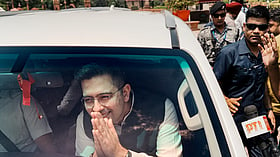
    Raghav Chadha on 5 May accused the Aam Aadmi Party (AAP)-led Punjab government of indulging in “dangerous vendetta politics” and misusing state machinery to target MPs who recently quit the party and joined the Bharatiya Janata Party (BJP).Chadha, along with three other Rajya Sabha MPs, met Droupadi Murmu and submitted a representation alleging harassment and politically motivated action following their exit from AAP on 24 April.“All those MPs who exercised their constitutional right to express
     

Raghav Chadha accuses AAP of ‘vendetta politics’ after meeting President Murmu

5 May 2026 at 11:15

Raghav Chadha on 5 May accused the Aam Aadmi Party (AAP)-led Punjab government of indulging in “dangerous vendetta politics” and misusing state machinery to target MPs who recently quit the party and joined the Bharatiya Janata Party (BJP).

Chadha, along with three other Rajya Sabha MPs, met Droupadi Murmu and submitted a representation alleging harassment and politically motivated action following their exit from AAP on 24 April.

“All those MPs who exercised their constitutional right to express disagreement… have been presented today before the President,” Chadha said, alleging that dissenters were branded corrupt after leaving the party.

He claimed former AAP MPs who joined the BJP are facing intimidation and coercive action from Punjab authorities.

Specific allegations cited

Chadha alleged that former cricketer and MP Harbhajan Singh was attacked, with stones thrown at his residence and “traitor” written outside his home.

He also claimed that industrialist and MP Rajendra Gupta’s factory in Punjab’s Malwa region was targeted, alleging that water supply was cut and regulatory raids were carried out to initiate closure.

Further, he said cases registered against MP Sandeep Pathak were “malicious and fabricated”.

“These FIRs and notices are so frivolous that they are not worth the paper they are written on. The judiciary will tear them apart,” Chadha said.

Warning to Punjab govt

Chadha warned that using agencies such as the police, vigilance and pollution authorities for political purposes was a “dangerous game”.

“You may have started it, but the end will not be good. This must stop,” he said, adding that the BJP controls governments in multiple states.

He also alleged that attempts were being made to target him through fabricated cases and social media campaigns.

Pathak alleges ‘fear and panic’

Sandeep Pathak said the AAP was resorting to coercive measures out of “fear and panic”.

“They are filing FIRs, conducting raids and trying to intimidate people… go ahead, file FIRs, but do not back off afterwards. We will fight legally,” he said.

Pathak added that the President assured them that constitutional protections would be upheld.

Chadha also took a swipe at the ruling party in Punjab, claiming its tenure was nearing its end and accusing it of misusing governance tools for political retaliation.

In a post on X later, he said the delegation had conveyed concerns over alleged misuse of state machinery and asserted that democratic choices must be respected.

Raghav Chadha accuses AAP of ‘vendetta politics’ after meeting President Murmu

With Kerala gone, Left stares at historic wipeout; no communist govt for first time since 1977

4 May 2026 at 13:19

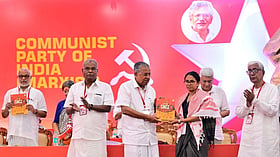
The Communist Party of India (Marxist)-led Left Democratic Front (LDF) is heading towards defeat in Kerala after two consecutive terms, if early trends from Monday’s Assembly election results hold.

After multiple rounds of counting, the Congress-led United Democratic Front (UDF) had surged ahead in 101 of the 140 Assembly seats, while the CPI(M)-led Left Democratic Front (LDF) was trailing with leads in fewer than 40 constituencies. The BJP-led National Democratic Alliance (NDA) was ahead in just two seats, according to television reports.

Even at time of publishing this report, chief minister Pinarayi Vijayan was trailing in the Dharmadam Assembly constituency by 733 votes. Indian National Congress candidate Abdul Rasheed took over Vijayan.

।। #ResultsWithAkashvani ।। Keralam

Pinarayi Vijayan of CPI(M) is From Dharmadam Seat. #AkashvaniNews ।। #AssemblyElections2026 ।। #PollsWithAkashvani ।। #ElectionResult2026 ।। pic.twitter.com/kdYS6fGTZT

— All India Radio News (@airnewsalerts) May 4, 2026

The marks a watershed in Indian politics — the first time since 1977 that no state will have a communist government.

For decades, even as the Left receded from the Hindi heartland, it retained a firm grip over three key states — West Bengal, Tripura and Kerala. What was once a durable, regionally anchored ideological presence has, over the past decade, shrunk into electoral marginality.

The Left’s high noon came in 1977, when the CPI(M), riding an anti-Emergency wave, captured power in West Bengal, ushering in the longest uninterrupted rule by any party in a state.

Under Jyoti Basu, who served as chief minister for over 23 years, and later Buddhadeb Bhattacharya, the Left Front governed for 34 years — a period that reshaped land reforms and rural politics, even as it later drew criticism for industrial stagnation.

In the northeast, Tripura was the Left's other pillar. In 1993, the Left swept the state, with the CPI(M) winning 44 out of 60 seats. After Dasarath Deb, Manik Sarkar presided over two decades of relatively stable governance, building a reputation for clean politics even as economic opportunities remained limited.

"Left resurgence necessary to be the voice of the voiceless."

- CPI's D Raja on LDF exit from Kerala leaving India without a left govt in several decades pic.twitter.com/Ejeh7vpWgT

— News Arena India (@NewsArenaIndia) May 4, 2026

The unravelling began in 2011. In West Bengal, Mamata Banerjee’s Trinamool Congress channelled anti-incumbency and anger over land acquisition in Nandigram and Singur to end Left rule, reducing it from a dominant 235 seats in 2006 to just 62.

The defeat was not merely electoral — it marked the collapse of a political ecosystem. Tripura followed in 2018, when the Bharatiya Janata Party breached what was once considered an impregnable Left fortress. The BJP’s 36-seat victory in the 60-member Assembly cut the Left down from 50 seats to 16, signalling a decisive ideological and organisational shift.

Kerala remained the final outpost. The LDF’s return to power in 2016 under Pinarayi Vijayan — and its re-election in 2021, breaking the state’s pattern of alternating governments — had suggested resilience, even renewal. But trends on Monday indicate that this last bastion, too, may be slipping.

The implications will go beyond a routine change of government. It would signal the near-total erosion of the Left as an electoral force in India — from hegemonic power in key states to the margins of the political map.

The deeper question, then, is not just about a lost election, but whether the Left can reinvent itself in a changed political landscape of India where Hindutva has emerged as the strongest ideology, and most winning electoral force.

  • ✇National Herald
  • Punjab will not withdraw anti-sacrilege law, says Bhagwant Mann NH Political Bureau
    Punjab Chief Minister Bhagwant Mann on Saturday asserted that the state government would neither withdraw nor dilute the recently enacted anti-sacrilege law, claiming the legislation had received overwhelming support from the Sikh Sangat across the world.Addressing gatherings during the concluding day of his four-day ‘Shukrana Yatra’, Mann said the Punjab government remained fully committed to protecting the sanctity and respect of Guru Granth Sahib and all religious scriptures.The Jaagat Jot Sr
     

Punjab will not withdraw anti-sacrilege law, says Bhagwant Mann

9 May 2026 at 15:52

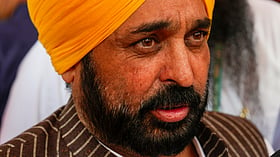
Punjab Chief Minister Bhagwant Mann on Saturday asserted that the state government would neither withdraw nor dilute the recently enacted anti-sacrilege law, claiming the legislation had received overwhelming support from the Sikh Sangat across the world.

Addressing gatherings during the concluding day of his four-day ‘Shukrana Yatra’, Mann said the Punjab government remained fully committed to protecting the sanctity and respect of Guru Granth Sahib and all religious scriptures.

The Jaagat Jot Sri Guru Granth Sahib Satkar (Amendment) Bill, 2026 was unanimously passed by the Punjab Assembly on 13 April and provides for stringent punishment, including life imprisonment, for acts of sacrilege involving the Guru Granth Sahib.

Mann said the law was introduced solely to ensure strict punishment for those attempting to hurt religious sentiments and disturb communal harmony in the state.

“The Governor has granted assent to the Act. There is no question of withdrawing or rolling back this law,” the chief minister said.

He claimed the legislation had received strong backing from Sikh communities worldwide and alleged that opposition to the law was being driven by a “particular family”, in an apparent reference to leaders of the Shiromani Akali Dal.

“Those claiming that the Panth has rejected this law must explain why millions are supporting it,” Mann said, accusing some political interests of creating confusion around the legislation for narrow political gains.

‘Long-standing public demand’

The chief minister said the anti-sacrilege legislation was enacted after years of public demand and asserted that there could be no compromise on preserving the sanctity of Sikh religious scriptures.

Mann noted that protests demanding a stricter anti-sacrilege law had continued for nearly one-and-a-half years and claimed that several Sikh intellectuals and scholars who are now criticising the legislation had earlier supported stricter legal provisions against sacrilege incidents.

He also referred to a resolution passed by the Shiromani Gurdwara Parbandhak Committee in July 2007, authorising the government to frame legislation for protection and respect of the Guru Granth Sahib.

Questioning the opposition’s change in stand, Mann alleged that some leaders were attempting to create a “parallel authority” while politicising a sensitive religious issue.

‘Historic legislation’

Mann thanked people across Punjab for participating in the ‘Shukrana Yatra’, which began at Takht Sri Kesgarh Sahib in Anandpur Sahib and concluded in Fatehgarh Sahib.

He claimed Punjabis were “extremely happy” with the enactment of the Jaagat Jot Sri Guru Granth Sahib Satkar (Amendment) Act, 2026 and alleged that previous governments lacked the political will to enact such legislation.

“Now as this historic Act has been passed, it will put an end to this unpardonable offence because no one will dare indulge in such acts again,” Mann asserted.

Punjab will not withdraw anti-sacrilege law, says Bhagwant Mann
  • ✇National Herald
  • Former EC observer Subrata Gupta appointed adviser to West Bengal CM Suvendu Adhikari NH Political Bureau
    Retired IAS officer Subrata Gupta was on Saturday appointed adviser to West Bengal Chief Minister Suvendu Adhikari, according to an official notification issued by the state government.Gupta, a 1990-batch IAS officer, had recently served as the Election Commission’s Special Roll Observer for the SIR (Special Intensive Revision) exercise conducted ahead of the recently concluded West Bengal Assembly elections.A state government official said Gupta’s administrative experience and familiarity with
     

Former EC observer Subrata Gupta appointed adviser to West Bengal CM Suvendu Adhikari

9 May 2026 at 14:10

Retired IAS officer Subrata Gupta was on Saturday appointed adviser to West Bengal Chief Minister Suvendu Adhikari, according to an official notification issued by the state government.

Gupta, a 1990-batch IAS officer, had recently served as the Election Commission’s Special Roll Observer for the SIR (Special Intensive Revision) exercise conducted ahead of the recently concluded West Bengal Assembly elections.

A state government official said Gupta’s administrative experience and familiarity with electoral and governance systems were expected to assist the new administration in policy coordination and governance-related matters.

“Gupta’s vast experience is expected to help the new administration in policy coordination and governance-related matters,” the official said.

The BJP (Bharatiya Janata Party)-led government also appointed IAS officer Shantanu Bala as the chief minister’s private secretary, according to a separate notification.

Bala, a 2017-batch IAS officer, was serving as Additional District Magistrate of South 24 Parganas prior to the appointment.

Another official said the move formed part of the restructuring of the Chief Minister’s Office following the change in government in the state.

Both officers have been directed to assume charge of their new assignments with immediate effect, according to the notifications.

Former EC observer Subrata Gupta appointed adviser to West Bengal CM Suvendu Adhikari
  • ✇National Herald
  • Vijay urges Centre to scrap 11% cotton import duty, warns of textile crisis NH Political Bureau
    Tamil Nadu chief minister C. Joseph Vijay has written to Prime Minister Narendra Modi seeking immediate removal of the 11 per cent import duty on cotton, warning that the state’s textile and apparel industry is under “severe stress” due to rising raw material costs.In his letter on Thursday, Vijay said the sharp surge in cotton and yarn prices has placed immense financial pressure on garment manufacturers and could threaten lakhs of jobs linked to the sector.“The textile and apparel industry in
     

Vijay urges Centre to scrap 11% cotton import duty, warns of textile crisis

15 May 2026 at 04:00

Tamil Nadu chief minister C. Joseph Vijay has written to Prime Minister Narendra Modi seeking immediate removal of the 11 per cent import duty on cotton, warning that the state’s textile and apparel industry is under “severe stress” due to rising raw material costs.

In his letter on Thursday, Vijay said the sharp surge in cotton and yarn prices has placed immense financial pressure on garment manufacturers and could threaten lakhs of jobs linked to the sector.

“The textile and apparel industry in Tamil Nadu is undergoing a severe crisis because of the unprecedented rise in cotton and yarn prices,” the chief minister wrote.

Sharp rise in cotton and yarn prices

Vijay highlighted a steep escalation in input costs over the past two months. According to him:

  • Cotton prices have jumped from Rs 54,700 to Rs 67,700 per candy, marking nearly a 25 per cent increase

  • Yarn prices have risen from Rs 301 per kg to Rs 330 per kg

He attributed the spike to domestic cotton supply shortages and increased trading activity across the country, which has disrupted the supply chain for textile manufacturers.

Industry dependence on imports

The chief minister said that with domestic availability tightening, imports have become essential to sustain production. However, the existing 11 per cent import duty on cotton is making imports costly and unviable for many units.

“Permitting duty-free cotton imports will help the industry meet increasing export commitments and remain globally competitive,” he said.

Employment concerns flagged

Calling Tamil Nadu India’s largest textile and apparel exporting state, Vijay stressed the sector’s importance in generating large-scale employment, particularly for women in rural and semi-urban areas.

“After agriculture, the textile and apparel industry remains one of the country’s largest job creators. There is a significant responsibility on the government to safeguard the employment of lakhs of people and ensure the sustainability of the textile value chain,” Vijay said.

Appeal to Centre

Vijay has urged the Union government to reduce the cotton import duty from 11 per cent to zero, arguing that the move would:

  • Stabilise raw material supply

  • Protect employment

  • Boost exports

  • Improve global competitiveness of India’s textile industry

The appeal comes amid growing concerns from textile clusters across Tamil Nadu over rising input costs and shrinking margins.

With IANS inputs

  • ✇National Herald
  • Congress targets Narendra Modi over Norway media interaction NH Political Bureau
    The Congress on Tuesday launched a sharp attack on Prime Minister Narendra Modi, criticising him for not taking questions from the media during his visit to Norway and accusing him of weakening India’s democratic tradition of free press engagement.Congress general secretary (communications) Jairam Ramesh alleged that the prime minister has consistently avoided press conferences over the last 12 years and “does not feel comfortable facing questions.”“The entire country witnessed how our ‘teleprom
     

Congress targets Narendra Modi over Norway media interaction

20 May 2026 at 03:18

The Congress on Tuesday launched a sharp attack on Prime Minister Narendra Modi, criticising him for not taking questions from the media during his visit to Norway and accusing him of weakening India’s democratic tradition of free press engagement.

Congress general secretary (communications) Jairam Ramesh alleged that the prime minister has consistently avoided press conferences over the last 12 years and “does not feel comfortable facing questions.”

“The entire country witnessed how our ‘teleprompter-jeevi’ PM was seen dodging and running away from a mere question on foreign soil. The world saw that the head of state of the world’s largest democracy is not comfortable facing even a single question,” Ramesh said in a post on X.

पूरे देश ने देखा कि विदेशी धरती पर महज एक सवाल के चलते हमारे टेलीप्रॉम्प्टरजीवी पीएम किस तरह बचते, छिटकते और भागते नजर आए।

पूरी दुनिया ने देखा कि विश्व के सबसे विशाल लोकतंत्र का राष्ट्राध्यक्ष एक सवाल का सामना करने में भी सहज नहीं है।

भारत तो यह पिछले 12 सालों से देख ही रहा है।… https://t.co/XKLdAJGU5R

— Jairam Ramesh (@Jairam_Ramesh) May 19, 2026

Referring to a journalist’s question posed to Modi during his Norway visit, Ramesh said India has seen a steady decline in press interaction by the prime minister despite a long-standing democratic tradition.

“In India’s democracy, the media, the Opposition, and heads of state have always upheld the tradition of asking and answering questions. However, in the last 12 years, this tradition has almost been broken by the prime minister,” he said.

The Congress also sought to draw a comparison with Leader of Opposition in the Lok Sabha Rahul Gandhi, claiming he has been far more accessible to the media. According to the party, Gandhi has held 129 press conferences between 2013 and 2025, apart from responding to “countless unfiltered questions” on multiple occasions.

“As the leader of India’s principal opposition party, Rahul Gandhi has consistently faced questions on a wide range of issues, questioned the government, and spoken directly to the press,” Ramesh added.

The party separately released a compiled list of Rahul Gandhi’s press interactions to reinforce its claim of regular media engagement.

With PTI inputs

  • ✇National Herald
  • Independent journalism punished: Kharge attacks BJP-RSS on press freedom NH Political Bureau
    Congress president Mallikarjun Kharge on Sunday launched a sharp attack on the BJP and the RSS over press freedom, alleging that the current regime has created an atmosphere where “independent journalism will be punished, and compliance rewarded.”In a post on X marking World Press Freedom Day, Kharge claimed that sections of the media have been reduced to echoing the government narrative, while those who question authority face sustained pressure.“The message of the BJP-RSS is clear: independent
     

Independent journalism punished: Kharge attacks BJP-RSS on press freedom

3 May 2026 at 06:18

Congress president Mallikarjun Kharge on Sunday launched a sharp attack on the BJP and the RSS over press freedom, alleging that the current regime has created an atmosphere where “independent journalism will be punished, and compliance rewarded.”

In a post on X marking World Press Freedom Day, Kharge claimed that sections of the media have been reduced to echoing the government narrative, while those who question authority face sustained pressure.

“The message of the BJP-RSS is clear: independent journalism will be punished, and compliance will be rewarded… those who persist in asking questions are targeted relentlessly,” he said.

Kharge pointed to India’s declining position in the global press freedom rankings, alleging that it has fallen to 157th place since 2014 under the BJP government.

“A free press… does not exist to amplify the government's narrative or conceal its failures. It exists to question authority, scrutinise power, and hold those in office accountable,” he said.

On World Press Freedom Day, the nation must confront a stark and undeniable reality. Since 2014, India’s position in the World Press Freedom Index has steadily declined, falling to 157th place, under the BJP regime.

A free press, in its truest sense, does not exist to amplify…

— Mallikarjun Kharge (@kharge) May 3, 2026

Invoking Jawaharlal Nehru, Kharge stressed the foundational role of media in a democracy.

“The freedom of the press is not just a slogan but an essential attribute of the democratic process,” he quoted, adding that this principle now stands “gravely compromised.”

The Congress chief accused the “Sangh Parivar” of “weaponising” laws to silence dissenting voices in the media.

“Defamation laws, national security provisions, and sweeping criminal statutes are deployed not as instruments of justice, but as tools of intimidation,” he alleged.

Kharge also cited figures to underline his claims, stating that over 135 journalists were arrested, detained, or interrogated between 2014 and 2020, while 36 journalists were imprisoned between 2014 and 2023. He further alleged that stringent laws like the UAPA have been used against journalists.

Raising concerns over safety, he claimed that journalists reporting on corruption have faced violence in BJP-ruled states, naming cases such as Raghvendra Bajpai in Uttar Pradesh, Mukesh Chandrakar in Chhattisgarh, Rajeev Pratap Singh in Uttarakhand, and Dharmendra Singh Chauhan in Haryana.

“They stand as grim reminders of the cost of speaking truth to power,” Kharge said.

Kharge also accused the government of attempting to tighten control over social media platforms, calling it part of a broader push for “total dominance.”

He urged introspection on World Press Freedom Day, warning that erosion of press freedom could have long-term consequences for democratic institutions.

“Any deviation from democratic principles… risks becoming normalised, causing lasting damage to democratic norms, values, institutions, and the people they serve,” he said.

Emphasising accountability, Kharge added that governments must hold themselves to the highest standards to preserve the balance between power and the people.

With PTI inputs

  • ✇National Herald
  • Bengal: EC orders repoll in 285 Falta booths on 21 May NH Political Bureau
    The Election Commission of India (ECI) has ordered a complete repoll in all 285 polling booths of the Falta Assembly Constituency in West Bengal’s South 24-Parganas district, citing “severe electoral offences and subversion of the democratic process” during voting on 29 April.According to an EC official, the fresh polling will be conducted on 21 May from 7 am to 6 pm under “stringent security arrangements to ensure a free, fair and transparent exercise”. Counting for the constituency will take p
     

Bengal: EC orders repoll in 285 Falta booths on 21 May

3 May 2026 at 04:39

The Election Commission of India (ECI) has ordered a complete repoll in all 285 polling booths of the Falta Assembly Constituency in West Bengal’s South 24-Parganas district, citing “severe electoral offences and subversion of the democratic process” during voting on 29 April.

According to an EC official, the fresh polling will be conducted on 21 May from 7 am to 6 pm under “stringent security arrangements to ensure a free, fair and transparent exercise”. Counting for the constituency will take place on 24 May.

The decision follows an extensive review of reports from the chief electoral officer, district election officer, returning officer, field officials, and independent observers. The commission said these reports flagged serious concerns, including voter intimidation, unauthorised presence inside booths, and possible tampering.

Ten lifetimes won't be enough for your Bangla Birodhi Gujarati gang and their stooge Gyanesh Kumar to put even a dent in my DIAMOND HARBOUR MODEL.

Bring everything you have got. I challenge the entire Union of India- Come to Falta. Send your strongest, send one of the… https://t.co/Db7yIsQXj7

— Abhishek Banerjee (@abhishekaitc) May 2, 2026

“In view of the gravity of the incidents reported and the vitiation of the poll process, the commission hereby declares the poll held on 29 April in Falta assembly constituency as void and orders a fresh poll in all polling stations,” the EC said in its order.

To prevent any recurrence, the poll body has directed deployment of adequate central forces, micro-observers, and webcasting facilities wherever necessary. It also mandated full videography and close monitoring of the entire voting process.

The 29 April voting in Falta was part of the second phase of the two-phase assembly elections held on 23 and 29 April, with overall counting scheduled for 4 May.

The decision triggered sharp political reactions. Sukanta Majumdar welcomed the move, calling it a vindication of voters.

“This is a victory of the women of Falta over the atrocities of local TMC leader Jahangir Khan,” he said.

Falta is witnessing a multi-cornered contest, with TMC’s Jahangir Khan facing BJP candidate Debangshu Panda, Congress leader Abdur Razzak Molla, and CPI(M)’s Sambhu Nath Kurmi.

Responding strongly, Abhishek Banerjee launched a blistering attack on the BJP and the Centre.

“Ten lifetimes won't be enough for your Bangla Birodhi Gujarati gang and their stooge Gyanesh Kumar to put even a dent in my DIAMOND HARBOUR MODEL,” he wrote on X.

He also issued a direct political challenge: “Bring everything you have got… Come to Falta. Send your strongest, send one of the godfathers from Delhi. If you have got the nerve, contest in Falta.”

With the EC stepping in decisively and political rhetoric intensifying, the Falta repoll is now set to become a high-stakes test of electoral credibility in West Bengal.

With PTI inputs

  • ✇National Herald
  • TMC MP quits as Barasat district chief, cites poll rout, takes swipe at I-PAC NH Political Bureau
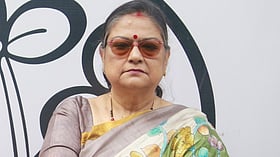
    Cracks within the All India Trinamool Congress (AITMC) appeared to deepen on Sunday as senior MP Kakoli Ghosh Dastidar resigned as the party’s Barasat organisational district president, taking “moral responsibility” for the TMC’s crushing defeat in the West Bengal assembly polls while launching a sharp attack on the party’s evolving power structure and campaign machinery.The resignation of the four-time Barasat MP comes days after she was removed as the TMC’s chief whip in the Lok Sabha and repl
     

TMC MP quits as Barasat district chief, cites poll rout, takes swipe at I-PAC

25 May 2026 at 04:38

Cracks within the All India Trinamool Congress (AITMC) appeared to deepen on Sunday as senior MP Kakoli Ghosh Dastidar resigned as the party’s Barasat organisational district president, taking “moral responsibility” for the TMC’s crushing defeat in the West Bengal assembly polls while launching a sharp attack on the party’s evolving power structure and campaign machinery.

The resignation of the four-time Barasat MP comes days after she was removed as the TMC’s chief whip in the Lok Sabha and replaced by senior MP Kalyan Banerjee following the party’s poor electoral performance.

Though her resignation letter to state TMC president Subrata Bakshi formally cited accountability for the defeat in Barasat and parts of North 24-Parganas, its political undertone carried a far broader message — one widely interpreted as criticism of poll strategist I-PAC and the growing influence of a newer leadership ecosystem around party national general secretary Abhishek Banerjee.

In a pointed message to TMC supremo Mamata Banerjee, Ghosh Dastidar urged the party to return to its earlier style of “street politics” and reconnect with grassroots workers.

“Leader Mamata Banerjee, if you work with honest, old and dedicated workers as in earlier days, the party’s image will brighten again. Difficult tasks cannot be achieved through fly-by-night organisations,” she wrote.

VIDEO | West Bengal: Kakoli Ghosh Dastidar resigns as TMC Barasat Parliamentary President, blames 'autocratic' IPAC for Bengal poll defeat.

(Source: Third Party)

(Full video available on PTI Videos - https://t.co/n147TvrpG7) pic.twitter.com/xlMPGfzAGA

— Press Trust of India (@PTI_News) May 24, 2026

Political observers saw the “fly-by-night organisations” remark as a veiled swipe at I-PAC, the election consultancy group closely linked to TMC’s recent campaign strategy.

The veteran MP also openly flagged concerns over corruption and criminalisation within the party — issues repeatedly raised by opposition parties during the election campaign.

“Recent incidents of crime and corruption in West Bengal have naturally created concern and apprehension among people. To strengthen democracy further, greater importance should be given to transparency, accountability, responsibility, decorum and values in politics,” she said in the letter.

Speaking later to reporters, Ghosh Dastidar intensified her criticism and accused the newer campaign apparatus of sidelining long-time party workers.

“I did not appoint I-PAC. But I saw how these young boys and girls behaved with full-time party workers like us. I have been a public representative here for 17 years. My office remained open round the clock for people,” she said.

The MP admitted that the election results reflected growing public anger.

“The results made it clear that people did not accept us. There has been criminalisation at every level in the party. I cannot accept the fact that the TMC’s tally has dropped to 80. I will continue as an ordinary worker,” she added.

In another remark likely to intensify political speculation, Ghosh Dastidar suggested that senior leaders had struggled to communicate directly with Mamata Banerjee in recent years.

“She remained too occupied over the last decade. It became difficult to even reach her by phone,” she reportedly told reporters.

Despite the criticism, the veteran MP later attempted to strike a conciliatory tone by reposting Mamata Banerjee’s message on X with the words: “Take charge, leader.”

A doctor-turned-politician, Ghosh Dastidar has long been associated with Mamata Banerjee’s political rise and is considered part of the TMC’s old guard. Apart from serving four terms as MP from Barasat, she also headed the party’s women’s wing and district organisation.

Her recent removal as chief whip had already hinted at internal unease. Soon after being replaced, she posted cryptically on social media that after “40 years of loyalty” to the party, she had finally received her “reward”.

Political analysts believe her resignation and unusually public criticism indicate that TMC’s post-election introspection may now spill into open factional conflict, complicating the leadership’s efforts to rebuild unity after one of the party’s worst electoral setbacks.

The TMC had not officially responded to her resignation till late Sunday.

With PTI inputs

  • ✇National Herald
  • Farooq Abdullah says ‘Operation Sindoor’ met its goals, warns against war NH Political Bureau
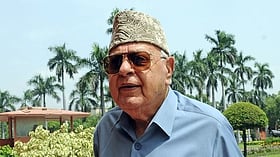
    National Conference president Farooq Abdullah on Wednesday said “Operation Sindoor” had delivered results, but cautioned that wars never provide lasting solutions and instead lead to widespread destruction and hardship.Speaking to reporters at the party headquarters in Srinagar, the former Jammu and Kashmir chief minister said military conflicts only deepen suffering, pointing to ongoing crises in Ukraine and the West Asia.“Operation Sindoor has paid its dividends,” Abdullah said. “But wars do n
     

Farooq Abdullah says ‘Operation Sindoor’ met its goals, warns against war

6 May 2026 at 08:55

National Conference president Farooq Abdullah on Wednesday said “Operation Sindoor” had delivered results, but cautioned that wars never provide lasting solutions and instead lead to widespread destruction and hardship.

Speaking to reporters at the party headquarters in Srinagar, the former Jammu and Kashmir chief minister said military conflicts only deepen suffering, pointing to ongoing crises in Ukraine and the West Asia.

“Operation Sindoor has paid its dividends,” Abdullah said. “But wars do not bring solutions, they only bring misery.”

Referring to the global fallout of prolonged conflicts, he highlighted the economic and energy disruptions affecting several regions.

“Look at Ukraine and the destruction there, look at the West Asia. Even gas supplies have been affected. It may take Qatar one or two years to restore supplies fully,” he said.

Abdullah also sought to ease fears over the escalating tensions in the Gulf region, arguing that the global economic climate makes a wider war unlikely.

“The world is not ready for another war,” he said. “Economic conditions are already weak in many countries and nobody wants further instability.”

He warned that any prolonged disruption in the Middle East, which remains central to global oil and gas supplies, could have severe consequences for economies around the world.

“If pressure continues in that region, the global situation could become extremely difficult,” he added.

Commenting on recent Assembly election results in different states, Abdullah said the outcomes reflected the political realities in each region.

He referred to allegations of irregularities raised by Mamata Banerjee in West Bengal, while also noting political changes in Tamil Nadu and electoral victories by different parties in Kerala and Assam.

Asked whether the special intensive revision of electoral rolls had influenced the elections, Abdullah said multiple factors had affected the results.

“There was an impact of everything,” he remarked.

The National Conference leader also dismissed suggestions of weakness within the opposition INDIA bloc, insisting the alliance remained strong.

On recent explosions reported in Punjab, Abdullah said such incidents were not new to India and urged people not to panic.

Responding to criticism from opposition parties directed at the National Conference government in Jammu and Kashmir, he said scrutiny from rivals was a normal part of democracy.

“It is the opposition’s job to speak against us,” Abdullah said. “Our party will continue working in the way it believes is right.”

With PTI inputs

❌
Subscriptions