
Normal view

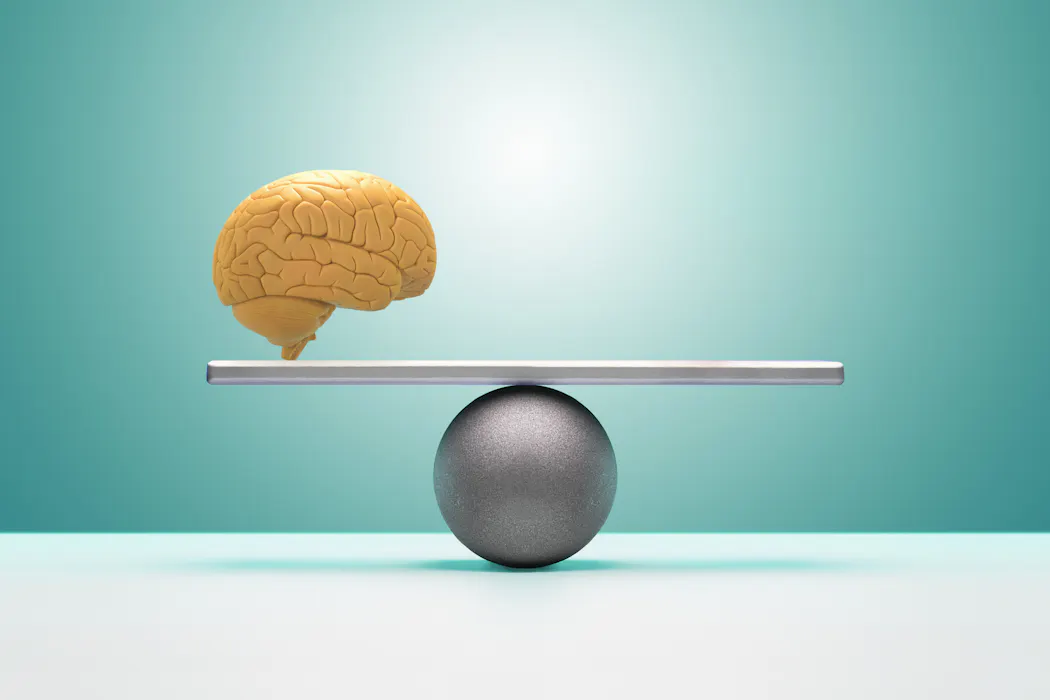
Why sophrosyne, an ancient Greek virtue, matters more than ever in the age of AI

Sophrosyne is a constellation of characteristics that includes moderation, reflectiveness and self-knowledge. PM Images/DigitalVision via Getty Images

Texting while driving. Bullying people on social media. Buying into the latest conspiracy theory. Passing off AI-generated work as your own.

That may seem like a random list of 21st-century vices. But I’d argue they’re all examples of the loss of one particular virtue: sophrosyne.

An ancient Greek concept, sophrosyne – pronounced “suh-fros-uh-nee” – is what we might call “sound-mindedness” today. It’s a constellation of characteristics, including moderation, reflectiveness and self-knowledge. They’re found in the kind of person who can respect and trust herself, and be respected and trusted by others.

As a philosopher and philosophical counselor, I research the connection between virtue and happiness. In particular, I’ve noticed a connection between sophrosyne and eudaimonia, the Greek philosophical concept for happiness, or living well.

Harmony of the soul

For the Greeks, sophrosyne represented excellence of character, moderation and self-control. It was connected to phronesis, or practical wisdom, and stood in marked contrast with hubris: excessive pride, dangerous overconfidence and lack of self-insight. Heraclitus, a philosopher who lived around 500 B.C.E., taught that sophrosyne was the most important virtue of all.

Plato, who taught a century later, discussed sophrosyne as the ability to know oneself – and to know when you don’t know something. In “Republic,” he likened sophrosyne to a harmony or friendship between the three parts of the soul: reason, spirit and bodily desires.

A faded fresco shows two bearded men in robes gesturing as they speak with each other.
At the center of ‘The School of Athens,’ by Raphael, stand Plato and his student, Aristotle. Wikimedia Commons

Plato’s student Aristotle argued that sophrosyne allows people to strike a balance between self-indulgence and self-denial – like someone who tries to get the right amount of physical exercise, neither too much nor too little. Aristotle taught that it was a virtue developed through practice, just like training for a sport or learning to play a musical instrument.

Sound-mindedness, in short, is not inborn but must be learned.

Discipline and discernment

I believe sophrosyne is still essential for the good life, the life of eudaimonia – happiness and human flourishing. It’s not a transitory feeling, but a sense of being your best self. This involves a kind of satisfaction that is not possible without self-knowledge and self-control.

What’s more, it requires the ability to discriminate between the good and the bad, the true and the false – capacities that are not inborn, but learned through steady practice. Without sophrosyne, it may not be possible to discern what is good for yourself or others. And even if you could, without sophrosyne you might lack the will to follow through.

If anything, these qualities might be even more important with the rise of artificial intelligence and social media. In my counseling practice, I’ve worked with people like “Brian,” an idealist who wanted truth and justice to win out over evil and oppression.

The problem was that he didn’t know how to vet his sources. As the COVID-19 pandemic raged, Brian fell down a conspiracy theory rabbit hole. He was certain that the condensation left in airplanes’ wake were “chemtrails,” a government brainwashing plot, and fumed against the “New World Order.” Thinking he knew it all, he was no longer open to reasoned dialogue.

A man, seen from behind, looks at his phone in a dark room.
Sound-mindedness helps us keep perspective in the sea of information online. Artur Debat/Moment Mobile via Getty Images

But if Brian is an example of the loss of sophrosyne, another person I worked with, “Lee,” shows how we can develop it. Lee spent quite a bit of time on social media, but she began to wonder how it was affecting her. She slowed down, took more breaks and started paying more attention to what her mind was doing and to how she was feeling.

As Lee became more self-aware, she realized she was wasting her time. She no longer connected to the reasons she had used social media in the first place. “Consuming social media was making me uneasy. It was like pigging out on junk food,” she told me. “Now I read more books, prepare food and walk during the time I had been spending on social media.”

Ripple effect

For the Greeks, sophrosyne was an ideal second to none. In the 1960s, though, Plato scholars Edith Hamilton and Huntington Cairns lamented that it was no longer “among our ideals.” That seems all the more true today – and the wider consequences are easy to see.

First, there’s the increase in incivility, in all its 21st-century forms – from road rage to cyberbullying. After the isolation of the pandemic, there’s even a new term for general social incivility: “social jet lag.”

The decline of sophrosyne can also lead to screen addiction, diminished attention span and ability to focus – factors that can, in turn, undermine civility. Civility takes sustained awareness of oneself and others.

The consequences go beyond our friends, families and co-workers to democracy itself. If sound-mindedness suffers, excessive pride and overconfidence hurt our ability to engage in reasoned dialogue and to respect other people’s differences.

Timeless virtue

There are a number of factors, I’d argue, that have led to the loss of sophrosyne, including a decrease in funding for education, more teaching to the test and greater economic inequality, which leaves less time and energy for things like personal development.

Another is the decline of mentoring relationships, which the ancient Greeks considered central to intellectual and moral development. A true mentoring relationship involves both instruction and leading by example. It’s about character, not success defined by wealth and status. Today, it appears that mentors have largely been replaced by celebrities and hero culture, with the rich and famous held up as examples worthy of emulation.

I believe the first step toward recovering sophrosyne is to recognize its importance in the good life. The second is to acknowledge its decline. The third is to understand the factors that have led to this decline.

Temperance, moderation, self-control, discernment – qualities such as these add up to a timeless excellence of character that cannot be faked. Becoming such a person requires guidance, practice and consistency.

The Conversation

Ross Channing Reed does not work for, consult, own shares in or receive funding from any company or organization that would benefit from this article, and has disclosed no relevant affiliations beyond their academic appointment.

Eroding a virtue: AI trains people to expect instant answers – and that’s bad news for patience

Have you found yourself drumming your fingers in impatience more lately? Connect Images via Getty Images

When I was growing up, teachers would assign research papers that required going to the library, or later, searching for relevant material on the internet. If the paper was going to turn out well, we students needed to patiently comb through piles of material, weaving what we found into a coherent argument that was well-supported with evidence.

Unbeknownst to us at the time, our teachers were giving us a chance to develop our patience.

That chance is rapidly disappearing with increased use of artificial intelligence tools. Now you can have an AI do everything from school assignments to legal writing, sermon preparation, vacation planning, work emails and academic research. Researchers are already documenting how using AI tools in these contexts likely erodes critical thinking skills.

But what hasn’t been appreciated is AI’s effect on patience. As a philosopher who has written extensively about virtue, including the virtue of patience, I am especially concerned about what people can do to resist this trend.

half dozen people standing in line against a wall, looking bored and impatient
How do you react to waiting in a long, boring line? Delmaine Donson/E+ via Getty Images

What is patience, and why is it important?

Patience involves responding calmly when it is taking longer than you want to accomplish your goals.

When I am stuck in a traffic jam, or the checkout line is barely moving, I might wish that I was meeting my goals faster, but my calm demeanor is a sign that I am being patient. If I react to delays like these with frustration or anger, that is a sign that I am being impatient.

The same applies in the case of doing research. If it is taking me awhile to find everything I need, that can test my patience. But if I react to such a delay with calmness, I avoid frustration or anger and hence impatience.

Philosophers, theologians and educators have long considered patience an important character trait to cultivate. It is a virtue that contributes to well-being. More specifically, researchers have linked it to a variety of good outcomes, including healthier lifestyles, greater emotion regulation, more fulfilling relationships, increased caring about equity and justice, increased cooperation, greater purpose in life, lower depression and higher life satisfaction.

Why AI tools erode a capacity for patience

AI tools are helping foster a culture of immediacy, thereby diminishing the capacity for patience. Admittedly, we already started down this path with the dawn of the internet and the launch of fast and easy search engines. But now, AI instantaneously delivers fully developed answers, further reducing the delays once experienced as people searched, assessed and integrated information from various sources.

The training in patience that people used to get from thorough research and investigation is being replaced by a growing sense of impatience with thinking that takes time and effort. And this impatience doesn’t just stop with research. It extends to writing as well.

Research on AI and patience is still in its infancy. But my conclusions about these impacts rest on plausible inferences from what researchers know more generally about cognitive psychology. For instance, psychologists have long understood that people’s expectations change due to repeated use and exposure to something.

This adaptation explains why the hourlong train ride to work can start out as exhausting, but become part of your daily routine. Or you might initially be impressed by how fast your new computer is, but after a while you take it for granted and get frustrated if loading a PowerPoint presentation takes even a few moments.

Hence using AI tools is likely to recalibrate what feels normal to you. In particular, it is likely to normalize getting immediate, fully formed answers to your questions. This shift, I contend, makes people increasingly impatient with the very tasks of research and investigation that helped train us to become more patient in the past.

One concrete illustration of this change is with students. If a professor gives an assignment involving interpreting an author’s text and then developing a critique of the author’s position, students today are very tempted to offload the patient work of interpretation and critique to an AI.

Or consider sermon preparation. Pastors normally take hours a week to examine the original language for their text, consult commentaries, develop illustrations and examples, and deliberate about practical applications. Now, this process can all be done in a matter of seconds using AI, and one study found that a majority of pastors are using it for sermon preparation. There is no patience training happening here.

boy shooting baskets alone
Sticking with a challenging task can help you build up that patience muscle. JasonDoiy/E+ via Getty Images

What can be done?

There are ways to cultivate patience in the age of AI tools, but they will not be easy. Here are three:

  • Deliberately choose a slower path. Select this option because it comes with intellectual struggles, not in spite of them. Don’t rely on AI summaries or shortcuts, but try to come up with the answers on your own. This choice needs to be deliberative since the default human tendency is to take the easier route. But the long-term benefit is worth the short-term cost.

  • Design your environment. Remove AI tools from your surroundings and carve out dedicated time free of distractions and notifications. Reading and writing take time, and by being willing to invest that time and not get impatient with how long it is taking, you can cultivate patience.

  • Encourage and reward intellectual engagement. Institutions such as schools and churches have a structural role to play. The more such institutions can resist integrating AI tools into every aspect of their operations, and instead incentivize human intellectual engagement even at the expense of efficiency, the better as far as patience is concerned.

There is one other hopeful suggestion. Patience can be developed in lots of different areas of life that have nothing to do with research and which are less susceptible to AI incursion. Working on a craft project, detailing a car, weeding a garden, practicing your basketball shot, lifting weights – all these activities can foster patience too. The more this character muscle is strengthened, the more it will be available to use in many different areas of your life.

The Conversation

Christian B. Miller does not work for, consult, own shares in or receive funding from any company or organization that would benefit from this article, and has disclosed no relevant affiliations beyond their academic appointment.

As an American, should you feel guilty about rooting against the US in the World Cup?

The 2026 World Cup promises to be the planet’s most-watched sporting event. It’s also poised to generate its fair share of controversy.

Taking into account the history of corruption in FIFA, the sport’s governing body, it would be hard to blame anyone who decided to ignore this year’s competition.

However, some viewers of this summer’s tournament may face an additional dilemma.

Political tensions are high in the U.S., where most of the tournament’s matches will be played. The Trump administration is historically unpopular, and its critics are already concerned about sportswashing: when governments use the spectacle of athletic competition to burnish their image and distract the public.

As I point out in my 2022 book, “The Ethics of Sports Fandom,” fans who are critical of their country’s behavior sometimes feel ambivalent about rooting for their national sports teams – and may even feel compelled to root against them.

After all, it’s one thing to pull for your national team when patriotism feels uncomplicated. It’s quite another when you aren’t feeling very proud to be an American.

The Cold War made it easy for many Americans to rally behind the 1980 U.S men’s hockey team in its victory over the Soviet Union in the “Miracle on Ice.” But what do you do when you don’t see your country as the “good guys”?

Patriotism doesn’t mean blind loyalty

Some fans might double down on their patriotic commitments during the tournament. They’ll use the occasion to champion America in all things, whether it’s the country’s battles in the Middle East or its national team taking on Paraguay at SoFi Stadium in Los Angeles.

Sports have a way of fueling nationalistic passions, and I fully expect plenty of people who don’t care much about soccer to channel their patriotic sentiments into the tournament.

However, rooting for your country’s national soccer team doesn’t mean that you endorse everything your country does, any more than wanting a friend to get a promotion at work requires you to support all of their behavior. As the philosopher Eamonn Callan has argued, a proper love of country requires citizens to be clear-eyed about its faults. The true patriot highlights problems and works to correct them, independent of how much they want the national team to win their next match.

By the same token, I think a deep love of country can coexist with ambivalent feelings about how the national team performs on the field. If patriots can disapprove of their country’s military adventurism – either because they see it as flatly unjust or because it casts their country in an unfavorable light on the international stage – there is nothing fundamentally unpatriotic about not wanting the U.S. to do well in the World Cup.

Other fans might invoke the mantra that it’s important to simply keep politics out of sports – that the games should be a refuge from the controversies that plague so many other aspects of civic life.

But as I argue in my book, fully separating politics and sports is almost impossible. It requires fans to view athletes as nothing more than bodies who exist to perform on the field. It means team executives and owners do little more than sign paychecks. And it ignores the reality that sports are woven into the social, economic and political life of communities.

Outcomes don’t change a thing

For fans who choose to watch, then, my suggestion is to view the action on the field as you would any other sporting event.

Root for whomever you want to win, for more or less any reason that moves you.

Because for all the political significance attached to the World Cup, the winner or loser of any given contest has essentially no broader political significance. The problems that existed before the tournament will still demand attention when it is over, no matter who happens to win.

Success or failure on the pitch isn’t likely to bring about meaningful political change. After all, whether a government has the right legislative agenda or approach to foreign policy is totally divorced from its national soccer team’s ability to score goals.

Viewed in this way, rooting for your country’s national soccer team doesn’t imply blind loyalty to your country or ignorance of its flaws. It simply means that you want the athletes who represent your country to win the game they are playing on that particular day.

Athletes have long been able to navigate this ambivalence. You’ll regularly hear them trying to separate a love of their country and its people from support of problematic regimes.

When Iranian soccer player Mehdi Taremi refused to celebrate a goal in a January 2026 Greek Super League match, he embraced precisely such a position. Thousands of people had been killed during protests of the Iranian regime, and the moment called for a different reaction.

“There are problems between the people and the government,” he said. “The people are always with us, and that’s why we are with them.” For Teremi, publicly celebrating as an Iranian citizen abroad felt too much like endorsing the current regime, something he had no desire to do. If the athletes who wear their national colors can maintain such nuanced views, surely fans can, too.

Young Middle Eastern man wearing a green, dry-fit shirt and a backpack.
Mehdi Taremi arrives at an Iran national soccer team practice in Antalya, Turkey, ahead of the 2026 FIFA World Cup. Sinan Ozmus/Anadolu via Getty Images

Of course, nuance can be difficult in today’s political climate, and the rhetoric around the World Cup likely won’t change that. When the U.S. men’s hockey team won gold at the Olympics back in February, Donald Trump attempted to turn it into a personal political victory by inviting the team to his State of the Union address.

“Our country is winning again,” Trump said, devoting nearly six minutes of his speech to the team’s victory.

The outlook for the U.S. men in this year’s World Cup is not quite as bright, but chances are good that someone will try to co-opt their success or failure for political purposes. Fans don’t have to fall into the trap.

The Conversation

Adam Kadlac does not work for, consult, own shares in or receive funding from any company or organization that would benefit from this article, and has disclosed no relevant affiliations beyond their academic appointment.

From oversight to coercion: How authoritarian governments are twisting AI safety to get tech companies to fall in line

President Trump's 2025 executive order about 'woke AI' put the tech industry on notice about aligning with the administration's views. AP Photo/Julia Demaree Nikhinson

When researchers founded Anthropic in 2021, they said the race to build powerful AI was moving too recklessly. They inserted detailed safety measures into their products and marketed their commitment to safety as the corporate quality that distinguished them from competitors – notably OpenAI, the rival company they had left. In March 2026 that reputation was tested when the Trump administration declared that Anthropic was a supply chain risk.

The company had refused to remove built-in safeguards that prohibited domestic surveillance and autonomous weapons from products it had supplied to the Pentagon. President Donald Trump ordered the federal government to stop using Anthropic and its large language model, Claude, labeling the company a national security risk. Within hours, OpenAI made a deal to be the Pentagon’s supplier instead.

Despite Anthropic’s apparent stand, during its clash with Trump the company quietly scrapped the binding principles in its main safety policy. Several weeks earlier, Anthropic’s head of safeguards research had resigned, warning that “the world is in peril.” And a week after the Pentagon officially banned Claude, the U.S. military was still using the technology to select and target sites to bomb in Iran.

As a philosopher studying the rule of law and democracy, I’ve found that authoritarian governance of technology often does not involve direct censorship. Instead it delegitimizes the intended protections, poisoning any external regulation and even voluntary self-regulation that deviates from the regime’s goals or values.

The Trump administration, which follows the authoritarian playbook, has argued that AI safety standards and user restrictions are ideological impositions rather than sound engineering decisions. The “Preventing Woke AI” executive order of July 23, 2025, didn’t change what companies are allowed to do with their products. By by attaching the “woke” label to basic ethics protections, the administration made those protections politically costly to maintain.

The Brennan Center, a legal policy and advocacy organization, has documented how AI ethics is being redefined through contract negotiations. In these cases, the government weaponizes terms such as “biased” to disqualify companies that maintain civil rights protections from competing for federal contracts.

The prisoner’s dilemma

A single U.S. Defense Department AI contract can be worth billions of dollars. It can also provide access to data no private company could otherwise have and unlock further government work. Companies that maintain the ethics guardrails risk ceding ground to competitors that don’t.

When OpenAI moved in to take the Pentagon work, CEO Sam Altman told his board of directors the move looked “opportunistic and sloppy.” But he said the company took it anyway, because admitting that an action looks bad is different from being willing to fall behind.

Donald Trump talking to AI leaders at the White House.
President Donald Trump and OpenAI CEO Sam Altman speak during a Jan. 21, 2025, news conference during which Trump announced an investment in AI infrastructure. Andrew Harnik/Getty Images

This situation reflects the classic prisoner’s dilemma. If Anthropic maintains safety provisions and OpenAI strips them away, OpenAI gets the contracts and the future advantage. If both companies maintain the provisions, digital protections might survive. But because neither company can be certain the other will hold the line – and because being left behind is not a good option – the rational choice is to discard safety measures.

These circumstances differ from a standard market race to the bottom in one key respect: The trap of having to strip away guardrails isn’t an accident of competition; it’s being maintained by the government through incentives.

Palantir didn’t wait to be caught in this trap. The data analytics company was founded by Peter Thiel and run by Alex Karp, who spent years denouncing “woke” Silicon Valley. Palantir built its business model around government surveillance and military data infrastructure. While Palantir has said it is committed to privacy and civil liberties, critics contend that the company is dismantling those protections. The company’s stock has surged under the Trump administration, its contracts have expanded, and it now has a front-row seat where AI policy is being written. Palantir solved the prisoner’s dilemma by defecting first.

It’s important to note that the dissolution of safety teams across the industry, such as OpenAI’s Superalignment team and Microsoft’s ethics unit, isn’t the result of anyone deciding to abandon safety. What I see in analyzing the different companies’ actions is a pattern: an accumulation of collective, incremental compromises that quietly reorient the definition of safety away from the public and toward the state. The resulting harm and risks fall on everyone whose lives are shaped by AI systems.

Redefining safety to serve the government

Across government contracts and policy documents, I have also observed that the original definition of AI-related safety has shifted from protecting the public toward making systems controllable for the state. The “anti-woke” framing accelerates this shift: Once ethics requirements are characterized as ideological rather than technical, removing them can be framed not as a safety reduction but as a correction.

This shift does not require bad faith from the companies. Safety teams are still doing rigorous work. The companies are not lying when they describe their safety commitments. Those commitments are now simply oriented toward the government rather than the public.

The case for stronger AI regulation assumes that a government constrains commercial entities on behalf of the public. But blacklisting a company for maintaining civil rights protections, and then banning the military deployment of its AI hours later, shows that the federal government in this instance enables the harm that regulation is meant to prevent.

Expanding regulatory authority over AI companies does not necessarily protect citizens. Safety regulations – intended to constrain corporate power – in authoritarian regimes become tools to coerce compliance.

The Conversation

Michael Gregory does not work for, consult, own shares in or receive funding from any company or organization that would benefit from this article, and has disclosed no relevant affiliations beyond their academic appointment.

❌
Subscriptions