
Normal view

  • ✇Camille Styles
  • Why Your Plants Make Your Home Feel Cluttered (and How to Fix It) Stacey Lindsay
    In uncertain, often overwhelming times, I’ve found solace in my houseplants. There’s a joy in tending to them—the ritual of watering, the slow unfurl of a new leaf, and the way a room softens in their presence. Over time, my home has filled with them. But somewhere along the way, I realized: more plants didn’t necessarily mean a more beautiful space. Too many, placed without intention, and suddenly a living room starts to feel less like a sanctuary and more like a roadside nursery. What I wa
     

Why Your Plants Make Your Home Feel Cluttered (and How to Fix It)

17 April 2026 at 10:00
Camille Styles living room plants

In uncertain, often overwhelming times, I’ve found solace in my houseplants. There’s a joy in tending to them—the ritual of watering, the slow unfurl of a new leaf, and the way a room softens in their presence. Over time, my home has filled with them.

But somewhere along the way, I realized: more plants didn’t necessarily mean a more beautiful space. Too many, placed without intention, and suddenly a living room starts to feel less like a sanctuary and more like a roadside nursery. What I was craving wasn’t more greenery—it was a sense of cohesion. A way to make my plants feel like part of the design, not an afterthought.

So I set out to understand how designers actually style plants at home. What I found, through conversations with San Francisco-based Little Trees owner Kathy Ho and Lindsay Pangborn, formerly a gardening expert at Bloomscape, is that the difference comes down to perspective. Plants aren’t just décor—they’re a design layer. And when you start to think about them that way, everything shifts: where you place them, how you group them, and how they shape the feeling of a room.

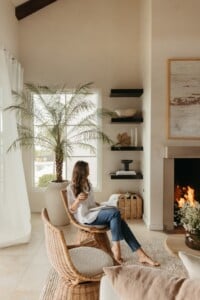
Pin it Woven chairs in living room with houseplants in the background.

How to Design With Plants (By Thinking Like a Designer)

When you start to see plants as a design element—not just something to care for—the way you use them begins to change. It’s easy to slip into collecting mode. You find a plant you love, then another, then another—and before long, they’re scattered throughout your home with little thought for how they relate to one another.

Designers approach plants differently. Instead of asking Where can I fit this? they ask, What does this room need?

That shift—from accumulation to intention—creates a space that feels considered.

“Plants should complement your space and your lifestyle, not compete with it,” Pangborn says. In practice, that means thinking about plants the same way you would any other design element: in terms of scale, balance, and placement.

A single, well-placed plant can anchor a corner. A small grouping can create a focal point on a surface. Even negative space—what you choose not to fill—plays a role in how your plants are experienced.

1. Create Visual Moments (Not Plant Clutter)

Once you start thinking like a designer, the next step is editing—then arranging with intention. Instead of dispersing plants evenly throughout a room, focus on creating a few defined moments. Designers often group plants in twos or threes, treating them less like standalone objects and more like part of a vignette. The result feels grounded and cohesive, rather than scattered.

“Grouping plants can make a space feel more calm and considered,” says Ho. “It also makes care easier when plants with similar needs are placed together.”

Think of a cluster on a coffee table, a styled corner of a console, or a small trio anchoring a shelf. What matters isn’t the number of plants—it’s how they relate to one another and to the space around them.

Just as important: what you leave out. Giving each grouping room to breathe allows the eye to land, rather than constantly move.

2. Use Height and Movement to Shape the Room

One of the simplest ways to elevate your plant styling is to think vertically. When every plant sits at the same level—lined up on a windowsill or clustered at eye height—the effect can feel flat. Designers, instead, use plants to create movement throughout a space, guiding the eye up, down, and across the room.

Trailing plants are especially effective here. Placed on a high shelf, bookshelf, or cabinet, they soften hard lines and draw the eye upward as they grow. Hanging planters offer a similar effect, making use of often-overlooked ceiling space while adding a sense of lightness.

“Using vertical space is key, especially in smaller homes,” Pangborn notes. “It allows you to incorporate more greenery without sacrificing surface area.”

The goal isn’t to fill every level, but to create a sense of rhythm—something that feels layered and lived-in, rather than static. A taller plant on the floor, a cluster at mid-level, and something trailing above can be enough to shift the entire energy of a room.

3. Let Plants Fill the Space—Not Overwhelm It

One of the most common mistakes when decorating with plants is treating every empty spot as an opportunity to add one. But designers tend to approach it the opposite way. Instead of filling space, they use plants to resolve it.

That might look like placing a taller plant in an empty corner to soften a hard edge, or using a single, sculptural plant to anchor a blank wall. On the floor, especially, plants can create a sense of weight and presence—grounding the room in a way smaller accents can’t.

“Larger plants can make an immediate impact,” Pangborn says. “They help define a space and can bring balance to areas that feel unfinished.”

Just as important is what surrounds them. Giving a plant enough space—away from furniture, walls, or artwork—allows it to stand on its own without competing for attention.

A room doesn’t feel lush when every inch is filled. It feels lush when there’s contrast—between fullness and openness, presence and pause.

4. Balance Scale, Shape, and Texture

If you’re drawn to a home filled with plants, the key is to create contrast. A room full of greenery can feel rich and layered, but only when there’s variation. When every plant is similar in size, shape, or tone, the effect flattens. What designers do instead is mix elements deliberately: pairing something tall with something low, something structured with something soft, something bold with something more delicate.

“Combining plants with different leaf shapes and sizes keeps a space visually interesting,” Pangborn says. “It creates depth rather than repetition.”

Think of a broad-leaf plant set against something more airy, or a sculptural silhouette next to a trailing vine. These contrasts give the eye somewhere to move and a reason to linger.

The effect is what people often describe as a “lush” space, but what it really comes down to is composition. Not more plants, but better balance.

Design for Real Life, Not Just Aesthetics

Even the most beautifully styled plants should support the way you actually live in your space. It’s easy to get caught up in how something looks—especially when it comes to plants, which can instantly transform a room. But if they’re difficult to care for, constantly in the way, or require more attention than you can realistically give, that sense of ease starts to disappear.

“Plants should complement your space and your lifestyle,” Pangborn notes. “They should never feel like a burden.”

That might mean grouping plants with similar care needs so your routine feels intuitive. Or choosing fewer, more impactful pieces that you can tend to consistently. It might even mean moving things around as your space (or your energy) shifts.

When you start to see plants as part of your home’s design, the entire approach softens. You edit more. You place with intention, and you let the space breathe.

In turn, your home begins to feel the way you wanted it to all along: lush, yes—but also calm, cohesive, and entirely your own.

This post was last updated on April 17, 2026, to include new insights.

The post Why Your Plants Make Your Home Feel Cluttered (and How to Fix It) appeared first on Camille Styles.
  • ✇Camille Styles
  • 9 Designer Tricks That Instantly Make a Bedroom Feel Bigger Stacey Lindsay
    If your bedroom feels cramped, cluttered, or smaller than it should, the solution usually isn’t more space—it’s a few smarter design decisions. The way your furniture is arranged, how your eye moves through the room, and even the scale of your lighting can make a noticeable difference in how spacious it feels. We’re all drawn to those impossibly charming spaces: the Paris apartment, the cozy but perfectly arranged bedroom, and the ones that feel light-filled and effortless even when they’re
     

9 Designer Tricks That Instantly Make a Bedroom Feel Bigger

8 April 2026 at 10:00
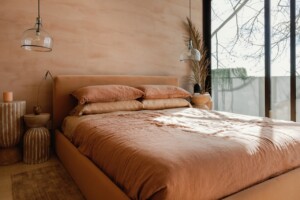
Monochromatic bedroom

If your bedroom feels cramped, cluttered, or smaller than it should, the solution usually isn’t more space—it’s a few smarter design decisions. The way your furniture is arranged, how your eye moves through the room, and even the scale of your lighting can make a noticeable difference in how spacious it feels.

We’re all drawn to those impossibly charming spaces: the Paris apartment, the cozy but perfectly arranged bedroom, and the ones that feel light-filled and effortless even when they’re not especially big. The fact that they work has nothing to do with square footage. Instead, it’s because everything inside them feels considered.

That’s the shift: creating a bedroom that feels bigger is about how the space functions—and how it makes you feel when you’re in it. The easiest solve? Remove what’s getting in the way.

Small Shifts That Make Your Bedroom Feel Bigger—Fast

Sure, it’s subtle, but in practice, it’s what changes everything. If your bedroom feels smaller than it should, a few thoughtful shifts can change how the entire space reads—fast. Start here:

1. Leave at least one area intentionally open. A room feels bigger when not every corner is trying to do something.

2. Remove one piece of furniture you don’t actually need. If it’s not essential, it’s taking up visual space.

3. Choose fewer, better-proportioned pieces. Oversized furniture closes a room in faster than you think.

4. Keep surfaces intentionally clear. Not empty—just free of anything that doesn’t need to be there.

5. Use lighting that gives the room breathing room. Think slimmer lamps, sconces, or anything that doesn’t crowd the surface it sits on.

6. Draw the eye upward. Artwork, vertical lines, or even higher curtain placement can subtly expand the space.

7. Let your bed have space on at least one side. Even a small gap can make the layout feel more open.

8. Stick to a more tonal color palette. When colors flow, the eye moves more easily—and the room feels larger.

9. Use mirrors to reflect light, not just fill a wall. Placement matters more than size.

10. Keep sightlines clear from the doorway inward. What you see first shapes how spacious the room feels.

These shifts might feel small, but they’re the same principles designers use to make a space feel considered, balanced, and more expansive. To take it a step further, I asked designers how they approach small bedrooms. Take out your notepad (and prepare your Pinterest board). These small bedroom design tips are gold.

Pin it Woman making bed.

9 Designer-Approved Ways to Make a Bedroom Feel Bigger

1. Start With Less Than You Think You Need

The fastest way to make a small bedroom feel bigger is to remove what isn’t essential.

It sounds obvious, but it’s where most spaces go wrong—trying to fit in one more chair, one more surface, one more piece that doesn’t quite have a role. As designer Katie Raffetto puts it, “less is more,” especially in a bedroom.

If it’s not helping you sleep, store, or soften the space, it’s likely adding visual noise.

Strip the room back to what you actually use—a bed, a place to set things down, lighting that works—and let everything else be intentional.

A bedroom feels bigger the moment it stops trying to be anything other than a bedroom.

2. Rethink the Scale of Your Furniture

In a small bedroom, the issue isn’t always how much you have—it’s how much space your furniture takes up.

A queen bed might feel like the default, but if it leaves you with barely any room to move, it’s working against the space. The same goes for bulky nightstands, oversized dressers, or anything that sits heavy in the room. Even creating space on just one side of the bed can make the entire layout feel more open.

Designer Cameron Johnson refers to this as “space engineering”—making decisions that create room around your furniture, not just filling the room with it. Sometimes that means choosing a smaller bed, a narrower nightstand, or a piece that can serve more than one function.

Pin it

3. Use Color to Your Advantage (Not Just for Aesthetics)

Color doesn’t just change how a room looks—it changes how it feels. In smaller bedrooms, there’s often a tendency to default to all white in hopes of making the space feel bigger. But according to Raffetto, leaning into deeper, more saturated tones can actually create the opposite effect—in a good way. “Dark colors allow you to lean into the coziness,” she says, turning the room into something that feels intentional rather than constrained.

The key is consistency. When your palette feels cohesive—whether it’s light and tonal or rich and layered—the eye moves more fluidly through the space. And that sense of visual continuity can make a room feel larger, not smaller. A room feels bigger when your eye isn’t constantly stopping to process contrast.

4. Keep Your Sightlines Clear

What you see first when you walk into your bedroom sets the tone for how the entire space feels. If your line of sight is blocked—by bulky furniture, clutter, or awkward layout—the room immediately reads as smaller. But when that path is open, even a compact space can feel noticeably more expansive.

Designers often think about this as creating a clear visual entry point. The less your eye has to work to understand the space, the bigger it feels.

Pin it Airy bedroom with blue duvet cover.

5. Draw the Eye Upward

One of the simplest ways to make a bedroom feel bigger is to change where the eye goes. When everything sits at the same level—low furniture, low art placement, nothing pulling your gaze upward—the room can start to feel compressed. Designers counter this by using vertical space to create a sense of expansion.

That might look like hanging artwork slightly higher than expected, extending the visual height of your headboard, or mounting curtains closer to the ceiling to elongate the walls. As Johnson notes, even something as simple as placing art above the bed can help “extend the headboard” and shift how the room is perceived.

It’s a subtle trick, but it works: when your eye travels up, the room opens with it.

6. Use Mirrors With Intention

Mirrors are often recommended for small spaces—but how you use them matters more than simply having one.

Placed thoughtfully, a mirror can reflect natural light, extend a sightline, or create the illusion of depth. Placed randomly, it just becomes another object on the wall. Again, you’re not filling the space for the sake of it. The goal is to amplify what’s already working.

Pin it Camille Styles drinking coffee in bedroom armchair.

7. Choose Pieces That Do More Than One Thing

In a smaller bedroom, every piece should earn its place. When square footage is limited, adding more furniture isn’t the answer—choosing smarter furniture is. Pieces that can serve multiple functions allow you to get what you need from the space without visually crowding it.

Raffetto suggests something as simple as placing a dresser next to the bed so it doubles as a nightstand. Johnson echoes this approach, pointing to bed frames with built-in storage as a way to eliminate the need for additional pieces.

8. Be Intentional With Lighting

Lighting has a bigger impact on how spacious a room feels than most people realize. Oversized lamps and bulky fixtures can take over a surface, making everything around them feel tighter. Raffetto recommends choosing streamlined lighting—slimmer lamps or wall-mounted sconces—that give your furniture room to breathe.

It’s also about placement. When light is distributed thoughtfully, it softens the edges of the room and reduces visual clutter. When it’s not, even a well-designed space can start to feel crowded.

Pin it

9. Design for a Room That Feels Resolved

Editing a room down is only half the equation. The other half is knowing when it feels complete.

A space can be minimal and still feel unfinished. The difference comes down to how the elements work together. When a room feels resolved, your eye isn’t jumping from object to object or looking for what’s missing—it can settle.

Designers create this sense of closure through a few intentional choices: curtains that frame the room, a rug that grounds the bed, and a mirror that reflects light into the space. Not more pieces—just the right ones, placed with purpose.

The One Thing That Makes a Bedroom Feel Smaller

Most bedrooms don’t feel small because of their size. They feel small because too many things are competing for attention. When every surface is filled, every corner is doing something, and every piece of furniture is slightly too big or slightly out of place, the room starts to feel visually crowded—even if there’s technically enough space.

Designers think about this differently. It’s about centering in on what the room doesn’t need. Because the moment your eye has space to move—to land, to rest—the entire room opens up.

This post was last updated on April 8, 2026, to include new insights.

The post 9 Designer Tricks That Instantly Make a Bedroom Feel Bigger appeared first on Camille Styles.

❌
Subscriptions