
Normal view

What to do if someone you know in Philadelphia or elsewhere is detained by ICE

A handout photo provided by U.S. Immigration and Customs Enforcement of a worksite enforcement operation at a car wash in Philadelphia on Jan. 28, 2025. U.S. Immigration and Customs Enforcement via Getty Images

If someone you know is detained by U.S. Immigration and Customs Enforcement, it can be incredibly challenging to find and communicate with them.

For example, it can take several days just to confirm where they are. Even after locating a loved one, it is possible to lose track of them again, as ICE regularly moves people between facilities without notice.

I’m a law professor at Temple University in Philadelphia, where I work with immigrant rights organizations on issues of ICE arrest and detention.

Here’s what we know about how and where ICE is holding people as of May 2026.

A confusing web of detention facilities

When a person is arrested by ICE, the lack of a centralized immigration detention system makes it hard to figure out where they are.

For ICE detention, the federal government can contract with counties for county jail space or to execute service agreements with private prison companies. ICE also contracts with the Federal Bureau of Prisons to hold immigrants in their facilities.

Pennsylvania is no exception to this patchwork system. Four county jails – in Pike, Clinton, Cambria and Franklin counties – have contracts with the federal government to detain immigrants for ICE. Pike County, for example, received US$16 million from ICE in 2024 and 2025 for use of its jail.

Further, ICE contracts with Centre County so the county can serve as a pass-through for payment to the private prison company, the Geo Group, which runs the Moshannon Valley Processing Center. Moshannon is the largest detention center in the Northeast with 1,876 beds. This pass-through system allows the federal government to avoid the burdensome Federal Acquisition System for contractors. That purchasing system is governed by uniform policies that apply to all federal agencies that enter into contracts for services to ensure that business is conducted with integrity, fairness and transparency.

ICE pays millions of dollars each month to operate the Moshannon Valley facility.

Most recently, ICE set up contracts with two Bureau of Prison facilities in Pennsylvania to hold immigrants: the federal detention center in Philadelphia and the federal prison FCI Lewisburg.

Over 2,000 immigrants in detention in PA

After a person has been arrested by ICE, major federal policy changes that are intended to keep people locked up or have them deported make it difficult to get that person released.

For example, ICE has issued new guidance that expands who is subject to mandatory detention without access to a bond hearing to include anyone who entered the U.S. without a visa. This policy is currently being legally challenged by the ACLU along with other groups.

Additionally, ICE releases many fewer people. Under federal law, ICE has the discretion to release most people, unless they fall into a specialized category of “criminal aliens.” Previously, people were released on parole or on their own recognizance, sometimes with an order of supervision or bond.

As a result, immigration detention has reached unprecedented levels. Over 70,000 people were held in immigration detention in January 2026. As of April 2, 2026, over 2,000 people were held in immigration detention in Pennsylvania.

Crowd of people with one holding a sign that reads 'Sergio is one of us' and another holding a sign that reads 'We stand with Sergio'
Residents of Danville, Pa., hold a candlelight vigil for local business owner Sergio Chavez Jimenez after he was arrested by ICE on Dec. 27, 2025, and detained at the Clinton County Correctional Facility. Paul Weaver/SOPA Images/LightRocket via Getty Images

Isolated from family and legal advice

Once arrested, ICE detainees have a hard time contacting the outside world.

Upon arrival at a facility, they are stripped of their belongings, including their cellphone. They must pay for telephone calls to their family or get others to pay by putting money in their commissary account.

Further, ICE detention facilities are often outside of major urban areas and far from legal services and community support. Moshannon, for example, is over 100 miles from any nonprofit immigration attorneys who provide representation to people in immigration removal proceedings.

Previously, the federal government funded a Legal Orientation Program where nongovernmental legal services offered information, referrals and representation to those in detention. In 2025, the Department of Justice ended the program, justifying its termination based on the executive order entitled “Protecting the American People Against Invasion.” Section 19 of that executive order relates to reviewing, pausing or terminating contracts, grants or other agreements with nongovernmental organizations that support or provide services “to removable or illegal aliens.”

Out-of-state transfers are common

ICE’s movement of people without notice across different facilities is a long-standing practice. However, a recent UCLA study found that out-of-state transfers of noncriminal Latino detainees jumped from 18% to 55% after President Donald Trump’s reelection in 2024.

Transfers are mostly about ICE’s own efficiency in maximizing the filling of bed space. Some advocacy organizations have alleged that transfers are conducted for retaliatory reasons against people who make requests or complain. Transfers are not only disorienting for the person involved but also impede communication with family and access to counsel.

How to find someone in ICE detention

Several online guides provide information about how to locate someone after an ICE arrest and how to prepare one’s family in case of future arrest.

Here are some key tips.

1. Use the ICE online detainee locator.

The locator requires either a person’s country of birth and alien registration number – called an “A number” – or their full name and date of birth. A person might have an A number if they have a past or present case with the government, including having applied for a green card or asylum. It can take 48 hours for ICE to enter information about the person into its database so it can be picked up by the online locator. The name must be an exact match with what was entered into the system.

Webpage of U.S. Immigration and Customs Enforcement
This online search tool can help locate an adult detainee in ICE or Customs and Border Protection custody. U.S. Immigration and Customs Enforcement

2. Contact the ICE field office.

The Philadelphia field office covers Delaware, Pennsylvania and West Virginia. If you are a noncitizen, you might want a U.S. citizen to do this for you out of an abundance of caution, because ICE records information about the person calling. Call 215-656-7164 or email Philadelphia.Outreach@ice.dhs.gov.

3. Contact the consulate.

In many instances, ICE is supposed to notify the consulate of the arrested person’s home country within 72 hours.

4. Reach out to community groups, attorneys and elected officials.

In Philadelphia, community groups such as Asian Americans United, Juntos and New Sanctuary Movement, or the statewide Pennsylvania Immigration Coalition, might be able to help you. An attorney might also be able to help you. Here is a list of nonprofit legal service providers in Pennsylvania.

Further, you can ask for help from your federal elected officials, such as your congressional representative or Sens. John Fetterman or Dave McCormick. If you have a more direct relationship with a local elected official, such as your city council member, it cannot hurt to see whether they can also help you.

How to prepare in advance

If you know someone who is at risk of arrest by ICE, you can help them prepare in advance. Tell them to:

1. Keep copies of their documents in a secure space.

This includes their A number as well as immigration documents, passport, birth certificate, marriage certificate, tax returns and any employment and medical records. If they have children, make sure to include their passports, birth certificates and medical records.

2. Memorize important phone numbers.

They should know the numbers of family members and their attorney in case their cellphone is taken from them.

3. Have an emergency plan.

A family preparedness plan includes designating a caregiver for children in case a parent or guardian is arrested. They should also consider filling out documents that may help a family member or friend to care for their children if they are unavailable because of detention or deportation. These include forms that provide temporary guardianship or custody of minor children, consent for medical care of minor children and information for the Philadelphia School District.

Philadelphia Legal Assistance provides free downloadable packets in English and in Spanish to build a family preparedness plan.

Read more of our stories about Philadelphia and Pennsylvania, or sign up for our Philadelphia newsletter on Substack.

The Conversation

Jennifer J. Lee does not work for, consult, own shares in or receive funding from any company or organization that would benefit from this article, and has disclosed no relevant affiliations beyond their academic appointment.
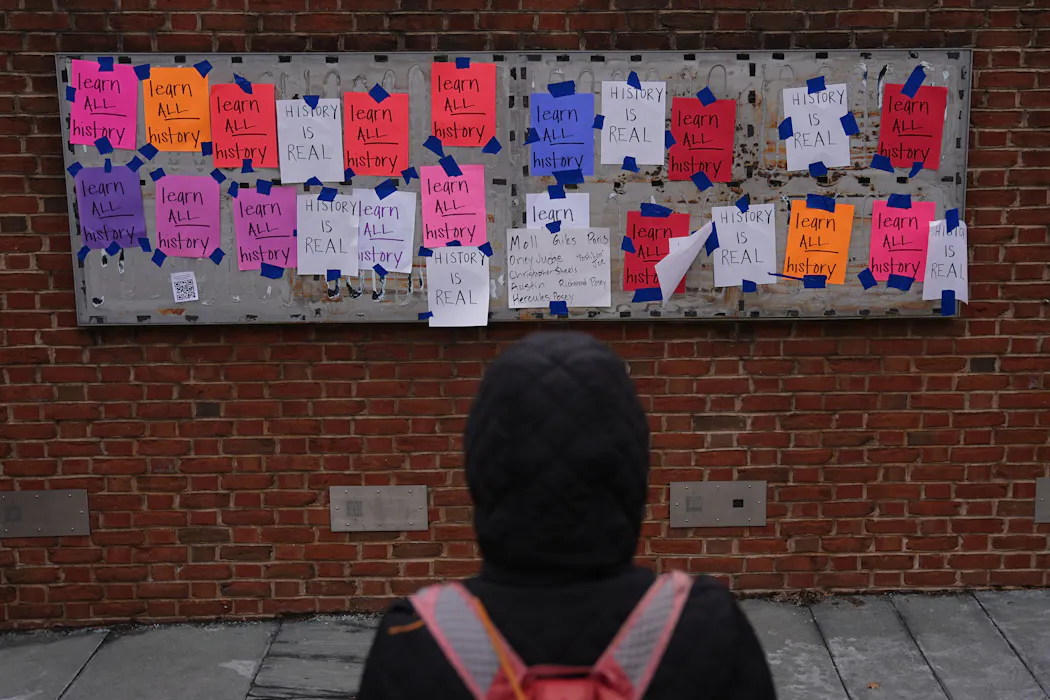
Philadelphia will celebrate Ona Judge Day to honor Martha Washington’s enslaved maid who made a daring escape to freedom

The National Park Service removed an exhibit on slavery at the President's House site in Philadelphia on Jan. 22, 2026. AP Photo/Matt Rourke

On the evening of May 21, 1796, Ona Judge made the daring decision to free herself.

Considering the prominence of her owner, the laws of the time and the dangerous trek to New Hampshire, a place where she could discreetly live freely, the act carried remarkable risk. Nevertheless, she slipped out of President George Washington’s home in Philadelphia undetected while the first family dined.

The house, then located at the intersection of 6th and Market streets in Philadelphia, served as the first executive mansion. It stood mere feet from Independence Hall, where the nation adopted its lofty language regarding freedom.

Panels with pictures and text affixed to the exterior of a building
The slavery exhibition at Independence Hall opened in December 2010. It was the first slavery memorial on federal land in U.S. history. Michael Yanow/NurPhoto via Getty Images

Years later, Judge described her narrow escape to Rev. Benjamin Chase in an interview for the abolitionist newspaper The Liberator. Judge told Chase, “I had friends among the colored people of Philadelphia, had my things carried there beforehand, and left Washington’s house while they were eating dinner.”

Prior to her escape, Judge served as a chambermaid in the President’s House. She spent years tending to Martha Washington’s every need: bathing and dressing her, grooming her hair, laundering her clothes, organizing her personal belongings, and even periodically caring for her children and grandchildren.

Being a chambermaid also included grueling daily tasks such as maintaining fires, emptying chamber pots and scrubbing floors.

Even though she engaged in this arduous labor as property of the Washingtons, living in Philadelphia provided Judge a glimpse of what freedom could eventually look like for her. Historians estimate that 5% to 9% of the city’s population at the time were free Black people. Prior to her escape, Judge befriended several of them.

Dark, moody painting depicting Black woman taking care of children by a fireplace
An oil painting titled ‘Mt. Vernon Kitchen’ by Eastman Johnson, 1864. Mount Vernon Ladies’ Association

In the spring of 1796, the Washingtons prepared to return to Virginia to resume private life. President Washington issued his farewell address in the fall of 1796, but he told family and close confidants of his plans earlier in the year.

During that time, Martha Washington made arrangements for their pending return to Mount Vernon. Her plans included bequeathing Ona Judge to her granddaughter, Elizabeth Parke Custis, as a wedding gift. Upon learning this, Judge made plans of her own.

In her interview with Chase she explained, “Whilst they were packing up to go to Virginia, I was packing to go, I didn’t know where; for I knew that if I went back to Virginia, I should never get my liberty.”

As a civil rights lawyer and professor in the Africology and African American Studies department at Temple University in Philadelphia, I study the intersection of race, racism and the law in the United States. I am pleased that the city of Philadelphia has decided to honor May 21 as “Ona Judge Day” starting this year, as I believe Judge’s story is vital to the telling of America’s history, despite attempts by the Trump administration to erase that legacy.

Dismantling history

Erica Armstrong Dunbar, a professor of African American Studies at Emory University, tells Judge’s fascinating story in her book “Never Caught: The Washingtons’ Relentless Pursuit of their Runaway Slave Ona Judge.”

Before January 2026, those who wished to learn about Judge could literally stand on the same walkway in Philadelphia where Judge once stood when she chose to flee. Several footprints, shaped like a woman’s shoes and embedded into the pathway outside of where the President’s House once stood, memorialize the beginning of Judge’s journey. These footprints composed part of an exhibit examining the paradox between slavery, freedom and the nation’s founding.

The exhibit, “Freedom and Slavery in the Making of a New Nation,” also included 34 explanatory panels bolted onto brick walls along that sidewalk. They provided biographical details about the nine people the Washingtons owned while living in the presidential mansion. The exhibit presented the sobering reality that our nation’s first president enslaved people while he held the nation’s highest office.

Colorful illustration on a panel on wall of brick building
These and other panels discussing the founders’ owning of slaves were removed in late January 2026, after an executive order issued by President Donald Trump in March 2025 called to eliminate materials deemed disparaging to the Founding Fathers or the legacy of the United States. Matthew Hatcher/Getty Images

This changed in late January when the National Park Service dismantled the slavery exhibit at Philadelphia Independence National Historic Park. The removal sparked intense, immediate outrage from people across the country dismayed by the attempt to suppress unfavorable aspects of American history.

Philadelphia Mayor Cherelle Parker responded swiftly. “Let me affirm, for the residents of the city of Philadelphia, that there is a cooperative agreement between the city and the federal government that dates back to 2006,” she said in a public statement. “That agreement requires parties to meet and confer if there are to be any changes made to an exhibit.”

The city of Philadelphia later sued Interior Secretary Doug Burgum and National Park Service acting Director Jessica Bowron. Pennsylvania subsequently filed an amicus brief in support of the city’s lawsuit.

After an inspection of the exhibit’s panels, U.S. District Judge Cynthia Rufe, who oversaw the case, ruled that the government must mitigate any potential damage to them while they are stored.

Civil rights activist and Philadelphia-based attorney Michael Coard had an opportunity to visit and examine the exhibits in storage prior to a ruling from Rufe that ultimately ordered their restoration. Coard led the fight to create and preserve the exhibit and later led the fight to restore it.

Man in overcoat and sunglasses holds up phone, with brick walls around him
Philadelphia-based attorney Michael Coard, who helped lead the effort to create the exhibition, visited the site after its removal. AP Photo/Matt Rourke

Limiting discussion of race

In ruling to “reinstall all panels, displays, and video exhibits that were previously in place,” Rufe referenced George Orwell’s “1984.” She chided the federal government’s efforts to “dissemble and disassemble historical truths.” Critics had raised similar concerns and argued that the National Park Service’s dismantling of the exhibit was an attempt to “whitewash history” and erase stories like Ona Judge’s.

Avenging the Ancestors Coalition, a Philadelphia-based organization dedicated to preserving Black history, has scheduled a celebration on May 21, 2026, at Independence Hall to honor Ona Judge Day and Judge’s courageous escape more than two centuries ago.

Organizers feel greater urgency to share this history around slavery in the U.S. because of actions by the federal government that seek to suppress it. For example, the Trump administration has restored and reinstalled two Confederate monuments of Albert Pike in Washington and Arlington National Cemetery, while it removed the slavery exhibit in Philadelphia.

Moreover, during the first week of his second term, Trump signed multiple executive orders to eliminate diversity, equity and inclusion policies.

Similarly, during the first Trump administration, the federal government engaged in various efforts to counterbalance the 1619 Project, a project spearheaded by Pulitzer-winning journalist Nikole Hannah-Jones that discussed the 400th anniversary of slavery’s beginnings in America. The 1619 Project spawned yearslong backlash. This included the 1776 Commission, created during the first Trump administration, which tried to discredit the conclusions of the 1619 project.

It is all part of a broader pattern across the country to limit how public institutions broach topics pertaining to race and racism.

This pattern has intensified as the United States prepares to celebrate the 250th anniversary of the framers signing the Declaration of Independence. As the nation celebrates its history, it must decide how much of it to explore.

This is an updated version of an article originally published on Feb. 11, 2026.

Read more of our stories about Philadelphia and Pennsylvania, or sign up for our Philadelphia newsletter on Substack.

The Conversation

Timothy Welbeck has colleagues and affiliates who are members of Avenging the Ancestors Coalition, an organization which is mentioned in this article.

❌
Subscriptions