Login
Login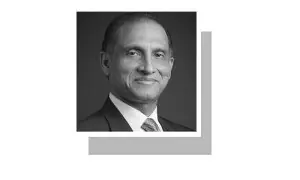


Elusive peace
THIS month, mixed signals emanated from India on the normalisation of relations with Pakistan.
Dattatreya Hosabale, secretary general of the Hindu extremist organisation RSS, proposed in an interview that the “window for dialogue” with Pakistan should always be open. He argued for diplomatic ties, visa issuance, trade and people-to-people contacts. His call was endorsed by several notables, including former Indian army chief (retd) Gen Manoj Naravane.
Within days, as if to ensure that there was no confusion about the real Indian intent, the serving army chief Gen Upendra Dwivedi announced that Pakistan must decide whether it wants to remain a “part of geography or history” — hubristic rhetoric that reflected the hegemonic mindset of the Narendra Modi regime.
ISPR strongly condemned these remarks, describing them as “madness and warmongering”.
It is clear that the Modi government isn’t interested in normalising ties with Pakistan, and is engaged in creating a Hindutva-led polity in India. It uses anti-Pakistan rhetoric to fetch votes and remain in power. To that end, it has exploited the issue of terrorism to malign Pakistan and thus ‘justify’ its policy of a so far decade-long disconnect with Pakistan.
After the Pahalgam terrorist attack in Indian-occupied Kashmir in April 2025, Prime Minister Modi authorised military strikes against nine non-military sites (mosques and allied schools) in Pakistan under the garb of fighting terrorism.
To project resilience following India’s unilateral, illegal and brazen aggression, Modi announced three policy decisions — often described as the new Modi doctrine. According to this, the response to every act of terrorism in India would be severe military action against Pakistan; India would not distinguish between terrorism by a non-state actor and state-sponsored terrorism; and India would not be blackmailed by the threat of nuclear escalation. This meant that India would continue to expand space for kinetic confrontation with Pakistan below the nuclear overhang. It is a high-risk strategy which the two nuclear-armed neighbours can ignore only at their own peril.
To its own surprise and dismay, however, India found an answer to this three-pronged Modi doctrine during the May 2025 stand-off with Pakistan.
One, Pakistan demonstrated that it could defend itself against a much larger and better-equipped hostile neighbour. Two, India’s campaign to malign Pakistan in the name of terrorism and isolate it diplomatically crashed to the ground. Three, India’s desire to be the regional hegemon also received a major setback. The Pakistani side has made it clear that any future kinetic misadventure under the so-called Modi doctrine will receive a befitting response from Pakistan through its policy of ‘quid pro quo plus’.
It’s clear that India doesn’t want peace with Pakistan.
Both countries are well aware that future wars between them would not be face-to-face engagement, but rather, non-contact warfare through missiles, drones, cyberattacks and electronic wars. It is still not clear, though, whether India has learned the right lessons from last May’s war.
When one hears Indian experts still talking of Modi’s doctrine, it appears that India is continuing to live under the illusion that it is a dominant power that can settle issues through its conventional superiority and use of force. Instead, the Indian side must appreciate the new reality that modern non-contact wars employing autonomous lethal weapons have already equalised battlefields in asymmetric situations.
In this context, pro-normalisation signals, such as those radiated by the RSS secretary general, appear tactical in nature. These could be intended to give the impression to the outside world that India was a reasonable country ready to engage with its neighbours. These gestures could also be a smokescreen to manage international pressure should India decide to carry out another attack against Pakistan to avenge its defeat in the May 2025 war.
The Modi doctrine of expanding space for larger kinetic confrontation is very dangerous. Being neighbours, the reaction time before lethal autonomous weapons are deployed is so little that both countries could virtually destroy each other if another war erupts.
A saner alternative is for the two to incrementally resume bilateral contacts, including a back channel, and implement confidence-building measures that lower the chances of another armed conflict. The only mechanism available for bilateral contact are the DGMOs, but they normally confine themselves to routine communications. Thus, there is a need to reimagine the brinkmanship within the South Asian security construct.
If Pakistan and India cannot be friends, they must at least find a way of coexisting peacefully. They owe it to a billion and a half people.
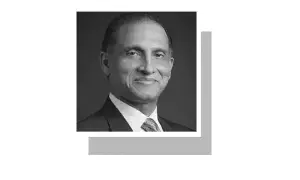
The writer is chairman, Sanober Institute and former foreign secretary of Pakistan.
Published in Dawn, May 24th, 2026