Normal view

  • ✇Dawn Newspaper Pak
  • Democrats hold early lead ahead of mid-terms none@none.com (Anwar Iqbal)
    • National polls show they have modest edge over Republicans• Congress serves as check on presidential powers WASHINGTON: National polling suggests that Democ­rats hold a modest advantage over Republicans ahead of the 2026 US mid-term elections, a contest that could significantly affect President Donald Trump’s ability to advance his agenda during the second half of his term. A compilation of recent generic congressional ballot surveys, published by The New York Times on Sunday, shows Democrats
     

Democrats hold early lead ahead of mid-terms

• National polls show they have modest edge over Republicans
• Congress serves as check on presidential powers

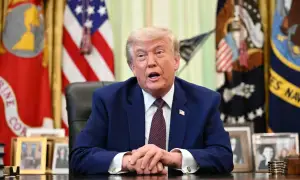
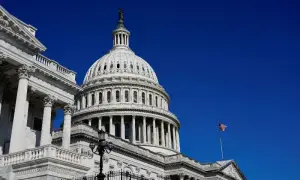
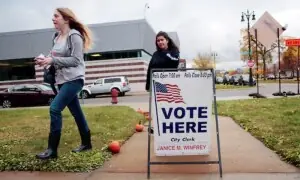
WASHINGTON: National polling suggests that Democ­rats hold a modest advantage over Republicans ahead of the 2026 US mid-term elections, a contest that could significantly affect President Donald Trump’s ability to advance his agenda during the second half of his term.

A compilation of recent generic congressional ballot surveys, published by The New York Times on Sunday, shows Democrats leading in most national polls by margins ranging from one to six percentage points, with one survey showing a larger Democ­ratic advantage. The generic ballot asks voters which party they would support for Cong­ress without naming specific candidates.

According to the non-partisan US Vote Foundation, a mid-term election takes place halfway through a president’s four-year term. In 2026, voters will elect all 435 members of the US House of Represe­ntatives and 35 members of the 100-seat Senate.

“The composition of Cong­ress, and which party in Cong­r­ess has greater power to make laws and decide whether to support, modify or reject the president’s actions, will greatly affect the president and the success of his administration,” the foundation noted.

Powerful check

Congress forms the legislative branch of the US government and serves as a powerful check on presidential authority. A Congress controlled by the opposition party can block legislation, launch investigations and make it more difficult for a president to implement policies.

Historically, mid-term elections have often been difficult for sitting presidents. The US Vote Foundation noted that “voters typically want change and therefore, the president’s party typically loses ground in mid-term House elections”.

According to the organisation, this occurred in 20 of the past 22 mid-term elections.

Current polling may reflect that historical pattern. Presi­dent Trump’s job approval ratings remain weak by historical standards. The New York Times polling average shows 38 per cent approval and 58pc disapproval, while the Economist/YouGov average places his approval rating at 35pc and disapproval at 60pc.

Political scientists have long observed a strong relationship between presidential popularity and mid-term election outcomes. The 2026 elections are also unfolding amid an increasingly heated debate over the health of American democr­acy. Analysts say that public rea­ction to the administrat­ion’s domestic and foreign policies, including the consequen­ces of the conflict with Iran, could influence voter sentim­ent and shape electoral choices.

The Washington Post recently reported that the Trump admi­n­istration had pursued several controversial measures, inclu­ding efforts to redraw congressional districts in some states, changes to voting procedures, and prosecutions of political opponents.

Fair electoral maps

Among the groups expressing concern is the Campaign Legal Centre (CLC), a Washin­gton-based non-profit organisation that advocates voting rig­hts and fair electoral maps. “Our democracy is under threat,” the CLC warned. “By protecting the freedom to vote and fighting for fair maps and transparent elections, we can ensure that our democratic system remains resilient. The future of our elections depends on the actions we take today.”

Another factor shaping the battle for control of the House is the congressional map that will be used in the 2026 elections. Because House seats are awarded district by district rather than according to the national popular vote, district boundaries can influence which party wins a majority even when national vote totals remain close.

As a result, Democrats leading in national polling do not automatically translate into a House majority.

Analysts note that control of the chamber will likely be decided in a relatively small number of competitive districts, where local issues, candidate quality and voter turnout often matter as much as national political trends.

With less than five months before elections, the political landscape could still shift significantly. Economic conditions, international crises, presidential approval ratings and voter turnout will all influence the final outcome.

For now, however, the early indicators point to a familiar pattern in American politics: an unpopular president, an energised opposition party and a mid-term election that could reshape the balance of power in Washington.

Published in Dawn, June 8th, 2026

  • ✇Dawn Newspaper Pak
  • UN affirms Kashmir and Palestine are unresolved disputes none@none.com (Anwar Iqbal)
    UNITED NATIONS: The UN Security Council’s annual report for 2025, presented to the General Assembly on Friday, reaffirmed the continued relevance of the Jammu and Kashmir dispute and the Palestinian question, describing them as long-standing issues on the UNSC’s agenda with implications for regional and international peace and security. The report noted that more than 20 communications concerning the India-Pakistan question were brought before the UNSC during the reporting period and that the co
     

UN affirms Kashmir and Palestine are unresolved disputes

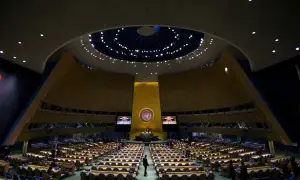
UNITED NATIONS: The UN Security Council’s annual report for 2025, presented to the General Assembly on Friday, reaffirmed the continued relevance of the Jammu and Kashmir dispute and the Palestinian question, describing them as long-standing issues on the UNSC’s agenda with implications for regional and international peace and security.

The report noted that more than 20 communications concerning the India-Pakistan question were brought before the UNSC during the reporting period and that the council held closed consultations on the issue in May 2025. It also documented the UNSC’s engagement with the situation in the occupied Palestinian territory, particularly Gaza, including the adoption of Resolution 2803 endorsing a Gaza peace plan.

Pakistan, which coordinated and drafted the introduction to the report during its UNSC presidency in July 2025, welcomed the references to both disputes, saying they underscored the need for their resolution in accordance with UN resolutions and international law.

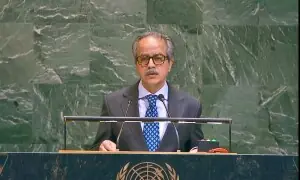
Addressing the General Assembly debate, Pakistan’s Permanent Representative to the UN, Ambassador Asim Iftikhar Ahmad, said the report highlighted the continued relevance of the Jammu and Kashmir and Palestinian disputes, which must be resolved in accordance with international legitimacy and UNSC resolutions. “This underscores that the Jammu and Kashmir dispute, which has remained on the Council’s agenda for over seven decades, continues to engage its attention,” he said.

Pakistan, India clash over references to Kashmir in Security Council’s report

Ambassador Asim reiterated Pakistan’s position that durable peace in South Asia required a just settlement of the Kashmir dispute in line with UNSC resolutions and the aspirations of the Kashmiri people.

The annual report reviews the UNSC’s work from Jan to Dec 2025 and records its engagement with conflicts and crises across Africa, the Middle East, West Asia, South Asia, Europe and Latin America, as well as thematic issues such as the peaceful settlement of disputes.

Highlighting Pakistan’s role in preparing the report, Ambassador Asim said Islamabad adopted an open, constructive and inclusive approach and secured early consensus on the introduction through consultations with Council members and the wider UN membership.

He said the report showed that despite heightened geopolitical tensions, the Security Council remained actively engaged in addressing threats to international peace and security. He also highlighted the unanimous adoption of Resolution 2788, sponsored by Pakistan, which promoted the peaceful settlement of disputes and fuller utilisation of the UN Charter’s conflict-resolution mechanisms.

Turning to Palestine, the ambassador said the continuing tragedy in the occupied Palestinian territory, particularly Gaza, remained high on the Council’s agenda. He described Resolution 2803, endorsing the Gaza Peace Plan, as a significant step after repeated failures to halt the bloodshed and stressed the need for its full implementation.

Pakistan also reiterated support for the Palestinian people’s right to self-determination and for an independent, viable and contiguous State of Palestine.

Separately, Pakistan joined UN member states in marking the International Day of UN Peacekeepers. The ambassador noted that Pakistan has contributed more than 237,000 peacekeepers to 48 UN missions over the past six decades, with more than 183 personnel losing their lives.

The debate also witnessed a sharp exchange between Pakistan and India over references to Kashmir in the report. Exercising Pakistan’s right of reply, Counsellor Gul Qaiser Sarwani rejected India’s criticism and said the report itself recorded communications on the India-Pakistan question and the UNSC’s consultations in May 2025.

Published in Dawn, June 7th, 2026

  • ✇Dawn Newspaper Pak
  • US House proposal seeks unprecedented military integration with Israel none@none.com (Anwar Iqbal)
    WASHINGTON: A provision tucked into the US House of Representatives’ version of the National Defence Authorisation Act (NDAA) for fiscal year 2027 could significantly deepen military cooperation between the United States and Israel, potentially creating Washington’s closest defence partnership with any foreign country. The NDAA is the annual legislation through which Congress authorises defence spending and sets policy priorities for the Pentagon. Before becoming law, the bill must be approved b
     

US House proposal seeks unprecedented military integration with Israel

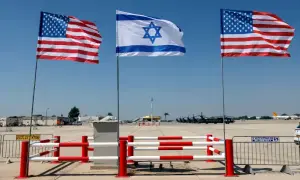
WASHINGTON: A provision tucked into the US House of Representatives’ version of the National Defence Authorisation Act (NDAA) for fiscal year 2027 could significantly deepen military cooperation between the United States and Israel, potentially creating Washington’s closest defence partnership with any foreign country.

The NDAA is the annual legislation through which Congress authorises defence spending and sets policy priorities for the Pentagon. Before becoming law, the bill must be approved by both the House of Representatives and the Senate, and then signed by the president.

At the centre of the current debate is Section 224, titled the “United States–Israel Defence Technology Cooperation Initiative,” which requires the US Secretary of Defence to “designate an executive agent responsible for synchronising cooperative efforts between the United States and Israel, including bilateral defence technology research, development, testing, evaluation, integration, and industrial cooperation.”

It outlines expanded collaboration in areas such as artificial intelligence, cyber warfare, autonomous systems, quantum technologies, and advanced weapons development. The provision also refers to potential “network integration” and “data fusion,” raising concerns among some analysts about the extent of operational interoperability between the two countries’ defence establishments.

Critics of closer cooperation argue that the proposed framework goes significantly further than existing arrangements — shifting cooperation from traditional aid mechanisms toward integrated research and co-production. They warn that the proposed changes in procurement structures could reduce public transparency and congressional oversight.

Under the current aid model, military assistance is typically approved through visible annual budgetary processes, whereas industrial and procurement partnerships operate through more complex contracting channels within the defence establishment.

These concerns come amid broader and evolving debates within US politics over the scale and nature of American support for Israel. While bipartisan backing for the US–Israel security relationship has historically been strong, recent years have seen more public questioning from lawmakers across the political spectrum regarding alignment between US foreign policy interests and Israeli military actions.

For example, Senator Chris Van Hollen, a Maryland Democrat, has argued publicly that unconditional support for Israeli governments may conflict with broader US strategic and humanitarian interests. “The Democratic Party has provided reflexive and unconditional support to Israeli governments, even as their actions have increasingly undermined American interests and values,” he wrote in The New York Times on Tuesday.

On the Republican side, Representative Thomas Massie and former Representative Marjorie Taylor Greene have both criticised the influence of pro-Israel lobbying groups — positions that some analysts and commentators suggest may have affected their standing within the party.

“Why is America having to give Israel $3.8 billion?” Greene asked, noting: “We’re $37 trillion in debt; Israel is less than $400 billion in debt.”

Whether Section 224 survives in its current form remains uncertain. Defence authorisation bills in Congress often undergo significant revision during negotiations between the House and Senate, and controversial or far-reaching provisions are frequently modified, narrowed, or removed before final passage.

Published in Dawn, June 1st, 2026

  • ✇Dawn Newspaper Pak
  • Islamabad stays in frame for US-Iran deal signing none@none.com (Anwar Iqbal)
    • Diplomats see high chances of final agreement despite hiccups• Insist both sides want to avoid open-ended conflict• Nuclear issues likely to be handled in later negotiations• Ex-envoy Munir Akram says gaps are more about narrative than substance WASHINGTON: Islamabad remains a leading contender to host the formal signing ceremony of a possible US-Iran peace agreement if negotiators succeed in finalising a deal, diplomatic sources said. Diplomatic sources at the United Nations and in Washington
     

Islamabad stays in frame for US-Iran deal signing

• Diplomats see high chances of final agreement despite hiccups
• Insist both sides want to avoid open-ended conflict
• Nuclear issues likely to be handled in later negotiations
• Ex-envoy Munir Akram says gaps are more about narrative than substance

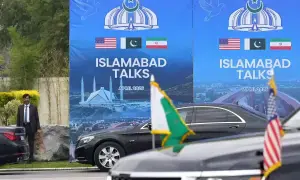
WASHINGTON: Islamabad remains a leading contender to host the formal signing ceremony of a possible US-Iran peace agreement if negotiators succeed in finalising a deal, diplomatic sources said.

Diplomatic sources at the United Nations and in Washington told Dawn that prospects for a final agreement remained high despite delays in completing the draft.

“Nine out of 10,” a senior diplomat said when asked to assess the likelihood of a final agreement being signed. “But I cannot say when it will happen.”

Another senior diplomat said Islamabad’s role in facilitating the initial contacts between Washington and Tehran had strengthened its credentials as a possible host.

“Iranians cannot come to Washington, and Americans cannot go to Tehran because the two countries do not have diplomatic relations,” the diplomat said. “If the signing takes place in a third capital, Islamabad would be a natural choice because it hosted the first round of talks.”

The assessment comes as reports in major US media outlets suggest Washington and Tehran have converged on several key elements of a potential settlement, including reopening the Strait of Hormuz and extending the current ceasefire while negotiations continue on more contentious issues.

Recent reports in The Washington Post and Reuters indicate that negotiators have developed a framework for a broader agreement, although significant differences remain over implementation and sequencing.

Diplomatic sources said both sides had increasingly concluded that prolonging the conflict would impose unacceptable costs.

According to officials familiar with the negotiations, the Trump administration determined early in the conflict that air power alone would not achieve all of Washington’s objectives and that a prolonged military campaign risked becoming politically costly at home.

The sources said Tehran had reached a similar conclusion. While Iranian officials view their ability to withstand months of military pressure as a strategic achievement, they also recognise that a prolonged conflict would further damage an economy already weakened by war and sanctions while accelerating the destruction of critical infrastructure.

“Neither side wants an open-ended conflict,” one source said. “Both recognise that the current stalemate carries growing political, economic and strategic costs.”

Diplomats said this shared assessment had created momentum for a negotiated settlement.

Although details of the proposal have not been made public, diplomatic sources familiar with the discussions described several of its key elements to Dawn.

According to these sources, the agreement would effectively end the US-Israeli military campaign against Iran in exchange for Tehran reopening the Strait of Hormuz, the strategic waterway it has kept closed since the early stages of the conflict, disrupting global energy supplies and trade.

The sources said Iran would also provide assurances that it would not seek to develop nuclear weapons, while some of the most contentious issues, including the future structure of its nuclear programme and the disposition of its enriched uranium stockpile, would be addressed in subsequent rounds of negotiations.

Several of these elements broadly correspond with details reported by Reuters and The Washington Post, which said negotiators were working on a framework that would reopen the Strait of Hormuz while deferring some nuclear issues to later stages of the process.

Former Pakistani ambassador to the UN Munir Akram said many of the demands publicly outlined by President Donald Trump appeared to overlap with provisions already under discussion.

“The differences are largely about narrative rather than substance,” Mr Akram said during a television interview on Saturday. “Both sides want an agreement they can present as a victory.”

He predicted that negotiators would eventually narrow the remaining gaps and reach a settlement.

Diplomats cautioned, however, that important obstacles remained.

Several pointed to Israeli military operations in southern Lebanon as a major concern for Tehran, which is seeking an immediate halt to those operations as part of a regional settlement.

Mr Akram argued that continued delays in reaching an agreement were hurting Iran’s allies in Lebanon by giving Israel additional time to consolidate its position in the south.

“This issue alone has the potential to complicate the peace process,” one diplomatic source said. Sources also said Washington remained concerned about the security of its Gulf allies. While the conflict exposed some of Iran’s vulnerabilities, diplomats noted that Tehran’s ability to withstand sustained military pressure had also heightened anxiety among Arab states in the region.

According to the sources, some Gulf governments have begun exploring closer ties with Iran as a hedge against future instability, prompting Washington to reaffirm its long-term military commitment to the region.

“The United States wants to strengthen, not reduce, its military presence in the Gulf,” a diplomatic source said. “That is not an issue on which Washington is prepared to compromise.”

Diplomats monitoring the negotiations said that while disagreements remained over sequencing, security guarantees and political messaging, there was growing confidence that both Washington and Tehran now viewed a negotiated settlement as preferable to a prolonged conflict whose costs continued to mount for all sides.

If an agreement is reached, Pakistan remains among the most likely venues for a formal signing ceremony, they added.

Published in Dawn, May 31st, 2026

  • ✇Dawn Newspaper Pak
  • Democrats seek Senate Republican support to limit Trump’s war powers none@none.com (Anwar Iqbal)
    WASHINGTON: Three senior Democratic leaders urged their colleagues in the US Senate on Thursday to support the move to prevent President Donald Trump from continuing the war against Iran without congressional approval. Democratic Whip Katherine Clark, Minority Leader Hakeem Jeffries, and Caucus Chair Pete Aguilar said in a joint statement that the House of Representatives on Wednesday “successfully passed a War Powers Resolution” and that it is “now time for Senate Republicans to do the right th
     

Democrats seek Senate Republican support to limit Trump’s war powers

WASHINGTON: Three senior Democratic leaders urged their colleagues in the US Senate on Thursday to support the move to prevent President Donald Trump from continuing the war against Iran without congressional approval.

Democratic Whip Katherine Clark, Minority Leader Hakeem Jeffries, and Caucus Chair Pete Aguilar said in a joint statement that the House of Representatives on Wednesday “successfully passed a War Powers Resolution” and that it is “now time for Senate Republicans to do the right thing.”

They reminded Republican lawmakers that the Iran war has now lasted more than 90 days.

The 90-day period is significant because a US law designed to limit a president’s ability to wage war requires the “president to seek authorisation from Congress if military operations continue beyond that timeframe”.

The statement comes as the legislation moves into the Senate, where lawmakers are expected to decide whether to take up and pass a companion measure or adopt the House-passed version directly.

The resolution is part of a broader congressional effort under the War Powers Resolution framework, which allows Congress to challenge or limit sustained military operations initiated without explicit authorisation.

What happens next in the Senate

The immediate next step is a Senate floor process. The chamber will likely debate and vote on a version of the resolution, following earlier procedural votes that allowed similar measures to advance.

Several senators from both parties have previously supported moving the legislation forward, increasing the likelihood of formal consideration.

However, significant uncertainty remains over final passage. Republican leadership has generally opposed restricting the president’s wartime authority, arguing that such measures could interfere with ongoing military and diplomatic operations.

At the same time, Democrats are unified in pushing for congressional oversight of any continued military engagement with Iran.

Expected outcome after Congress

Even if the Senate approves the resolution, it is expected to face a presidential veto from President Donald Trump. The administration has argued that congressional restrictions would undermine national security decision-making and limit executive flexibility during an active conflict.

Overriding a veto would require a two-thirds majority in both the House and Senate, a threshold that current political alignments make highly unlikely.

Although the measure faces steep procedural and political hurdles, its advancement reflects renewed tensions between Congress and the White House over war-making authority.

Regardless of its final fate, the debate underscores ongoing disputes about the limits of presidential power in authorising and sustaining military operations abroad.

'The bridge between confrontation and peace': Pakistan calls for stronger mediation efforts to prevent conflicts

UNITED NATIONS: Pakistan on Monday renewed its call for restraint, de-escalation and a return to diplomacy in the ongoing Middle East crisis, saying that dialogue and mediation remain the only sustainable path to resolving conflicts.

Addressing the UN General Assembly during a debate on strengthening mediation in conflict prevention and resolution, Pakistan’s Permanent Representative to the United Nations, Ambassador Asim Iftikhar Ahmad, said Islamabad had consistently advocated diplomacy in the recent tensions involving Iran and the United States.

“As a friendly neighbour of Iran, a brotherly partner of the Gulf countries, and a country with longstanding ties of amity with the United States, Pakistan continues to make sincere efforts to facilitate a durable solution for regional and global peace and stability,” he said.

The Pakistani envoy used the occasion to press for a stronger role for mediation and preventive diplomacy in addressing international disputes before they escalate into crises.

“Conflicts are not inevitable. They are often the result of diplomacy delayed, dialogue denied, and disputes left to fester,” Ambassador Ahmad told the Assembly.

“The first responsibility of the United Nations is not merely to respond to conflicts after they erupt, but to prevent them before they consume lives, regions and generations,” he said.

He noted that Pakistan’s commitment to peaceful dispute settlement was reflected in Security Council Resolution 2788, adopted unanimously in July 2025 on Pakistan’s initiative.

The resolution reaffirmed the importance of Chapter VI of the UN Charter, encouraged the use of mediation and the Secretary-General’s good offices, and underscored the role of regional and subregional organisations in resolving disputes peacefully.

Ambassador Ahmad argued that mediation should become a central pillar of international conflict prevention rather than a tool used only after violence breaks out.

“Mediation must become the guiding principle of prevention, not an instrument of crisis management,” he said.

He called for greater investment in early-warning mechanisms, quiet diplomacy, preventive engagement and the secretary general’s good offices before disputes lead to confrontation. He also stressed that mediation efforts should be anchored in international law and address the root causes of conflicts rather than merely managing their consequences.

“Lasting peace cannot be built on the denial of rights, including the right to self-determination, normalisation of foreign occupation, aggression and violation of treaties,” he said.

The envoy also urged predictable funding for the UN Mediation Support Unit and stronger partnerships between the UN and regional organisations.

Later in the day, speaking at an emergency Security Council meeting on Ukraine convened at Romania’s request, Ambassador Ahmad warned that protracted conflicts carry increasing risks of miscalculation and escalation.

He said unresolved wars often generate spillover effects and wider confrontations, a pattern that the international community was witnessing in several regions.

Referring to efforts to end the Ukraine conflict, the Pakistani envoy reiterated support for a negotiated settlement and cautioned against reliance on military solutions.

“We, therefore, see an early resumption of the United States-facilitated dialogue process as the most credible path forward,” he told the Council.

He added that military means could not deliver lasting peace and emphasised the need for sustained and meaningful negotiations.

“The true test of our commitment to peace is not how we condemn conflicts after they break out, but how proactively we prevent them in the first place,” Ambassador Ahmad said. “Mediation is the bridge between confrontation and peace.”

Pakistan has consistently maintained that dialogue, diplomacy and adherence to international law offer the only durable path to resolving international disputes, including longstanding conflicts that continue to threaten regional and international peace and security.

Iran willing to negotiate ‘aspects’ of nuclear programme, Rubio says amid escalating scrutiny over war

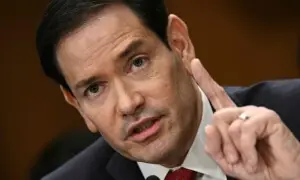
WASHINGTON: US Secretary of State Marco Rubio on Tuesday told lawmakers that Iran had agreed to begin limited negotiations over its nuclear programme, marking what he described as a tentative but meaningful shift in Tehran’s posture as the United States-led conflict continues to destabilise the Middle East.

Rubio said that Iran had also indicated interest in discussing parts of its nuclear programme that it had previously refused to engage on, but he cautioned that this did not ensure the negotiations would produce a deal to end the US-Israeli conflict with Iran.

“They have agreed to negotiate aspects of their nuclear programme that just a month ago, just a year ago, they were refusing to even mention,” Rubio said.

But he added that it’s “not a guarantee that ultimately it will lead to a deal that’s acceptable” by Congress. He said these negotiations had been made difficult by the instability of Iran’s leadership.

He also stated that the Trump administration had not proposed sanctions relief in exchange for Iran opening the Strait of Hormuz, adding that any easing of sanctions would depend on Tehran meeting conditions tied to its nuclear programme.

US officials have also indicated that discussions remain preliminary and highly conditional, with major unresolved issues tied to sanctions relief, nuclear enrichment limits, and regional security guarantees. Despite the fragile diplomatic opening, lawmakers remain sceptical that any durable agreement is within reach as fighting continues and ceasefire arrangements remain under strain.

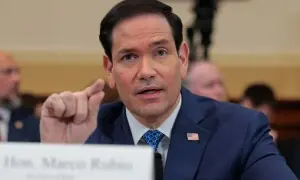
Rubio’s comments came as he appeared before the Senate Foreign Relations Committee for the first time since the outbreak of the Iran war, in a hearing dominated by questions over military escalation, diplomatic breakdowns, and the administration’s broader Middle East strategy.

At the hearing, lawmakers questioned the administration for the first time since the start of the conflict, amid a faltering ceasefire and renewed uncertainty over diplomatic efforts to end hostilities and reopen the Strait of Hormuz.

This was a tense hearing on the State Department’s $36 billion budget request, as negotiations to end the three-month war in Iran continue to stall.

The optimism projected last week by US President Donald Trump regarding a potential deal with Tehran has faded rapidly, after Iran suspended talks on Monday in protest over Israel’s continuing strikes in Lebanon, further complicating already fragile negotiations.

Rubio is also scheduled to testify before the House of Representatives later on Tuesday, as the administration faces mounting scrutiny over its handling of the crisis and its broader Middle East strategy.

As committee members indicated in their opening remarks, Iran dominated the proceedings, with lawmakers pressing the administration on military objectives, ceasefire enforcement, and the risk of wider regional escalation involving Lebanon, Israel, and Gulf shipping routes.

Senator Jeanne Shaheen, the ranking Democrat on the Senate Foreign Relations Committee, sharply criticised Rubio in her opening remarks, saying the administration had failed to provide Congress with requested information on changes to US troop posture in Europe, ongoing operations involving Iran, and American support for Ukraine.

“When you do notify Congress, it’s to inform us of decisions you have already made,” she said.

Shaheen also expressed concern about the depletion of US military stockpiles, particularly advanced weapons used in the Iran conflict.

Committee Chair James E. Risch, a Republican, opened Tuesday’s hearing by noting that it was the first appearance by the secretary of state since the Iran war began. His remarks reflected growing unease among some Republican lawmakers over the administration’s practice of limiting congressional oversight of war-related decisions.

Secretary Rubio entered the Senate briefing room as protesters shouted slogans urging him to “stop killing Cubans”. Rubio, who is of Cuban origin, was met with brief disruption as security removed the demonstrators from the room.

The protesters also chanted “Let Cuba live!” and “Repent Marco Rubio. God will forgive you for your sins. Stop killing Cubans.”

A small group of protesters gathered outside the briefing room was detained after continuing similar chants, including “Rubio lies. People with AIDS die” and “One child dies every 30 minutes”. Another small group of demonstrators, who were not arrested, later took seats at the back of the room.

  • ✇Dawn Newspaper Pak
  • Muslim rights group CAIR sues Virginia schools over student suspensions none@none.com (Anwar Iqbal)
    WASHINGTON: The Council on American-Islamic Relations (CAIR), the largest Muslim civil rights and advocacy organisation in the United States, has filed a federal lawsuit against one of America’s largest public school systems, alleging that four Muslim students were unlawfully disciplined because of their religion and ethnic background. The lawsuit accuses Fairfax County Public Schools (FCPS), a school district serving nearly 180,000 students in the suburbs of Washington, DC, of discriminating ag
     

Muslim rights group CAIR sues Virginia schools over student suspensions

WASHINGTON: The Council on American-Islamic Relations (CAIR), the largest Muslim civil rights and advocacy organisation in the United States, has filed a federal lawsuit against one of America’s largest public school systems, alleging that four Muslim students were unlawfully disciplined because of their religion and ethnic background.

The lawsuit accuses Fairfax County Public Schools (FCPS), a school district serving nearly 180,000 students in the suburbs of Washington, DC, of discriminating against students at the prestigious Thomas Jefferson High School for Science and Technology, one of the nation’s top-ranked public schools.

Filed in federal court in Alexandria, Virginia, the suit claims that school officials violated the students’ constitutional rights and federal civil rights laws by suspending them over a social media video while allowing similar conduct by other student groups to go unpunished.

The case stems from a video posted in October 2025 by members of the school’s Muslim Student Association (MSA), a student organisation representing Muslim pupils. According to the complaint, the students were participating in a viral social media trend used by clubs and organisations nationwide to promote events and attract members.

In the video, students ask classmates whether they intend to attend an MSA meeting. When the answer is “no”, other students jokingly appear and carry them away in what the lawsuit describes as a comedic skit. The plaintiffs argue the video contained no threats, weapons or references to any real-world conflict.

CAIR contends that similar videos had been produced by other student groups, including some depicting mock violence and weapons, without disciplinary action. The organisation argues that school officials acted only after outside activists and social media commentators accused the Muslim students of glorifying Hamas and reenacting the Oct 7, 2023 attacks in Israel.

According to the complaint, school officials adopted those characterisations, suspended the students, labelled their conduct antisemitic and placed disciplinary records in their files.

One plaintiff was also prohibited from wearing a sweatshirt depicting the map of Palestine, the lawsuit alleges.

The students are identified in court records by pseudonyms to protect their privacy.

“The MSA behaved innocently and no differently than other student groups on campus,” CAIR attorney Catherine Keck said while announcing the lawsuit. “Yet Fairfax County singled them out, robbed them of academic and professional opportunities, and encouraged the community to target and harass them.”

The complaint alleges that the suspensions had lasting consequences. The students claim they suffered reputational damage, lost educational opportunities, were subjected to online harassment and threats, and in some cases faced setbacks in college admissions and internship applications.

CAIR’s legal team argues that the disciplinary action violated the students’ rights under the First Amendment, which protects free speech, the Fourteenth Amendment’s Equal Protection Clause, and Title VI of the Civil Rights Act of 1964, which prohibits discrimination in federally funded educational institutions.

School officials have previously defended their response, saying the videos depicted mock kidnappings and violence that were inappropriate in a school setting.

At the time of the controversy, FCPS said such content was especially troubling because it could be perceived as traumatic by members of the Jewish community amid ongoing tensions related to Israel’s war on Gaza.

Jewish community organisations also criticised the videos when they surfaced last year, arguing that imagery resembling hostage-taking was particularly insensitive given the continued impact of the October 7 attacks and the hostage crisis that followed.

The lawsuit, however, argues that the school’s actions were driven not by concerns about student safety but by stereotypes associating Muslim and Arab students with violence.

“The reason FCPS and TJHSST punished these students and not other students in similar videos is because they believe that Muslims and Arabs pose a threat where others do not,” CAIR attorney Ahmad Kaki said.

The school district has not yet filed a detailed response to the complaint.

The case is likely to turn on whether the plaintiffs can demonstrate that similarly situated non-Muslim student groups engaged in comparable conduct but were treated differently.

If the court finds evidence of selective enforcement based on religion or ethnicity, the lawsuit could become one of the most closely watched school civil-rights cases arising from post-October 7 tensions in American public schools.

The complaint seeks damages, expungement of the students’ disciplinary records, declaratory relief and court orders preventing similar actions in the future.

  • ✇Dawn Newspaper Pak
  • Bangladesh elected president of UN General Assembly in closely contested vote none@none.com (Anwar Iqbal)
    UNITED NATIONS: Bangladesh’s Foreign Minister Khalilur Rahman was elected president of the United Nations General Assembly (UNGA) for its 81st session (2026–2027) on Tuesday, defeating Cyprus’s candidate Andreas S. Kakouris in a tightly fought vote that underscores the continuing importance of regional consensus-building within the global body. Rahman secured 99 votes in the 193-member UNGA, while Kakouris received 91 votes. There were no abstentions. The required majority for the election was 9
     

Bangladesh elected president of UN General Assembly in closely contested vote

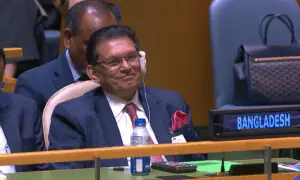
UNITED NATIONS: Bangladesh’s Foreign Minister Khalilur Rahman was elected president of the United Nations General Assembly (UNGA) for its 81st session (2026–2027) on Tuesday, defeating Cyprus’s candidate Andreas S. Kakouris in a tightly fought vote that underscores the continuing importance of regional consensus-building within the global body.

Rahman secured 99 votes in the 193-member UNGA, while Kakouris received 91 votes. There were no abstentions. The required majority for the election was 96 votes.

How the election works

The president of the UNGA is elected annually by the 193 member states, with each country holding one equal vote.

According to the UN’s Rules of Procedure, the election is conducted by secret ballot unless members agree otherwise, and a candidate must obtain a simple majority of those present and voting to win.

While the process is formally competitive, it is shaped in practice by a long-standing principle of geographical rotation, under which the presidency alternates among regional groups.

For the 81st session, the Asia-Pacific Group was entitled to nominate candidates, leading to a contest primarily between Bangladesh and Cyprus-backed contenders within the agreed rotation framework.

The president-elect assumes office at the opening of the UNGA session in September 2026 and serves a one-year term, presiding over plenary meetings, managing debate, and facilitating negotiations among member states.

Significance of the outcome

Bangladesh’s election is notable for several reasons.

First, the margin reflects a competitive race within a system that often produces consensus or unopposed candidates. The relatively close result—99 to 91—signals a more contested political environment within the UNGA, where regional alignments and diplomatic campaigning increasingly matter.

Second, the presidency is a high-visibility role in global diplomacy. Although the UNGA president does not set binding policy, the officeholder plays a key role in shaping the agenda of debates on international peace and security, development, climate action, and UN reform. The president also helps steer negotiations on procedural and sometimes politically sensitive resolutions.

Finally, the result highlights Bangladesh’s growing diplomatic profile within multilateral institutions. The presidency is often viewed as both symbolic and strategic, offering the holder country an opportunity to influence consensus-building across 193 member states during a period of heightened global tensions.

Rahman will formally take up the post at the opening of the 81st UNGA session in September 2026.

FM Dar extends felicitations

Deputy Prime Minister and Foreign Minister Ishaq Dar extended felicitations to his Bangladeshi counterpart over his appointment as the UNGA president.

In a social media post on X, FM Dar said, “Having closely engaged with him, I am confident that his vast diplomatic experience and steadfast commitment to multilateralism will guide the Assembly with distinction. I look forward to continuing our engagement at the United Nations and working together to strengthen multilateral cooperation, advance shared global priorities, and promote dialogue, peace and sustainable development.”

He also wished Rahman success in this important responsibility and endeavour.

  • ✇Dawn Newspaper Pak
  • US judge blocks Trump’s $100,000 fee for H-1B visas none@none.com (Anwar Iqbal)
    WASHINGTON: A United States federal judge has blocked a controversial Trump administration rule that would have required a $100,000 fee for each new H-1B visa application, it emerged on Tuesday. US President Donald Trump had ordered the annual fee be added to H-1B skilled worker visas in September 2025. H-1B visas allow companies to sponsor foreign workers with specialised skills — such as scientists, engineers, and computer programmers — to work in the US, initially for three years, but extenda
     

US judge blocks Trump’s $100,000 fee for H-1B visas

WASHINGTON: A United States federal judge has blocked a controversial Trump administration rule that would have required a $100,000 fee for each new H-1B visa application, it emerged on Tuesday.

US President Donald Trump had ordered the annual fee be added to H-1B skilled worker visas in September 2025.

H-1B visas allow companies to sponsor foreign workers with specialised skills — such as scientists, engineers, and computer programmers — to work in the US, initially for three years, but extendable to six years.

Judge Leo Sorokin ruled that the charge was effectively a tax, and therefore illegal because only the US Congress has the authority to create new taxes.

The decision came after 20 state attorneys general, all Democrats, filed a legal challenge. They argued that the fee would make it harder for public universities, schools, and hospitals to hire qualified international staff.

The Trump administration had defended the policy, saying the president had the power to impose the fee as part of immigration enforcement and efforts to limit certain categories of foreign entry into the US. The court rejected that argument.

Judge Sorokin said the government could not re-label a tax as a “fee” or “penalty” to bypass congressional approval.

The H-1B visa system allows up to 65,000 new visas per year, plus an additional 20,000 for people with advanced degrees. Normally, employers pay a few thousand dollars in administrative and processing costs for each H-1B application. The $100,000 charge was far higher than standard practice and widely seen as a major barrier.

Court records showed that only a small number of employers — about 85 — had paid the fee before it was challenged in court and effectively halted.

  • ✇Dawn Newspaper Pak
  • US Congress moves to tighten oversight of military affairs none@none.com (Anwar Iqbal)
    WASHINGTON: The US Congress is moving to tighten oversight of Pentagon leadership decisions and limit unilateral military action against Iran, in a rare bipartisan effort that underscores renewed tensions over presidential war powers and civilian control of the military. On Thursday, the House Armed Services Committee adopted a bipartisan provision that would require the Pentagon to notify Congress within five days whenever a senior military officer is dismissed, along with a written explanation
     

US Congress moves to tighten oversight of military affairs

WASHINGTON: The US Congress is moving to tighten oversight of Pentagon leadership decisions and limit unilateral military action against Iran, in a rare bipartisan effort that underscores renewed tensions over presidential war powers and civilian control of the military.

On Thursday, the House Armed Services Committee adopted a bipartisan provision that would require the Pentagon to notify Congress within five days whenever a senior military officer is dismissed, along with a written explanation for the decision.

Lawmakers say the measure is intended to improve transparency over personnel changes at the top levels of the armed forces, where congressional visibility has traditionally been limited.

The move comes amid broader scrutiny on Capitol Hill of the Trump administration’s handling of military operations against Iran and recent changes in senior defence leadership.

While Congress frequently debates executive war powers, bipartisan agreement on measures that directly constrain presidential military authority is uncommon in a sharply divided Washington.

On Wednesday, the House of Representatives also adopted a War Powers resolution aimed at limiting the president’s ability to continue military operations against Iran without congressional authorisation.

The measure reflects growing interest among lawmakers in reasserting legislative authority over sustained military action under the 1973 War Powers framework, which requires congressional consultation when operations extend beyond defined time limits.

The latest resolution, introduced by Democratic Representative Pat Ryan, passed on Thursday by voice vote without objection, signalling unusual bipartisan consensus on an issue that has historically divided Congress along party lines.

The push for greater oversight has been fuelled in part by reports that US War Secretary Pete Hegseth has dismissed roughly two dozen senior military officers since taking office.

Some lawmakers in both parties have questioned both the scale of the removals and the absence of public explanations for the decisions.

Scrutiny intensified further after the removal of Army Chief of Staff General Randy George, a highly regarded officer with more than four decades of service.

Republican Congressman Steve Womack described Gen George as a “patriotic American,” reflecting unease within parts of the Republican caucus over the decision.

While civilian control of the military is a core principle of US governance, lawmakers have raised concerns in hearings about whether recent personnel changes have been accompanied by sufficient transparency to Congress, particularly at a time of heightened military activity in the Middle East.

The new reporting requirement still faces a long legislative path, needing approval by both chambers of Congress and the president’s signature. But its advancement at the committee level, alongside the War Powers resolution, signals a cautious but notable shift in congressional willingness to assert oversight over both military operations and senior Pentagon personnel decisions.

Even so, Republican lawmakers remain broadly supportive of the administration’s defence posture, suggesting that the emerging push for oversight is more focused on process and transparency than on a fundamental break with the White House’s military policy.

Rubio declares US operation against Iran over, claims Washington achieved military objectives

WASHINGTON: US Secretary of State Marco Rubio told lawmakers on Wednesday that Washington’s military campaign against Iran, codenamed “Operation Epic Fury”, had concluded and that any subsequent American military action would be defensive in nature rather than part of an ongoing offensive operation.

Rubio made the remarks during a House Foreign Affairs Committee hearing when members of Congress questioned the administration’s assessment of the conflict and its aftermath.

His comments came amid continuing concerns over regional security, the deployment of US forces across the Middle East and the closure of the Strait of Hormuz, a vital maritime route through which a significant share of the world’s oil exports pass.

During the hearing, Rubio announced, “We’re no longer conducting sustained strikes inside of Iran to degrade their military, because Epic Fury is over.”

Later, he reiterated: “Epic Fury is over … that operation has concluded.”

Rubio argued that the operation was a “victory” as Washington achieved its objectives by severely degrading Iran’s conventional military capabilities.

According to the secretary, the United States had destroyed Iran’s defence industrial base, significantly reduced its missile launchers and drone stockpile, destroyed what remained of its air force and wiped out its conventional navy.

“Those are all gone,” Rubio said. “So, I consider that victory, and we did, too. And that was the purpose of Epic Fury.”

He also noted that despite the extensive damage inflicted by the United States and Israel, Iran retained some drone and maritime combat capabilities.

Rubio’s comments prompted a sharp exchange with Democratic Representative Sara Jacobs, who questioned the administration’s assertion that the war was over while American troops remained deployed across the region and the Strait of Hormuz remained closed.

Jacobs asked: “You can change the name of the operation, it doesn’t change the fact that the Strait’s still closed, and my service members and all of our service members are still in harm’s way.”

She continued: “I’d like to talk about the war in Iran. Yesterday, in your testimony, you told Senator Booker that the war in Iran is over. This is news to me. It’s also news to my 2,500 constituents Marines, San Diego, Marines, in the Middle East, the other of my constituents who are deployed there and the thousands more of my constituents who have 48-hour deployment notices whose families are still very concerned.”

Jacobs said she was willing to accept the secretary’s claim but still had a question for him: “Who won?”

Responding, Rubio defended the administration’s definition of victory and said the operation had accomplished the goals set by Washington.

“We’re no longer conducting sustained strikes inside of their military because Epic Fury is over. The second point, as on the question of who won, I can tell you this: we define victory.

“We define victory as destroying their defence industrial base significantly, reducing the number of missile launchers that they possess significantly, reducing the stockpile of drones,” he added.

“And we achieved all of those in addition to destroying what they had left of an Air Force and wiping out their entire conventional navy. Those are all gone, so I consider that victory and we did too, and that was the purpose of Epic [Fury]“

The lawmaker countered his argument, saying that, “You can change the name of the operation, but it doesn’t change the fact that the Strait of Hormuz is still closed and my service members and all of our service members are still in war.”

In a further exchange during the hearing, Jacobs accused Rubio of failing to recognise that the administration was “losing this reckless war of choice”.

She added a personal remark, saying: “And just like you couldn’t admit that the shoes the president bought you were too big, you clearly don’t know what winning means.”

Secretary Rubio appeared momentarily confused by the reference and responded with frustration: “I don’t know what shoes she’s talking about… They’re some Florsheim’s. They’re actually pretty good. They fit fine.”

Jacobs then challenged the administration’s claims regarding Iran’s military capabilities, citing intelligence assessments.

“Our intelligence community has said that Iran is reconstituting its military industrial base faster than we had predicted,“ she said.

“Analysts assess it still holds roughly 70% of its missile stockpile and 70% of its mobile launchers,” said the lawmaker.

Jacobs further argued that the strategic situation had deteriorated since the conflict began. “The Strait of Hormuz was open before the war, it is now closed…”

Secretary Rubio pushed back on her assertions, disputing the basis of the intelligence being referenced.

“Well, first of all, I don’t know what intelligence assessments you’re referring to.”

“We wouldn’t discuss intelligence assessments if they were real.”

The exchange highlighted the continuing debate in Washington over the consequences of the conflict with Iran.

While the administration maintains that the operation successfully achieved its military objectives and has now ended, critics argue that threats to US forces and instability in the Gulf region persist despite the cessation of large-scale American strikes.

Rubio’s remarks nevertheless marked the clearest public declaration by the administration to date that the military phase of “Epic Fury” has concluded and that the United States no longer considers itself engaged in an offensive campaign against Iran.

Political aims, diplomacy debate

Rubio also told lawmakers that while the administration would welcome political change in Iran, it was not the objective of the US military mission.

“We would love to see a change in Iran and that they be governed by people,” Rubio told the Committee after Republican Congressman Michael McCaul expressed hopes for a “free Iran”.

However, he stressed: “That was not the goal of our mission,” adding that the objective was to deprive Tehran of the ability to threaten the region with missiles, drones and a potential nuclear weapons capability.

“The goal of our mission was to take away their ability to threaten the region with an overwhelming number of missiles and drones,” he said, adding that the US had to prevent Iran from “break[ing] out to a nuclear weapon.”

The hearing also featured sharp criticism from Democrats. Representative Gregory Meeks, the ranking member of the committee, accused the Trump administration of abandoning diplomacy and escalating regional conflict.

In prepared remarks, Meeks said President Trump had promised Americans “no new wars — only to send a new generation of troops back to the Middle East.”

He argued that the administration had “traded dialogue for bombs yet again” and claimed that “America First” had left the United States isolated.

“The record says otherwise on all three,” Meeks said, referring to Rubio’s pledge to make America “safer, stronger, and more prosperous”.

He added that Americans were “not safer while fighting an unnecessary war” and “not more prosperous when this administration has done everything it can to enrich the president and his allies, while everyday Americans struggle to afford groceries, gas, and healthcare”.

❌
Subscriptions