Normal view

  • ✇Eos
  • As the Coal Industry Fades, Life Expectancies in Coal Country Shift Grace van Deelen
    Want to see more reporting from Eos in your Google search results? Click the button below to make Eos a preferred source. Go to Google The coal industry can damage human health in myriad ways via dangerous working conditions and harmful pollution. But the income opportunities offered by the industry can also provide much-needed stability for certain communities, such as those in Appalachia’s coal country. “Being employed is good for your health, but environm
     

As the Coal Industry Fades, Life Expectancies in Coal Country Shift

30 April 2026 at 12:56
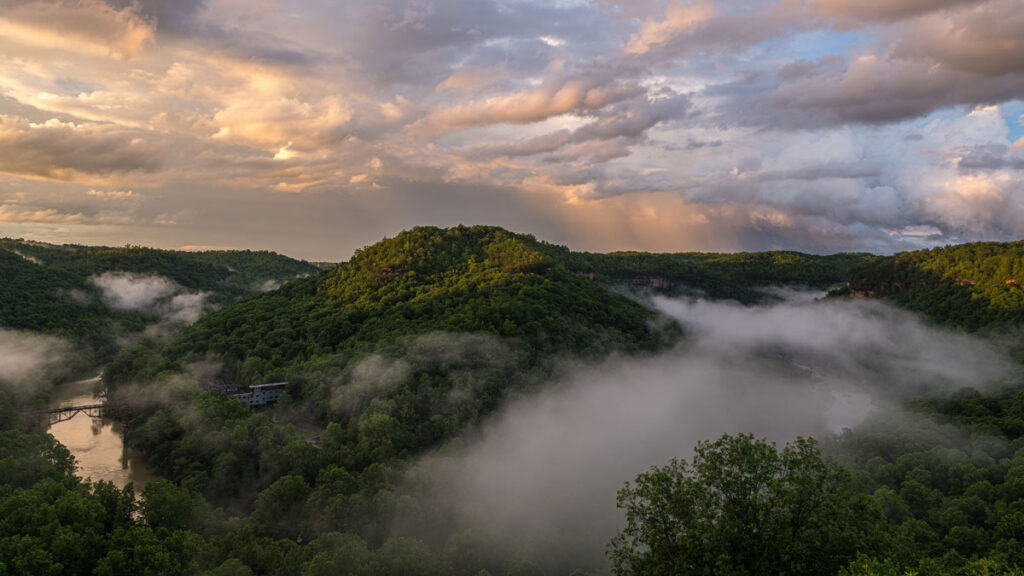
A foggy mountain scene at sunset. In the right-hand corner, a railroad leading to a small building can be seen.

The coal industry can damage human health in myriad ways via dangerous working conditions and harmful pollution. But the income opportunities offered by the industry can also provide much-needed stability for certain communities, such as those in Appalachia’s coal country.

“Being employed is good for your health, but environmental pollution is bad for your health, and these two things are operating at the same time in some communities,” said Mary Willis, an epidemiologist at Boston University.

The industry, though, is changing. Total coal production in the United States peaked in 2008, and the number of miners has steadily dropped since then.

A graph shows total, underground, and surface production of coal in millions of short tons alongside the number of coal miners from 1949 to 2023.
Total coal production peaked in the United States in 2008, after which the number of coal miners declined, too. Credit: Thombs et al., 2026, https://doi.org/10.1111/ruso.70034, CC BY 4.0

A new study coauthored by Willis and published in Rural Sociology delves into the effects of this decline on life expectancies across the United States and in Appalachia in particular. The results show that a disappearing coal mining industry has mixed effects on health, highlighting the importance of a “just transition”—a shift away from coal mining and toward clean energy that also prioritizes decent work opportunities for those left without a job.

“How do we balance these two conflicting priorities?” Willis said.

Delving into the Decline

Coal production and consumption are linked to many human health harms, including heart disease, asthma, lung cancer, mental illness, and more. But how those health impacts intersect with the broader economic effects of mining has not been well studied.

In the new study, the research team analyzed the effects of the declining industry through the lens of the social determinants of health, or how social structures influence health outcomes.

A table shows the life expectancy outcomes of the effects of three pathways by which coal mining impacts health.
Researchers analyzed how coal mining impacts life expectancies via three pathways: production, mining labor time, and employment. Credit: Thombs et al., 2026, https://doi.org/10.1111/ruso.70034, CC BY 4.0

To study these effects, the team compared coal mining data from the U.S. Energy Information Administration to life expectancy data from the Institute for Health Metrics and Evaluation at the University of Washington from 2012 to 2019. Life expectancy is a metric that can be responsive to subtle changes in the environment, Willis explained. For example, the decommissioning of a coal-fired power plant a few miles away from a community may not affect residents’ day-to-day life but probably affects the scale of life expectancy across the population.

In coal-producing counties across the United States, the average life expectancy was 1.6 years lower than that in non-coal-producing counties. But the declining coal industry had more nuanced impacts on health in Appalachian communities, the researchers found. As coal production fell and miner labor hours decreased, life expectancy increased. But as the number of jobs available decreased, life expectancy decreased, too.

The findings suggest that the employment and associated economic impacts of a waning coal industry harm health. Previous studies documented similar increases in mortality in other regions where the fossil fuel industry has declined. Such research has indicated that these increased mortality rates may be partially driven by “deaths of despair” from drug and alcohol use and suicide related to economic distress. The association of these factors with mortality rates in coal country, the authors suggest, may be an area for future study.

Understanding that coal mining is associated with some positive economic and health effects is “an important perspective for understanding the sector as a whole,” said Lucas Henneman, an environmental engineer at George Mason University who was not involved in the new study. “It’s a really interesting piece of work.”

“This is just a really complex story that hasn’t been told yet—putting health into the context of these just energy transitions,” Willis said.

The complex reality of the coal industry extends beyond Appalachia. Most of the pollution related to the coal industry consists of toxins released when coal is burned, meaning those who bear the brunt of coal’s health impacts may not be located where coal is mined, Henneman said.

In fact, a 2023 study by Henneman and others found that before 2009, a quarter of all air pollution–related deaths of people on Medicare were attributable to coal burning. From 2013 to 2020, that number dropped to 7%, alongside a drop in coal consumption. A complete picture of how the coal industry affects health should also consider how pollution travels beyond coal country—where it’s burned, how it’s transported in the air, and who ultimately breathes it in, he said.

A Just Transition

“The question is how to provide [jobs] in a way that provides the same level of stability, same kind of income benefits, and isn’t too much of a shock to [communities’] way of life or sense of identity.”

The economic activity of a mine, through direct employment as well as businesses reliant on the mine and miners, “chases away other opportunities,” making the mine the economic backbone of the area, said Jonathan Buonocore, an environmental health scientist at Boston University and a coauthor of the new study. The concept of a just transition aims to ensure that employment opportunities in the wake of the coal industry’s decline reach these communities.

“The question is how to provide [jobs] in a way that provides the same level of stability, same kind of income benefits, and isn’t too much of a shock to [communities’] way of life or sense of identity,” Buonocore said.

—Grace van Deelen (@gvd.bsky.social), Staff Writer
Citation: van Deelen, G. (2026), As the coal industry fades, life expectancies in coal country shift, Eos, 107, https://doi.org/10.1029/2026EO260134. Published on 30 April 2026.
Text © 2026. AGU. CC BY-NC-ND 3.0
Except where otherwise noted, images are subject to copyright. Any reuse without express permission from the copyright owner is prohibited.
  • ✇Eos
  • Antibiotic Resistance Might Get a Boost from Droughts Javier Barbuzano
    The spread of antibiotic resistance, a growing threat to global health that causes millions of deaths annually, is typically blamed on the overuse of drugs in hospitals and in the food industry. However, a new study published in Nature Microbiology suggests that normal geological processes could be accelerating the development of new resistances. Soil microorganisms naturally produce antibiotics as a form of chemical warfare to compete with each other. When soils dry out, these natural compo
     

Antibiotic Resistance Might Get a Boost from Droughts

29 April 2026 at 13:19
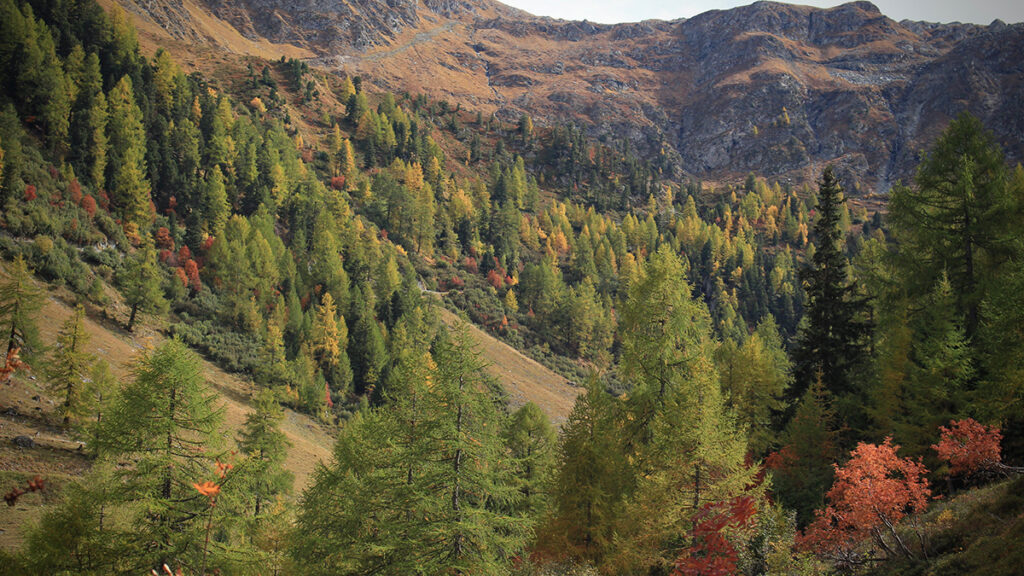
A forest on a mountainside has mostly green trees, with sprinkles of autumn red and yellow. A brown mountain is in the distance.

The spread of antibiotic resistance, a growing threat to global health that causes millions of deaths annually, is typically blamed on the overuse of drugs in hospitals and in the food industry. However, a new study published in Nature Microbiology suggests that normal geological processes could be accelerating the development of new resistances.

Soil microorganisms naturally produce antibiotics as a form of chemical warfare to compete with each other. When soils dry out, these natural compounds become more concentrated because there is less water to dilute them. Like a dosage increase, this concentration can create a harsher environment, killing sensitive microbes and sparing those with the capacity to resist. This phenomenon, in turn, is an evolutive driver that favors the appearance of new and more effective resistance genes.

“If you have more antibiotics in your environment, only the organisms that can withstand it…can resist it.”

To test whether this mechanism is having real genetic effects, Xiaoyu Shan, a microbial ecologist and postdoctoral researcher at the California Institute of Technology (Caltech), and colleagues looked at soil samples under controlled conditions as the samples transitioned from a wet state to a desiccated one. They found that as the soil dried, the presence of genes related to antibiotic production and resistance spiked, suggesting that drought leads to a rapid escalation in the subterranean biological arms race. Importantly, they did not look for pathogenic bacteria specifically, only for resistance genes, which can be present in a variety of microbes, whether those microbes are pathogenic or not.

“Drought leads to this elevation of antibiotic producers and bacteria that are resistant,” said team member Dianne Newman, a professor of biology and geobiology also at Caltech. “It’s a pretty simple idea: If you have more antibiotics in your environment, only the organisms that can withstand it…can resist it.”

Alternative Explanations

However, there could be other potential explanations for the observed increase in antibiotic-producing and antibiotic resistance genes, according to Enrique Monte, a microbiologist at the Universidad de Salamanca in Spain who wasn’t involved with the new study. For instance, arid soils are naturally more diverse than humid soils, making it common to find a more diverse gene pool in the ground, Monte said. In addition, the mere presence of antibiotic genes might not result in an actual release to the environment, or a release could happen in dosages that are too small to cause noticeable effects. “There are antibiotics that are volatile; they escape into the air, so they never reach a therapeutic concentration to kill others,” Monte said.

The authors, however, took some precautions to show that the increase in antibiotic resistance genes was actually a biological response to environmental stress. For instance, they also tracked other genes that should remain unaffected or decline under desiccation. As expected, genes that are needed for basic survival remained stable, while genes responsible for bacterial movement declined in dry soil, where mobility is restricted. Even some species that were not favored by desiccation saw an increase in resistance-related genes, “which is even stronger evidence,” Shan said.

Geographic Limitations

As the researchers combed through publicly available metagenomic data libraries, they had to select collections with strict control of all variables and in which the only changing factor was water content. That limited the analysis to five locations: two grasslands and a sorghum field in California; a forest in Valais, Switzerland; and a wetland in Nanchang, China.

The scarcity of locations might limit how extrapolable these results are, said Fiona Walsh, a microbiologist at Maynooth University in Ireland who was not involved with the work. “There are thousands of high-quality metagenomes available online with excellent metadata. I would really like to see a comparison where they apply their analysis to a broader map of global metagenomic data to see if they reach the same conclusions,” she said.

From the Soil to the Hospital

Drier regions consistently showed a higher number of resistant bacteria cases in hospitals, even after adjusting for confounding factors such as local income.

The study also suggests that dry soils might be a hidden driver of clinical cases of antibiotic resistance worldwide. The authors combined hospital data on the number of cases of resistant infections from 116 countries with the local aridity index, which measures temperature and precipitation, for each location. They found a strong correlation: Drier regions consistently showed a higher number of resistant bacteria cases in hospitals, even after adjusting for confounding factors such as local income.

However, the authors admitted that this is only a correlation effect and doesn’t prove causation. “It motivates follow-up research to see how environmental concentration weighs against human overuse and poor stewardship,” Newman said.

Even this correlation could be a stretch, according to microbiologist Sara Soto, head of the Global Viral and Bacterial Infections Programme at the Instituto de Salud Global de Barcelona. At the end of the day, she said, the authors have soil data from only five locations in three countries, and they are not tracking the specific bacterial varieties that make people sick, only resistance genes.

For the thesis to be solid, Soto said, the ideal approach would have been to contrast hospital strains from a specific area with soil data from that same region during the same drought episode. “Making such a vast inference—that what happens in the soil of one location affects what happens in a hospital elsewhere—is a big leap,” she said.

The authors, however, point out that resistance genes from soils can eventually make their way into human pathogens. Microbes have the capacity to share genetic material across species—a process known as horizontal gene transfer. In their analysis, the team identified specific resistance sequences that appeared to have been transferred between soil bacteria relatively recently, perhaps within the past decade. How they are reaching hospitals remains a matter for a future study, they said.

As droughts increase in numerous regions in the face of climate change, this selective pressure within soil ecosystems is expected to intensify. Though these findings do not show that drought directly puts drug-resistant pathogens in hospitals, they still suggest that a drying climate could set the scene for an increase in antibiotic resistance, the researchers report.

—Javier Barbuzano (@javibar.bsky.social), Science Writer

Citation: Barbuzano, J. (2026), Antibiotic resistance might get a boost from droughts, Eos, 107, https://doi.org/10.1029/2026EO260132. Published on 29 April 2026.
Text © 2026. The authors. CC BY-NC-ND 3.0
Except where otherwise noted, images are subject to copyright. Any reuse without express permission from the copyright owner is prohibited.
  • ✇Eos
  • Cleanup of Battery Recycling Sites May Lower Childhood Lead Exposure Anuradha Varanasi
    Lead-acid batteries are omnipresent. An integral part of most electric vehicles and all conventional vehicles globally, they also serve as backup energy storage systems in developing countries. But if lead-acid batteries are recycled in smelting units without adequate pollution control measures, they can cause elevated lead pollution that persists in local soils for thousands of years. However, because recycling sites with pollution control measures cost millions of dollars, most efforts are in
     

Cleanup of Battery Recycling Sites May Lower Childhood Lead Exposure

15 April 2026 at 13:00
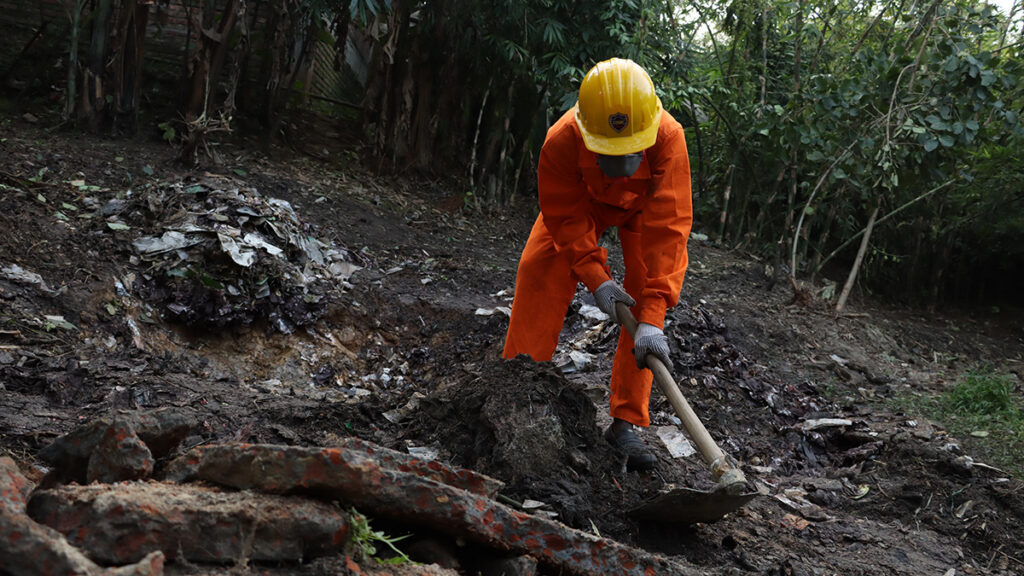
A person in an orange jumpsuit and a yellow hard hat takes a tool similar to a hoe to the dark soil they are standing on.

Lead-acid batteries are omnipresent. An integral part of most electric vehicles and all conventional vehicles globally, they also serve as backup energy storage systems in developing countries. But if lead-acid batteries are recycled in smelting units without adequate pollution control measures, they can cause elevated lead pollution that persists in local soils for thousands of years. However, because recycling sites with pollution control measures cost millions of dollars, most efforts are informal and unregulated.

In a recent study, researchers reported that scraping lead-contaminated soil in the vicinity of an abandoned recycling site for used lead-acid batteries and treating it with phosphate was linked to a 22% reduction in the blood lead levels (BLLs) of children who were living close to that site in a Bangladeshi town. The research was published in the International Journal of Hygiene and Environmental Health.

“Informal battery recycling is rampant in Bangladesh.”

“Informal battery recycling is rampant in Bangladesh,” said study coauthor Mahbubur Rahman, an environmental health scientist at the International Centre for Diarrhoeal Disease Research, Bangladesh. “Used lead-acid batteries are broken up and smelted in close proximity to residential and agricultural areas, which exposes those communities to lead emissions that contaminate their soil and water sources.”

Rahman and colleagues analyzed the BLLs of 130 children living close to two recycling sites for used lead-acid batteries (ULAB) in the Tangail District of Bangladesh that were abandoned in early 2019. They also assessed the BLLs of 37 children who did not live anywhere near ULAB recycling sites. The researchers then carried out soil remediation efforts at one of the ULAB sites but not the other. Prior to the work, the team members held informational sessions for the community about the dangers of lead pollution so locals could provide informed consent to participate.

The team observed that following remediation efforts, the lead content of the soil in and around the former battery recycling site decreased from more than 20,000 parts per million to less than 400 parts per million, which was considered acceptable by the U.S. EPA when the study was conducted, from 2022 to 2023. (The EPA reduced the limit to 200 parts per million in 2024.)

The researchers collected and cleaned up soil from children’s play areas, roadsides, and courtyards of 68 households that belonged to the intervention group. A year after the lead-contaminated soil was cleaned up, the 89 children from those households had the most significant decreases in their BLLs: from 90.1 to 70.4 micrograms per liter, a decrease of more than 21%.

“We know for sure that the areas close to abandoned ULAB recycling sites are as contaminated as areas around abandoned lead mines.”

The children in the group who lived close to the second abandoned ULAB recycling site, where soil remediation was not conducted, experienced only about an 8.4% decrease in their BLLs, from 88.5 to 81.1 micrograms per liter. The reduction in the control group’s BLLs could be attributed to a government initiative focused on reducing lead levels in turmeric, which was happening over the same time period as the study, Rahman said.

Anne Riederer, an environmental health scientist at the University of Washington who was not involved in the new study, said the dangers of lead exposure from ULAB recycling sites are well documented.

“We know for sure that the areas close to abandoned ULAB recycling sites are as contaminated as areas around abandoned lead mines. This study fits with the bigger picture of what we have learned to date about cleaning up contaminated sites and how that could improve children’s health,” she said.

A Widespread Issue

Similar studies conducted in Brazil and Bangladesh reported 46% and 35% reductions, respectively, in children’s BLLs following soil remediation initiatives around ULAB recycling sites.

Despite those drastic improvements, the children’s BLLs were still far above the World Health Organization’s threshold of 50 micrograms per liter. “This could mean there are other sources of lead exposure, like paints and cookware items,” said Rahman. “Or the persistently high BLLs could be because of chronic and long-term lead exposure, due to which lead gets deposited deep into the bones for several decades, even if [people] move away from toxic sites.”

Rahman explained that while soil remediation is an effective mitigation measure for lowering childhood lead exposure, it is also labor-intensive and expensive. Though the team identified hundreds of toxic sites borne from informal ULAB recycling, it wasn’t possible for them to remediate the soil at every site.

“The reason why this issue is so widespread is [that] informal recycling is cheap,” he said. “That makes the formal sector reluctant to invest in costly pollution control measures.”

—Anuradha Varanasi, Science Writer

Citation: Varanasi, A. (2026), Cleanup of battery recycling sites may lower childhood lead exposure, Eos, 107, https://doi.org/10.1029/2026EO260120. Published on 15 April 2026.
Text © 2026. The authors. CC BY-NC-ND 3.0
Except where otherwise noted, images are subject to copyright. Any reuse without express permission from the copyright owner is prohibited.
❌
Subscriptions