Normal view

Cambridge confirms leak of AS-level Mathematics paper, postpones upcoming exam as 'precautionary step'

Cambridge International Education (CIE) on Wednesday confirmed the leak of an AS-level Mathematics exam paper held on May 12, and announced the postponement of another Mathematics paper scheduled for Friday, May 15.

Amid recent reports of Cambridge exam paper leaks, students who appeared for an AS-level Mathematics paper on Tuesday made fresh claims that the paper they received was identical to a solved paper they had come across on social media just a day earlier.

“We can confirm that Cambridge International AS-Level Mathematics Paper 52 (9709), taken in our administrative zones 3 and 4 on May 12, was shared prematurely against our strict regulations,” said a statement issued by the board on Wednesday.

“We investigate such incidents promptly and thoroughly and we are now working to understand the extent of the leak and determine next steps.”

The statement said that “as an additional security and identification measure”, and upon discussions with “key stakeholders” in the country, the board was postponing the exam for Cambridge International AS Level Mathematics Paper 32 (9709), due to be sat in Pakistan on Friday (May 15).

“We will replace this with a new exam paper and communicate a new exam date within the June series by Friday May 22,” the statement said.

The release date of AS- and A-Level results, however, remains unchanged (August 11).

Cambridge’s Country Director of Pakistan Uzma Yousuf commented, “Our priority is to ensure that students are not disadvantaged by this incident, and we continue to take all possible measures to protect the integrity of our exams.”

She added that the board’s decisions were taken by senior and experienced professionals “in possession of all the facts”, stressing that its principles were to ensure the fairness and reliability of the grades awarded, “so that universities and other users of the grades can continue to trust them”.

“The nature of the exam paper theft we are seeing in this exam series is unprecedented,” Yousuf said. “We believe it is the work of criminals seeking to undermine examinations and the futures of the students who depend on them.”

She added, “We are pursuing several legal routes to stop and punish those responsible.”

Yousuf noted that while Cambridge did not comment on individual reports of paper leaks, it investigated all allegations. She stressed that leaks remained rare, and that schools were updated and provided recommended next steps in the event of a genuine issue — “this example notwithstanding”.

She also requested the public to only trust official statements from Cambridge and not to add to misinformation, “which is very unhelpful for students”.

Yousuf thanked all our students and schools for their patience and asked them to await further updates.

The CIE, part of Cambridge University Press and Assessment, offers internationally recognised exams to schools in over 160 countries. In Pakistan, O Levels (grades 10–11) cover a broad range of subjects, while A and AS Levels (grades 12–13) are more specialised and advanced, providing pathways to higher education in Pakistan and abroad.

Last month, the AS Level Mathematics exam (9709/12), conducted on April 29, was also subject to similar claims. After conducting a thorough investigation into the matter, CIE said it had reason to believe the claims were not unfounded. A replacement examination for the paper has therefore been scheduled for June 9.

In June last year, question papers of three AS and A Level examinations were partially leaked across Pakistan in 2025.

  • ✇Dawn Newspaper Pak
  • PM Shehbaz to undertake official three-day China visit: DPM Dar none@none.com (News Desk)
    Prime Minister Shehbaz Sharif is set to undertake a three-day visit to China, starting May 23, Deputy Prime Minister and Foreign Minister Ishaq Dar said on Tuesday. DPM Dar made the announcement while addressing the launch ceremony of the IBI Pakistan Digital Economy Centre in Islamabad. He said that the premier would undertake an official visit to China from May 23 to 26. Dar added that premier was also set to attend a B2B forum on May 24 during the visit. Earlier this month, President Asif Ali
     

PM Shehbaz to undertake official three-day China visit: DPM Dar

Prime Minister Shehbaz Sharif is set to undertake a three-day visit to China, starting May 23, Deputy Prime Minister and Foreign Minister Ishaq Dar said on Tuesday.

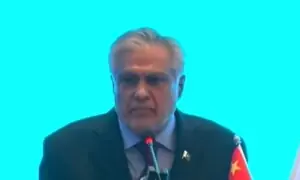
DPM Dar made the announcement while addressing the launch ceremony of the IBI Pakistan Digital Economy Centre in Islamabad.

He said that the premier would undertake an official visit to China from May 23 to 26. Dar added that premier was also set to attend a B2B forum on May 24 during the visit.

Earlier this month, President Asif Ali Zardari completed a five-day visit to China, which was aimed at strengthening bilateral cooperation across key economic sectors. He also oversaw the signing of multiple memoranda of understanding (MoUs).

Pakistan and China share a longstanding strategic partnership with ties that span various sectors, including trade, energy, defence, and infrastructure. The two countries are also set to mark the 75th anniversary of their diplomatic relations on May 21.

The visit comes at a time when Pakistan has remained engaged in facilitating engagement between the US and Iran in the past month, of which China has also been a part.

A day earlier, DPM Dar held a phone call with his Chinese counterpart Wang Yi, where the two leaders discussed Pakistan’s efforts to “facilitate engagement between Iran and the US”.

PM Shehbaz last visited China in September 2025, where he attended the Shanghai Cooperation Organisation (SCO) summit. The development comes as the US President Donald Trump is also scheduled to visit China from May 13 to May 15.

‘Pak-China digital corridor’

Speaking at the launch ceremony, DPM Ishaq Dar underscored that Pakistan and China were taking “another significant step towards innovation, digital connectivity and the economy of the future as our partnership enters a new phase in the digital age”.

He remarked that Pak-China friendship was “not ordinary diplomacy”.

“It is a relationship tested by time and strengthened by trust […] from the Karakoram Highway, carved through some of the most difficult terrain in the world, to the China-Pakistan Economic Corridor, which transformed Pakistan’s energy and connectivity landscape,” he continued.

He noted that with the launch of the centre, Pakistan and China were moving towards “digital transformation, agriculture, disaster management, climate resilience, healthcare, and smart cities”.

“The emerging Pak-China digital corridor will not only deepen bilateral ties but also create opportunities for the wider global south,” he remarked.

President Zardari approves Sitara-i-Shujaat for citizen who sacrified his life while averting suicide attack

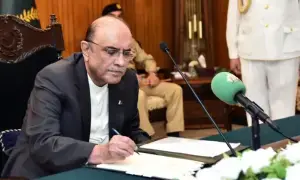
President Asif Ali Zardari on Wednesday approved awarding the Sitara-i-Shujaat to a citizen who sacrificed his life while foiling a suicide attack in Attock’s Jand tehsil.

The approval was granted by the president on the recommendation of Prime Minister Shehbaz Sharif, state-run PTV reported.

According to reports, the incident occurred on Monday near a key security post on the Punjab–Khyber Pakhtunkhwa border, located in Jand, some 70km from Attock.

A local shepherd, identified as Liaqat, noticed a suspicious individual in the area while grazing his goats nearby. Witnesses said Liaqat confronted the suspect after sensing something unusual about the man’s behaviour. As he approached, the suspect detonated himself, claiming Liaqat’s life in the process.

A day earlier, the president and the prime minister had lauded Liaqat’s sacrifice in separate statements.

PM Shehbaz said that as a responsible citizen, Liaqat stopped the terrorist and asked for his identification, who then blew himself up, resulting in the shepherd’s martyrdom.

“Such brave and fearless citizens are the true symbol of the national resolve against terrorism. Shaheed Liaqat’s sacrifice is a guiding light for every individual of the nation,” he said.

President Zardari said that brave citizens like Liaqat were a shining example of national resilience, patriotism and collective awareness in the fight against terrorism.

“The entire nation stands united with its security forces and law enforcement agencies for the elimination of the scourge of terrorism. The war against terrorism resulting from external support will continue,” he added.

Indian arrogance shot down alongside planes during last year's military conflict, Tarar says

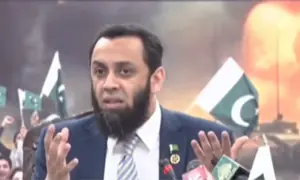
Information Minister Attaullah Tarar said on Wednesday that the Indian aircraft shot down during the brief military conflict in May last year “brought down Indian arrogance with them”.

He made these remarks while addressing a ceremony held in relevance to Marka-i-Haq at Islamabad’s Institute of Strategic Studies.

The conflict with India — starting from the April 22 Pahalgam attack to the end of Operation Bunyanum Marsoos with a ceasefire between the two countries on May 10 — has been called “Marka-i-Haq” (Battle of Truth) by the state.

During the conflict, New Delhi launched deadly air strikes in Punjab and Azad Kashmir on May 7. Pakistan retaliated by downing several Indian planes in air-to-air combat. The initial tally of the downed jets was announced as five and later raised to eight.

In his fresh remarks on the matter, Tarar said: “When those eight planes went down — and a lot of them were Rafale planes, which are a source of pride for India — those planes brought down with them the Indian arrogance; and proved to the world, once again, our dominance in aerial battle; and how Pakistan’s indigenous technology helped it achieve victory.”

He also said the Pakistan Navy was “alert and ready” to respond to any aggression.

“So this Marka-i-Haq belongs to the entire nation. We saw the entire nation stand tall, stand united. We set aside our political differences, we set aside our differences of opinion, and the whole nation came together as a united force,” he added.

Earlier in his address, Tarar noted that a first information report of the Pahalgam attack in India-occupied Kashmir was registered “within 10 minutes of the incident, without any inquiry, without anyone going to that spot, without any detailed investigation”.

He recalled that Indian was then quick to blame Pakistan, further stating that Islamabad’s narrative during the May conflict “gained strength” right from the beginning because “we expressed the truth at the right forum at the right time”.

“When it comes down to narrative, it’s all about saying the right thing at the right time at the right forum … There has to be a specific, detailed campaign with regard to what your strategic narrative is,” he explained.

The minister said Pakistan’s narrative was boosted when Prime Minister Shehbaz Sharif made the offer of a fair, independent and transparent investigation into the Pahalgam incident in April 2025.

“A year has passed, and there has been no response to the prime minister’s offer. And there could not be any response because we knew that it was a false flag operation.

“Pakistan proved that our hands are clean, and it was India that shied away from an investigation,” he said.

Tarar went on to say that on the pretext of that false flag operation, India resorted to attacking civilians in Pakistan. “It further damaged India’s stance, especially at the global stage,” he added.

The minister said Pakistan was well within its rights under the UN Charter to respond to Indian attacks in a firm and decisive manner in May last year.

He further stated that Pakistan had been “a frontline state against terrorism, or a shield or a wall between the terrorists and the rest of the world”.

“When one Pakistani lays down his or her life, it is for the motherland. But then, laying down that life [also] makes the world a safer place. No other country has to its credit 90,000 lives laid down …

So how can a country which is countering terrorism be blamed for terrorism?” he said.

“And who is pinning this blame on Pakistan?” he further questioned, as he went on to recount allegations of transnational assassinations associated with India.

In connection with this, he also mentioned Kulbhushan Sudhir Jadhav, an Indian spy who was arrested in Pakistan in 2016. Tarar said Jadhav had been involved in terrorist activities, adding: “When an Indian spy is captured red-handed within the territory of Pakistan … and it is proven at the international level that he has been involved in these activities, then which country is promoting terrorism?”

Coming back to Marka-i-Haq, he said where Pakistan told the truth to the world in an effective manner, the Indian media and government made “absolutely absurd” claims.

He also acknowledged the role of the Pakistani media, intelligentsia, journalists, academia and analysts, who he said “made us look very good at the global stage”.

The Pakistani media was giving out information that was “100 per cent authentic, verified and that could not be contradicted at any level”, he said, adding that it was so because there was “complete unanimity and smooth, uninterrupted flow of information between the state institutions and the private sector media”.

Tarar also commended the youth, mentioning the “meme war” that was witnessed during Marka-i-Haq.

“We were at the top of our game. When it came down to the narrative game, when it came down to the conventional war, when it came down to diplomatic efforts … because we had a lot of truth to tell the world and we told it the right way, we were at the top of our game,” he said.

On the other hand, Tarar continued, “the enemy kept on making mistake after mistake. The entire world saw how their nefarious designs were exposed”.

“The entire world saw that starting from the false flag operation of Pahalgam and the baseless allegations made against Pakistan, Pakistan played all its cards right,” he added.

Tarar said a year after Marka-i-Haq, Pakistan’s relevance, significance and status had elevated at the international level.

“On the other hand, you have your eastern neighbour that spent hundreds of billions of dollars through lobbying and PR firms to come up with a ‘shining’ slogan. But, from shining to isolation, this is a one-year journey.

“When you base your entire premise and narrative on false information and propaganda, and you externalise your internal issues and internalise your external issues, and you try to create a hegemony within the region, and you assume the role of the bully of South Asia, that can never go well for you,” he said.

Tarar ended his speech, saying that “we have all witnessed how Pakistan has transformed after Marka-i-Haq” and “it is a moment to be proud”.

Naqvi says land-grabbing mafia, illegal constructions to be completely eradicated from Islamabad

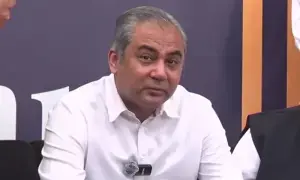
Interior Minister Mohsin Naqvi on Wednesday vowed that illegal constructions would be “completely eradicated” from Islamabad.

He made the remarks during a special meeting he and Minister of State for Interior Tallal Chaudhry were chairing, the interior ministry said on the social media platform X.

“Land-grabbing mafia and illegal constructions will be completely eradicated from Islamabad,” the ministry quoted Naqvi as saying.

He vowed, “Operation Clean-up would continue without any pressure until it achieves its final result.”

For the past two months, the Capital Development Authority (CDA) has been conducting anti-encroachment operations in Islamabad, with a special focus on katchi abadis (informal settlements), whose residents have strongly protested the actions.

According to CDA’s rules, 34 societies/schemes were supposed to transfer amenity land in the name of the civic agency for further utilisation. However, despite the passage of years, CDA has failed to get the land. There are reports that many societies have already eaten up the land after carving out plots.

After removing the Muslim Colony in the Bari Imam area, CDA also conducted an operation against Rimsha Colony at H-9 and Shapar Colony of G-7, where residents had staged a protest in March against the move.

The Human Rights Commission of Pakistan (HRCP), along with several civil society organisations, had called on authorities to halt all planned and ongoing eviction operations in Islamabad’s low-income areas and katchi abadis.

In October 2025, Prime Minister Shehbaz Sharif had constituted a joint inquiry committee to thoroughly probe alleged land-grabbing by the “land mafia” in the federal capital and to fix responsibility on those involved in it.

Sewage treatment plants, Convention Centre discussed

Meanwhile, the meeting held on Wednesday also reviewed the progress of several ongoing and planned projects in the federal capital, including the construction of 11 new police stations.

It was decided during the meeting to set up sewage treatment plants to prevent untreated sewage from entering the Rawal Dam.

Various suggestions were reviewed regarding sewage plants at streams which feed into Rawal Dam, the interior ministry said, adding that this would provide clean water to residents.

Rawal Dam has been receiving untreated sewage and solid waste via streams, particularly through the Korang Nullah. A mega project under which three sewage treatment plants were to be built in the reservoir’s catchment areas had previously faced inordinate delay.

During the meeting, Naqvi also directed the relevant authorities to complete ongoing “development work” at Parliament Lodges by June 30.

The meeting reviewed the upgradation plan for the Capital Police College, which would include new classrooms, a mess, and barracks for personnel under training.

While being briefed about the plans to construct another Convention Centre, Naqvi was informed that three international companies have submitted their designs and that the process of evaluation was underway.

The minister was told that legal requirements were being fulfilled and that construction work for the Convention Centre would begin by the last week of June.

  • ✇Dawn Newspaper Pak
  • Finance minister discusses budget preparations with visiting IMF mission none@none.com (News Desk)
    Finance Minister Muhammad Aurangzeb on Wednesday discussed preparations for the upcoming federal budget and the country’s broader reform agenda with the International Monetary Fund (IMF) visiting Islamabad, the finance ministry said. He briefed the delegation on the country’s macroeconomic outlook, fiscal strategy, reform priorities, and the government’s ongoing efforts to ensure sustainable economic stability and long-term growth, the ministry said on the social media platform X.
     

Finance minister discusses budget preparations with visiting IMF mission

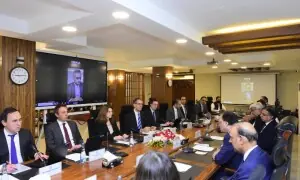
Finance Minister Muhammad Aurangzeb on Wednesday discussed preparations for the upcoming federal budget and the country’s broader reform agenda with the International Monetary Fund (IMF) visiting Islamabad, the finance ministry said.

He briefed the delegation on the country’s macroeconomic outlook, fiscal strategy, reform priorities, and the government’s ongoing efforts to ensure sustainable economic stability and long-term growth, the ministry said on the social media platform X.

The ministry said that the discussions focused on the country’s “macroeconomic stabilisation efforts, preparations for the upcoming federal budget, and the broader reform agenda aimed at strengthening fiscal and external sustainability while fostering sustainable economic growth”.

“Both sides exchanged views on maintaining reform momentum, preserving macroeconomic stability, and advancing structural reforms to promote investment, productivity, and export-led growth within a balanced and forward-looking policy framework,” the ministry said.

Welcoming the IMF delegation to Islamabad, the finance minister “appreciated the Fund’s continued engagement and constructive dialogue” with the government, it said, adding Aurangzeb particularly acknowledged the productive discussions initiated during the spring meetings held in Washington earlier this year.

The ministry added that Aurangzeb shared encouraging developments regarding the country’s external sector, highlighting positive trends in remittances and export performance.

“He noted that recent data indicated improvement in exports on both a month-on-month and a year-on-year basis, reflecting growing resilience in the economy and a gradual strengthening of macroeconomic fundamentals,” it said.

Further, the finance minister emphasised that while economic stabilisation efforts had produced encouraging results, the government remained fully mindful of the structural challenges confronting the economy, particularly external liabilities and the need to accelerate sustainable, export-led growth, it said.

Aurangzeb also reiterated the government’s commitment to deepening reforms aimed at strengthening macroeconomic stability without compromising long-term growth prospects.

“In this regard, he underscored the importance of moving Pakistan away from recurring boom-and-bust cycles through structural reforms, productivity enhancement, deregulation, and improved export competitiveness,” it said.

Aurangzeb further stated that the government’s reform agenda had been carefully calibrated in consultation with international experts and economists. He emphasised that the ongoing policy measures were not driven by short-term considerations, but formed part of a broader and technically grounded economic transformation strategy endorsed at the highest level, the ministry added.

The finance minister also briefed the mission on the country’s continued engagement with international development partners, including ongoing economic cooperation initiatives with China and efforts aimed at mobilising long-term investment aligned with the country’s strategic economic priorities.

According to the ministry, the visiting IMF mission, led by Iva Petrova, acknowledged the “positive progress made by Pakistan in maintaining macroeconomic stability despite a challenging global and regional environment”.

“The mission appreciated the government’s continued commitment to prudent economic management and reform implementation,” the ministry said.

“The IMF team emphasised the importance of sustaining reform momentum, maintaining fiscal discipline, and advancing structural reforms to support durable and inclusive economic growth. Discussions during the meeting also focused on the broader macroeconomic framework, the government’s reform agenda, and priorities for the upcoming budget,” it said.

“The mission reaffirmed its commitment to continued engagement and constructive cooperation with the government of Pakistan in support of the country’s economic reform programme and long-term economic resilience,” the ministry concluded.

Last week, the international money lender had approved a new disbursement for Pakistan of about $1.3 billion, acknowledging the nation’s resilience in maintaining economic stability while warning that continued reforms are essential to manage growing risks from the war in the Middle East.

Meanwhile, the government is considering reducing the income tax burden on salaried individuals while refraining from increasing salaries and pensions in the upcoming budget, aiming to provide equitable fiscal relief to both public and private sector employees.

Informed sources have told Dawn that Aurangzeb has expressed a desire to lower tax rates and, if possible, raise the taxable income threshold for the salaried class in recognition of their significant contribution to revenue generation compared to retailers, wholesalers, exporters and real estate players.

On the other hand, the government may keep salaries and pensions uncha­nged at current levels, using the resulting fiscal savings to provide tax relief instead.

  • ✇Dawn Newspaper Pak
  • SBP says it has received $1.3bn tranche from IMF none@none.com (News Desk)
    The State Bank of Pakistan (SBP) said on Wednesday that it had recieved $1.3 billion from the International Monetary Fund (IMF). “The IMF Executive Board completed the third review under the Extended Fund Facility (EFF) in its meeting held on May 8 and approved the disbursement of SDR 760 million for Pakistan. Furthermore, the IMF Executive Board has also approved the disbursement of the second tranche of SDR 154 million under the Resilience and Sustainability Facility (RSF),” the central bank s
     

SBP says it has received $1.3bn tranche from IMF

The State Bank of Pakistan (SBP) said on Wednesday that it had recieved $1.3 billion from the International Monetary Fund (IMF).

“The IMF Executive Board completed the third review under the Extended Fund Facility (EFF) in its meeting held on May 8 and approved the disbursement of SDR 760 million for Pakistan. Furthermore, the IMF Executive Board has also approved the disbursement of the second tranche of SDR 154 million under the Resilience and Sustainability Facility (RSF),” the central bank said on the social media platform X.

“Accordingly, SBP has received SDR 914 million (equivalent to about US$ 1.3 billion) under the EFF and RSF in value May 12 from the IMF,” it said.

It said that the amount would be reflected in the country’s foreign exchange reserves for the week ending on May 15.

Last week, the international money lender had approved the latest review of Pakistan’s reform programme. The decision paved the way for disbursements of about $1.1bn from the EFF and $220m from the RSF, bringing total payouts under the two arrangements to roughly $4.8bn.

While the funding provides crucial short-term support, the IMF’s statement emphasised an evolving and uncertain outlook, cautioning that Pakistan’s recent gains are exposed to heightened global volatility, particularly spillovers from the conflict in the Middle East.

“The authorities’ strong implementation, despite the Middle East war, has maintained economic stability and improved financing and external conditions,” the Fund noted in its statement.

However, it cautioned that the shocks emanating from the Middle East war underlined the continued importance of maintaining strong policies to continue building resilience and of moving ahead with structural reforms to achieve sustainable long-term growth.

IMF Deputy Managing Director and Acting Chair Nigel Clarke reinforced this cautionary tone, stressing the need for both discipline and accelerated reforms.

“Amid a more challenging and highly uncertain external environment since the onset of the war in the Middle East, Pakistan needs to maintain strong macroeconomic policies while accelerating reform efforts, which are critical to managing further shocks and fostering higher sustainable medium-term growth,” he said.

Meanwhile, the central bank on Tuesday said that while macroeconomic stability had improved in the first half of fiscal year 2026, the war in the Middle East posed risks to the economic outlook amid heightened uncertainty.

In its half-year report, the bank said supply chain disruptions were likely to affect the inflation trajectory, external trade and remittance flows and the country’s economic activity.

Despite improved macroeconomic stability in first half of FY26, war in Middle East poses significant risks to outlook: SBP

While macroeconomic stability improved in the first half of fiscal year 2026, the war in the Middle East poses risks to the economic outlook amid heightened uncertainty, the State Bank of Pakistan (SBP) said on Tuesday.

The SBP released its Half Year Report 2025-26 (The State of Pakistan’s Economy) on Tuesday, showing that Pakistan’s macroeconomic stability strengthened in the first half of the fiscal year despite headwinds from uncertainty regarding global trade and domestic floods.

However, the report noted that the war in the Middle East poses “significant risks to the macroeconomic outlook”, as supply chain disruptions are likely to affect the inflation trajectory, external trade and remittance flows, and the country’s economic activity, according to an SBP press release.

Discussing the outlook for FY26, the report notes that the latest data on high-frequency indicators — including Purchasing Managers’ Index (PMI), LSM and construction — suggests that economic activity maintained the momentum through February before the war began to weigh on output in the remaining month of FY26.

“Therefore, SBP projects real GDP growth close to the lower bound of the earlier projected range of 3.75 to 4.75 per cent for FY26,” the statement said, adding that despite momentum in economic activity and higher commodity prices, the current account deficit is now expected to be close to the lower bound of the earlier projected range of 0-1pc of GDP.

However, a surge in international oil prices and its impact on other commodity prices are expected to keep the National Consumer Price Index (NCPI) inflation above the upper bound of the medium-term target range of 5-7pc for most of FY27.

The report highlights that economic indicators improved significantly in the first half of FY26. It noted that average NCPI inflation eased further, while SBP’s FX purchases and net financial inflows shored up external buffers.

“These outcomes were supported by prudent monetary and fiscal policies, ongoing structural reforms, favorable commodity prices and [the] IMF programme,” the press release said, particularly highlighting the continued cautious monetary policy stance of the SBP.

“The macroeconomic stability, in turn, facilitated growth momentum,” it added.

The report further said that the real GDP in H1-FY26 grew at “twice the pace” of the same period last year, mainly driven by pickup in industrial activity followed by services and agriculture sectors. The momentum in economic activity translated into a volume-driven increase in imports in H1-FY26.

At the same time, it noted, a significant drop in rice exports led to a decline in export earnings. However, steadily rising workers’ remittances continued to finance a major part of the deficits in trade, services, and primary income balance, helping to keep the current account deficit at moderate levels.

The report also highlights that “the substantial reduction in interest payments and fiscal consolidation measures turned the fiscal balance into a surplus in H1-FY26, for the first time since FY02, while the primary surplus remained at last year’s level”.

The report further notes that “continued prudent policy mix, an improved external account position and stability in exchange rate, softened international commodity prices along with downward adjustments in administered electricity tariffs” kept inflation moderate during H1-FY26.

“The NCPI inflation averaged 5.2 per cent in H1-FY26, about two percentage points lower compared to the same period last year,” the SBP said.

According to the SBP statement, the report highlights that while Pakistan’s overall economic conditions improved, the country’s transition to a sustainable high-growth path with sustained macroeconomic stability required deep-rooted economic reforms.

“These specifically need to address the long-standing issues, including low savings and investment, weak competitiveness, falling exports, subdued foreign direct investment, and the persistently low tax to GDP ratio,” it said.

The report includes a chapter titled ‘Climate Change and its Impact on Pakistan’s Economy’, which highlights that while Pakistan’s contribution to global greenhouse gas emissions is very low, it is the 15th-most affected country by climate events.

It further noted that Pakistan is among the countries that face high levels of vulnerability to climate change and low levels of preparedness to deal with the ensuing challenges, saying, “This low readiness enhances the risks to country’s economy.”

It also pointed out Pakistan’s relatively high emissions intensity of GDP, reflecting “structural inefficiencies and a carbon-intensive growth trajectory”.

It stressed the requirement for substantial investments in climate mitigation and adaptation, which currently remain largely unmet due to low international climate inflows and challenges to domestic public and private sector financing.

The report also discusses the multifaceted macroeconomic risks to the medium-term outlook in the case of an extended war in the Middle East.

Last week, the Ministry of Finance and the SBP showed unanimous optimism over economic growth and achieving fiscal and current account targets despite the regional crisis.

In April, SBP Governor Jameel Ahmad said that while the ongoing conflict in the region has introduced new risks and heightened uncertainty about the macroeconomic outlook, the economy is relatively better positioned than during previous crises to manage these challenges.

❌
Subscriptions