SINGAPORE, May 15 — Singapore will deny Vehicle Entry Permit (VEP) applications and renewals for foreign-registered vehicles with outstanding traffic, parking, or vehicular emissions fines committed in the republic from November 2.In a joint statement, the Ministry of Home Affairs and the Land Transport Authority (LTA) said the new measure expands existing enforcement, under which foreign-registered vehicles with unpaid fines are denied entry only upon arrival at
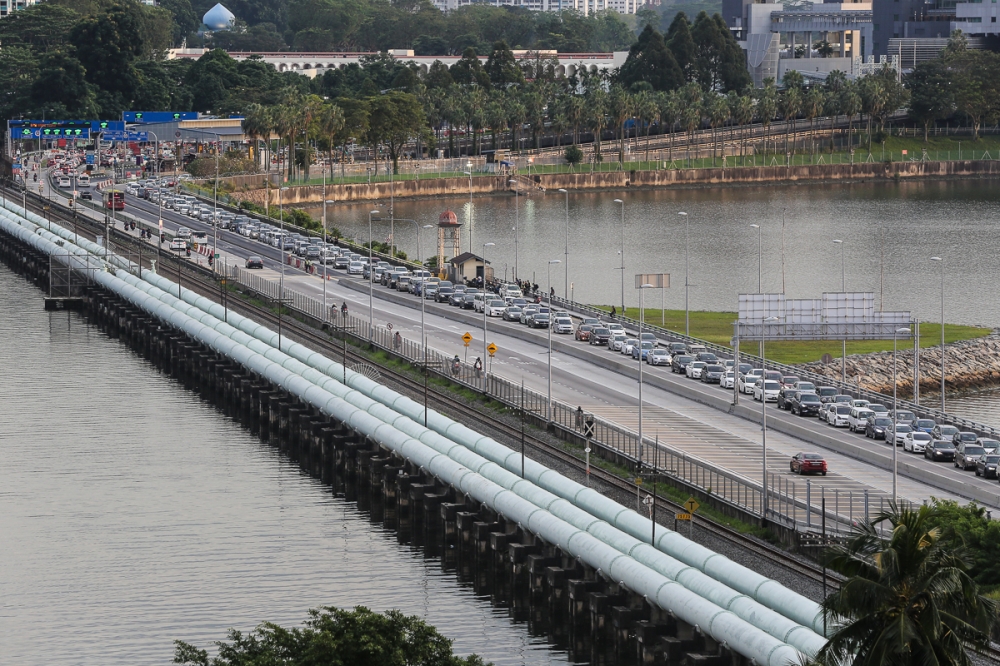
SINGAPORE, May 15 — Singapore will deny Vehicle Entry Permit (VEP) applications and renewals for foreign-registered vehicles with outstanding traffic, parking, or vehicular emissions fines committed in the republic from November 2.
In a joint statement, the Ministry of Home Affairs and the Land Transport Authority (LTA) said the new measure expands existing enforcement, under which foreign-registered vehicles with unpaid fines are denied entry only upon arrival at Singapore’s land checkpoints.
“Foreign-registered vehicles should settle their outstanding fines before applying for or renewing a VEP and entering Singapore.
“To ensure a smooth VEP application process, foreign motorists should check for any outstanding fines at www.axs.com.sg and settle them promptly before applying for or renewing their VEP at LTA OneMotoring website,” it said.
The authorities advised foreign motorists to submit their VEP applications at least two weeks before their intended entry date.
“Payment service providers may take up to two calendar days to process fine payments and update the records in the agencies’ systems,” it added.
The authorities also reminded Singaporean motorists with outstanding traffic fines in Malaysia to settle their fines before entering the country. — Bernama
One of the main tools the Trump administration is using in its campaign against immigration is the collection of personal data. The line between citizens’ right to privacy regarding sensitive information and the Department of Homeland Security’s acquisition of data collected by private companies has become blurred in recent months, due to the sharing of personal information between government agencies and the proliferation of opaque contracts with companies like Palantir. This U.S.-based softwar
One of the main tools the Trump administration is using in its campaign against immigration is the collection of personal data. The line between citizens’ right to privacy regarding sensitive information and the Department of Homeland Security’s acquisition of data collected by private companies has become blurred in recent months, due to the sharing of personal information between government agencies and the proliferation of opaque contracts with companies like Palantir. This U.S.-based software company, specializing in big data analytics and artificial intelligence, has designed specific programs to assist Immigration and Customs Enforcement (ICE) in its efforts to identify and locate both undocumented immigrants and anyone critical of the agency’s operations.
Nadia emigrated to Los Angeles in 2010, and the first thing she was advised to do was go to Alvarado Street to buy fake documents. She was bluntly warned that there was no other way to get a job. She paid $150 and was given two fake cards with her real name: a Social Security card and a green card. It was a fabricated identity that several employers have accepted since then. “You know beforehand that it’s not right, but the need to survive leads us to look for ways to get ahead in this country,”
Nadia emigrated to Los Angeles in 2010, and the first thing she was advised to do was go to Alvarado Street to buy fake documents. She was bluntly warned that there was no other way to get a job. She paid $150 and was given two fake cards with her real name: a Social Security card and a green card. It was a fabricated identity that several employers have accepted since then. “You know beforehand that it’s not right, but the need to survive leads us to look for ways to get ahead in this country,” says the 56-year-old Mexican woman.
 Login
Login

:max_bytes(150000):strip_icc():format(jpeg)/clintblack-father-74b9c84b0be847598ed4cc088cf78e5c.jpg)


:max_bytes(150000):strip_icc():format(jpeg)/clintblack-lisa-recent-1f2749c13e1047808d52566627953f2c.jpg)
:max_bytes(150000):strip_icc():format(jpeg)/clint-black-killin-time-120925-2-64be099236f9406f882fb9286ee9e4c5.jpg)


:max_bytes(150000):strip_icc():format(jpeg)/jet-li-1-547a5ef63c7844eb83713b3d3c178dff.jpg)
