Normal view

  • ✇Popular Science
  • If you use Google accounts, it’s time to do a free security checkup David Nield
    Your Google account likely stores a lot of important information, from your home address in Google Maps and your work emails in Gmail, to family pictures in Google Photos and personal conversations in Google Chat. You don’t want anyone else gaining access to that data—and nor does Google. To minimize the chances of anyone else accessing your account, Google has created a Security Checkup tool that you can use in any web browser. It takes you quickly and simply through a security audit, warnin
     

If you use Google accounts, it’s time to do a free security checkup

16 May 2026 at 17:04

Your Google account likely stores a lot of important information, from your home address in Google Maps and your work emails in Gmail, to family pictures in Google Photos and personal conversations in Google Chat. You don’t want anyone else gaining access to that data—and nor does Google.

To minimize the chances of anyone else accessing your account, Google has created a Security Checkup tool that you can use in any web browser. It takes you quickly and simply through a security audit, warning you about potential issues without overloading you with settings and menu screens.

If you’re logged into Google in your web browser, you can get to the Security Checkup tool from this page. Alternatively, you can find it from your Google account page, by clicking Security and sign-in (the Checkup should appear at the top).

Devices and sign-ins

screenshot of security check-up
Any causes for concern will be flagged for you to review. Screenshot: Google

The Security Checkup will alert you to pressing problems that have been identified, but you can work through each section in turn, whether or not there are related issues. To start, you can see the devices that you’re currently signed into Google on under Your devices. It will also list their location, operating system, and when you last used them.

If there’s anything you don’t recognize here, or there’s a device you no longer have, you can disconnect it from your account remotely. It’s best to err on the side of caution here—if you accidentally disconnect a device that is actually genuine and that you are still using, the worst that’s going to happen is you’ll need to sign in again on that device.

Then we’ve got the Sign-in and recovery section. This contains crucial information about how your account is accessed, so make sure everything here is in order, and up to date. For example, you might be asked to confirm your backup email address and phone number, which will be crucial (and trusted) communication channels for Google to use should you somehow get signed out of your account.

Many devices now use passkeys, where you use something like a PIN code or a fingerprint scan to access your accounts. You can also see a list of passkeys you’ve set up here—and again, as with the list of devices, passkeys can be revoked if you see something that might be a problem (such as an authorization you don’t recognize).

Then you have the Your saved passwords section. If you’re using Android and Google Chrome to save login credentials to your Google account, then the stored passwords will appear here. Google will warn you if any passwords have been repeated or aren’t strong enough (usually because they’re not long or complex enough).

Browsing and activity

screenshot of apps connected
Review the apps and services that are connected to your Google account. Screenshot: Google

The Safe Browsing section of the Security Checkup is specifically for users of the Chrome browser, and gives you extra, proactive protection against dangerous websites and extensions. However, it also requires a greater level of data sharing with Google (so it can check your activity), and can feel restrictive for those who feel confident recognizing threats themselves—so the choice is yours.

Open Recent security activity, and you see a detailed list of all security-related activity on your Google account across the last 28 days. This will include activity such as devices you’ve signed in on, or deleted data you’ve recovered (something a hacker could potentially attempt to do). If anything here looks suspicious, you can alert Google.

Under Your third-party connections, you can see apps, sites, and services that have some kind of connection to Google. Maybe you use your Google credentials to log into them, for example, or they’re utilities that you use to manage your Google Photos account. Google-made smart home devices may also appear here.

The rules are the same as they are with connected devices: If you see anything that shouldn’t be there, you can break the link. The app or site in question will no longer have access to your Google account and its data. If you need to use it again, you’ll need to reapprove the connection. It’s a good idea to regularly review this list, to make sure older services that you no longer regularly use have been removed.

The final part of the Google Security Checkup is Gmail Settings, and from here you can view and make changes to email accounts you’ve blocked, and email accounts you’ve connected to. If you see anything that’s not right, you’re able to make changes. And with that done, your security checkup is complete—and your Google account should be significantly more secure than it was before.

The post If you use Google accounts, it’s time to do a free security checkup appeared first on Popular Science.
  • ✇Popular Science
  • How to remove bamboo from your yard Debbie Wolfe
    Bamboo may feel like an easy landscaping win because it’s a fast-growing privacy screen that can turn a plain yard into a lush retreat. But then a few shoots start popping up in random places all over your yard. Before long, they’re pushing through flower beds, lawns, and even neighboring yards. What looked like a landscaping dream can quickly become a problem. Stories of runaway bamboo have gone viral online, with some homeowners spending thousands trying to remove it. So, is all bamboo inva
     

How to remove bamboo from your yard

16 May 2026 at 12:00

Bamboo may feel like an easy landscaping win because it’s a fast-growing privacy screen that can turn a plain yard into a lush retreat. But then a few shoots start popping up in random places all over your yard. Before long, they’re pushing through flower beds, lawns, and even neighboring yards. What looked like a landscaping dream can quickly become a problem.

Stories of runaway bamboo have gone viral online, with some homeowners spending thousands trying to remove it. So, is all bamboo invasive? Not exactly. Some species grow in slow, manageable clumps, while others spread aggressively underground through fast-growing stems. The key is to identify what kind of bamboo you’re dealing with and act before it takes over.

How to Identify the Type of Bamboo Growing in Your Yard

Not all bamboo behaves the same way. There are two main categories: running and clumping. Both are members of the grass family Poaceae, but unlike the soft turf grasses in your lawn, bamboo grows thick, woody stalks called culms. Species range from small, groundcover-like plants to towering varieties that reach nearly 100 feet in height.

Root bamboo in garden.
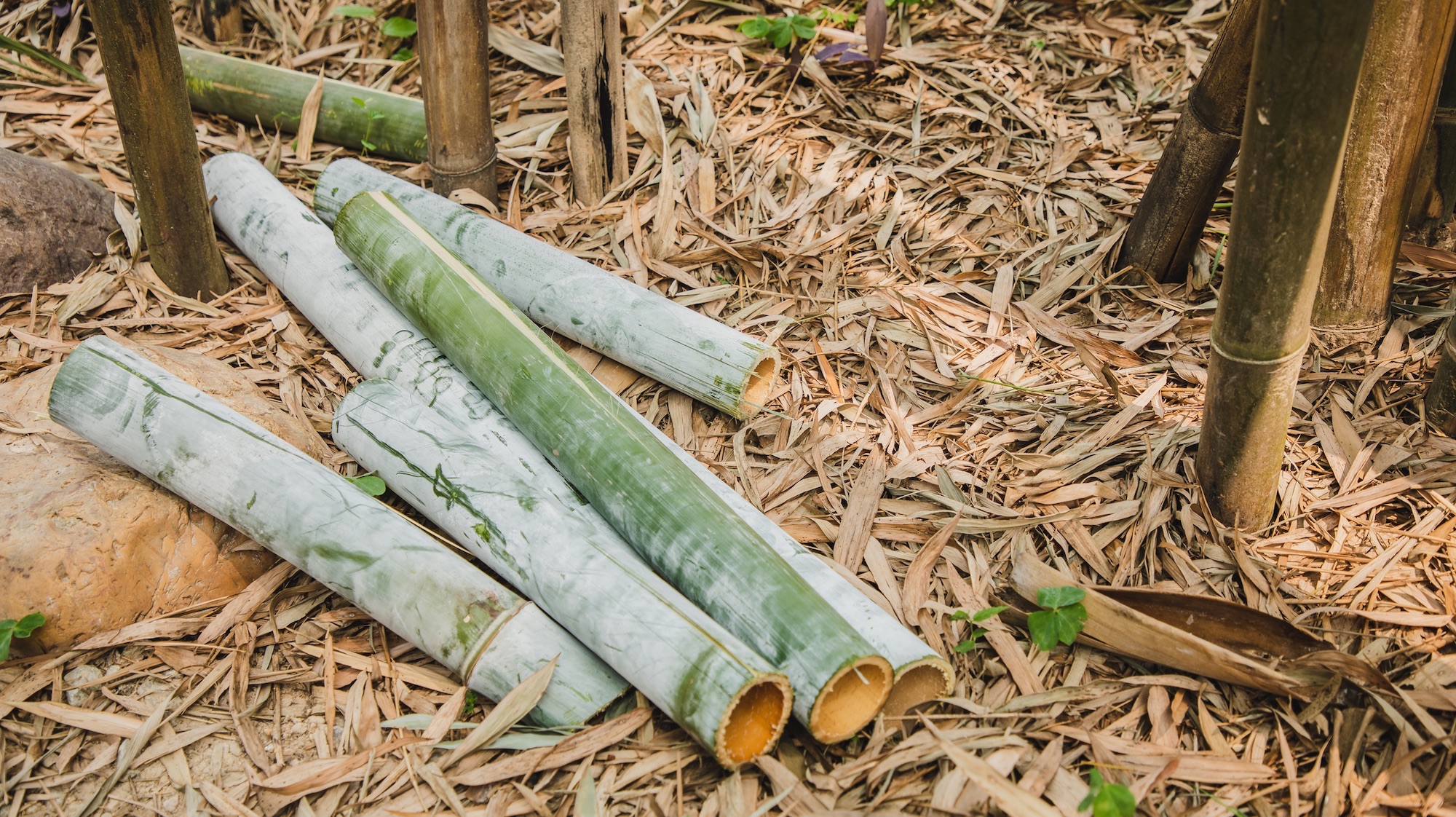
Bamboo stalks are thick beasts. Image: Shutterstock DISGO99

Running bamboo

There are many species of running bamboo, but they all behave in a similar way: they spread aggressively underground through fast-moving rhizomes. The species that causes the most trouble for homeowners in the U.S., especially across the Southeast, is Phyllostachys aurea, better known as golden bamboo. It’s considered one of the most invasive bamboo species in North America.

Running bamboo rhizomes can travel surprisingly far from the original plant before sprouting new shoots. Those rhizomes store energy for the plant, which is why simply cutting down visible stalks rarely solves the problem. Left unmanaged, running bamboo can rapidly colonize your entire yard and neighborhood.

Clumping bamboo

There are also several species of clumping bamboo, though they tend to behave much differently from running varieties. One popular example is Fargesia robusta, which is often grown for its cold hardiness and more manageable growth habit. No matter the species, clumping bamboo generally grows slowly outward in tight clusters rather than spreading long distances underground.

That makes clumping bamboo easier to control and far less likely to become a neighborhood-wide problem. While it still spreads through rhizomes, the underground stems remain compact and close to the parent plant rather than racing across a yard.

Get Expert Advice

If you can not tell by visual cues alone, no worries. Take photos of shoots, leaves, and stalks, and contact your local county extension offices to help identify the species. Extension experts can often confirm the type. Although you can try using plant ID apps, keep in mind they aren’t always accurate; they can still be useful starting points.

A bamboo shoot emerge from dirt
A bamboo shoot emerges from dirt. Should you panic? Not yet. Image: Getty Images Meta

Why Bamboo is so Difficult to Remove 

What makes bamboo so frustrating to eliminate is its massive underground network of rhizomes, which fuels its growth. These root-like stems spread beneath the soil in multiple directions, storing energy and sending up new shoots far away from the original plant. In running bamboo species, that underground web can quietly expand for months before homeowners realize how far it has traveled.

What about just mowing it regularly or cutting it down? That may temporarily weaken the plant, but it can also trigger fresh shoots as the rhizomes tap into their stored energy reserves. That solution only works on the surface. Even small fragments left behind in the soil can regrow into entirely new plants.

In warmer regions like the Southeast United States, invasive bamboo has become such a persistent issue that some municipalities now regulate where it can be planted. Fully removing established bamboo often requires repeated digging, cutting, or chemical treatment over months or even years.

How to Remove Bamboo

If bamboo has started spreading through your yard, the good news is that you probably do not need heavy machinery immediately. The bad news is that waiting too long can turn a manageable project into a years-long battle. The right removal method depends on how large the infestation is, how long it has been growing, and how much labor you are willing to take on.

Method 1: Manual removal

This method works best for small or early infestations. The goal is to dig out as much of the underground rhizome network as possible by cutting down visible stalks and removing the thick stems beneath the soil. 

The biggest advantage is that it does not require herbicides and can permanently eliminate smaller patches if done thoroughly. The downside is that it is extremely labor-intensive, and even small rhizome fragments left behind can resprout later. Because of that, manual removal requires ongoing monitoring. Homeowners need to check the area for months and quickly remove any new shoots before the bamboo has a chance to recover and spread again.

Method 2: Cutting and starving the plant

This method is best for long-term control and ongoing maintenance rather than quick removal. It works by repeatedly cutting down new shoots before they can grow leaves. Without leaves, the bamboo cannot photosynthesize efficiently, which slowly drains the energy stored in the underground rhizomes. The advantage is that it avoids herbicides and can weaken even large patches over time. The downside is that progress is slow and often requires multiple growing seasons. If you miss even a few cutting cycles, the bamboo can recover and continue spreading.

Method 3: Herbicide treatment

This method is best for large, established patches that have spread beyond easy digging. Glyphosate-based herbicides are commonly used because the plant can carry the chemical from actively growing leaves down into the underground rhizome system. The advantage is that herbicides can help weaken dense infestations that would be difficult to remove by hand alone. The downside is that complete removal usually requires repeated applications rather than a single treatment.

Chemical control also comes with tradeoffs. It is important to follow local regulations, avoid spraying near waterways, and consider the potential ecological impact before using herbicides as part of a removal strategy.  

Method 4: Professional removal

This method is best for severe infestations, especially when established bamboo has spread beneath fences, patios, driveways, or neighboring properties. Professionals may use excavation equipment to remove large underground rhizome networks and install root barriers to help prevent the bamboo from returning. The biggest advantage is that it can fully address infestations that are too extensive for most homeowners to manage on their own. The downside is cost, as professional removal can quickly become expensive, particularly when excavation or property repairs are involved.

The post How to remove bamboo from your yard appeared first on Popular Science.
  • ✇Popular Science
  • How to free up space on your phone and avoid the dreaded ‘storage full’ messages David Nield
    You never want to see a ‘storage full’ message pop up on your phone. It means you’re not going to be able to install new apps, or capture new photos, videos, or audio messages, because there’s nowhere to put them. You won’t be able to sync music or podcasts, if the storage is all filled up. The good news is, you can preemptively prevent this from happening by doing a little bit of regular digital housekeeping. Android and iOS now come with features to make it easier for you to manage local st
     

How to free up space on your phone and avoid the dreaded ‘storage full’ messages

10 May 2026 at 19:03

You never want to see a ‘storage full’ message pop up on your phone. It means you’re not going to be able to install new apps, or capture new photos, videos, or audio messages, because there’s nowhere to put them. You won’t be able to sync music or podcasts, if the storage is all filled up.

The good news is, you can preemptively prevent this from happening by doing a little bit of regular digital housekeeping. Android and iOS now come with features to make it easier for you to manage local storage, whether it’s deleting files completely or sending them off to the cloud for safe keeping.

These are your options for keeping a sizable chunk of space available on your phone for when you need it.

How to free up space on Android

Android comes with a Google app called FIles, and if you load this up you can begin diving in and deleting files manually. The Downloads folder is a good starting point: It’s likely there are quite a few files here that you’ve downloaded from the web and forgotten about, and that you don’t need any more.

Tap the three dots to the right of a file then Move to trash to delete it (it will stay in the Trash folder for 30 days before being completely wiped). To delete several files at once, tap one of the check boxes on the right to start selecting, then tap the trashcan icon at the top to confirm your choice.

screenshot of android free up space options
The Android Files app shows you how much room you’ve got left. Screenshot: Android

The Files app comes with a dedicated tool for freeing up storage. From the front screen, tap the menu icon (three horizontal lines, top left), then select Clean. You’ll be shown a breakdown of how much room is left on your phone, together with ways to increase it. These might include deleting duplicate files and screenshots, but the options you see will vary depending on your device.

For example, you might see an option to Delete memes—images detected as standard meme templates that your contacts have sent to you over messaging apps. Pick Select files, and you can choose which memes to delete before sending them to the Trash folder.

You might also be advised to delete certain apps via the Files app, but you can also do this yourself from the Settings page in Android by choosing Apps, then selecting an app, and tapping Uninstall. Under Storage and cache you can see the space each app takes up, which can help you figure out what to get rid of (remember these apps can always be reinstalled, if needed).

screenshot of google photos storage
In Google Photos, you can delete local copies. Screenshot: Google

Speaking of apps, it’s worth double-checking any offline content you might have cached in your media apps. In Spotify, for example, tap your profile picture (top left), then Settings and privacy > Data-saving and offline to see how much room is being taken up by the app, and to get to the Remove all downloads option.

Finally, there’s a separate option in Google Photos for Android. If you tap your profile picture (top right), then Free up space on this device, you’ll be able to delete local copies of photos and videos that have been safely backed up to the cloud. Bear in mind though that you should always keep another backup somewhere else, in case anything should happen to your files in the cloud.

How to free up space on iOS

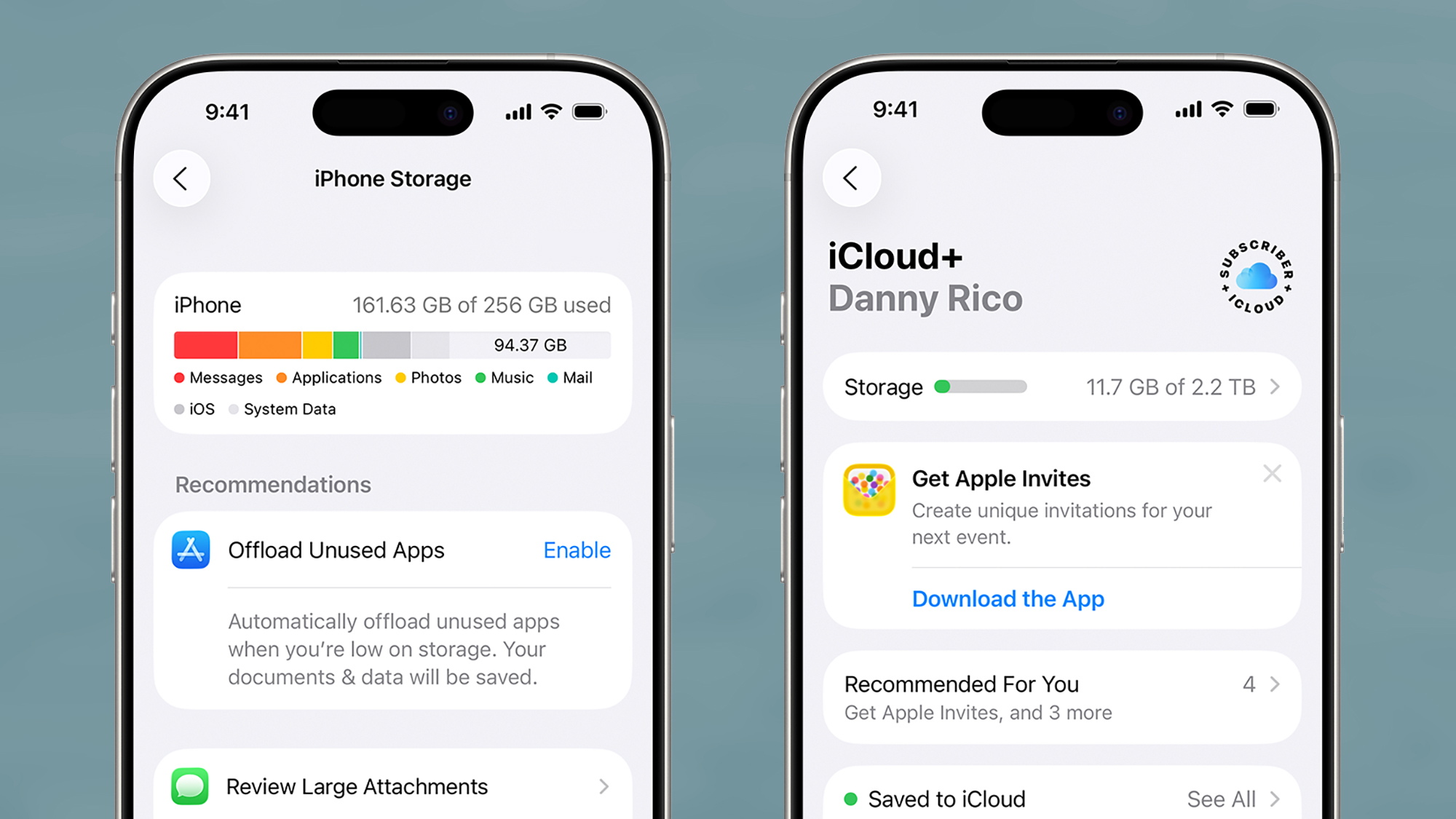
Over on the iPhone, there is a tool for identifying ways you can free up more storage space, but it’s not in the native Files app for iOS. Instead, you need to go to Settings, then tap General > iPhone Storage. You’ll see how much storage space is spare, and some suggestions for what you can do about it.

Scroll down and you get a full list of the apps installed on your phone, with the biggest ones at the top—it might be worth removing any you don’t use regularly. Tap on an app name and there are two options: Offload App (which keeps the app in place but deletes all the data it has stored locally), and Delete App (which removes it completely).

screenshot of iphone storage
The iPhone Storage screen in iOS Settings. Screenshot: Apple

You can also uninstall apps from the App Library screen to free up space: Tap and hold on an app icon, then pick Delete App. Bear in mind you can always reinstall these apps again later, or even use the web app versions through Safari, if you find you need them again.

Photos and videos can take up a good chunk of space on a phone. If you open iOS Settings and pick Apps > Photos, you’ll find an Optimize iPhone Storage option, if you’re syncing to iCloud—this means lower-resolution versions of your files will be saved locally, as long as they’re safely backed up to the cloud.

Google Photos for iOS offers something similar, if that’s your photo and video app of choice. Inside the app, tap your profile picture, then choose Free up space on this device and you get the option to delete local copies of photos and videos that are saved in the cloud. With any of these clean-up tools though, remember that cloud copies are not enough on their own—you do need to make sure these files are saved somewhere else as well (like on a laptop), just in case.

screenshot of photos on apple
You can optimize photo and video storage on the iPhone. Screenshot: Apple

It’s worth digging through media apps that may have saved content for watching or listening too offline as well (the iPhone Storage screen will tip you off to some of these). To check downloaded content in the Netflix app, for example, open the My Netflix tab and then choose Downloads.

Finally, you can use the iOS Files app for manual deletions as well. From the Browse screen, tap On My iPhone: Long press on a file to find the Delete option, or tap the three dots (top right) and Select to pick multiple files (a trash can icon will show up at the bottom). The files get moved to the Recently Deleted folder for 30 days, and after that they’ll be wiped permanently.

The post How to free up space on your phone and avoid the dreaded ‘storage full’ messages appeared first on Popular Science.

DIY Project Turns a Panasonic GF3 and Soviet Fed 5 Into a Digital Rangefinder

15 May 2026 at 18:20

Three vintage cameras are displayed on a wooden surface, with one black camera in sharp focus in the foreground and two blurred cameras in the background against a dark backdrop.

Photographer and creator Mr. 50mm designed a DIY digital rangefinder, which only requires about $200-$250 worth of parts.

[Read More]

  • ✇Funky Junk Interiors
  • Cow-theme simple DIY planter box with easy wooden spoon ears Funky Junk Donna
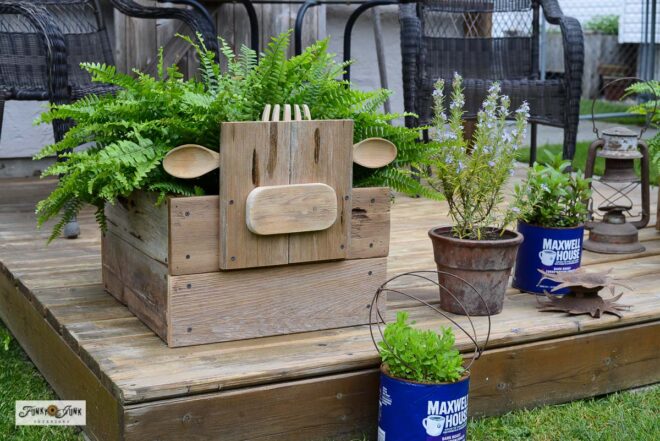
    Bring a touch of farmhouse charm to your garden by building this cow-themed simple DIY planter box, featuring adorable wooden spoon ears and salad fork hair for a playful, rustic look! As a Fusion and Amazon Influencer, this post contains affiliate links in which I earn a small percentage from qualifying purchases at no extra […] The post Cow-theme simple DIY planter box with easy wooden spoon ears appeared first on Funky Junk Interiors.
     

Cow-theme simple DIY planter box with easy wooden spoon ears

7 May 2026 at 19:39

cow theme simple DIY planter boxBring a touch of farmhouse charm to your garden by building this cow-themed simple DIY planter box, featuring adorable wooden spoon ears and salad fork hair for a playful, rustic look! As a Fusion and Amazon Influencer, this post contains affiliate links in which I earn a small percentage from qualifying purchases at no extra […]

The post Cow-theme simple DIY planter box with easy wooden spoon ears appeared first on Funky Junk Interiors.

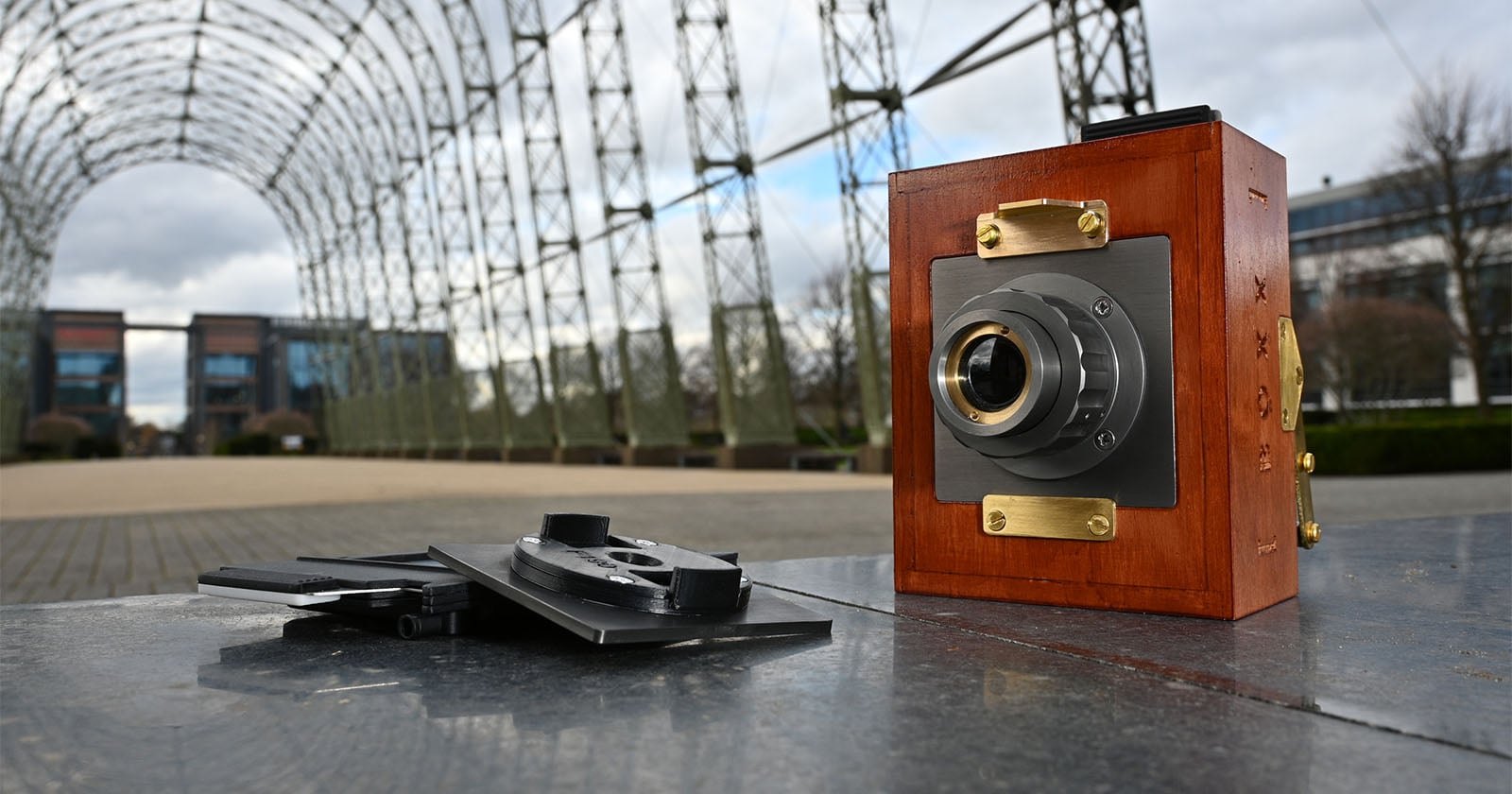
Alfie Boxx Camera Promises an All-in-One Analog Photography Experience

1 May 2026 at 20:15

A vintage wooden camera sits on a metal surface outdoors, with film holders next to it. In the background, there is a large metal arch structure and modern buildings, under a cloudy sky.

Upstart British photography company Alfie Cameras is launching its next camera, the Alfie Boxx, in just a few weeks. The upcoming camera is an all-in-one analog camera experience, enabling photographers to capture and develop photos right in the camera itself.

[Read More]

  • ✇Earth911
  • 5 Fun Ways To Recycle Your Jeans Earth911
    The average American discards roughly 82 pounds of clothing and textiles each year — and most of it lands in a landfill. According to the EPA, more than 17 million tons of textiles were generated as municipal solid waste in 2018, a figure the U.S. Government Accountability Office confirmed was more than 50% higher than in 2000 due largely to the rise of fast fashion. And the recycling rate for clothing and footwear? Just 13%. Denim is one of the most salvageable things in that waste stream. Beca
     

5 Fun Ways To Recycle Your Jeans

24 April 2026 at 07:10

The average American discards roughly 82 pounds of clothing and textiles each year — and most of it lands in a landfill. According to the EPA, more than 17 million tons of textiles were generated as municipal solid waste in 2018, a figure the U.S. Government Accountability Office confirmed was more than 50% higher than in 2000 due largely to the rise of fast fashion. And the recycling rate for clothing and footwear? Just 13%.

Denim is one of the most salvageable things in that waste stream. Because authentic jeans are made mostly from cotton, a natural, biodegradable fiber, they can be recycled into building insulation, pet bed inserts, and thermal packaging, or given a second life through resale and creative reuse.

Here are five ways to put your worn-out jeans to work, and have some fun doing it.

1. Your unwanted denim can be turned into insulation.

Cotton Incorporated’s Blue Jeans Go Green program has been recycling denim into insulation since 2006. Since then, the program has collected more than 5 million pieces of denim and diverted over 2,290 tons of textile waste from landfills. That recycled fiber gets processed into UltraTouch™ Denim Insulation by Bonded Logic — used in homes, thermal packaging, and pet bedding — with some insulation donated each year to building projects in communities in need.

The program accepts any denim item (jeans, jackets, skirts, shirts) that’s at least 90% cotton, in any condition. Drop off locations include Anthropologie, which has committed to diverting 10 tons through the program, and a rotating list of retail partners you can find on the Blue Jeans Go Green recycle page.

You can also mail denim directly to the program at Cotton’s Blue Jeans Go Green™ Program c/o Phoenix Fibers – CIMI, 400 East Ray Road, Chandler, AZ 85225 (a free prepaid label program ended in August 2025, so you’ll need to cover shipping).

BlueJeansGoGreen.org denim recycling box.


Madewell’s denim trade-up program is one of the most practical ways to close the loop on old jeans, regardless of the brand. Drop any pair of jeans of any cut, color, or condition at a Madewell store and receive $20 off a full-priced pair of Madewell jeans. The program is year-round with no limit on how many pairs you bring in.

The program has collected more than 2.3 million preloved pieces. Gently worn jeans are resold through Madewell Forever, the brand’s resale platform with ThredUp; jeans beyond repair are recycled into housing insulation and sustainable packaging via the Blue Jeans Go Green partnership.

You can also mail in denim with a free Clean Out Kit or shipping label if you don’t have a Madewell nearby.

2. Turn your denim into a pair of shorts.

This is probably the easiest way to repurpose a pair of jeans. Even if you don’t sew, you can make long jeans into shorts. Get a pair of sharp scissors, figure out where you want to cut, and then enjoy your new shorts. Remember the old saying, “measure twice, and cut once.” If you’re a sewer (or good with a glue gun), check out this tutorial by Craft & Creativity for some adorable additions to cutoffs.

Cute cutoff jean ideas by Craft and Creativity

3. Upcycle your denim into a reusable bag.

One of my favorite ways to upcycle denim is by making reusable bags. You can use the bags as an adorable way to package a gift, as a purse, and as a reusable grocery carrier, just to name a few. I also found this creative phone charging bag. This is another project that could be done simply with a glue gun or, if you don’t have one, some craft glue.

Recycle your jeans into this creative phone-charging bag

4. Upcycle your denim into some sweet friendship bracelets.

One of my girls’ favorite projects is to upcycle material, including denim, into friendship bracelets. They are able to use their creativity and make each bracelet a special work of art. First, gather supplies like fun buttons, embroidery floss, and any other embellishments you may have on hand. Then cut the denim into strips.

materials for upcycled denim friendship bracelets

Next is where the fun really begins. Let your kids use their imaginations to dream up some adorable ways to decorate their friendship bracelets. They could even begin by sketching out their ideas so you know how to help them make their vision a reality.

adorning denim friendship bracelet

Your kiddos can wear their bracelets proudly and give them as gifts.

completed recycled denim friendship bracelets

Need more ideas on how to upcycle your worn denim? Visit this helpful Pinterest board.

5. Make a craft supply holder with your unwanted jeans and some cans from the recycling bin.

This is a great idea for anyone who wants to organize their craft supplies in one spot. You could make it a kid-friendly craft supply holder by including washable markers, colored pencils, safety scissors and glue sticks. Add a handle and this could be a great way to bring craft supplies on the road with you. I found this example at 8Trends.com.

Recycle your jeans into these cute craft supply holders, courtesy of 8Trends.com.

Denim scraps also work well as ties for garden plants, drawer liners, coasters (backed with felt), small coin pouches, and journal covers. Because denim frays attractively rather than looking ragged, even imperfect cuts tend to look intentional. There’s also a growing community of textile artists on Pinterest’s denim upcycle boards with ideas organized by skill level and material quantity.

Your old jeans are too valuable to throw away. If they’re still wearable, donate them to a local thrift store or trade them in at Madewell. If they’re worn out, recycle them through Blue Jeans Go Green — or cut them into something new. Use Earth911’s Recycling Search to find textile recycling drop-off spots near you.

Editor’s Note: Originally published by Wendy Gabriel on February 6, 2017, this article was updated in April 2026. Feature image courtesy of Shutterstock.com.

The post 5 Fun Ways To Recycle Your Jeans appeared first on Earth911.

  • ✇Funky Junk Interiors
  • Turn an old cable reel into a herbs potting bench or outdoor table Funky Junk Donna
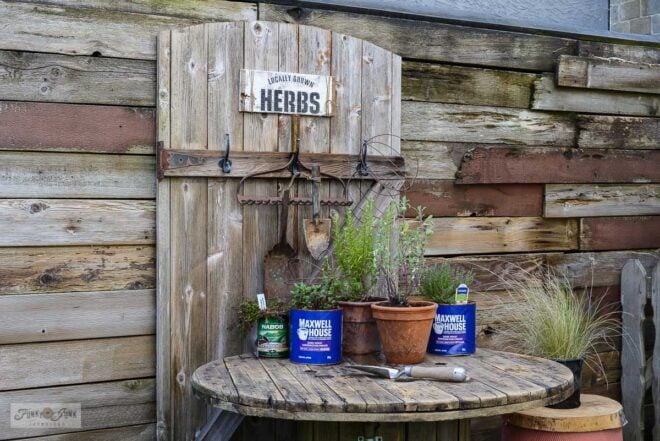
    Transform a forgotten cable reel into a charming and functional herbs potting bench or outdoor table, adding rustic charm and practicality to your garden space with this easy DIY project!  As a Fusion and Amazon Influencer, this post contains affiliate links in which I earn a small percentage from qualifying purchases at no extra cost […] The post Turn an old cable reel into a herbs potting bench or outdoor table appeared first on Funky Junk Interiors.
     

Turn an old cable reel into a herbs potting bench or outdoor table

23 April 2026 at 00:05

cable reel potting bench for growing herbsTransform a forgotten cable reel into a charming and functional herbs potting bench or outdoor table, adding rustic charm and practicality to your garden space with this easy DIY project!  As a Fusion and Amazon Influencer, this post contains affiliate links in which I earn a small percentage from qualifying purchases at no extra cost […]

The post Turn an old cable reel into a herbs potting bench or outdoor table appeared first on Funky Junk Interiors.

❌
Subscriptions