“Play is how we give permission,” says Vitor Freire, co-founder of the Amsterdam-based studio Imagination of Things. “Permission to challenge what’s fixed, rehearse what doesn’t exist yet, and close the distance between people who wouldn’t otherwise meet.”
Freire and co-founder Monique Grimord take play seriously and, in a new project, their studio created a vast repository of 169 artworks, designs, games, and more that have offered an unexpected encounter with imagination and joy. From Ra
“Play is how we give permission,” says Vitor Freire, co-founder of the Amsterdam-based studio Imagination of Things. “Permission to challenge what’s fixed, rehearse what doesn’t exist yet, and close the distance between people who wouldn’t otherwise meet.”
Freire and co-founder Monique Grimord take play seriously and, in a new project, their studio created a vast repository of 169 artworks, designs, games, and more that have offered an unexpected encounter with imagination and joy. From Rael San Fratello’s award-winning “Teeter-Totter Wall” to the healing Wind Phone project to a 12-foot puppet walking the world, Unruly Play is a multi-decade archive of participatory projects, public spaces, and digital creations that invite surprise and camaraderie.
“Our collaborators have always asked us where our ideas come from,” Gimrod says, “and the truth is that they come from references that rarely talk to each other—it can be a seesaw through a border wall or a phone booth connected to the dead… We wanted to create unusual dialogues and support new creative practices, and Unruly Play was our answer for that.”
Fully interactive, the project is searchable by theme or browsable through a shuffle feature. To dive deeper into the power of play, check out this compendium of artist-designed spaces.
Riding the coattails—or perhaps it would be more apt to say the gown trails—of the monumental retrospective exhibition in 2023 in Paris at the Musée des Arts Décoratifs, the Brooklyn Museum is about to open the striking new edition of Iris van Herpen: Sculpting the Senses. Building upon the previous presentation’s emphasis on the way fashion meets art, this show also includes recent collections like Sympoeisis, reaffirming Iris van Herpen’s one-of-a-kind approach to sustainable, sculptural co
Riding the coattails—or perhaps it would be more apt to say the gown trails—of the monumental retrospective exhibition in 2023 in Paris at the Musée des Arts Décoratifs, the Brooklyn Museum is about to open the striking new edition of Iris van Herpen: Sculpting the Senses. Building upon the previous presentation’s emphasis on the way fashion meets art, this show also includes recent collections like Sympoeisis, reaffirming Iris van Herpen’s one-of-a-kind approach to sustainable, sculptural couture.
Van Herpen is known for her elaborate dresses that incorporate high-tech processes and materials, such as laser-cutting and Plexiglas, while also embracing the rhythms and patterns of biological and celestial realms. At this year’s Met Gala, for example, Olympic skier Eileen Gu arrived in a dress titled “Airu,” which was not only coated in plastic bubbles but also emitted real ones. In the “Living Algae” look from her 2025 Sympoeisis collection, van Herpen even incorporates real Pyrocystis lunula, a type of algae that forms a crescent shape and glows in the dark.
“Living Algae” look from the ‘Sympoiesis’ collection (2025), Pyrocystis lunula algae, nutrient gel, H2O, silicone, silk organza, and tulle. Collaborator: Chris Bellamy. Model: Stella Maxwell. Photo by Molly SJ Lowe
“Fascinated by the complexity of nature and the power of science, van Herpen transforms scientific concepts into visionary fashion,” says a statement. “Drawing from wide-ranging fields spanning mathematics, neuroscience, marine biology, paleontology, mycology, mineralogy, astronomy, and more, her haute couture designs seamlessly merge art, science, and technology—evoking the often unseen structures of nature, from coral reefs and branching systems of fungi to the vast patterns of planetary motion.”
Sculpting the Senses features more than 140 haute couture designs, plus the works of numerous artists like Kenny Nguyen, Wim Delvoye, Agostino Arrivabene, 目[Mé], Katsumata Chieko, Tara Donovan, and many others—several of whom have pieces in the Brooklyn Museum’s own collection. The experience is also complemented by a multi-sensory soundscape created by Dutch composer and music producer Salvador Breed.
The show opens on May 16 and continues through December 6 in Brooklyn. See more on van Herpen’s Instagram and YouTube.
A quick one to say I’ve been thinking a lot about the different subtitles they’ve slapped on Lewis Hyde’s The Gift through the years, mostly because it was only this year I learned that the original 1983 edition looked like this:
I LOVE IT. WHY DID THEY CHANGE IT. WHAT GIVES.
The whole thing is a far cry from 2019’s:
As well as the copy I first encountered (published in 2007), which features a third option:
Which is…fine? It’s fine.
BUT WHO BURIED THE LEDE ON THE E
A quick one to say I’ve been thinking a lot about the different subtitles they’ve slapped on Lewis Hyde’s The Gift through the years, mostly because it was only this year I learned that the original 1983 edition looked like this:
I LOVE IT. WHY DID THEY CHANGE IT. WHAT GIVES.
The whole thing is a far cry from 2019’s:
As well as the copy I first encountered (published in 2007), which features a third option:
Which is…fine? It’s fine.
BUT WHO BURIED THE LEDE ON THE EROTIC LIFE OF PROPERTY?!
Audre Lorde originally presented “Uses of the Erotic: The Erotic as Power” as a paper in 1978, but it wasn’t published in Sister Outsider until 1984—just one year after the first edition of The Gift came out.
(There’s a nice write-up of this design on Fonts in Use, if you’re into that sort of thing, *cough*ROBIN*cough*)
I wonder about this post-70s literary landscape, everything still reverberating with the energy of the 60s, the explosive visibility of sexuality in American youth culture, the rising tide of queer voices—but also the broader definition of eroticism.
I just re-read Katherine Angel’s Unmastered: a Book on Desire, Most Difficult to Tell, which I picked up after Tomorrow Sex Will Be Good Again. Her exploration of eroticism veers more towards the question of what to do with desire that resists being codified, named, and negotiated in explicit terms. How do we reckon with consent culture alongside the lure of the unknown? What of discovery? What of the secret third thing?
Kate Wagner coming in at the right moment here with this essay:
A situational eroticism is what is needed now, in our literalist times. […] Arousal is a matter of the self, which takes place within the body, a space no one can see into. It is often a mystery, a surprise, a discovery. It can happen at a small scale, say, the frisson of two sets of fingers in one’s hair at once. It is beautiful, unplanned and does not judge itself because it is an inert sensation, unimbued with premeditated meaning. This should liberate rather than frighten us. Maybe what it means doesn’t matter. Maybe we don’t have to justify it even to ourselves.
This draft has been languishing because I don’t have a neat bow to slap on the end of this. If there’s anything I’m thinking of, though, it’s that Hyde (or his publisher) wasn’t wrong to foreground eroticism in that first edition of the book. Eroticism is creativity, and neither are as much work as they are play.
Spring is the season of renewal. An opportunity for a fresh start. Walking outside on the first warm and sunny day of the year—and seeing neighbors out and about, too—can feel like a collective sigh of relief. With winter’s chill behind us, spring invites us to lighten up, especially in our homes. The time has come to put away the heavy knits and faux furs and break out the gingham tablecloths and pastel throw pillows. Spring has finally arrived, and we’re ready for a refresh.
Spring is the season of renewal. An opportunity for a fresh start. Walking outside on the first warm and sunny day of the year—and seeing neighbors out and about, too—can feel like a collective sigh of relief. With winter’s chill behind us, spring invites us to lighten up, especially in our homes. The time has come to put away the heavy knits and faux furs and break out the gingham tablecloths and pastel throw pillows. Spring has finally arrived, and we’re ready for a refresh.
7 Spring Home Decor Trends for the Ultimate Refresh
We spoke with several interior designers to get the scoop on what spring home decor trends they’re seeing and loving this season. It’s a dreamy mix of soft colors, trending patterns, cozy textures, and a dash of the unexpected. Read on to learn how to give your home a fresh start with this season’s latest interior trends.
Stripes and Gingham
One of the biggest decor trends of the year is playing with patterns. Gingham and stripes are everywhere this spring, and Elizabeth Vergara, founder and CEO of Vergara Homes is happy to hop on the trend. “This spring, I can see gingham and stripes coming back in a huge way,” she shares. “I would incorporate these patterns into my home through table runners, pillow cases, and throws. I try to make small shifts in my home so they can easily be switched out once the season changes or the trend passes.”
The best part about patterns is that they work in every room. If your spring refresh is in the living room, try adding a few gingham pillows to the sofa. Want to refresh the bedroom? Add a new set of striped sheets to your bed. Hosting a spring dinner party? Include gingham in your tablescape with patterned napkins or a tablecloth.
Florals for spring aren’t exactly groundbreaking, but it truly wouldn’t be the season without them. “Adding seasonal florals such as tulips, daffodils, and flowering branches in soft pastels or bright, cheerful tones can instantly brighten your home and make it feel fresh,” Ashley Gallion, Founder of Ashley Ayers Interiors, shares. “You can easily pull playful spring accents in smaller accessories such as pillows or vases.”
Whether you decorate with fresh or faux florals, be generous. Now is the time to place vases full of blooms at the center of your coffee table, dining table, kitchen island, and mantle, all at once!
A spring home refresh doesn’t require a full-blown renovation, of course, and swapping out accents like pillows and throws is a perfect way to welcome the season. “One very easy change for spring is to swap out your heavy winter throw blankets for lighter spring-inspired throws in pretty florals or light and bright plaids,” Laura Medicus, Interior Designer and Owner of Laura Medicus Interiors, says. Looking to add some fun patterns to your space? This is the way to do it. “Hop on the gingham trend with one or two soft-colored gingham pillows!” Medicus continues.
A spring home refresh is not only about how your home looks, but how it feels. Outdated art and photos can bring the vibe down, so take some time to check in with what you have displayed. “One easy way to refresh your home for spring is to update your framed photos or art to go with the seasons,” Erin Greene, Interior Designer at Erin Greene Designs, notes.
Take a look at your walls and notice if any frames need updating or art that needs refreshing. Winter is generally for darker, moodier art, while spring lends itself to art that’s soft and light. Pick photos and art that feel like spring. To get the most bang for your buck, Greene recommends digital frames. “I particularly love this HD framed canvas from Frameology because it’s a great way to make digital art look more luxurious,” she says. “You can frame art that captures springtime vibes, then once fall rolls around, swap out that art to represent autumn instead.”
Sarah Goesling, owner and principal, and Rebecca Goesling, Director of Design at Goesling Group, know a thing or two about trending colors for spring. “For springtime, we’re loving pops of color like citrus or spicy orange, whether saturating the whole room in a fresh coat of paint or adding an unexpected ceiling moment,” they share. “Our advice for ceilings is to try a bolder contrast in a smaller space for some drama. Ceilings are a great way to experiment with color if you’re not ready to fully commit to walls just yet.”
Even if you’re not ready to pick up a paintbrush this season, adding pops of color through accents and decor is a great way to sprinkle some fresh energy into your space. “Other color ideas we’re enjoying are creamy apricot, asparagus green, bubblegum pink with a violet undertone, frosty translucent blues, and scarlet in high lacquer,” they continue.
“Other ways to refresh your space include incorporating some fun vintage pieces,” Goesling shares. “We always love sourcing unique finds from estate sales or local artisans. Other details like fringe, raw materials, and handcrafted items are also having a moment.”
Good design takes time, and pieces that are lived in, well-worn and have a story to tell are becoming more and more popular. Interior trends this year are less about curating a home that looks like it belongs in a showroom and more about curating a space you love, regardless of trends. Spring is the ideal time to rearrange a room, bring in new pieces, and experiment with your design style. Shopping secondhand is a fantastic way to create a space that feels like it was collected over time, instead of all at once.
Spring beckons us to start living outside again. Decks, patios, porches, and backyards are ready to be revived! “Spring is usually when we realize how heavy everything started to feel over winter, so we try to lighten it up by taking away a few layers, bringing in airier materials, and making our outdoor space feel usable again,” Barrett Oswald, Principal Designer at Barrett Oswald Designs, says.
As you refresh your outdoor space, Oswald recommends adding new exterior pillows, updating greenery, and checking on your lantern lights. “A few small changes can make a big impact,” she states.
With a stained glass window, light filters through to illuminate narrative scenes or geometric patterns, but it’s primarily the window itself that draws our attention. For Lesley Green of Bespoke Glass, these vibrant compositions certainly aren’t limited to these traditional apertures. “One of my personal obsessions is trying to convince people to hang glass on the wall instead of in the window, so you can really experience the pure color and texture of the glass,” she tells Colossal.
Besp
With a stained glass window, light filters through to illuminate narrative scenes or geometric patterns, but it’s primarily the window itself that draws our attention. For Lesley Green of Bespoke Glass, these vibrant compositions certainly aren’t limited to these traditional apertures. “One of my personal obsessions is trying to convince people to hang glass on the wall instead of in the window, so you can really experience the pure color and texture of the glass,” she tells Colossal.
Bespoke Glass creates a wide range of aesthetic and functional forms, conceived for both residential and commercial interiors. Some are designed to be screens or separators, such as behind a bar or between tables in a restaurant. Others are more sculptural, such as her three-dimensional sculptures that project onto the wall when the sun shines through them, interacting with local shadows. This display method also highlights the inherent textures of the glass itself, from waves to ridges to mottled patterns.
Using a hand-cut, traditional copper foil method of creating the stained glass, Green has also innovated some studio-developed techniques to produce three-dimensional objects. “Craftsmanship is extremely important to me as well,” she says. “Precise cuts and especially smooth solder lines are part of everything my studio produces.”
All pieces are available to be commissioned in custom colorways, and Green is also working on larger-scale versions of the sculptural works, plus multiple-piece collections designed to installed on the wall. See more on Instagram.
Earlier this month, dozens of metallic discs suspended from the ceiling of a large industrial space invited viewers to immerse themselves in what SpY describes as “a continuous choreography of movement and reflection.” The artist is known for his large-scale installations, often repurposing objects like traffic cones and metallic rescue blankets to create striking urban interventions.
SpY’s most recent room-scale work, titled “Halos,” reimagined the industrial interior of a former railway-
Earlier this month, dozens of metallic discs suspended from the ceiling of a large industrial space invited viewers to immerse themselves in what SpY describes as “a continuous choreography of movement and reflection.” The artist is known for his large-scale installations, often repurposing objects like traffic cones and metallic rescue blankets to create striking urban interventions.
SpY’s most recent room-scale work, titled “Halos,” reimagined the industrial interior of a former railway-related factory in Florence—a place we typically associate with Renaissance elegance as opposed to brutalist design—as part of the city’s Bright Festival.
Three stories high, “Halos” interacts with the natural breeze that flows throughout the space, which is exacerbated by people moving around. Glimmering light further lends a sense of ethereality and even magic.
A bold new structure has appeared in Cary Park in Cary, North Carolina: the latest sculptural pavilion by Marc Fornes / THEVERYMANY. The work is titled “L’Ile Folie,” which nods to the architectural tradition of the folly, a landscape feature that was all the rage with wealthy estate owners in the 18th and 19th centuries.
Often nostalgic and resembling ruined miniature castles or bucolic village buildings, follies were generally non-functional and conceived as pure decoration. Fornes, howe
A bold new structure has appeared in Cary Park in Cary, North Carolina: the latest sculptural pavilion by Marc Fornes / THEVERYMANY. The work is titled “L’Ile Folie,” which nods to the architectural tradition of the folly, a landscape feature that was all the rage with wealthy estate owners in the 18th and 19th centuries.
Often nostalgic and resembling ruined miniature castles or bucolic village buildings, follies were generally non-functional and conceived as pure decoration. Fornes, however, reimagines this practice with an eye toward the future rather than the past. The pavilion “gives this tradition a contemporary meaning: memorable, playful, and slightly surreal,” says a statement.
Fornes is known for creating high-tech structures made from thousands of individual facets, blurring the distinction between architecture and sculpture. Situated along a boardwalk and perched over a pond, the gleaming white pavilion invites visitors to pause and appreciate their natural surroundings from a contemporary landmark.
“Constructed from ultra-thin folded aluminum panels, each piece is digitally fabricated and precisely riveted into place,” says a statement. “There is no hidden frame; the skin is the structure. Thousands of perforations filter sunlight into delicate patterns, turning the canopy into an ever-changing atmosphere of shadow and shimmer.”
From rivers and oxbow lakes to crop-field patchworks and mineral sediments, Landsat has seen it all. A program of NASA and USGS, the satellite initiative has documented the Earth’s surface since 1972, making it the longest continuous record of our planet’s ever-evolving landscapes. And to mark Earth Day 2026, the organizations launched a playful way to interact with some of their findings collected over the past five-and-a-half decades—a name generator.
Using the tool is simple: type in yo
From rivers and oxbow lakes to crop-field patchworks and mineral sediments, Landsat has seen it all. A program of NASA and USGS, the satellite initiative has documented the Earth’s surface since 1972, making it the longest continuous record of our planet’s ever-evolving landscapes. And to mark Earth Day 2026, the organizations launched a playful way to interact with some of their findings collected over the past five-and-a-half decades—a name generator.
Using the tool is simple: type in your name, or any word, and Landsat returns it in the form of vertical snapshots of a wide range of terrain. Just like we see with composites of Mars, for instance, scientists have digitally enhanced some images to highlight specific features. Those used for “Your Name in Landsat” sport a wide array of hues, textures, and patterns that glimpse the diversity of our planet’s surface.
“Colossal”
Landsat is an incredible resource that features time-lapses of changing land use over several decades. Even this playful name generator allows you to hover over individual images and learn the exact locations—down to the coordinates—and all of the program’s data is publicly accessible. For example, the “C” in “Colossal” above is a vertical view of a cloud-speckled Deception Island in Antarctica, and the “A” is the uniquely shaped Lake Mjøsa in Norway.
You might also enjoy Overview, a book that chronicles how the landscape has changed over time. Learn more about Landsat from NASA. (via PetaPixel)
From factories and barrel-roofed buildings to gabled churches and towers, Charles Young’s sprawling yet diminutive city of paper models continues to grow. Known for his miniature constructions and animations that often double as three-dimensional color studies, the sculptor and animator highlights a wide range of architectural styles with an emphasis on color pairings.
Since 2020, Young has been making hundreds of miniature structures inspired by A Dictionary of Color Combinations by Japan
From factories and barrel-roofed buildings to gabled churches and towers, Charles Young’s sprawling yet diminutive city of paper models continues to grow. Known for his miniature constructions and animations that often double as three-dimensional color studies, the sculptor and animator highlights a wide range of architectural styles with an emphasis on color pairings.
Since 2020, Young has been making hundreds of miniature structures inspired by A Dictionary of Color Combinations by Japanese costume designer and painter Sanzo Wada (1883-1967). (There’s even a fun, interactive website based on the book.) So far, Young has completed 258 buildings from the first volume, which focuses on two-color combinations, and there are 90 to go. But he’s created a wide array of examples featuring multiple color combinations, too.
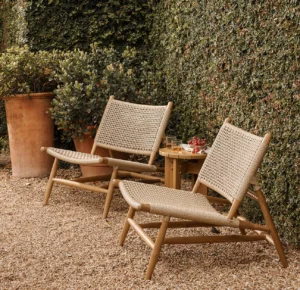
I’m moving at the end of the month, and while there’s plenty to figure out, one thing is already decided: outdoor furniture comes first. Al fresco season is here, and I plan to claim every early-morning coffee and late-afternoon aperitivo outside while I can. In Austin, that window is fleeting—so sofas and rugs can wait.
Even on the days I’m not hosting outside or lingering with a summer book on the porch, there’s something about an inviting patio that changes how a home feels. From the kitc
I’m moving at the end of the month, and while there’s plenty to figure out, one thing is already decided: outdoor furniture comes first. Al fresco season is here, and I plan to claim every early-morning coffee and late-afternoon aperitivo outside while I can. In Austin, that window is fleeting—so sofas and rugs can wait.
Even on the days I’m not hosting outside or lingering with a summer book on the porch, there’s something about an inviting patio that changes how a home feels. From the kitchen sink, it’s the view of planters, soft lighting, and a space that’s ready when you are. Lately, I’ve been deep in the search for patio sets, comfortable chairs, and small pieces that pull it all together—and the good news? Affordable outdoor furniture has come a long way.
Here’s the approach I keep coming back to: start with one anchor piece, then build around it. It’s the simplest way to create an outdoor space that feels layered, intentional, and actually lived in.
Ahead, the best affordable outdoor furniture—everything you need to create a space that looks elevated, feels effortless, and lives well all season.
The Investment Pieces That Make Everything Else Look Better
Here’s the trick: not everything needs to be a splurge. But a few pieces should be. The ones that ground the space, hold it all together, and make even the simplest setup feel pulled together. Start here, then layer in the rest.
Most budget patio sets feel temporary—lightweight, overly matching, and easy to forget. These bring a little more presence: better materials, softer lines, and a look that lasts beyond one summer.
In smaller spaces, every piece has to earn its place. These do—pulling double (or triple) duty as side tables, plant stands, or extra surfaces when you need them, then tucking away just as easily.
The Finishing Touches That Pull It Together—Planters + Decor
Once the larger pieces are in place, this is where the magic happens. The finishing touches—planters, pillows, lanterns—add the warmth and texture that make a space feel truly your own.
The Pieces That Make It Livable—Umbrellas, Rugs, and Lighting
An outdoor space only works if you can live in it. These are the pieces that make that possible—cooling shade, grounding textures, and lighting that extends the day just a little longer.
Over the course of two decades, Queens resident Joe Macken meticulously built an entire city from the ground up. In fact, he built New York City—the whole thing—one building, house, and bridge at a time. Now, his expansive scale construction is on view in He Built This City: Joe Macken’s Model at the Museum of the City of New York.
Macken began working on the 50-by-27-foot model in 2004, first in Middle Village, Queens, before moving to Clifton Park, New York. It comprises 340 individual s
Over the course of two decades, Queens resident Joe Macken meticulously built an entire city from the ground up. In fact, he built New York City—the whole thing—one building, house, and bridge at a time. Now, his expansive scale construction is on view in He Built This City: Joe Macken’s Model at the Museum of the City of New York.
Macken began working on the 50-by-27-foot model in 2004, first in Middle Village, Queens, before moving to Clifton Park, New York. It comprises 340 individual sections, each built from everyday materials like cardboard and glue, with many of the buildings constructed of balsa wood and detailed with pencil and paint. He completed the structure in 2025, and it’s now on long-term view at the museum, where visitors can walk around it and are encouraged to use binoculars to find familiar buildings and neighborhoods.
Photo by David Lurvey. All images courtesy of the artist and the Museum of the City of New York, shared with permission
You may also enjoy the “Panorama of the City of New York” at the Queens Museum, which was completed in 1964 and took a team of more than 100 people about three years to complete.
Photo by Filip WolakPhoto by David LurveyPhoto by David LurveyPhoto by Filip WolakPhoto by David LurveyPhoto by David LurveyPhoto by David LurveyPhoto by David Lurvey
Editor’s Note: There’s something magical about a home that truly reflects its owner—a space that feels deeply personal, rooted in memory, and in harmony with its surroundings. That’s exactly the feeling you get stepping into Lily Riesenfeld’s thoughtfully curated home, featured in Sense of Place, a stunning book by my dear friend Caitlin Flemming and her mother, Julie Goebel. Together, they’ve built a body of work that celebrates the art of creating spaces infused with meaning.
Step inside
Editor’s Note: There’s something magical about a home that truly reflects its owner—a space that feels deeply personal, rooted in memory, and in harmony with its surroundings. That’s exactly the feeling you get stepping into Lily Riesenfeld’s thoughtfully curated home, featured in Sense of Place, a stunning book by my dear friend Caitlin Flemming and her mother, Julie Goebel. Together, they’ve built a body of work that celebrates the art of creating spaces infused with meaning.
Step inside a special home that proves: our surroundings have the power to inspire, comfort, and connect us more deeply to what matters.
A Home Rooted in Place
When you meet Lily Riesenfeld, you can’t help but notice that she seems tethered to the earth with deep roots.
An advocate for environmentally friendly living, Lily seems deeply comfortable in her surroundings. Her 1921 black shingled home with mahogany doors and trim sits in harmony with the surrounding mighty redwood trees, and hiking trails meet the backyard. Lily and her family chose this home because it is located near the trails of Mount Tamalpais, with San Francisco Bay inlets to the east and the Pacific Ocean to the west.
A Childhood Spent Outdoors
Lily grew up in Berkeley, California. When she was eight years old, her family bought a ranch in Healdsburg, California, a short drive from their home.
“Watching my mom and dad develop a vision for the ranch was special,” states Lily. Over the years, the family planted several hundred trees, built a ranch home, restored a redwood barn from the 1850s, and eventually planted one hundred acres of French varietal grapes. Her family developed the ranch with the idea for animals, the vineyard, and natural habitats to coexist. Lily’s favorite part of going to the ranch is sharing it with people who come to visit.
Along with the ranch in Healdsburg, where they spent most summers, the family also went to visit various family homes for two weeks every summer in Maine. As a child, Maine was somewhere she could be wild and free. The furniture on the porch, as well as the porch itself, in the home belonging to her great-grandparents, was painted in a celadon green that the family called “Gamby green,” after her great-grandmother. Gamby loved the shade so much that she even had a set of Wedgwood china made in the color. Many of the choices Lily has made in her home were inspired by her grandmother’s home in Maine, the family home in Berkeley, and the ranch in Healdsburg.
Building a Life at the Intersection of Wellness and Purpose
During her early adult years, Lily began her work with a focus on personal wellness and launched her first entrepreneurial endeavor, The Lily Pad, located in Malibu. After meeting her husband and moving back to the San Francisco Bay area, Lily also cofounded The Pad Studios, which is both a Pilates and yoga studio. Over the years, she began developing purpose-driven events to help communities connect, launching a brand called the Kinship Experience. As those experiences evolved, “I began moving my work to the intersection of human health and global health,” states Lily. She then launched a summit called Futurewell.
Today, Lily is an advocate for regenerative agriculture and works to advance healthy, equitable food systems. She is fundraising for a regeneratively built Center for Food and Agriculture, which will offer a permanent farmers’ market by the Marin Civic Center. “The building we have plans to erect will be drawing down more carbon and energy than it uses.”
A Home Designed in Harmony
Lily designed her Larkspur home with guidance from Caitlin Flemming. “Caitlin was a huge inspiration and the reason my home came together in the most synchronistic way possible.”
The colors within the home coexist in a calm harmony. Earth tones of deep greens, wheat, and a light shade of blue are mixed with a diversity of complementary patterns. All of these color choices can be found in the outdoors around her—the golden hills, the redwood trees (one of which is in her garden), and the light blues and grays of the water.
Walls in both the entry and the dining room are covered in a large-scale William Morris pattern. Curtains and pillows use smaller prints combined with a touch of wood-toned plaid in many rooms. Two petite vintage French chairs are covered in a hand-printed leaf pattern, continuing the spirit of the outdoors. Even the plates are a combination of patterns of vintage transferware in varying shades of green, along with pieces from her great-grandmother’s green Wedgwood.
If there is a heart to this home, it would unquestionably be the kitchen, where homemade tortillas sit wrapped in a linen towel by the stove and slow-simmering pinto beans are ready for anyone who is hungry. It’s a place to be nourished, and Lily is ready to welcome those in need of its healing power.
10 Reflections on Home
1. What drew you to where you live?
It was definitely Mount Tamalpais and the hiking here. We didn’t even look at Berkeley, even though our families live there. We also thought it would be good to be a bridge away from our parents.
2. How do the surroundings of where you live inform your aesthetic in your home?
The colors of the nature where I live definitely inform my aesthetic.
3. What is your idea of home?
A place for people to gather and to feel comfortable—a place you instantly feel at ease.
4. What is your favorite season where you live? Why?
I would have to say late summer. Suddenly, the light changes, and there is a golden cast to everything.
5. Is there anything you collect?
Anyone can see that I have a soft spot for wicker baskets and hats. I also love anything for the kitchen, especially interesting pottery.
6. How do you spend your weekends?
We spend our weekends hiking, cooking, and going to our children’s sporting events. When we can get away in the winter, I love going to our cabin in Sugar Bowl, which is very close to Tahoe, that was built in the 1930s to look like a Swiss village.
7. What can’t you live without?
Probably a latte in the morning. Of course, my children and husband, too! Also, my morning hike every day is what keeps me sane.
8. What elements turn your house into a home?
I think it feels like my home because it has a strong element of nostalgia. I also love adding layers of textures and textiles. This home is the opposite of stark.
9. How does your home fuel your creativity?
I love styling meals and bringing people together at the table. Every Sunday, my mother-in-law comes to dinner, and I always make an effort to dress up and make a nice meal.
10. Are there people or businesses close to home that you rely on to fuel your creativity?
I have learned so much from Alice Waters, after having the pleasure of doing a few curated events alongside her. Alice’s specific direction taught me how to make an experience about food, and how to perfectly execute the presentation. For the purpose side of my work, I am inspired by local creatives such as Paul Hawken, Jack Kornfield, Dr. Daniel Siegel, and my dearest friend, Jennifer Siebel Newsom.

 Login
Login