Normal view

  • ✇Malay Mail - All
  • ‘Too little, too late’: Why experts say social media giants are failing to protect Malaysian youth
    KUALA LUMPUR, May 20 — Children under 16 in Malaysia will likely not be able to make social media accounts in the near future, when the provision under the Online Safety Act (ONSA) 2025 restricting underage access to social media takes effect.Years of research have shown social media’s deleterious effects on youth mental health, fueling anxiety, depression, self-harm and even suicide. Australia was the first to ban social media access for under-16s. Indonesia soo
     

‘Too little, too late’: Why experts say social media giants are failing to protect Malaysian youth

20 May 2026 at 02:44

Malay Mail

KUALA LUMPUR, May 20 — Children under 16 in Malaysia will likely not be able to make social media accounts in the near future, when the provision under the Online Safety Act (ONSA) 2025 restricting underage access to social media takes effect.

Years of research have shown social media’s deleterious effects on youth mental health, fueling anxiety, depression, self-harm and even suicide. Australia was the first to ban social media access for under-16s. Indonesia soon followed suit, while France, the United Kingdom, Turkiye, Thailand and many other countries are in the process of implementing similar laws. These laws treat social media as an addictive substance, like cigarettes and alcohol, and therefore subject to age restrictions.

The move comes as tech companies face lawsuits and accusations of developing addictive features and failing to protect children’s safety online. In March, social media giant Meta, the parent company of Facebook, Instagram and WhatsApp, was found liable for not protecting its underage users against sexual predators and fined US$375 million (RM1.49 billion) in New Mexico in the United States.

Meta is facing 2,400 lawsuits related to social media addiction in the United States.

Malaysia has similar issues with its youth. Research by Mohamed Badawi, M. A. E. et al found that 73.71 per cent of students surveyed in Selangor had social media addiction. The study — “A Cross-Sectional Study on Social Media Addiction and its Relationship with Stress and Loneliness”, published in the Malaysian Journal of Public Health Medicine in 2024 — involved 350 respondents, all Malaysian university students studying in Selangor. It also found that 82.4 per cent of them had moderate stress, while 73.4 per cent felt lonely. 

Evidence

Policymakers argue that the restrictions under ONSA, which aim to prevent children under 18 from accessing social media, are needed as the scale and speed of social media are outpacing existing safeguards. But civil societies (CSOs) and the United Nations Children’s Fund (Unicef) are not enthusiastic about legislation that bans children based on their age, saying it may restrict freedom of speech and social media benefits, such as forging friendships.

Unicef said in a statement that it may drive teens into less-regulated corners of the Internet. Non-governmental organisations (NGOs), meanwhile, take issue with the e-KYC (electronic Know Your Customer) system for age-verification, which will remove anonymity and increase risks of data leaks and surveillance. 

In a statement, the CSOs also said the ban unfairly penalises children instead of holding social media companies accountable for exploitative algorithms and data collection practices, and may exclude marginalised communities.

Some NGOs suggested that Malaysia increase mental health resources and digital literacy training for teens, and shift accountability to tech companies instead.

For now, there is not much evidence for or against social media restrictions as such bans are still very new. Studies take time as society adjusts.  

But the arguably strongest evidence to support the ban on social media access for children lies in the anecdotal example of Greystones, a village of 22,000 people in Ireland. After the Covid-19 lockdown, when social media use spiked, children reported feeling anxiety and sought mental health services. As a response, community leaders came up with the “It Takes a Village” initiative in 2023, and got most of its residents to ban smartphones for their children until they entered secondary school, according to a New York Times report

Three years later, children and parents in Greystones reported being happier and better-adjusted. 

“The idea behind prohibiting children from having a social media account before turning 16 is to either prevent or delay these consequences until their brains are further developed,” said Harris Zainul, director of the Centre for Responsible Technology.

Whether Malaysia and other countries will reap the same benefits is still unknown, but one thing many experts are certain about is that some teenagers will be able to find a workaround to accessing social media when the ban comes into effect. 

“Our Gen Alpha (those born after 2010) is (growing up) with LLMs (Large Language Models), and ChatGPT and even Grok,” commented Dr Haezreena Begum Abdul Hamid, a criminologist and senior lecturer at Universiti Malaya.

“If (they) can’t do (get online), (they’ll) find alternative methods.”

In a survey done on 1,027 teens two months after Australia banned under-16s on social media in December last year, three out of four teens (73 per cent) reported they were still mostly able to access social media platforms. Of the 26 per cent who were affected by the ban, slightly more than half of this group said they were getting less news.  

Accountability

CSOs and experts have pointed out the need to hold social media companies accountable for their addictive features and designs, such as the endless scroll. The reason for the design is simple. The more time you spend online, the more opportunities advertisers have to reach you.

Due to many countries beginning to legislate and impose limits on social media platforms, some tech companies have implemented several safety features to limit endless scrolling.

TikTok, Instagram and other platforms currently allow users to set a daily limit for scrolling, but leave it up to users to enforce. In Malaysia, Meta recently rolled out accounts for 13- to 18-year-olds with stricter default settings, similar to cinema ratings, to protect them from inappropriate content and contact. 

“At Meta, keeping teens safe online is our top priority. We recently announced additional safety features for parents and teens in Malaysia,” said Clara Koh, Meta’s director of public policy for South-east Asia and Asean, during a media roundtable in Kuala Lumpur last month.

Some of the safety features include limiting who the teenager can follow by blocking any account that regularly posts age-inappropriate content. It will also block search terms related to sensitive topics like suicide, self-harm and eating disorders, even if misspelled. Meta said its artificial intelligence (AI) will not return any age-inappropriate responses either.

Teen accounts are also automatically set to private and have a sleep mode, so no notifications can get through. It also has an aggressive nudity filter, which means no inappropriate photos can be uploaded or downloaded. Meta representatives at the press briefing told Bernama the filter also applies to classic art pieces.

Harris, who is also the director of research at the Institute of Strategic and International Studies Malaysia, described the introduction of the features as “too little too late”.

“(This) was only rolled out globally in June 2025. This is despite internal documents reportedly showing the platform was prioritising growth and engagement metrics over child safety, despite being aware of the problem internally,” he said.

As ONSA, which came into force on January 1, 2026, applies to social media platforms, they do not have criminal penalties. However, platforms face up to RM10 million in civil penalties for non-compliance.

The tech industry is fighting back against attempts to regulate them. Some social media companies have threatened to pull out of specific markets, although many experts consider the threat largely empty. Since so many countries are mulling a similar set of restrictions, anywhere they operate will require social media companies to implement some form of restriction in the end.

Haezreena said should the companies concerned follow through and leave, it may turn out to be a blessing in disguise.

“All these platform providers don’t like it if it involves their business profits,” she said. 

“(If social media companies pull out) there will be a loss at first. You know, it may be a bit difficult, but then society will get used to it.” — Bernama 

  • ✇El País in English
  • Steven Soderbergh brings us John Lennon’s Last Interview Gregorio Belinchón Yagüe
    On December 8, 1980, John Lennon and Yoko Ono sat down to talk to a small crew from San Francisco’s KFRC radio station in their Dakota Building apartment in New York. It was the only radio interview they gave to promote their album Double Fantasy, released three weeks earlier. For two hours and 45 minutes they spoke calmly, optimistically and, in Lennon’s case, in an almost messianic voice, about life. That night, returning home, Lennon would be shot dead by Mark David Chapman. Given the circums
     

Steven Soderbergh brings us John Lennon’s Last Interview

On December 8, 1980, John Lennon and Yoko Ono sat down to talk to a small crew from San Francisco’s KFRC radio station in their Dakota Building apartment in New York. It was the only radio interview they gave to promote their album Double Fantasy, released three weeks earlier. For two hours and 45 minutes they spoke calmly, optimistically and, in Lennon’s case, in an almost messianic voice, about life. That night, returning home, Lennon would be shot dead by Mark David Chapman. Given the circumstances, the interview could be viewed as prophetic, which is Steven Soderbergh’s angle in his documentary John Lennon: The Last Interview, presented at Cannes in a special session.

Seguir leyendo

John Lennon, Yoko Ono and Sean Lennon, in one of the images from the family album used in the documentary 'John Lennon: The Last Interview.'
  • ✇Malay Mail - All
  • Injunctions needed to prevent scam advertising — Ong Tze Chin
     MAY 15 — In November 2025, leaked internal Meta documents revealed that the platform was deriving substantial revenue from advertising activities linked to online scams and prohibited goods.These revelations found that Meta had failed to prevent the dissemination of approximately 15 billion “high-risk” advertisements to users each day, generating an estimated US$7 billion (around RM29 billion) in annualised revenue from ads exhibiting clear indicators of fraud.T
     

Injunctions needed to prevent scam advertising — Ong Tze Chin

15 May 2026 at 02:25

Malay Mail


MAY 15 — In November 2025, leaked internal Meta documents revealed that the platform was deriving substantial revenue from advertising activities linked to online scams and prohibited goods.

These revelations found that Meta had failed to prevent the dissemination of approximately 15 billion “high-risk” advertisements to users each day, generating an estimated US$7 billion (around RM29 billion) in annualised revenue from ads exhibiting clear indicators of fraud.

The problem appears to have been further exacerbated by Meta’s advertising personalisation engine, which systematically amplifies users’ exposure to fraudulent content.

Rather than functioning as a protective mechanism, the system uses prior engagement signals to optimise and deliver additional high-risk advertisements, effectively transforming victims into prime targets for repeated scams.

Notwithstanding Meta’s unsatisfactory explanation, an important question arises as to what extent the newly enforced Online Safety Act 2025 can provide effective protection and remedies for the RM2.77 billion in losses arising from financial scams last year.

The sharp rise in both the number of cases and the resulting losses calls for a careful examination of advertising practices.

In an era where digital deception evolves as rapidly as the technology it inhabits, the public law injunction has emerged as a critical tool for regulatory bodies to protect the collective interests of online users.

While private litigation addresses individual harm, public law enforcement focuses on the prevention of systemic unfair commercial practices that threaten users’ safety and economic stability.

The Online Safety Act 2025 (the Act) imposes obligations on social media and messaging platforms with over 8 million users in Malaysia, classifying them as licensees required to comply with the law.

The Act includes measures to mitigate the risk of exposure to harmful content (Section 13), issue guidelines to users (Section 14), enable users to manage their online safety (Section 15), provide mechanisms for reporting harmful content (Section 16) and user assistance (Section 17), protect the online safety of child users (Section 18), establish procedures to make priority harmful content inaccessible (Section 19), and prepare an Online Safety Plan (Section 20).

In addition, the Act also specifies the actions that must be taken by the licensees to ensure compliance and effective implementation of these provisions.

The Online Safety Committee has the power to instruct the platforms to make the harmful content permanently inaccessible on its service to all users upon determination of the harmful content.

Non-compliance with the Act carries a maximum financial penalty of RM10 million (Section 39).

The Online Safety Act 2025 provides a systemic risk management framework and platform accountability framework for content policing.

Public law injunction has been a cornerstone of consumer protection and market regulation for decades, serving as a means to stop harmful commercial practices and malpractice. — Picture via Pexels

Despite its novelty in implementing safety by design, which requires social media and messaging platforms to submit annual online safety plans to the Malaysian Communications and Multimedia Commission (MCMC).

Relying on platforms’ online safety plans has limitations in preventing scam advertising because these plans often prioritize automated filtering over human oversight, allowing sophisticated scammers to bypass detection using AI-generated content.

Furthermore, since these plans are self-reported, they may lack the transparency needed for regulators to verify if the safety protocols are being strictly enforced in real-time.

Finally, the reactive nature of most safety plans means that fraudulent ads are often only removed after the financial damage has already occurred, highlighting the need for more aggressive public law injunctions to stop scams at the source.

Public law injunction has been a cornerstone of consumer protection and market regulation for decades, serving as a means to stop harmful commercial practices and malpractice.

Changes in design, safety plans from reporting, investigations, evidence gathering, and procedures in ensuring compliance take time and often allow fraudulent campaigns to achieve their maximum impact before any regulatory action is finalised.

While internal platform safety plans are essential for long-term systemic health, they are fundamentally slow-moving administrative processes that struggle to keep pace with the agility of modern scammers.

To bridge this gap, authorities should utilise public law injunction as a rapid-response mechanism.

Unlike the lengthy audit cycles of an Online Safety Plan, an injunction serves as an immediate “emergency brake”, allowing regulators to bypass procedural delays and legally compel platforms to freeze scam accounts or remove deceptive advertisements in real-time.

By deploying injunction alongside statutory investigations, it can prevent widespread financial loss while the more time-consuming work of evidence gathering and compliance auditing continues in the background.

In the landmark case of Zschimmer & Schwarz GMBH & Co. KG Chemische Fabriken v Persons Unknown and Mohammad Azuwan bin Othman (t/a Premier Outlook Services) 7 MLJ 178, the Malaysian high court had established a precedent for granting injunctions against “Persons Unknown”.

Utilising public law injunctions against “Persons Unknown” to combat anonymous cybercrime and scam advertising should serve as an immediate priority, allowing for the immediate freezing of the advertising scam, while awaiting the Online Safety Act 2025 transitions into full operation.

* The author is a Senior Lecturer at the Faculty of Law, Universiti Malaya and can be reached at tzechinong@um.edu.my

** This is the personal opinion of the writer or publication and does not necessarily represent the views of Malay Mail.  


Instagram’s Instants Lets You Share Photos That Disappear After They’re Seen

13 May 2026 at 21:15

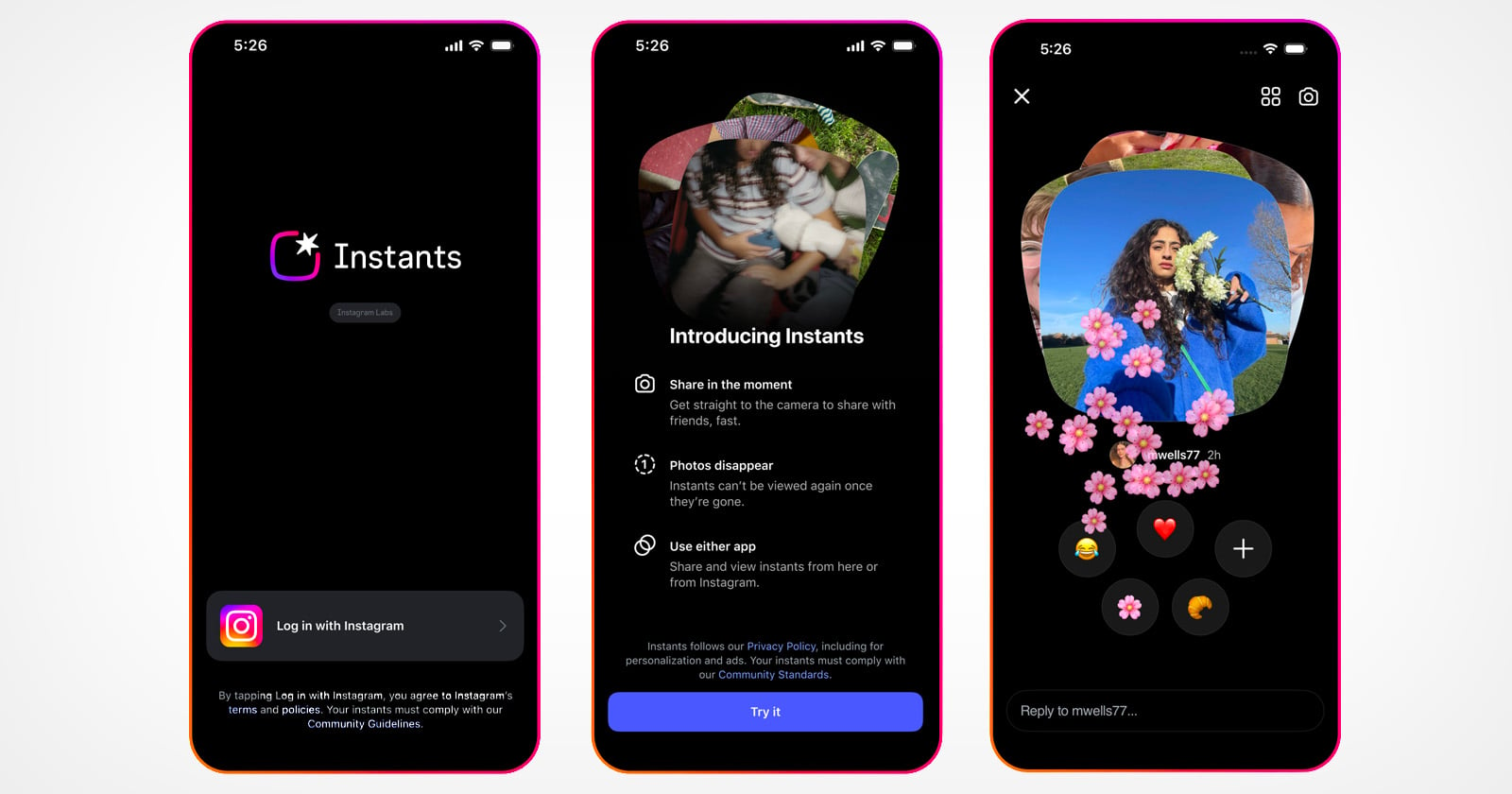
Three smartphone screens show the Instants app: a login page, an introduction screen about sharing photos that disappear, and a photo reply screen with creative flower stickers and emoji reactions.

Instagram has launched a new feature called Instants, a disappearing photo-sharing system designed around fast, unedited sharing with close friends. Available both inside Instagram and through a new standalone Instants app, the feature pushes even further into real-time photography and casual social sharing, with a strong emphasis on authenticity and privacy.

[Read More]

💾

  • ✇Hong Kong Free Press HKFP
  • Meta removes fake INTERPOL ads targeting Hong Kong scam victims Tom Grundy
    Meta has removed a series of scam ads impersonating the International Criminal Police Organization (INTERPOL) following HKFP’s enquiries. Since-removed scam ads impersonating INTERPOL appeared on Meta platforms in recent weeks. Photo: HKFP screenshot. The ads, targeting Hongkongers, appeared for weeks on Facebook. They urged users to get in touch with the global policing body if they wished to retrieve funds previously lost to scams – however, the ads were fraudulent. The posts were p
     

Meta removes fake INTERPOL ads targeting Hong Kong scam victims

11 May 2026 at 23:30
Fake Interpol ads featured image

Meta has removed a series of scam ads impersonating the International Criminal Police Organization (INTERPOL) following HKFP’s enquiries.

Since-removed scam ads impersonating INTERPOL appeared on Meta platforms in recent weeks
Since-removed scam ads impersonating INTERPOL appeared on Meta platforms in recent weeks. Photo: HKFP screenshot.

The ads, targeting Hongkongers, appeared for weeks on Facebook. They urged users to get in touch with the global policing body if they wished to retrieve funds previously lost to scams – however, the ads were fraudulent.

The posts were published by a since-removed fake news outlet page called “Hong Kong Daily,” which falsely claimed to share an office address with HKFP.

Since-removed scam ads impersonating INTERPOL appeared on Meta platforms in recent weeks.
Since-removed scam ads impersonating INTERPOL appeared on Meta platforms in recent weeks. Photo: HKFP screenshot.

INTERPOL told HKFP that such ads should be reported to the local police. “To confirm that INTERPOL never contacts members of the public directly, never demands money from people and never asks for bank details or any money transfer,” it said on Thursday. “Any such request or advert is fake. Members of the public should not engage and report any such emails or adverts to the local police.”

In response to HKFP on Friday, a spokesperson for the Hong Kong Police Force said they have been “actively engaging relevant authorities to verify and remove suspicious or fraudulent websites. In the process of removing such websites, cooperation with concerned parties, including various service providers, is essential. The Hong Kong Police Force is committed to safeguarding the interests of the public by working with these service providers to suppress fraudulent messages.”

The police force is part of the INTERPOL Member State of China.

Meta’s US$3.5 bn profits from scams – report

Last year, Meta banned over 3.7 million items of ad content in Hong Kong and 134 million instances globally. Also in 2025, the tech giant took down 10.9 million accounts associated with scam centres. The company owns Facebook, Instagram and WhatsApp.

A spokesperson for Meta told HKFP on Friday that ads which impersonate organisations or seek to defraud people go against its policies.

“The flagged Facebook Page and associated ads have been removed for violating our policies,” the spokesperson said. “Fighting scams on our platforms is one of our top priorities and as scammers have grown in sophistication in recent years, so have our efforts. We use AI-powered detection technology to identify and remove scam ads at scale, and we also encourage anyone who encounters suspicious ads to report them through our in-app tools.”

facebook headquarters singapore social media reaction like
File photo: Tom Grundy/HKFP.

Nevertheless, according to a report by Reuters news agency, Meta earns US$3.5 billion (HK$27.4 billion) from just a portion of scam ads every six months.

Citing internal Meta documents, Reuters said that the social media company projected that 10 per cent of its 2024 revenue would come from ads for scams and banned goods, amounting to US$16 billion (HK$124.8 billion).

Other fraudulent ads, appearing to target scam victims, remained online as of Monday, according to HKFP’s checks.

A fraudulent Meta ad running on Facebook, as of May 11, 2026. Screenshot: HKFP.

One ad targeting Hongkongers, published by a page called “Law Help,” urged those “affected by online fraud or an unregulated broker” to submit their details.

Scammers have been posing as law enforcement officers to defraud victims.

In March, Nikkei Asia reported that mock police stations and banks had been set up at scam centres, used to fool victims interacting via video call.

  • ✇Hong Kong Free Press HKFP
  • What does China want out of Xi-Trump summit? AFP
    US President Donald Trump is due to visit China on May 14-15, where he is expected to meet leader Xi Jinping, after delaying an earlier summit because of the Iran war. US President Donald Trump (left) greets Chinese President Xi Jinping before a bilateral meeting at the Gimhae International Airport terminal, in Busan, South Korea, on October 30, 2025. Photo: The White House, via Flickr. Here is what Beijing could be hoping to achieve: What does China want? Beyond diplomatic niceties
     

What does China want out of Xi-Trump summit?

By: AFP
10 May 2026 at 09:39
Xi Trump featured image

US President Donald Trump is due to visit China on May 14-15, where he is expected to meet leader Xi Jinping, after delaying an earlier summit because of the Iran war.

US President Donald Trump (left) greets Chinese President Xi Jinping before a bilateral meeting at the Gimhae International Airport terminal, in Busan, South Korea, on October 30, 2025.
US President Donald Trump (left) greets Chinese President Xi Jinping before a bilateral meeting at the Gimhae International Airport terminal, in Busan, South Korea, on October 30, 2025. Photo: The White House, via Flickr.

Here is what Beijing could be hoping to achieve:

What does China want?

Beyond diplomatic niceties and behind closed doors, Beijing will be looking for small, concrete achievements, analysts said, but will stay “realistically pragmatic” given Trump’s unpredictable nature.

China wants a broad reset in ties but knows this would be unlikely, said Benjamin Ho from Singapore’s S. Rajaratnam School of International Studies.

Beijing and Washington had been locked in a blistering trade war in which US levies on many Chinese goods reached an eye-watering 145 percent.

The tit-for-tat escalation cooled off after Trump and Xi agreed in October to a one-year truce, with experts saying Beijing’s baseline goal for the upcoming meeting would be to extend that agreement.

“What China needs is for Trump to follow through on his promise to engage, with at least a few concrete outcomes discussed at the highest level,” said Yue Su from the Economist Intelligence Unit (EIU).

Beijing will be satisfied with “targeted” results such as limited tariff reductions that would justify a measured rollback of its own tariffs or export restrictions, she said.

What about the Iran war?

The topic of Iran will be “hard to avoid” in the Trump-Xi meeting, experts said, but “this is not a domain China is eager to engage deeply on”.

“The US is already raising pressure pre-summit on China by targeting its economic ties with Tehran,” said Lizzi Lee at the Asia Society Policy Institute.

Chinese Foreign Minister Wang Yi (right) and Iranian Foreign Minister Abbas Araghchi in Beijing on May 6, 2026.
Chinese Foreign Minister Wang Yi (right) and Iranian Foreign Minister Abbas Araghchi in Beijing on May 6, 2026. Photo: China’s Ministry of Foreign Affairs.

Trump warned last month he would hit China’s goods with a 50 percent tariff if it provided military assistance to Iran.

Beijing is a close partner of Tehran and has called US-Israeli strikes on Iran illegal, but it has also criticised Iranian attacks on Gulf countries and called for the Strait of Hormuz to be reopened.

However, China will not accept pressure from the United States to take action on Iran or Russia, over whom it “may have some influence but not decisive control”, the EIU’s Su said.

Beijing will also aim to avoid “additional complications” such as new US tariffs linked to China’s trade with Iran being introduced into an “already complex relationship”, Su said.

The Iran war will add “another layer of mutual pressure”, Lee said, but the real negotiating terrain remains in trade and investment.

What are China’s bargaining chips?

One of China’s key bargaining chips is its rare earths — metals crucial in the production of everything from smartphones to electric cars.

China’s dominance in the rare earths industry, from natural reserves and mining through processing and innovation, is the result of a decades-long drive.

It remains China’s strongest tool if meaningful concessions from the United States are needed, Su said.

Trump has shown that he “cares a lot about” rare earths, said Joe Mazur, a geopolitics analyst at Beijing-based consultancy Trivium China.

“I think that’s sort of something that the US doesn’t really have an answer to,” he said.

Mazur thinks that China is “going to line up… quick wins” before the visit, which may include buying more US agricultural products or Boeing jets.

China, he said, might hope “that will put Trump and his team in a positive frame of mind when they’re then discussing more complex, thornier issues”.

How has Beijing prepared?

China has hedged against instability brought about by Trump through diversifying trade towards Southeast Asia and the Global South, and strengthening regional ties, said the Asia Society’s Lee.

Beijing has also sharpened its legal and regulatory toolbox, she said, and “has a potentially more extensive playbook”, as seen in the recent blocking of tech giant Meta’s acquisition of AI firm Manus.

Logos of Manus and Meta.
Logos of Manus and Meta. Photo: Manus.

However, a lot of these measures, including diversification of energy imports, a push towards electrification and tech self-sufficiency, predate Trump’s second term, Mazur said.

“If this meeting goes exceptionally well, it’s not going to change the trajectory that China’s on,” he said.

“This push to America-proof the Chinese economy is going to continue, no matter what happens.”

Is China confident?

Beijing will enter talks “cautiously confident”, Lee said.

It believes it can absorb pressure better now and is more comfortable playing “a long game” than Trump, who is facing midterm election pressure, she said.

A visit to Beijing by Russian President Vladimir Putin is also on the cards, with Foreign Minister Sergei Lavrov — who met Xi in April — saying it would happen in the first half of this year.

A back-to-back visit would send the message that “just because he (Xi) had a good meeting with Trump, it doesn’t mean that Chinese support for Russia is going anywhere”, Mazur told AFP.

“That relationship is rock solid.”

The immense power of the new plutocracy: How billionaires like Musk, Bezos and Zuckerberg shape our lives and our democracies

On May 5, 1789, King Louis XVI of France inaugurated the Estates-General. The institution convened that year to address the problem of rampant inflation and the bankruptcy of the monarchy, which was deeply indebted due to a lack of revenue. Neither the nobility nor the clergy paid taxes. Not because they were short of money. Their reason for exemption was simpler and more absurd: it was their privilege.

Seguir leyendo

© Pau Valls (EL PAÍS)

  • ✇The Daily Cartoonist
  • Class Action Accuses Meta of Pirating Books to Train AI Alan Gardner
    Five publishers and one author have filed lawsuit against Meta for deliberately pirating millions of books to train its AI model Llama. While symbolic, the suit also names Mark Zuckerberg for “personally authorized and actively encouraged the infringement.” The publishers include: Hachette, Macmillan, McGraw Hill, Elsevier, and Cengage, and novelist Scott Turow.The suit, filed in […]
     

Class Action Accuses Meta of Pirating Books to Train AI

6 May 2026 at 21:13
Five publishers and one author have filed lawsuit against Meta for deliberately pirating millions of books to train its AI model Llama. While symbolic, the suit also names Mark Zuckerberg for “personally authorized and actively encouraged the infringement.” The publishers include: Hachette, Macmillan, McGraw Hill, Elsevier, and Cengage, and novelist Scott Turow.The suit, filed in […]

❌
Subscriptions