
Normal view

  • ✇Dawn Newspaper Pak
  • SMOKERS’ CORNER: POPULISM BY DESIGN none@none.com (Nadeem F. Paracha)
    Nigel Farage represents the latest populist spectre to haunt an established democracy: the United Kingdom (UK). He serves as a primary case study in how a populist can be manufactured to disrupt the status quo. Originally a member of the centre-right Conservative Party, Farage broke away in 1992 to co-found the UK Independence Party (UKIP). He steered the movement toward a staunchly Eurosceptic and anti-immigration platform. By 2014, he had successfully pressured the gove
     

SMOKERS’ CORNER: POPULISM BY DESIGN

Nigel Farage represents the latest populist spectre to haunt an established democracy: the United Kingdom (UK). He serves as a primary case study in how a populist can be manufactured to disrupt the status quo.

Originally a member of the centre-right Conservative Party, Farage broke away in 1992 to co-found the UK Independence Party (UKIP). He steered the movement toward a staunchly Eurosceptic and anti-immigration platform. By 2014, he had successfully pressured the government into holding a referendum on UK’s membership of the European Union (EU). UKIP campaigned for the ‘Leave’ option. To the shock of the country’s establishment parties, 51.89 percent of the electorate voted for the UK to exit the EU (referred to as “Brexit”), catapulting Farage from the far-right fringes into the national mainstream.

His political evolution continued with the formation of Reform UK. In the 2024 general election, Farage finally entered the British Parliament, despite Reform UK securing just 14.3 percent of the total vote. However, in the recent 2026 local elections, the party won a large number of council seats, sending shockwaves through Westminster.

Some analysts now suggest that Reform UK could challenge for a majority in the 2029 general elections. Others argue that a coalition of Labour, the Liberal Democrats and the Greens could keep Reform UK from power, even if the party secures a plurality of seats. This tactic was famously used to sideline Geert Wilders in the Netherlands after his far-right populist party won a majority in 2023.

The rise of Nigel Farage and Reform UK demonstrates how modern populists are constructed through strategic narratives of decline, grievance and cultural anxiety

The making of a populist is rarely an organic occurrence. After closely studying the dynamics of populism for years, I posit that populists are largely manufactured. They are forged during crises, some genuine, others strategically engineered. The architects of populists utilise mainstream and social media to proliferate perceptions of institutional decay, convincing the polity that their voices have been erased from the national discourse.

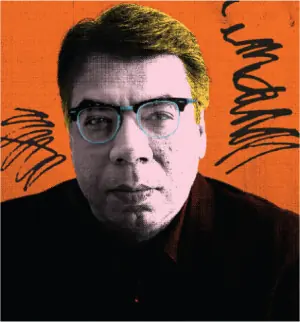
 Illustration by Abro
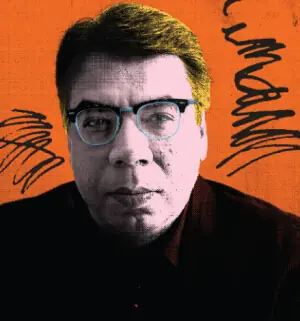
Illustration by Abro

According to the Dutch political scientist Cas Mudde, this process does not require a coherent ideology. Instead, it relies on identifying societal cracks where the vulnerable have fallen. The populist-in-waiting is encouraged to offer these citizens empathy rather than policy and targets to blame rather than solutions. The objective is to drive a wedge between the ‘forgotten’ and the ‘elite’, and applying enough pressure to social and economic fissures to shatter the status quo and allow a ‘charismatic outsider’ to breach the mainstream.

While the emergence of such figures is often framed as an outpouring of simmering anger, it is mostly a calculated political strategy. Even in the absence of a genuine crisis, manufacturers engineer one, prompting their populist-to-be to amplify grievances into ‘existential’ threats.

The populist is provided with a script designed to keep the public’s nervous system in a state of high anxiety, which is then ‘cured’ by utopian promises and the demonisation of the ‘evil other.’ Once the public loses faith in established arbiters and parties, the populist becomes the sole remaining source of ‘truth’. The project is then complete.

The manufacturers of populists vary by region. In countries such as Pakistan, Brazil and Thailand, military establishments have been known to activate populist projects to undermine the electoral traction of established parties that threaten the military’s orbit of influence. However, these projects often collapse when the populist becomes too volatile to control, as seen with the military’s eventual distancing from Jair Bolsonaro in Brazil and Imran Khan in Pakistan.

In the West, though, while populism may find sympathisers within the ranks, military institutions have largely refused to intervene when populists face electoral defeat or legal challenges. This was evidenced during the turbulent transition from Donald Trump to Joe Biden following the 2020 US election, which Trump lost.

The most consistent factor in manufacturing populists is the backing of wealthy elites. This is the great irony of modern populism: while its primary constituencies are the rural and working classes in the global North and the urban middle-class in the global South, these movements are bankrolled by ‘counter-elites.’

These are wealthy individuals who fund the weaponisation of a populist to counter a rival section of the elite perceived as too deeply embedded in the established order. UK-based historian Hugo Drochon identifies this as a struggle between old elites and emergent counter-elites.

Farage fits this template. While his rhetoric regarding British nationalism, immigration and “Christian heritage” appeals to white working-class and rural voters, his ascent was financed by multimillion-pound donations from wealthy financiers. His role at GB News, which is backed by hedge fund manager Sir Paul Marshall and the Dubai-based Legatum Group, cements his status as a key player among the UK’s counter-elites. He receives substantial support from these interests, proving that the modern populist is not a voice emerging from the bottom but a tool wielded from the top.

The entry of Nigel Farage into Parliament marks his transition from a pressure-group leader to a legislative force. With Reform UK capturing a significant share of the vote in the recent council elections, mainstream parties face a dilemma: do they co-opt his rhetoric, or form a united front to marginalise him? History suggests that co-option rarely works. It merely legitimises the populist’s narrative. Brazil eventually returned to an established party to rescue the country from a leader seen by his supporters as a ‘messiah’.

Pakistan has recalibrated its ‘hybrid system’, which was once used to manufacture a populist but is now remodelled to undo the damage that the populist left behind. Here as well, mainstream parties are back in power alongside a military establishment that has reset its goals, tightening the constitution to curb populism in both the political and judicial spheres.

Meanwhile, India’s middle-income groups continue to vote for a populist who is being bolstered by powerful business interests, and an American populist has dragged his country into a polarising conflict that is negatively impacting America’s global influence and economics.

Farage is no longer just a spectre. He is a permanent fixture of a troubled democracy. He is a product of a global trend, wherein the elite exploit the grievances of the many to secure the interests of the few through manufactured populists.

Published in Dawn, EOS, May 17th, 2026
  • ✇Dawn Newspaper Pak
  • SMOKERS’ CORNER: THE AGE OF HYPERPOLITICS none@none.com (Nadeem F. Paracha)
    In the early 2020s, the Belgian political theorist Anton Jäger coined the term “hyperpolitics”. He noticed that, in this day and age, politics seemed to be everywhere and in everything but was not catalysing any real change. At least not the way politics used to in the 20th century. The last century was an era of mass political activity (‘mass politics’) driven by large political parties, unions and macro-ideologies. According to Jäger, until the 1980s, political life was
     

SMOKERS’ CORNER: THE AGE OF HYPERPOLITICS

In the early 2020s, the Belgian political theorist Anton Jäger coined the term “hyperpolitics”. He noticed that, in this day and age, politics seemed to be everywhere and in everything but was not catalysing any real change. At least not the way politics used to in the 20th century.

The last century was an era of mass political activity (‘mass politics’) driven by large political parties, unions and macro-ideologies. According to Jäger, until the 1980s, political life was anchored by “thick institutions” that acted as a bridge between the individual and the state. But by the 1990s, “post-politics” had set in and replaced mass politics.

In the era of post-politics, the polity became increasingly consumerist in nature and governance was left in the hands of technocrats. Conflict was suppressed and political parties became hollow after delegating important economic and social tasks to ‘experts’ serving the interests of large banks and multinational corporations. Then, from the early 2010s, a sudden return of political energy filled the vacuum left behind by the docility of post-politics. It is this energy that Jäger calls hyperpolitics.

But this energy is nothing like the one that had carried countries towards widespread change and even revolutions in the 20th century. That energy had begun to wane from the 1980s, increasingly replaced by an emphasis on the well-being of the ‘self’ through consumerism and the commodification of identities.

Once anchored by ideologies and movements, politics is now increasingly performed through aesthetics and consumption, as ‘allegiances’ are signalled through brands rather than a sustained struggle

Mass politics started suffering fatigue and the individual became the “new self.” But the new self wasn’t the rugged, reflective and morally ambiguous manifestation of individualism of previous eras. The post-political individual was a ‘sensitive’, self-centred person entirely invested in their own ‘happiness’ and ‘contentment’. In a way, they were more manageable for governments and multinationals.

They consumed politics like they did consumer brands. In fact, corporate brands began to define the identities of these individuals just like political ideologies had done before the 1980s. They ‘became’ the brand they wore, drank, ate etc. In her 1999 book No Logo, the Canadian author Naomi Klein wrote that corporations shifted from selling products to selling ‘meaning’. In 1968, the French sociologist Jean Baudrillard had predicted that objects would no longer be valued for their use but for what they say about the owner’s identity. He was right.

According to the Polish-British sociologist Zygmunt Bauman, when everything, including politics, is treated as a consumer choice, the individual becomes more manageable. Since consumerism is about instant gratification and disposability, long-term political commitment or ideological struggle becomes too time-consuming or boring for the modern individual. Consequently, the idea of individualism also transformed.

One way to demonstrate this is through studying the way lead (male) characters in films evolved. The classic 20th century idea of individualism wasn’t detached from mass politics as such. It was very much part of it. Take the example of the cynical, hard-drinking and chain-smoking character played by Humphrey Bogart in 1942’s Casablanca. He seems uninterested in the political affairs of the world, but ends up contributing to America’s war effort against the Nazis. He realises that his anger towards a lover who had left him was far smaller an issue than the war.

Clint Eastwood’s brooding and detached character in the Dollar trilogy, directed by Sergio Leone in the 1960s, is a loner and a cynic who doesn’t say much but ends up accepting the circumstances that compel him to aid the helpless against thugs.

Quite a number of films across the 1960s and 1970s romanticised this nature of individualism. Amitabh Bachchan’s ‘angry young man’ roles in 1970s’ Bollywood films were in the same mould. Nikhat Kazmi wrote in her book Ire in The Soul that Bachchan’s characters were largely shaped to channel the anger of the people during a turbulent period in India.

However, Bachchan’s Kala Pathar (1979) is an interesting case of the transition that was to come. The angry, brooding character played by Bachchan in the film suddenly embraces ‘normal life’ by plunging into a satisfying romantic partnership. This meant that he didn’t have to bother anymore about fighting his inner demons nor carry the burden of an exploited collective (in this case, a community of coal miners). And unlike his previous angry individual films, he doesn’t die in this one.

By the 1990s, Bollywood films had completely discarded the brooding loner who accepts circumstances that compel him to fight for the people. As the idea of 20th century individualism faded into the docility of the post-politics era, the new ‘aspirational’ lead characters became sensitive souls seeking gratification through lush romantic relationships and corporate brands.

Designer homes, attire and brands became necessities for ‘happiness’ and even for self-actualisation. Religious rituals in films also became extravagant and an expression of sacralised joy. Therefore, faith was also commodified as a consumer product to ‘better oneself.’

But as all this was manifesting the era of post-politics, hyperpolitics exploded on to the scene. Yet, nothing changed much. According to Jäger, since post-politics had emptied established institutions, people entered the hyperpolitical arena as self-gratifying individuals rather than as members of a collective, cohesive body.

Jäger identifies technology as the catalyst. He wrote that social media allows for “low-cost, high-decibel politicisation.” Anyone can participate. To Jäger, though, this participation focuses more on expression rather than on sustained canvassing. In the absence of traditional institutional power to influence material conditions, hyperpolitics redirects energy toward symbolic battlegrounds, where personal consumption and language serve as primary signifiers of collective identity.

The classic Peshawari chappal, for example, which the populist politician Imran Khan preferred to wear, became a brand identity (‘Khan chappal’) that replaced traditional platform-based politics. Supporters became the brand by adopting a specific aesthetic of Khan. Buying and wearing this item functioned as a political act. Not a very convincing portrayal of mass politics, though.

This is an example of consumerist politics, a leftover of the post-politics era but ubiquitous in the era of hyperpolitics as well. The recent boycott movements against certain brands also demonstrate this. For example, most individuals feel they cannot influence the actual conditions in Gaza, so they redirect their energy into ‘consumer-activism.’ They manage their political emotions by curating their social media presence to show they are the ‘right kind of consumer’ because they consume local brands. Of course, for most, an actual physical protest outside the factories of the boycotted brands is out of the question.

To Jäger, this nature of activism produces “high heat” but “low light”, resulting in a culture defined by intense moral outrage and aesthetic posturing that rarely translates into substantive policy shifts or reform.

Published in Dawn, EOS, May 10th, 2026

❌
Subscriptions