Normal view

  • ✇Dawn Newspaper Pak
  • Pakistan-UAE ties unaffected by external engagements, says FO none@none.com (News Desk)
    The Foreign Office (FO) on Thursday said Pakistan’s relations with the United Arab Emirates remained unaffected by any external engagements the Gulf state may have, expressing confidence in the strength of bilateral ties. It said the relationship was based on mutual trust, adding that this sentiment was also shared in Abu Dhabi. “Pakistan – UAE relations are strong, brotherly, built on strong foundation. We have 2.2 million-strong diaspora in the UAE. We have traditionally been friendly and coop
     

Pakistan-UAE ties unaffected by external engagements, says FO

The Foreign Office (FO) on Thursday said Pakistan’s relations with the United Arab Emirates remained unaffected by any external engagements the Gulf state may have, expressing confidence in the strength of bilateral ties. It said the relationship was based on mutual trust, adding that this sentiment was also shared in Abu Dhabi.

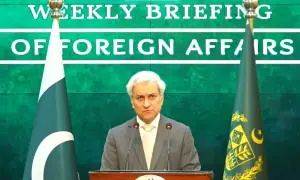
“Pakistan – UAE relations are strong, brotherly, built on strong foundation. We have 2.2 million-strong diaspora in the UAE. We have traditionally been friendly and cooperative in all affairs. We have a trade close to $8 billion, said FO Spokesperson Tahir Andrabi during the weekly press briefing.

He further said that there is “absolutely no question” of any negative aspersions with respect to relations between Islamabad and Abu Dhabi.

Earlier in the day, Minister of State for Interior Tallal Chaudhry said that Pakistan’s relationship with the United Arab Emirates was “absolutely fine”.

Several media outlets in recent days have reported that the Gulf country had begun a “large-scale expulsion” of Pakistani workers, particularly Shia workers, signalling a shift in Pakistan-UAE ties. The Interior Ministry has denied the claims.

Referring to India, Andrabi said that calls in India for dialogue with Pakistan were a positive development and expressed hope that “warmongering” and “belligerence” being witnessed in the neighbouring country for a long time would “fade away”.

The journalist who asked the question mentioned various statements, including a recent one by former Indian army chief Gen (retired) Manoj Naravane, who supported the Rashtriya Swayamsevak Sangh (RSS) secretary general’s remarks calling for keeping the window for dialogue between Islamabad and New Delhi open.

In response to the question, Andrabi said: “The voices within India calling for dialogue are obviously a positive development; we hope that sanity will prevail in India, and warmongering, the belligerence that has been emanating for the past several months and even beyond, for past years, will fade away and pave the way for more such voices.”

When asked about reports in the Indian media about backchannel talks going on between New Delhi and Islamabad, the FO spokesperson replied: “About track two or backchannel – well I am not aware of that and do not wish to comment on those. If I were to comment, there would be no backchannel. Backchannel or track two, the name is self-explanatory.”

In the recent past, ties between India and Pakistan particularly deteriorated after New Delhi blamed Islamabad without evidence for an attack on tourists in occupied Kashmir’s Pahalgam in April 2025. For its part, Pakistan strongly denied the allegations and called for a neutral investigation.

Two days after the Pahalgam attack, India had taken a series of aggressive measures against Pakistan, including unilaterally suspending the critical Indus Waters Treaty (IWT). Pakistan retaliated by suspending all kinds of trade, closing its airspace for Indian flights and shutting down the Wagah border.

Subsequently, New Delhi launched deadly overnight air strikes on Pakistan on May 6 over allegations about the Pahalgam attack. In retaliation, Pakistan Air Force downed several Indian planes in air-to-air combat. The initial tally of the downed jets was announced as five and later raised to eight.

After tit-for-tat strikes on each other’s airbases, it took American intervention on May 10 for both sides to finally reach a ceasefire.

‘Misrepresented’

During the weekly briefing Andrabi also said that certain media reports “misrepresented” Chinese Foreign Minister Wang Yi’s recent remarks to Deputy Prime Minister and FM Ishaq Dar, affirming the call was held with cordiality.

The clarification comes after Chinese state media Xinhua reported that during his call with Dar on Tuesday, Wang expressed hope that “Pakistan can step up mediation efforts” between the United States and Iran.

Addressing the matter, Andrabi said, “Some reports suggested that the Chinese side urged us to enhance the mediation efforts, implying as if Pakistan was being asked to sort in a ‘do more’ paradigm. So news coverage by some of local newspapers conveyed the same impression.

“I wish to place on record that such reports somewhat misrepresent the call in both letter and spirit,” he added, asserting that the call was held with “traditional warmth and cordiality”.

Andrabi said FM Wang appreciated “Pakistan’s constructive mediation role and expressed full support for its efforts”, echoing what was reported by Xinhua as well.

“Wang reiterated China’s principled position and commended Pakistan for facilitating US-Iran talks and helping extend the temporary ceasefire. He expressed hope that Pakistan will maintain confidence and contribute to restoring regional peace at an early date, which is also the common aspiration of the international community,” the report read.

China will continue to support Pakistan’s mediation efforts and make its own contribution toward this end, Wang was quoted as saying.

In its statement on the call, the FO had also said Wang reiterated Beijing’s appreciation and support for Pakistan’s role as a mediator.

It added that both top diplomats “underscored the importance of continuing a durable ceasefire and ensuring normal passage through the Strait of Hormuz”.

Despite signs that negotiations between the US and Iran have stalled after President Donald Trump rejected Tehran’s latest response to a proposed settlement framework, Pakistan has remained engaged in mediation efforts.

A series of diplomatic contacts made earlier this week suggested that regional and international actors are still attempting to prevent the situation from sliding back toward open hostilities.

Even as military pressure and fears of renewed confrontation continued to shape the crisis, Pakistan’s diplomatic engagement has persisted despite a far more complicated scenario.

On Monday, US Chargé d’Affaires Natalie Baker met with Dar to discuss the evolving regional situation. The same day, Dar spoke with Saudi FM Faisal bin Farhan Al Saud on a call, with FO saying that the latter “reiterated support for Islamabad’s efforts aimed at promoting regional peace and stability”.

Also on Monday, United Nations Secretary General’s Personal Envoy for the Middle East Conflict Jean Arnault also met Dar, who briefed him on recent developments and Pakistan’s continuing engagement with the parties concerned.

Seamen still in Somali pirates’ captivity

The FO spokesperson was also asked about the captivity of Pakistanis aboard an oil tanker seized by Somali pirate.

The MT Honour 25, a Palau-flagged product tanker, was seized on April 21, approximately 30 nautical miles off Somalia’s Puntland region with 17 crew members aboard, 10 of them Pakistani.

Andrabi said the “individuals are still with the Somali pirates. Unfortunately, their release has not been secured as yet”.

However, he added that a two-member team from the Pakistani embassy in Djibouti had gone to Somalian capital Mogadishu.

“It has held important meetings with the Somali Ministry of Foreign Affairs, Somali Ministry of Defence, with the Somali naval authorities, and maritime authorities.

“We were told [our] nationals are safe and are being provided food,” he said. “They are in harsh living conditions, but at least we were assured of their safety.”

The FO spokesperson further stated that they had been informed that the pirates were negotiating directly with the ship owner, who had been constantly communicating the details to Somali government officials.

“We (our team) spoke with this official who is in touch with the ship owner. The dynamics of this incident of piracy is that the pirates, who are Somali nationals, do not negotiate with the governments of the captives. They negotiate only with the shipowners. So, it’s incorrect to say that Pakistan government can negotiate or will negotiate,” he added.

The FO spokesperson also said that piracy had been a long-standing problem.

“We feel for the safety of our people. We are very keen for their quick repatriation. We are in touch with the Somali authorities and we will continue to do so. I can assure you that this matter is high on our radar and agenda, in terms of our bilateral with Somalia, and is a pressing, emergent humanitarian imperative,” he added.


  • ✇Dawn Newspaper Pak
  • Pakistan successfully test fires Fatah-IV cruise missile: ISPR none@none.com (News Desk)
    The Army Rocket Force Command conducted the successful test fire of the indigenously developed Fatah-IV ground-launched cruise missile on Thursday, the military’s media affairs wing said. A statement issued by the Inter-Services Public Relations said that the weapon system was “equipped with advanced avionics and state-of-the-art navigational aids” and “capable of engaging long-range targets with high precision”. “The training fire was conducted to enhance operational efficiency of the troops an
     

Pakistan successfully test fires Fatah-IV cruise missile: ISPR

The Army Rocket Force Command conducted the successful test fire of the indigenously developed Fatah-IV ground-launched cruise missile on Thursday, the military’s media affairs wing said.

A statement issued by the Inter-Services Public Relations said that the weapon system was “equipped with advanced avionics and state-of-the-art navigational aids” and “capable of engaging long-range targets with high precision”.

“The training fire was conducted to enhance operational efficiency of the troops and validate technical parameters of various sub-systems incorporated for improved accuracy and enhanced survivability,” it added.

According to the statement, senior officers of the Pakistan Army Rocket Force Command, along with scientists and engineers of the missile’s developing agency, were present during the training fire.

It said that President Asif Ali Zardari, Prime Minister Shehbaz Sharif, Chief of Defence Forces and Chief of Army Staff Field Marshal Asim Munir, Chief of Naval Staff Admiral Naveed Ashraf and Chief of Air Staff Air Chief Marshal Zaheer Ahmad Baber Sidhu commended the “successful training fire of Fatah-IV and appreciated the technical prowess, dedication and commitment of all those who contributed towards the successful training fire of the F-series missile”.

Later, the interior ministry released a statement, saying that Interior Minister Mohsin Naqvi “congratulates the nation on the successful training test of the locally developed Fatah-IV ground-launched cruise missile”.

“The successful test is a commendable achievement of the scientists and engineers of the Army Rocket Force Command … [it] is an important advancement in the defence sector,” the statement said.

It further quoted Naqvi as saying: “I congratulate the scientists and engineers. I am proud of the scientists and engineers. Pakistan’s defence is impregnable.”

Deputy Prime Minister and Foreign Minister Ishaq Dar said the test firing of the missile marked “another significant milestone in strengthening the country’s indigenous defence capabilities and strategic deterrence”.

The development comes less than three weeks after the Army Rocket Force Command conducted the successful training launch of the indigenously developed Fateh-II missile system.

In September 2025, the Pakistan Army had also successfully conducted the training launch of the cruise missile Fatah-IV at a range of 750 kilometres.

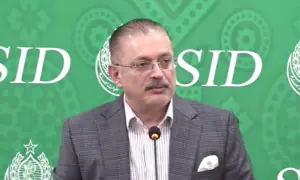
Karachi's Shahrah-i-Bhutto to be fully open to public by end of May: Sharjeel Memon

The Sindh government will fully open the Shahrah-i-Bhutto Expressway in Karachi to the public by the end of May, Sindh Senior Minister Sharjeel Memon said on Thursday.

Shahrah-i-Bhutto Expressway is a 39-kilometre high-speed corridor in Karachi that was noted to be 88.2 per cent complete as of March. Sindh Chief Minister Syed Murad Ali Shah had earlier this year directed the local government department to ensure that the expressway was fully operational by April 2026.

Announcing the upcoming completion of the project at a press conference in Karachi, Memon called the opening of the expressway “very good news” for Karachiites, asserting that they would be saving “at least an hour” coming into the city.

“We believe it will be a game changer in terms of traffic,” he said, as well as a big step for people’s convenience.

After having started to be opened in phases, he said, Shahrah-i-Bhutto will now directly connect to the M-9 highway by the end of the month, saving travel time for those heading out of Karachi.

Additionally, the minister announced that another road was being built to connect Karachi Port with Taj Haider Bridge. He said that the groundbreaking of that road would likely take place around the same time as the completion of Shahrah-i-Bhutto, “give or take one or two days”.

“Connectivity will keep getting easier and from this connectivity, people will have a lot more travel convenience,” he said, terming the new project a “game changer”.

“The Sindh government of PPP has made lots of efforts with these projects to bring people as much convenience as possible,” he added.

Alongside these two projects, Memon said, work was being carried out on other bridges, underpasses, roads and infrastructure by the Karachi Municipal Corporation (KMC) and local government departments. He said that the Sindh government’s top priority was to complete these projects as fast as possible.

He addressed the challenges faced during some projects, namely the “hot topic” of the Bus Rapid Transit (BRT) Red Line project on University Road that has stalled for years and recently had its construction contract terminated.

On April 26, CM Murad announced that the deteriorated University Road will be reconstructed within 90 days as the Frontier Works Organisation (FWO) resumed work on it.

“However many efforts we made to complete this project with good intentions and as quickly as possible, there are challenges,” Memon said. “With any big city projects, there are big challenges.”

Amid the issues faced, however, he said, “We tried with good intentions that government money be spared … all the delay was us trying to see how we could save the government’s funds, because that is public money.”

He added that the government had held conferences, met with the dispute board, raised challenges to their decisions and negotiated, but “the work was not getting done”, leading to the cancellation of the contract.

“The FWO is working on it day and night,” he said, highlighting that the first priority was the completion of the mixed traffic lane. “On the government’s side, or institution’s side, there was no ill will.”

At the time of the contract’s cancellation, Memon had told Dawn that the contract had been terminated due to delays in the project’s execution by the contractor. He had said the Asian Development Bank, which funds the project, was unhappy with the pace of work, as were stakeholders concerned about environmental impact.

Alongside the information about the transport projects, the senior minister recalled his visit to China alongside President Asif Zardari last month, where one of the Memoranda of Understanding (MoUs) signed was for a desalination plant in Karachi.

Memon highlighted the major issue of clean drinking water for Karachi residents, saying that the project would benefit many. He noted that while desalination plants are expensive, alternative sources are needed for drinking water as the population expands.

He also called attention to MoUs signed in the fields of agriculture and livestock, noting that these were the “only two pathways” for Pakistan’s rural population when it came to earning a livelihood. He highlighted the longtime friendship between Pakistan and China, describing the visit as a “great success”.

Finance ministry terms report on Dar being 'handed' budget-making process 'misleading, incorrect'

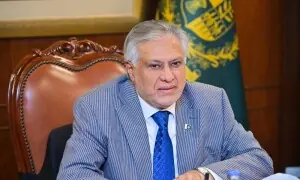
The Ministry of Finance said on Thursday that a media report claiming Deputy Prime Minister and Foreign Minister Ishaq Dar had been handed the budget-making process was “misleading” and “factually incorrect”.

The clarification came after a report published by The Express Tribune said the government had “handed over the responsibility of making the new budget to Dar after it found the initial work below par”.

According to the report, Prime Minister Shehbaz Sharif had constituted a Dar-led committee to “review, analyse and present tax policy proposals” formulated by the Tax Policy Office working under the Finance Division.

Citing a notification, it added: “With the formation of the committee, the final responsibility to finalise roughly Rs215 billion to Rs230bn in new taxes and to grant any tax relief has been handed over to Dar.”

Moreover, the report said, the responsibility for finalising the enforcement measures had been handed over to a committee led by Minister for Economic Affairs Ahad Khan Cheema.

It mentioned that “the prime minister’s decision to place Dar at the head of the budget committee and Cheema at the head of the enforcement committee suggests that budget-making responsibility, for all practical purposes, no longer rests in the Q Block – the seat of the finance minister”.

In its clarification on Thursday, the finance ministry said it “strongly rejects the misleading and speculative impression created by The Express Tribune story titled ‘PM hands budget-making to Dar’”.

“The story incorrectly portrays the constitution of a high-level review committee by the prime minister as a ‘handover’ of the budget-making process from the Finance Division or as a ‘sidelining’ of the finance minister. This interpretation is factually incorrect, misleading and does not reflect the actual mandate or functioning of the committee,” it said.

The ministry’s statement further said that the committee constituted by the PM had been tasked with reviewing and analysing certain tax policy proposals prepared by the Tax Policy Office in the context of the upcoming budget.

“Such consultative and inter-ministerial review mechanisms are neither unusual nor extraordinary, particularly when fiscal measures carry significant economic, political and public implications,” it said.

Moreover, as head of the government, the prime minister “is fully within his constitutional and administrative authority to seek broader input from relevant cabinet members before finalisation of tax proposals that may impact businesses, inflation, investment climate and the wider economy”, the ministry contended.

It asserted that “at no stage has the budget-making process been shifted away from the Ministry of Finance or the Finance Division”.

“The preparation of the federal budget, including macroeconomic framework, fiscal strategy, expenditure planning, IMF engagement and overall budget coordination, continues to be undertaken by the Ministry of Finance under the leadership of the finance minister,” it added.

The statement also highlighted that Finance Minister Muhammad Aurangzeb himself was a member of the committee constituted by the PM, saying that he “continues to lead Pakistan’s engagement with the International Monetary Fund and other international financial institutions on all budgetary and macroeconomic matters”.

“Similarly, the committee relating to enforcement measures has been formed only to refine and strengthen revenue administration and enforcement proposals in consultation with relevant stakeholders. Such coordination mechanisms are a normal feature of governance and fiscal management,” it said.

The ministry said the headline and framing of The Express Tribune report “appear designed to create an impression of internal divergence within the government where none exists. The federal budget remains a collective constitutional and cabinet-driven exercise carried out under the leadership of the prime minister with the Ministry of Finance playing its central and mandated institutional role”.

“The ministry expects responsible sections of the media to avoid speculative interpretations and to report institutional processes with accuracy, context and due professional responsibility,” its statement said.

Later in the day, DPM Dar chaired a meeting of the newly formed committee to deliberate on “tax policy proposals” for the upcoming budget, as per a statement from his office.

In a post on X, the DPM Office said that during the meeting, the committee “reviewed progress on various proposals”.

It further “emphasised the need for balanced, growth-oriented measures aimed at broadening the tax base, enhancing revenue generation, and promoting investment and economic growth”.

As per the statement, the meeting also “reiterated the priority for balanced and growth-oriented measures that enhance revenue generation while safeguarding compliant taxpayers from additional tax burden”.

  • ✇Dawn Newspaper Pak
  • Tallal Chaudhry says Pakistan's ties with UAE 'absolutely fine' none@none.com (News Desk)
    Minister of State for Interior Tallal Chaudhry on Thursday said that Pakistan’s relationship with the United Arab Emirates was “absolutely fine”. Chaudhry made the remarks while speaking on the floor of the National Assembly in response to concerns raised by lawmakers regarding the deportation of Pakistanis from the Gulf country. Several media outlets in recent days have reported that the Gulf country had begun a “large-scale expulsion” of Pakistani workers, particularly Shia workers, signalling
     

Tallal Chaudhry says Pakistan's ties with UAE 'absolutely fine'

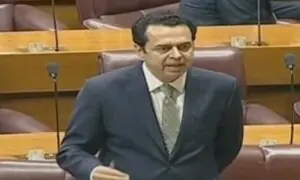
Minister of State for Interior Tallal Chaudhry on Thursday said that Pakistan’s relationship with the United Arab Emirates was “absolutely fine”.

Chaudhry made the remarks while speaking on the floor of the National Assembly in response to concerns raised by lawmakers regarding the deportation of Pakistanis from the Gulf country.

Several media outlets in recent days have reported that the Gulf country had begun a “large-scale expulsion” of Pakistani workers, particularly Shia workers, signalling a shift in Pakistan-UAE ties. The Interior Ministry has denied the claims.

“I don’t know why people are intent on building a narrative against a country; that people from there are being deported based on sectarian differences,” the state minister said on Thursday.

“There is no such thing. The government has categorically denied this. Our ties with the UAE are absolutely fine,” he said.

He went on to say that for this month, the highest amount of remittances was received from Saudi Arabia, followed by the UAE.

“We should not be jumping to conclusions regarding countries,” the state minister said, warning that it could impact “future ties”. However, he asserted that “if there are any complaints, we will address them,” vowing that the government viewed Pakistanis of “all sects and colours” as equal.

On May 7, during a weekly briefing, Foreign Office spokesperson Tahir Andrabi was asked about the “unusually high number” of emergency exit documents (ETD) or outpasses being issued by the Pakistani consulate in the UAE.

In his response, Andrabi said the development was “mainly driven by administrative actions, including immigration status violation and other legal infractions”.

  • ✇Dawn Newspaper Pak
  • Govt orders inquiry into Cambridge exam leaks none@none.com (News Desk)
    The interior ministry on Thursday directed the National Cyber Crime Investigation Agency (NCCIA) to investigate, in coordination with Cambridge International Education (CIE), the leaking of the latter’s exam papers. According to a handout issued by the interior ministry, the development came as Interior Secretary Muhammad Khurram Agha chaired a high-level meeting regarding the “alleged leakage of Cambridge examination papers” at the Ministry of Interior and Narcotics Control. A day earlier, CIE
     

Govt orders inquiry into Cambridge exam leaks

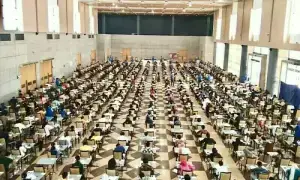
The interior ministry on Thursday directed the National Cyber Crime Investigation Agency (NCCIA) to investigate, in coordination with Cambridge International Education (CIE), the leaking of the latter’s exam papers.

According to a handout issued by the interior ministry, the development came as Interior Secretary Muhammad Khurram Agha chaired a high-level meeting regarding the “alleged leakage of Cambridge examination papers” at the Ministry of Interior and Narcotics Control.

A day earlier, CIE confirmed the leak of an AS-level Mathematics exam paper held on Tuesday and announced the postponement of another Mathematics paper scheduled for Friday (tomorrow). This was the second such incident it had confirmed during the ongoing session.

However, the statement issued by the ministry mentioned the “alleged leakage of Cambridge O Level Mathematics examination papers”.

Thursday’s meeting was attended by the Education Secretary Nadeem Mahbub, representatives from CIE, NCCIA Director General Syed Khurram Ali, representatives from the Ministry of Foreign Affairs, the British Council and other relevant stakeholders, the ministry said.

According to the statement, Mahbub briefed the participants on “the concerns expressed by the government and parents regarding the alleged leakage of Cambridge O-Level Mathematics examination papers”.

It stated that the British deputy high commissioner informed the participants that “the matter appeared to involve theft rather than an actual paper leak”, while representatives from CIE reiterated that “Cambridge maintains strict standards to ensure transparency and integrity in the conduct of examinations”.

It added that the education secretary also raised concerns regarding reports of “another examination paper leak and sought Cambridge’s official position on the issue in light of the anxiety being faced by students and parents”.

It added that representatives from CIE assured the forum that “an official update in this regard would be shared at the earliest”.

It further said that the interior secretary expressed serious concern “over the alleged leak of examination papers and underscored the need for coordinated and effective measures for the early resolution of the matter”.

“He directed the NCCIA DG to conduct a thorough investigation in coordination with Cambridge. He further emphasised the strict implementation of decisions taken during the meeting and timely sharing of investigation findings to ensure transparency and maintain public confidence,” it said.

“It was also decided that Cambridge would further strengthen its system capacity to address weaknesses and loopholes in the examination process,” the statement concluded.

The CIE, part of Cambridge University Press and Assessment, offers internationally recognised exams to schools in over 160 countries. In Pakistan, O Levels (grades 10-11) cover a broad range of subjects, while A and AS Levels (grades 12-13) are more specialised and advanced, providing pathways to higher education in Pakistan and abroad.

Last month, the AS Level Mathematics exam (9709/12), conducted on April 29, was also subject to similar claims. After conducting a thorough investigation into the matter, CIE said it had reason to believe the claims were not unfounded. A replacement examination for the paper has therefore been scheduled for June 9.

In June last year, the question papers of three AS and A Level examinations were partially leaked across Pakistan.

  • ✇Dawn Newspaper Pak
  • PM Shehbaz calls for efforts to turn Pakistan into an 'economic power' none@none.com (News Desk)
    Prime Minister Shehbaz Sharif said on Thursday just as Pakistan had emerged as a nuclear power, efforts were now needed to turn it into an economic power. The premier expressed these views while addressing a federal cabinet meeting in Islamabad, where he also spoke about May 28. On May 28, 1998, Pakistan joined the ranks of nuclear powers after atomic tests in the hills of Chagai, Balochistan. In his address, PM Shehbaz said on that day, Pakistan gained a power that would remain a “defensive ass
     

PM Shehbaz calls for efforts to turn Pakistan into an 'economic power'

Prime Minister Shehbaz Sharif said on Thursday just as Pakistan had emerged as a nuclear power, efforts were now needed to turn it into an economic power.

The premier expressed these views while addressing a federal cabinet meeting in Islamabad, where he also spoke about May 28.

On May 28, 1998, Pakistan joined the ranks of nuclear powers after atomic tests in the hills of Chagai, Balochistan.

In his address, PM Shehbaz said on that day, Pakistan gained a power that would remain a “defensive asset” of the country.

“It is our national narrative that this asset is for defence, not offence. And this is the reason that the world knows Pakistan as a responsible nuclear power,” he added.

The premier then paid tribute to all “heroes” who contributed to efforts for making Pakistan a nuclear power, particularly mentioning late prime minister Zulfikar Ali Bhutto and former prime minister and PML-N supremo Nawaz Sharif.

“[The initiative’s] founder was Zulfikar Ali Bhutto and my leader, Nawaz Sharif, saw it to completion,” he said.

The prime minister went on to say that just as Pakistan had become a nuclear power, “we have to turn it into an economic power with the same commitment and hard work”.

Addressing cabinet members, he said, “You, as a team, have made several efforts for it over the past two years, and gradually, we have seen [some] results. But, this is a very long and difficult journey.”

He added that, however, when nations were resolute in their decision to face difficulties and overcome challenges, “God blesses them with success”.

PM Shehbaz also mentioned the Middle East conflict, which began with US-Israeli strikes on Iran on February 28. The conflict has also resulted in the disruption of traffic in the Strait of Hormuz — a maritime corridor through which one-fifth of the world’s oil and gas supply used to pass during peacetime.

The premier said the situation in the Middle East had caused economic difficulties for several countries, including Pakistan. “But, you faced those challenges as a team and continue to do so,” he said, addressing the cabinet members.

At the outset of his address, he also spoke about Marka-i-Haq, a brief military conflict between India and Pakistan that took place in May last year.

He said Pakistan had emerged victorious in the conflict as the entire nation was united at the time, and the armed forces fought bravely and courageously.

PM Shehbaz also spoke about “sacrifices being made in the fight against terrorism”. In this connection, he particularly mentioned Muhammad Liaqat, a railway employee who thwarted a suicide attack in Attock.

“They are heroes of the nation. The sacrifices being made [in the fight against] terrorism are unparalleled,” he said.

HRCP 'deeply alarmed' at continued captivity of seafarers onboard tanker seized by Somali pirates

The Human Rights Commission of Pakistan (HRCP) on Thursday expressed alarm at the continued captivity of Pakistanis aboard an oil tanker seized by Somali pirates, demanding urgent action by the government and the relevant authorities.

The MT Honour 25, a Palau-flagged product tanker, was seized on April 21, approximately 30 nautical miles off Somalia’s Puntland region with 17 crew members aboard, 10 of them Pakistani.

In a post on X, the HRCP said that it was “deeply alarmed by the continued captivity of the Pakistan crew members aboard the MT Honour 25 by Somali pirates and demands urgent action by the Pakistan government and all relevant international authorities”.

The commission also expressed concern at reports over the living conditions of the hostages.

“Reports that hostages are surviving on contaminated water and minimal food while their families endure severe psychological distress are unacceptable,” HRCP said.

The human rights body stated that it stood in solidarity with “the families in Karachi protesting for the safe return of their loved ones,” referring to a protest held near Karachi’s Native Jetty Bridge a day earlier.

It demanded that the seafarers’ “protection, dignity and safety” must be treated as an “urgent national priority”.

On April 30, the Foreign Office had said that Pakistan was in contact with the Somali government over the hostage crisis involving Pakistani sailors.

FO spokesperson Tahir Andrabi, addressing a press briefing, said, “Our Embassy in Djibouti, which is accredited to Somalia, approached the authorities in Somalia, including their foreign office, and we learned that the vessel was anchored in the coast of EYL in the Puntland region”.

He further stated that the Puntland region was a semi-autonomous part of Somalia.

“We consider it as part of the brotherly nation of Somalia. MT Honor 25, we understand, is owned by a businessman who is based in Puntland. So, I think the positive side of this story or the silver lining is that the ship is where it belongs to,” he said.

Hijackings off Somalia have fuelled concerns about a resurgence of Indian Ocean raids by opportunistic pirates. Pirate attacks off the Somali coast peaked in 2011 — with gunmen launching attacks as far as 3,655 kilometres from the Somali coast.

❌
Subscriptions