Wind turbines are a net positive for a sustainable society, but that doesn’t mean they don’t have an environmental impact. Apart from their material requirements, those giant, spinning blades can be lethal to unsuspecting winged animals like birds and bats. Although some reports dramatically overplay wind farms’ danger to flying species, there is no denying they can unintentionally kill anywhere from two-to-six birds and four-to-seven bats per megawatt every year. That may not seem like many fat
Wind turbines are a net positive for a sustainable society, but that doesn’t mean they don’t have an environmental impact. Apart from their material requirements, those giant, spinning blades can be lethal to unsuspecting winged animals like birds and bats. Although some reports dramatically overplay wind farms’ danger to flying species, there is no denying they can unintentionally kill anywhere from two-to-six birds and four-to-seven bats per megawatt every year. That may not seem like many fatalities, but every animal counts for an endangered species.
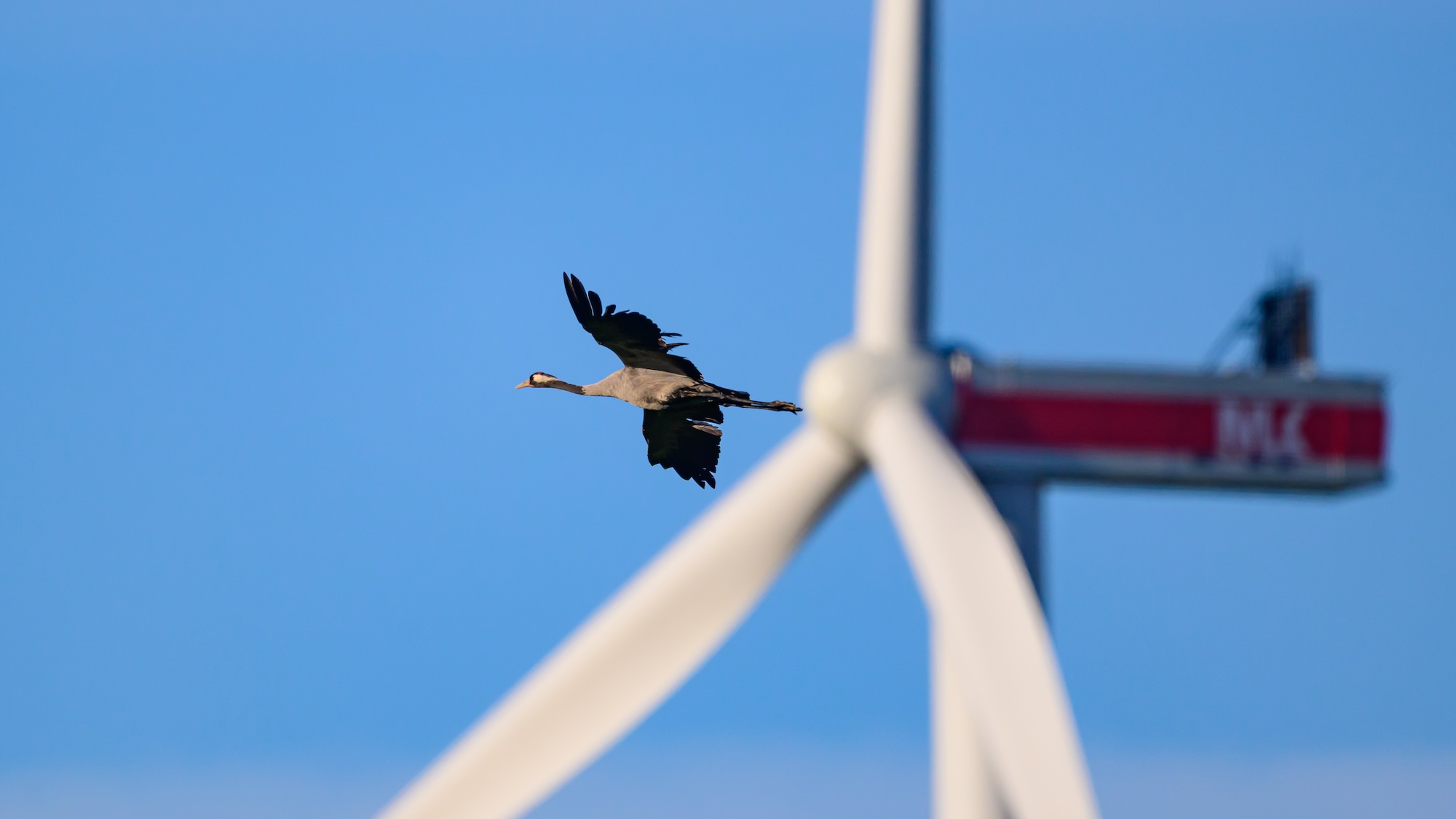
To lower these risks, engineers are devising new ways to make wind turbines more visible and avoidable. One potential solution may involve taking a cue from some of nature’s most dangerous creatures. According to a study published in the journal Behavioral Ecology, more bats and birds will steer clear of wind turbines when their blades are painted with colors similar to animals like venomous coral snakes and poison dart frogs.
A drone photograph of a wind turbine in southern Finland, digitally modified with a biologically inspired warning pattern under natural light conditions. Credit: Eric Lehtonen
“White blades, which are the most frequently used pattern around the world, turned out to be the worst option for birds,” Johanna Mappes, a University of Helsinki environmental scientist and study co-author, said in a statement. “This suggests that a relatively simple visual change could reduce bird mortality in connection with wind power.”
To test how birds respond to various turbine designs, Mappes and her colleagues placed test subjects in front of a video screen in a controlled laboratory environment. They then played clips of wind blades with multiple color palettes spinning at different speeds. These included turbines featuring classic white blades, one blade painted black, blades with red-and-white stripes, or blades with a newly designed, biomimetic red-black-yellow pattern.
“By using a touchscreen especially designed for birds, we can use games to explore their behavior and ecology by simulating real-world scenarios, without putting the birds at risk,” explained University of Exeter ecologist and study co-author George Hancock.
In nearly every trial, the birds were far more likely to approach white blades than any of the colored options. However, the test subjects were the most avoidant of the team’s novel, biomimetic striped blades.
“We’ve known for a long time that birds change how they respond to objects with warning colors, but to see such a large effect was remarkable,” Hancock added.
There is no way to completely prevent wind turbines from ever accidentally harming or killing animals. That said, the study’s authors believe a wider industry adoption of evolutionarily inspired color schemes could be an easy, cheap way to make the technology safer. They also suggest that similar approaches be developed for other human-made avian dangers like power lines and building windows.
“If the results are repeated in practical conditions in different countries and with different bird species, it could be a significant change for the entire wind power industry,” said Mappes.
Summer is quickly approaching, which means more time for summer fun like checking out amusement parks. Millions of people go to amusement parks for the thrill of riding a favorite classic ride or a new roller coaster. And this summer, dozens of new coasters are debuting, such as Falcon’s Flight, the world’s tallest and fastest roller coaster located in Six Flags Qiddiya City in Saudi Arabia.
While roller coasters and amusement rides are generally very safe—the International Association of Am
Summer is quickly approaching, which means more time for summer fun like checking out amusement parks. Millions of people go to amusement parks for the thrill of riding a favorite classic ride or a new roller coaster. And this summer, dozens of new coasters are debuting, such as Falcon’s Flight, the world’s tallest and fastest roller coaster located in Six Flags Qiddiya City in Saudi Arabia.
While roller coasters and amusement rides are generally very safe—the International Association of Amusement Parks and Attractions (IAAPA) says that the chance of being seriously injured on a fixed-site ride in the U.S. is about 1 in 15.5 million rides taken—the risk isn’t zero. And when deadly or disabling cases make the headlines, it raises legitimate questions about how to stay safe and have fun.
“People are injured or killed on amusement rides and devices. That is a harsh reality, especially in the name of fun,” says Brian Avery, a senior lecturer and roller coaster safety expert at the University of Florida. “But generally speaking, your risk or exposure to that is low.”
Here’s what you need to know about roller coasters and amusement rides, how they are assessed for safety, and how to prepare for any trips you plan to take this summer.
Falcon’s Flight is the world’s tallest and fastest roller coaster located in Six Flags Qiddiya City in Saudi Arabia. The coaster reaches speeds of 150 mph in under five seconds. Video: That SOUND?! Falcon’s Flight Cliff Drop Testing at Six Flags Qiddiya World’s Tallest Coaster, @CoasterRaccoon
How do roller coasters work?
The first thing to know about rides and coasters is that not all rides are the same.
“Roller coasters are amusement rides, but all amusement rides are not roller coasters,” says Kathryn Woodcock, a professor of occupational and public health who studies amusement ride safety at Toronto Metropolitan University.
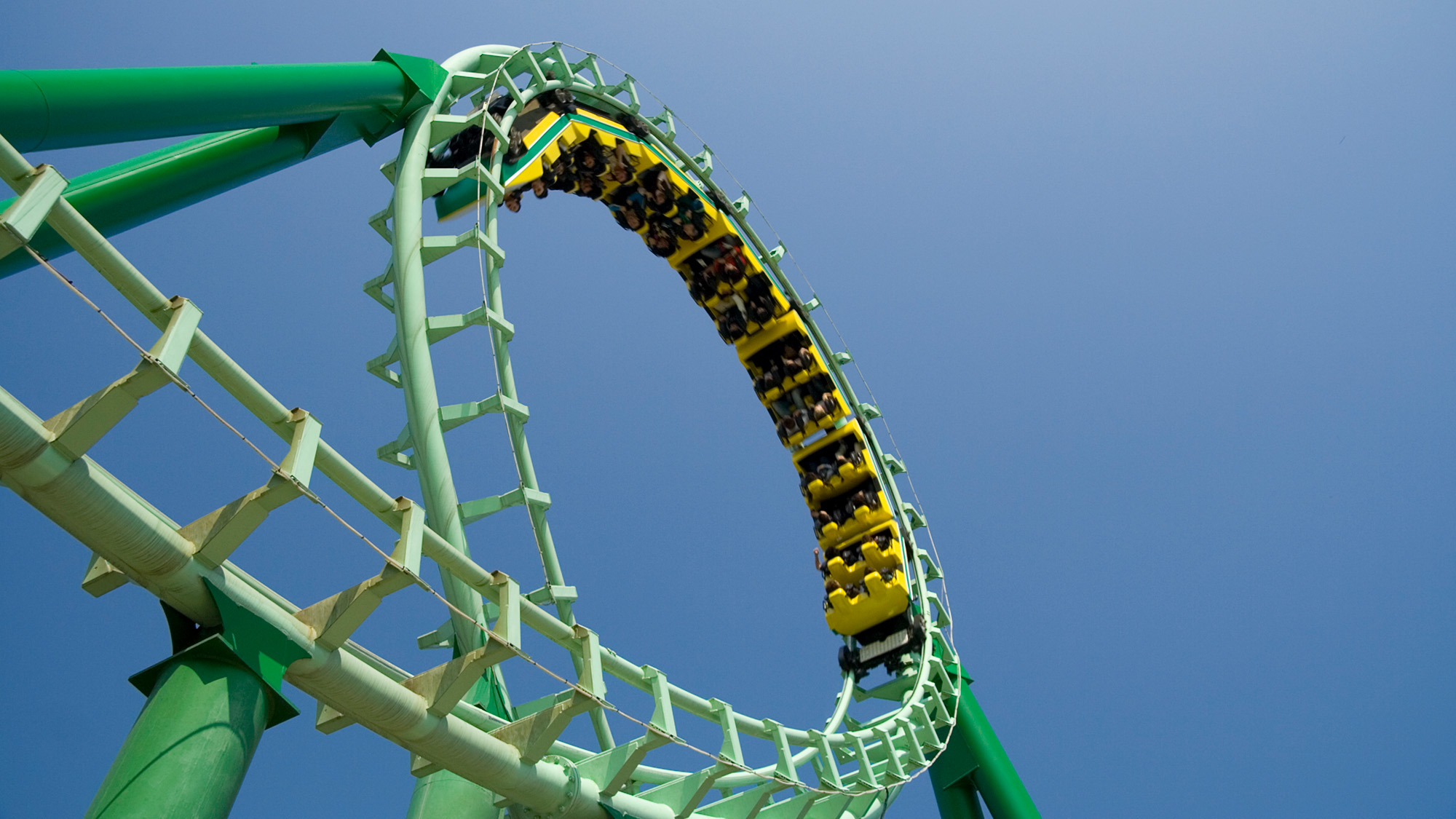
Roller coasters are defined as a ride with an elevated railway with sharp curves and steep inclines, but even roller coasters have tons of different subtypes based on what the tracks and support structures are made of (namely wooden or steel), how the riders are positioned, and the ride’s speed.
Beyond coasters, there’s other rides, such as: drop towers, ferris wheels, bumper cars, water rides, and more, all with their own considerations for fun and safety.
But the gist is, according to amusement park ride manufacturer Sunhong, that rides use controlled inputs like motors, hydraulics, pneumatics, or gravity to shape the acceleration, centripetal force, and changes in G-force that makes rides exciting.
Just existing on the Earth, we experience a G-force of about one G, jumping and landing is about two to four G, and the most intense rides out there, according to Sunhong, hit about six G for a moment.
“It’s pushing the envelope or it gives the illusion of [riders] being in danger while they’re experiencing an amusement ride device, but in a controlled manner,” adds Avery.
How safe are roller coasters and rides, really?
The first roller coasters were invented in the late 1800s, says theme park and roller coaster historian Richard Munch. At that time, the only safety in place was a fixed metal bar and a “do not stand up” sign, he adds. “If you followed those words, you would normally return unhurt and many times happy to ride again,” he says.
This photograph of the “Loop the Loop” roller coaster was taken at Coney Island, New York, in 1903.Image: Contributor / Getty Images / Photo 12
Roller coasters and amusement rides have changed a lot since those days—including in the 1990s when Avery says there was a “roller coaster arms race” to get faster, taller, and more attractive rides out there for thrill-seeking visitors. But safety comes at every level of a ride, from engineering and manufacturing, to installing and regulating, and of course operating.
“They’re looking at everything from the track, how the footers are sunk into the ground, the forces being exerted, the station being built, the trains that will be on it, the containment system that’s going to be used, the types of harnesses, secondary restraints,” he says. “All those are factored into their design considerations.”
Once a coaster is designed, it’s tested and inspected for months and operational guidelines, policies, and training are developed by the engineers or manufacturer.
Next comes state inspections, or at least in some states that heavily regulate amusement rides. There isn’t federal government oversight of rides, except in the case of traveling carnival rides, says Amanda Demanda, an injury lawyer based in Florida.
Regulations vary greatly. Some states, like Alabama, Mississippi, Montana, Nevada, Wyoming, and Utah, don’t have state oversight at all, so take a look at the regulations in the state that you’re visiting before heading out.
Finally, it comes down to the operators and attendants. “Attendants are the first line of defense,” says Avery. “They’re going to be the ones that are adequately trained or should be. They’re enforcing the rules. They’re going through the checkpoints.”
While some rides have computer systems that can help alert attendants to potential problems, attendants are in charge of checking restraints, conducting daily maintenance and operation inspections, and dispatch rides.
They also assess riders to make sure they are an appropriate size and weight for a ride, and if a rider has a disability, ensuring that they can maintain enough postural control to stay safe for the duration of the ride, he says.
While the news stories about amusement park incidents demonstrate the worst case scenarios, most of the injuries that occur on rides are soft tissue injuries: sprains, strains, and cuts, according to one 2013 study that looked at pediatric amusement ride-related injuries between 1990 and 2010. The study demonstrated that 70 percent of the incidents occurred in the summer months with more than 20 injuries a day between May and September.
But these injuries don’t necessarily just happen because the ride itself is unsafe—operation, rider health, and rider behavior all play a factor.
“The largest theme parks in the world have 20 million visitors per year, each of whom generally experiences multiple rides during their visit,” says Woodock. “The number of serious injuries associated with ride failure is very, very low proportionate to that.”
Serious injuries, even in people who are unsuited to the ride or acting inadvisably, are still very low, she adds.
Staying safe at the amusement park is relatively straightforward: Follow the guidelines when it comes to size and health, listen carefully to loading and safety instructions, and trust your gut. In the unlikely case that something does go wrong and you do get hurt, report it to the park and seek medical care.
If you’re one of the millions of visitors heading to an amusement park this summer, just be attentive, stay hydrated, and, of course, have fun.
In Ask Us Anything, Popular Science answers your most outlandish, mind-burning questions, from the everyday things you’ve always wondered to the bizarre things you never thought to ask. Have something you’ve always wanted to know? Ask us.

 Login
Login