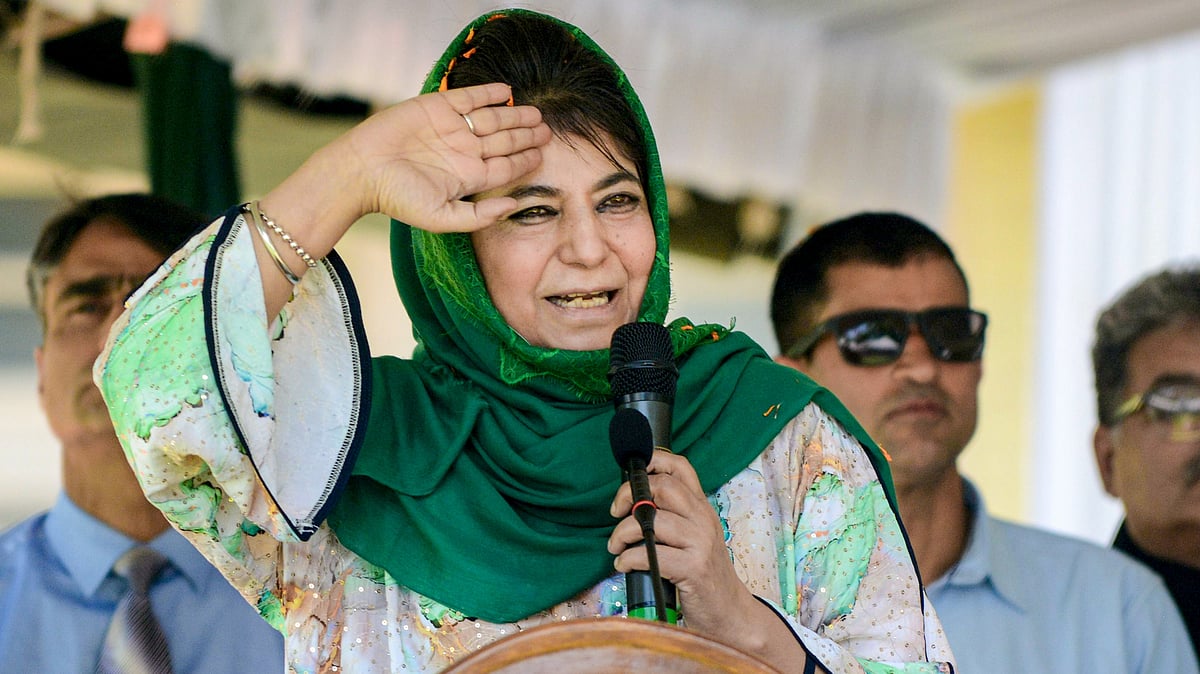
Mehbooba Mufti on Sunday endorsed recent remarks by RSS leader Dattatreya Hosabale advocating greater people-to-people engagement between India and Pakistan, saying dialogue remains the only path towards resolving the Kashmir issue.
Addressing a party workers’ convention in Srinagar, the Peoples Democratic Party president said peace and reconciliation in Jammu and Kashmir could only emerge through talks within the constitutional framework.
“The solution to Kashmir lies in dialogue and within the framework of the Constitution. Whatever we have to achieve needs to be done from Delhi and here. We believe in engagement and talks. We seek peace with dignity,” Mehbooba said.
‘Open roads to Pakistan, Central Asia’
The former chief minister welcomed Hosabale’s recent statement calling for civil society-led engagement with Pakistan after military and political channels lost credibility.
In an interview to PTI Videos earlier, the RSS leader had said people-to-people contact was important because India and Pakistan shared cultural ties and had once been “one nation”.
Mehbooba said the position echoed the long-held vision of PDP founder Mufti Mohammad Sayeed.
“What Hosabale has said now is what Mufti Mohammad Sayeed advocated till his last breath. Open our roads leading to the other side of Kashmir… Pakistan, China and Central Asia,” she said.
She urged Prime Minister Narendra Modi to initiate dialogue with the people of Jammu and Kashmir and involve Pakistan in efforts to resolve the issue.
“If Modi ji wants to carve a name for himself, he should resolve the Kashmir issue and involve Pakistan in the process,” she said.
Mehbooba recalls Modi’s Lahore visit
Mehbooba noted that Modi had earlier attempted outreach towards Pakistan, referring to his 2015 visit to Lahore, but said such efforts were derailed by subsequent militant attacks.
“I am not saying Narendra Modi has done nothing. He visited Lahore in 2016, but it was followed by the Pathankot attack. Pakistan will have to respond positively to any outreach from India,” she said.
The PDP leader also said Delhi must listen to the voices of Kashmiris and stressed that development alone could not resolve the region’s political problems.
“Even if we build roads of gold and bridges of silver, they will be of no use if the Kashmir issue is not resolved,” she quoted Mufti Mohammad Sayeed as saying.
Naravane also backed dialogue
Former Army chief M.M. Naravane had also backed Hosabale’s remarks earlier this week, saying people-to-people ties between India and Pakistan remained important.
“The common man has nothing to do with politics. When there is friendship between two persons, there will also be friendship between two nations,” Naravane had said.
Mehbooba also called for the release of political detainees ahead of Eid, describing it as an important confidence-building measure that could help foster reconciliation in Kashmir.
Mehbooba backs RSS leader Hosabale’s call for India-Pakistan people-to-people engagement
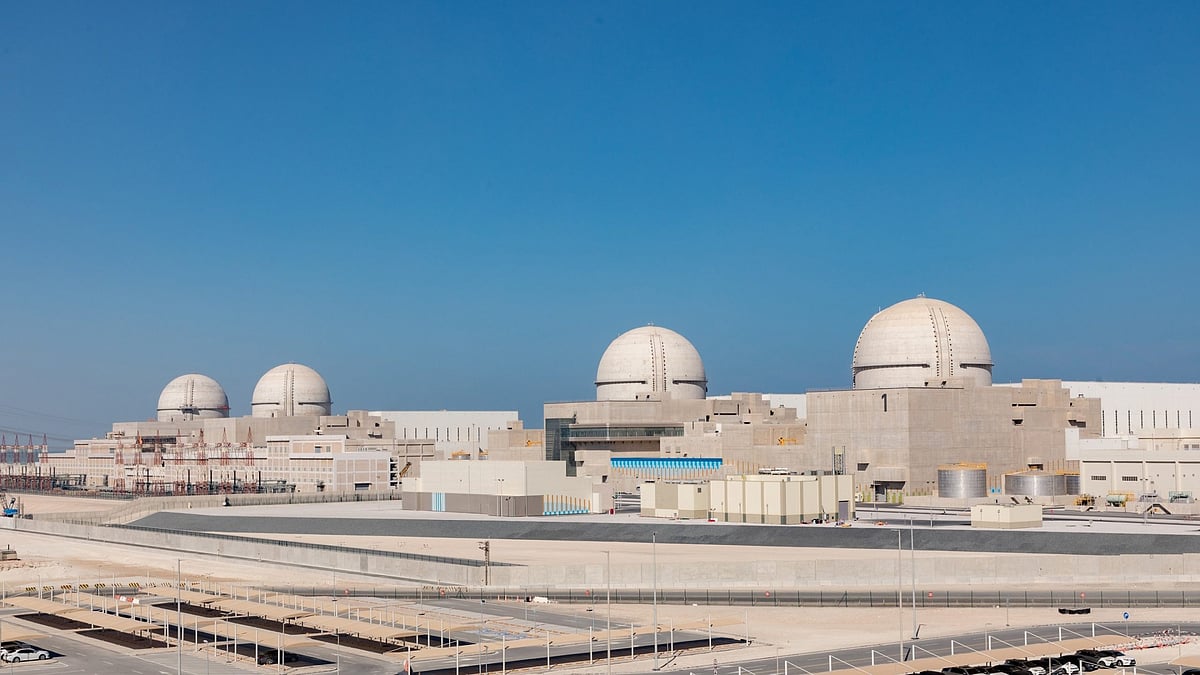
A suspected drone strike triggered a fire at the Barakah Nuclear Power Plant in the United Arab Emirates on Sunday, marking the first known attack on the Gulf region’s only nuclear power facility since the outbreak of the ongoing US-Israel-Iran conflict.
According to the Abu Dhabi Media Office, the strike caused a fire in an electrical generator located outside the inner perimeter of the nuclear plant in the Al Dhafra region of Abu Dhabi.
Authorities said no injuries were reported and there was no impact on radiological safety.
The Federal Authority for Nuclear Regulation said all key systems at the plant were functioning normally and radiation levels remained unaffected.
The UAE government did not identify who was responsible for the attack.
First strike on Barakah facility
The Barakah nuclear plant, built with South Korean assistance at a reported cost of around USD 20 billion, became operational in 2020 and remains the first and only nuclear power facility in the Arabian Peninsula.
The four-reactor complex is located in Abu Dhabi’s western desert region near the Saudi border.
The strike comes amid escalating regional instability linked to the ongoing confrontation involving the United States, Israel and Iran.
The UAE has witnessed multiple drone and missile incidents in recent months targeting energy infrastructure and maritime facilities. Emirati authorities had earlier blamed some of the attacks on Iran-backed operations during the conflict.
Oil export concerns grow
The latest incident also comes as the UAE accelerates efforts to expand oil export infrastructure bypassing the strategically critical Strait of Hormuz, through which a significant share of global oil and LNG shipments traditionally passes.
According to officials, Abu Dhabi Crown Prince Khaled bin Mohammed bin Zayed Al Nahyan recently directed state-owned energy giant ADNOC to fast-track a new export pipeline project linked to Fujairah.
The pipeline is expected to double export capacity through Fujairah and reduce dependence on Hormuz, where shipping disruptions linked to the conflict have triggered sharp increases in global oil prices.
Conflict fuels energy insecurity
The attack on Barakah adds to growing concerns over the vulnerability of nuclear and energy infrastructure in conflict zones.
During the war, Iran repeatedly claimed that its Bushehr Nuclear Power Plant had also come under attack, though no radiation leak was reported there either.
Diplomatic efforts to end the conflict remain stalled after recent negotiations between Washington and Tehran failed to produce a breakthrough, prolonging uncertainty across the Gulf region and global energy markets.
Drone strike triggers fire at UAE’s Barakah nuclear plant amid widening Gulf tensions
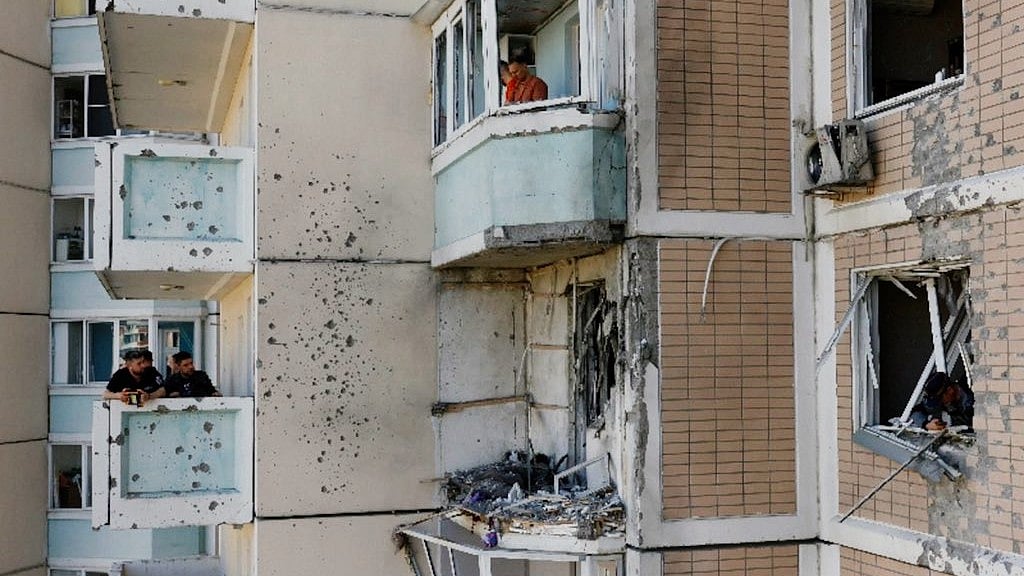
At least four people were killed, including three in the Moscow region, after Ukraine carried out what Russian officials described as the biggest overnight drone attack on the Russian capital in more than a year, authorities said on Sunday, 17 May.
Another person died in Russia’s Belgorod region near the Ukrainian border, according to local officials. Russia’s defence ministry said that by midday, its forces had intercepted more than 1,000 Ukrainian drones across the country over the previous 24 hours.
The attack came days after Ukrainian President Volodymyr Zelenskyy pledged retaliation following Russia’s largest combined drone and missile assault on Kyiv over a two-day period since the war began more than four years ago.
Zelenskyy confirmed the strikes by posting a video on X showing a drone in flight, thick black smoke rising into the air and firefighters battling blazes. “Our responses to Russia’s prolongation of the war and its attacks on our cities and communities are entirely justified,” Zelenskyy posted.
He claimed Ukraine had demonstrated the ability to strike targets located over 500 km from the border despite Moscow’s extensive air defence systems. “We are clearly telling the Russians: their state must end its war,” he said.
Our responses to Russia’s prolongation of the war and its attacks on our cities and communities are entirely justified. This time, Ukrainian long-range sanctions reached the Moscow region, and we are clearly telling the Russians: their state must end its war. Ukrainian drone and… pic.twitter.com/BVFJ1BJQ1i
— Volodymyr Zelenskyy / Володимир Зеленський (@ZelenskyyUa) May 17, 2026
Russia’s foreign ministry accused Kyiv of deliberately targeting civilians. “To the sound of Eurovision songs, the Kyiv regime, financed by the EU, carried out yet another mass terrorist attack,” TASS quoted foreign ministry spokesperson Maria Zakharova as saying.
Both Russia and Ukraine deny intentionally attacking civilian targets.
Ukraine has intensified long-range drone operations inside Russian territory in recent weeks, focusing on energy and logistics infrastructure such as oil refineries, fuel depots and pipelines as both sides attempt to weaken each other’s operational capabilities.
TASS quoted Moscow mayor Sergei Sobyanin as saying that Russian air defence systems had shot down 81 drones approaching Moscow since midnight, making it the heaviest attack on the capital in over a year.
❗️❗️❗️ The question of why Zelensky's official decree was necessary, which granted Putin permission to hold a parade on Red Square on May 9, is most clearly answered by the massive attack carried out by Ukrainians on Moscow today. This kamikaze drone strike was unprecedented… pic.twitter.com/6y9ZKF3Ds9
According to Sobyanin, 12 people were injured, most of them near the entrance to Moscow’s oil refinery. Three residential buildings were also damaged, though he said the refinery’s “technology” systems remained unaffected.
Moscow region governor Andrei Vorobyov said a woman was killed after a residential building in Khimki, north of Moscow, was struck. Rescue workers were still searching the rubble for another person, he added. Two men were also killed in Pogorelki village in the Mytishchi district, Vorobyov said, adding that several apartment blocks and infrastructure facilities sustained damage in the attacks.
Sheremetyevo Airport, Russia’s busiest airport, said drone debris had fallen within its premises but caused no damage.
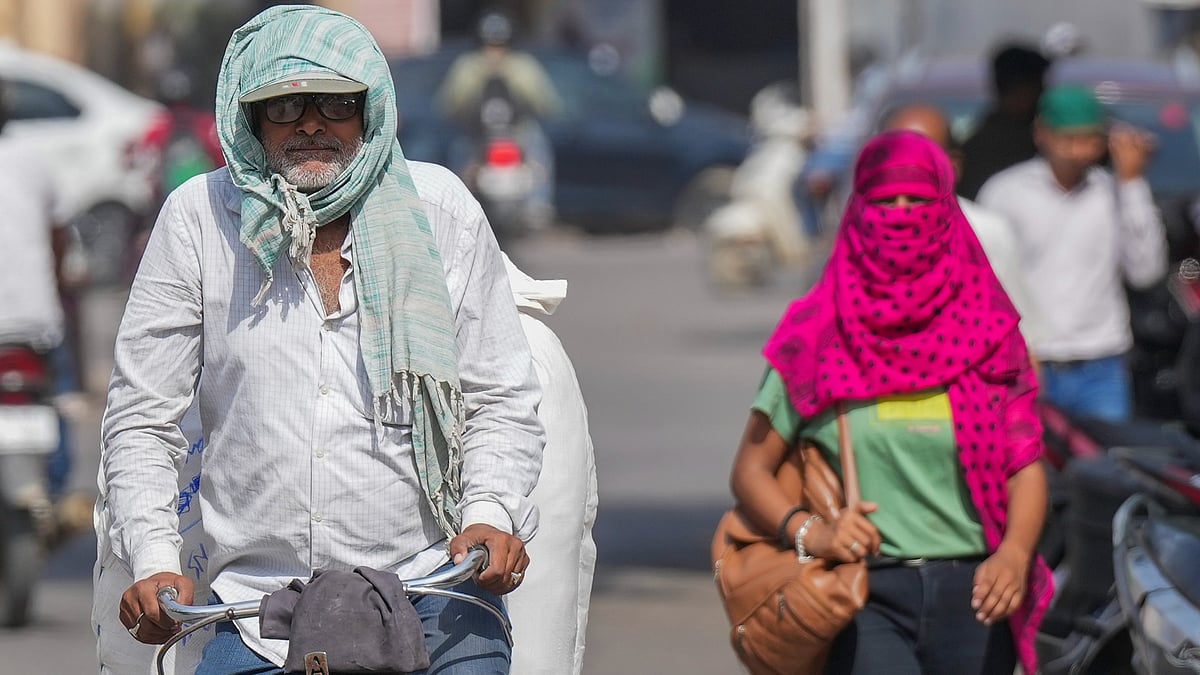
Days after thunderstorms and high-speed winds caused widespread destruction across Uttar Pradesh, the state is now bracing for an intense heatwave spell that could push temperatures close to 45 degrees Celsius in several districts next week. Additionally, wide swathes of India are heading into another intense spell of heatwave conditions days after thunderstorms, lightning and gusty winds battered several states.
The India Meteorological Department has warned of heatwave to severe heatwave conditions across parts of Uttar Pradesh, Rajasthan, Madhya Pradesh, Vidarbha and adjoining regions as dry weather and clear skies trigger a rapid rise in temperatures.
According to IMD forecasts, temperatures are expected to rise by 2-4 degrees Celsius in several regions due to strong radiational heating and the absence of any major active weather system over north India. Officials said southern Uttar Pradesh could witness severe heatwave conditions between 19 and 22 May, prompting orange alerts in several districts.
Parts of Vidarbha in Maharashtra are already recording some of the country’s highest temperatures. Amravati and Wardha touched 46 degrees Celsius on Saturday, while Akola, Brahmapuri and Yavatmal also witnessed extreme heat conditions.
Meteorologists said India is currently witnessing sharp pre-monsoon weather contrasts, with intense heat over northern and central regions while southern and northeastern states continue to receive thunderstorms and heavy rainfall activity.
The IMD has separately issued heavy rain and thunderstorm alerts for Kerala, Tamil Nadu and parts of the Northeast as pre-monsoon activity intensifies. Kerala is expected to receive heavy rainfall over the next few days, while conditions are becoming favourable for the southwest monsoon to advance further over the Arabian Sea, Bay of Bengal and Andaman Sea.
The weather department has indicated that the monsoon could reach Kerala around 26 May, slightly ahead of its normal schedule. However, officials clarified that early monsoon advance does not necessarily indicate lower heat intensity over northern India.
The renewed heatwave warnings come after storms and lightning strikes caused widespread damage and casualties in several states earlier this month, highlighting increasingly erratic and extreme weather patterns linked to climate variability. Experts have warned that above-normal heatwave days are likely across east, central and northwest India during the April-June period.
Election in the times of heatwave: Bengal voters brace for summer heat — check best time to vote
Every time I stepped outside the city and told someone where I was from, the reaction was almost scripted. Either they would immediately start talking about kababs, nihari, biryani… or they would laugh at my insistence on saying ‘hum’ and my talaffuz. Nobody has ever heard ‘Lucknow’ and responded with, “Ah yes, rewdi.” Nobody.
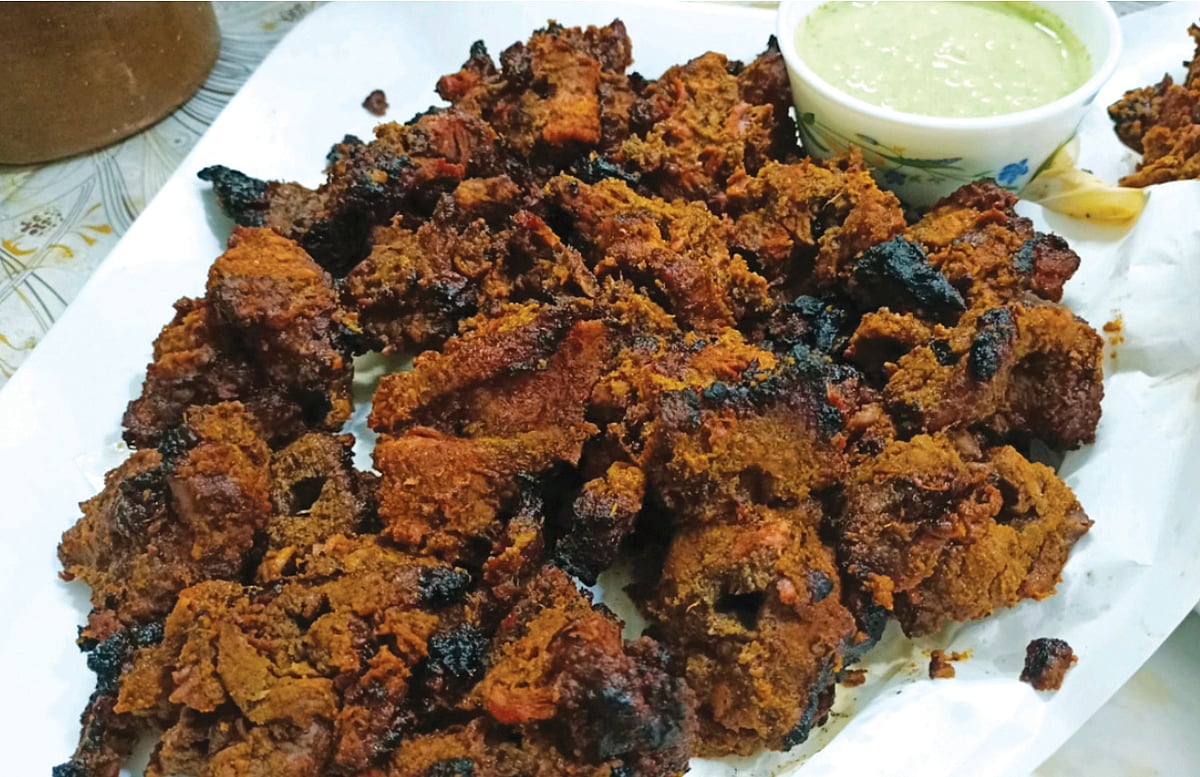
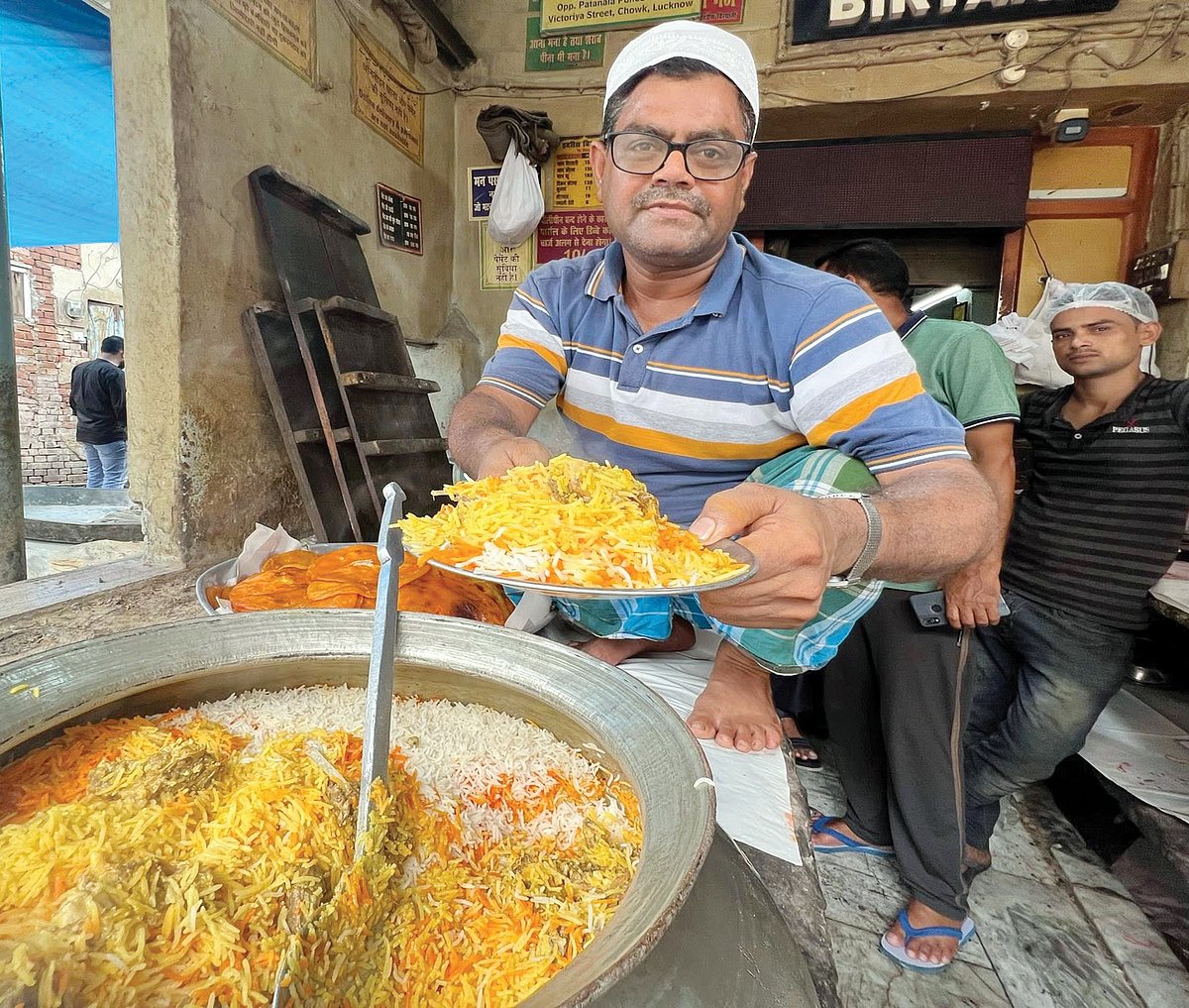
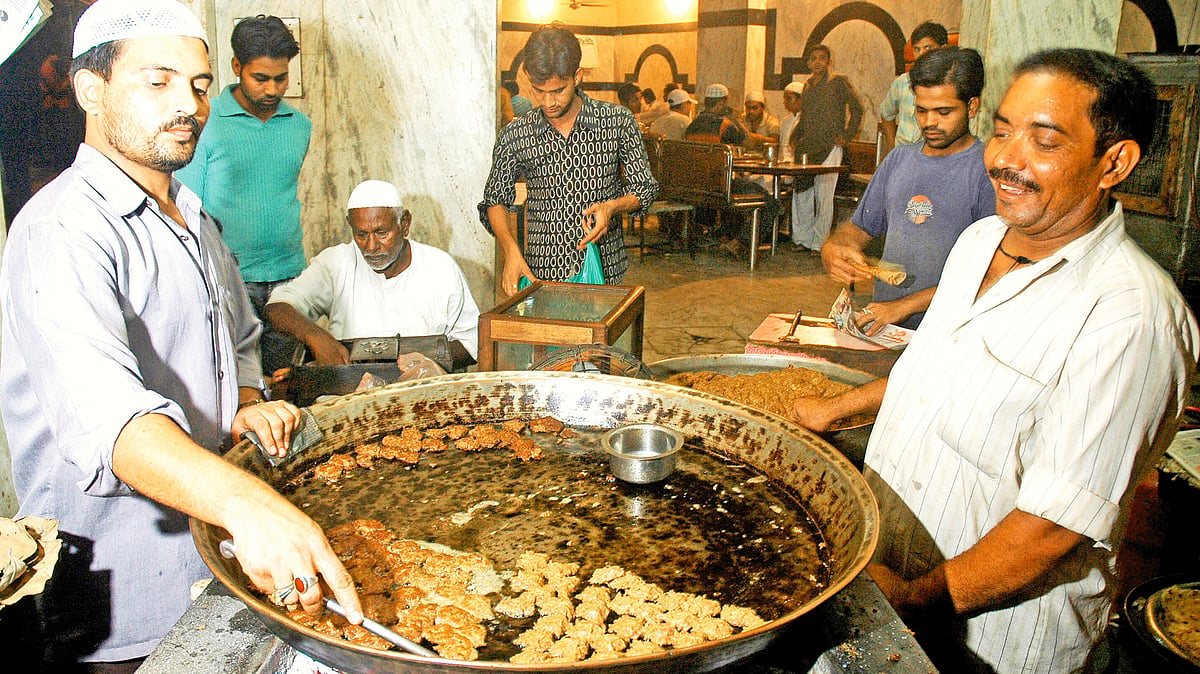
The smell that rises after maghrib (Arabic for sunset) from countless tandoors and grills across old Lucknow is practically one of the three reasons I moved back. People gather around hole-in-the-wall hotels to eat Rahim ki nihari, Mubeen ke pasande, Idrees ki biryani, Tundey kabab… Standing shoulder to shoulder, sometimes waiting for a plate of kababs so soft they melt in your mouth, just like your slightly liberal political opinion might in front of your right-wing papa.
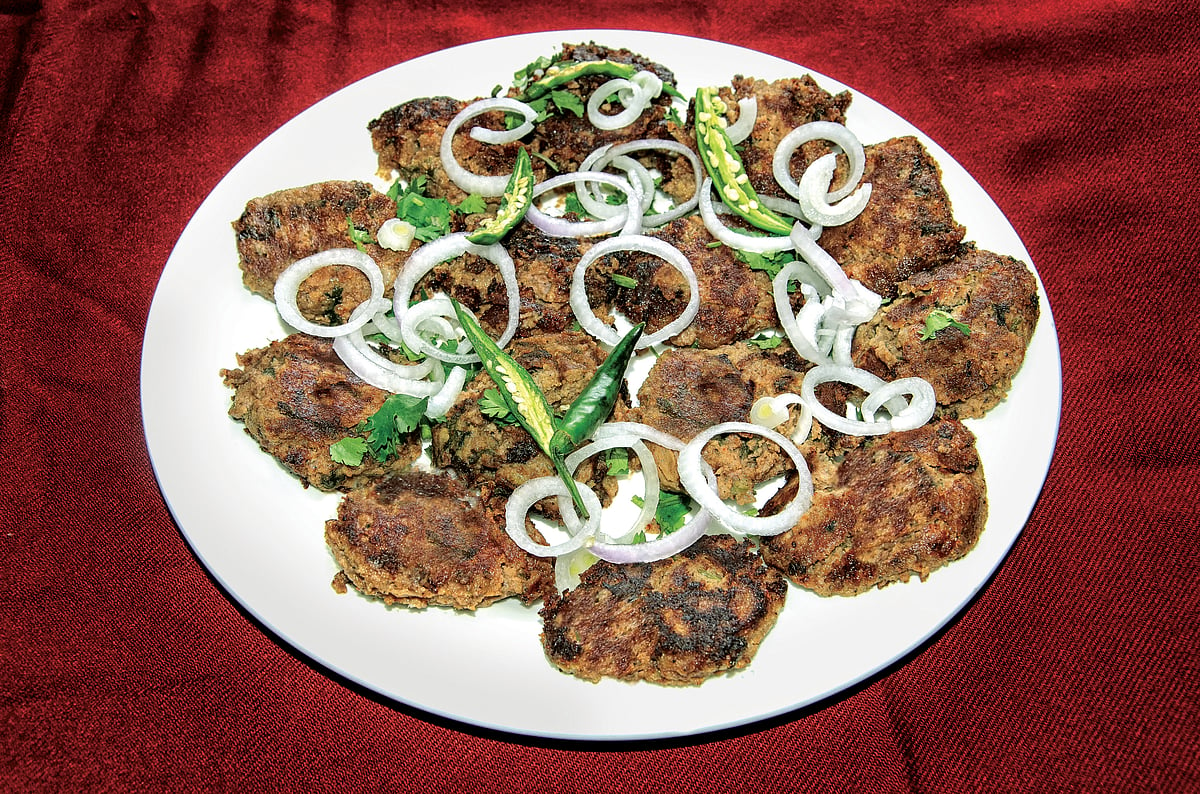
I grew up proudly telling people that Lucknow boasts of over forty varieties of kababs and that Awadhi cuisine is what truly puts us on the map. Galawati kabab so delicate they were supposedly invented for a toothless nawab. Dhaagey ke kabab tied carefully with thread so the meat would not disintegrate before cooking. Shami kabab and the endless debate about how crisp they should be. Nargisi kabab, boti kabab, pasande, koftey, Kakori kabab, majlisi kabab... Even lauki ke kabab.
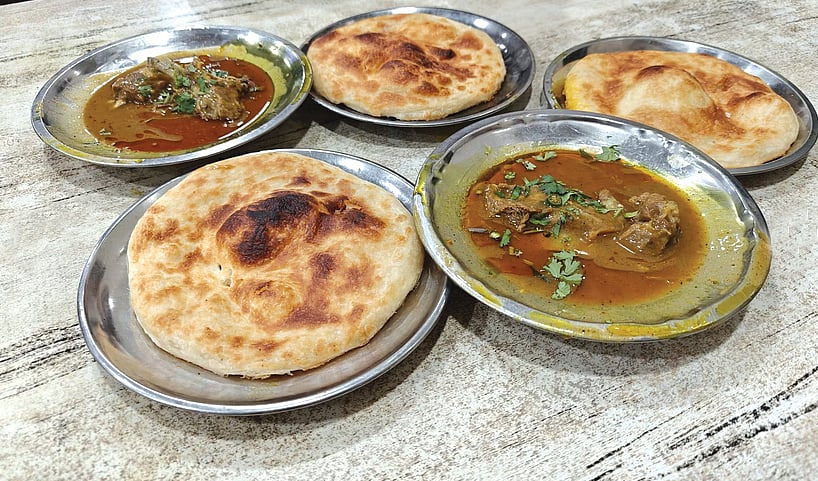
And this is just kababs. I have not even started on nihari-kulcha breakfasts after winter fog, paya simmering overnight, bheja fry at weddings, yakhni pulao, or even home-cooked adraki gosht, methi machhli ka saalan or even gosht ka achaar.
I am listing all this because one Uttar Pradesh government list would have us think that all of UP survives on vegetarian snacks. I truly hope this list does not reach my Lucknawi friends Tullika or Madhvi or Shabnam apa, who would launch a protest almost instinctively when they find out that only rewdi, mango produce and chaat made it to the Lucknow district cuisine.
PasandaNihari
Now listen, I have absolutely nothing against rewdi. What problem could I possibly have with those little gur-and-til discs sold every winter in every gali and every train stopping at LJN? I love them. I am also deeply loyal to ‘mango produce’. I’ll physically defend the honour of Lucknawi chausa mangoes, if need be. So, this is not just about me taking the absence of kababs on that list personally.
Or maybe it is.
Because the curious case of the missing kababs from UP’s grand ‘One District One Cuisine’ list is absurd (and dangerous). According to ministers, district-level committees were formed across all 75 districts. District magistrates chaired them. Teachers, professors and local experts were consulted. Surveys were conducted. Files moved. Meetings happened. Chai was consumed.
Can you imagine this? A full-blown committee of experts sat together to decide what the historic Lucknow district should boast of culturally and arrived at the revolutionary conclusion that the city globally associated with Awadhi meat cuisine should pretend kababs don’t exist. Or can be packaged and sold and benefit communities.
This government is asking us to believe that only vegetarian items can serve MSME interests. Seriously? In the whole of Lucknow district? Which has mastered the art of packaging even malai makkhan, a dessert so delicate it practically evaporates if exposed to sunlight for three minutes. Somehow, that made the list.
Now, I’m a huge fan of malai makkhan. But one cannot ignore the saffron tint of practically any new policy. And by saffron, I do not mean the zafran lovingly sprinkled over our biryani. I mean the saffron draped over legislative and policy processes.
The state insists the omission of meat is ‘not intentional’. Which is as far from the truth as malai makkhan is from boti kabab. The uncooked truth is this state-driven cultural and palate cleansing is a way to impose a savarna upper-caste vegetarian worldview on us all.
They are using food to shape identity, memory, nationalism and power. The state decides whose cuisine becomes ‘heritage’, whose food gets subsidies and branding support, and whose food is made to disappear from official memory.
This is not even about some exoticised Nawabi nostalgia. Lucknow’s food culture survives in small businesses tucked inside narrow lanes, in qasai mohallas, in winter nihari breakfasts, in bhuni kaleji stalls, in Kayastha kitchens cooking khade masale ka gosht, in Eid daawats where shami kababs disappear before the second roti arrives, and in paya simmering overnight for workers heading out before sunrise.
****
What’s being erased in this sanskari project is the food of meat-eating communities and economies built around them. Out with Muslim food traditions! Out with Dalit food traditions! And their kitchens, roadside stalls, butchers, women preserving recipes through generations, and the labouring castes whose cuisines emerged from resilience and survival. None of this should sully our ‘One District One Cuisine’ list.
And how they love their unitary fantasies! One District One Cuisine, One Nation One Election, One Nation One Tax, One Nation One Ration Card, One Nation One Grid… One language. One culture. One Supreme Leader. One (political) Party. Obliterate all and everything that does not fit their notion of a Hindu rashtra cooked in the Nagpur kitchen.
Remember this cuisine list is tied directly to state benefits, subsidies, packaging support, branding and promotion. So the question arises: whose food entrepreneurs will benefit? Whose labour will get visibility? Whose cuisines will the state deem worthy of investment?
It’s almost comical to think that UP has been one of India’s largest exporters of buffalo meat. UP is perfectly comfortable exporting buffalo meat all over the world, generating crores through slaughterhouses and meat-processing infrastructure. A fully packaged buffalo can board an international cargo ship, but the kabab cannot enter a tourism brochure.
We are casually informed that the ODOC list is ‘flexible’, that additions can later be approved by the chief minister. Will he approve my kababs? I won’t hold my breath.
But this isn’t about my beloved kababs. I’m angry because this is part of a much larger political project of omission and erasure — of food, language, culture, names, love stories, entire histories!
I’m sure this woman from Lucknow district is not the only person enraged about this list. So, friends from other districts, do speak up! I refuse to believe Azamgarh is happy to be represented by tehri — and I say this as someone who considers tehri deeply emotional comfort food.
Rampur, my friend, are you okay with this list? And Moradabad? Bareilly? Meerut? Will you just sit quietly while your food histories are vegetarianised under your noses?
For the nonce, if someone asks what in Lucknow they must absolutely try, I guess I’ll have to offer: “Ye lijiye, rewdi naush farmaiye”.
And now, if you’ll excuse me, I need to get a plate of kababs to calm my nerves.
The Delhi Labour Department has advised private companies and commercial establishments in the national capital to adopt a minimum two-day work-from-home policy every week as part of fuel conservation measures amid global economic uncertainty and rising energy concerns.
The advisory, issued on Sunday, comes amid growing debate over the economic impact of austerity-style measures at a time when foreign direct investment (FDI) inflows into India have remained sluggish and industry groups have raised concerns over policy uncertainty affecting investor sentiment.
The move follows an appeal by Prime Minister Narendra Modi urging citizens to conserve fuel and reduce non-essential expenditure in view of the ongoing West Asia crisis and pressure on foreign exchange reserves.
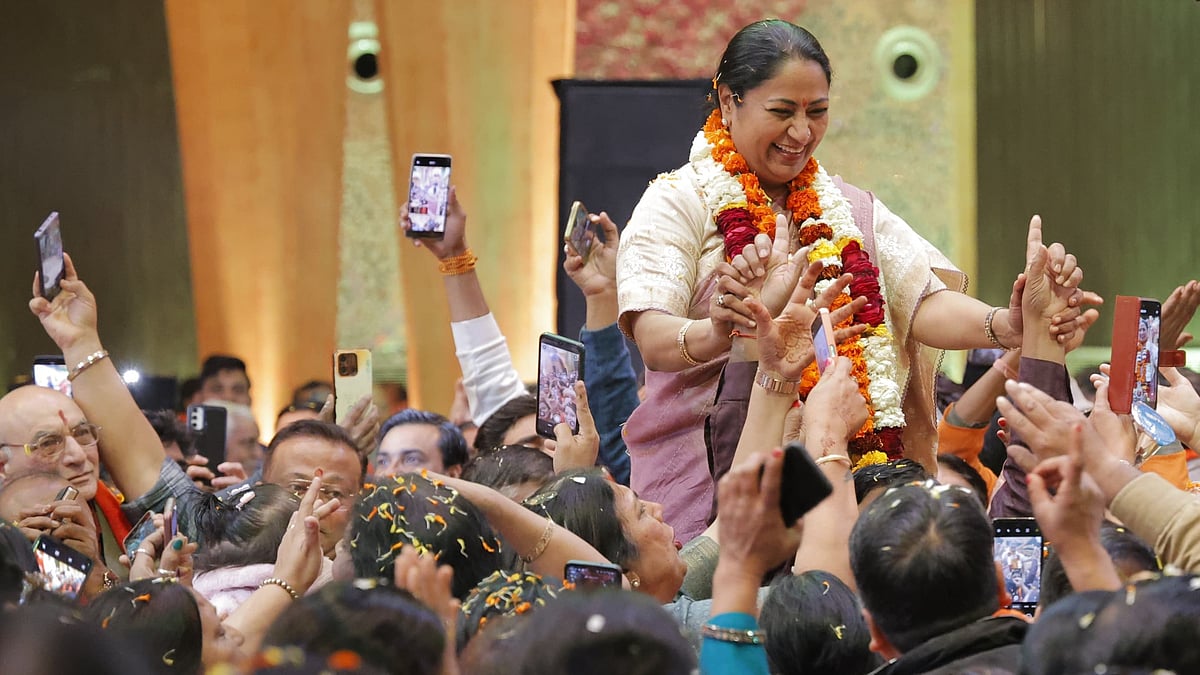
Delhi Chief Minister Rekha Gupta earlier launched a 90-day ‘Mera Bharat, Mera Yogdan’ fuel-saving campaign for government employees and said the private sector would also be encouraged to participate.
Advisory for offices, industries and IT firms
The labour department advisory said commuting remained one of the largest contributors to daily fuel consumption in Delhi and noted that work-from-home arrangements had proven operationally feasible during the COVID-19 pandemic and GRAP restrictions.
“All employers of industrial establishments, factories, shops and commercial establishments in Delhi, including IT and IT Enabled Services (ITES), are strongly encouraged to implement a minimum of two days of work-from-home per week,” the advisory stated.
Private firms were also advised to introduce staggered office timings, encourage use of public transport and car-pooling, minimise non-essential official travel and shift physical meetings to virtual platforms.
The advisory exempted hospitals, healthcare facilities, electricity, water supply, sanitation and other emergency services from the suggested measures.
Industry concerns over economic signalling
The advisory comes at a sensitive time for India’s economy, with critics arguing that repeated calls for austerity, postponement of consumption and work curbs could send adverse signals to private investors and multinational corporations already cautious about slowing demand and global instability.
Industry experts have often maintained that extended work-from-home mandates and consumption restraint campaigns are generally viewed unfavourably by sections of private industry, especially sectors dependent on urban mobility, office ecosystems and discretionary spending.
The Delhi government also urged private organisations to sensitise employees about the “national importance of fuel conservation” and encourage purchase of Indian-made products to strengthen the domestic economy.
When Nepal’s Prime Minister Balendra Shah declined to receive India’s foreign secretary Vikram Misri last week, citing his now-celebrated ‘equal stature’ policy, he triggered a small diplomatic storm across Kathmandu, Delhi and beyond.
Days earlier, he had also declined to meet US President Donald Trump’s special envoy for South and Central Asia, Sergio Gor. Cabinet colleagues, including foreign minister Shisir Khanal and finance minister Swarnim Wagle, reportedly urged reconsideration. Balen held firm.
New Delhi has since said Misri’s visit will be rescheduled ‘at mutual convenience’ and the diplomatic temperature has begun to cool. But the episode matters for reasons larger than diplomatic etiquette or political personality. It exposes a deeper transition underway in South Asia: the erosion of old equidistance politics and the growing pressure on smaller states like Nepal to adopt a more strategic, interest-driven foreign policy in an increasingly competitive region.
The real question is no longer whether Nepal can balance between powers rhetorically. It is whether it can think strategically enough to turn geography into leverage rather than insecurity.
The ‘stature’ doctrine is a textbook case of foreign policy driven more by symbolism and political theatre than by strategic consequences. It plays well at home. It looks like sovereignty asserting itself. But statecraft is not a tableau. It is the slow accumulation of trust, predictability and leverage. Foreign secretaries, by tradition, do call on prime ministers across the neighbourhood. This is not subservience. It is diplomatic symmetry.
Refusing such calls does not necessarily produce independence. It produces absence. And in international relations, absence is rarely neutral.
Classical realists from Thucydides to Hans Morgenthau, and neorealists from Kenneth Waltz to John Mearsheimer, share a sobering view of the international order: it is anarchic, structurally unequal and fundamentally unsentimental. Idealism may visit. Realism always returns. States cooperate when it serves their interests.
For a country like Nepal, landlocked, limited in market size, dependent on two giant neighbours and a wider donor ecosystem, this is not cynicism. It is geography speaking through theory.
The implication is unavoidable. Nepal’s foreign policy cannot continue resting on inherited slogans of non-alignment or rigid equidistance. It must evolve into realpolitik: a clear-eyed pursuit of national interest, calibrated by capacity and disciplined by institutional maturity.
One of Nepal’s most revered leaders and statesmen, B.P. Koirala, understood this decades ago. In the 1970s, he rejected equidistance as a ‘numbers game’, the simplistic notion that every agreement with Delhi must be balanced by one in Beijing. Instead, he argued for active internationalism rooted in interests, not artificial symmetry.
Two other lenses throw light on the present moment. The first is neoclassical realism, which insists that a state’s external behaviour is not shaped by systemic pressures alone, but filtered through domestic institutions, leadership perceptions and political culture. By that measure, Nepal’s foreign policy will continue oscillating until its institutions stop oscillating.
The second is strategic hedging: the small-state art of avoiding a lock-in with any single power while maintaining multiple credible options. Hedging is not equidistance. It is asymmetric, opportunistic and ruthlessly interest-driven. ASEAN states practise it. Vietnam practises it with both Washington and Beijing. Bangladesh is learning it after its recent political reset. Sri Lanka is rediscovering it between Colombo Port City and Trincomalee. Nepal must learn it too, and quickly.
What does that mean operationally? Three commitments.
First, Nepal must treat foreign policy as national capital, not seasonal currency. Every government that dissipates diplomatic gains for short-term domestic optics is liquidating capital painstakingly built by previous generations. The country needs a serious, merit-based and properly funded diplomatic service, a professional national school of foreign service and institutional continuity that outlasts cabinets.
Second, Parliament must reclaim ownership over foreign policy. The committees on international relations and state affairs should not function as ceremonial holding pens for MPs. They must scrutinise treaties, debate strategic priorities, ratify appointments, and hold the executive accountable to publicly stated objectives. The old ‘water’s edge principle’ works only when the water’s edge is institutional, not personal.
Third, and this is non-negotiable: Nepal and India must finally move toward resolving all outstanding border disputes. Lipulekh, Kalapani, Limpiyadhura and other contested points are not abstract dots on a map. They are the daily friction points along an open border of more than 1,750 km that ties Bihar to Birgunj, Uttar Pradesh to Lumbini, West Bengal to Mechi.
A resolved border would be one of the strongest signals South Asia could send to itself and to the world: that two democracies can settle inherited cartographic disputes through dialogue, patience and political courage. Border management must become the priority, not the postscript.
Here, with respect, the larger burden lies with the larger country. India’s Neighbourhood First policy has been substantial and sincere in many respects. Cross-border power trade, the Motihari–Amlekhgunj petroleum pipeline, the Jaynagar–Janakpur rail link and post-earthquake reconstruction support have all strengthened regional connectivity.
But neighbourhoods are not managed only with deliverables. They are sustained through restraint, generosity of spirit and the confidence to allow smaller partners find their own voice without taking offence at every wobble.
Atal Bihari Vajpayee captured this best: you can change friends, but you cannot change neighbours. Nepal is not a problem for Delhi to solve. It is a partner to grow alongside. The Misri episode, rather than being a setback, can become an opportunity, a chance for India to demonstrate that mature powers absorb the bumps without overreacting, and continue the conversation with strategic patience. Lead the neighbourhood; do not merely manage it.
For Kathmandu, however, the lesson runs the other way.
Prime ministers and presidents are the face of the nation. When the world comes to engage, through ambassadors, envoys or foreign secretaries, the head of government does not always need to sit in the room. But the door must never appear closed. India’s foreign secretary carries the political weight of the Indian state behind him. The US special envoy for South and Central Asia speaks for the Oval Office. Refusing such meetings in the name of ‘stature’ is not strategic confidence, it is stagecraft.
Real strength lies in receiving counterparts, listening carefully, negotiating firmly, pushing back where necessary, and walking away with outcomes. That is realpolitik. Stagecraft produces headlines. Realpolitik produces highways, transit corridors, energy deals, investment flows and resolved borders.
China is watching. So are Bhutan, the Maldives, Bangladesh and Myanmar. Beijing engages South Asia on ruthlessly clear terms: Tibet first, connectivity next. South Asia is in the middle of a quiet reordering and the states that organise their institutions, define their direction and treat foreign policy as a long-term strategic asset will set the tempo. Nepal can be that country. India can be the partner that helps make it possible.
The old Nepali metaphor of the ‘yam between two boulders’ remains relevant but is perhaps misunderstood. The yam survives not by standing still, but by knowing when to bend, when to grow and when to ask the boulders to make space. The boulders, for their part, are wise when they understand that a thriving yam is a sign of a healthy mountain.
Nepal’s choice today is not between Delhi and Beijing. It is between hesitation and strategic clarity. India’s choice is not between influence and restraint. It is between managing the neighbourhood and maturing it. The road, as Robert Frost reminded us, is always there. Let us walk it together, with concrete steps, flexible minds and the humility neither of our nations can afford to lose.
Kanchan Jha is a leader of the Nepali Congress party and an Emmy-nominated former journalist
An anti-corruption organisation in Madhya Pradesh has sought a high-level probe into alleged land purchases by senior IAS and IPS officers near the proposed Rs 3,200-crore Bhopal Western Bypass project, claiming the value of the plots rose sharply after the project received approval.
The System Parivartan Abhiyan has written to Chief Minister Mohan Yadav demanding cancellation of the 35-km bypass project and alleging that its alignment was altered multiple times to benefit bureaucrats.
SPA president Azad Singh Dabas alleged that the project was being used to provide financial gains to senior officials.
“Our crusade against corruption is a campaign for administrative, judicial, police and media accountability,” Dabas told PTI.
Land bought before project approval: SPA
According to the organisation, media reports claimed that around 50 IAS and IPS officers from different states jointly purchased 2.023 hectares of agricultural land in Guradi Ghat village in Bhopal’s Kolar area through a single registry document dated 4 April 2022.
SPA alleged that the land was bought for around Rs 5.5 crore even though its market value at the time was estimated at Rs 7.78 crore.
The state government approved the Western Bypass project on 31 August 2023, nearly 16 months after the land transaction, the organisation said.
According to Dabas, the land use was subsequently changed from agricultural to residential in June 2024, leading to a steep rise in prices.
“The value of the land has increased exponentially from around Rs 5.5 crore in 2022 to nearly Rs 55-60 crore now,” he alleged.
‘Alignment changed three times’
The anti-graft outfit further alleged that the alignment of the bypass was changed three times, but the proposed route continued to pass close to the land parcels allegedly purchased by the officers.
SPA questioned the necessity of the project, arguing that Bhopal’s Eastern Bypass already manages the city’s transit traffic.
“It appears the road project is being constructed unnecessarily to provide financial benefit to IAS and IPS officers,” Dabas alleged.
The organisation also claimed that some officers from the 2013 to 2016 batches allegedly purchased land in the names of their wives and children and that certain constructions in Bhopal violated existing rules.
SPA has demanded a high-level inquiry into the land transactions and urged the state government to scrap the bypass project to prevent what it termed “unnecessary expenditure of public money”.
Congress alleges corruption under BJP rule in MP, seeks CM's removal

 Login
Login