Reading view

Mehbooba backs RSS leader Hosabale’s call for India-Pakistan people-to-people engagement

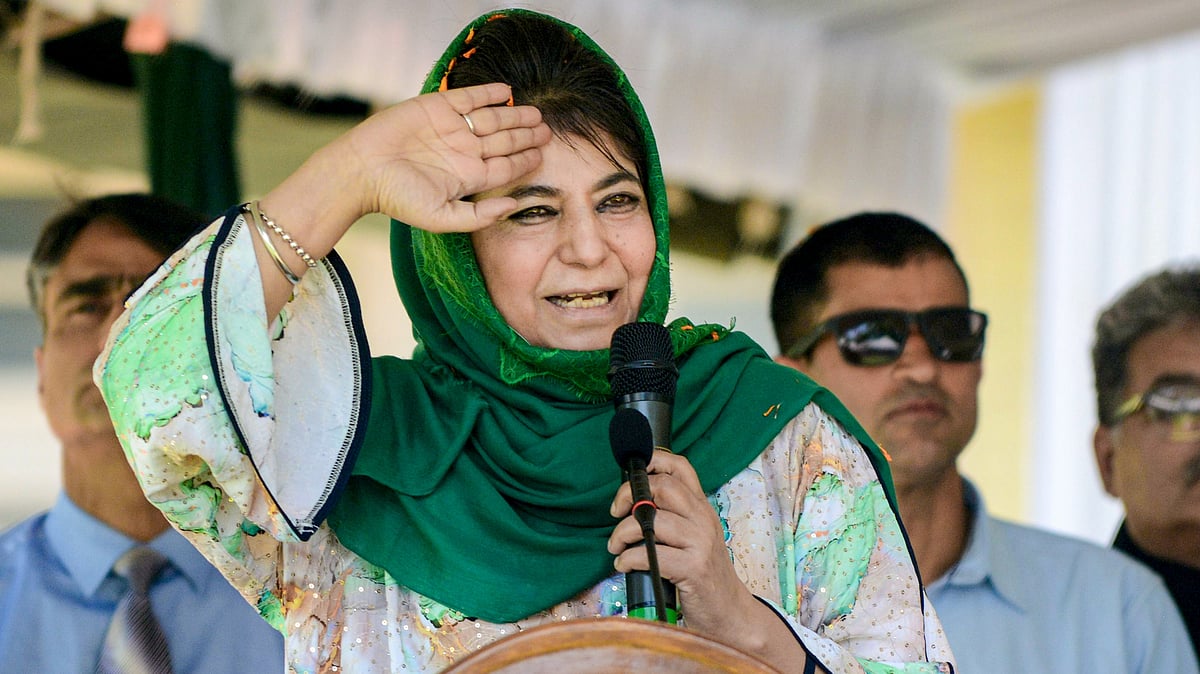
Mehbooba Mufti on Sunday endorsed recent remarks by RSS leader Dattatreya Hosabale advocating greater people-to-people engagement between India and Pakistan, saying dialogue remains the only path towards resolving the Kashmir issue.

Addressing a party workers’ convention in Srinagar, the Peoples Democratic Party president said peace and reconciliation in Jammu and Kashmir could only emerge through talks within the constitutional framework.

“The solution to Kashmir lies in dialogue and within the framework of the Constitution. Whatever we have to achieve needs to be done from Delhi and here. We believe in engagement and talks. We seek peace with dignity,” Mehbooba said.

‘Open roads to Pakistan, Central Asia’

The former chief minister welcomed Hosabale’s recent statement calling for civil society-led engagement with Pakistan after military and political channels lost credibility.

In an interview to PTI Videos earlier, the RSS leader had said people-to-people contact was important because India and Pakistan shared cultural ties and had once been “one nation”.

Mehbooba said the position echoed the long-held vision of PDP founder Mufti Mohammad Sayeed.

“What Hosabale has said now is what Mufti Mohammad Sayeed advocated till his last breath. Open our roads leading to the other side of Kashmir… Pakistan, China and Central Asia,” she said.

She urged Prime Minister Narendra Modi to initiate dialogue with the people of Jammu and Kashmir and involve Pakistan in efforts to resolve the issue.

“If Modi ji wants to carve a name for himself, he should resolve the Kashmir issue and involve Pakistan in the process,” she said.

Mehbooba recalls Modi’s Lahore visit

Mehbooba noted that Modi had earlier attempted outreach towards Pakistan, referring to his 2015 visit to Lahore, but said such efforts were derailed by subsequent militant attacks.

“I am not saying Narendra Modi has done nothing. He visited Lahore in 2016, but it was followed by the Pathankot attack. Pakistan will have to respond positively to any outreach from India,” she said.

The PDP leader also said Delhi must listen to the voices of Kashmiris and stressed that development alone could not resolve the region’s political problems.

“Even if we build roads of gold and bridges of silver, they will be of no use if the Kashmir issue is not resolved,” she quoted Mufti Mohammad Sayeed as saying.

Naravane also backed dialogue

Former Army chief M.M. Naravane had also backed Hosabale’s remarks earlier this week, saying people-to-people ties between India and Pakistan remained important.

“The common man has nothing to do with politics. When there is friendship between two persons, there will also be friendship between two nations,” Naravane had said.

Mehbooba also called for the release of political detainees ahead of Eid, describing it as an important confidence-building measure that could help foster reconciliation in Kashmir.
Mehbooba backs RSS leader Hosabale’s call for India-Pakistan people-to-people engagement
  •  

Drone strike triggers fire at UAE’s Barakah nuclear plant amid widening Gulf tensions

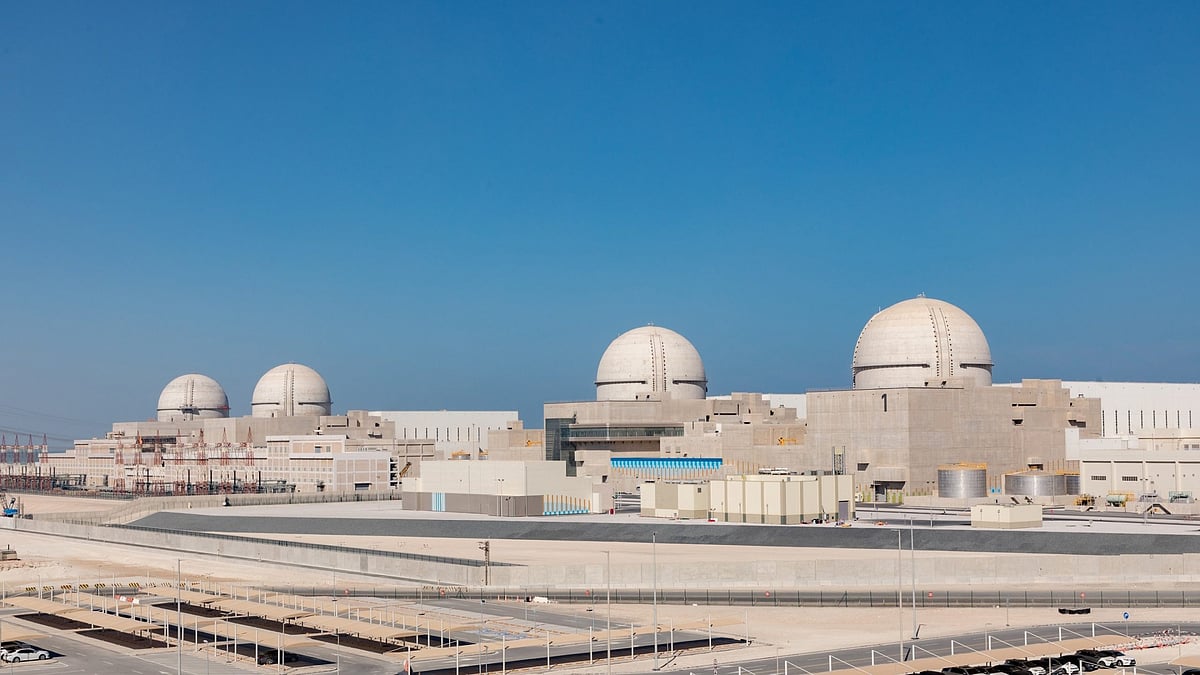
A suspected drone strike triggered a fire at the Barakah Nuclear Power Plant in the United Arab Emirates on Sunday, marking the first known attack on the Gulf region’s only nuclear power facility since the outbreak of the ongoing US-Israel-Iran conflict.

According to the Abu Dhabi Media Office, the strike caused a fire in an electrical generator located outside the inner perimeter of the nuclear plant in the Al Dhafra region of Abu Dhabi.

Authorities said no injuries were reported and there was no impact on radiological safety.

The Federal Authority for Nuclear Regulation said all key systems at the plant were functioning normally and radiation levels remained unaffected.

The UAE government did not identify who was responsible for the attack.

First strike on Barakah facility

The Barakah nuclear plant, built with South Korean assistance at a reported cost of around USD 20 billion, became operational in 2020 and remains the first and only nuclear power facility in the Arabian Peninsula.

The four-reactor complex is located in Abu Dhabi’s western desert region near the Saudi border.

The strike comes amid escalating regional instability linked to the ongoing confrontation involving the United States, Israel and Iran.

The UAE has witnessed multiple drone and missile incidents in recent months targeting energy infrastructure and maritime facilities. Emirati authorities had earlier blamed some of the attacks on Iran-backed operations during the conflict.

Oil export concerns grow

The latest incident also comes as the UAE accelerates efforts to expand oil export infrastructure bypassing the strategically critical Strait of Hormuz, through which a significant share of global oil and LNG shipments traditionally passes.

According to officials, Abu Dhabi Crown Prince Khaled bin Mohammed bin Zayed Al Nahyan recently directed state-owned energy giant ADNOC to fast-track a new export pipeline project linked to Fujairah.

The pipeline is expected to double export capacity through Fujairah and reduce dependence on Hormuz, where shipping disruptions linked to the conflict have triggered sharp increases in global oil prices.

Conflict fuels energy insecurity

The attack on Barakah adds to growing concerns over the vulnerability of nuclear and energy infrastructure in conflict zones.

During the war, Iran repeatedly claimed that its Bushehr Nuclear Power Plant had also come under attack, though no radiation leak was reported there either.

Diplomatic efforts to end the conflict remain stalled after recent negotiations between Washington and Tehran failed to produce a breakthrough, prolonging uncertainty across the Gulf region and global energy markets.

Drone strike triggers fire at UAE’s Barakah nuclear plant amid widening Gulf tensions
  •  

Four killed in Ukraine’s largest drone assault on Moscow in over a year

At least four people were killed, including three in the Moscow region, after Ukraine carried out what Russian officials described as the biggest overnight drone attack on the Russian capital in more than a year, authorities said on Sunday, 17 May.

Another person died in Russia’s Belgorod region near the Ukrainian border, according to local officials. Russia’s defence ministry said that by midday, its forces had intercepted more than 1,000 Ukrainian drones across the country over the previous 24 hours.

The attack came days after Ukrainian President Volodymyr Zelenskyy pledged retaliation following Russia’s largest combined drone and missile assault on Kyiv over a two-day period since the war began more than four years ago.

Zelenskyy confirmed the strikes by posting a video on X showing a drone in flight, thick black smoke rising into the air and firefighters battling blazes. “Our responses to Russia’s prolongation of the war and its attacks on our cities and communities are entirely justified,” Zelenskyy posted.

He claimed Ukraine had demonstrated the ability to strike targets located over 500 km from the border despite Moscow’s extensive air defence systems. “We are clearly telling the Russians: their state must end its war,” he said.

Our responses to Russia’s prolongation of the war and its attacks on our cities and communities are entirely justified. This time, Ukrainian long-range sanctions reached the Moscow region, and we are clearly telling the Russians: their state must end its war. Ukrainian drone and… pic.twitter.com/BVFJ1BJQ1i

— Volodymyr Zelenskyy / Володимир Зеленський (@ZelenskyyUa) May 17, 2026

Russia’s foreign ministry accused Kyiv of deliberately targeting civilians. “To the sound of Eurovision songs, the Kyiv regime, financed by the EU, carried out yet another mass terrorist attack,” TASS quoted foreign ministry spokesperson Maria Zakharova as saying.

Both Russia and Ukraine deny intentionally attacking civilian targets.

Ukraine has intensified long-range drone operations inside Russian territory in recent weeks, focusing on energy and logistics infrastructure such as oil refineries, fuel depots and pipelines as both sides attempt to weaken each other’s operational capabilities.

TASS quoted Moscow mayor Sergei Sobyanin as saying that Russian air defence systems had shot down 81 drones approaching Moscow since midnight, making it the heaviest attack on the capital in over a year.

❗️❗️❗️ The question of why Zelensky's official decree was necessary, which granted Putin permission to hold a parade on Red Square on May 9, is most clearly answered by the massive attack carried out by Ukrainians on Moscow today. This kamikaze drone strike was unprecedented… pic.twitter.com/6y9ZKF3Ds9

— Visioner (@visionergeo) May 17, 2026

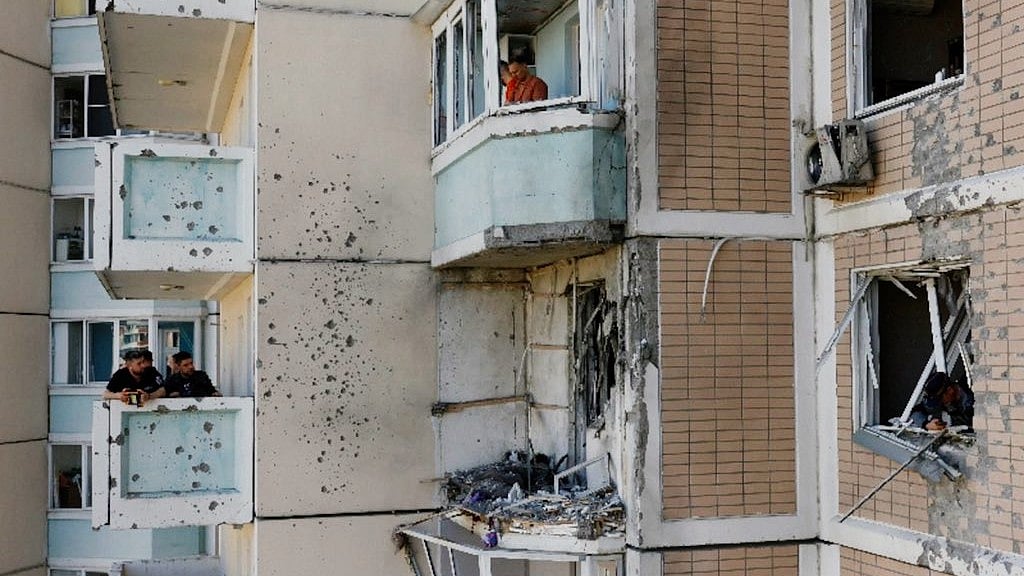
According to Sobyanin, 12 people were injured, most of them near the entrance to Moscow’s oil refinery. Three residential buildings were also damaged, though he said the refinery’s “technology” systems remained unaffected.

Moscow region governor Andrei Vorobyov said a woman was killed after a residential building in Khimki, north of Moscow, was struck. Rescue workers were still searching the rubble for another person, he added. Two men were also killed in Pogorelki village in the Mytishchi district, Vorobyov said, adding that several apartment blocks and infrastructure facilities sustained damage in the attacks.

Sheremetyevo Airport, Russia’s busiest airport, said drone debris had fallen within its premises but caused no damage.

With agency inputs

  •  

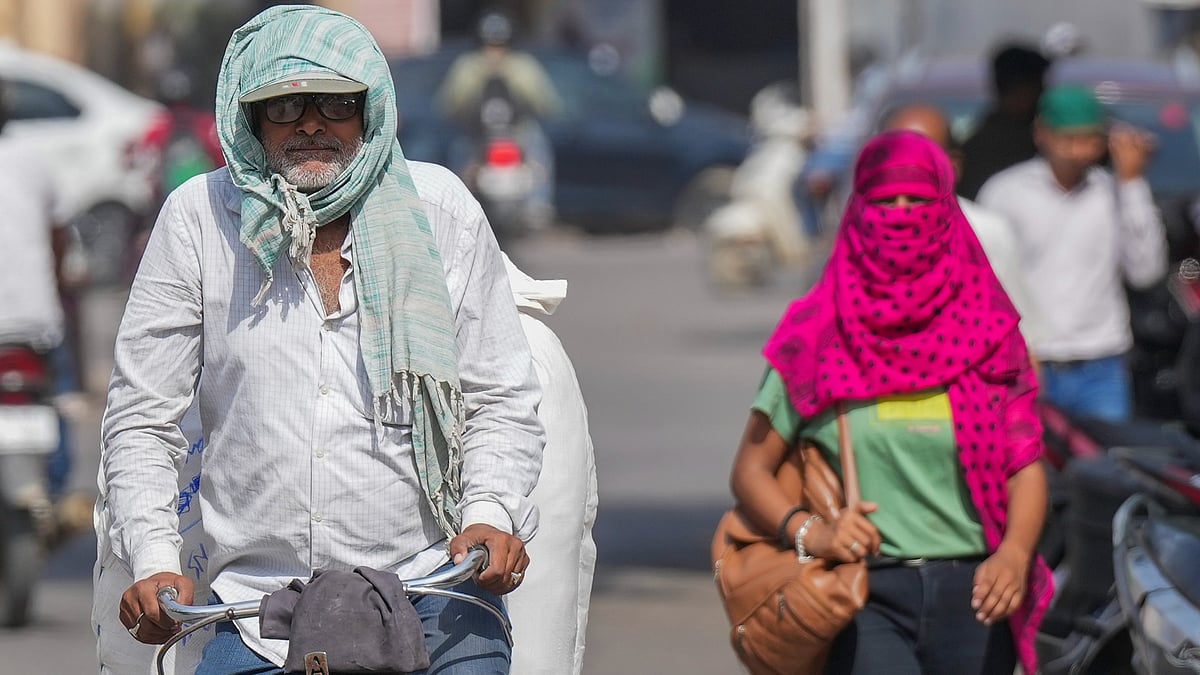
Days after deadly storms, India braces for severe heatwave as temperatures set to touch 45°C

Days after thunderstorms and high-speed winds caused widespread destruction across Uttar Pradesh, the state is now bracing for an intense heatwave spell that could push temperatures close to 45 degrees Celsius in several districts next week. Additionally, wide swathes of India are heading into another intense spell of heatwave conditions days after thunderstorms, lightning and gusty winds battered several states.

The India Meteorological Department has warned of heatwave to severe heatwave conditions across parts of Uttar Pradesh, Rajasthan, Madhya Pradesh, Vidarbha and adjoining regions as dry weather and clear skies trigger a rapid rise in temperatures.

According to IMD forecasts, temperatures are expected to rise by 2-4 degrees Celsius in several regions due to strong radiational heating and the absence of any major active weather system over north India. Officials said southern Uttar Pradesh could witness severe heatwave conditions between 19 and 22 May, prompting orange alerts in several districts.

Parts of Vidarbha in Maharashtra are already recording some of the country’s highest temperatures. Amravati and Wardha touched 46 degrees Celsius on Saturday, while Akola, Brahmapuri and Yavatmal also witnessed extreme heat conditions.

Meteorologists said India is currently witnessing sharp pre-monsoon weather contrasts, with intense heat over northern and central regions while southern and northeastern states continue to receive thunderstorms and heavy rainfall activity.

The IMD has separately issued heavy rain and thunderstorm alerts for Kerala, Tamil Nadu and parts of the Northeast as pre-monsoon activity intensifies. Kerala is expected to receive heavy rainfall over the next few days, while conditions are becoming favourable for the southwest monsoon to advance further over the Arabian Sea, Bay of Bengal and Andaman Sea.

The weather department has indicated that the monsoon could reach Kerala around 26 May, slightly ahead of its normal schedule. However, officials clarified that early monsoon advance does not necessarily indicate lower heat intensity over northern India.

The renewed heatwave warnings come after storms and lightning strikes caused widespread damage and casualties in several states earlier this month, highlighting increasingly erratic and extreme weather patterns linked to climate variability. Experts have warned that above-normal heatwave days are likely across east, central and northwest India during the April-June period.

Election in the times of heatwave: Bengal voters brace for summer heat — check best time to vote
  •  

Delhi urges private firms to adopt 2-day WFH policy amid fuel-saving push

The Delhi Labour Department has advised private companies and commercial establishments in the national capital to adopt a minimum two-day work-from-home policy every week as part of fuel conservation measures amid global economic uncertainty and rising energy concerns.

The advisory, issued on Sunday, comes amid growing debate over the economic impact of austerity-style measures at a time when foreign direct investment (FDI) inflows into India have remained sluggish and industry groups have raised concerns over policy uncertainty affecting investor sentiment.

The move follows an appeal by Prime Minister Narendra Modi urging citizens to conserve fuel and reduce non-essential expenditure in view of the ongoing West Asia crisis and pressure on foreign exchange reserves.

Delhi Chief Minister Rekha Gupta earlier launched a 90-day ‘Mera Bharat, Mera Yogdan’ fuel-saving campaign for government employees and said the private sector would also be encouraged to participate.

Advisory for offices, industries and IT firms

The labour department advisory said commuting remained one of the largest contributors to daily fuel consumption in Delhi and noted that work-from-home arrangements had proven operationally feasible during the COVID-19 pandemic and GRAP restrictions.

“All employers of industrial establishments, factories, shops and commercial establishments in Delhi, including IT and IT Enabled Services (ITES), are strongly encouraged to implement a minimum of two days of work-from-home per week,” the advisory stated.

Private firms were also advised to introduce staggered office timings, encourage use of public transport and car-pooling, minimise non-essential official travel and shift physical meetings to virtual platforms.

The advisory exempted hospitals, healthcare facilities, electricity, water supply, sanitation and other emergency services from the suggested measures.

Industry concerns over economic signalling

The advisory comes at a sensitive time for India’s economy, with critics arguing that repeated calls for austerity, postponement of consumption and work curbs could send adverse signals to private investors and multinational corporations already cautious about slowing demand and global instability.

Industry experts have often maintained that extended work-from-home mandates and consumption restraint campaigns are generally viewed unfavourably by sections of private industry, especially sectors dependent on urban mobility, office ecosystems and discretionary spending.

The Delhi government also urged private organisations to sensitise employees about the “national importance of fuel conservation” and encourage purchase of Indian-made products to strengthen the domestic economy.

Delhi urges private firms to adopt 2-day WFH policy amid fuel-saving push
  •  

Anti-graft outfit seeks probe into IAS, IPS land deals linked to Bhopal bypass project

An anti-corruption organisation in Madhya Pradesh has sought a high-level probe into alleged land purchases by senior IAS and IPS officers near the proposed Rs 3,200-crore Bhopal Western Bypass project, claiming the value of the plots rose sharply after the project received approval.

The System Parivartan Abhiyan has written to Chief Minister Mohan Yadav demanding cancellation of the 35-km bypass project and alleging that its alignment was altered multiple times to benefit bureaucrats.

SPA president Azad Singh Dabas alleged that the project was being used to provide financial gains to senior officials.

“Our crusade against corruption is a campaign for administrative, judicial, police and media accountability,” Dabas told PTI.

Land bought before project approval: SPA

According to the organisation, media reports claimed that around 50 IAS and IPS officers from different states jointly purchased 2.023 hectares of agricultural land in Guradi Ghat village in Bhopal’s Kolar area through a single registry document dated 4 April 2022.

SPA alleged that the land was bought for around Rs 5.5 crore even though its market value at the time was estimated at Rs 7.78 crore.

The state government approved the Western Bypass project on 31 August 2023, nearly 16 months after the land transaction, the organisation said.

According to Dabas, the land use was subsequently changed from agricultural to residential in June 2024, leading to a steep rise in prices.

“The value of the land has increased exponentially from around Rs 5.5 crore in 2022 to nearly Rs 55-60 crore now,” he alleged.

‘Alignment changed three times’

The anti-graft outfit further alleged that the alignment of the bypass was changed three times, but the proposed route continued to pass close to the land parcels allegedly purchased by the officers.

SPA questioned the necessity of the project, arguing that Bhopal’s Eastern Bypass already manages the city’s transit traffic.

“It appears the road project is being constructed unnecessarily to provide financial benefit to IAS and IPS officers,” Dabas alleged.

The organisation also claimed that some officers from the 2013 to 2016 batches allegedly purchased land in the names of their wives and children and that certain constructions in Bhopal violated existing rules.

SPA has demanded a high-level inquiry into the land transactions and urged the state government to scrap the bypass project to prevent what it termed “unnecessary expenditure of public money”.

Congress alleges corruption under BJP rule in MP, seeks CM's removal
  •  

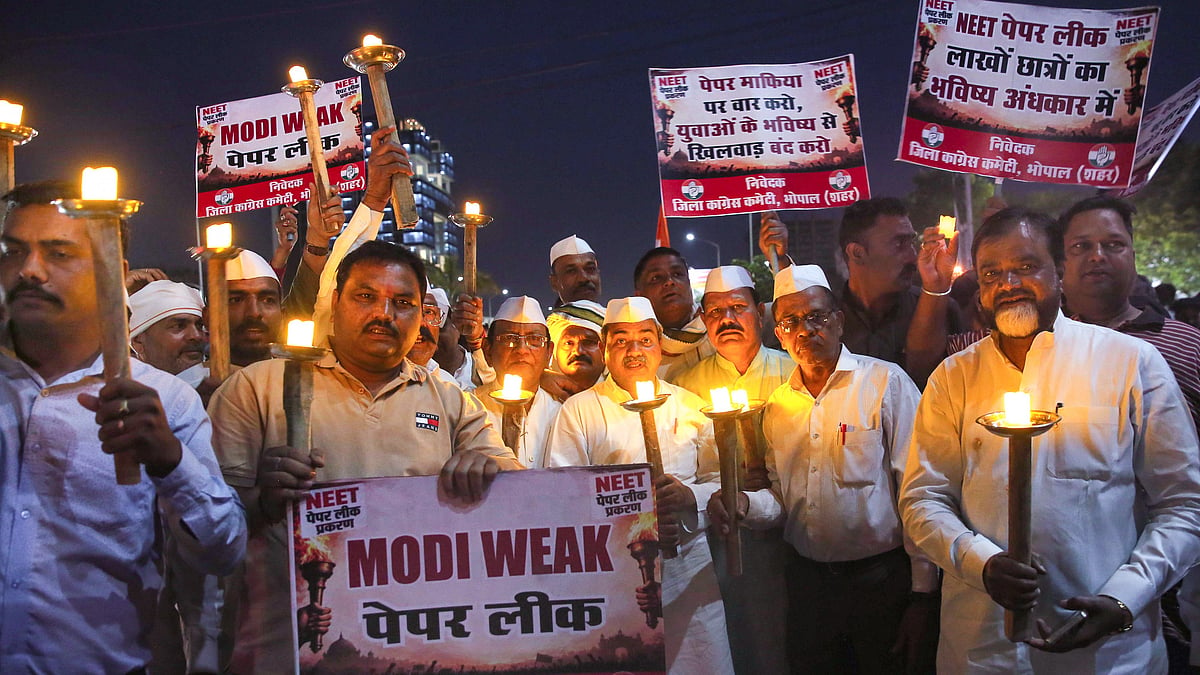
Delhi court questions CBI closure of 2024 UGC-NET paper leak case amid NEET controversy

A Delhi court has pulled up the Central Bureau of Investigation for closing its probe into the 2024 UGC-NET paper leak case despite recording that an accused had allegedly collected money from candidates by promising leaked question papers.

The development comes amid a nationwide controversy over the cancellation of this year’s NEET-UG examination following allegations of paper leaks and malpractice.

Additional Chief Judicial Magistrate Neetu Nagar at Delhi’s Rouse Avenue Court on Friday sought a written explanation from the CBI over the closure report filed in January 2025.

In an order dated 15 May, the court pointed to paragraph 16.30 of the agency’s closure report, which stated that accused Nikhil Soni had allegedly “collected money from the aspirants of the UGC-NET 2024 by luring them on pretext of giving/leaking the exam paper”.

“It is manifest that crime has been committed as per the contents of para 16.30 but still the investigating officer has ignored the same and filed a closure report for reasons best known to him,” the judge observed.

Following the court’s remarks, the investigating officer sought time to submit a written explanation. The matter has now been listed for hearing on 21 May.

Probe had concluded evidence was ‘doctored’

The UGC-NET examination held on 18 June 2024 for more than nine lakh candidates across 317 cities was cancelled by the Centre a day later after inputs from the Ministry of Home Affairs suggested that the integrity of the examination “may have been compromised”.

The alleged evidence involved screenshots purportedly showing the question paper circulating on Telegram before the examination.

The CBI, which took over the investigation on 23 June 2024, later concluded that there was no actual paper leak.

In its closure report filed earlier this year, the agency claimed forensic analysis showed the screenshots had been digitally manipulated by a school student using a mobile application to falsely create the impression that the paper had been leaked before the exam.

The agency said its findings were based on analysis of digital trails and Telegram messages linked to claims of the leak.

The court’s observations have now reignited scrutiny over the handling of major examination leak cases at a time when the Centre is facing mounting criticism over alleged irregularities in competitive examinations.

Delhi court questions CBI closure of 2024 UGC-NET paper leak case amid NEET controversy
  •  

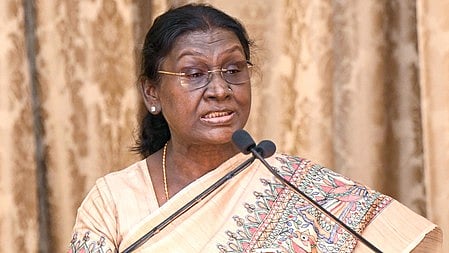
Droupadi Murmu approves increase in SC judge strength from 33 to 37

President Droupadi Murmu has promulgated the Supreme Court (Number of Judges) Amendment Ordinance, 2026, increasing the sanctioned strength of judges in the Supreme Court of India from 33 to 37, excluding the Chief Justice of India, in a major move aimed at tackling mounting case pendency and speeding up the delivery of justice.

The ordinance raises the total sanctioned strength of the apex court to 38 judges, including the Chief Justice of India.

Announcing the development, Union minister of state (independent charge) for law and justice Arjun Ram Meghwal said the president had approved the expansion through an ordinance amending the Supreme Court (Number of Judges) Act, 1956.

“The President is pleased to increase the Judge strength of the Supreme Court from 33 to 37 Judges (Excluding the Chief Justice of India) by promulgating The Supreme Court (Number of Judges) Amendment Ordinance, 2026,” Meghwal posted on X.

The President is pleased to increase the Judge strength of the Supreme Court from 33 to 37 Judges (Excluding the Chief Justice of India) by promulgating The Supreme Court (Number of Judges) Amendment Ordinance, 2026, which has further amended the “Supreme Court (Number of Judges)…

— Arjun Ram Meghwal (@arjunrammeghwal) May 16, 2026

The move comes shortly after the Union Cabinet, chaired by Prime Minister Narendra Modi, approved a proposal to amend the 1956 law and introduce the Supreme Court (Number of Judges) Amendment Bill, 2026 in Parliament.

According to the government, the decision was taken in response to the increasing workload of the apex court and the steady rise in pending litigation across the country.

Officials said the expansion in judicial strength is expected to improve the efficiency of case disposal, reduce delays in hearings and strengthen the overall functioning of the judiciary.

The Supreme Court’s sanctioned strength has been revised multiple times since the original legislation was enacted in 1956 to keep pace with rising judicial demands.

The last major revision came in 2019, when Parliament increased the number of judges from 30 to 33, excluding the Chief Justice of India, through the Supreme Court (Number of Judges) Amendment Act, 2019.

Legal experts view the latest expansion as a significant step towards improving judicial infrastructure and enhancing citizens’ access to timely justice, particularly at a time when courts across India continue to grapple with heavy case backlogs.

With IANS inputs

  •  
❌