Reading view

Xi-Trump summit: reset for US-Chinese relations but tension over Taiwan remains

The initial top line emerging from the Trump-Xi summit in Beijing was that while the two leaders had talked trade, technology and the US war in Iran, the most potentially hazardous issue was Taiwan. The Chinese foreign ministry reported that the Chinese president, Xi Jinping, told the US president, Donald Trump, that “the Taiwan question is the most important issue in China-US relations”.

Handled properly, China’s statement said, relationship between China and the US will remain stable. “If handled poorly”, Xi told the US president, “the two countries will collide or even clash, putting the entire US-China relationship in an extremely dangerous situation.”

A White House statement didn’t mention Xi’s warning over Taiwan, instead focusing on the two leaders’ agreement that the Strait of Hormuz must be kept open and the importance of China buying US agricultural produce and curtailing the flow of fentanyl precursors into the US.

In other words, the two sides’ reports neatly reflected their respective priorities.

So, despite the warm words and bonhomie at the subsequent banquet at which the two leaders raised glasses to each other over lobster, beef ribs and Beijing roast duck, there is clearly the potential for a serious misunderstanding over Taiwan. Last week a bipartisan group of senators sent a letter to the US president urging him to sign off on a US$14 billion (£111 billion) package of arms to Taipei. If he proceed with this, it would seriously hamper any efforts the two leaders might make to stabilise relations between the two countries.

The problem, write international affairs specialists Nicholas Wheeler and Marcus Holmes, is that the two sides come at the issue from completely different directions. For the US, continuing to provide Taiwan with state-of-the-art US defence weaponry is about deterring Chinese aggression. For China, US arms sales to Taiwan are themselves an aggressive move.

The situation is fraught with possibilities for misunderstanding. But surely this is what summits are for, argue Wheeler and Holmes. They recall the crisis in 1983 sparked by a US military drill that the Soviet Union convinced themselves was a preparation for a real nuclear strike by the US. It was Ronald Reagan’s realisation that “maybe they are scared of us and think we are a threat” which led him to develop warm relations with the next Soviet leader, Mikhail Gorbachev, precipitating a new era in arms control.

Maybe this week’s summit could help the pair to – as Xi put it – “make 2026 a historic, landmark year that opens up a new chapter in China-US relations”.


Read more: Trump-Xi summit: in a high-stakes meeting the two leaders can’t afford to misread each other


Where would this new era leave Taipei? Distinctly nervous, you’d have to think. As Trump prepared to leave for Beijing, he commented that he was planning to discuss US arms sales with Xi – which, as Andrew Gawthorpe notes – breaches one of the Six Assurances that has been part of America’s policy towards Taiwan since the 1980s.

Gawthorpe, an expert in US foreign policy at the University of Leiden, cautions that the Trump administration breaking one of these promises could embolden Xi to press Trump on the other five, which include a US commitment on Taiwanese sovereignty.

The fact is, Gawthorpe concludes, if US arms sales to Taiwan are on the table now, they a likely to stay there, which could prove perilous for Taiwan if the US wants any major concessions, say on China’s support for Iran.


Read more: Trump-Xi summit: US president says he will discuss arms sales to Taiwan – breaking decades of US policy


Xi talked about his hope that the summit could work towards “a new paradigm of major-country relations”. The importance of this bilateral relationship was a theme the Chinese president returned to several times in the meeting, at one point referencing what he called the “Thucydides trap”, which refers to the stresses that occur when a rising power challenges an established one. (You may recall Canadian prime minister Mark Carney made reference to the revered Greek historian in his widely praised Davos speech in February.)

But where was Russia in all this? Stefan Wolff, professor of international security at the University of Birmingham, observes that any stabilising of relations between Washington and Beijing is likely to come at Moscow’s expense and will certainly be a blow to Vladimir Putin’s aspiration to restore his country to great power status.

So as not to be left out, Kremlin spokesman Dmitry Peskov announced as Xi and Trump toured the Temple of Heaven in Beijing (an honour that has yet to be afforded to Putin) that preparations are underway for the Russian president to visit China “very soon”.

That’s not to say that Putin’s “no-limits friendship” with Xi is at threat, writes Wolff. But he observes that “the Xi-Trump summit is a party to which Putin was not invited”, which “indicates that his efforts to make his presence felt have largely failed”.


Read more: Why Putin will have been watching the Trump-Xi summit nervously


Damp squib for Putin

It hasn’t been a great week for the Russian president, all things considered. On May 9, what has traditionally been a red letter day for Vladmir Putin – Russia’s Victory Day celebration – proved to be something of a damp squib.

Ukraine’s recent successes in long-range drone attacks, one of which successfully struck a luxury high-rise apartment block less than ten miles from Red Square, prompted Putin to scale back the parade. What is usually a showcase of Russia’s military might, parading tanks, ballistic missile launchers and an array of other state-of-the-art weaponry in front of invited world leaders, was reduced to a march past with a couple of Putin allies and assorted second world war veterans.

Russia-watcher Jennifer Mathers of Aberystwyth University has examined the Victory Day parades since the Ukraine war begin in 2022 and believes they reflect Russian national morale. This year’s, she says, saw Russia looks “fearful, diminished and isolated”.


Read more: Fearful, diminished and isolated: what this year’s Victory Day parade in Moscow tells us about Russia’s war against Ukraine


Caspian Sea

With all the attention – understandably – on the Strait of Hormuz in recent weeks, little has been written about the Caspian Sea. But the world’s largest landlocked body of water has played an important role in both the Iran and Ukraine wars.

During the Ukraine war, Iran used it to supply Russia with Shahed drones, now Russia is returning the compliment. The two countries have also found it useful in avoiding western sanctions on trade in all manner of other goods.

Here’s a piece from maritime security expert Basil Germond, of Lancaster University on just how significant the Caspian Sea has become.


Read more: Why the Caspian Sea has become so important in both the Ukraine and Iran wars


The Conversation
  •  

After an opaque summit, China and the US want to work together again. That might not be good news for the world

Back in 2005, US economist Fred Bergsten coined the term “Group of 2” or “G2”, proposing a stronger partnership between what are now the world’s two largest economies – the United States and China.

In the aftermath of the global financial crisis a few years later, economic cooperation between these two countries briefly seemed to attest to the success of efforts at integrating China into a liberal rules-based order.

To be sure, the ostensible G2 was not meant to replace the larger, formalised G20 group of major economies, so much as strengthen it. Underpinning the broader G20’s response to the global financial crisis, the US enacted an initial US$787 billion fiscal stimulus, while China provided its own US$586 billion stimulus. This helped avert a much larger global economic catastrophe.

This week’s summit between US President Donald Trump and Chinese President Xi Jinping heralds a different sort of G2. On Friday, Trump claimed the countries had struck some “fantastic trade deals”. But anyone hoping for details of such deals – on tariffs, rare earths or Iran – was left disappointed on Friday afternoon.

Whatever may have transpired, US–China cooperation no longer automatically implies positive spillover effects for the rest of the world. Instead, in 2026, the G2 appears, at best, to be a private bargain between two great powers, imposing hidden costs on those outside, looking in.

The Trump administration has ushered in a noticeable shift in how the US views its economic interests: no longer premised on shared liberal values, but on spheres of influence among great powers. The key question, therefore, is not whether the US and China can cooperate. It is what kind of order their cooperation will produce.


Read more: Trump-Xi summit: 3 ways the US and China can compete without going to war


West and East

An older economic contrast is useful here.

In the wake of the second world war, the Western bloc (led across the US, the United Kingdom, and Western European states) was united by a shared commitment to a Keynesian global order (under the Bretton Woods system) that sought freer trade in goods while preserving national economic autonomy.

In contrast, the Eastern bloc (led by the Soviet Union) organised trade through what was called the Council for Mutual Economic Assistance (Comecon), trading many goods between countries through planned barter arrangements, instead of for cash.

The irony for the present day is that the Trump–Xi agenda looks more like the old Eastern bloc’s approach.

In this light, the clearest sign that a G2 may be working outside the G20 or larger rules-based order is not that Washington and Beijing are talking. It is the range of issues that may be managed, tying together such concerns as tariff relief, airplane orders, rare-earths access, chip restrictions, Taiwan and Iran.

In each of these cases, it’s reasonable the two countries would want to coordinate their policies. But together, they point to a new global order where two superpowers increasingly call the shots in their own interests.

Chips and rare earths

Rare earths and advanced chips are the clearest example. Beijing wants access to the advanced semiconductors necessary to dominate the artificial intelligence race.

Washington wants rare earths and critical minerals whose importance has become more acute as the conflict with Iran has strained US stocks of missiles, drones, air-defence systems and other high-end military technologies.

If these are traded against one another, the summit is not about economic liberalisation. It is about whether strategic technologies remain national-security constraints or become bargaining chips in a bilateral deal.

An entourage of executives

The business delegations that have accompanied Trump on this trip point in the same direction.

The presence of executives such as Nvidia’s Jensen Huang, Apple’s Tim Cook, Tesla and SpaceX’s Elon Musk (not to mention others from Qualcomm, Citigroup and Boeing) gave the summit the appearance of a commercial negotiation.

Reported agreements on aircraft orders, agricultural purchases, investment forums and corporate access may all be presented as signs of economic normalisation.

But the question is not only whether US firms gain market access. It is whether commercial wins help stabilise a great-power bargain whose geopolitical costs are borne elsewhere.

Any deal the countries eventually reach on tariffs will likely have the biggest market impacts. But the deal itself could matter less than the optics, allowing Trump to claim a business victory.

This might calm markets in the short term, but it highlights the potential for a retreat from rules-based multilateral liberalisation in the longer term.

A warning on Taiwan, near silence on Iran

The question of Taiwan loomed large over this week’s summit. On Thursday, Xi gave an unusually direct warning to Trump, saying if the issue was not handled properly, the two countries could see “clashes and even conflicts”.

In a larger sense, the danger is not necessarily a formal US concession on Taiwan. It is that Taiwan and other regional actors bear the external costs of a private bargain.

If Taiwan becomes one variable in a wider negotiation, the costs of US–China cooperation may fall on those not in the room.

Iran and oil broaden the same logic. If Trump has pressed Xi to use China’s influence over Tehran, he is not simply asking for diplomatic help. He is treating Beijing as a co-hegemon in a great-power bargain based on order for some – the US and China – and exclusion for others.

This kind of G2 can undermine the global public good. It will also test whether middle powers like Australia, Canada and European countries can keep their seat at the table where decisions are made or, as Canadian Prime Minister Mark Carney put it, risk being “on the menu”.

The Conversation

Wesley Widmaier receives funding from the Australian Research Council.

  •  

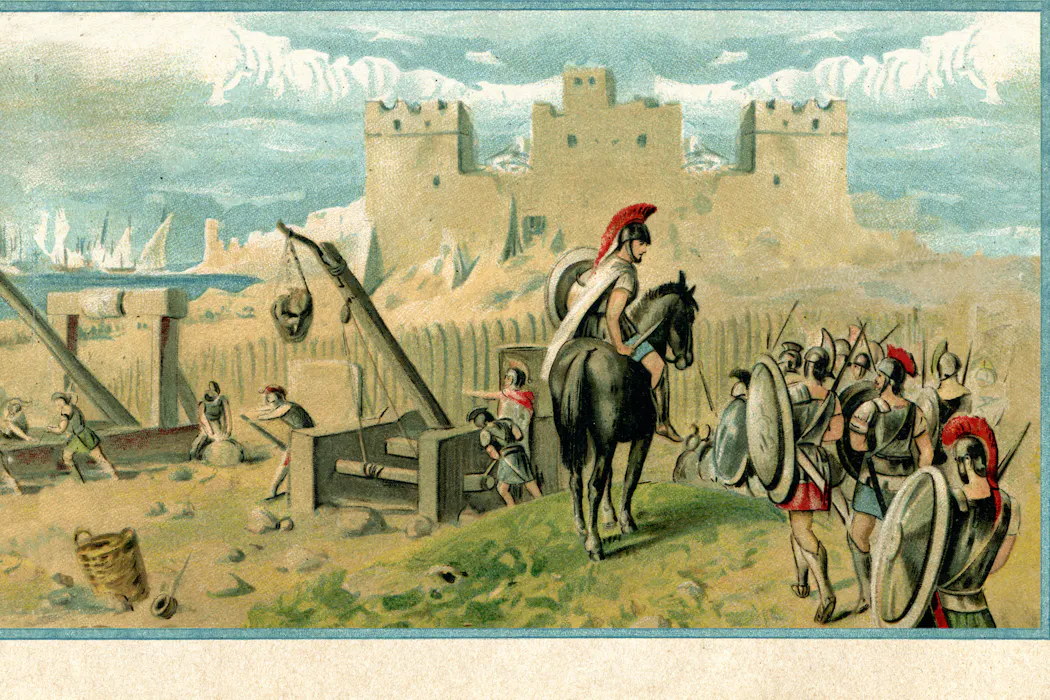
What is the ‘Thucydides trap’ Xi warned Trump about? Lessons from an ancient war between Athens and Sparta

Grafissimo/Getty

During their high-stakes meeting in Beijing this week, Chinese President Xi Jinping reportedly asked US President Donald Trump if the two countries could overcome the “Thucydides trap”.

This phrase, popularised by contemporary US political scientist Graham Allison in the early 2010s, is used to describe how two countries can drift toward war when an existing superpower feels anxious about an emerging one. Allison had China and the US in mind specifically.

It takes its name from Athenian historian and general Thucydides, who wrote the History of the Peloponnesian War, about the 27-year war between Athens and Sparta that broke out in 431 BCE.

But what did Thucydides really say on this? And what do Athens and Sparta have to do with the current state of US–China relations?

An implied fumble

The implication in the term “Thucydides trap” is that the established superpower manages the rising power badly and feels obliged to go to war when that’s not necessarily the only option.

It is based on a quote from Thucydides’ History of the Peloponnesian War (book one, chapter 23). He said:

The growth of the power of Athens, and the alarm which this inspired in Lacedaemon [Sparta], made war inevitable.

In other words, Thucydides is saying what made the Peloponnesian War inevitable was the rise of Athenian power.

At the time, lots of Greeks were saying Athens and Sparta had gone to war again because of smaller disputes.

But Thucydides says no, the real cause was the overall fear that Sparta (the traditional superpower) had for the new powerful state: democratic Athens.

The general idea, of course, is that in its anxiety about the rise of China, the US may tend toward war when other options are available.

But many scholars of ancient Greece take issue with the way the term is used today.

A contested term

The word “trap” implies Sparta made a mistake in 431 BCE and could’ve handled things better. But that’s not what Thucydides really narrates in book one of his History of the Peloponnesian War.

He shows that, in fact, Sparta had good reason to fear the rising Athenians. Athens was, by then, a predominate naval power in the Balkans and the Aegean Sea. It was stripping allies off Sparta left, right and centre, and beating up the ones that refused to defect.

Those allies basically said to Sparta in 432 BCE: listen, you have got to do something about Athens and if you don’t act, we will join them.

It was pressure from these allies that pushed the Spartans to act against Athens.

So yes, in a sense Sparta’s own anxieties about ever-increasing Athenian power led to war. Sparta felt compelled to wage total war against Athens to maintain its system of alliances, and in 431 BCE broke the peace treaty it had with Athens.

A longer-term perspective

More generally, the term “Thucydides trap” is about how over the longer term things didn’t turn out so well for Sparta; although they won the Peloponnesian War, it took them 27 years to do so.

And after the victory, Sparta engaged in a huge expansion to become an even greater superpower. That ended up making all the other Greeks very fearful for their security. This growth in Spartan power after 404 BCE caused many of its allies to become enemies. All those Greek states then came together to confront Sparta, which was completely and utterly destroyed in 371 BCE at the Battle of Leuctra.

The whole security architecture of Sparta collapsed; they lost all their allies, all their slaves were liberated and Sparta was reduced to just a minor state.

So the lesson for the US implied in the term Thucydides trap is that fear of superpowers is a potent shaper of international affairs.

But many people who use the term Thucydides trap forget to mention what happened to Athens in the longer term.

Athens survived the Peloponnesian War and restored its democracy and military, and became a regional power. But what’s fascinating is that by the early 4th century BCE Athens was under immense pressure from the Persian empire, which was many times more powerful than any Greek state.

So Athens clipped its own wings and gave up on being this huge Mediterranean superpower; it decided to forego any attempt to reassert its imperial control over the many Greek states of Anatolia, allowing them again to be subjects of the Persian empire.

Athens decided to focus more closely on the Aegean Sea and give up on fighting Persians; it recognised the constraints of its power.

So it’s not as though Sparta’s decision to enter war with Athens in 431 BCE led, in the long run, to total world domination by Athens.

A lesson for today

The history of the Peloponnesian War provides important lessons for China–US relations today.

One is that it may be foolish for an established superpower to check the rise of an emerging one. Sparta learned that trying to do so can come at a terrible cost.

Accommodating Athens would have allowed Sparta to continue as a superpower well into the fourth century.

Another lesson is that an established superpower, such as the US, can cut back its ambitions and focus on regions closer to home.

This is exactly what democratic Athens did after the Peloponnesian War. Doing so allowed it to flourish culturally and politically and keep enemies well away until the 310s BCE.

The Conversation

David M. Pritchard receives funding from the ARC.

  •  

Museums have always been entangled with European imperialism. Will the world’s first ‘AI art’ museum be any different?

Dataland will open at the Frank Gehry designed The Grand LA. RDNE Stock project/Pexels

The “world first museum of AI arts” is scheduled to open next month in a 35,000 square feet purpose-built facility in downtown Los Angeles.

Dataland is the brainchild of Refik Anadol and Efsun Erkiliç, artists known for using artificial intelligence and vast datasets to create large-scale immersive art projects.

The “living museum” will present a continuously evolving immersive, audiovisual experience based on millions of images, sounds and scents from nature. As an indication of what it will be like, Dataland’s website presents phantasmagorical images of ecological wonder and awe.

Anadol says he wants Dataland to

develop a new paradigm of what a museum can be, by fusing human imagination with machine intelligence and the most advanced technologies available.

But behind its futuristic facade and the fleeting cultural landscapes hosted inside, the museum has much deeper historical roots.

The birth of the museum

A clear connection exists between the aspirations and dreams of Dataland’s founders and the 19th century fascination with emerging technologies. Large-scale exhibitions promised new forms of public spectacle and commercialised entertainment.

The Crystal Palace exhibition was held in London in 1851. Its purpose-built glass and iron building was considered a technological marvel.

Sepia photograph – a great hall with interesting machines.
The Great Exhibition at Crystal Palace, featuring the hall of works of industry of all nations. Attributed to Ferrier & F. von Martens, C.M., 1851/Rijksmuseum

Visited by over six million people, it was designed to promote Britain as an industrial power.

It showcased more than 100,000 objects from around the globe. These included locomotives, hydraulic presses, agricultural products and musical instruments. Its most famous item was the world’s largest-known diamond, acquired from India two years earlier for Queen Victoria.

The “midway” at the 1893 Chicago World’s Fair was famous for its exhilarating amusements and living exhibits.

Premier attractions were the world’s first Ferris wheel and the world’s first commercial movie theatre. It also featured human display villages, or “human zoos”, that reinforced racist colonial hierarchies.

Colour illustration.
The world’s first Ferris wheel – designed by George Ferris – at the Chicago World Fair. Field Museum

This era kicked off the modern public museum movement in Europe and the United States. Early museums were rooted in Enlightenment ideals of industrial and technological progress, civic education and national identity.

Museums including the South Kensington Museum (1857) and the Smithsonian’s Graphic Arts Department (1897) extended visitor fascination with new technologies such as cinema and railway travel, and sold mass-produced souvenirs of exotic and intriguing cultures.

Just as we today express conflicted views about AI-generated art, 19th-century audiences needed to learn how to respond to new cultural forms. Entertainment was key.

They quickly learnt viewing motion pictures was a social and public activity, improved if they suspended disbelief and expressed individual reactions.

The most well-known (albeit exaggerated) account describes an 1895 screening of a Lumière Brothers film. As the moving image of a train seemingly hurtled toward the audience, viewers are said to have screamed and ducked under seats.

Global exploitation

There is a darker side to the 19th-century precursors of Dataland.

The project’s dataset is a large nature model (LNM) – an open-source model trained on half a billion images sourced “ethically” from partner institutions including the Smithsonian in Washington, DC, and London’s Natural History Museum.

These images are complemented by data gathered by Anadol’s team from 16 rainforests “from Chile to Indonesia to Australia”.

Dataland’s website does not provide provenance information about partner institution’s source collections. But we know they would likely include 19th century specimens.

Natural history collecting was a lucrative industry in the 19th century. The increasing ease with which people and commodities were able to travel the world expanded supply chains and the global industry of specimen transfer.

Black and white photo: sharks suspended over display cases.
London’s Natural History Museum, photographed in 1881. Courtauld, CC BY-NC-SA

Museum collecting was deeply entangled with the violent, systemic processes of European imperialism, colonial expansion and scientific exploitation.

Dataland promotes its “permission-based” approach to using data from institutions. It cites contemporary collaboration with the Yawanawá people of the Amazon as “radically responsible”.

It also insists it manages the environmental impact of the museum’s consumption of natural resources.

But Dataland does not appear to apply its own ethical standards for producing collections from rainforests to the vast historical resources it sources from its partner museums.

It is silent on the obligations it may have to contemporary descendants of communities from which specimens and knowledge were extracted. It provides no guardrails about appropriate cultural protocols or safeguards for anyone wanting to access or learn more about any of its collections.

This approach is out of step with the United Nations Declaration on the Rights of Indigenous Peoples. The declaration enshrines the rights of Indigenous peoples to self-determination over their data. This includes traditional knowledge and ownership over natural resources.

Many of the kinds of institutions Dataland has partnered with are now seeking to repair the loss of Indigenous knowledge, cultural heritage and authority caused by colonial collecting.

The Natural Sciences Collections Association UK explains this reparative work is

proactive in telling hidden truths however difficult, about how we got our collections – [we must] acknowledge we have them, but at what cost?

The lack of transparency and self-awareness regarding the large nature model’s use of historical collection materials is a significant oversight. It echoes criticism that AI art does not adequately seek human consent or offer credit or compensation for contemporary art.

Dataland is a museum of the future. But it cannot outrun the historical and very human legacies of the form it has chosen to align itself with – the museum.

The Conversation

Kylie Message does not work for, consult, own shares in or receive funding from any company or organisation that would benefit from this article, and has disclosed no relevant affiliations beyond their academic appointment.

  •  

We proved these ‘forever chemicals’ can last longer than three decades

The fresh air, picturesque vistas and pristine bush of the Blue Mountains west of Sydney draw millions of visitors a year.

Unfortunately, the Blue Mountains are also the site of a controversial investigation into water contamination with “forever chemicals”, also called PFAS.

Our recent study investigated long-term PFAS contamination from two incidents, both involving petrol tanker crashes and fires. Both accidents occurred in drinking water catchments, and our study found contamination was present but undetected for 24 and 33 years, respectively. We have searched the international literature and could not find similar examples.

PFAS (Perfluoroalkyl and polyfluoroalkyl substances) are a broad category of thousands of synthetic chemicals used in numerous consumer and industry products. Exposure to PFAS is associated with a greater risk of several illnesses.

Our research shows how vulnerable drinking water supplies are to long-term PFAS contamination. It also shows how contamination can remain hidden due to an absence of PFAS monitoring.

Two historical accidents

The 1992 petrol tanker accident in the Blue Mountains at Medlow Bath caused PFAS contamination of the local drinking water supply. And 32 years later it forced the closure of two storage reservoirs.

Despite limited data, we identified the source of contamination as a type of foaming material used globally by firefighters to help extinguish burning fuel fires. This foaming substance was mixed with water using perfluorooctane sulfonate, a type of PFAS.

Firefighters used this substance to form a foam “blanket” and coat burning materials and extinguish liquid fires. The PFAS foams were used for decades before their harmful human health and environmental impacts were understood.

Nine years after the first petrol tanker accident, another fuel tanker crash and fire linked to PFAS contamination occurred in 2000, near Ourimbah on the NSW Central Coast. The fuel tanker was carrying 40,000 litres of fuel, and the crash and fire were triggered by a collision with a car. This resulted in the tragic death of two people.

Similar to the Medlow Bath accident, news footage showed water and foam were used to control the blaze. It also showed a foamy runoff draining from the accident.

Why are PFAS a problem?

PFAS, often called “forever chemicals”, are a broad category of thousands of synthetic chemicals. They are used in numerous products, such as non-stick cookware, stain-resistant fabrics, takeaway food packaging and even cosmetics.

PFAS molecules don’t easily break down, and readily accumulate in tissue of wildlife across the globe. Exposure to small amounts of PFAS sees the chemicals build up in the vital organs of animals and people. Analysis of human autopsy tissue revealed accumulation of PFAS in the brain, lungs, liver, kidney and bones.

In 2025, an Australian Bureau of Statistics report revealed nearly all Australians have PFAS chemicals accumulating in our bodies.

Should we be worried?

Exposure to PFAS is associated with a greater risk of several illnesses. These include decreased fertility, higher blood pressure, increased risk of cancer (particularly prostate, kidney and testicular cancers), liver disease, higher cholesterol and obesity.

One of the humans are likely to consume PFAS is through eating foods containing PFAS and in drinking water.

The Upper Blue Mountains water supply serves about 40,000 people, and operated by Sydney Water Corporation. It reported that one of the most hazardous forms of PFAS, PFOS, reached 16.4 nanograms per litre in the local drinking water on June 25 2024. This is double the safe amount, according to the recently revised Australian drinking water guidelines.

Discovery of PFAS triggered the closure of two drinking water reservoirs downstream of the Medlow Bath petrol tanker crash and fire. Although a lack of testing data creates uncertainty, it is likely PFAS contamination was undetected in the Blue Mountains drinking water supply for more than 30 years.

What our study showed

Our study showed contaminated creek water contained 2,000–2,400ng/L of PFOS in October 2025. This is 250–300 times the maximum safe concentration (less than 8ng/L) recommended by the Australian Drinking Water Guidelines.

The Blue Mountains contamination plume extended downstream into Greaves Creek, in the upper Blue Mountains. This creek is part of the UNESCO Blue Mountains World Heritage Area, where PFOS levels exceeded aquatic ecosystem guidelines by 100 times. The safe level of PFOS concentration for protection of freshwater species is 0.23ng/L.

As far as we know, the PFAS contamination identified in this study has not received any remediation to remove contaminated soil or water. Most PFAS contamination across Australia has occurred at sites where PFAS foam was used in repeated fire fighting training activities. Our work shows even single incidents involving PFAS can have long-lasting environmental impacts.

The Conversation

Ian A. Wright has received research funding from industry, local, NSW and Commonwealth Government. He has previously worked for the water industry (Sydney Water) as a scientist and catchment officer.

Amy-Marie Gilpin receives funding from the research and development corporation Hort Innovation.

Katherine Warwick receives funding from the water industry (Sydney Water), WIRES, local and state government bodies.

  •  

Iran is threatening undersea cables. The world’s ‘digital chokepoints’ have never been more vulnerable

imaginima / Getty Images

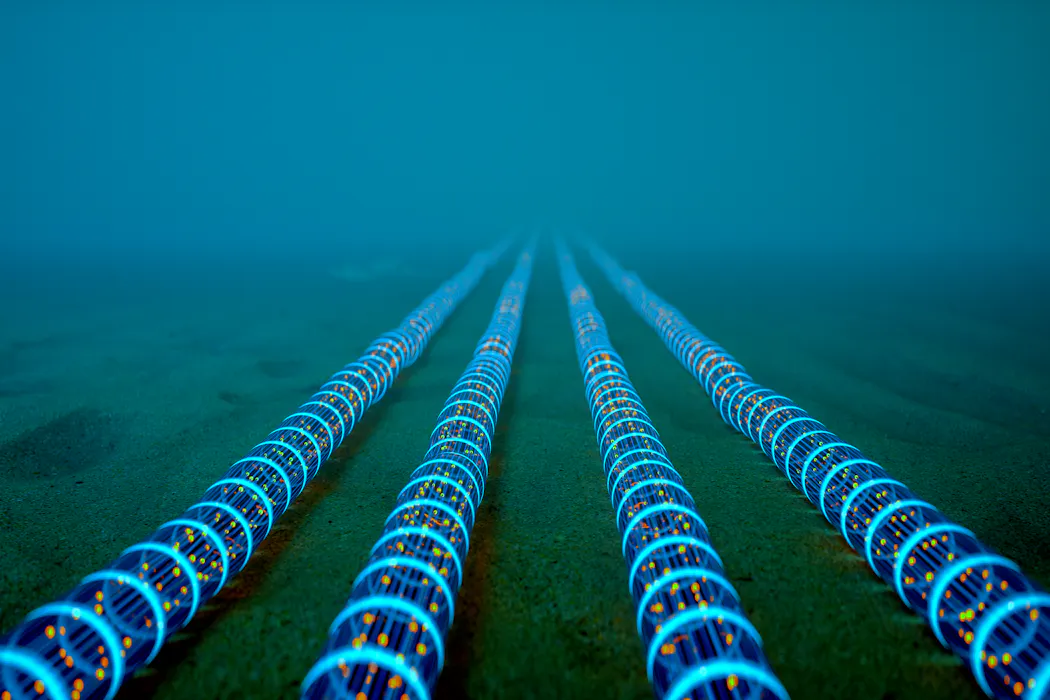
Early this week, Iranian state-linked media floated a plan to charge the operators of undersea internet cables in the Strait of Hormuz for access to what they say is Iran’s offshore territory.

The suggestion comes after Iranian warnings that several important cables in the strait were a vulnerable point for economies in the Middle East.

Iran’s comments expose an invisible foundation of the internet and globalisation itself: the web of more than 500 undersea cables that carries more than 95% of international data traffic.

We may think the internet lives in a kind of virtual cloud. But its physical underpinnings are vulnerable – and that vulnerability is becoming a very real geopolitical concern.

Gulfs, straits and cables

Several of the world’s most critical submarine cable routes run through the Middle East. Narrow sealanes through the Red Sea, Bab el-Mandeb Strait, Suez Canal, and the Strait of Hormuz also function as “digital chokepoints”.

These maritime corridors connect major economic centres in Europe, Asia and Africa. In 2024, submarine cable incidents in the Red Sea disrupted around 25% of the internet traffic between Europe and Asia.

The strategic importance of submarine cables is not lost on Iran. Damage to these cables, whether accidental or deliberate, would have significant consequences.

In the bigger picture, the message is unmistakable. Digital infrastructure can give states strategic leverage, but it’s also a potential target.

Digital infrastructure

Critical infrastructure used to mean oil pipelines, ports, or power grids. But data infrastructure has become just as important for national and economic security.

The core problem of undersea cables lies in the concentration of infrastructure. Many of the cables are bundled together along the same seabed routes and funnelled through a small number of maritime chokepoints.

This creates dangerous single points of failure. A cable cut – whether deliberate or accidental – can degrade connectivity across multiple regions simultaneously.

While cable breaks are not uncommon, repairs are difficult – especially in contested or militarised waters. Repair vessels require safe access, international coordination, and time.

Fragmentation and disruption

A serious submarine cable disruption could have profound consequences. One immediate effect would be the fragmentation of global connectivity. The ability to communicate with anyone anywhere that we now take for granted could take a significant hit.

Regions which depend heavily on vulnerable cable routes might experience degraded internet performance, communications blackouts, or financial instability. Countries with little backup infrastructure, particularly developing states across parts of Africa, the Middle East, and South Asia, would be disproportionately affected.

Financial markets too are vulnerable. Extremely fast and reliable data flows underpin high-frequency trading systems, global payment networks, and international banking transactions.

Even brief disruptions can make markets fluctuate rapidly, delay transactions, and make investors uncertain. Because so much of the global economy is so thoroughly interconnected, digital instability in one region can rapidly create worldwide financial shockwaves.

If cable disruptions coincided with conflict or instability along major maritime trade routes such as the Strait of Hormuz or the Suez Canal, insurance markets, shipping industries, and energy supply chains would also face increased uncertainty.

The military domain

The military and strategic consequences of cable disruption may prove even more serious. Armed forces rely on secure long-range communications and real-time coordination.

When you get down to it, everything from command-and-control systems to drone operations and logistics planning relies on undersea cables. Damage to these networks would make forces less effective, make it harder to coordinate with allies, and make miscalculations more likely.

Cable sabotage is not as clear-cut a provocation as a conventional attack on a military target. It’s hard to work out who did it – in cases such as cable breakages in the Baltic Sea often attributed to Russian action – and the legal situation is ambiguous. This ambiguity creates a risk that conflict will escalate, as states may struggle to determine whether disruptions are accidental, criminal, or acts of war.

The digital world has physical foundations

The US–Iran conflict has already delayed construction of new undersea cables. It also highlights a broader reality: the foundations of the digital world are real and concrete, and they are not invulnerable.

Any deliberate targeting or sabotage would not just be a local event. It would reverberate across global communications, economies, and security systems. The seabed has become a zone of geopolitical competition – and the consequences of disruption could affect the world’s stability for years to come.

The Conversation

Meredith Primrose Jones does not work for, consult, own shares in or receive funding from any company or organisation that would benefit from this article, and has disclosed no relevant affiliations beyond their academic appointment.

  •  

Who are the main contenders to replace Keir Starmer as prime minister?

It has become a given in Westminster circles that Keir Starmer’s tenure as prime minister could be nearing its end. This is because, fairly or unfairly, the UK public have made up their minds – and they do not like him.

Labour MPs know this all too well, having seen the level of animosity on the doorstep during recent election campaigns in England, Wales and Scotland. They just didn’t immediately know what to do about it. But then Wes Streeting quit as health secretary, criticising Starmer in his resignation letter for what he said was a “vacuum” where political vision was required.

Recent UK history is full of precedents when prime ministers found their position untenable. For the Conservatives, Theresa May, Boris Johnson and Liz Truss were all removed eventually. But such a course of action comes with costs: to party unity, to market sentiment, and in terms of how the voters view political shenanigans.

This is why, until now, the more thoughtful voices in the Labour party either kept their counsel or argued for caution. But a significant number of Labour MPs believe that a change at the top is now inevitable.

Streeting, Rayner or Burnham

From the right of the party, Streeting, the combative former health secretary, is the key figure to challenge Starmer. But he still requires the backing of at least 81 fellow Labour MPs.

A Streeting bid for the leadership would be supported by much of the media, but what many regard as his lukewarm re-tread of old Blairite orthodoxies would limit his appeal with the party membership. And members play a significant role in leadership contests.

By contrast, a likely candidate of the so-called “soft left”, former deputy prime minister Angela Rayner, has now cleared up her tax affairs and is more popular with the party rank-and-file. But she would alienate much of the London commentariat.

What neither Streeting nor Rayner possess is genuine cut-through with the wider British public. And this is where the current mayor of Greater Manchester, Andy Burnham, comes in. Burnham does not have a parliamentary seat and, although he intends to contest the Makerfield constituency made vacant by Josh Simons’ decision to step aside, it is not guaranteed that he will win. Given Labour’s current unpopularity, the party cannot assume it would win a by-election anywhere.

And even if Burnham did scale that hurdle, there is a real danger that his replacement as the Labour candidate for the mayoralty would lose to Reform UK. This would allow party opponents to portray Burnham’s move as an indulgence at the expense of the party.

Nevertheless, if the political stars were to align and Burnham navigates his passage back to Westminster in time for a leadership challenge, he would be a formidable opponent. Burnham not only outpolls his main rivals among Labour members, he also enjoys rare net approval ratings with the public (+6, compared with -12 for Rayner and -20 for Streeting). Labour MPs will be paying particular attention to those numbers.

There is strong reason to believe that Rayner will have a crucial role in how this plays out. This could either be by standing for leader herself or through working with Burnham. Either way, she is in an incredibly influential position.

And what would Labour and the country look like under new leadership? The revolving door at the top partly reflects the extent of the challenges (economic, political, cultural) that the country faces. Voters have not seen rises in their real living standards for two decades, are truly angry and deeply polarised.

The UK is divided on how to go forward, and so is the Labour Party. That is why potential challengers to Starmer really should be careful what they wish for. Much of the political instability of recent years is down to the collective obsession with politics as a short-term and personality-based kind of show business.

But this ignores the more worrying long-term developments in financial markets that indicate that there is no faith in the UK’s ability to tackle its structural problems any time soon. The eventual winner of Labour’s leadership drama may inherit the throne just as money markets’ patience with the UK runs out.

The Conversation

Charles Lees does not work for, consult, own shares in or receive funding from any company or organisation that would benefit from this article, and has disclosed no relevant affiliations beyond their academic appointment.

  •  

Baloch insurgency: Suicide bombs and uptick in violence threaten Pakistan, regional security

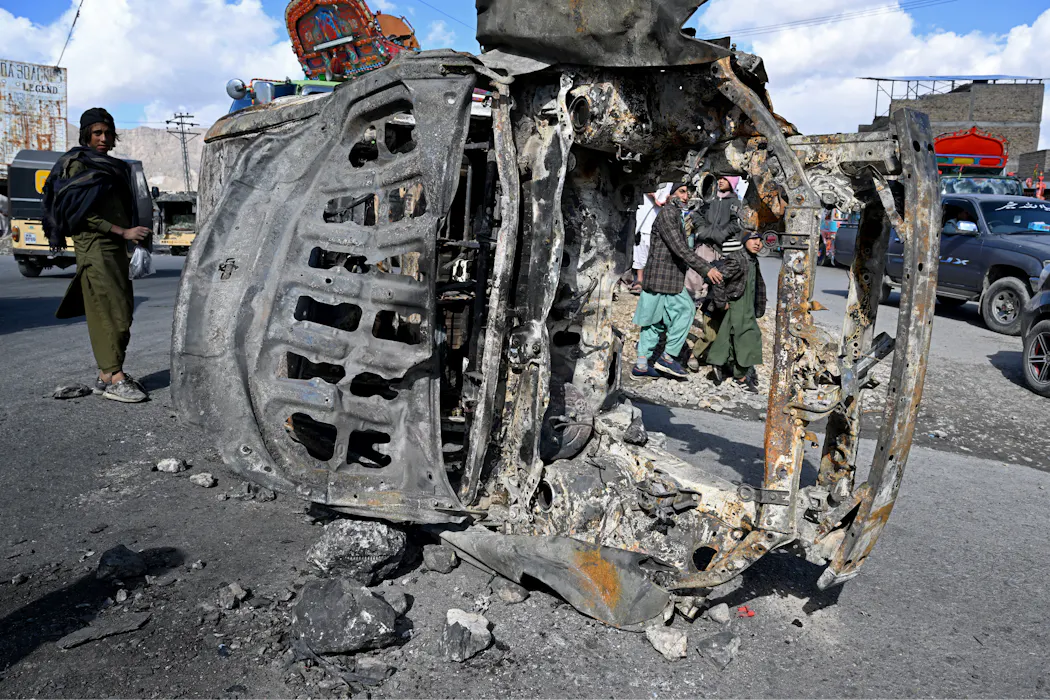
The aftermath of an attack by Baloch separatists in Quetta, Pakistan, on Feb. 1, 2026. Banaras Khan/AFP via Getty Images

In the space of 10 days in late April 2026, insurgents in Pakistan purportedly carried out 27 attacks in the country’s southwest province of Balochistan, killing at least 42 military personal. Then, on May 11, authorities announced that a suicide bombing plot on the capital, Islamabad, had been foiled. Authorities arrested a girl over the incident – a nod to militants’ increasing use of young Baloch women to carry out attacks.

These incidents represent the latest flaring up of a long-running insurgency in Pakistan’s largest province and home to around 15 million people.

For a rundown of what you need to know about the Baloch insurgency and groups involved, The Conversation turned to Amira Jadoon and Saif Tahir, experts on militant and terrorist organizations currently researching such groups’ operational activities and strategic messaging in Afghanistan and Pakistan.

What is the Baloch insurgency about?

Pakistan’s southwestern province of Balochistan has long been the site of resistance and armed movements involving Baloch, an ethnic group of an estimated 8 million to 10 million people that straddles parts of Pakistan and Iran.

Their insurgency is rooted in both contemporary and historical grievances. Its origins trace back to the contested annexation of the princely state of Kalat in 1948, months after the partition of British India into India and Pakistan, and the resulting confrontations between Baloch tribal leaders and the newly formed Pakistani state.

While the insurgency long remained a low-level struggle framed around Baloch marginalization and economic exploitation, it turned violent in the early 2000s with the rise of militant factions, including the Balochistan Liberation Army, or BLA, in 2000 and the Balochistan Liberation Front, or BLF, which was revived in 2004 under current leader Allah Nazar Baloch decades after its 1964 founding. The insurgents’ goals vary, from greater autonomy and control over the province’s natural resources to full independence.

Baloch militants generally cast their emergence as a nationalist rebuttal to the Pakistani government’s long-standing narrative, which states that the unrest is driven by a handful of tribal chiefs resisting development rather than a broad-based movement.

In practice, the contemporary insurgency has expanded well beyond its tribal base, and Baloch militant groups have invested heavily in strategic communications that directly challenge the Pakistani state’s framing.

Today, Baloch militants’ propaganda targets the local educated youth, including women. They play on existing grievances over enforced disappearances, state repression and resource extraction. Balochistan is home to significant deposits of copper, gold, natural gas and coal, including at the Reko Diq mine, one of the world’s largest undeveloped copper and gold reserves. Yet the province remains Pakistan’s poorest.

Baloch militants’ efforts are designed to broaden the insurgency’s appeal, adding an urban, middle-class layer to what was once a primarily tribal revolt that casts itself as a struggle to defend the Baloch “motherland” and achieve national liberation.

The Baloch insurgency has emerged as one of Pakistan’s most consequential internal security challenges. In 2025, the BLA claimed 521 attacks and 1,060 security-force fatalities, though independent monitoring records substantially fewer attacks, at around 254 events, in Balochistan over the same period.

Two Baloch militants’ operations bookend the recent escalation. In March 2025, BLA fighters hijacked the Jaffar Express – a heavily used passenger train connecting Quetta, the capital of Balochistan, to Peshawar in northwestern Pakistan – holding more than 350 passengers in a 30-hour siege. In April 2026, the group announced a new naval wing, the Hammal Maritime Defence Force, following its first maritime attack on a Pakistan coast guard vessel near Jiwani, in Gwadar district.

These tactical innovations have been reinforced by deliberate efforts at broadening the support base for Baloch separatism. The 2018 formation of Baloch Raji Ajohi Sangar, an alliance of Baloch militant groups, and the 2020 entry of the non-Baloch Sindhudesh Revolutionary Army, a Sindhi separatist group based in neighboring Sindh that has extended Baloch militants’ operational reach into Karachi, signal an expanding ethno-regional coalition aimed at broadening the geographic and ideological scope of the insurgency.

Why the uptick in violence now?

Four converging factors explain the recent escalation.

First, the Pakistani state’s crackdown on peaceful political space in recent months has accelerated social discontent. Following the March 2025 Jaffar Express attack, prominent Baloch rights defender Mahrang Baloch was arrested under anti-terrorist laws, while three protesters were shot dead at a peaceful sit-in in Quetta.

As nonviolent avenues close, aggrieved civilians become more receptive to Baloch militants’ recruitment narratives.

Second, Baloch militants have acquired U.S. weapons left behind in Afghanistan during the 2021 withdrawal, including M4 and M16 rifles fitted with thermal optics. Recent reports have linked the arms used in the Jaffar Express attack directly to abandoned U.S. stockpiles in Afghanistan.

Third, militant operational collusion has deepened between the Balochistan Liberation Army and the Tehrik-i-Taliban Pakistan, the latter ranked by the Institute for Economics and Peace as the world’s fastest-growing insurgent group in 2024.

Despite the groups’ divergent ideologies, the cooperation appears to have produced clear tactical convergence, including town takeovers, the use of suicide bombings, and sniper and ambush tactics.

Finally, Baloch groups have excelled in the effective use of social media to influence and recruit educated young people, including women.

A man in a gun stands in the middle of a street.
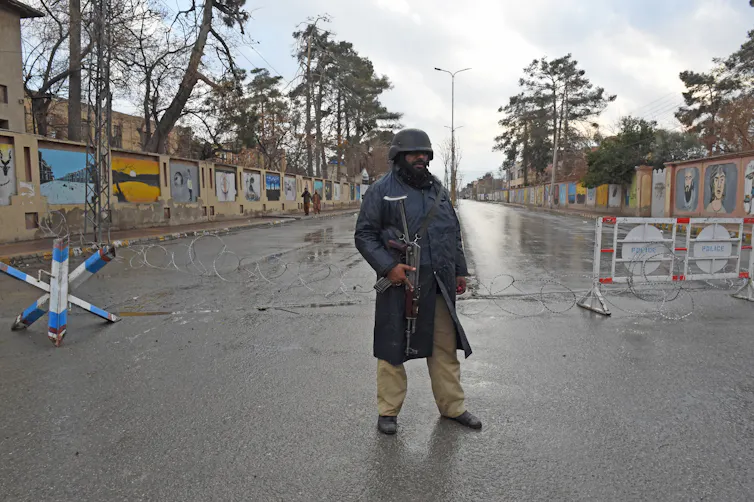
A policeman stands guard near the blast site in Quetta after an attack by Baloch separatists on Jan. 31, 2026. Adnan Ahmed/AFP via Getty Images

The BLA’s elite Majeed Brigade has formalized a women’s wing, and the use of female suicide bombers has now spread across multiple Baloch factions. At least five known cases have been reported since 2022.

The deployment of women is strategic: Female operatives present a softer public face and yield both reputational and tactical benefits, evading security profiling, expanding target reach and amplifying media impact.

Has the insurgency been affected by the Iran war?

Tehran’s destabilization creates new tactical space for insurgents. Ethnic Baloch communities straddle the Pakistan-Iran border, and the BLA already maintains a presence in Iran’s Sistan and Baluchestan province.

The “Greater Balochistan” narrative promoted by Baloch nationalists, which envisions the reintegration of Baloch lands across both states, is gaining traction on the Iranian side. Moreover, weaker border enforcement gives militants greater freedom to move, recruit and coordinate.

Cross-border trade flows have dropped sharply since the war in Iran began, but the disruption is more likely to expand than to shrink Balochistan’s illicit economy over time. As state enforcement weakens on both sides of the border, the cross-border fuel and narcotics smuggling networks that Baloch militants tax and target are likely to expand further.

The cross-border problem had already escalated to interstate confrontation. In January 2024, Iran and Pakistan exchanged tit-for-tat strikes on Baloch militant groups operating across their shared border.

Counterterrorism coordination between the two countries remains modest, and attacks have continued, including the killing by militants of Pakistani migrants inside Iran as recently as April 2025.

With Iran’s stability weakening, these dynamics are likely to deepen, potentially raising tensions between Islamabad and Tehran over separatists in the future.

How are Pakistan-US relations affected?

The Baloch insurgency is now also an increasingly important focus of a warming U.S.-Pakistani relationship.

In August 2025, the U.S. State Department designated the BLA and its Majeed Brigade as foreign terrorist organizations – a move Islamabad had long pressed for.

Months later, the U.S. Export-Import Bank approved US$1.3 billion for the Reko Diq copper-gold project in Balochistan, its single largest critical minerals investment to date.

The current insurgency directly contests Pakistan’s capacity to deliver security in Balochistan. The Reko Diq mine lies in the same district where Zareena Rafiq, a BLF-affiliated female suicide bomber, struck a base of Pakistan’s federal paramilitary force on Nov. 30, 2025.

Further, in April 2026, a BLF commander declared that the group would target all foreign companies operating in Balochistan, regardless of country of origin.

Yet the present alignment between the U.S. and Pakistan is transactional: Its durability depends on Pakistan delivering on counterterrorism, mediation with Iran and mineral access.

Meanwhile, absent a counterinsurgency approach that addresses the underlying political and social drivers of the Baloch insurgency – including state repression, political marginalization and resource grievance – the broader U.S.-Pakistan reset is unlikely to deliver the stability its investments require.

The Conversation

The authors do not work for, consult, own shares in or receive funding from any company or organization that would benefit from this article, and have disclosed no relevant affiliations beyond their academic appointment.

  •  
❌