Your immune system has one job: to protect you. And most of the time, it does that job like a pro.
But occasionally it gets a bit overzealous, even paranoid. It mistakes harmless, even wonderful things—flowers, peanuts, cats—for threats, and attacks them (and you—mostly you) with a senseless, chaotic vengeance.
For most allergy sufferers, this might mean giving up a few tasty foods, staying inside during high pollen counts, or rehoming the cat—or, more realistically, the person allergic to the cat. But for a tiny number of people, the immune system decides to take aim at one of the most essential substances on earth: water.
Yes, it is possible to be allergic to water. And the condition is even stranger than it sounds.
“Imagine not being able to go into the pool, or the lake, or the ocean,” says dermatologist Dr. Amir Bajoghli, who has treated a patient with this rare condition. “My patient also has to take much faster showers, as you might imagine. It definitely interferes with quality of life.”
Yes, you can be allergic to water
The medical term for an allergy to water is aquagenic urticaria, a form of hives. The condition is so rare that only an estimated 100 to 150 cases have ever been reported. However, researchers believe many more cases go undiagnosed: When a patient comes in complaining of hives, “it could be water” is probably not the first thing that leaps to mind.
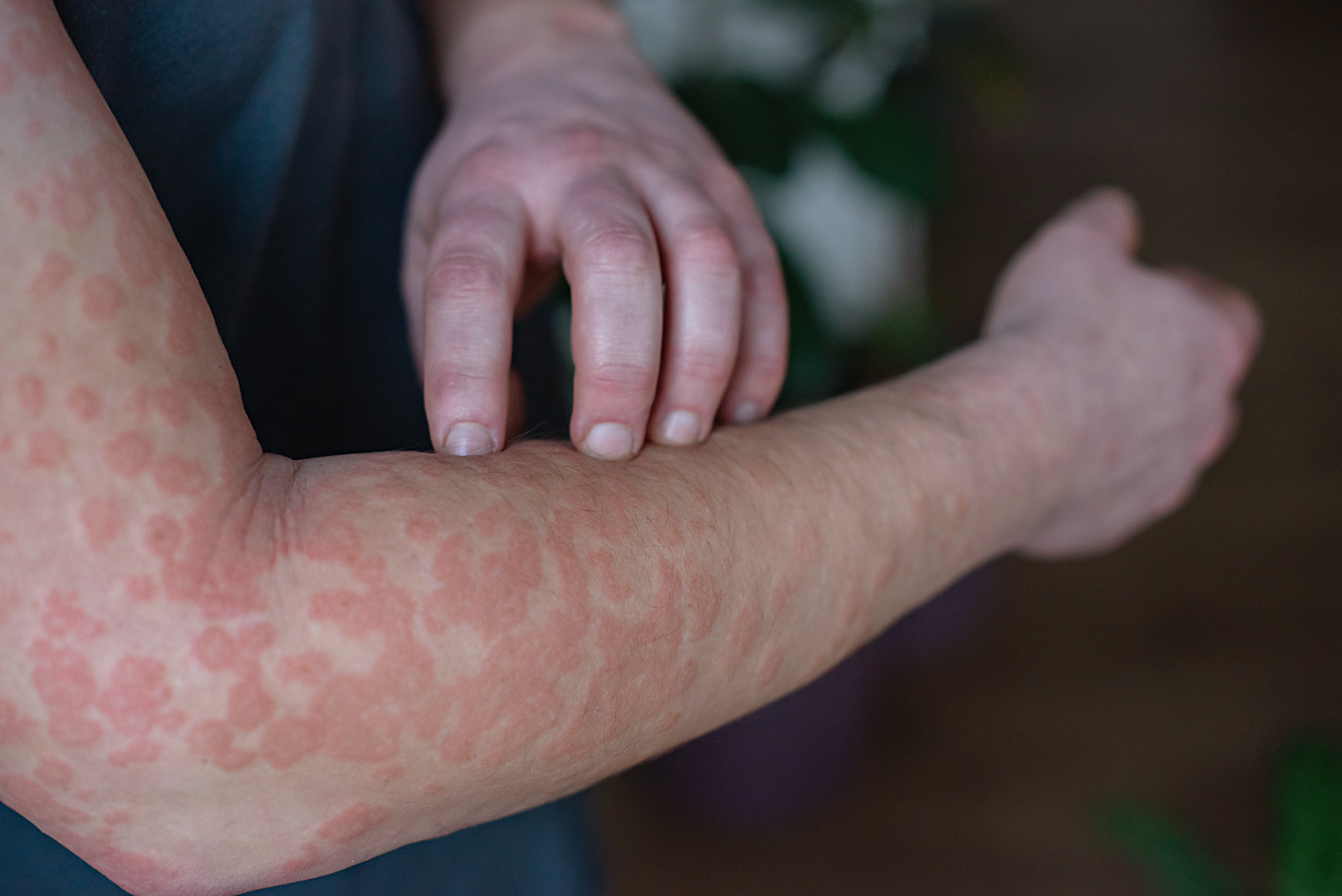
People with this rare condition break out in hives like these when exposed to water. Image: Getty Images / Yuliia Kokosha
“Honestly, a lot of general physicians aren’t even aware of it,” says Bajohgli, an adjunct professor at Georgetown University School of Medicine. “It’s rare, and it’s not on their radar.”
Although scientists don’t fully understand exactly how aquagenic urticaria works, they believe water itself isn’t the culprit. Rather, it appears that certain people’s skin responds differently to water contact, setting off a reaction in the skin’s outermost layer. This triggers the body’s mast cells (immune cells that sound the alarm during allergic reactions), which releases histamine, the troublemaking chemical responsible for allergic responses.
Within minutes of water touching the skin, a person with aquagenic urticaria will develop raised, intensely itchy welts. The reaction typically lasts anywhere from 30 minutes to an hour, and the longer the exposure, the more severe the symptoms.
You can still drink water, but sweating can be a problem
Interestingly, and luckily, aquagenic urticaria does not interfere with the body’s need for life-sustaining hydration. In other words, drinking water is fine. When water is swallowed and processed by the gut rather than absorbed through the skin, it doesn’t trigger the same immune response, Bajoghli says.
“The gut, just like the skin and the lungs, is one of the first forms of defense,” he says, “but in this case, somehow, it’s not eliciting the response in the gut the way it does in the skin.”
Bajoghli notes that some patients with aquagenic urticaria do react to their own sweat, although his patient does not. Sweat, he explains, involves an entirely different biological process than external water making contact with the skin.
Scientists believe an unidentified substance in the skin may be triggering this reaction, although much remains unknown.
“It’s still, medically, for us, a mystery,” he says.
How to test if you’re allergic to water
For better or worse (mostly better), water is inescapable. Because of its ubiquity, and also because aquagenic urticaria is something of a medical unicorn, it often takes a while for patients or doctors to connect the dots.
Once it occurs to the patient and provider that water could be the culprit, diagnostic testing is fairly straightforward. It typically involves applying water-soaked compresses to the skin and waiting. In most positive cases, symptoms appear within five minutes, although the test can take up to 30.
“We wait 30 minutes before we call it negative,” Bajoghli says.
The importance of very quick showers
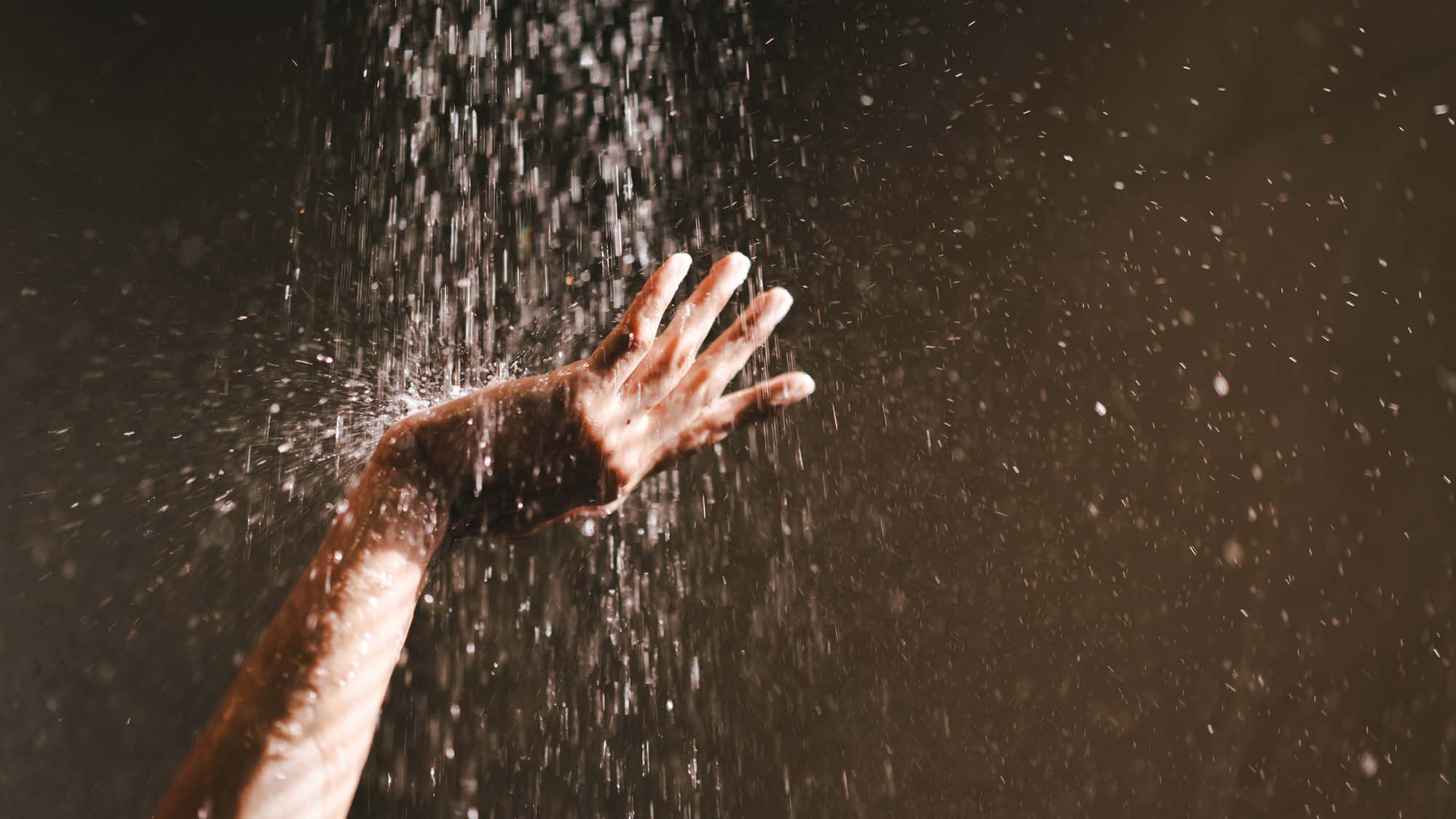
So, what is life like for a person whose body treats H₂O as a sworn enemy? For Bajoghli’s patient, an active teenager involved in sports, the condition reshapes even the most basic daily routines. Among other things, this means really fast showers.
“When he showers for about two minutes, the symptoms are more subdued and milder in nature,” Bajoghli says. “If he takes a longer shower, they’re more severe and they persist longer.”
The good news is that aquagenic urticaria is unlikely to cause a major allergic reaction. It is, however, chronic; patients should not expect it to resolve on its own.
Treatment options do exist, however. Bajoghli’s patient takes an antihistamine called cyproheptadine, which reduces symptoms enough to make that two-minute shower manageable. Timing is important: taking the antihistamine about an hour before water exposure helps maximize its effectiveness.
For patients who need more relief, Bajoghli says a newer drug called omalizumab has shown promise.
For now, the mechanisms behind aquagenic urticaria, including the identity of the substance—or antigen—that triggers it, remain poorly understood, and that knowledge gap makes it difficult to develop more targeted treatments.
“We’re really looking forward to finding out what that antigen is,” Bajoghli says, “and hopefully one day solving this.”
In Ask Us Anything, Popular Science answers your most outlandish, mind-burning questions, from the everyday things you’ve always wondered to the bizarre things you never thought to ask. Have something you’ve always wanted to know? Ask us.
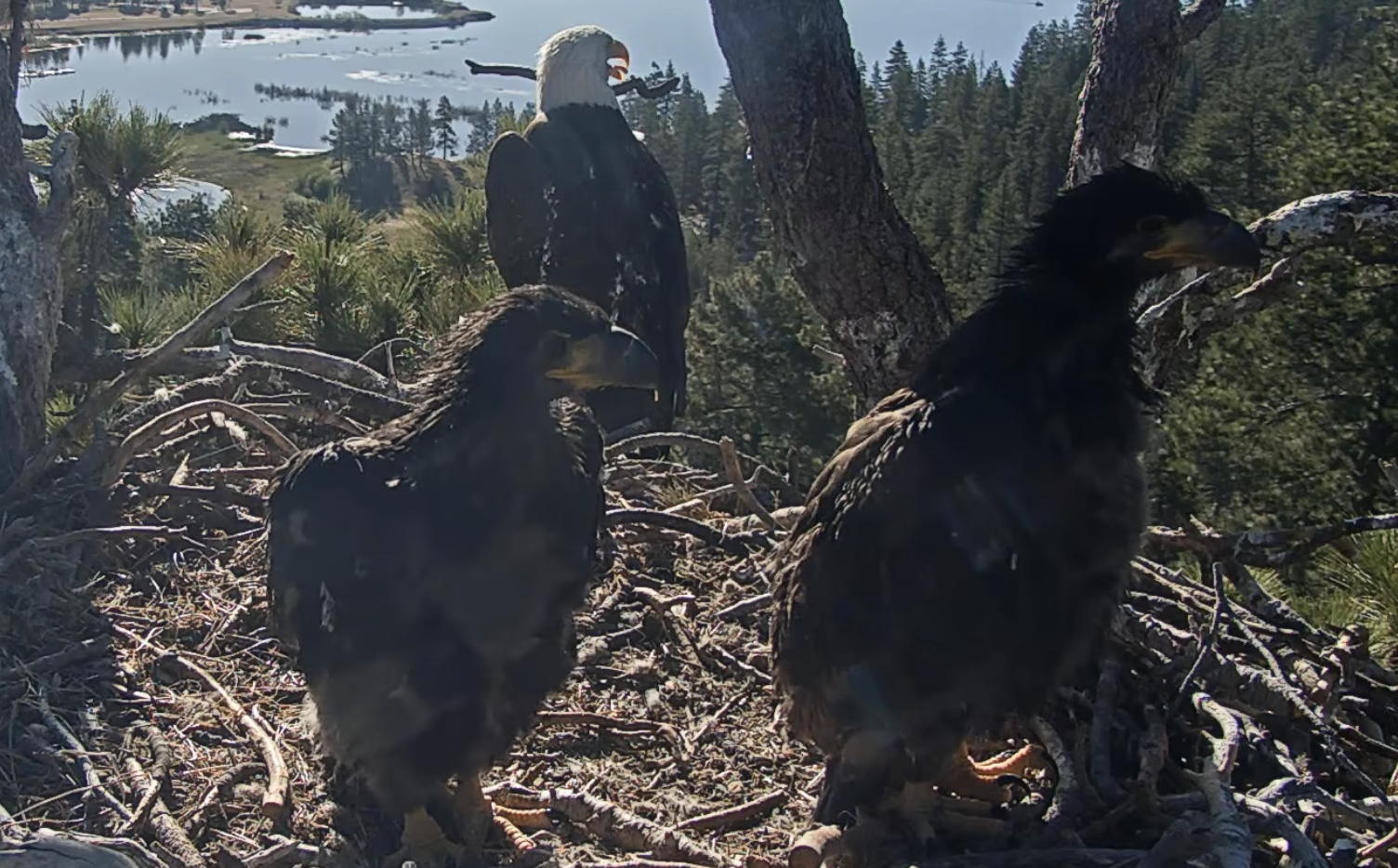
The babies are growing up. Since hatching in early April, Jackie and Shadow’s eaglets have sprouted new feathers, developed keen vision, and now, they’re practicing some vital grownup skills. Sandy and Luna can be seen engaged in lively wing-flapping sessions. While it might look a little awkward, the movement helps the chicks develop their pectoral muscles, an essential step in learning to fly.
“It [also] helps them learn the ‘wingspan’ of their own bodies so they don’t hit the nest walls or their siblings,” Friends of Big Bear Valley (FOBVV), the non-profit group that maintains the eagles’ livestream, explains. But don’t expect them to fly away anytime soon. The chicks are only about six weeks old and fledging won’t happen until 10-14 weeks of age. Last year, Sunny and Gizmo each fledged around 13 weeks.
Viewers might also notice the pair stomping around their nest. Again, the eaglets aren’t exactly graceful, but this behavior is important. Bald eagles are raptors, or birds of prey, so learning how to hunt is essential to long-term survival. “This is an instinctual behavior to ‘pin’ prey down,” FOBBV explains. “Because they are top-heavy at this age, stomping helps them find their center of gravity as their legs grow longer and stronger.” Although, yes, they do occasionally stomp on each other’s toes.
It’s been another roller coaster nesting season for Jackie and Shadow, a pair of internet-famous bald eagle parents living in San Bernardino National Forest in Southern California. After two of their eggs were destroyed by ravens in January, Jackie and Shadow laid two new eggs that have successfully hatched.
Chick 1 hatched on April 4 at 9:33 p.m. PDT, while Chick 2 followed on April 5 at 8:30 a.m. Their large nest in Big Bear Valley east of Los Angeles is livestreamed 24 hours a day by nonprofit Friends of Big Bear Valley (FOBBV) and has captivated millions.
On May 1, FOBBV announced the chicks’ names: Sandy and Luna.
Before leaving the nest, the chicks face threats from other birds of prey, including hawks, ravens, other eagles, and owls. Inclement weather can also present challenges for the chicks. In 2025, a March snowstorm resulted in the death of one of Jackie and Shadow’s three chicks.
During fledging, only 70 percent of eaglets survive. One of the greatest threats is from cars that can injure or kill the birds while they scavenge for food on roadkill.
Who are Jackie and Shadow?
The pair first got together in 2018 and successfully raised chicks in 2019 and 2022. However, their eggs failed to hatch in 2023 and 2024. Only 50 percent of eagle eggs successfully hatch, so this pair has already beaten the odds.
What happened to Jackie and Shadow’s 2025 eaglets?
In 2025, Jackie laid three eggs that all hatched in early March. On March 13, a strong snowstorm dumped up to two feet of snow and battered the nest with strong winds. Only two of the chicks were visible on the live cam when the storm passed by the next morning. FOBBV later confirmed the passing of one of the chicks. The two surviving chicks were later named Sunny and Gizmo after 54,000 names were submitted by fans.
What happens after chicks fledge?
Young eagles usually fledge–or leave the nest and fly–when they can flatten their wings and have feathers capable of flight. This typically occurs when the birds hit 10 to 14 weeks of age. Males also tend to take their first flight a little sooner than females.
According to FOBBV, fledglings from Southern California have been spotted as far south as Baja California, as far north as British Columbia, and as far east as Yellowstone National Park.
About 70 percent of bald eagles survive the fledgling stage. FOBBV does not tag their eagles, so it’s not possible to follow the chicks’ journeys after they flee the nest.
Can I help Jackie and Shadow?
Yes. Environmental groups are currently fundraising $10 million to protect Jackie and Shadow’s foraging area from development. Learn more at SaveMoonCamp.org.
Your Google account likely stores a lot of important information, from your home address in Google Maps and your work emails in Gmail, to family pictures in Google Photos and personal conversations in Google Chat. You don’t want anyone else gaining access to that data—and nor does Google.
To minimize the chances of anyone else accessing your account, Google has created a Security Checkup tool that you can use in any web browser. It takes you quickly and simply through a security audit, warning you about potential issues without overloading you with settings and menu screens.
If you’re logged into Google in your web browser, you can get to the Security Checkup tool from this page. Alternatively, you can find it from your Google account page, by clicking Security and sign-in (the Checkup should appear at the top).
Devices and sign-ins
Any causes for concern will be flagged for you to review. Screenshot: Google
The Security Checkup will alert you to pressing problems that have been identified, but you can work through each section in turn, whether or not there are related issues. To start, you can see the devices that you’re currently signed into Google on under Your devices. It will also list their location, operating system, and when you last used them.
If there’s anything you don’t recognize here, or there’s a device you no longer have, you can disconnect it from your account remotely. It’s best to err on the side of caution here—if you accidentally disconnect a device that is actually genuine and that you are still using, the worst that’s going to happen is you’ll need to sign in again on that device.
Then we’ve got the Sign-in and recovery section. This contains crucial information about how your account is accessed, so make sure everything here is in order, and up to date. For example, you might be asked to confirm your backup email address and phone number, which will be crucial (and trusted) communication channels for Google to use should you somehow get signed out of your account.
Many devices now use passkeys, where you use something like a PIN code or a fingerprint scan to access your accounts. You can also see a list of passkeys you’ve set up here—and again, as with the list of devices, passkeys can be revoked if you see something that might be a problem (such as an authorization you don’t recognize).
Then you have the Your saved passwords section. If you’re using Android and Google Chrome to save login credentials to your Google account, then the stored passwords will appear here. Google will warn you if any passwords have been repeated or aren’t strong enough (usually because they’re not long or complex enough).
Browsing and activity
Review the apps and services that are connected to your Google account. Screenshot: Google
The Safe Browsing section of the Security Checkup is specifically for users of the Chrome browser, and gives you extra, proactive protection against dangerous websites and extensions. However, it also requires a greater level of data sharing with Google (so it can check your activity), and can feel restrictive for those who feel confident recognizing threats themselves—so the choice is yours.
Open Recent security activity, and you see a detailed list of all security-related activity on your Google account across the last 28 days. This will include activity such as devices you’ve signed in on, or deleted data you’ve recovered (something a hacker could potentially attempt to do). If anything here looks suspicious, you can alert Google.
Under Your third-party connections, you can see apps, sites, and services that have some kind of connection to Google. Maybe you use your Google credentials to log into them, for example, or they’re utilities that you use to manage your Google Photos account. Google-made smart home devices may also appear here.
The rules are the same as they are with connected devices: If you see anything that shouldn’t be there, you can break the link. The app or site in question will no longer have access to your Google account and its data. If you need to use it again, you’ll need to reapprove the connection. It’s a good idea to regularly review this list, to make sure older services that you no longer regularly use have been removed.
The final part of the Google Security Checkup is Gmail Settings, and from here you can view and make changes to email accounts you’ve blocked, and email accounts you’ve connected to. If you see anything that’s not right, you’re able to make changes. And with that done, your security checkup is complete—and your Google account should be significantly more secure than it was before.
Social media is widely considered to be bad for one’s mental health, at least anecdotally. However, it can have some positive impacts, such as videos of animals chewing food very loudly. What could possibly be better than a closeup of an animal’s snout as it crunches on a carrot?
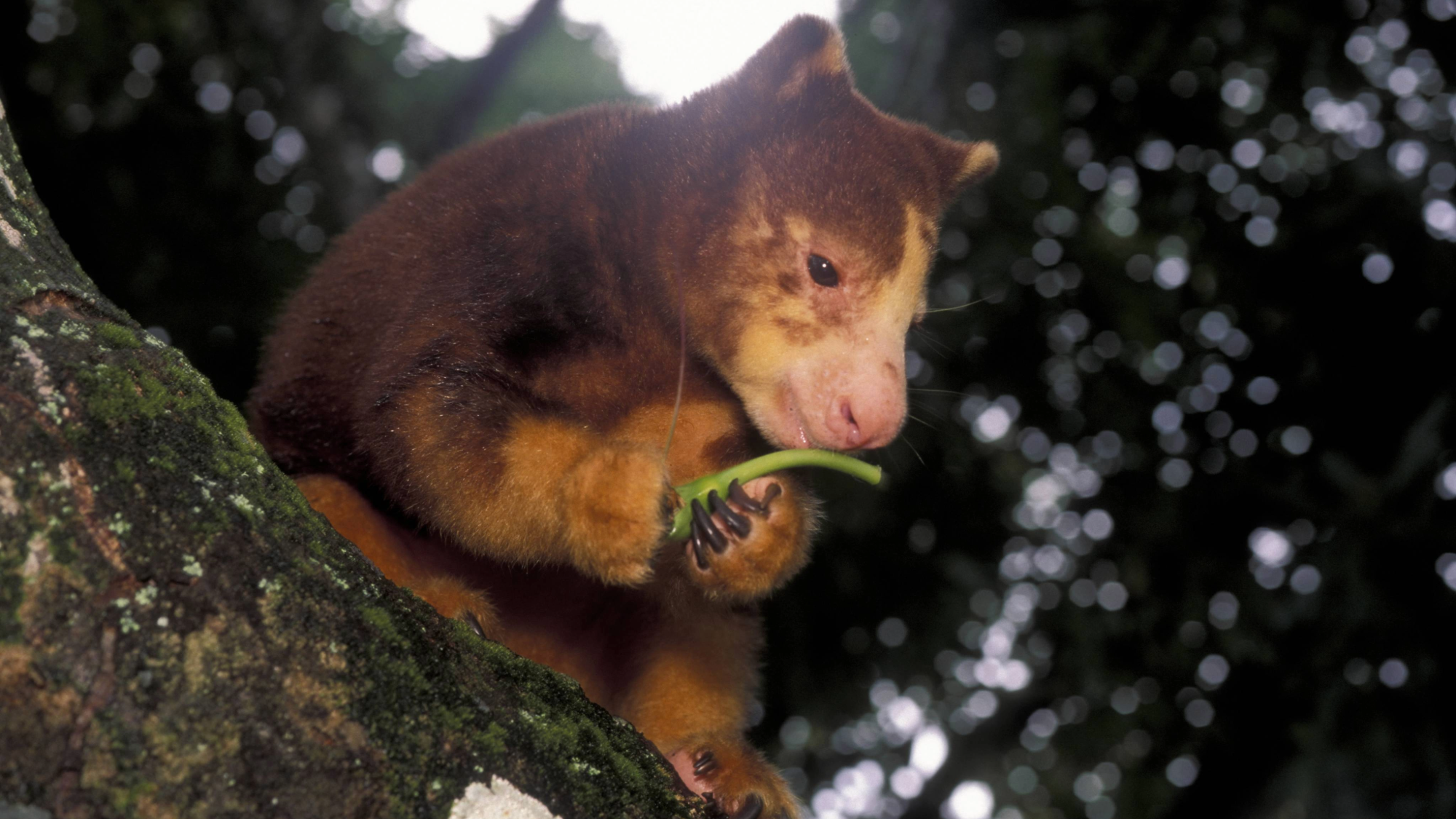
This week, zoos around the United States have been using social media to highlight one particularly cute muncher—tree kangaroos. Ahead of World Tree Kangaroo Day on May 21, conservation organization AZA SAFE (Saving Animals From Extinction): Tree Kangaroo of Papua New Guinea is inviting organizations working with tree kangaroos to compete in this year’s International Tree Kangaroo Crunch-a-Thon.
In the aptly-named competition, participants posted videos on Instagram and/or Facebook of their tree kangaroo eating something. The competition categories are Most Likes, Most Views, and Judges’ Choice, and winners will be announced on May 17, Australian Eastern Standard Time.
The organizers even provide crunchy food recommendations: bell peppers, celery, romaine hearts, snap peas, green beans, cucumbers, and zucchini—with the caveat that the last two vegetables might not have the best crunch.
“In partnership with the AZA Tree Kangaroo SAFE program, we’re participating in the Tree Roo Crunch-a-Thon to help shine a spotlight on this endangered species,” reads a social media post by Roger Williams Park Zoo & Carousel Village featuring three munching, pink-nosed brown and white tree kangaroo. “Our Zoo is home to three Matschie’s tree kangaroos – a species of tree kangaroo native to the cloud forests of Papua New Guinea.”
Tree kangaroos are 14 species in the Dendrolagus genus, the sole arboreal kangaroo group. They are herbivorous marsupials with bushy tails, and usually have long arms and padded back feet. Tree kangaroos live in parts of Australia, Indonesia, and New Guinea’s rainforests. The Golden-mantled tree kangaroo (Dendrolagus pulcherrimus) is among the world’s most endangered mammals and only lives in a small area of Papua New Guinea.
In the words of the Crunch-a-Thon organizers, “let the crunching begin!”
Bamboo may feel like an easy landscaping win because it’s a fast-growing privacy screen that can turn a plain yard into a lush retreat. But then a few shoots start popping up in random places all over your yard. Before long, they’re pushing through flower beds, lawns, and even neighboring yards. What looked like a landscaping dream can quickly become a problem.
Stories of runaway bamboo have gone viral online, with some homeowners spending thousands trying to remove it. So, is all bamboo invasive? Not exactly. Some species grow in slow, manageable clumps, while others spread aggressively underground through fast-growing stems. The key is to identify what kind of bamboo you’re dealing with and act before it takes over.
How to Identify the Type of Bamboo Growing in Your Yard
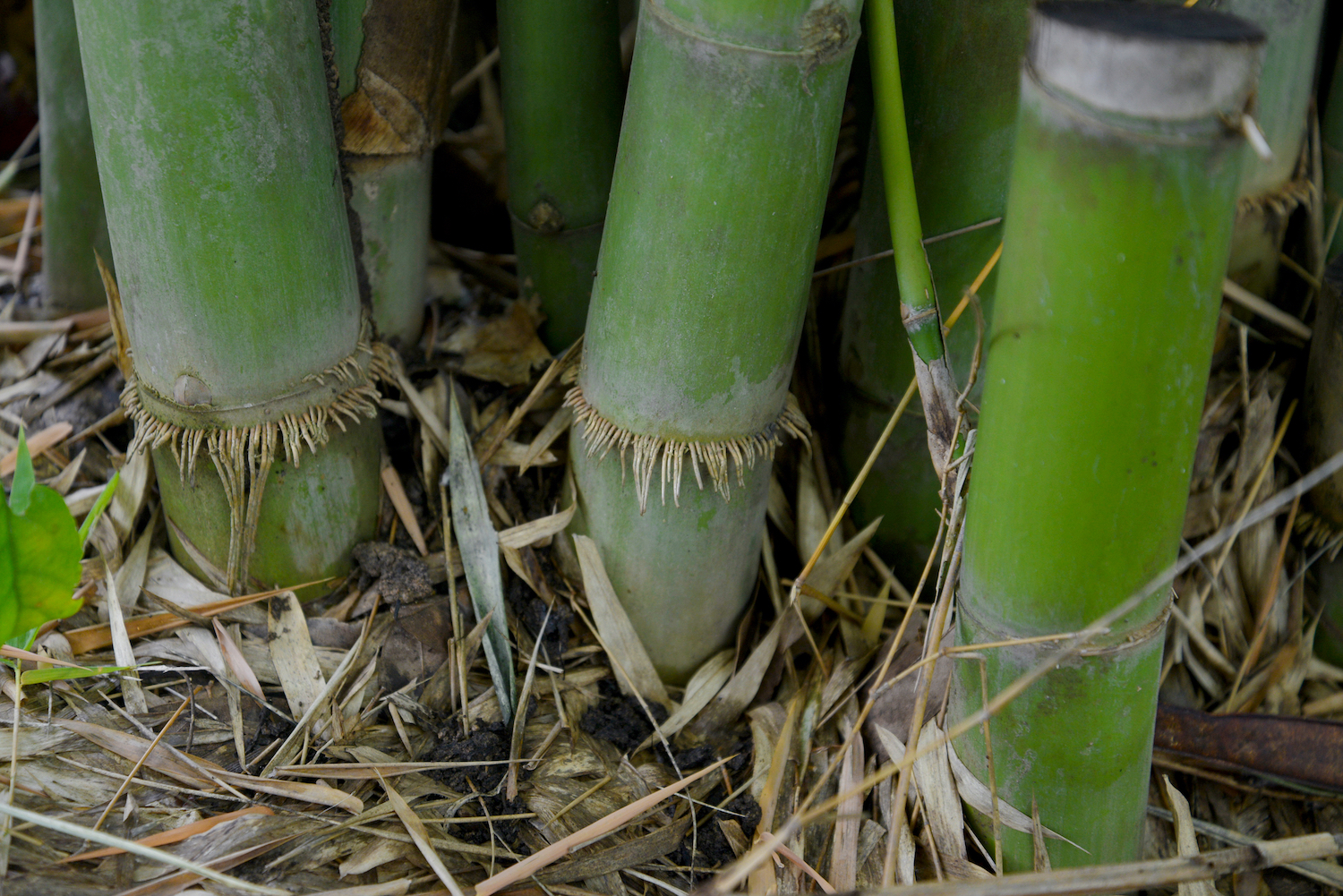
Not all bamboo behaves the same way. There are two main categories: running and clumping. Both are members of the grass family Poaceae, but unlike the soft turf grasses in your lawn, bamboo grows thick, woody stalks called culms. Species range from small, groundcover-like plants to towering varieties that reach nearly 100 feet in height.
Bamboo stalks are thick beasts. Image: Shutterstock DISGO99
Running bamboo
There are many species of running bamboo, but they all behave in a similar way: they spread aggressively underground through fast-moving rhizomes. The species that causes the most trouble for homeowners in the U.S., especially across the Southeast, is Phyllostachys aurea, better known as golden bamboo. It’s considered one of the most invasive bamboo species in North America.
Running bamboo rhizomes can travel surprisingly far from the original plant before sprouting new shoots. Those rhizomes store energy for the plant, which is why simply cutting down visible stalks rarely solves the problem. Left unmanaged, running bamboo can rapidly colonize your entire yard and neighborhood.
Clumping bamboo
There are also several species of clumping bamboo, though they tend to behave much differently from running varieties. One popular example is Fargesia robusta, which is often grown for its cold hardiness and more manageable growth habit. No matter the species, clumping bamboo generally grows slowly outward in tight clusters rather than spreading long distances underground.
That makes clumping bamboo easier to control and far less likely to become a neighborhood-wide problem. While it still spreads through rhizomes, the underground stems remain compact and close to the parent plant rather than racing across a yard.
Get Expert Advice
If you can not tell by visual cues alone, no worries. Take photos of shoots, leaves, and stalks, and contact your local county extension offices to help identify the species. Extension experts can often confirm the type. Although you can try using plant ID apps, keep in mind they aren’t always accurate; they can still be useful starting points.
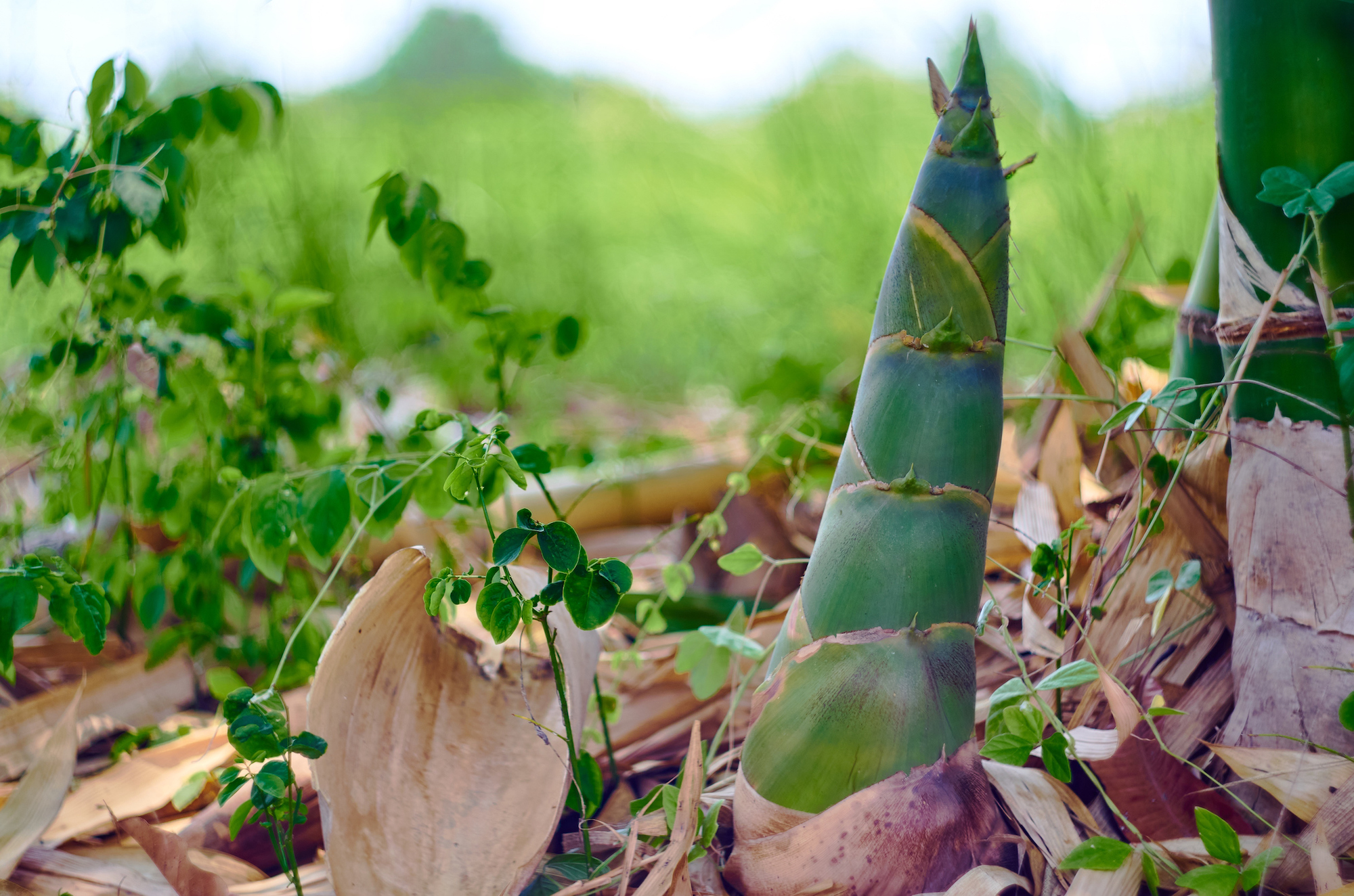
A bamboo shoot emerges from dirt. Should you panic? Not yet. Image: Getty Images Meta
Why Bamboo is so Difficult to Remove
What makes bamboo so frustrating to eliminate is its massive underground network of rhizomes, which fuels its growth. These root-like stems spread beneath the soil in multiple directions, storing energy and sending up new shoots far away from the original plant. In running bamboo species, that underground web can quietly expand for months before homeowners realize how far it has traveled.
What about just mowing it regularly or cutting it down? That may temporarily weaken the plant, but it can also trigger fresh shoots as the rhizomes tap into their stored energy reserves. That solution only works on the surface. Even small fragments left behind in the soil can regrow into entirely new plants.
In warmer regions like the Southeast United States, invasive bamboo has become such a persistent issue that some municipalities now regulate where it can be planted. Fully removing established bamboo often requires repeated digging, cutting, or chemical treatment over months or even years.
How to Remove Bamboo
If bamboo has started spreading through your yard, the good news is that you probably do not need heavy machinery immediately. The bad news is that waiting too long can turn a manageable project into a years-long battle. The right removal method depends on how large the infestation is, how long it has been growing, and how much labor you are willing to take on.
Method 1: Manual removal
This method works best for small or early infestations. The goal is to dig out as much of the underground rhizome network as possible by cutting down visible stalks and removing the thick stems beneath the soil.
The biggest advantage is that it does not require herbicides and can permanently eliminate smaller patches if done thoroughly. The downside is that it is extremely labor-intensive, and even small rhizome fragments left behind can resprout later. Because of that, manual removal requires ongoing monitoring. Homeowners need to check the area for months and quickly remove any new shoots before the bamboo has a chance to recover and spread again.
Method 2: Cutting and starving the plant
This method is best for long-term control and ongoing maintenance rather than quick removal. It works by repeatedly cutting down new shoots before they can grow leaves. Without leaves, the bamboo cannot photosynthesize efficiently, which slowly drains the energy stored in the underground rhizomes. The advantage is that it avoids herbicides and can weaken even large patches over time. The downside is that progress is slow and often requires multiple growing seasons. If you miss even a few cutting cycles, the bamboo can recover and continue spreading.
Method 3: Herbicide treatment
This method is best for large, established patches that have spread beyond easy digging. Glyphosate-based herbicides are commonly used because the plant can carry the chemical from actively growing leaves down into the underground rhizome system. The advantage is that herbicides can help weaken dense infestations that would be difficult to remove by hand alone. The downside is that complete removal usually requires repeated applications rather than a single treatment.
Chemical control also comes with tradeoffs. It is important to follow local regulations, avoid spraying near waterways, and consider the potential ecological impact before using herbicides as part of a removal strategy.
Method 4: Professional removal
This method is best for severe infestations, especially when established bamboo has spread beneath fences, patios, driveways, or neighboring properties. Professionals may use excavation equipment to remove large underground rhizome networks and install root barriers to help prevent the bamboo from returning. The biggest advantage is that it can fully address infestations that are too extensive for most homeowners to manage on their own. The downside is cost, as professional removal can quickly become expensive, particularly when excavation or property repairs are involved.
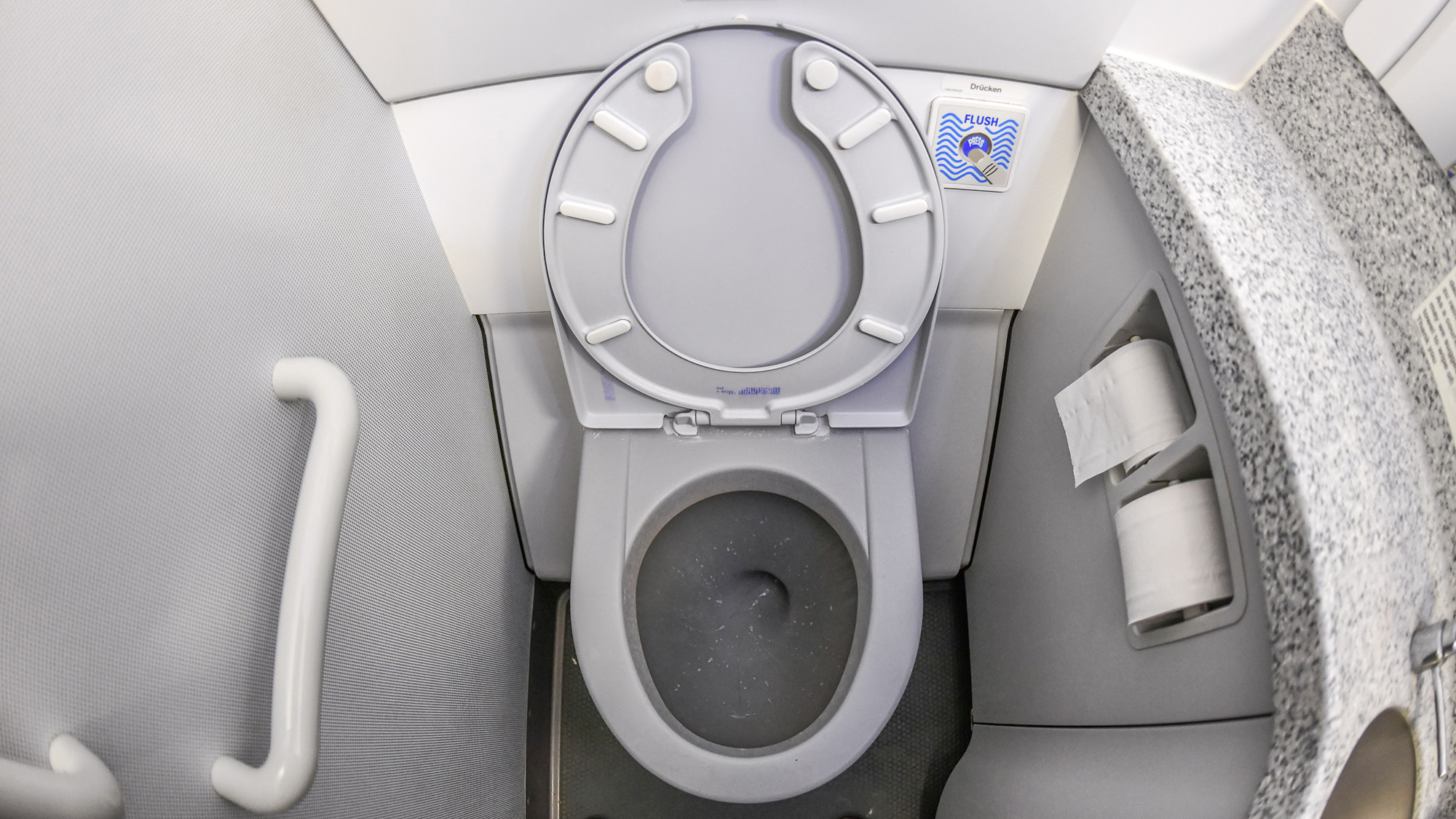
There’s nothing quite like the sound of an airplane toilet flushing. But that incredibly loud sucking sound is actually something of an engineering marvel. These toilets flush, with no water, while zooming along at 500 miles per hour.
In this episode of Ask Us Anything by Popular Science, we get into all the smelly details of how airplane toilets actually work.
Sarah Durn: You’re six years old, wedged into a middle seat on your very first flight.
Your ears are popping. The engine sounds impossibly loud. Somewhere a baby is crying. And after nervously sipping one too many ginger ales, you realize there’s something else you need to do.
So you make the LONG walk down the NARROW aisle to the airplane bathroom.
You open the weird sliding door, and this lavatory is tiny. And, after doing your business, you hesitantly hit the flush button.
For one horrifying second, you’re convinced the toilet might actually suck you into the sky.
But what exactly is happening here? How do airplane toilets work?
Turns out, the answer involves physics, pressure differentials, and one surprisingly clever engineering trick.
Laura Baisas:And hello, I’m news editor Laura Baisis.
SD: Here at Popular Science, we can’t stop thinking about all the world’s strangest questions, and this week, we’re wondering how the heck airplane toilets actually work, something Laura actually edited a story on.
So Laura, what’s going on here? What happens when we use the bathroom at 35,000 feet?
LB: First of all, you can relax. The toilet is not strong enough to suck you out of the plane.
SD: Ah, thank God. Childhood fear officially resolved.
LB: But that terrifying slurp sound, very real. And it turns out that airplane toilets use a surprisingly clever system that takes advantage of something that planes already have at high altitude, the enormous pressure difference between the cabin and the outside of the plane.
SD: So every time we flush on a plane, physics is essentially doing the dirty work?
LB: Pretty much. We love physics.
SD: Oh, we do.
LB: And once you learn how the system actually works, from vacuum toilets to something called blue ice, I’m pretty sure you’ll never hear that sound the same way again.
SD: All right. I’m in. Tell me all the airplane bathroom facts.
LB: I’d be happy to. But before we dive into the science of sky-high plumbing, we want to hear from you. What questions are swirling around your brain? Submit your question by clicking the “Ask Us” link at popsci.com/ask. Again, that’s popsci.com/ask, and click the “Ask Us” link.
SD: We’ll be right back with more about airplane toilets after this quick break.
SD: Welcome back! Okay, Laura, before we get into all the smelly details, I think we need to talk about the history of airplane toilets because early flying was kind of a nightmare.
LB: Oh, absolutely. I mean, that glamorous golden age of air travel, a lot less glamorous if you needed to pee.
SD: Right. So in the very earliest days of aviation, planes just, you know, straight up no bathrooms at all.
LB: Which makes sense if you remember early flights were a lot shorter and planes flew so much closer to the ground.
SD: Yeah, exactly. Pilots were basically flying by sight, and it’s said that early pilots actually peed into their shoes and then would just toss it into the air.
LB: I still can’t believe that’s real.
SD: Me neither. Or they’d make a hole in the cockpit floor…and just go ahead and, you know, pee through that.
LB: Correct. This is all so, so bad. So bad.
SD: But it does get better. I mean, kind of. As passenger air travel became more common in the later 1920s, airlines were like, “Okay, we should probably do something about the bathroom sitch.”
So early passenger planes basically had buckets. Just, you know, a bucket in the back of the plane.
LB: Ah, truly a luxury travel experience.
SD: Very chic, very elegant. Then in the late 1930s, the first enclosed plane lavatory debuted on the DC-4 passenger plane. But even those were pretty primitive. The toilet had a removable bowl that crews had to take out and dump after landing.
LB: Yeah, not sure I’d want that job.
SD: Yeah, same. Eventually planes, though, started using chemical toilets, you know, kind of like a fancy porta potty situation. Waste would sit in these tanks full of bright blue disinfectant liquid.
LB: Ah, yes, we come to the origin of one of aviation’s most disgusting phrases: blue ice.
SD: It doesn’t sound disgusting, which is what throws me.
LB: It’s kind of a misnomer.
SD: I know. It sounds like something a superhero would use. But anyways, explain it to us. What is blue ice?
LB: So blue ice forms when waste leaks from a plane at a really high altitude. Since it’s so cold outside, the waste instantly freezes onto the aircraft.
SD: Okay, which is already kinda gross.
LB: Yeah, and then sometimes, I’m gonna emphasize this, very, very rarely it can break off as the plane descends.
SD: Wait, meaning frozen airplane toilet waste can theoretically fall from the sky? That’s what blue ice is? Frozen human waste raining from above?
LB: Again, gross, but very, very rare, but yes, it can.
SD: Okay. Awful. New fear unlocked. Hate that. Really bad.
LB: But the good news is that modern airplane toilets are much, much more sophisticated. Most commercial planes today use vacuum toilet systems, which are lighter, cleaner, and honestly kind of ingenious.
SD: Okay, so let’s get into it. What’s actually happening when we flush while up in the sky?
LB: Okay, so the key thing to understand here is pressure. Airplanes fly at very high altitudes, usually between 31,000 and 42,000 feet up. There, the air pressure outside of the plane is way lower than inside of the cabin.
SD: Because the cabin is pressurized so all of us, you know, can breathe.
LB: Exactly. Breathing equals important. Right.
SD: Right.
LB: So engineers realized they could use that pressure difference to their advantage. So when you hit the flush button in an airplane bathroom, a valve opens between the toilet bowl and a waste tank. So because the air pressure is lower on the tank side, everything gets sucked downward incredibly fast.
SD: Which explains the very loud sucking sound.
LB: Exactly. And one reason engineers love this system is because it saves a ton of weight. Traditional toilets need a lot of water, but on airplanes water is heavy and heavier planes burn more fuel.
SD: So instead of gallons and gallons of water, plane toilets mostly use air pressure.
LB: Right, which is why the flush is so dramatic and loud and fast.
SD: Okay, and, you know, silly question, but can you actually get sucked into an airplane toilet?
LB: No. Despite what every child, and honestly some adults, might believe, the vacuum is nowhere near powerful enough to suck a human into the plumbing.
SD: Oh, thank goodness.
LB: Although aviation experts do say that you should close the lid before flushing because the suction can splash some gross things around more than you’d maybe like.
SD: Ooh, yikes. Noted forever.
LB: And that’s… Come on, that’s just good general toilet flushing behavior anywhere. You know, flush with that lid down.
SD: Yeah, I’m a strict lid down girl.
LB: Yep, same. Same.
And, you know, airplane toilet systems are also designed with a lot of safety features. There are pressure valves, sealed tanks, all kinds of redundancies to make sure the cabin stays pressurized and everything works safely.
SD: Right, ’cause you don’t wanna mess with the air pressure on a plane.
LB: Absolutely not.
SD: Okay, so when you flush an airplane toilet, where does everything actually go?
LB: So all the waste gets sucked through pipes into holding tanks elsewhere in the aircraft, and contrary to a very persistent myth, planes do not just simply dump sewage while flying. The waste stays on board until the plane lands.
SD: Unless it’s blue ice.
LB: Unless it’s blue ice. But remember, very rare and not that often anymore. Planes are more sophisticated with their waste.
SD: I’m gonna be so aware of anything falling from the sky.
LB: I know.
SD: Watch out. We’re really helping, you know, just assuage a lot of childhood fears on this episode.
LB: You know, we aim to please here.
SD: And okay, so then after the plane lands comes the very misleadingly named honey truck.
LB: The honey truck. Uh, yeah, unfortunately the honey truck is a lot grosser than it sounds. After landing, airport ground crews bring over these specialized service trucks that connect to the aircraft and pump all of that waste out of the holding tanks.
SD: The fact that they’re called honey trucks feels like a crime. Like, who is naming things—blue ice, honey trucks—what the heck is going on?
LB: But, at major airports this happens constantly. Honey trucks are always roving around, pumping waste from planes into their holding tanks for disposal.
Kinda cute, sort of like a poop version of WALL-E happening all along the tarmac without us even knowing.
SD: Is it cute? Do we think that’s cute?
LB: I kind… You know what? I kind of do. It’s important. It’s important, so I think it’s cute.
SD: Fair. Yeah, I can’t imagine being the person assigned to the airplane poop truck.
LB: And apparently, as I said, those very important crews also deal with people flushing things they absolutely should not flush.
SD: Oh, no.
LB: According to one aircraft engineer, mechanics have found diapers, silverware, soda cans.
SD: Soda cans?
LB: Soda cans. And airplane toilet pipes are tiny, so clogs are a huge deal, not to mention they can cause major delays.
SD: Yeah, you do not wanna be the person responsible for grounding a plane because you flushed your ginger ale can.
LB: There are already enough reasons you could get delayed. Do not delay a flight because you decided to flush that can, exactly.
SD: People are crazy.
LB: A clog can even take a plane out of service for days while mechanics fix the plumbing.
SD: It’s honestly incredible that these toilets don’t have more issues. I mean, they’re really clever little pieces of technology.
LB: And the engineering behind all of this is fascinating. These systems have to work safely, reliably, and hygienically while flying hundreds of people through the sky at 500 miles per hour. It’s amazing.
SD: Airplane toilets are one of those weird engineering marvels most of us never think about unless we’re hearing the very loud slurp sound.
LB: And yep, never gonna hear that sound the same way again.
SD: Yeah, same.
LB: Or think of blue ice and honey the same way again, if I’m being honest. And with that image in mind, we’ll be right back after this quick break.
SD: Welcome back. Since this episode is all about flying toilets, we have to talk about the fact that while we were making this episode, NASA sent four astronauts into space, headed to the dark side of the Moon for the first time, and then their toilet basically immediately broke.
LB: Immediately. I mean, that poor crew.
SD: I know. Yeah, Artemis II embarks on this historic mission around the Moon, and then just a few hours into the mission, NASA’s like, “Ooh, guys, quick update, the space toilet fan broke.”
LB: Guessing that’s a sentence that probably caused, you know, some stress at Mission Control.
SD: Yeah, just, you know, a little bit, especially because there was only one toilet on board for four astronauts on a 10-day mission.
LB: Yeah, that toilet had a lot riding on it.
SD: Yeah. And unlike airplane toilets, space toilets can’t really rely on gravity because, you know, space.
LB: Space. In microgravity, nothing naturally goes down, which means space toilets use fans to pull waste in the correct direction, and in this case, the fan stopped doing that, which would have meant urine floating around the cabin. Ew.
SD: Yeah. The good news is NASA fixed it pretty quickly. Astronaut Christina Koch worked with Mission Control to get the system back online within a few hours.
LB: And apparently the astronauts had backup emergency urine bags, just in case.
SD: Which, fun fact, is basically how Apollo astronauts handled this back in the 1960s. No luxury Moon bathroom, just Neil Armstrong peeing and pooping in a bag.
LB: What an image.
SD: I mean …
LB: I know, right? Humanity can build giant rockets, fly hundreds of thousands of miles through space, and still end up improvising bathroom solutions.
SD: Honestly, it all feels very, very human.
LB: It does. And on that note…
SD: May all of your toilets, earthly or cosmic, function correctly.
LB: And that’s it for this episode, but don’t worry, we’ve got more episodes of Ask Us Anything live in our feed right now. Follow or subscribe to Ask Us Anything by Popular Science wherever you enjoy your podcasts, and if you like our show, leave us a rating and review.
SD: Our producer is Alan Haburchak, and this week’s episode was based on an article written for Popular Science by Tom Hawking, with a link in the show notes if you wanna learn more about airplane bathrooms.
LB: Thank you, team. Thank you, toilets, and thanks everyone for listening.
SD: And one more time, if you want something you’ve always wondered about explained on a future episode, go to popsci.com/ask and click the “Ask Us” link. Until next time, keep the questions coming and close those toilet lids.
In 1634, English settlers established St. Mary’s City as the first permanent outpost in the colony of Maryland. Many of these early residents were ultimately buried in the town’s Chapel Field cemetery, including 49 colonists between the town’s founding and 1734. Recently, geneticists collaborating between Harvard University, the Smithsonian Institute, and genetics company 23AndMe analyzed these previously unidentified remains as part of a larger genealogical project tracing colonial migration across the United States.
Their findings illustrate how such a small original population can have vast genetic influences over time. According to the team’s study published in the journal Current Biology, over 1.3 million living descendents can be traced directly to the handful of settlers buried at St. Mary’s City. What’s more, researchers believe that they potentially identified remains belonging to Maryland’s second governor.
The results come after decades of work that began with the excavation of a trio of extremely rare lead coffins from the cemetery’s Brick Chapel in 1986. These were later revealed to contain the bodies of Philip Calvert, his first wife Anne Wolseley Calvert, and an infant son from Calvert’s second wife, Jane Sewell. Calvert served as Maryland’s fifth governor, and came from one of the colony’s most prominent and influential founding families. Later DNA analysis tied the Calverts to three more bodies buried nearby.
“Although additional work is needed to determine exactly how these individuals were related to Philip, this finding is significant given that several members of the extended Calvert family, including Philip’s half-brothers Leonard (1610–1647) and George (1613–1634), died in St. Mary’s during this period,” explained Douglas Owsley, the Smithsonian’s biological anthropology curator.
Further genetic examinations identified relatives among five other families, including one that spanned three generations.
“Because mortality was so high in the early days of the colony, finding a multigenerational family was a surprise,” Owsley said. “It’s a discovery that simply wouldn’t have been possible without genetic study.”
From there, the team was able to move forward through the centuries by comparing the DNA information at St. Mary’s City with more than 11.5 million participants from the 23AndMe genetic database. The results show that there are now around 1.3 million living relatives of Maryland’s first European residents. They were also able to corroborate a major migration that occurred between 1780–1820, when many of the colony’s Catholics fled south to Kentucky due to economic stressors and anti-Catholic sentiments.
One of the study’s more groundbreaking facets involved researchers’ ability to assess unknown remains through a combination of genetic material and multiple family trees that include still-living individuals. First, they identified people in the database who shared the strongest genetic relationships to the three related cemetery bodies. They then examined overlaps in anthropological information and known lineages to narrow down the mystery remains. Based on their findings, the team now believes the remains belong to colonial Maryland’s second governor, Thomas Greene, his first wife, Anne, and their son, Leonard.
“This is the first time that ancient DNA has been used to help identify unknown individuals, without any prior knowledge of who they might have been. And it just so happens that one of those individuals turned out to be one of colonial Maryland’s most prominent figures,” said Éadaoin Harney, a senior scientist at the 23andMe Research Institute.
Study co-author and Harvard Medical School geneticist David Reich added that their latest work showcases how vital ancient DNA analysis can be to expanding our understanding of history.
“While written records are extraordinarily rich, genetic data can still address gaps in that record and yield surprises,” said Reich.
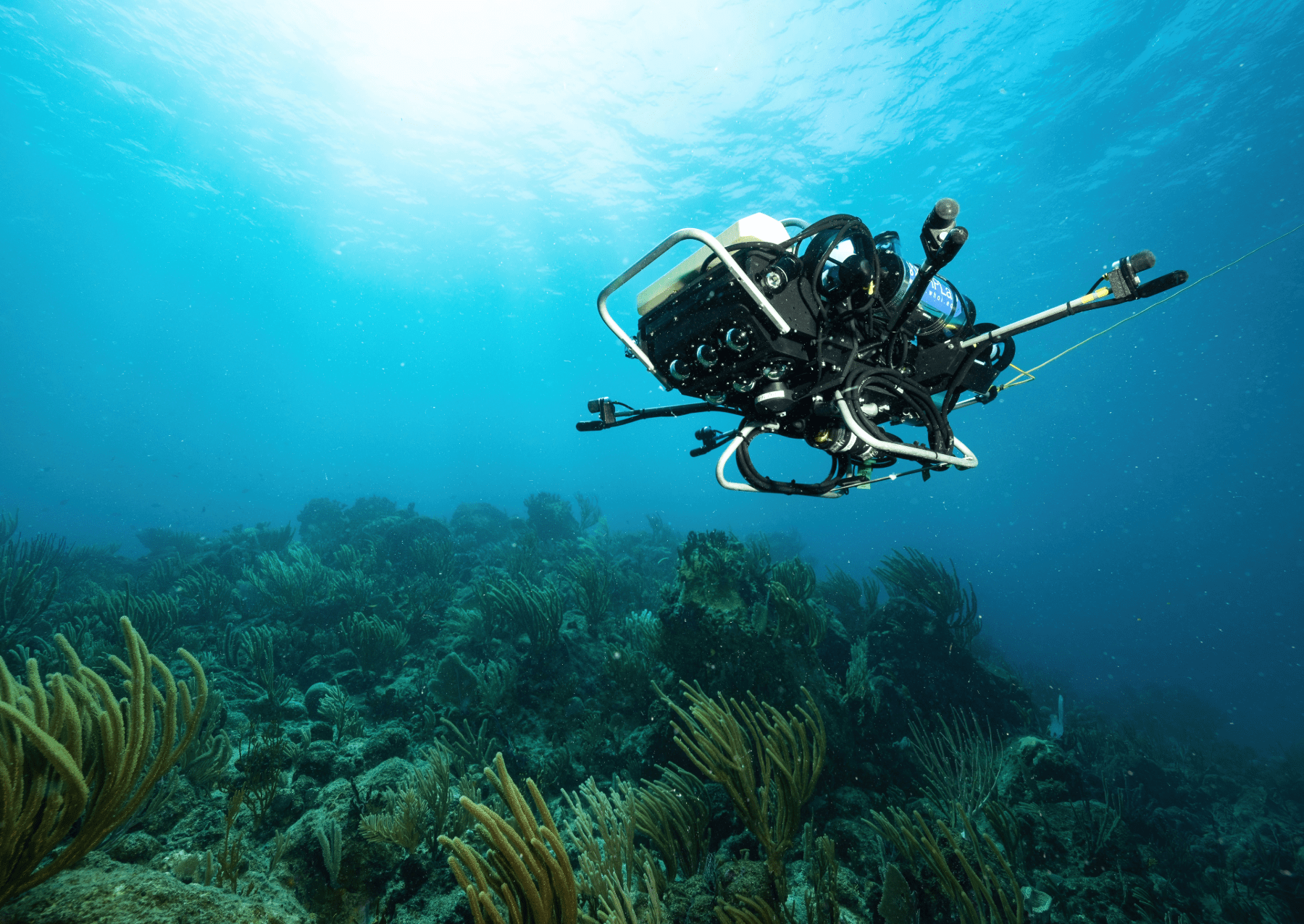
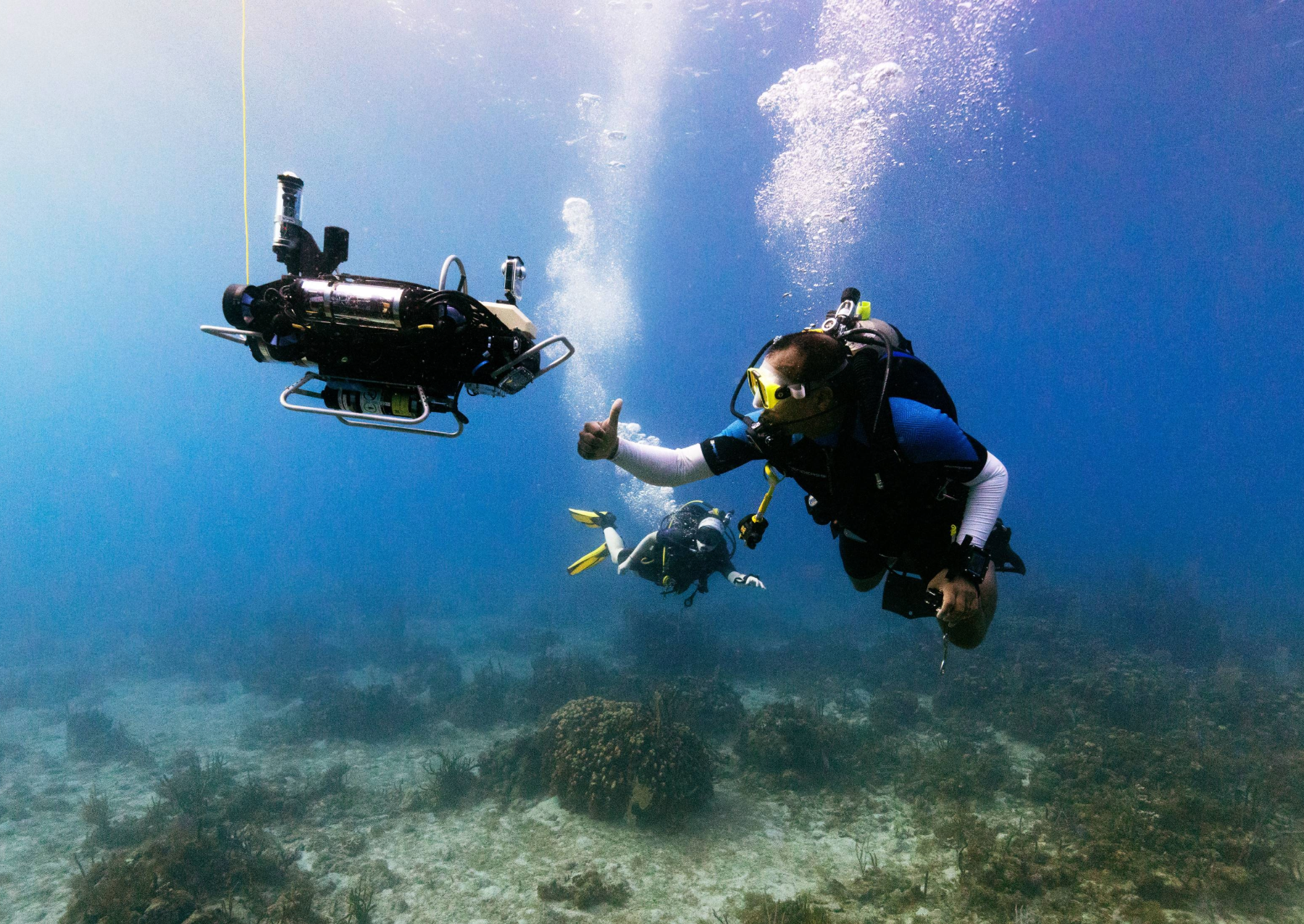
Coral reefs may soon have new swimming visitors observing their life-rich aquatic metropolises. But that visitor isn’t a fish—or even a human. It’s an autonomous, multi-sensor survey robot. Developed by the Woods Hole Oceanographic Institution (WHOI) Reef Solutions Initiative, this new underwater surveyor uses a combination of hydrophones, high-resolution cameras, and an onboard computer to find signs of marine life hotspots. It then moves in closer for a better look, creating data-rich maps that would likely take many human divers multiple trips to produce.
The system, appropriately called the Curious Underwater Robot for Ecosystem Exploration (CUREE), does all this all by itself. Well, that’s the goal, at least. In actual testing around Joel’s Shoal in the U.S. Virgin Islands, the curious robot was able to home in on the distant crackle of shrimp, and even tailed a barracuda for more than 984 feet. That last barracuda tracking bit required some human intervention to get it back on course, but the majority of the barracuda tracking occurred totally autonomously. The findings were published this week in the journal Science Robotics.
Keeping tabs on coral reef’s inhabitants
Coral reefs are like a busy neighborhood or bustling bar in the ocean. Though they account for less than 0.1 percent of physical ocean space, roughly a quarter of all marine species spend some part of their lives there. But overfishing, human development, and warming ocean temperatures are putting those bustling ecosystems at risk. Because of this threat, it’s more important than ever for marine biologists to have an accurate and timely sense of what those environments look like.
Getting a clear sense of what species are where in a reef isn’t simple, though. At any given time, most of a reef is barren, with marine life typically clumping into hotspots distributed throughout the reef. Currently, researchers primarily track those hotspots with trained human divers, though that approach isn’t perfect. Our pesky lungs and limited oxygen tanks mean human divers run on a short clock. It’s also costly for research teams to properly train and equip a human diver, which limits the amount of time and frequency with which they can take a plunge.
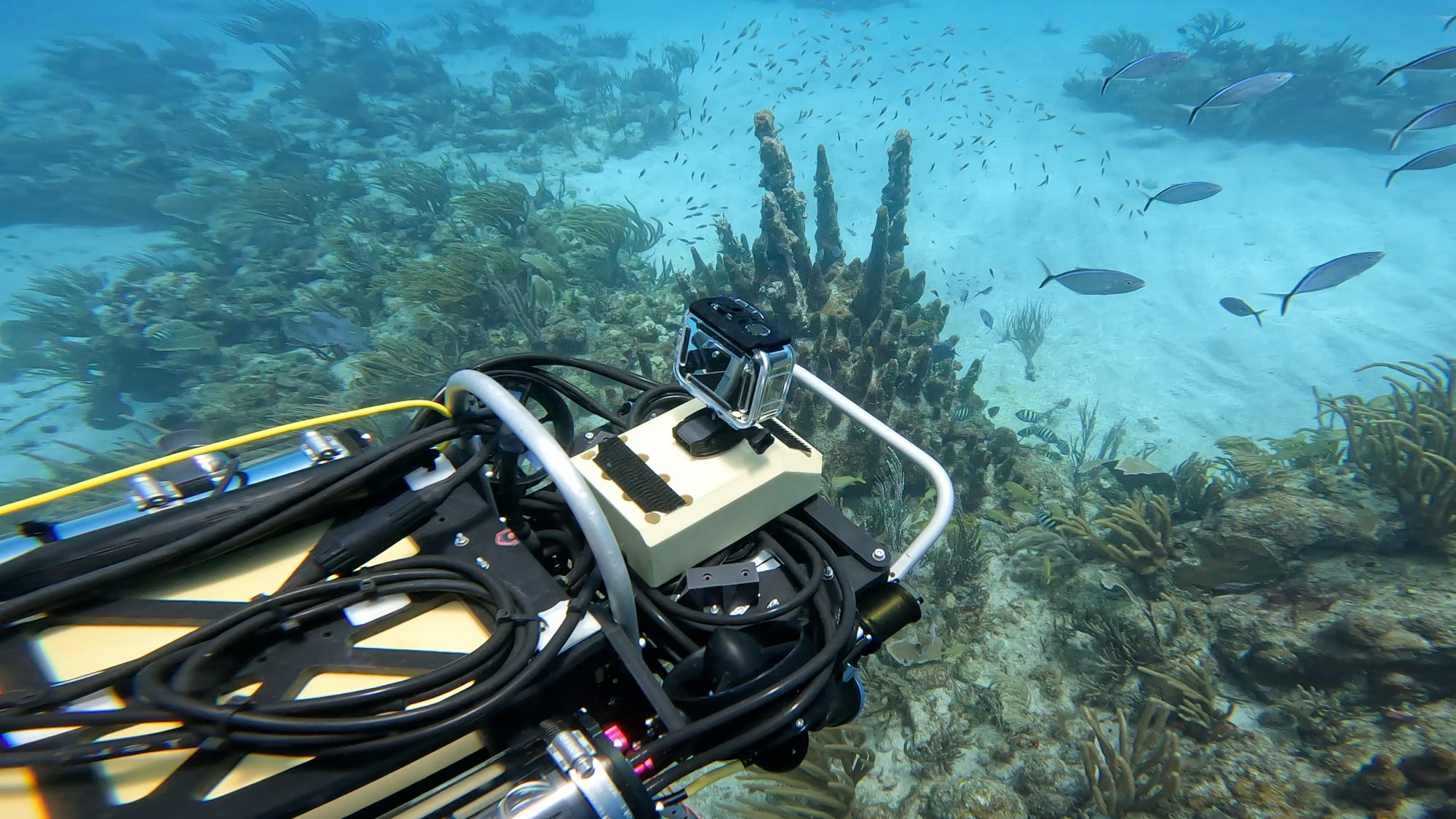
An underwater robot could potentially solve both those problems, but it would need the right tools for the job. That’s where CUREE comes in. Engineers outfitted the robot with a variety of sensors that can detect both visual and auditory signals. The system can analyze far-off audio signals in real time to hear distant noises as subtle as fish calling out to each other. It can then triangulate that data using an onboard computer system that moves toward areas it suspects have a high chance of containing marine life. If it spots life once there, it can then use its cameras to provide more precise data about the species and their behavior.
“In some sense, they’re almost a perfect compliment for each other,” WHOI roboticist Seth McCammon said of the multiple sensor method in a statement. “Passive acoustics gives you a broad sense of the environment, while vision is short range, but is this really information-rich data stream.”
Curious robot stalks a barracuda
The team put CUREE to the test near Joel’s Shoal, a coral reef located on the coast of St. John in the U.S. Virgin Islands. In one test, the robot could accurately find and count the number of fish in a region. It was able to detect signs of fish from up to 82 feet away and then use those clues to identify life hotspots.
However, the most interesting result was CUREE’s successful barracuda tracking. Once locked on to its target, CUREE followed the apex predator for a total of nine minutes and 55 seconds, as the fish weaved its way around, looking for lunch. The tracking video in the study shows the barracuda traveling first to a hotspot and then backtracking to another spot where it had previously startled a large reef snapper. And while a human diver had to initiate the robot’s lock on the barracuda,and had to re-lock on the target several times, CUREE did most of the work on its own. The team says eight minutes and 59 seconds of the tracking was done with full autonomy.
Though this isn’t the first underwater robot, its use of multiple sensor types makes it unique because it’s eventually a jack of all trades. Researchers can, in theory at least, drop the robot in a broad area of water and let it get to work surveying.

 Login
Login