Reading view

Need a doctor or nurse after hours? How to get virtual or in-person care in Australia – including for free

Guido Mieth/Getty Images

If you or someone you’re caring for has a medical emergency, visit your nearest emergency department or call 000.

But what if it’s not an emergency, or you’re not sure? Sometimes you can’t wait wait until 9am or Monday morning to see a doctor or access health care.

You might have a fever that’s not subsiding, a sprain that could be a break, a painful urinary tract infection, or a distressing situation that demands immediate mental health support.

Here are your options for accessing timely health care, in-person and virtually – including some that are free.

Medicare Urgent Care Clinics

Medicare Urgent Care Clinics provide bulk-billed care by a general practitioner (GP) for non-life-threatening illnesses and injuries.

Patients can walk in without an appointment or referral, and can access other services such as blood tests and X-rays. There are no out-of-pocket costs.

You can find your local clinic here.

Search engines to find a GP appointment – in person or online

Health service search engines such as Healthengine and HotDoc can help you find GPs and book appointments.

You can filter search results by types of services and telehealth availability, including the “GP telehealth on-demand option within 15 minutes” on Hotdoc.

Many will come with out-of-pocket costs.

Home visits

In-person home doctor visits for urgent, episodic illness or injury can also be arranged through options such as 13SICK National Home Doctor Service, DoctorDoctor, Hello Home Doctor Service, Sydmed, 13 CURE and OnCallDrs.

These are often bulk billed.

A call with a nurse or doctor

The new 1800MEDICARE helpline is a free 24/7 service where you can speak to a registered nurse about any health concern.

They will listen to your concerns, assess your symptoms and provide advice on next steps. This might mean looking after yourself at home, getting help from a GP, or attending an Urgent Care Clinic, pharmacy or emergency department.

If the 1800MEDICARE nurse advises you to see a GP within 24 hours, you may be offered a telephone or video call back from a 1800MEDICARE GP. These GPs can provide prescriptions via SMS.

Virtual emergency departments for non-life-threatening emergencies

Virtual emergency departments are free, online emergency departments that treat non-life-threatening emergencies such as pain, sprains, infections, respiratory illnesses, gastroenteritis, high blood pressure, pain, infections, minor burns and rashes.

Examples include:


Read more: What is a virtual emergency department? And when should you ‘visit’ one?


Another similar option is My Emergency Doctor, which offers patients access to specialist emergency doctors via video call or telephone 24 hours a day, seven days a week. However, this service costs $150.

Medicines and pharmacists

Some pharmacies operate on extended business hours, including 24 hours. You can find a pharmacy near you at this link, with the option to filter by “extended hours”.

In some circumstances, pharmacies can issue a small amount of a medicine if you’ve run out.

In some states and territories, pharmacists can provide medicines such as antibiotics for simple urinary tract infections without a prescription.


Read more: It’s now easier to get antibiotics for UTIs. But here’s what to do if your symptoms don’t go away


For people living in remote Australia, the Royal Flying Doctor Service (RFDS) runs a Medical Chests program. Medical chests contain a range of pharmaceutical and non-pharmaceutical items, including prescription-only medicines, which RFDS doctors may prescribe after a phone consultation.

Pregnancy, birth and children

Pregnancy, Birth and Baby is a free national service that provides support to expecting parents, and parents of children from birth to five years of age.

You can speak to maternal and child health nurses via phone, by calling 1800 882 436, or video call about you or your baby, between 7am and midnight, seven days a week.
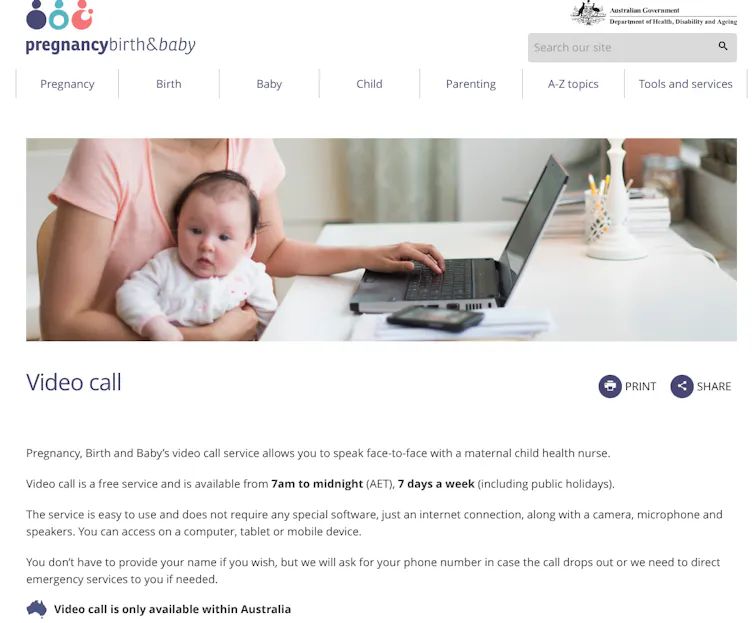
If video call isn’t an option, you can call 1800 882 436. Screenshot from Pregnancy Birth Baby

CubCare is another virtual urgent care option which provides access to paediatric emergency doctors, for a fee.

Dental care

The Australian Dental Foundation runs a free 24/7 Emergency Dental Hotline which can help you work out the urgency of your issue and your next steps.

National Emergency Dentist is a private health service which connects patients to emergency dentists offering same-day and after-hours appointments, for a fee.

Mental health phone support

Mental health support will depend on your individual needs and background. You can access mental health support after hours through these call services (some also have online chats):

Aboriginal and Torres Strait Islander services

  • 13 YARN: 24/7 crisis support phone line operated by and for Aboriginal and Torres Strait Islander Peoples

  • Yarning Safe'N'Strong: 24/7 support available to Aboriginal and Torres Strait Islander people who need to have a yarn with someone about their wellbeing

  • Brother to Brother: 24/7 crisis line providing phone support for Aboriginal men, staffed by Aboriginal men, including Elders.

LGBTQIA+ services

  • QLife: phone and webchat that operates during afternoons and evenings seven days a week to support LGBTQIA+ people.

Communication assistance

The National Translating and Interpreting Service offers support to non-English speaking people for their consultations. This service is typically free, covers 150 languages and can be accessed after-hours. Register here.

The National Relay Service provides assistance to people with hearing or speech difficulties during their medical consultations.

The Conversation

Mahima Kalla received previous funding from the Digital Health Cooperative Research Centre to help build a patient consultation summary application within Healthdirect's video telehealth platform.

Feby Savira Feby received a Priority Primary Care Centre Fellowship (2023-2025) supported by the Western Victoria Primary Health Network and was involved in the evaluation of Priority Primary Care Centres in the Western Victoria region.

Kara Burns receives funding from the Australian General Practice Foundation to research the scaling of digital maternity care in remote general practice. 

Sathana Dushyanthen does not work for, consult, own shares in or receive funding from any company or organisation that would benefit from this article, and has disclosed no relevant affiliations beyond their academic appointment.


  •  

Curaçao and Cabo Verde are into the World Cup. What impact can these ‘minnow nations’ make?

For the first time in history, soccer’s World Cup will expand to 48 teams in 2026, marking one of the most radical changes ever made to the tournament.

Starting on June 11 in Mexico City, the tournament will be the longest and largest ever. Across 39 days, there will be 104 matches.

The new format has allowed several so-called “minnow nations” to qualify for the first time. They include Uzbekistan and Jordan, while Haiti has returned after last appearing in 1974.

But it is two small island nations that have rightly grabbed the most international attention.


Read more: From ‘USA94’ to now: how soccer has changed since the last American World Cup


Curaçao makes history

Curaçao will appear at the World Cup for the first time.

With a population of around 156,000, Curaçao is the smallest nation ever to participate in the tournament.

Their place was confirmed after a draw against Jamaica in November 2025 and there were, as expected, huge scenes of celebration across the Caribbean island.

Curaçao is a former Dutch colony and remains part of the Kingdom of the Netherlands, and this plays a major role in its soccer story.

The entire starting team from the Jamaica match was born and raised in the Netherlands, eligible to play through family history. Tahith Chong, who plays for Sheffield United in England’s second tier, was the only squad member born in Curaçao.

Curaçao has not often come up against the elite of world soccer, although a friendly match against current world champions Argentina ended in a 7-0 defeat in 2023.

They now face the daunting prospect of facing tenth-ranked Germany in their opening match in Houston on June 14.

Cabo Verde joins the party

Cabo Verde (formerly Cape Verde) is an island state off the west coast of Africa. With a population of around 525,000, the country is also preparing for its maiden World Cup appearance.

Similar to Curaçao, Cabo Verde’s soccer context is shaped by its colonial past, with the nation gaining independence from Portugal in 1975. A large number of Cabo Verdeans live outside the country and the national side draws heavily on players born or developed in Portugal.

In their final two qualifying matches, 14 of the 25 players called up were part of the Cabo Verdean diaspora, born and raised in other parts of the world.

Compared with Curaçao, Cabo Verde has more experience against stronger soccer nations due to being affiliated with the Confederation of African Football. To qualify, they beat Cameroon – a country boasting a strong history in the World Cup, including reaching the quarter-finals in 1990.

Still, when Cabo Verde line up against second-ranked Spain in Atlanta on June 15, it will be a new level again.

Inclusive or excessive?

There are two ways to assess the 48-team World Cup.

The FIFA view is the tournament is the biggest show on Earth, and the previous 32-team format did not do it justice. Expanding to 48 will help grow the game around the world and give more countries a chance to shine on soccer’s biggest stage.

The distribution of the 16 new slots reflects this widened inclusivity, which has disproportionately benefited the global south.

Africa’s confederation has received nine slots – up from five. Asia has grown from 4.5 to eight. Oceania now receives one direct entry where it previously only received 0.5, with the winner of its confederation entering a playoff (notable for Australia’s memorable qualification battles with Uruguay in both 2002 and 2006).

By comparison, Europe’s allocation only grew from 13 to 16.

This new model will only further exacerbate quirks in the rankings between those that do and do not qualify for the World Cup.

For the 2026 tournament, European nations Italy (ranked 12) and Poland (35) missed out, while Cabo Verde (69) and Curaçao (82) qualified.

Yet, the scenes of pure jubilation in Curaçao and all the other first-time qualifying countries show the case for inclusion is there. If growing the game is FIFA’s mission, this is strong validation for it.

The other view is this is yet another example of FIFA prioritising commercial outcomes above all. More matches mean more money. Yet questions linger over the dilution of match quality.

There is a strong argument the old 32-team format struck the right balance between quality and inclusion. Critics worry FIFA is effectively ignoring any idea of scarcity that can make the World Cup special.

Then there is the soccer calendar, which is already bursting at the seams and contributing to more injuries to players.

Will there be upsets?

FIFA will feel validated if we get a few shocks from smaller nations beating the established elite. And soccer, more than most sports, is capable of producing them.

Look no further back than the 2022 World Cup, when 51st-ranked Saudi Arabia shocked eventual champions Argentina during their group-stage match.

Could we see Cabo Verde or Curaçao produce an even greater World Cup upset?

The Conversation

The authors do not work for, consult, own shares in or receive funding from any company or organisation that would benefit from this article, and have disclosed no relevant affiliations beyond their academic appointment.

  •  

Three hours of free power a day sounds good – but is Australia’s scheme fair?

xavierarnau/Getty

From July 1, many Australians can choose something that once sounded absurd: free electricity in the middle of the day. The federal government’s opt-in Solar Sharer Offer will give three hours of free power to households with smart meters in New South Wales, South Australia and southeast Queensland. Victoria’s separate scheme will launch in October.

Free power sounds like a giveaway. It isn’t. It’s meant to encourage people to use more electricity during the hours when solar power flows into the grid. The real aim is to get people to shift the use of water heaters, pool pumps, air-conditioning and electric vehicle charging to the middle of the day. At other times, power prices will be slightly more expensive.

The main challenge for Australia’s power systems is no longer how to meet peak demand in the evening. We now have to use or manage the floods of very cheap solar during the sunniest hours when there’s more supply than demand. If this imbalance isn’t managed, electricity voltage and frequency can move outside safe limits, equipment can trip, and the risk of outages rises.

The scheme makes sense. But there are still questions about its fairness. Electrified households will benefit most, while renters and other groups may benefit less.

The challenge of solar abundance

About one in three Australian homes now has solar. At times, this power source can supply 50% of total demand on Australia’s biggest power grid, the National Energy Market. Wholesale prices have regularly gone negative in recent quarters.

In big solar states such as South Australia, solar can supply more power than the state can use. Surplus power is exported, stored in batteries or curtailed – wasted.

The Solar Sharer Offer is meant to make better use of these floods of solar power.

This financial year, the three hours of free power will be 11am to 2pm daily in NSW and southeast Queensland and 12 to 3pm in South Australia. Australia’s energy regulator chose these times to match when solar output is highest, and network and wholesale costs are lowest. This may change year by year.

The reason the scheme isn’t national is because it’s tied to the Default Market Offer — a regulated safety net plan for electricity customers – which only applies in NSW, SA and southeast Queensland.

red brick apartment block in sunshine.
Renters and people in apartments may find it harder to benefit from the free power scheme. Andrew Merry/Getty

Who will benefit most?

Ensuring fair access has been a constant challenge for household clean-energy schemes. People who own their homes and have access to capital are usually better placed to benefit. This scheme has the same issue.

It’s easy to picture the ideal customer for three hours of free power – a homeowner with a smart meter, flexible hot water, electric vehicle, home battery and the ability to choose when power-hungry appliances run.

That’s great for them. But what about everyone else? For instance, you have to have a smart meter to be eligible. Only about 60% of households have one.

The harder question is whether this offer is fair for other households.

Renters, apartment residents and people on embedded networks in retirement villages, caravan parks or shopping centres face another barrier. If they opt in without being able to make good use of the free power, they could actually be worse off due to the higher prices at other times. These concerns were raised during the consultation process.

Making it fairer

The government is aware of these issues. The free power period is capped at 24 kilowatt hours a day, enough to cover several large daytime loads such as hot water, dishwashing, laundry, air-conditioning or part-charging of an EV.

The cap matters because offering electricity for free still incurs costs for energy retailers. To recover the missed revenue during the free window, retailers will boost other usage charges. Capping free power at 24 kWh a day limits how much high-consumption households can use at zero price, which limits how much revenue has to be recovered from usage at other times of day.

More needs to be done to ensure it’s fair. A key step is unglamorous but effective: helping households heat water during the day. Heating water takes a lot of power. Electric hot-water systems are often on controlled-load tariffs designed for overnight operation. A South Australian trial moved close to 50% of water heating from night to day with little reported inconvenience.

Where safe and practical, retailers and network businesses could shift the time these systems charge to the middle of the day. Governments could help rentals and apartment residents by supporting the use of timers, smart controllers and efficient heat-pump hot-water systems. The same logic applies to other flexible loads.

The free lunch is real. The question is who gets a seat at the table.

The Conversation

Saman Gorji receives funding from the Recycling and Clean Energy Commercialisation Hub (REACH), supported by the Australian government's Trailblazer Universities Program.

Alireza Ganjovi does not work for, consult, own shares in or receive funding from any company or organisation that would benefit from this article, and has disclosed no relevant affiliations beyond their academic appointment.

  •  

From exporting spyware to surveilling activists – how democracies became the new digital authoritarians

“Digital authoritarianism” refers to governments using technology for surveillance and censorship to repress dissent.

China remains the master practitioner. There, sweeping surveillance and censorship at home is combined with cyber-espionage and disinformation, censorship and influence campaigns abroad.

But this problem is no longer confined to Moscow or Beijing. Democracies, too, are beginning to repress their citizens with the same tools, and export them abroad.

Two countries in particular – India and Israel – reveal how democracies are drifting toward the very digital authoritarianism they once opposed.

Israel: exporting spyware

Israel, a democracy, permits private firms to export spyware under a state-regulated system.

Pegasus spyware, developed by the Israeli firm NSO Group, is marketed as a tool licensed to government agencies for counterterrorism and serious crime investigations.

However, investigations have linked it to the surveillance of journalists, activists, lawyers and political opponents.

Pegasus spyware can infiltrate smartphones without the user clicking on a link. It can grant access to messages, calls, microphones and cameras.

It has been linked to the surveillance of journalists in Mexico, opposition politicians in India and civil society groups in Hungary.

Israel tightened export rules in 2021, insisting sales go only to trusted governments for legitimate purposes. Yet the problem has not disappeared.

In early 2025, it was revealed Paragon Solutions, an Israeli spyware firm cofounded by former Prime Minister Ehud Barak, developed a powerful surveillance tool capable of potentially compromising encrypted communications.

WhatsApp said last year nearly 100 journalists and members of civil society had been targeted using Paragon spyware.

Reporters at Citizen Lab later identified the spyware as a Paragon product, Graphite, and confirmed it had been used against journalists. It remains unclear who exactly the perpetrators were.

Through its export control system for offensive cyber tools, Israel is still allowing Israeli firms such as NSO Group and Paragon Solutions to sell spyware abroad, including Pegasus and Graphite.

This has contributed to concerns about the normalisation of commercial spyware.

India: Pegasus turned inward

In India, Amnesty International’s Security Lab reported forensic evidence of Pegasus being used on the phones of high-profile journalists.

Earlier reporting alleged Indian journalists, activists, lawyers and opposition figures appeared among potential targets. Following a petition, the Supreme Court will soon decide whether there should be an investigation into “India’s alleged use of Pegasus spyware on journalists, activists and public officials”.

The perpetrator has not been conclusively identified in those forensic reports, but NSO Group says Pegasus is licensed only to law enforcement and the intelligence agencies of sovereign states and government agencies.

The Indian government has denied wrongdoing, with IT Minister Ashwini Vaishnaw saying such surveillance was not possible under Indian law. The government later declined to file a detailed affidavit before the Supreme Court, citing national security.

These allegations sit within a wider pattern of democratic erosion in India. Critics have linked the Pegasus controversy to broader state practices, including:

  • frequent internet shutdowns and online censorship
  • legal pressure on journalists and activists
  • online harassment of journalists, activists and members of marginalised groups
  • and the stifling of dissent.

In 2023, Apple warned at least 20 Indian opposition politicians and journalists that their iPhones may have been targeted by “state-sponsored attackers”, reviving allegations the Indian government was using electronic surveillance against domestic critics. The Indian government has rejected the implication, but has announced an investigation.

Social media platforms have also been pressured by Indian government agencies and regulators to remove posts critical of the government. And supporters of the ruling party are known to organise online harassment campaigns of government critics.

A global problem

Other democracies – from Hungary to Turkey to Mexico – have experimented with spyware and aggressive online controls.

Technologies once hailed as enabling protest, connecting citizens and amplifying marginalised voices are now being redeployed for surveillance and control.

In 2024, global internet freedom declined for the 14th consecutive year. This was driven by censorship, surveillance, disinformation, platform restrictions and controls on internet access.

Governments of all types are blocking platforms, expanding monitoring, and deploying trolls and bots to tilt online debate.

For instance, Russia’s state-linked online influence operations have used coordinated troll farms to manipulate political discussions at home and abroad. Turkey’s pro-government “AKtroll” networks have also been accused of amplifying official narratives and harassing opposition voices online.

Gradual erosion of freedoms

Digital authoritarianism does not arrive overnight. It advances through normalisation: spyware licensed as “security”, platforms nudged into silencing dissent, internet shutdowns excused as “temporary”.

These measures, taken alone, may appear minor. Together, they gradually erode freedoms until democratic life itself is hollowed out.

Reversing this requires democracies to commit to strict controls on spyware exports. These controls must be backed by transparency, accountability and robust oversight.

Surveillance powers and online restrictions must be publicly justified and subject to independent review.

Equally vital is the protection of civil society. Journalists, activists and opposition groups need guarantees they can operate freely.

The Conversation

The authors do not work for, consult, own shares in or receive funding from any company or organisation that would benefit from this article, and have disclosed no relevant affiliations beyond their academic appointment.

  •  

What ‘biodegradable’ packaging really means – and 3 key questions to ask about it

John Cameron / Unsplash

“Biodegradable” has become one of the most reassuring words in modern packaging. It appears on coffee cups, shopping bags and food containers, implying a promise: this product is better for the environment because nature will eventually take care of it.

However, biodegradability is not a simple yes-or-no property. It exists in shades, which we can measure.

Biodegradation is a complex process. Microbes and molecules present in an environment such as soil attack a material and digest it, much like what happens to food in our gut.

A material is typically defined as biodegradable if it is digested “well” by the environment in which it is placed. The more mass the material loses during digestion, and the more carbon dioxide it produces, the more biodegradable it is.

Different environments digest materials in different ways. Temperature, sunlight, oxygen, moisture and microbial diversity all influence how quickly materials degrade.

Even the most rigorous testing cannot fully capture the complexity of the real world – but it can help guide our choices.

Biodegradability is relative

In the lab we can simulate environments such as landfill, home compost bins and industrial compost facilities. If we understand in which settings a material breaks down better, we can tell the consumer how to best dispose of it and prevent pollution and other issues.

A material that decomposes quickly in an industrial composting facility may persist for years in the ocean or landfill.

Industrial composting systems maintain elevated temperatures, controlled aeration and consistent moisture. Hot, moist and oxygen-rich conditions generally aid biodegradation but they are not easy to come by in a backyard compost bin.

Home compost systems are typically cooler and more variable. The result: a material certified for industrial composting may not break down effectively at home.

Take polylactic acid (PLA), a biodegradable material generally considered to be a greener alternative to common plastics (like PET). PLA can biodegrade effectively in an industrial composting system. With temperatures above 60°C and controlled moisture, oxygen and microbial activity, microbes can convert PLA into carbon dioxide, water and biomass in just a few days.

Outside these conditions, the story changes. If PLA ends up in landfill, decomposition can be slow because oxygen is limited. In rivers or marine environments, it may persist for years and act as a raft for “alien” species. In your compost bin or worm farm it might disappear in a few months.

Time for standards

There are many ways to measure biodegradability. One common series of tests, OECD 301 assesses “ready biodegradability” in different environments as a material’s ability to biodegrade around 60% within 28 days under controlled conditions.

Industrially compostable materials are tested under very specific conditions. Standards such as EN 13432, used in Europe, assess whether packaging can successfully break down in industrial composting facilities.

To meet the standard, at least 90% of the material must biodegrade into carbon dioxide, water and biomass within six months. These tests typically involve elevated temperatures, controlled aeration, and moisture.

Most biodegradable plastic materials do not disappear cleanly. Instead, they fragment into progressively smaller particles before fully breaking down. During this period, the fragments will continue interacting with organisms and ecosystems.

Compost bins too can get indigestion

Biodegradability standards are helpful for consumers and waste regulators. Nevertheless, they are limited. They often do not test how much of any given material a specific disposal system can sustain at any one time.

This is an important parameter to take into account. Take food waste. When large quantities of food lie in landfill without oxygen, they generate methane, a greenhouse gas far more potent than carbon dioxide over short timescales.

Other biodegradable materials are no different and can throw out the balance of an ecosystem such as your compost bin, if added in excessive quantities.

Introducing certain materials to a compost bin might also cause certain microbes to thrive and others to suffer, sometimes with unintended consequences, such as making your compost bin smell bad.

In the future, biodegradability tests will likely be paired with ecotoxicity assessments, to help us understand whether a material breaks down safely and without generating harmful byproducts or microbial imbalances.

What can we do?

Few of us have an industrial composting facility nearby to take care of biodegradable materials. Industrially compostable products such as coffee cups often end up sent to landfill alongside conventional waste.

This does not mean individuals are powerless or that biodegradable materials are inherently bad.

You can start by checking local council guidance and choosing products certified for the systems available in your area, or your compost bin.

Ask yourself:

  • is this product home compostable or only industrially compostable?

  • is there infrastructure locally that can process it?

  • has it been independently certified?

As for industrially compostable coffee cups, check that you can return cups to participating cafes. They should not be placed in standard recycling bins or food and organics bins as they are considered contaminants. If unsure, place them in a bin destined for landfill.

Ultimately, the most sustainable option remains a reusable washable cup.

These may seem like small actions but they help push packaging design and waste systems toward greater transparency and accountability.

Moving beyond simple labels

As consumers, we want to make educated choices about their purchases and how they can be disposed of.

For now, we have simple labels. In the future, we will hopefully have more complete information about how materials degrade in industrial composting facilities, home compost bins, soil, freshwater, sea water and landfill sites.

Biodegradable materials offer clear advantages over highly persistent materials, but the term “biodegradable” should not be mistaken for environmentally harmless.

Let’s just remember that a biodegradable material released in the wrong place, at the wrong scale, or under the wrong conditions may behave not very differently from a non-biodegradable material.

Understanding the shades of biodegradability moves the conversation beyond simplistic labels. Nature can break many things down, eventually. The more important question is whether it can do so without getting indigestion.

The Conversation

Alessandra Sutti has received research funding from the Australian Research Council, the Marine Bioproducts Cooperative Research Centre, the Innovative Manufacturing Cooperative Research Centre and by companies participating in associated projects such as the ARC Research Hub for Functional and Sustainable Fibres and the ARC Training Centre in Sustainable Material and Responsible Technologies for Packaging (SMaRT-Pack), as well as from industry partners associated with these grants, such as HeiQ Pty Ltd, Xefco Pty Ltd, C. Sea Solutions Pty Ltd (trading as ULUU) and Simba Global Pty/Ltd. Alessandra is a paid member of the HeiQ Innovation Advisory Board, is a member of the American Chemical Society and serves as a volunteer member on Standards Australia ME-009 Committee (Microplastics). She collaborates closely with The GLOBE Program (through GLOBE Italy), The University of California Berkeley and San Francisco State University, co-developing microplastics monitoring protocols and is involved in environmental education programmes.

Martin Zaki does not work for, consult, own shares in or receive funding from any company or organisation that would benefit from this article, and has disclosed no relevant affiliations beyond their academic appointment.

  •  

How to encourage a child to try new, scary things (without traumatising them in the process)

Justin Paget/ Getty Images

If your child has ever dug their heels in on the morning of the school athletics or cross country day, or refused to speak in front of the class, you’re not alone.

For some children, these kinds of events bring a heavy, anxious feeling: what if I’m the slowest, what if everyone’s watching, what if I get it wrong?

For parents, it can be hard to know what to do. Push too hard and the morning becomes a meltdown. Let them off and you worry you’ve taught them to opt out.

Is it ever okay to follow their lead? And how do you give them the best chance of having a go next time?

Why (gently) facing fears matters

When we avoid something we’re afraid of, we feel instant relief. That relief is powerful, and it teaches the brain that avoiding worked. Over time, the fear grows and the impulse to avoid gets stronger. This is true for all of us, not just children.

So, in general, it helps for children to face fears sooner rather than later, before avoidance settles in.

But that doesn’t mean forcing a child through a panic. Pushing too hard can confirm to them the situation really is dangerous.

It’s worth helping your child face the fear before avoidance takes hold. What that looks like depends on what’s driving it.

Start by understanding what’s going on

If you can see a tricky day coming, talk to your child about how they are feeling ahead of time. Ask gentle questions to work out what the resistance is actually about.

Did something happen last time? Is something going on with friends? Is your child worried about failing, being judged, or being laughed at?

You might say:

I noticed you got really quiet when Dad mentioned athletics day. Is something about it worrying you?

Children won’t always have the words straight away, so give them time. It can help to have these conversations side-by-side rather than face-to-face: at bedtime, walking or driving together. Without eye contact, children find it easier to think and talk about hard things.

Try not to jump in to say “you’ll be fine” or “there’s nothing to worry about”. This can come across as dismissing the feeling, and your child may stop talking. Just listening can help children open up.

Validate the feeling

Once you have a sense of what’s going on, let your child know the feeling makes sense before moving to suggesting what to do. Children find it easier to think about solutions once they feel heard. You might say:

I can see this feels really big right now. It makes sense you’re worried.

Pause and stay silent for a moment. They may start crying, which is often part of processing fears.

This is often when we are tempted to rescue or reassure them. Instead, try to just remain a supportive presence. You can offer a hug and say, “This sounds really hard”.

Then work out a plan together

At this point, help your child think about what taking part might look like in a way that feels safe and manageable for them. You might say:

I wonder what might make it easier to go? What’s one small part of it you think you could manage?

Options might be walking the cross country instead of running it, reading the speech to one trusted teacher before presenting to the class, or going along and just observing to start with.

For some events, it’s worth having a quiet word with the teacher too, so the plan works at school as well as at home. The goal isn’t a perfect performance, it’s helping your child take part in a way they can manage.

Try not to rush or pressure them. If they say “I don’t know” acknowledge it can be hard to think when you are feeling worried. Sometimes it helps to take a brief break and come back to explore options later.

On the day

You can calmly remind them of what has been discussed. It can help to state what you would like to happen and then provide opportunity for the child to express how they are feeling:

It’s time to go. I know this is not easy and a part of you really doesn’t want to do this.

If they become upset, stay close and let the feelings be there. You don’t need to fix it or hurry them through it. A hand on their back or a quiet “I’m here” is often enough.

Children often need to feel their fear before they can move through it. This is where courage grows. Courage isn’t the absence of fear, it’s being able to move forward even when fear is present.

When children see they can carry their worries and still take part, they begin to develop confidence in their ability to cope with challenges.

Is it ever okay to follow their lead?

Sometimes, yes, if your child is really distressed, a brief step back will help them regain a sense of control.

A one-off opt-out isn’t a problem, and children are allowed to dislike things.

The warning sign is a pattern: when avoidance is creeping in more often, or your child is missing out on things they actually want to do.

If there’s a history of bullying, a bad past experience, or their fear and anxiety is starting to limit daily life, it’s worth seeing your GP for a referral to a psychologist who works with children.

How to approach ‘achievement’ and ‘participation’ in general

Most of what helps a child “have a go” is built in to the everyday conversations at home, not on the morning of the event. It’s about gently setting expectations: that we don’t always have to win, be the best, or get it right, and that’s okay.

A few themes are worth weaving in often.

The first is everyone has different brains and bodies so some things will come more or less easily to each of us. Difference is normal, and worth admiring rather than ranking. You might say:

I loved learning from my colleague Penny at work today. She knows so much about how water works in the environment.

The second is that skill is built, not bestowed. Children often think of sport, music or performance as fixed talents you either have or you don’t. But ability develops with practice. A child who plays sport every day will find running at athletics day easier, because they’ve put in the time, not because they were born for it.

The third is to help children notice progress against their own past self, rather than the ranking.

Last week you could swim 20 metres, and now you are swimming almost 30!

And the fourth, persisting at something hard is the real achievement. It’s easy to do what you’re already good at. Sticking with the thing that doesn’t come easily is harder, and worth naming when you see it.

I can see how frustrated you are with your reading. Keeping going – when it’s this hard is the bit I’m most proud of.

The goal isn’t a fearless child

The goal is a child who learns, over time and in small steps, that they can do hard things, and that being different from the child next to them is okay and a normal part of life.

The Conversation

Elizabeth Westrupp receives funding from the National Health and Medical Research Council. She is Editor-in-Chief of the journal Mental Health & Prevention, affiliated with the Parenting and Family Research Alliance, and is a registered clinical psychologist.

Christiane Kehoe is co-author on the Tuning in to Kids suite of programs and receives royalties from the sale of the facilitator manuals used by clinicians who deliver the parenting groups. She is affiliated with the Parenting and Family Research Alliance and Deputy Editor of the journal Mental Health & Prevention.

Rebecca Knapp does not work for, consult, own shares in or receive funding from any company or organisation that would benefit from this article, and has disclosed no relevant affiliations beyond their academic appointment.

  •  

Chatbot teddies for three-year-olds? Why AI toys are risky for kids

Cottonbro Studio/Pexels

ChattyBear, a soft, brown-furred teddy bear, begins every conversation with a jubilant, “Hello, my buddy!”

No longer the province of the imagination, ChattyBear is part of a new generation of artificial intelligence (AI) toys. It can tell stories, chat about a child’s interests, play games or even discuss what’s happening in the world today.

These high tech toys are powered by generative AI engines such as ChatGPT and are now widely available online. They are being marketed as a way to give children as young as three an educational advantage and a new type of play – without the perils of screen time.

After evaluating six different AI teddy bears and toys over several months, it’s clear how these toys could feel compelling for children. Yet as our new report highlights, there are new risks that come with AI toys turning up in young children’s lives.

Sounding human

For younger children especially, understanding that their teddy or toy isn’t “alive” or magic can be hard. This is especially true if “teddy” uses language that positions it as a trusted friend – for example, by insisting it is a “real buddy”.

This is a feature of many AI toys.

Sounding human builds an artificial sense of trust and intimacy, which can be especially problematic for children when combined with sycophantic language choices – or excessively agreeable, validating and even flattering language.

Research shows young children are particularly prone to developing a strong sense of emotional attachment to conversational AI agents.

Increased trust leads to increased use and engagement with the toys. Recent estimates suggest close to 80% of children aged 10 to 17 have used an AI companion or assistant, so it’s urgent children and young people be taught how to “reality check” their AI “buddies”.

Infinite chat

The marketing materials for many AI toys often highlight “endless conversations” as a feature of these devices.

But enabling endless conversations, or infinite chat, poses risks when it comes to children learning how to moderate their technology use. In the social media realm, the infinite scroll of TikTok or Instagram is seen as a potential challenge to teens limiting their use to healthy amounts.

Research has also found some AI toys discuss very adult topics – such as sexual fetishes and how to find knives and start fires.

Infinite chat also opens the door to infinite data collection.

The potentially intimate nature of conversations with AI toys might lead children to presume their conversations are private. But most AI terms of use reveal the opposite to be true.

Sharing personal details with a friendly bear might feel safe. But that chat could be training data for the next large language model.

Marketing material for ChattyBear says the toy offers “safe, filtered content for children”. The Conversation contacted the manufacturer for further detail about this but did not receive a response before deadline.

Children’s wellbeing

Childhood is a critical period when young people develop the social and emotional skills to form and maintain trusting relationships. These skills are usually learned through interactions with trusted friends and adults.

Children’s rights advocates have raised concerns that excessive engagement with AI agents may reduce opportunities for children to develop these skills.

And the risks may compound over time.

Initially, time spent with AI agents may displace time interacting with real humans. Fewer opportunities to build these skills could lead to a reduced capacity to maintain caring human relationships. Difficulties in maintaining human relationships may promote a preference of machine over human relationships as children expect “frictionless” interactions.

Eventually, these developments may lead to less satisfying human connections, increasing loneliness, which in turn promotes increased time spent with AI.

The novelty of AI toys means there is little evidence to confirm these possible detrimental impacts. Further research is needed – especially as the AI toy industry is set to grow even more.

Last year, for example, Mattel, one of the world’s biggest toy makers, announced a strategic collaboration with OpenAI to support AI-powered products.

Barriers to the online world are gone

The ability to read and write was once a requirement to use most online tools and services. This literacy barrier no longer exists today with many generative AI toys, tools and devices now widely accessible to younger children through voice interactions.

The audio turn opens up new technological play, experiences and opportunities for children. But it also means adults need to ensure AI toys can be safe for younger children, too.

Right now, playing with AI toys under the supervision of a parent or trusted adult may well be a fun way to explore the world of AI together. But especially for younger children, playing with AI toys without supervision opens the door to a wide range of new risks.

Importantly, the risk factors in AI toy design, such as the degree to which they pretend to be human, can be changed by manufacturers, offering opportunities to follow safety-by-design.

However, the business models behind many AI toys capitalise on the duration and intensity of users’ engagement, leaving little incentive for companies to change their products.

The Conversation

Tama Leaver receives funding from the Australian Research Council. He is a Chief Investigator in the ARC Centre of Excellence for the Digital Child.

Katrin Langton receives funding from the Australian Research Council. She is a Research Fellow in the Centre of Excellence for the Digital Child.

Suzanne Srdarov receives funding from the Australian Research Council. She is a Research Fellow in the Centre of Excellence for the Digital Child.

  •  

Do mandatory body cameras actually reduce police brutality?

In early June, an ABC Four Corners investigation into NSW Police showcased first-hand accounts of police using excessive force against the public.

These stories alleged an internal police culture that willingly covered up wrongdoing to evade accountability.

This is not a novel concept. The 1997 Wood Royal Commission revealed the same cultural deficits in New South Wales.

With a sharp rise in complaints and civil suits against NSW Police since 2020, these issues have gained a renewed focus.

In response to the ABC’s reporting, NSW Police committed to making the use of body-worn cameras mandatory whenever a police power is used or force is initiated.

The policy would align with all other Australian states and territories, except for Western Australia.

Why police are turning to body cameras

There are many purported benefits associated with an increased use of body cameras. One important 2014 experiment found police who wore body cameras were significantly less likely to use force in California in 2012-13.

There is also evidence that body cameras reduce complaints against police – including in NSW. However, this may be due to a decline in false reports and/or those without merit, rather than a reduction in misconduct.

Recorded footage also provides advantages in police evidence-collection, assisting with the prosecution of offenders.

However, it is clear NSW Police views this as a meaningful step in addressing the allegations documented in the ABC report.

While some recent evidence suggests body camera incident footage increases substantiation rates (that is, how often a complaint is proven to be true), there are still questions about their impact on improving police accountability systems.

Activation policy and police compliance

While earlier experiments showed reductions in use of force incident rates, replication studies found mixed results.

This is due to the role of discretion.

Even with mandatory recording policies, the activation of body cameras is still discretionary in nature. The effect these cameras have on policing is dependent on officers turning on their cameras, and facing consequences if they fail to record.

Compliance is also a key issue. A 2022 Victorian Auditor-General Office’s report found body cameras weren’t activated in nearly 18% of incidents that required it. The report also found there are still no mechanisms to track officer use and compliance.

The internal penalties for failing to record remain unclear. In Victoria, calls to increase scrutiny of officer compliance were rejected by Victoria Police.

If failures to follow mandatory recording policies are not closely monitored or sufficiently punished (as in Victoria), then any benefits are at risk.

The importance of storage and access

The storage and access of body footage is controlled by police. This puts the footage at risk of corruption from within.

There is a history of police – both in NSW and internationally – allegedly destroying or tampering with incident footage to cover-up wrongdoing.

In 2024, Operation Bendoc found a NSW officer destroyed two body cameras following the use of excessive force. Four officers with knowledge of this allegedly failed to report it.

In 2023, the BBC reported on more than 150 misuses of body cameras in England and Wales. This included footage being lost, deleted or not marked as evidence.

Police in England and Wales also rarely release footage in response to Freedom of Information requests, prompting a change in policy.

Public access to footage was also a known issue in Victoria until a legislative change in 2021.

Even today, getting access to footage can be difficult, with police oversight bodies experiencing delays in response.

When police investigate police

One of the cases in the recent ABC report also exemplifies the reality of internal investigations.

Police had access to both body camera and station CCTV footage that showed police appearing to assault Brad Kellson.

Yet, NSW Police cleared the officer of wrongdoing – both for excessive use of force and for dishonesty. This is despite a magistrate Magistrate finding there had been “clear” and “deliberate” collusion between some officers.

This is not isolated to NSW.

In 2015, Yvonne Berry was assaulted by Victoria Police on police station CCTV. While a criminal case would eventually find the offending officer guilty in 2019, the internal investigation cleared the senior constable of wrongdoing.

Research has shown for decades that internal affairs models are ineffective. Even in jurisdictions with compulsory recording requirements, the internal bias and conflict of interest that comes with police investigating other police are still evident.

What solutions could there be?

While the commitment to compulsory body camera recording is a welcome and necessary change, it fails to address the root causes.

Stronger structural reforms are needed in how police complaints are handled.

Without addressing the inherent conflicts of interest associated with the internal affairs model, this culture of impunity will likely remain pervasive.

Instead, we need civilian control of the police complaint system, such as the police ombudsman in Northern Ireland.

The Conversation

Michael Cain does not work for, consult, own shares in or receive funding from any company or organisation that would benefit from this article, and has disclosed no relevant affiliations beyond their academic appointment.

  •  

We desperately need skilled workers. So why is vocational education treated as the ‘back-up plan’ for school leavers?

Design Pics/ Getty Images

At the end of each school year, we see the same ritual play out. Year 12 results are released and newspapers publish league tables, ranking schools by their exam results.

What you almost never see on the front page is a student who finished a vocational program and walked straight into skilled work.

This doesn’t make sense. There is constant commentary from governments and employers that the country needs more skilled workers in construction, nursing, aged care, early childhood, teaching and trades.

Yet we still treat the pathways that produce these workers as the option you take when the “real” one doesn’t work out.

Why is this? And how can we fix it?

What is a vocational pathway?

A vocational pathway means developing workplace-specific skills and qualifications for a particular occupation or industry. Students can begin vocational learning while still at school, including as part of a senior secondary certificate or through a school-based apprenticeship or traineeship. After school, they might continue through TAFE, another registered training provider, an apprenticeship, a traineeship or a private registered college.

This is different from a “higher education”, where the focus is on giving you thinking tools to perform in a role (although unis can also focus on practical skills).

You might do vocational training to be a hairdresser, chef, electrician or dental hygienist, for example.

Vocational pathways can start before students leave school. In 2024, more than 266,000 Australian school students undertook vocational training as part of their senior secondary certificate. This was about 26% of Year 12 completers.

You can also start your vocational training – with no prior experience – after school.


Read more: Help! I’m almost finished school but don’t know what I want to do next


A paradox decades in the making

For at least 40 years, governments of every stripe have warned about skills shortages. As of 2025, 29% of occupations are in shortage. This involves almost 50% of trade roles and about 40% of professional occupations. But when it comes to life after Year 12, the focus keeps flowing toward universities and the ATAR.

Students can absorb the message early. From the first years of high school, the academic route is presented as the aspiration and vocational study as the fallback.

This is despite the strong opportunities many vocational pathways can provide. In 2024, 95.4% of trade apprentices were employed after completing their apprenticeship or traineeship. Some trade occupations also pay above the all-occupation median. For example, electricians have median full-time earnings of about A$2,191 a week, well above median weekly full-time earnings of about $1,852.

A current Victorian parliamentary inquiry has heard evidence from students of the “stigma” around taking a vocational pathway in the senior years of school, noting it’s not seen as the “smart way”.

A 2024 federal parliamentary inquiry similarly found many students still see vocational pathways as a “last resort” for those who do not get the marks for university.

It also heard many schools are institutionally structured to channel students toward university. This can include limited provision of vocational options, inadequate information about non-university career pathways, and a lack of trained career counsellors and educators with industry knowledge.

It also noted how high ATAR scores are used to rank schools, while schools are “rarely if ever” ranked by the number of students who succeed through VET pathways.

Vocational learning seen as ‘residual’ by school leaders

This doesn’t mean students lack interest in vocational learning. It means they are often making choices in a system where university entrance, ATAR results and academic achievement remain the most visible signs of “school success”. Meanwhile, vocational achievement is less publicly recognised.

In our research on vocational and applied learning (which includes workplace learning, projects and community activities), we found school systems often make vocational learning less visible and less secure.

In a project with school leaders across 23 Victorian high schools, applied learning was repeatedly described as “additional”, “extra” or “residual” work. Leaders pointed to timetabling pressures, staffing instability and school systems that still privilege academic performance.

When vocational learning is treated as peripheral inside schools, students are more likely to view their pathway is also peripheral.

The teachers no one talks about

Students aren’t the only ones affected.

Teachers in applied and vocational settings do some of the most demanding work in schools. They connect classroom learning to what’s happening in industry, build partnerships with employers, and teach some of the most diverse groups of students.

That work takes real expertise. Yet our research also found it is routinely treated as a “lesser” role in the profession. This judgement shows up in concrete ways in timetabling, funding, and in who gets resourced and recognised.

Why marketing won’t fix it

Three structural changes can help this situation.

1. Change how we measure and report success. If a school’s public worth is summarised by its top ATARs, everything else is invisible. Recognising and reporting achievement in vocational pathways would begin to shift what counts.

2. Stop treating vocational and academic pathways as separate worlds. Schooling, vocational education and higher education are still too often governed, funded, and discussed through different systems. This reinforces the idea that they are different kinds of learning – with different levels of importance – rather than connected parts of a broader education and training system.

3. Build more useful evidence. Government-funded bodies such as the Australian Education Research Organisation give schools research-based advice. Applied and vocational pathways need the same attention, so schools are not left to build programs on goodwill alone. They need clearer evidence about what works, how to implement it, and how to recognise successful outcomes beyond ATAR results.

Signs of change

It isn’t all bleak. For example, in Victoria, students can now do a vocational major as part of the Victorian Certificate of Education. This means there is a clear place within the schooling system and recognition of distinct contributions they make to schools.

Educators and young people already know the value of this learning, they live it. The shift still to come is among policymakers, the media and the public.

The next time the ATAR league tables appear, it is worth asking who they leave out, and what we would have to change to put them back in.

The Conversation

Kellie McGlynn has received Victorian Department of Education funding for research and partnership work related to applied learning, vocational education and senior secondary pathways. Some of the research informing this article draws on that broader program of work. The views expressed in this article are those of the authors.

Shaun has received Victorian Department of Education funding for research and partnership work related to applied learning, vocational education and senior secondary pathways. Some of the research informing this article draws on that broader program of work. The views expressed in this article are those of the authors.

  •  

‘Some people’s lives matter more than others’: local responders in Sudan feel ignored as the world focuses on other crises

In April 2026, Sudan marked three years of civil war – one of the most ignored humanitarian crises in the world.

This conflict began between two factions that seized power after a coup in 2021: the Sudanese Armed Forces (SAF), led by Abdel Fattah al-Burhan, and the Rapid Support Forces (RSF), a paramilitary group led by Mohamed Hamdan “Hemedti” Dagalo.

The actions of these men have thrown Sudan into the worst humanitarian crisis in the world. It has involved crimes against humanity, genocide, the death of potentially more than 150,000 people, the forced displacement of more than 15 million civilians and 19 million people facing acute hunger.

In one of the most dangerous places in the world, local leaders are putting their lives at risk to provide humanitarian assistance within their communities.

These volunteers have formed Emergency Response Rooms or غرف الطواريء to coordinate, resource and carry out life-saving assistance. They describe being motivated by nafeer – a Sudanese tradition focused on a “deep sense of social responsibility” and “collective volunteerism”.

This concept is grounded in the idea that one must “lift your bowl to your neighbour”. Diaspora communities around the world have been funding and coordinating this work for years.

As one 25-year-old female volunteer told us:

The success of emergency rooms stems from the spirit of volunteerism and the desire to help others. This motivation keeps people working despite the challenges they face, like lack of funding, security threats from authorities and working in active war zone.

However, nafeer, by its nature, should only last for a limited period. After three years, these crisis leaders are exhausted, and the international humanitarian system is not stepping up to support them.

In fact, our recent research shows the system’s own structures are making their work harder.

Our research

We spoke to 20 local leaders from Emergency Response Rooms, civil society organisations and women’s associations. These interviewees were based in Darfur, Greater Khartoum, Gezira, Kassala, Al-Qadarif, Kordofan and the Nuba Mountains.

Interviews were conducted online in Arabic by Mayada Elmaki, a Sudanese-British researcher living between Europe and Qatar.

Responders’ names, organisations and locations were taken out, due to safety concerns. Of the 20 leaders we spoke with, only a quarter received a salary. The remainder were unpaid volunteers.

Because these community organisations have not been formally recognised as “humanitarian” by the international humanitarian system itself, their people are not considered “humanitarian workers”. This means they are not given the legal protection afforded those conferred on humanitarian workers under international law, including the Geneva Conventions. This puts them at extra risk of harm from military and paramilitary forces.

The Sudanese emergency workers say funders from within the humanitarian system – including governments, nongovernmental organisations and UN agencies – are often more focused on managing perceived risk than on what the community actually needs.

Funding is often so inflexible, it takes an “extremely, extremely long time” to access. Getting money from funders require negotiating quite different templates and procedures.

As one person told us:

when our priority is saving lives first, it’s problematic when donors dictate what we should focus on.

Sudan is one of the most dangerous places in the world to deliver humanitarian assistance. It is also home to one of the most chronically underfunded humanitarian crises.

The number of organisations in Sudan getting money from these major humanitarian funders has fallen dramatically in recent years. This isn’t because things have improved, but because the priorities of many international organisations have shifted elsewhere.

As one Sudanese humanitarian leader put it:

When one crisis receives more attention and support than another, it means some people’s lives matter more than others.

At the heart of the international humanitarian system’s ethical foundation is the idea that assistance should be based on need alone – not factors such as geopolitical interest. But this is not what many of our interviewees have experienced.

The international community has taken some notice. Sudan’s Emergency Response Rooms were awarded major humanitarian prizes in 2025 and have been twice nominated for the Nobel Peace Prize.

But awards are not protection, funding, or recognition within the humanitarian system.

As Sudanese leaders, community members and volunteers endure one of the world’s worst humanitarian crises, the international system needs to step up.

Local priorities

Our research seeks to amplify the priorities of local Sudanese responders.

They are calling for:

  • better protection and compensation for those on the front lines
  • more flexible agreements with major funding bodies
  • direct funding that acknowledges operational costs
  • funding for long-term rebuilding of Sudan (not just the emergency response).

Otherwise, the international humanitarian system and the major players in it will, as one person told us, continue “ploughing the sea”, and “keep going in circles without real progress”. They added:

I hope my words reach them and make them reconsider their policies and establish long-term strategies for developing local communities.

The Conversation

Max Kelly recevies funding from the Norwegian Refugee Council. This research is funded in part by Deakin University, and the Norwegian Refugee Council (NRC).

Julia Hartelius and Mayada Elmaki do not work for, consult, own shares in or receive funding from any company or organisation that would benefit from this article, and have disclosed no relevant affiliations beyond their academic appointment.

  •  

Can ‘grip strength’ exercises actually help you live longer?

If you follow wellness channels on social media, you might’ve come across the claim that your grip strength – or how firmly you can squeeze something with your hands – can predict how long you will live.

This sounds far-fetched. Yet the science supports such a connection.

But as wellness influencers try to monetise this link, what started as something based on scientific evidence starts to get stretched. Now some influencers claim just strengthening your grip strength can help you live longer.

And it’s not just social media influencers. Mainstream media often follows some similar patterns, overlooking the complexity and nuance of the science and misrepresenting what it means for individuals.


So many ideas about what makes us sick, or keeps us well, sound plausible. Early studies might sound promising. But then something gets twisted. In this series, we investigate how a grain of truth ends up as a common health myth. And we untangle what went wrong along the way.


What the science says

The evidence consistently shows a person’s grip strength is a good indicator of their overall health and therefore can act as a proxy for how long they might live.

However, grip strength isn’t a driver of longevity. The strength of your hands doesn’t make your healthier. It indicates how robust the body is, from muscle and nerve function, to the health of your heart and veins, and how your body uses energy.

A typical way researchers have investigated the relationship between grip strength, health and longevity is to measure participants’ handgrip strength by getting them to squeeze a hand-held device called a dynamometer. Then they track participants over time, to see if they developed diseases and how old they were when they died.

For example, a study of around half a million British people aged 40–69 years found a 5kg lower grip strength was associated with an approximately 20% greater risk of dying during the follow up period, which was up to ten years.

The researchers also found muscle weakness, which they defined as having a grip strength of less than 26kg for men and 16kg for women, was associated with a higher overall risk of death as well as a higher risk of death from cardiovascular disease (heart attack and stroke), respiratory disease, chronic obstructive pulmonary disease and a number of cancers.

The link is stronger for older people

While the relationship between grip strength and health holds for all age groups, in older people it appears to be a particularly good predictor of death, heart attacks, stroke, falls and fractures.

This is because it seems to be exceptionally good indicator of age-related loss of muscle mass (known as sarcopenia), power and resilience in older people.

Consequently, some researchers suggest grip strength should be considered a “new vital sign” – alongside more traditional indicators of health such as temperature, pulse, respiration and blood pressure.

The reason grip strength is a less powerful predictor of longevity in younger people compared to older age groups is because most young people are near the upper end of physiological performance. Differences in young people’s health are relatively small compared to the “noise” introduced by measurement error or random variation.

As people age, however, their health varies much more, while the sources of error remain roughly the same. Consequently, this higher signal-to-noise ratio results in a much stronger relationship between grip strength and health in later life.

So how did this turn into hype?

The problem with the way some people communicate this is generally an issue of overreach. Things often get muddled and this association can sometimes be turned into a prescription.

When people conflate correlation with causation, they may claim that just doing exercises to improve your grip strength, without improving your overall health, can help you live longer.

But just because two variables are linked does not mean that one causes the other. Improving grip strength is not a magic path to longevity. Rather, it’s a marker or proxy of broader physiological robustness, which influences longevity.

Intriguingly, some reels and articles explain the science clearly and highlight that grip strength is a proxy and not a cause, but then, paradoxically, go on to describe ways of increasing grip strength. This undoubtedly undermines the message that the relationship is not causal.

One of the problems seems to be that influencers and journalists sometimes feel it’s not enough to just explain the science: they have to offer actionable health advice or a solution. This can lead to overreach, where advice is given that goes beyond what the evidence says.

In a nutshell

We’re all naturally drawn to simple metrics that promise insights into our health and longevity, and grip strength seems to be one of the more useful ones.

Grip strength is a simple and accessible marker that can help predict health and longevity, particularly in the elderly. But improving your grip strength in isolation won’t make you healthier or extend your life.

The most effective drivers of health and longevity remain the obvious ones: staying active, eating a balanced diet, sleeping well, maintaining social connections and managing stress.


Read more: How old are you really? Are the latest ‘biological age’ tests all they’re cracked up to be?


The Conversation

Hassan Vally does not work for, consult, own shares in or receive funding from any company or organisation that would benefit from this article, and has disclosed no relevant affiliations beyond their academic appointment.

  •  
❌