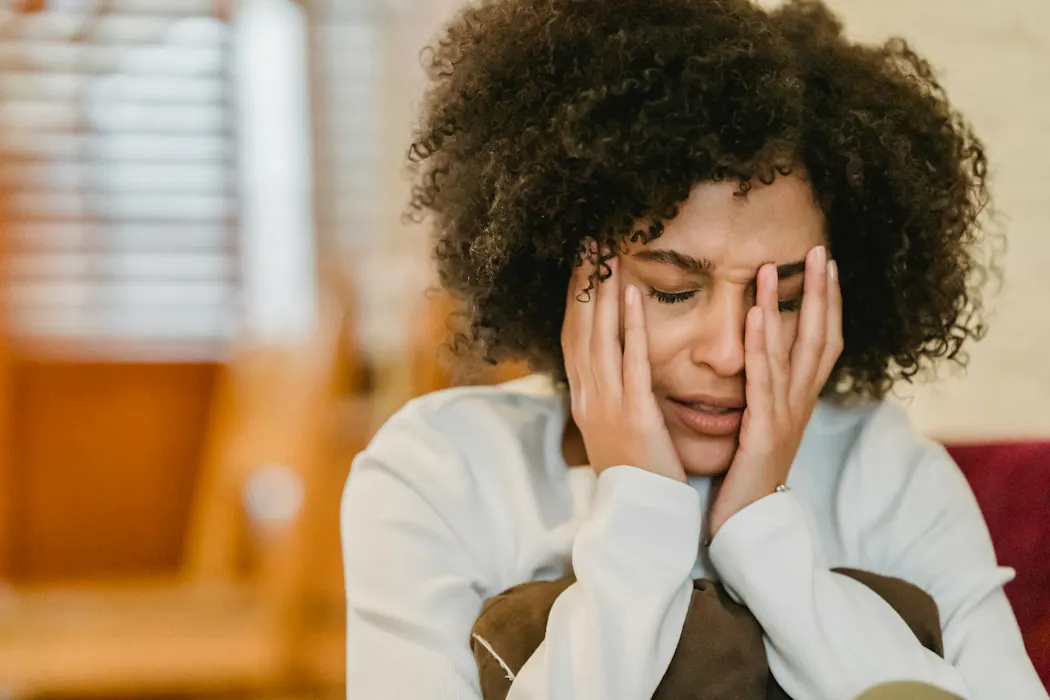
Reading view

Feral horse numbers in Australia’s alps are on the rise again. It’s time to act
Theo Clark/Getty

Last year, we noted early signs of recovery in Australia’s high country, following the reduction of feral horse numbers.

These had dropped from 17,000 in 2023 to around 3,000 in 2024 across Kosciuszko National Park, thanks to the management efforts of NSW National Parks staff and contractors.

But horse numbers are already bouncing back. The latest survey data estimate between 6,476 and 16,411 horses now roam the national park.

So, what happened?

A mild summer

The answer is simple. If feral horse eradication is impossible — or politically and legally off the table — then continuous management of horse numbers is essential.

With no aerial culling within the national park in 2025, two factors likely contributed to this rapid rebound.

First, horses move. Control efforts have largely focused on remote parts of Kosciuszko National Park, away from people, trails and roads. Once resident herds in these areas have been culled, horses from surrounding regions – particularly adjacent state forests – likely moved in.

Second, horses breed. After a mild summer with significant rainfall across the high country, most mares will have bred. During Autumn fieldwork, we observed large numbers of foals accompanying herds throughout the region.

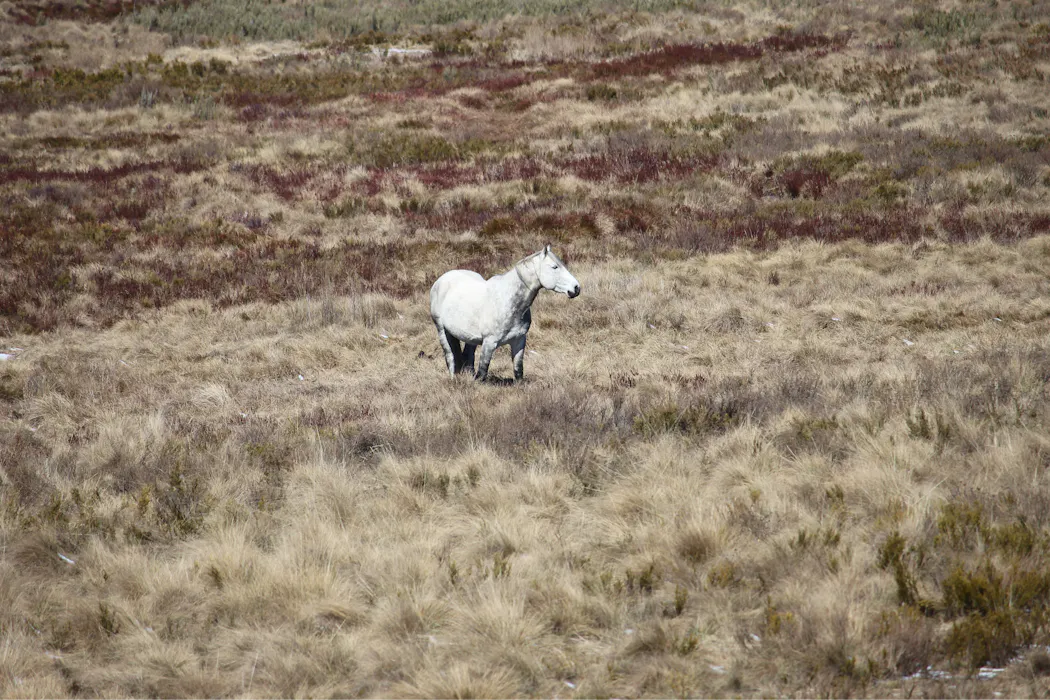
A herd of feral horses in an alpine meadow.
If feral horse numbers aren’t rapidly reduced again, things will get worse for the alpine environment and the horses themselves. crbellette/Getty

A numbers game

If numbers aren’t rapidly reduced again, things will only get worse, both for the fragile alpine environment and the horses themselves. With winter conditions imminent, many horses will struggle to maintain condition as snow covers grazing areas and energy reserves are depleted.

Ironically, some of the strongest opposition to culling overlooks these very real animal welfare consequences. Leaving horse populations unmanaged may ultimately result in prolonged suffering from starvation and exposure, compared with humane control conducted by trained professionals.

Forecast El Niño conditions may further compound these pressures, with drought likely to persist through spring and summer. As water and food become scarce, horses will likely concentrate around creeks, wetlands, alpine bogs, fens and meadows. These are precisely the alpine ecosystems most vulnerable to trampling, grazing and erosion.

And this is where hard-fought gains will be rapidly lost. Banks will become eroded, clear waters fouled and our fabled high plains replaced by overgrazed paddocks.

A long-term effort

We don’t need to look far to see what happens when a population of feral animals goes unchecked. Great Keppel Island, for example, is overrun with a thousand or more feral goats, denuding dune and forcing increasingly exasperated locals to erect fences around their properties

As with horses in Kosciuszko, political hesitancy and delayed action on Great Keppel have allowed ecological damage to escalate while management becomes increasingly difficult and expensive.

New South Wales Environment Minister, Penny Sharpe, recently said the latest Kosciuszko feral horse numbers confirmed the need for “continued management”, required to meet the target of reducing feral horse numbers to 3,000 by mid-2027.

But where did that target come from? It’s a holdover from the repealed Kosciuszko Wild Horse Heritage Act and, when even basic population growth models are applied, the implications become clear. Maintaining a population of 3,000 horses would still require the removal of well over 1,000 animals every two years — indefinitely.

In other words, there is no “set and forget” solution. If horse populations are to remain capped, ongoing culling will be necessary in perpetuity.

Alternative solutions?

Some have suggested that instead of culling, rehoming and fertility control should be used. While many Australians might like the idea of a “brumby” or two grazing in the back paddock, the number of landholders willing and able to care for these animals is far smaller.

Even retired racehorses struggle to find suitable long-term homes once their racing careers end, highlighting the practical limitations of large-scale rehoming programs.

Likewise, although various fertility control options have been suggested, vaccines, intra-uterine devices or surgical sterilisation are all invasive procedures for which horses need to be caught and sedated. These may be effective to maintain a small herd in an easily accessible area. But previous assessments have warned such an approach must be carried out in concert with large scale culling efforts.

Population dynamics vs politics

We don’t have to look far to find other examples of how invasive species management could be improved. In 2016, then New Zealand Prime Minister John Key introduced a bold plan to rid Aotearoa of all introduced predators in the next 30 years.

Predator Free 2050 is the first national-scale initiative to reduce the impacts of introduced predators, capitalising on the invention of new technologies including real-time automated species identification to trap targeted species and mobilising neighbourhoods across the country to join the effort.

Australia faces a different set of challenges — larger landscapes, divided jurisdictions and deeply entrenched cultural and political debates around invasive species management.

But the broader lesson remains the same: meaningful conservation outcomes require long-term commitment, clear targets and the willingness to act before ecological problems become too difficult to reverse.

The Conversation

David M Watson receives funding from the Australian Government (DAFF and DCCEEW).

Patrick Finnerty does not work for, consult, own shares in or receive funding from any company or organisation that would benefit from this article, and has disclosed no relevant affiliations beyond their academic appointment.

  •  

How common is sex-selective abortion in Australia, really?

The Good Brigade/Getty Images

New South Wales parliament is debating a bill this week that seeks to ban abortions performed on the basis of fetal sex.

If passed, health practitioners who perform such abortions would face professional misconduct charges and lose indemnity insurance coverage for the procedure.

At first glance, this might appear to be a defensible measure to address a practice that sits uneasily with gender equality.

But there’s little evidence sex-selective abortions are occurring in Australia.

The South Australian Law Reform Institute has warned such prohibitions would restrict and delay access to time-sensitive care. They would also prove unworkable and unenforceable.

When and how can you determine fetal sex?

Fetal sex can be determined through non-invasive prenatal testing. This blood test is taken from the pregnant person between ten and 14 weeks’ gestation, and costs around A$500 to $800 out of pocket.

Around 25–30% of pregnant people use this type of testing.

Fetal sex can also be determined through routine ultrasounds performed at around 20 weeks’ gestation.

When can you get an abortion?

Australia progressively decriminalised abortion between 2002 and 2023. It’s now legal in all states and territories.

Decriminalisation shifted decision-making power from doctors to pregnant people, recognising them as the authorities on their own pregnancies. Pregnant people are no longer required to account for their decisions to medical professionals.

However, gestational limits apply in most states and territories (aside from the Australian Capital Territory), ranging from 14 to 24 weeks.

Beyond those limits, medical signoff is still required.

What does the law say about sex-selective abortion?

The law varies by state.

South Australia explicitly prohibits it.

During its decriminalisation debate, NSW passed a statement of parliamentary opposition to the practice.

No other state or territory has specific provisions.

How common is sex-selective abortion?

The evidence base for the bill is thin. The SA Law Reform Institute found “little, if any, evidence that abortions purely on the basis of gender are a real issue in Australia”.

A 2020 NSW review similarly found sex-selective abortions “are rarely performed for the sole purpose of sex selection”.

Proponents cite a recent study as evidence of the practice among people with specific migrant backgrounds.

The study’s own authors, however, describe their findings as “indirect evidence” of a skewed sex ratio at birth. They note only that this “may be indicative of prenatal sex selection” and explicitly state it “does not establish causality”.

It’s actually an anti-abortion strategy

Sex-selection amendments are a well-documented anti-abortion strategy designed to foment stigma and discourage health practitioners from providing abortions.

This bill is one of several currently before state parliaments to limit access to abortions. It’s part of a coordinated effort to erode abortion access and contest the principle that abortion is health care.

Legislation is only part of the strategy. The parliamentary process is also used as a mechanism to advance narratives that frame abortion as morally indefensible. The goal is to undermine not just access, but the legitimacy of abortion itself.

The language of the second reading speech reflects this. The speech contains no reference to fetuses or embryos, only “unborn babies” and “girls”.

There are no “pregnant people” or even “women”, only “mothers”. Doctors who perform abortions are “abortionists.” Advocates are the “pro-abortion lobby”.

This is the lexicon of the anti-abortion movement. It constructs a worldview in which the fetus has independent moral status, the pregnant person exists only as a mother, and abortion is something only the unscrupulous would defend.

The bill’s stated justification rests on one study’s indirect and observational findings about “two migrant communities”, who are portrayed as culturally at odds with Australian values of gender equality.

The bill positions abortion restrictions as a protective, progressive measure, obscuring Australia’s uneven and incomplete record on gender equality.

What could the bill mean for pregnant people and providers?

In practice, the bill reintroduces medical gatekeeping for pregnant people. It will return pregnant people to a regime in which their reasons for terminating a pregnancy are subject to medical and legal scrutiny.

This burden is likely to fall unevenly on racialised communities: in practice, people from some ethnic communities may face greater scrutiny of their decisions from health providers.

It also imposes greater professional and personal risks on abortion providers. Australia already faces a shortage of abortion providers. Exposing health practitioners to professional sanction and voiding their indemnity insurance deters providers.

The international literature is clear: bans on sex-selective abortion do nothing to address the underlying causes of son preference. Those causes are social, economic and cultural.

What sex-selective abortion bans do is restrict reproductive autonomy – itself foundational to gender equality. This bill will not advance gender equality. It will restrict abortion access and expose providers to sanction.

The Conversation

Erica Millar receives funding from the Australian Research Council. She is a member of the South Australian Abortion Action Coalition.

Anna Noonan does not work for, consult, own shares in or receive funding from any company or organisation that would benefit from this article, and has disclosed no relevant affiliations beyond their academic appointment.

  •  

Hanson’s gas policy follows the far-right playbook: attack ‘elites’ and push for drilling

Mick Tsikas/AAP, Hakim/Canva, The Conversation, CC BY

New polling this week put One Nation ahead of Labor in the primary vote for the first time, as the party’s latest policy announcements signal greater political ambition.

One Nation recently unveiled its new oil and gas policy at the Australian Energy Producers Conference in Adelaide. It promises “vastly greater returns” to an electorate “rightly unhappy” with the distribution of Australia’s natural resources.

While One Nation’s gas policy is not entirely new, the party’s growing prominence means announcements will attract greater scrutiny.

So, what is the party proposing?

Embracing government intervention

The Norway-style gas proposal is One Nation’s first substantial intervention in current tax and energy policy debates. It’s a marked shift away from the social and migration issues that have long defined the party.

Norway heavily taxes its oil and gas extraction profits. It reinvests the wealth into the world’s largest sovereign fund to spent on social initiatives.

Echoing the Trump administration’s willingness to buy into resource and technology companies, One Nation’s announcement reflects a broader embrace of economic interventionism: where a government actively modifies a free-market economy.

The announcement shows a stark differentiation between One Nation and The Liberal Party on the economy. And it comes at a time when the parties have increasingly overlapped on issues like migration.

Liberal frontbencher James Paterson attacked the policy as socialist. He described it as “borrowed from Venezuela and Hugo Chávez”.

One Nation’s policy

Despite the splashy announcement, One Nation’s gas policy was not entirely new.

Hanson has pointed to a Norway-style sovereign wealth fund as a model for gas revenue policy since at least 2017. Senator Hanson has also frequently attacked parliament for being “hostage” to multinationals resource companies operating in Australia.

In announcing the policy, Senator Hanson committed One Nation to encouraging more gas and oil exploration and production. Hanson also said taxpayers should get a “fair share” on profits from Australian resources.

Key elements of the policy include replacing the current Petroleum Resource Rent Tax, which places a 40% tax on the profits related to the extraction of petroleum, gas and condensate.

Instead, One Nation would give the government the option to take a 30% stake in future drilling projects, with profits directed into a new sovereign wealth fund.

It’s not the first time this has been suggested. Back in May 2017, Hanson proposed One Nation adopt a system of royalties paid on production, saying such a scheme would raise up to $10 billion per year.

Tapping into public grievance

One Nation’s position sets it apart from both major parties.

Labor and the Coalition hold sharply differing views on energy and Net Zero.

But the two parties share common ground on one point: neither supports increased taxation measures on the gas industry, particularly amid global uncertainty caused by the US-Israel war with Iran.

With its policy, One Nation is tapping into real public grievance. Others, such as The Australia Institute, the Greens, and Independent senator David Pocock have spent years pointing out the same basic unfairness: Australia exports vast quantities of gas, companies profit enormously, and the taxpayer gets very little in return.

But the timing of One Nation’s announcement deserves closer scrutiny. It was not made to a general audience but a gathering of energy industry heavyweights. Reports suggest the announced version was softened after consultations with industry representatives.

Pushing back at the ‘green agenda’

Far-right parties have a distinctive approach to energy policy – they simultaneously cast multinationals as “elites” who take wealth from ordinary people, while advocating for gas drilling expansion themselves.

Hanson has adopted US President Donald Trump’s slogan – “drill, baby, drill” – to spruik her party’s approach to fossil fuels. And she has called on the Labor government to push their “climate change bedwetters” to the side, and expand oil and gas exploration in the interest of energy security.

One Nation blames environmental reforms for triggering an energy crisis, which it claims has cost everyday Australians. Ending net zero is, accordingly, a “massive part” of One Nation’s gas policy, which they claim will safeguard fuel security.

Hanson has described One Nation’s policy as “partnering with the oil and gas industry, rather than treating it as the enemy”.

Internal tensions

This policy debate risks exposing potential tensions between the federal and state branches of One Nation.

Efforts by the South Australian Labor government to repeal a ten-year moratorium on fracking in the south east of the state were blocked by the newly elected One Nation MPs and Liberal Opposition.

The inconsistency between the federal party’s pledge to expand gas exploration and the state branch’s efforts to block it have created headaches for their leader. Hanson distanced herself, dismissing it as a decision for the state branch.

Heading into the next election, One Nation wants contrast with the Liberals on economic interventionism, while setting itself apart from Labor, the Greens and the independents on climate and environmental policy. It is calculated decision from a party that senses its moment.

The Conversation

Emily Foley receives funding from the Australian Research Council.

Jordan McSwiney receives funding from the Australian Research Council, NSW Government, and NSW RNA Research & Training Network.

Kurt Sengul receives funding from the Australian Research Council, NSW Government, and NSW RNA Research & Training Network

  •  

How the food industry shapes your child’s fussy eating

Imad 786/Unsplash

Your toddler demands a Bluey-themed yoghurt and has a tantrum when offered something else. If it’s not a Nutella sandwich, your child’s lunchbox comes home uneaten. And the dinner table can become a battleground unless there are sausages, chicken nuggets or pizza on the plate.

These examples of fussy eating are everyday experiences for many parents.

Fussy eating, also known as picky or selective eating, is common, and can be frustrating. It’s often seen as a child or parenting issue. But it’s not merely shaped by what parents do, or the characteristics of the child.

Our new research suggests food fussiness and children’s eating habits are also shaped by commercial interests in food.

This includes mass produced foods that are high in sugar, salt and additives, combined in irresistible combinations and that are heavily promoted to children to maximise sales.

This has important implications for children’s health, and sets up tensions between what parents want their children to eat, and what they’ll actually eat.

What is ‘fussy eating’?

Fussy eating refers to having strong preferences for specific foods. Sometimes it involves not trying new foods, eating a limited variety of foods, or avoiding foods with a specific taste, texture or appearance.

Most research estimates 10–30% of children two to six years old are considered fussy eaters, peaking at around three years old.

The origins of food fussiness lie in the age-old practice of learning which foods are safe to eat and provide enough energy. This is why we often like sweet foods and not bitter ones.

Today, food companies capitalise on this biology of survival. They engineer and market foods to appeal to children, and in ways that confuse their parents.

What we did and what we found

We interviewed 34 parents of children aged one to 18 years old about their children’s eating habits and how they navigated them.

Parents talked about how they felt pitted against powerful food companies that influenced their children’s tastes.

Their comments also revealed fussy eating in children older than most earlier research presumes. We found this is developing in the primary school years when children are exposed to more ultra-processed foods.

Here are some of the common themes.

1. ‘Pester power’

Parents felt responsible for teaching their children about healthy eating, yet this was challenging with so much food marketed directly to children.

Such concerns of children’s “pester power” have arisen with concerted efforts by food corporations to market foods designed to maximise shareholder returns.

One mother of three pre-school and primary school-aged children talked about marketing “bad” foods to kids or placing them in reach:

[…] my 2-year-old is always like Bluey!!! […] You almost don’t want to take your kids to the supermarket […] Of course, my kids [are] gonna throw a tantrum – you’ve got a lollipop at his eye level.

2. Conflicting information

Parents today are swamped with misleading, confusing and often false information about food. This makes it challenging for parents to discern what’s healthy or unhealthy.

A mother of three primary school aged-children said:

You think you’re getting something that’s actually healthy because […] on the packaging, it says it’s healthy. So you trust it […] but it’s actually not.

3. Impossible binds

Social situations that normalise processed foods influence the foods children see as desirable and place parents in impossible binds. A father of three pre-school and primary-school aged children said:

My son used to love hummus. But everyone else around eats doughnuts or chips […] It’s a battle that we’re not gonna win.

In this context, many parents were concerned about pushing healthy food too hard. They worried this could have the opposite effect in the longer term. A mother of two primary school aged children said:

It’s a Catch-22 […] if I put Nutella toast in his lunch box, he’ll eat it. But then do I stay strong and not put shit in his lunch box, knowing that he’s going to be starving and be horrible at the end of the day? […] I don’t want to make it a huge thing because I worry about making food a problem.

Fostering compassion and government action

Dietitians advise parents not to pressure children about food. They say not to hide vegetables, and not to use food as a reward. Instead, they suggest eating together at a table, and persisting with offering healthy options.

Our findings suggest this advice falls flat if it doesn’t consider the commercial food environment. We suggest that more compassion, rather than shame, is needed towards parents about the food they provide.

Fussy eating can be a symptom of commercial interests in selling certain kinds of products. Recognising this may encourage people to demand governments do more to support children’s healthy eating.

Ultimately, food fussiness is much more than arguments at the dinner table. It is also a challenge that involves governments and the food industry.


We would like to acknowledge the following co-authors of the study mentioned in this article: Imogen Harper, Katherine Kenny, Holly A. Harris and Fiona Wright.

The Conversation

Juliet Bennett receives funding from the Charles Perkins Centre Jennie Mackenzie Research Fund, the Faculty of Arts and Social Sciences, University of Sydney, and a family foundation grant.

Alex Broom has received ARC funding and is currently ARC Academic Director (Social, Behavioural & Economic Sciences).

David Raubenheimer receives funding from the ARC and NHMRC.

  •  

Need a doctor or nurse after hours? How to get virtual or in-person care in Australia – including for free

Guido Mieth/Getty Images

If you or someone you’re caring for has a medical emergency, visit your nearest emergency department or call 000.

But what if it’s not an emergency, or you’re not sure? Sometimes you can’t wait wait until 9am or Monday morning to see a doctor or access health care.

You might have a fever that’s not subsiding, a sprain that could be a break, a painful urinary tract infection, or a distressing situation that demands immediate mental health support.

Here are your options for accessing timely health care, in-person and virtually – including some that are free.

Medicare Urgent Care Clinics

Medicare Urgent Care Clinics provide bulk-billed care by a general practitioner (GP) for non-life-threatening illnesses and injuries.

Patients can walk in without an appointment or referral, and can access other services such as blood tests and X-rays. There are no out-of-pocket costs.

You can find your local clinic here.

Search engines to find a GP appointment – in person or online

Health service search engines such as Healthengine and HotDoc can help you find GPs and book appointments.

You can filter search results by types of services and telehealth availability, including the “GP telehealth on-demand option within 15 minutes” on Hotdoc.

Many will come with out-of-pocket costs.

Home visits

In-person home doctor visits for urgent, episodic illness or injury can also be arranged through options such as 13SICK National Home Doctor Service, DoctorDoctor, Hello Home Doctor Service, Sydmed, 13 CURE and OnCallDrs.

These are often bulk billed.

A call with a nurse or doctor

The new 1800MEDICARE helpline is a free 24/7 service where you can speak to a registered nurse about any health concern.

They will listen to your concerns, assess your symptoms and provide advice on next steps. This might mean looking after yourself at home, getting help from a GP, or attending an Urgent Care Clinic, pharmacy or emergency department.

If the 1800MEDICARE nurse advises you to see a GP within 24 hours, you may be offered a telephone or video call back from a 1800MEDICARE GP. These GPs can provide prescriptions via SMS.

Virtual emergency departments for non-life-threatening emergencies

Virtual emergency departments are free, online emergency departments that treat non-life-threatening emergencies such as pain, sprains, infections, respiratory illnesses, gastroenteritis, high blood pressure, pain, infections, minor burns and rashes.

Examples include:


Read more: What is a virtual emergency department? And when should you ‘visit’ one?


Another similar option is My Emergency Doctor, which offers patients access to specialist emergency doctors via video call or telephone 24 hours a day, seven days a week. However, this service costs $150.

Medicines and pharmacists

Some pharmacies operate on extended business hours, including 24 hours. You can find a pharmacy near you at this link, with the option to filter by “extended hours”.

In some circumstances, pharmacies can issue a small amount of a medicine if you’ve run out.

In some states and territories, pharmacists can provide medicines such as antibiotics for simple urinary tract infections without a prescription.


Read more: It’s now easier to get antibiotics for UTIs. But here’s what to do if your symptoms don’t go away


For people living in remote Australia, the Royal Flying Doctor Service (RFDS) runs a Medical Chests program. Medical chests contain a range of pharmaceutical and non-pharmaceutical items, including prescription-only medicines, which RFDS doctors may prescribe after a phone consultation.

Pregnancy, birth and children

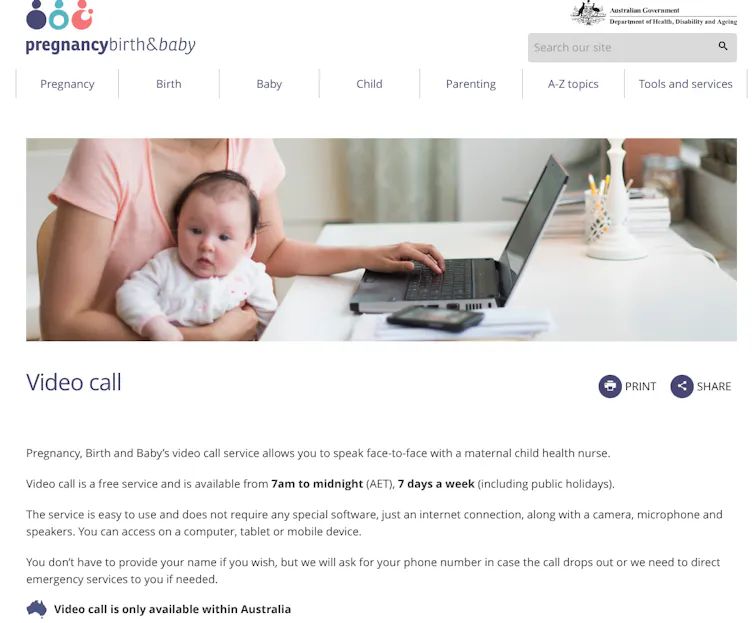
Pregnancy, Birth and Baby is a free national service that provides support to expecting parents, and parents of children from birth to five years of age.

You can speak to maternal and child health nurses via phone, by calling 1800 882 436, or video call about you or your baby, between 7am and midnight, seven days a week.

If video call isn’t an option, you can call 1800 882 436. Screenshot from Pregnancy Birth Baby

CubCare is another virtual urgent care option which provides access to paediatric emergency doctors, for a fee.

Dental care

The Australian Dental Foundation runs a free 24/7 Emergency Dental Hotline which can help you work out the urgency of your issue and your next steps.

National Emergency Dentist is a private health service which connects patients to emergency dentists offering same-day and after-hours appointments, for a fee.

Mental health phone support

Mental health support will depend on your individual needs and background. You can access mental health support after hours through these call services (some also have online chats):

Aboriginal and Torres Strait Islander services

  • 13 YARN: 24/7 crisis support phone line operated by and for Aboriginal and Torres Strait Islander Peoples

  • Yarning Safe'N'Strong: 24/7 support available to Aboriginal and Torres Strait Islander people who need to have a yarn with someone about their wellbeing

  • Brother to Brother: 24/7 crisis line providing phone support for Aboriginal men, staffed by Aboriginal men, including Elders.

LGBTQIA+ services

  • QLife: phone and webchat that operates during afternoons and evenings seven days a week to support LGBTQIA+ people.

Communication assistance

The National Translating and Interpreting Service offers support to non-English speaking people for their consultations. This service is typically free, covers 150 languages and can be accessed after-hours. Register here.

The National Relay Service provides assistance to people with hearing or speech difficulties during their medical consultations.

The Conversation

Mahima Kalla received previous funding from the Digital Health Cooperative Research Centre to help build a patient consultation summary application within Healthdirect's video telehealth platform.

Feby Savira Feby received a Priority Primary Care Centre Fellowship (2023-2025) supported by the Western Victoria Primary Health Network and was involved in the evaluation of Priority Primary Care Centres in the Western Victoria region.

Kara Burns receives funding from the Australian General Practice Foundation to research the scaling of digital maternity care in remote general practice. 

Sathana Dushyanthen does not work for, consult, own shares in or receive funding from any company or organisation that would benefit from this article, and has disclosed no relevant affiliations beyond their academic appointment.

  •  

What’s the difference between intrusive thoughts and suicidal thoughts?

Liza Summer/Pexels

We have thousands of spontaneous thoughts a day. Most of them are mundane, such as “Where did I leave my car keys?”

But every now and then a strange and distressing thought might pop into our mind, such as “What if I hurt myself or someone I care about?”

So, what’s the difference between these random (and sometimes scary) intrusive thoughts and suicidal thoughts?

And when can our thoughts be a warning sign we need help?

What are intrusive thoughts?

Intrusive thoughts are sudden, involuntary thoughts, mental images or urges. They often cover difficult themes such as causing or experiencing harm, contamination, making a mistake, or sexual or religious content.

Sometimes these thoughts can feel alarming or upsetting, especially if they’re unwanted and we feel an urge to get rid of them.

But most people experience intrusive thoughts and having them doesn’t mean you’re a bad person or will necessarily act on them.

It’s unclear exactly why we have intrusive thoughts. It might reflect the natural tendency of our minds to wander. This process is usually helpful, and can help us form new understandings or generate new ideas.

But under stress having intrusive thoughts can become less helpful, particularly when they are unwanted, upsetting or feel hard to control.

So if intrusive thoughts are mostly a signal of stress, not danger, when do they become a problem?

If these thoughts cause you distress and make it hard to manage everyday things such as work, school or relationships, this could be a sign of a mental health disorder such as obsessive-compulsive disorder (OCD), an anxiety disorder, depression or post-traumatic stress disorder.

What should you do about intrusive thoughts?

The more we try to push intrusive thoughts away, the more they return and the more intense they can become.

However, a type of psychological treatment that pairs cognitive behaviour therapy with “exposure and response prevention” is effective for dealing with intrusive thoughts in anxiety or OCD.

This involves allowing intrusive thoughts to be present without trying to control them, then gradually reducing less helpful responses (such as scrolling on your phone to try to block out the thought), so the brain learns the thoughts are not dangerous.

You can try a simple version of this at home:

  • label the thought (for example, “This is an intrusive thought.”)

  • reduce unhelpful coping mechanisms (for example, drinking alcohol to block out unwanted thoughts)

  • let the thought pass (for example, try a visualisation exercise where you imagine the thought drifting down a stream, without engaging with it or trying to get rid of it)

  • refocus your attention on enjoyable activities such as going for a walk, chatting to a friend, or focusing on a task like cooking. This is not to “escape” the thought but to let it sit in the background while you focus your attention on what’s important to you.


Read more: Unwanted unacceptable thoughts: most people have them and we should talk about them


What if your intrusive thoughts are about death, self-harm or suicide?

Intrusive thoughts about experiencing harm such as your own death, self-harm or suicide are surprisingly common. We can also have intrusive thoughts about harm coming to others, including loved ones.

While they can feel upsetting, having thoughts such as “I wish I didn’t exist” doesn’t necessarily mean a person wants to or will act on them. However, it may indicate they are feeling emotionally overwhelmed, anxious or depressed.

Intrusive thoughts about your own death and specific ways of dying can also mean something more serious. It can lead to a greater risk of suicide or self-harm.

When do intrusive thoughts become a warning sign?

If intrusive thoughts are causing you distress, impacting your day to day life or you’re having thoughts about suicide, these are clear warning signs it’s time to get help.

Other important warning signs can include:

  • more frequent or persistent thoughts or images about death or suicide

  • increased hopelessness

  • actively thinking about, planning or preparing for death

  • behavioural changes such as withdrawing from others.

How can I get help and what can I do to help someone else?

You don’t need to manage these thoughts alone.

If you notice these warning signs in yourself, it’s important to ask for support. Talking to someone such a GP, psychologist, psychiatrist, trusted family member or friend can be a good first step.

If you’re having intrusive thoughts about suicide, your GP may ask you to complete a safety plan, which is a helpful reminder of ways to get support and keep safe when difficult thoughts, feelings or urges come up.

If you notice these signs in someone else, it’s important to check-in with how they’re doing at an appropriate time and in a caring way.

Here’s a four-step guide:

  1. Ask directly about suicide. This won’t put the idea in someone’s head. When done sensitively, directly (“Are you thinking about suicide?”) and honestly, it can help people feel less alone.

  2. Listen to the person, take them seriously and stay with them.

  3. Get help (see examples below).

  4. Follow-up and check in regularly.

For more information and support

For more information and resources about intrusive thoughts and OCD you can visit Lifeline, or for young people ReachOut or headspace.

You can visit This Way Up or MindSpot to access evidence-based online treatment programs for intrusive thoughts and OCD.

There are also online treatments for kids and teens with OCD.

If you’re having distressing thoughts about death and dying or suicide and need someone to talk to you can call:

  • Lifeline: 13 11 14

  • Beyond Blue: 1300 22 4636

  • Suicide Call Back Service: 1300 659 467


We would like to acknowledge the contribution of Ann Martin and Jill Newby to this article.

The Conversation

Emily Upton receives funding from an Australian Government Research Training Program Scholarship.

Kayla Steele does not work for, consult, own shares in or receive funding from any company or organisation that would benefit from this article, and has disclosed no relevant affiliations beyond their academic appointment.

  •  

Independent MPs are considering forming a party. The money helps explain why

Federal independent MPs have been in discussions about forming a political party. The irony won’t be lost on some in the Liberal Party, who have long argued the Teal independents already look and act like one.

Many independents already coordinate on policy, vote in similar patterns, and draw on shared fundraising vehicles such as Climate 200. But the independents’ reasons for considering a party may have less to do with political strategy and more to do with money.


Read more: View from The Hill: would a ‘party of independents’ be a contradiction in terms?


Federal member for Warringah Zali Steggall said this week that Australia’s federal donation laws “favour major party structures” and amount to “major parties trying to rig the game for their benefit”. Other crossbenchers, including Senator David Pocock, have signalled openness to the idea, even if several others have already ruled it out.

Much of the debate has centred on whether forming a party would betray the independent brand. In a study published in the Australian Journal of Political Science, we examined funding returns spanning multiple electoral cycles for minor parties, independents, and the major parties. Our findings suggest that Steggall’s complaint reflects something deeper than just the recent donation reforms. The financial disadvantages facing independents are enduring structural features of the political finance regime.

Financial barriers for independents

Consider public funding. After each federal election, the Australian Electoral Commission distributes money to parties and candidates based on the number of votes they receive. This seems relatively neutral, but it has an inbuilt asymmetry.

Parties run candidates across multiple seats and can accumulate votes nationally. Independents contest a single electorate. Even an independent who wins comfortably accumulates a far smaller absolute vote total than a party contesting dozens of seats (successfully or otherwise).

Our research found that public funding makes up a smaller share of independents’ total income than it does for parties. For minor parties, public funding is their single largest funding source.

Corporate donations tell a similar story. Corporate donors often give strategically, directing money toward actors who can offer policy access and influence. Major parties, as parties of government, are the obvious destination.

Independents, who can offer just a single vote – and for those in the House, a single vote in a chamber dominated by government – attract little from corporate donors. Even minor parties with balance-of-power positions in the Senate do marginally better.

The result is that independents are overwhelmingly dependent on individual donations – and mostly on a small scale. In many ways, this funding model is genuinely democratic. But it does leave independents with a narrow funding base, and few alternatives when donations fluctuate.

The volatility problem

The fluctuation in funds for independents can be severe. We measured how much political parties and independents received in donations from year to year, and found independents tend to experience significantly more volatility than parties. One independent in our study showed year-on-year fluctuation more than four times higher than any other electoral actor in our sample.

The explanation is organisational. Parties maintain permanent infrastructure that enables continuous fundraising: membership databases, regular donor programs, associated entities, dedicated staff.

Independents typically lack most, if not all, of these advantages. Their fundraising surges before elections and collapses afterwards, creating a cycle of boom and bust.

Some minor parties, notably the Greens, have built funding operations nearly as sophisticated as the major parties. The gap between an established minor party and a major party is one of scale. Conversely, the gap between an independent and a party of any size is one of structure.

Recent reforms amplify these issues

These structural disadvantages have long existed. But the Electoral Legislation Amendment (Electoral Reform) Act 2025, due to take effect in January 2027, is set to amplify them.

Under the new rules, a single donor can give up to $50,000 a year to an independent candidate. But the same donor could give $50,000 to each branch of a major party, meaning up to $450,000 to the major parties across their state and federal divisions.

National spending is capped at $90 million for parties, but $800,000 per electorate for independents. And while parties can move money from safe seats to flood marginal electorates with general advertising, independents have no equivalent mechanism. Public funding has also increased from $3.50 to $5 per vote, a change that disproportionately benefits parties with large national vote totals.

Former independent federal MPs, Zoe Daniel and Rex Patrick have launched a High Court challenge to these provisions. Whatever the outcome, the reforms illustrate the broader pattern our research identifies: a regulatory framework built around party structures that treats independents as an afterthought.

The independents’ dilemma

The financial logic of forming a party is clear. A party structure would give current independents access to higher donation caps, national spending allowances, shared fundraising infrastructure (including associated entities), and the organisational capacity to cultivate donors between elections.

It would pool electoral support across multiple seats, increasing public funding returns. It could create the kind of permanent organisation that smoothes revenue and reduces the precariousness that currently defines independent finances.

But a significant part of what makes independents attractive to voters (and smaller donors) is precisely that they are not a party. The community and Teal independent movements have mobilised support around local identity, independence from partisan discipline, and a rejection of major party culture.

Climate 200 emerged specifically to support independents without party structures. Would a “party of independents” retain any of that appeal? The split among independents this week suggests there is no immediate answer.

The Conversation

Josh Holloway receives funding from the Australian Research Council.

Emily Foley receives funding from the Australian Research Council Discovery for her work on Hiding in Plain Sight: 'Associated Entities' and Australian Democracy.

Rob Manwaring receives funding from the Australian Research Council - Discovery project on political parties and associated entities

Narelle Miragliotta does not work for, consult, own shares in or receive funding from any company or organisation that would benefit from this article, and has disclosed no relevant affiliations beyond their academic appointment.

  •  

Men film themselves sexually abusing sedated women and share it with other men online. Why?

Erik Mclean/Pexels, The Conversation, CC BY-SA

The world watched on in horror in 2024 as Dominque Pelicot and 50 other men were tried in a French court for repeatedly drugging and raping Gisele Pelicot over almost a decade. All of them were found guilty.

While such horrific abuse can feel far away and rare, it’s more widespread than many realise. There are private online communities with thousands of members all over the world, including in Australia, trading in video and photos of sedated women being abused.

A recent investigation by CNN revealed there are thousands-strong groups on messaging app Telegram who share tactics and videos assaulting and raping their girlfriends and wives.

In April, France launched an investigation into the website Pelicot used to recruit dozens of strangers to rape his wife. During the trial, police uncovered 20,000 videos and photos of his wife’s abuse, recorded by Pelicot himself.

So why do men do it, and how can we stop it?

Global, organised abuse

While the CNN report and Pelicot’s case shocked the world, these cases are not unique, with private pages and group chats being uncovered in Australia, Canada, Ireland, the United Kingdom, Germany, Italy, Spain, China, and Poland.

These reports show how widespread this issue is, underscoring that these are not isolated episodes. They are organised crimes committed by dedicated communities that support such violence, hosted on platforms that provide the essential infrastructure.

One report from the New York Times reported China-based group chats with as many as 100,000 members. A study of Telegram networks across Italy and Spain showed groups with nearly 25,000 users.

The Telegram group CNN reported on had more than 1,000 members with some videos posted in the group amassing over 50,000 views.

The groups identified in these stories and reports are part of a broader digital ecosystem often referred to as the manosphere, an online network of group chats, influencers and communities that perpetuate misogynistic ideas.


Read more: From violence to sexism, the manosphere is doing real-world harm


Why are people doing this?

As the CNN report puts it “while the platforms vary, inside such groups, video is king”. The more perverse, humiliating and risky the visual material, the higher the engagement and the greater the reward.

Telegram, like other platforms, provides financial incentives for engagement. Members can earn points through their activity and earn a place on leader boards. Telegram has its own internal crypto system, which members can spend through affiliate links.

Research from Australia shows men who non-consensually share images and videos online are motivated by more than revenge. What these men crave is the chance to prove their manliness to other men.

While research on perpetrators of online violence is still emerging, those who study the cultures of these online groups observe that a kind of homosocial bonding is created when share their abuse with one another. As feminist philosopher Marilyn Frye put it:

from women they want devotion, service and sex. Heterosexual male culture is homoerotic; it is man-loving.

While the men in these groups are sharing images and videos of women, commenting on women’s bodies, degrading women and objectifying women, it is men who are at the centre of the exchange. They seek the validation and praise of other men. One way this is achieved is by getting comments and likes on their videos.

Another popular form of bonding is the solicitation of comments from other members. One study described how users requested descriptions of what others would do, such as “describe how you would rape this bitch”.

Others commission sexualised deepfakes – realistic but fake sexually explicit images – using nudify apps and other artificial intelligence (AI) platforms.

In these groups, the practices and the language are meant to degrade women, to reduce them to raw material, objects to be consumed to satiate men’s desire, and to reinforce the bonds between men. Misogyny is the “social glue” that holds these communities together.

What can we do about it?

Traditional approaches and responses to gender-based violence still tend to individualise the problem, focusing on single perpetrators. What this approach fails to do is address the social, structural and technological enablers of this abuse.

Take the Telegram platform: why has this become the safe haven for perpetrators?

Telegram has specific design affordances that both enable and amplify image-based sexual abuse.

Groups can have up to 200,000 members. End-to-end data encryption allows for anonymity, and its content moderation regulations are weak. Telegram allows users to share visual and audio material (including large files). And perhaps most importantly, it has interactive features: likes, comments and disappearing messages.

All of these features collide to create the perfect storm for perpetrators. They are large, private, largely unregulated and allow them to anonymously share non-consensual sexual material.

There are efforts to stop this abuse, with emerging legislation such as the Take It Down Law in the United States that came into effect in May, and regulatory bodies such as the eSafety Commissioner in Australia, that aim to tackle the creation of image-based sexual abuse (including using sexualised deepfakes).

While these laws are aimed at individual perpetrators, the Pelicot case in France prompted the arrest of the creators of the website Dominique used to recruit others to assault his wife. In 2024, Telegram’s founder was arrested and charged in France for allowing illicit behaviour on the platform, including the distribution of child sexual abuse material. The case is still before the courts.

These arrests represent a welcome shift in how we tackle this issue by holding tech executives, not just their companies, responsible for providing the infrastructure that allows this abusive and degrading behaviour to proliferate and thrive.

The author would like to acknowledge Siân Human from the Australian Research Council Centre of Excellence for the Elimination of Violence Against Women for her insights and support during the process of writing this piece.

The Conversation

Emma Quilty receives funding from the Australian Research Council and eSafety.

  •  

What would it take for Pauline Hanson to become prime minister?

There has been a lot of speculation lately, not least from Pauline Hanson, about the possibility of the One Nation leader riding her surging polling figures into the Lodge at the next election.

So what are the rules around who can be prime minister? What would need to happen first? Is it likely Hanson will ever hold the position, or is this just hype?

What are the rules?

While the prime minister has historically come from the House of Representatives and not the Senate, where Hanson is, this is not actually stipulated in the Constitution.

This means many of our rules are mostly conventions inherited from the Westminster traditions of the United Kingdom, rather than legal requirements.

By these conventions, the prime minister has historically been the leader of the party or parties that can maintain the confidence of the House of Representatives. To be eligible, section 64 of the Constitution requires only that all government ministers have a seat either in the Senate or House within three months of being appointed to the role.

So, given Hanson holds a seat in the Senate, she’s eligible to be a government minister and will remain so unless she loses her seat and can’t get it back.

By convention, prime ministers have traditionally been drawn from the House of Representatives. This convention is so strong that when Senator John Gorton was voted by the Liberals to become their leader in 1968, he resigned and moved to the lower house almost immediately.

Having the prime minister in the lower house means they are directly accountable to the people of an individual electorate, can face more scrutiny during question time, and helps to show they’re better in control of their own ministers and backbenchers. It also means they share in the three-year electoral cycle with the majority of MPs, rather than six-year terms of senators.


Read more: The new leader of the Greens sits in the Senate. Why is that so unusual in Australian politics?


What would need to happen?

First, One Nation would need to get a large enough share of seats in the lower house to ensure Hanson could survive a vote of no confidence. This would need to be either a majority (76 of the 150 seats up for grabs) or a large enough share to persuade other parties to join a coalition or at least guarantee her confidence.

An example of this in practice occurred after the 2010 election, when Prime Minister Julia Gillard needed to negotiate with independents and Greens to form government.

It is likely Hanson would want to move from the Senate (where she’s very safe) to a lower house seat, either by resigning and running herself in 2028 or persuading another member to vacate the seat. In the latter scenario, she would still need to win a byelection in that seat. If her party or coalition could obtain the right numbers, either by election or defection from other parties, she could then make a case to the governor-general for appointment to the top job.

What is likely to happen?

The reason we are asking these questions is because One Nation for the first time in its history has been polling better than the Liberal-National Coalition federally (and with a higher primary than Labor in two recent polls).

This comes as the conservative parties, after several leadership changes and election defeats, are at one of their lowest ebbs. It is also reflective of an environment in which none of the major parties is attracting as enthusiastic support as in the past. Similarly, Albanese and Labor are at a point in the electoral cycle where incumbents are generally in decline.

History may prove me wrong, but I think Hanson’s ambitions are unlikely to be achieved for three reasons.

First, although the Liberal and National parties are struggling at the moment, they may bounce back in the coming years. Polling outside of an election period is also different from when an election is looming – and the next federal election is not due until 2028.

Low satisfaction with Albanese in 2024 didn’t translate to a win for his opponent Peter Dutton in 2025. The polls reversed just before the election when people were paying more attention, and Albanese was elected with a large majority.

Voters closer to an election may put more scrutiny on One Nation’s policies around economic management, or their positions on vaccines, abortion and gun control. With migration falling, the importance of their core issue area may have lessened as well, although much will depend on how people are feeling about the state of the economy, and how much they connect migration with other pressing issues such as housing.


Read more: What does One Nation actually believe in?


Second, despite some recent polling suggesting as many as 18 Labor seats were potentially under threat from One Nation, the main contest – at least for now – will be between One Nation and the Coalition for rural and regional seats.

Unless Hanson’s appeal can spread much further than it has in the past into the seats where most people live in cities with a more multicultural electorate, it’s unlikely One Nation would win more seats than Labor. The centrist independents who are doing well in these areas where Labor struggles would be unlikely to team up with her.

Finally, Hanson has historically been both the party’s greatest strength, and its greatest weakness. Her initial win in Oxley in 1996 was as a disendorsed Liberal candidate. By 1998 she was voted out again. When she was out of politics (and contemplating a move to the UK), the party struggled, despite an initial surge of enthusiasm at the 1998 Queensland state election (winning 11 seats from around 22% of the primary vote). By the next election, none of those elected were still with the party.

She has famously fallen out with other MPs in the past, including former Labor leader Mark Latham, who led the party in New South Wales, and the longstanding member for Mirani in Queensland, Stephen Andrews. One Nation has reportedly been aiming to create a more stable and traditional party branch structure recently. However, the party has often been run from the top down while lacking the organisational discipline of other parties.

Until the Farrer byelection last month, they had never won a federal lower house seat under their own label. It remains to be seen whether recent success in South Australia and the inclusion of high-profile but divisive figures such as Barnaby Joyce and Cory Bernardi will make the party more or less stable in the long term.

The Conversation

Pandanus Petter is employed with funding received from The Australian Research Council.

  •  

Washing machines could support skin health for First Nations people – if we get the wash settings right

Doing a load of laundry involves lots of decisions – from which cycle to choose to what detergent to use.

These choices may seem like simple personal preferences. But in communities where skin and other infections are common, doing laundry is often part of medical advice.

Washing clothes and bedding is widely recommended to help control skin and other infections. However, we haven’t known which wash settings are needed to kill or remove pathogens found on fabrics.

How hot? For how long? And with what detergent?

Our new research aims to answer these questions.

Why washing matters

Washing clothes and bedding may be one way to support skin health.

Rural and remote First Nations communities experience a particularly high burden of skin infections. These infections are driven by the consequences of colonisation, socioeconomic marginalisation and housing inequity, which disproportionately affect First Nations people.

Skin infections can have serious consequences. For example, skin infections caused by the toxin-producing bacteria, Corynebacterium diphtheriae, are driving the current diphtheria outbreak that has already claimed one person’s life.

Strep A skin infections can lead to acute rheumatic fever and rheumatic heart disease, conditions that can cause inflammation throughout the body and permanent damage to the heart. This has a big impact on the lives of children and families. Severe cases may lead to serious disability or death.

Improving access to effective washing may be one way to support wellbeing and curb the spread of skin disease. But we need to get our wash settings right.


Read more: Deep-rooted inequalities are driving the latest diphtheria outbreak. But we can fix them


What we studied

In our new study, we conducted a systematic review that analysed all the available research about fabric contamination and the effect of washing practices on skin pathogens.

Our results show temperature is the most important factor in preventing the spread of skin infections. This was true across all the pathogens and parasites we reviewed.

We found it is most effective to launder clothes at a minimum temperature of 60°C for at least 15 minutes to effectively kill off any bugs or pathogens. This can be in a washing machine set to hot, or in a conventional dryer.

However, reaching these high temperatures is not always possible. Under current regulations, hot tap water can only reach a maximum of 50°C to prevent scalds. And only some washing machines have internal water heaters, so even a “hot” wash might not be hot enough. Heating water and running dryers is also energy intensive and expensive.

Detergents containing activated oxygen bleach can effectively kill some skin pathogens at lower temperatures. But we need more research to know whether detergents and disinfectants can make cold water washing more effective.

Washing in First Nations communities

However, it’s often not possible to wash laundry in a way that effectively kills pathogens. This is especially true in remote Aboriginal and Torres Strait Islander communities.

Many households struggle to purchase a reliable washing machine that is large enough to suit the needs of families. Washing machines can be twice as expensive in remote communities than urban areas, and the cost of electricity is exorbitant. Environmental factors such as dust, wet seasons and hard water – meaning water with higher concentrations of certain minerals – can damage machines and shorten their lifespan.

In some areas, as many as 70% of First Nations households go without a functional washing machine. Even fewer households have access to a dryer.

Community laundries may be one way to improve access to washing facilities. Our research shows that in the past decade, more than 50 communal laundry facilities have been set up in at least 38 rural and remote First Nations communities. These facilities give people free access to industrial washing machines, machine dryers, hot water and detergent.

Last November, the federal government committed A$11.4 million in funding for new or upgraded laundries.


Read more: How we partnered with local communities to halve skin sores among Aboriginal children in remote WA


Where to from here

Washing facilities are tied to the human rights to water, sanitation and dignity. They also have clear benefits for wellbeing.

But more work is needed to understand how effective washing could help reduce skin infection rates, particularly in remote First Nations communities.

One reason is funding for these laundry facilities is often tied to potential health benefits. The Remote Community Laundries Project, for example, aims to prevent serious conditions that can arise from skin infections. However, we don’t have enough evidence for looking at the health impacts of having more laundry facilities, or how we can maximise them.

Another reason is we don’t currently have guidance to support communities and laundry providers delivering these services. Our research highlights that the Australian Standard for Laundry Practice, for instance, has no specific recommendations about how community laundry facilities should be established or run.

Everyone has the right to wash and dry their clothes and bedding. But more work is needed to ensure washing facilities and practices meet the needs, preferences and priorities of First Nations communities.

The Conversation

Rosemary Wyber is supported by an NHMRC Fellowship and receives funding from The Kids Research Institute Australia and Yardhura Walani at Australin National University.

Rachel Burgess receives funding from The Kids Research Institute Australia.

Kate Summer does not work for, consult, own shares in or receive funding from any company or organisation that would benefit from this article, and has disclosed no relevant affiliations beyond their academic appointment.
  •  
❌