Reading view

Australia’s huge ‘forever chemical’ lawsuit focuses on the cleanup – not human health. Why?
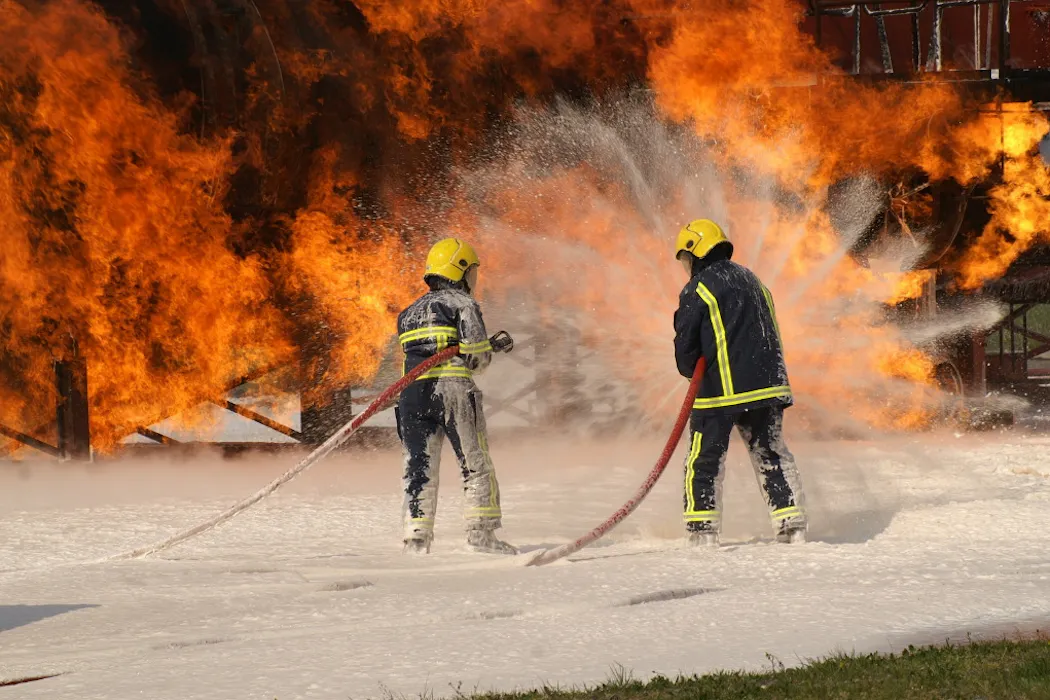
CRC CARE, CC BY-NC-ND

The Australian government has launched its largest-ever lawsuit, suing American chemical giant 3M and its local subsidiary. The government is seeking A$2 billion in damages for the past and future cost of investigating and managing “forever chemicals” contamination from firefighting foams on almost 30 Defence sites.

The government alleges the company withheld internal testing that showed these foams did significant environmental damage. 3M has vowed to defend itself.

What’s interesting is the scope. State-owned facilities, such as public water utilities, are unlikely to be included. The case also avoids any mention of possible impacts on human health. This is at least in part because the impacts of forever chemicals are a live topic of scientific debate and inquiry.

What is the case based on?

Forever chemicals are properly known as PFAS, or per- and polyfluoroalkyl substances. They are also known as “forever chemicals” because they take a very long time to break down in the environment.

The Commonwealth case focuses on the use of PFAS-containing firefighting foams manufactured by 3M and used on Defence bases from the 1970s until the mid 2000s. These aqueous film-forming foams have been slowly phased out in Australia.

Several communities near affected Defence facilities have sued the Commonwealth, with class actions and other claims amounting to around $400 million in legal settlements.

Until now, the government hasn’t sought to recover these costs, but is doing so now to remediate the sites, pay out class actions and cover future remediation.

While full court documents are not yet public, multiple government statements and the court file suggest the claim is mainly based on the Australian Consumer Law.

The Commonwealth may argue 3M engaged in misleading or deceptive conduct by failing to disclose what it knew about the environmental risks of these firefighting foams.

In the United States, many state attorneys-general have sought to recover clean-up and monitoring costs from manufacturers allegedly promoting PFAS products as safe, despite knowing their risks.

How likely is a settlement?

While both sides appear to have adopted a firm public position committing to the case, this isn’t guaranteed. Large lawsuits like this frequently reach a settlement before trial.

This is because reaching a settlement allows parties to agree on compensation without a judicial finding of liability.

Australian courts encourage alternative dispute resolution, which can enable settlements and reduce costs and uncertainty, while allowing defendants to avoid formal findings of wrongdoing. Class actions against Defence have all settled before trial.

In the US, municipal governments and water authorities sued 3M and other PFAS manufacturers for selling products they knew would contaminate the environment, seeking payments to “help clean up the mess that they created”. These claims became part of a larger case.

In response, 3M agreed to pay about A$14 billion (US$10 billion) to assist with testing and treatment costs while denying liability.

Settlements have also been reached in personal injury litigation, including one against another manufacturer, DuPont, worth A$953 (US$670) million across 3,550 claims.

What’s in and what’s out of the case?

The proceedings have been framed as an effort to recover past and future costs from almost 30 Defence sites.

Yet PFAS contamination isn’t limited to these sites. Other sites of concern include state-operated firefighting facilities, industrial sites and public water supplies. This case is unlikely to directly address those locations.

It’s not clear whether any funds recovered would support measures sought by affected communities, such as routine blood testing or long-term medical monitoring. Residents of Katherine in the Northern Territory have questioned whether any potential settlement would compensate losses not covered by earlier class actions. Many civilian and military firefighters exposed to these PFAS foams for decades have not been involved in compensation schemes or major litigation.

Notably, the case doesn’t mention any possible effects on human health. Assistant Minister for Defence Peter Khalil has cited advice from health authorities that evidence of health impacts from forever chemicals remains limited.

In 2023, the cancer agency of the World Health Organization found one forever chemical, PFOA, was carcinogenic. But there are many different types of PFAS. The WHO is now conducting a systematic review of key PFAS compounds and health outcomes, such as cancer and reproductive toxicity.

The PFAS class actions against Defence similarly excluded personal injury claims, focusing instead on property, business and cultural losses. Even so, evidence about possible health effects was raised because contamination affected property values.

It will be interesting to see whether the Commonwealth can separate environmental contamination from health concerns, while maintaining its position that evidence of human health impacts remains limited.

fighter planes about to take off from runway.
PFAS contamination has affected almost 30 Defence sites, including NSW’s RAAF Williamtown base. Jungle Jack/Flickr, CC BY-NC-ND

What’s next?

If the lawsuit goes to a trial and the government succeeds in its claim, it would likely open the door to further claims against 3M by fire services, water suppliers and other affected groups.

This could also happen if the claim is settled out of court.

Regardless of the result, more legal action and advocacy is likely from communities affected by PFAS around Australia.

The Conversation

Cameron Holley receives funding from the Australian Research Council (DP260103099).

Carley Bartlett receives funding from the Australian Research Council (DP260103099). Her PhD was supported by an Australian Government Research Training Program scholarship.

  •  

Australia wants social media to be ‘safe by design’. What does that actually look like?

visuals/Unsplash

Australia is world-leading in taking active measures to keep people safe online – home to the world’s first dedicated online safety regulator, the eSafety Commissioner, and the first country to introduce enforceable industry codes requiring platforms to tackle harmful content at scale.

And now, a newly released federal government issues paper proposes a “digital duty of care”, which would require social media platforms to take reasonable steps to prevent foreseeable online harm.

The proposal signals Australia’s position that it is platforms, not just individuals, who should be responsible for actively preventing online harms.

At the heart of the proposed digital duty of care is the principle that social media platforms should be “safe by design”.

But what does that mean in practice – especially for those who are most at risk? Our research with women and gender-diverse Australians offers six concrete recommendations for what safety by design could look like in practice.

Who bears the brunt of online abuse?

One in two Australian adults have experienced online abuse in their lifetime. Women and gender-diverse people are disproportionately targeted, experiencing harassment, non-consensual image sharing, impersonation, stalking and identity-based abuse at far higher rates than others.

Yet these groups are rarely involved in envisioning what safer platforms could look like. So, we asked them: what would safer social media look like to you?

We worked with 75 Australian women and gender-diverse social media users, and 21 experts in platform safety, digital policy and content moderation, to understand how existing safety features are falling short.

Here’s what they told us – and how it compares with the current Australian proposal for a digital duty of care.

1. Make abuse reports actually work. Abuse rarely fits a single category – without context, platforms don’t handle the reports well. A message that reads as innocuous to a stranger may be a clear threat to someone who knows their abuser. But without that context, platforms have no way of knowing.

Users want clearer processes that capture the full picture, smarter triage that prioritises urgent cases, and timely updates on what happened to their report. This fits well with what the digital duty of care proposes: platforms should have accessible complaint mechanisms and respond within 24 hours for serious issues.

2. Harmful content should be harder to share in the first place. Once someone shares intimate or sensitive content without your consent, it quickly spirals out of control. Australia’s proposal suggests platforms should prevent the upload of seriously harmful content such as image-based abuse, or detect and remove it.

Users in our research said they want prompts that encourage people to pause before sharing, technical measures that prevent screenshots or downloads, and real-time alerts showing when and where their content is being accessed.

3. Make bans harder to evade. If you block a user, they can create new accounts in minutes, facing few real barriers. The digital duty of care flags that anonymous account systems may need redesigning to prevent foreseeable harm.

As we found, users want layered verification – such as requiring a unique phone number or introducing delays before new accounts become active – that adds friction to repeat account creation, but not mandatory ID checks for everyone. This would protect those without formal ID, those escaping unsafe homes, or those who rely on anonymity to stay safe.


Read more: Tech solutions to limit kids’ access to social media are fraught with problems, including privacy risks


4. Harmful content should be caught before it spreads. Automated systems routinely miss culturally specific abuse and coded language. Content should be detectable before it is shared, and easy for bystanders – not just victims – to flag.

The users in our research recommended pairing automated detection with human moderators trained in cultural nuances, which is precisely the kind of effective content moderation system the proposed duty of care requires.

5. Recognise campaigns, not just individual posts. Abuse is often a sustained campaign, even when each message seems minor alone. The duty of care proposal requires platforms to mitigate reasonably foreseeable harms – which means looking beyond individual incidents.

Platforms should connect reports over time, identify patterns, and act before harm escalates, with independent audits to ensure these systems are never weaponised against the people they are meant to protect.

6. Surface safety tools before harm happens. Most users discover safety features only after something has gone wrong. Australia’s proposal envisions “empowering” users – but empowerment means more than adding features. It means the platform should offer the right tool at the right moment, rather than bury it in a settings menu that only the most determined users will ever find.

The real test

The proposed digital duty of care is a significant step in the right direction. But “safe by design” will only deliver if it works for everyone. As our research shows, those most affected already have clear, practical ideas about what would make platforms safer.

The opportunity now is to design with them – so safety is built in from the start.

Until the proposed digital duty of care is rolled out, it is up to all of us to look after each other. We can report harmful content, pause before we post and ask: is it true? Is it kind? Is it fair? And we can be active bystanders – commenting when we see something harmful, or offering support to those experiencing abuse.

We all have a role to play. From governments, to platforms, to everyday people – it is up to all of us to create a safe digital society, one that we can all be a part of.

The Conversation

Senuri Wijenayake receives funding from the Australian Research Council (DECRA) to investigate how social media safety can be designed to meet the needs of marginalised groups most at risk of online harm. She has previously received funding from Meta (Instagram). The report covered in this article was funded by the Australian Communications Consumer Action Network (ACCAN).

Anastasia Powell receives funding from the Australian Research Council, and is a director of Our Watch (Australia's national organisation for the prevention of violence against women). Anastasia teaches family violence specialist casework in the Graduate Certificate in Domestic & Family Violence at RMIT University.

Dana McKay receives funding from Professionals Australia to understand women's experiences working in technology. Dana has received funding from the Australian Research Council and Google in the past.

Madhuka Thisuri De Silva does not work for, consult, own shares in or receive funding from any company or organisation that would benefit from this article, and has disclosed no relevant affiliations beyond their academic appointment.

  •  

Australia’s economy slows as households tighten their belts, while AI investment surges

Australia’s economy grew by 0.3% in the first three months of 2026, slowing from 0.9% growth at the end of 2025, according to the latest Australian Bureau of Statistics figures.

Over the year to March, gross domestic product (GDP) rose 2.5%. But GDP per person – our total GDP, divided by our population – actually fell 0.1% in the quarter. This shows Australians were not necessarily feeling better off, despite the economy still growing overall.

The weaker-than-expected growth result is likely to reinforce the likelihood of the Reserve Bank leaving interest rates unchanged at its June meeting, after lifting rates in February, March and and May.

While inflation remains a concern, today’s figures suggest those rate rises were already beginning to weigh on household spending and economic activity.

Higher fuel prices took a toll

The Middle East war, which began on February 28, had a clear effect on Australia’s economy through higher fuel and fertiliser prices.

The Australian Bureau of Statistics (ABS) noted automotive fuel prices rose sharply towards the end of the March quarter. The federal government’s fuel discounts only started on April 1.

Households responded by spending more on essentials and cutting back elsewhere. Discretionary spending was very weak, suggesting many consumers were becoming more cautious.

Spending on electricity, gas and other fuels also rose sharply after energy rebates ended, while spending on operating vehicles increased amid concerns about petrol and diesel supplies.

Which parts of the economy grew?

The strongest part of the economy was investment.

Private investment rose strongly, led by a large jump in machinery and equipment investment. The ABS said this reflected increased business investment in data centres in New South Wales and Victoria.

That investment boom highlights one important theme: businesses are continuing to invest heavily in digital infrastructure and artificial intelligence, despite a challenging economic environment.

The GDP figures suggest Australia’s economy is becoming increasingly split in two. Sectors linked to data centres, engineering services, IT consulting and construction are expanding rapidly, while many consumer-facing industries remain under pressure.

Household consumption also grew – but the increase was concentrated in essentials, rather than discretionary spending. That is not a sign of strong consumer confidence. It suggests households were spending more because some necessary items became more expensive, or they may have been worried about supply chain shortages.


Read more: How reducing ‘just in case’ purchases can help avoid empty shelves and fuel bowsers


Which parts of the economy shrank?

Net trade was the main drag on growth.

Exports fell while imports rose. The fall in exports was driven by coal and iron ore, with bad weather disrupting port operations. Imports rose partly because of record imports of automatic data processing equipment, linked to data centre investment.

Government spending also fell, partly because energy bill relief ended. Mining saw the largest industry decline, with coal production hit by Cyclone Koji.

Consumer-facing services were weak. Retail trade, accommodation and food services, and arts and recreation all reflected subdued discretionary spending.

Watching for a per person recession

The key question is whether this is just a temporary slowdown, or the start of a more worrying loss of momentum.

The economy is still growing, but GDP per person has fallen. This happens when a country’s population is growing faster than its economy. And that matters because GDP per person is a better guide to living standards than headline GDP.

Households are also saving less, which suggests many are absorbing higher costs by dipping into their savings.

If GDP per person falls again in the June quarter, Australia would enter a per capita recession. That would not mean the whole economy is in recession, but it would mean the average Australian is going backwards.

The June quarter will therefore be important to watch. It will show more clearly how households are responding to higher fuel prices, higher interest rates and weaker confidence.

What does it mean for interest rates?

The Reserve Bank board meets on June 15–16.

Growth has slowed, GDP per person has fallen, and discretionary spending is weak. These are all signs that higher interest rates are already weighing on households and the broader economy.

At the same time, the Reserve Bank cannot ignore inflation risks. Fuel prices rose sharply late in the quarter, construction prices are still rising, and the end of energy rebates has lifted household out-of-pocket costs.

The Reserve Bank’s own forecasts suggest headline inflation is likely to peak in the June quarter.

Just after the Reserve Bank published those forecasts, Treasury released its own as part of the May federal budget. Treasury expected inflation to peak at around 5%. If the Middle East conflict ends soon, it expects inflation to fall back within the Reserve Bank’s 2–3% target band by this time next year. But if the war goes on longer, it could climb much higher.

This week’s wage rise for low-paid workers, as well as the latest inflation data and unemployment figures, will all be part of the board’s discussion.

That is why each interest rate decision is so difficult. As Reserve Bank board member Ian Harper acknowledged this week, it’s always harder to sleep the night before the board makes a rate decision:

Maybe not a sleepless night […but] you have to make a decision which, as you well know, affects every single person in this economy. And that bears on you in the middle of the night, usually about 2.30 in my case.

On balance, this GDP data strengthens the case for the Reserve Bank to hold rates in June and wait for more evidence, before deciding whether another increase is needed in August.

The Reserve Bank’s challenge is now even harder: bringing inflation back under control, without pushing an already slowing economy into a deeper downturn.


Read more: Interest rates look set to hold, after inflation and fuel costs fell in April. But it’s unlikely to last


The Conversation

Stella Huangfu does not work for, consult, own shares in or receive funding from any company or organisation that would benefit from this article, and has disclosed no relevant affiliations beyond their academic appointment.

  •  

World’s largest study of child sexual abuse perpetrators reveals why they abuse

L S/Unsplash

Warning: this article contains distressing quotes from perpetrators of child sexual abuse.

Researchers have long tried to answer the question: why do some men sexually abuse children?

We recently set out to find an answer.

In the largest study of child sexual abuse perpetrators’ accounts ever conducted, we systematically analysed nearly 700 adult male perpetrators’ accounts from 39 studies to document the ways these men account for their actions.

Some startling revelations

The men were aged 18 years and over and came from across the globe – from Norway to New Zealand, Malawi to Brazil. We were interested in documenting what perpetrators’ accounts can tell us about preventing child sexual abuse.

The men’s accounts varied dramatically. Some blamed drugs and alcohol, or their own experiences of childhood maltreatment. Others claimed they were seeking exciting or risky new sexual experiences.

Others said they were “in love” with or trying to “educate” the child.

The most common way perpetrators explained their behaviour was to cast their victims as consenting participants in the sexual activity.

In especially egregious cases, perpetrators positioned themselves as the hapless casualties of their (mostly female) victims’ devious sexual scheming, describing their young victims as “flirtatious”.

One stated:

she was a little vixen in the whole thing […] I was truly lured in.

Or course, children cannot consent to sexual activity with adults. Importantly, even if the victim had been an adult, the evidence of a child’s “consent” offered by perpetrators was extremely tenuous, usually amounting only to the absence of forceful resistance.

Abuse as revenge

Revenge was another common reason offered to explain the offending. Overwhelmingly, perpetrators nominated their adult women partners as the target of their retaliatory behaviour.

In short, they abused a child to get back at the child’s mother.

Perpetrators sought revenge because their adult women partners failed to adhere to traditional femininity and to fulfil the role of romantic/sexual partner and/or mother/homemaker to the perpetrator’s standard and preferences.

As one perpetrator stated:

There was a few times that I molested [my stepdaughter] out of being mad […] at [my wife for] […] not cleaning the house. Letting the dog shit on the floor and nobody cleaning it up.

In perpetrators’ accounts, adult women partners were expected to provide sexual interaction exclusively to the perpetrator when, where and how the perpetrator desired.

In some instances, perpetrators claimed they were driven to perpetrate child sexual abuse due to their desire for specific sexual acts or forms of bodily presentation that their adult partners declined to enact.

Anger and so-called rights

Perpetrators sometimes framed the child victim as deserving the abuse, claiming their offending resulted from anger toward the child.

For instance, perpetrators felt angry because their victims failed to meet “feminine” norms or did not display sufficient submissiveness. For example, one perpetrator said:

She wasn’t being a nice little girl, that a perfect little girl is supposed to be.

Crucially, men’s reasons for feeling anger toward the child victim(s) echo the same tropes that underpin their anger toward adult women.

Perpetrators commonly invoked their “right” to sexual activity to explain their offending and bemoaned a lack of sexual access to adult partners.

Moreover, perpetrators framed children as sexually compliant and constantly sexually available, again highlighting their sense of entitlement to sex and lack of concern that children can’t consent.

Compared with prior studies, we found a more frequent and pronounced emphasis on patriarchal thinking in perpetrators’ accounts.

Research often suggests men sexually abuse children due to “marital conflict” or “domestic discord”.

However, this interpretation appears sanitised against perpetrators’ own accounts, which often vigorously emphasise their rage and retaliatory reasoning alongside an unwavering sense of male sexual entitlement.

Perpetrators’ focus on child victims’ supposed “consent” is instructive here. In sexual encounters with adult women, men position partners as “gatekeepers” – as responsible for resisting their advances if they do not consent.

While this relates to men’s beliefs about adult women, men in our study commonly viewed women and children as a combined category of subordinates.

Indeed, many of the perpetrators in our study collapsed the distinction between girls and adult women, stating for example:

I felt a need for […] sexual satisfaction and that required a female.

Better education and policy is crucial

Our findings therefore highlight the need for policymakers and practitioners to strengthen efforts to combat misogyny, male sexual entitlement and patriarchal privilege.

Challenging rape myths (false beliefs about sexual violence, those who perpetrate it, and those affected by it) and rape myth acceptance (the acceptance of these false beliefs) remains critical.

While such measures are typically targeted at preventing sexual violence against adult women, our analysis suggests they may also help prevent child sexual abuse.

If this article has raised issues for you, or if you’re concerned about someone you know, call Lifeline on 13 11 14.

The National Sexual Assault, Family and Domestic Violence Counselling Line – 1800 RESPECT (1800 737 732) – is available 24 hours a day, seven days a week for any Australian who has experienced, or is at risk of, family and domestic violence and/or sexual assault.

The Conversation

Kelly Richards is on the national board of the Bravehearts Foundation. She receives funding from the Australian Research Council.

Emma Hussey does not work for, consult, own shares in or receive funding from any company or organisation that would benefit from this article, and has disclosed no relevant affiliations beyond their academic appointment.

  •  

Extreme heat at the World Cup: are FIFA’s safeguards enough?

On a midsummer day in Miami, temperatures can exceed 32°C with high humidity. In a full stadium of 65,000 fans, it can be several degrees hotter, posing a potential health risk to players.

These are the conditions some teams will endure at the 2026 FIFA World Cup in June-July, the hottest months across much of North America.

FIFA has already acknowledged the risk, introducing cooling breaks in each half of all matches for the first time at a World Cup.

But is this enough to protect players in the heat?

It’s not just the high temperatures

When we talk about heat stress in sport, we are not just referring to air temperature.

What matters for the human body is a combination of heat, humidity, solar radiation and airflow – often summarised by the “wet-bulb globe temperature” index, originally developed in the 1950s to curtail heat illness during military training.

Soccer presents a particular challenge under high wet-bulb globe temperature conditions. Elite players routinely cover 10-13 kilometres per match, repeatedly sprinting, decelerating and changing direction.

This produces substantial internal metabolic heat, while opportunities for heat loss are limited by clothing, match structure, restricted access to shade, airflow or other cooling technologies.

If heat production exceeds heat loss, core temperature rises. This places more strain on the cardiovascular system, elevates perceived effort, impacts performance and increases the risk of exertional heat illness, which can include ailments such as muscle cramps and heat exhaustion. At the extreme end, exertional heat stroke, a life-threatening medical emergency can develop.

What the forecasts show for 2026

Analyses of historical weather data across the 16 World Cup host cities indicate heat stress will be common, particularly for afternoon kick-offs in cities such as Dallas, Houston, Miami, Kansas City and Monterrey.

While some venues such as Dallas, Houston and Atlanta have retractable roofs that can modify temperature and airflow, most matches will be played in open-air stadiums, exposing players to heat stress.

Later kick-offs may only offer limited relief, especially in humid environments where sweat evaporation is impaired.

Until recently, most evidence on heat strain in professional soccer came from experimental simulations. Unpublished field-based research from our laboratory at the University of Canberra, measuring core temperature during real professional matches, provides insight into what players experience during competition.

Our data show that during competitive match-play:

  • average peak core temperature often exceeds 39°C, rising progressively before half-time or full-time

  • players’ peak core temperature can exceed 40°C even in conditions that would not traditionally trigger extreme heat policies and in some cases even when cooling breaks are applied.

Importantly, these observations were documented in elite Australian A-League players who are fit and seasonally heat-acclimatised.

Taken together, this shows elite soccer players can reach and sometimes exceed a 40°C core temperature during matches at wet-bulb globe temperatures that are already considered “high risk” for exertional heat illness.


Read more: Curaçao and Cabo Verde are into the World Cup. What impact can these ‘minnow nations’ make?


Are cooling breaks enough?

Cooling breaks are a sensible and evidence-based safeguard and FIFA’s decision to mandate them in every match at the World Cup is a proactive step.

Cooling breaks – particularly when combined with cold fluid ingestion and ice towels – can lessen rises in core temperature, heart rate and perceived effort, especially in male players.

However, two important caveats remain.

First, cooling breaks do not prevent large rises in core temperature – they reduce the rate or magnitude of that rise. Even with breaks, players can still reach very high core temperatures.

Second, emerging evidence indicates cooling breaks affect women differently. Although women athletes generally reach lower absolute core temperatures than men during match-play, standard FIFA-style cooling breaks appear to provide smaller additional reductions in physiological strain.

Women get more benefits when in-play cooling breaks are combined with longer half-time breaks, which include cooling in air-conditioned spaces.

In short, universal cooling breaks may help but are unlikely to be sufficient on their own.

What are other sports doing?

Most heat policies in sport rely solely on environmental measures such as the wet-bulb globe temperature index. While useful, these metrics describe the weather, not the physiological strain experienced by players.

Several sports have begun to anchor heat policies to the predicted rise in core temperature, linking environmental conditions and sport specific characteristics – heat production and clothing – rather than relying on environmental conditions alone.

This approach focuses on the body’s ability to maintain thermal balance through sweating – something administrators may increasingly need to consider as matches are played in hotter and more humid conditions.

World Rugby uses a similar approach, but tailored to the sport’s demands and clothing worn, as does Sport Medicine Australia for a variety of recreational sports.

Timing matters, a lot

One of the most effective heat-mitigation strategies requires no ice, no towels and no new technology: avoid playing at the hottest time of day.

Afternoon kick-offs consistently produce the greatest thermal strain because they combine peak solar radiation with high air temperature. Evening matches reduce – but do not eliminate – risk, particularly in humid cities.

From a player safety perspective, match scheduling may be as important as in-game cooling strategies. Yet broadcast considerations have historically driven afternoon kick-offs at World Cups.

An ongoing problem

Heat stress is already being reported more frequently in domestic soccer leagues, continental tournaments and youth competitions.

Heat policies must keep pace with a warming climate.

Protecting player health will require earlier decisions, stronger mitigation strategies and a willingness to rethink when and how matches are played – not just at World Cups, but at all levels of the sport.

The Conversation

Julien Périard has previously received funding from Professional Footballers Australia (PFA), the International Federation of Professional Footballers (FIFPRO) and the Fédération Internationale de Football Association (FIFA).

Brad Clark has previously received funding from Professional Footballers Australia (PFA), the International Federation of Professional Footballers (FIFPRO) and the Fédération Internationale de Football Association (FIFA).

Harry Brown has previously received funding from Professional Footballers Australia (PFA), the International Federation of Professional Footballers (FIFPRO) and the Fédération Internationale de Football Association (FIFA).

  •  

Demolishing homes after climate disasters can be devastating. Here’s how we reused precious materials

Elise Derwin

Following the devastating Northern Rivers floods in New South Wales in 2022, roughly 14,000 truckloads of water-damaged materials were sent to landfill.

The flood exposed many things, including our unimaginative approach to managing waste. As immediate recovery moved into reconstruction, we saw an opportunity to manage this flood-damaged material differently.

We proposed an alternative to traditional house demolition. It was piloted on two flood-damaged houses in Lismore, using a “circular” model that could reuse materials and eliminate waste.

As well offering potential economic benefits for the local community, our report found it had considerable social and environmental value.

Why did homes get demolished?

In the aftermath of the floods, many NSW homes were significantly damaged and still lay in the path of future floods. In response, the NSW government introduced a buy-back scheme for eligible homes in flood-prone areas.

Part of this program involved demolishing homes, with the materials discarded in landfill or used for low-value recycling, such as woodchipping and burning. Yet the homes contained valuable materials, such as hardwood timbers.

Losing these homes was traumatic for the local community and an unnecessary loss of valuable resources. So the NSW Reconstruction Authority, Living Lab Northern Rivers, and the University of Technology Sydney (UTS) explored how to recover a material that is extremely difficult to source today – old growth timber.

A weatherboard house that has suffered flood damage.
A flood-damaged home in North Lismore, before it was dismantled as part of the Circular Timber project. Kurt Petersen/LLNR

The colonial hunger for hardwood

The first wave of European colonisation of the Northern Rivers included groups known as “cedar getters”. These timber cutters arrived in search of highly-prized rainforest hardwoods.

Much of this timber was transported to Australian cities or as far away as Europe. It was also used to construct buildings and homes for local communities.

Premium old growth timbers extracted from the area included red cedar (Toona ciliata), spotted gum (Corymbia maculata), tallowwood (Eucalyptus microcorys), rosewood (Didymocheton fraserianus) and blackbutt (Eucalyptus pilularis).

This is not your ordinary hardware-variety timber. Prized hardwood rainforest timber is dense, strong, durable and resistant to rot and insects.

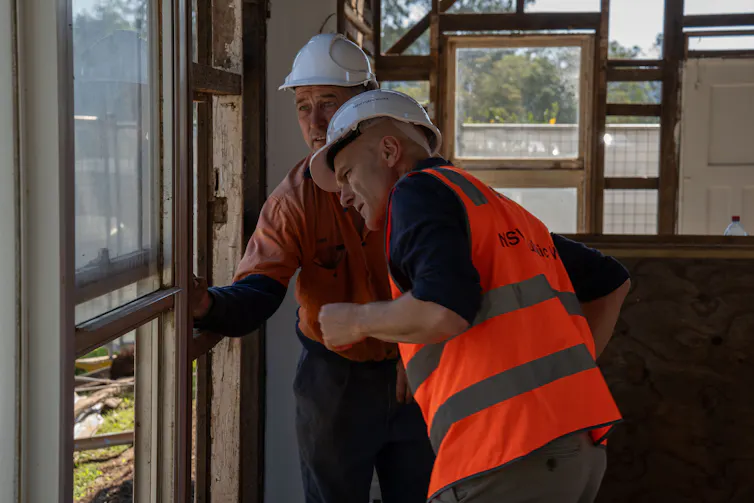
Two men in workwear and hard hats study the timber inside a house being deconstructed.
Berto Pandolfo (project lead) and Kris Gardner identifying timber species during the selective deconstruction process. Kurt Petersen

The circular timber project

In early 2024, the Circular Timber project developed an alternative to traditional demolition, which offers very little opportunity for recovering materials.

The current system for demolishing homes is this: large-scale machines level structures and excavators scoop materials into dump trucks, which transport them to distant landfill. Sometimes, materials are recovered, but the vast majority are broken into small pieces, trucked away and buried.

We wanted to establish a “circular” system that reused materials and eliminated waste. This cannot be achieved by a single entity – multiple partners needed to collaborate. In this case, the local community, educators, businesses and government agencies collaborated to establish a pilot where timber from uninhabitable homes could be recovered and reused.

The local community was invited to make prototypes as proof that these premium timbers could be salvaged into new objects. Buy-in from the community was immediate – the materials in these homes represented a link to the region’s history and culture.

Two homes acquired by the government authority were deconstructed, with their recovered materials made available to local timber makers, builders, artists, architects and designers. The salvaged timber was transformed into a dining table, a community shed, and other designed objects.

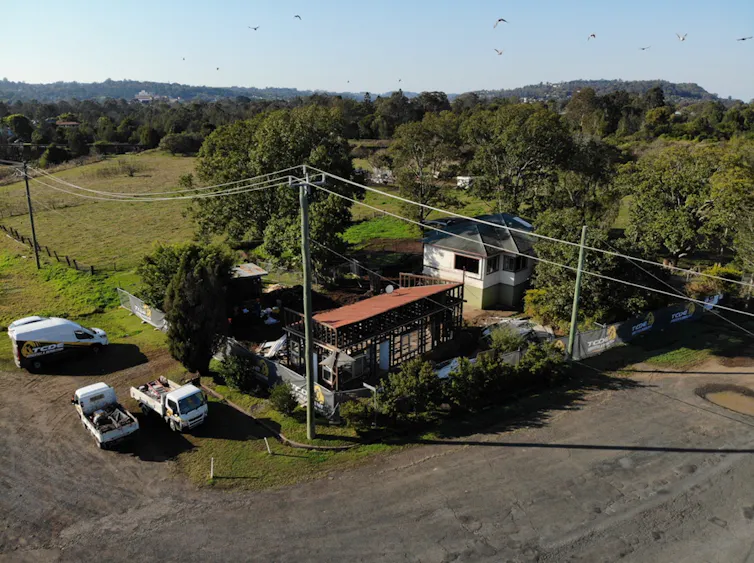
An aerial photo of two houses on a green hill.
An aerial photo of the two properties that were used for the project. Living Lab Northern Rivers

How it happened

Moving from home demolition to deconstruction represented a significant challenge. There are Australian standards for demolishing a building, but no guidelines for deconstructing exist (yet).

This project developed a considered approach to dismantling the homes. Care was taken in site preparation, materials identification and disassembly to ensure as much of the timber was recovered as possible.

Although deconstructing, recovering and reusing house materials requires more time, there were significant local and global benefits. For example, salvaging timber reduces carbon emissions, significantly reduces waste sent to landfill, and has a smaller carbon footprint than using virgin timber.

There are also economic and social benefits. This was a Northern Rivers community with a long history of seeing lives turned upside down by catastrophic floods. They responded positively to retaining the physical, cultural, and historical value of the past built into these homes.

A composite picture of household objects made with hardwood.
The salvaged timber from deconstructed homes was used to make new objects. Living Lab Northern Rivers

Homes hold many values

Between 2019 and 2025, there were 214,483 approvals granted nationwide for knock-down-and-rebuild applications in Australia, with the management of waste material left to the discretion of the owner and demolition contractor.

A standard Australian house can include salvageable materials such as hardwood timber, premium timbers, pressed metal ceilings or Federation red bricks.

Shifting our approach from demolition to deconstruction could open up new opportunities. Not only could it create jobs, but it could reduce the need for virgin materials and protect our environment.

This project reminds us that value should not only be assessed in economic terms but also in relation to our environment and communities. This program showed deconstructing homes can be embraced as a way to transform waste into a valuable resource.

The Conversation

Berto Pandolfo receives funding from Northern Rivers Reconstruction Corporation (NRCC).

Angelique Milojevic receives funding from Northern Rivers Reconstruction Corporation (NRCC).

Dan Etheridge receives funding from the NSW Reconstruction Authority. The NSWRA funded the project described in this article.

  •  

National wants to scrap sexual offender character references. Should NZ go further?

Lakeview Images/Getty Images

Stopping judges from considering “good character” references when sentencing sexual offenders – as New Zealand’s National Party has pledged to if re-elected – may sound like a niche legal reform.

But it targets a real and longstanding issue in the country’s criminal justice system – and one that has drawn renewed public attention and debate over recent months.

In the courts, character references are typically used to show a defendant has no prior history of similar offending. Lawyers may point to the absence of previous convictions and present supportive letters describing the assault as out of character.

Such evidence can be introduced by defendants convicted of – or pleading guilty to – sexual offending in a bid to reduce their sentence, alongside other mitigating discounts that judges can apply under the Sentencing Act.

National argues that its proposed reform, which comes alongside a separate petition and campaign, would lead to tougher sentences and stop offenders benefiting from their personal reputation or social standing.

Some defence lawyers, however, have argued judges already treat such evidence cautiously in serious sexual offending cases, and warn that removing it entirely could undermine the principle that courts should consider all relevant circumstances at sentencing.

In any case, the move would represent a meaningful change. But the discussion also raises wider questions about New Zealand’s sentencing framework itself – particularly when it comes to how much discretion judges are presently given.

The problems with ‘good character’ references

As Justice Minister Paul Goldsmith noted when announcing the move last month, good character references are often used to argue the offending was “the exception, not the rule”.

In sexual violence cases, this can involve employers, relatives or community figures portraying the defendant as an otherwise respectable person who made a one-off mistake.

Rape cases, particularly, illustrate the flaws in this type of reasoning. Presenting evidence of a defendant’s good character can reinforce the myth that there is a meaningful distinction between a “real rapist” and someone who has merely committed rape.

This framing also risks minimising the seriousness of sexual violence and obscuring the reality that most rapes are committed by someone known to the victim, often in private places and with little or no physical force.

Another problem is that this evidence can be deeply retraumatising for victims, who may have to watch the sentencing judge consider – and sometimes even credit – claims that the assault was less serious, or rather something more akin to a misunderstanding.

If the policy choice is between continuing to treat prior “good character” as mitigation in sexual violence cases, or scrapping it, the latter would arguably appear the sensible call.

But abolishing this single mitigating factor from the Sentencing Act – at least as it applies to sexual offences – still leaves many other issues within the legislation to address.

The case for wider reform

In another development last month, an advisory group was established to bring lived experience and leadership expertise into government decision-making around family and sexual violence prevention.

While this marks an important step, overseas experience suggests New Zealand could go much further in reforming its sentencing system.

Countries including the United States, the United Kingdom, Canada and many Australian states, for instance, use sentencing commissions to develop formal sentencing guidelines.

These bodies draw on expertise from criminology, psychology, statistics and criminal law to analyse research and sentencing data, then produce guidance on how different offences and offenders should be sentenced.

The resulting guidelines help to eliminate disparities across offences, offenders, judges, and geographic regions, while also ensuring transparency in sentencing policy. They also tend to rely more on evidence and risk-based assessment than on broad and often ambiguous factors gradually developed through court decisions.

By contrast, two-decade-old Sentencing Act appears antiquated.

Aggravating and mitigating factors referenced within the legislation are often intuitive, vague and morally framed, rather than being clearly defined or grounded in evidence.

Importantly, they also provide little meaningful guidance for how judges should apply them consistently across cases involving different levels of harm, premeditation or remorse on the part of the offender.

Leaving sentencing judges with such a high level of unguided discretion risks allowing implicit biases – which all people possess – to influence sentencing decisions.

The result is that subjective assessments about who seems dangerous, remorseful or respectable can end up driving sentencing decisions, rather than being based on consistent, evidence-based assessments of harm, proportionality and risk to public safety.

Removing “good character” mitigation in sexual violence cases may therefore be worthwhile. But if New Zealand wants a better sentencing system, much broader reform is required.

The Conversation

Carrie Leonetti does not work for, consult, own shares in or receive funding from any company or organisation that would benefit from this article, and has disclosed no relevant affiliations beyond their academic appointment.

  •  

Australia is facing a new 12.5% US tariff over anti-slavery claims. Are they actually right?

SimpleImages/Getty

The United States is threatening to impose trade tariffs of up to 12.5% on 60 countries, including Australia, over their inaction on forced and slave labour worldwide.

On Wednesday, US trade representative Jamieson Greer said:

The failure of our most important trading partners to address the importation of goods made with forced labor is unacceptable.

Australian Prime Minister Anthony Albanese responded that a new tariff on exports to the US was “unjustified”, as Australia has “robust, comprehensive and world-leading legislation addressing forced labour and modern slavery”.

Who’s right? And are the US claims about other nations turning a blind eye to forced and slave labour – where a person is either forced to work, or even owned by someone else – actually true?

Which countries could face new tariffs

In a new report released by the US Trade Representative, 54 countries – including Australia, China, New Zealand and the United Kingdom – were found to have:

failed to impose a legal prohibition on the importation of goods produced wholly or in part with forced labour and to effectively enforce such a prohibition.

All of those countries face a proposed 12.5% tariff on their exports to the US.

Another six economies – including Canada, the European Union and Indonesia – face lower 10% tariffs. They were seen to have done more overall, but failed to effectively enforce their own laws.

Forced labour is a form of modern slavery, defined under international law as “all work or service which is exacted from any person under the threat of a penalty and for which the person has not offered himself or herself voluntarily”.

This definition is consistent with an almost century old US law, Section 307 of the US Tariff Act of 1930. It’s now being used to legally justify this latest round of tariffs.

The US has a strong history of taking legislative action against forced labour. Section 307 prohibits imports of goods mined, produced or manufactured by forced labour.

In 2022, the US also established the Uyghur Forced Labor Prevention Act, prohibiting goods being imported from China’s Xinjiang Uyghur region, where there are “credible” allegations of widespread forced labour.

‘We get one ruling, we do it a different way’

These proposed forced labour tariffs appear to be less about labour rights and more about trade.

This latest move comes after US courts blocked US President Donald Trump’s sweeping international tariffs announced over the past year. That prompted Trump to pledge: “We get one ruling, and we do it a different way.”

As former Australian ambassador to the US Joe Hockey said about the new forced labour tariff today, “America is running out of money and they need to get it from somewhere”.

These tariffs are still subject to public consultations over the next month.

While using tariffs as a way to strengthen action on forced labour is questionable, there is some substance behind the US allegations.

41,000 people in Australia alone

An estimated 50 million people around the world – and rising – are trapped in modern slavery, more than half of those in forced labour.

Australia is estimated to have more than 41,000 people working as forced labourers or other forms of modern slavery, including child marriages.

Reports to the Australian Federal Police of human trafficking have nearly doubled in the past five years.

Australia’s laws are not world leading

In 2018, Australia established its Modern Slavery Act. This law was hailed as a critical first step in acting on modern slavery.

The law requires large business to report annually on the risks of modern slavery in their operations and supply chains.

Since 2019, more 17,000 modern slavery statements from more than 27,000 businesses have been lodged on Australia’s modern slavery registry.

Yet in 2023, an independent report found:

there is no hard evidence that the Modern Slavery Act in its early years has yet caused meaningful change for people living in conditions of modern slavery.

That’s not surprising: there is no enforcement built into the law.

What more needs to be done?

If Australia does want to have “world-leading” laws – and a stronger case to argue for lower US tariffs – what needs to change?

While the Modern Slavery Act has raised awareness of the problem in Australian boardrooms, it is not improving the working conditions of supply chain workers, here at home and overseas.

So Australia needs to move quickly to strengthen that law with enforcement, and establish a forced labour import ban.

A 2023 review of the Modern Slavery Act recommended penalties for companies failing to comply with reporting requirements and the introduction of a human rights “due diligence obligation” – similar to European Union laws and emerging requirements in South Korea, Thailand and Indonesia. This sees companies working to reduce human rights harms not just in their own factories, but through their suppliers’ suppliers too.

The Albanese government partially accepted some of the 2023 report recommendations, including the need for penalties. Three years on, it’s failed to take serious action.

The Australian government should also establish a forced labour import ban, like one the EU passed two years ago, now being phased in across all 27 member states. This would stop specific goods suspected of being produced with forced labour at the border.

Whether these proposed tariffs come into force or not, this new US forced labour investigation could actually do some good.

Right now, millions of people are working in dangerous, dehumanising conditions to make goods sold in Australia and worldwide. It’s long overdue to do more to stop it.

The Conversation

Justine Nolan does not work for, consult, own shares in or receive funding from any company or organisation that would benefit from this article, and has disclosed no relevant affiliations beyond their academic appointment.

  •  

‘Like drinking from a firehose’ – what it’s like to be the human in the AI loop

Getty Images

The government’s promised overhaul of New Zealand’s public service has made much of the potential of artificial intelligence (AI) to streamline operations and compensate for a radically reduced workforce.

This is in keeping with generally utopian visions of generative AI (GenAI) tools unleashing creativity, removing mundane, repetitive work, and “freeing up humans” for more fulfilling tasks.

However, this may be naive.

It’s true, GenAI tools can create efficiencies and cost savings for organisations as they become more powerful and their implementation becomes more sophisticated. In this win-win world, organisations and the people who work in them benefit.

But there’s another side to this story as we become more aware of the downsides of GenAI tools – security risks, hallucinations, bias, a “dumbing down” of human input and lack of ethical insight.

However, one thing that is not debated is the need for human oversight of GenAI work. For legal and reputational reasons, organisations require a “human in the loop” who is responsible for reviewing GenAI outcomes, and has the authority to overturn them.

Easier said than done. As we discovered earlier this year when we held an industry panel discussion on GenAI for business students, being the human in the loop can be a role with great responsibility and pressure.

Faster with fewer people

Humans are expected to check and approve outputs, make decisions in ambiguous situations, provide feedback to improve the performance of GenAI tools, and offer ethical oversight and judgement.

The main reason is that GenAI-tools cannot be held accountable for any of their outputs or decisions. GenAI tools are legally considered to be “property” not “persons” and they cannot hold rights or incur duties, meaning final accountability falls with humans.

However, exactly which humans can vary. The organisation implementing the GenAI tool is most frequently considered responsible for any of its behaviours and outputs. In other cases, especially if the tool can be shown to be faulty, the developers or tool vendors may be responsible.

If a problem can be traced to incorrect or biased data, the provider of the data may have some responsibility.

An unexpected negative consequence of GenAI implementation paradoxically arises from its success. Successful GenAI use means executives and managers are expecting to get things done faster with fewer people.

Tasks that used to be done in days or weeks are expected to be done in hours. As a senior manager of a large multinational business told us:

Our goal in the next 18 months is to cut the engineering team down to a quarter of its current size and we need to find out how to leverage AI tools to achieve this.

The pressures on human reviewers

When the overall volume of outputs is lifted substantially by AI tools, the human in the loop can become a major bottleneck.

Within organisations there are now emerging “content creators” who know how to prompt GenAI tools to quickly generate proposals, reports and presentations even in domains where they lack expertise.

These outputs will be sent to the “content reviewers” for “sanity checks”. Those reviewers are domain experts. They are expected to rectify errors, remove nonfactual hallucinated statements, improve quality and provide accountability and final endorsement.

On one hand, a GenAI-powered “creator” can generate a plausible 50-page report in a matter of 15–30 minutes. On the other, the “reviewer” will have to spend hours reading, rectifying and rewriting to make the final report ready for the audience.

This has transposed the workload distribution between “creators” and “reviewers”. At one time a creator would be responsible for around 80% of the total time and effort to produce an advanced draft or prototype, and a reviewer would use the remaining 20% to polish it.

Now the distribution is less than 20% required from the creator, and more than 80% from the reviewer. One of our panellists described this as like “drinking from a firehose”.

Sometimes reviewers have to “let it go”, as they cannot cope with the speed and volume of content coming towards them. But this coping strategy has potentially dire consequences for the organisations they serve.

‘Workslop’ and burnout

There is also a personal cost. Subject-matter experts exposed to unrealistic expectations suffer from burnout, low job satisfaction and high turnover in the organisations we spoke with.

They are overloaded while junior colleagues are losing their jobs or aren’t being hired in the first place. If expert reviewers resign, they may be replaced by more junior colleagues, who are more prepared to trust AI-generated content and sign it off rapidly.

This can become a cycle of decreasing quality, and also raises the question of where the next generation of expert reviewers will come from.

Generating “workslop” (content that seems professional but is of uncertain quality) is cheap and fast, while genuine accountability is difficult. Simply having a nominal human in the loop is not enough.

Quality human oversight needs to be designed in, budgeted for, valued and supported by organisational processes and culture.

The Conversation

The authors do not work for, consult, own shares in or receive funding from any company or organisation that would benefit from this article, and have disclosed no relevant affiliations beyond their academic appointment.

  •  

After a landmark international court case backed workers’ right to strike, here’s what could change

The International Court of Justice has just resolved a 14-year dispute over workers’ right to strike – giving trade unions worldwide a significant win.

In a historic decision late last week, the court issued an advisory opinion that the right to strike is protected by a United Nations treaty, the International Labour Organization’s Freedom of Association and Protection of the Right to Organise Convention (also known as convention 87).

The new court decision does not mean we’ll suddenly see outbreaks of strike action all over the world.

However, it does matter right around the world – particularly in 158 countries that have ratified convention 87, including Australia, Canada, Indonesia and the United Kingdom.

A fight triggered by an employers’ ‘strike’

The International Labour Organization (ILO) is unique among the United Nations’ agencies because of its “tripartite” (three part) membership: with representatives from member states, trade unions and employer groups.

In 1948, the ILO adopted convention 87. All the countries that have since formally adopted the convention (a process called “ratification”) committed themselves to protecting freedom of association and the right to organise in their own domestic laws.

The convention made no explicit reference to the right to strike. Yet for decades the ILO’s supervisory bodies – which supervise the implementation of convention obligations – said that the convention did protect the right to strike.

Why? That view was based on the wording of the convention, stating workers have the right to form their own associations and organise their own programmes and activities. Strike action was interpreted as one of those protected activities.

But in 2012, the ILO’s employer representatives decided that longstanding interpretation was wrong – so they staged a “strike” of their own.

For the past 14 years, the employer representatives have refused to cooperate with ILO supervisory processes considering if countries are complying with convention 87 when the right to strike was involved.

Since 2023, that stalemate has been before the International Court of Justice – which is the court which has the power to interpret ILO conventions.

Last week, the court’s judges voted ten to four in favour of the unions’ argument, concluding “the right to strike of workers and their organizations is protected” under the convention.

What was at stake

While countries aren’t legally bound to follow International Court of Justice’s advisory decisions, like this one, they do still carry significant legal and political weight worldwide.

The ILO is the only place in international law where trade unions can make formal complaints if a country is not respecting its obligations to protect the right to strike.

All of that was at risk if the International Court of Justice had made a different decision. A finding that went the other way – in favour of the employers’ case – would have weakened the right to strike worldwide.

Last week’s court finding was a huge win for the international trade union movement.

Australia shows why it matters

The advisory opinion is particularly significant for the 158 nations that have ratified convention 87. Here’s an example of why.

Australia used to be thought of as a country with high rates of strike action.

However, since Australia legislated for a right to strike in 1993, that has stopped being true. In fact, over recent decades, strike action in Australia has stayed as low as it has ever been.

Strike rates in Australia are so low partially because it is harder than people realise to take lawful strike action here.

Since 1993 when a legislated right to strike was introduced, the laws that say when you can strike legally have got tighter and tighter, and the hurdles unions have to jump have got higher and higher.

Even when unions can satisfy the rules around when they can strike, it is easy to get it wrong. When that happens, they can lose the right to strike altogether.

That may sound like a good thing, especially if you’ve ever been caught in a train worker strike, or had to keep children home during a teachers’ strike.

But not being able to strike significantly weakens all workers’ bargaining power. When the cost of living rises and wages don’t keep up, employees end up financially worse off than before.


Read more: Real wages have gone backwards. Even earning $100,000 isn’t what it used to be


What it could mean long term

Like a lot of other nations, Australia won’t see any instant impacts of this new international court advisory opinion.

However, the court’s finding does mean the ILO is no longer stuck in a deadlock. The ICJ decision means that the ILO supervisory bodies can start scrutinising Australia’s strike laws again.

It also means Australian unions have a better chance of bringing complaints about our laws to the ILO – and being successful.

That potential for increased international scrutiny may help shift the dial on Australia’s highly restrictive strike laws.

This is a good thing for workers. A healthy industrial relations system needs a well-protected, accessible right to strike.

The Conversation

Shae McCrystal has received funding from the Australian Research Council. She has published several books including 'The Right to Strike in Australia' and 'Strike Ballots, Democracy and Law'.

  •  

How the food industry shapes your child’s fussy eating

Imad 786/Unsplash

Your toddler demands a Bluey-themed yoghurt and has a tantrum when offered something else. If it’s not a Nutella sandwich, your child’s lunchbox comes home uneaten. And the dinner table can become a battleground unless there are sausages, chicken nuggets or pizza on the plate.

These examples of fussy eating are everyday experiences for many parents.

Fussy eating, also known as picky or selective eating, is common, and can be frustrating. It’s often seen as a child or parenting issue. But it’s not merely shaped by what parents do, or the characteristics of the child.

Our new research suggests food fussiness and children’s eating habits are also shaped by commercial interests in food.

This includes mass produced foods that are high in sugar, salt and additives, combined in irresistible combinations and that are heavily promoted to children to maximise sales.

This has important implications for children’s health, and sets up tensions between what parents want their children to eat, and what they’ll actually eat.

What is ‘fussy eating’?

Fussy eating refers to having strong preferences for specific foods. Sometimes it involves not trying new foods, eating a limited variety of foods, or avoiding foods with a specific taste, texture or appearance.

Most research estimates 10–30% of children two to six years old are considered fussy eaters, peaking at around three years old.

The origins of food fussiness lie in the age-old practice of learning which foods are safe to eat and provide enough energy. This is why we often like sweet foods and not bitter ones.

Today, food companies capitalise on this biology of survival. They engineer and market foods to appeal to children, and in ways that confuse their parents.

What we did and what we found

We interviewed 34 parents of children aged one to 18 years old about their children’s eating habits and how they navigated them.

Parents talked about how they felt pitted against powerful food companies that influenced their children’s tastes.

Their comments also revealed fussy eating in children older than most earlier research presumes. We found this is developing in the primary school years when children are exposed to more ultra-processed foods.

Here are some of the common themes.

1. ‘Pester power’

Parents felt responsible for teaching their children about healthy eating, yet this was challenging with so much food marketed directly to children.

Such concerns of children’s “pester power” have arisen with concerted efforts by food corporations to market foods designed to maximise shareholder returns.

One mother of three pre-school and primary school-aged children talked about marketing “bad” foods to kids or placing them in reach:

[…] my 2-year-old is always like Bluey!!! […] You almost don’t want to take your kids to the supermarket […] Of course, my kids [are] gonna throw a tantrum – you’ve got a lollipop at his eye level.

2. Conflicting information

Parents today are swamped with misleading, confusing and often false information about food. This makes it challenging for parents to discern what’s healthy or unhealthy.

A mother of three primary school aged-children said:

You think you’re getting something that’s actually healthy because […] on the packaging, it says it’s healthy. So you trust it […] but it’s actually not.

3. Impossible binds

Social situations that normalise processed foods influence the foods children see as desirable and place parents in impossible binds. A father of three pre-school and primary-school aged children said:

My son used to love hummus. But everyone else around eats doughnuts or chips […] It’s a battle that we’re not gonna win.

In this context, many parents were concerned about pushing healthy food too hard. They worried this could have the opposite effect in the longer term. A mother of two primary school aged children said:

It’s a Catch-22 […] if I put Nutella toast in his lunch box, he’ll eat it. But then do I stay strong and not put shit in his lunch box, knowing that he’s going to be starving and be horrible at the end of the day? […] I don’t want to make it a huge thing because I worry about making food a problem.

Fostering compassion and government action

Dietitians advise parents not to pressure children about food. They say not to hide vegetables, and not to use food as a reward. Instead, they suggest eating together at a table, and persisting with offering healthy options.

Our findings suggest this advice falls flat if it doesn’t consider the commercial food environment. We suggest that more compassion, rather than shame, is needed towards parents about the food they provide.

Fussy eating can be a symptom of commercial interests in selling certain kinds of products. Recognising this may encourage people to demand governments do more to support children’s healthy eating.

Ultimately, food fussiness is much more than arguments at the dinner table. It is also a challenge that involves governments and the food industry.


We would like to acknowledge the following co-authors of the study mentioned in this article: Imogen Harper, Katherine Kenny, Holly A. Harris and Fiona Wright.

The Conversation

Juliet Bennett receives funding from the Charles Perkins Centre Jennie Mackenzie Research Fund, the Faculty of Arts and Social Sciences, University of Sydney, and a family foundation grant.

Alex Broom has received ARC funding and is currently ARC Academic Director (Social, Behavioural & Economic Sciences).

David Raubenheimer receives funding from the ARC and NHMRC.

  •  

Almost 20% of Australian students don’t finish school – these 3 things can help them stay

Abstract Aerial Art/ Getty Images

The latest data on Australian schooling shows about 81.5% of Year 10 students go on to Year 12.

This is a modest rise of 1.6 percentage points on the previous year, but figures have been largely stable since the start of the COVID-19 pandemic.

There has been decades of research on how to help students finish school.

Each student is of course different and will have different needs. But there are many things schools can do from Year 7 to support students to stay until Year 12.

Here are three of the most important ones.

Why it’s important to finish school

Completing Year 12 is associated with a range of positive longer-term outcomes.

These include better employment prospects, higher lifetime earnings, and stronger health and wellbeing.

It also keeps the widest range of post-school options open, from vocational training and apprenticeships to further study and direct entry into work.

Why do students leave?

The reasons students leave before Year 12 are varied and often complex.

For example, some students might be managing health challenges, navigating difficult life circumstances, or pursuing opportunities like an apprenticeship that fit their goals well.

For others, however, leaving early is shaped by experiences at school itself.

Somewhere along the way, they became disengaged, fell behind, or lost their connection to school. These are the experiences schools are best placed to influence.

Research shows there are three key areas schools can better develop now to help increase the retention numbers in the years ahead.

1. How teachers teach

It may sound obvious but one main way schools can keep students is through teaching approaches that help students learn effectively. This is because students need to feel they can succeed at school — and see themselves making progress — in order to stay engaged and connected to it.

When learning is consistently out of reach, students disengage. In contrast, when they can see themselves getting better at things, school feels worth their effort.

Our research shows effective teaching in Year 7 is connected all the way through to whether a student completes school six years later.

This type of teaching is also linked with students putting in greater effort at school and higher achievement.

What kind of teaching practices are we talking about?

One well-evidenced approach is explicit instruction where teachers clearly model new concepts and skills, guide students through examples, and gradually shift responsibility to students as they gain mastery.

As part of this, two strategies stand out.

First, reducing difficulty during initial learning. When a concept is new, break it into manageable steps and match the challenge to what students already know.

Second, give students well-organised opportunities to practise, paired with specific guidance on how to improve.

2. How the classroom works

Orderly, predictable and positive classrooms free up students to focus on learning rather than navigating disruption.

This is why classroom management is important. This is how teachers structure the classroom environment and the interactions within it so learning can happen.

In a recent study, we found students whose teachers provided strong classroom management were up to six times more likely to have high motivation, engagement, and resilience at school than students whose teachers did not.

Two strategies are particularly effective for classroom management.

First, establishing and consistently maintaining clear rules and routines is important, so students know what to expect.

Second, recognising and building on what students do well rather than only focusing on what goes wrong.

3. Student-teacher relationships

Research also tells us it’s important for teachers to build warm, respectful relationships with students.

It is not only important for retention in its own right — it also underpins the other two areas above. Strong teaching and good classroom management both depend on positive teacher-student relationships.

When students feel known and supported by their teachers, they are more willing to engage and stay connected to school.

Our research shows each relationship a student has with a teacher matters. The more positive relationships students have with their teachers — relative to negative ones — the greater their academic engagement.

Academic engagement in turn, is a key driver of school retention.

Research tells us every teacher can make a difference, and the relationships teachers build with their students could be what helps that student stay on and complete school. This is because the relationships add up — and for some students, the bond they build with one teacher in particular can be what tips the balance toward staying engaged with school.

So it is important to create conditions where every student has the chance to build genuine, positive connections with teachers. This means teachers getting to know students as individuals, showing interest in their lives beyond the classroom, and teaching in ways that feel personal and engaging.

The Conversation

Rebecca J. Collie receives funding from the Commonwealth Department of Education and the New South Wales Department of Education.

Andrew J. Martin receives funding from the Commonwealth Department of Education and the NSW Department of Education.

  •  
❌