❌

Reading view

As Opec+ meets, Iran war hobbles power to shape oil market
Malay Mail

LONDON, June 7 β€”Β Opec+ ministers meet today to weigh higher production quotas in a bid to cap oil prices that have surged since the Iran war effectively choked off Gulf crude shipments.

But even if the cartel members vow to ramp up output by thousands of barrels per day, analysts say geopolitical realities mean they probably won’t move the needle on prices.

With the crucial Strait of Hormuz shut since US and Israeli attacks on Iran in late February, oil prices have nearly doubled, igniting inflation pressures worldwide.

Ministers from the 21 member states of Opec+, the main oil producing nations and their allies, are holding their quarterly meeting online.

The group is likely to beef up its production quotas by β€œ188,000 barrels a day”, said Jorge Leon, analyst at Rystad Energy, similar to recent increases.

But in reality, only seven members β€” Saudi Arabia, Russia, Iraq, Kuwait, Kazakhstan, Algeria and Oman β€” have the capacity to do so.

Dwindling supply

Tehran’s threats of retaliatory attacks to US and Israeli strikes have virtually blocked the vital Strait of Hormuz, through which roughly a fifth of global oil and gas supplies normally pass.

That is equivalent to about 20 million barrels a day.

But with key Gulf producers shut out of the global market, pledges to raise output in a bid to ease spiralling prices are unlikely to sway traders.

β€œAny announced production increases or changes to output targets will have limited practical value,” said Ole Hansen, a commodities analyst at Saxo Bank.

β€œThere is very little Opec can do,” he told AFP.

Opec+ itself says daily production has plummeted to just 33 million barrels a day as tankers remain stuck, compared to nearly 43 million before the conflict.

A US blockade on Iranian ports means β€œit will be even less than that” in reality, said Homayoun Falakshahi, head of crude oil analysis at data firm Kpler.

UAE slams the door

The United Arab Emirates’ recent decision to quit Opec further saps away at the cartel’s influence, given its huge excess production capacity.

And Abu Dhabi has made clear it wants to boost output.

β€œThey don’t want to be dictated to, they want to maximise their revenues,” said Lawrence Haar, a lecturer in finance at the University of Brighton in England.

And the cartel risks seeing other countries follow the UAE’s example.

β€œIf Iraq were to leave, it could mark the end of Opec+,” Falakshahi said.

Saudi Arabia, by far the cartel’s most influential member, β€œis going to do what it takes to stop anyone else from leaving,” Falakshahi predicted.

That could translate into more flexible output quotas or decreased penalties for any excess production.

But β€œfor now, the compensation framework has effectively become irrelevant due to widespread production shut-ins,” Hansen said.

As a result, the Iran war has largely neutralised the cartel’s stated mission β€œto secure an efficient, economic and regular supply of petroleum to consumers, and a steady income to producers”.

For Falakshahi, the only factor limiting further oil price spikes at the moment is China, β€œwhich is buying less oil than normal” by tapping into its vast strategic reserves. β€” AFP

Β 

  •  

Airlines to fly more passengers but profits to halve in 2026, industry warns

Malay Mail

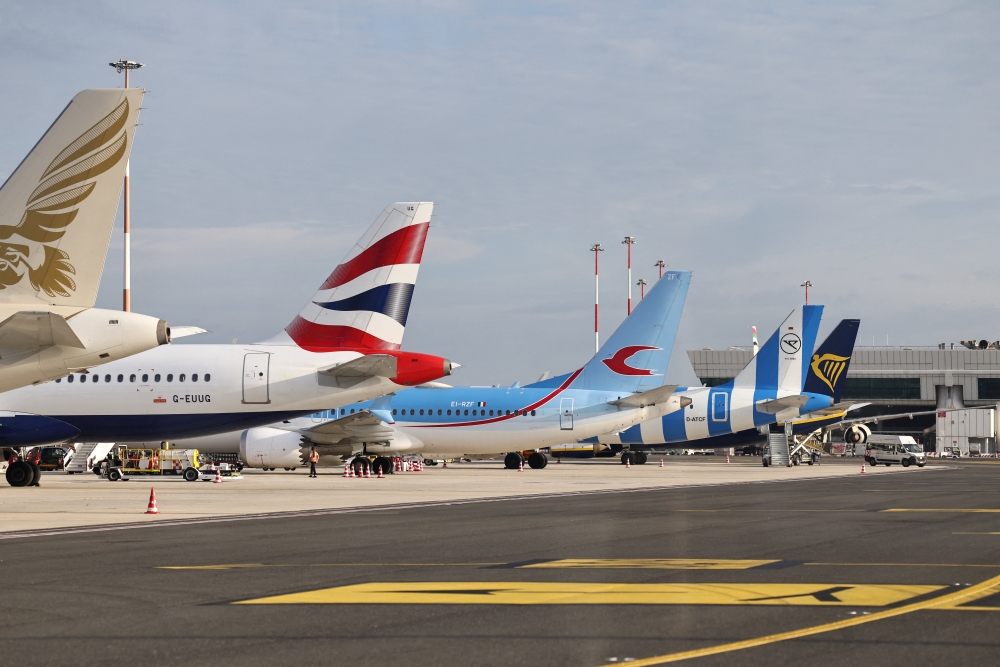
RIO DE JANEIRO, June 9 β€” Airlines expect to carry more passengers this year but earn only half as much profit as in 2025, as high fuel prices don’t appear to be fully deterring travel, according to projections published Sunday.

The International Air Transport Association (IATA) predicted its 370 member airlines, which account for 85 per cent of global air traffic, will carry 5.1 billion passengers this year.

That is up 2.4 per cent from 2025, when passenger traffic was estimated to have reached 4.98 billion. The four billion mark was surpassed in 2023.

Asked by reporters about the impact of the war in the Middle East compared to the Covid-19 pandemic in 2020-2021, IATA Director General Willie Walsh replied: β€œI don’t see this as a crisis.”

β€œYou’re looking at an industry that is forecasting growth,” he said. β€œIf you extract the impact of the Middle East, we’re looking at growth of 3.5 per cent.”

This growth, however, will be accompanied by profitability only half as strong as last year’s, while Middle Eastern airlines are expected to post losses.

β€œWar-related disruptions in the Middle East and rising fuel costs have shifted the outlook for airlines to the worse,” Walsh said in a statement.

β€œProfits will shrink from US$45 billion (RM181.4 billion) in 2025 to US$23 billion this year. And margins will shrink from 4.2 per cent to 2.0 per cent,” he said, referring to the net margin.

According to IATA’s calculations, net profit is expected to be US$4.50 per passenger, half the 2025 figure.

β€œUnder the circumstances, that shows resilience. But it won’t even buy you a hot dog at most of the Fifa World Cup venues and it does not leave much of a buffer should other costs or taxes start rising,” Walsh said in the statement.

β€˜Fuel price shock’ 

With fuel costs rising β€” and those increases being passed on in part through higher ticket prices β€” the revenue of IATA member airlines is expected to grow nine per cent this year, reaching US$1.165 trillion.

β€œAirlines are bearing the brunt of the fuel price shock. While air fares are rising, airlines are still absorbing part of the hike in their bottom lines,” the IATA said.

Profitability will vary across different regions of the world, according to the organization’s projections.

Middle Eastern airlines, which have traditionally had access to an abundant supply of fuel, are expected to face a difficult year, with net margins projected to turn negative.

For these airlines, including Emirates and Qatar Airways, β€œthe immediate recovery path is likely to be driven more by pricing than by a rapid return of volumes,” the IATA said.

European airlines are expected to become the most profitable (3.1 per cent net margin), followed by those in North America (2.5 per cent) and Asia-Pacific (2.1 per cent).

Despite significant geopolitical uncertainty and the inability to predict the duration of the war, the IATA is not worried about demand. It noted that according to its calculations, the average airline ticket price had fallen 26 per cent over the past 10 years. β€” AFPΒ 

  •  
❌