EDITOR’S NOTE: This is PART 2 of Lucas Nine’s report on the earliest animated features from France and Italy. Part one, about France’s “Mr. Wonderbird”, was posted last week – at this link.
To speak of “La Rosa di Bagdad” (“The Rose of Baghdad”), premiered at the 10th Venice Film Festival in 1949, is first and foremost to speak of its director, the colorful Anton Gino Domeneghini. A character worthy of a film in his own right, Domeneghini began his career as an invalid after enlisting as a volunteer in the First World War. Alongside his political and literary hero, the poet Gabriele D’Annunzio, he took part in the venture to create the “Free State of Fiume”: a former Hungarian port occupied in 1919 by D’Annunzio and his men, who were acting on their own initiative (and on behalf of Italy) following discontent with the outcome of the Treaty of Versailles. Domeneghini, always in direct contact with D’Annunzio, became head of his press office, embarking on a career that would turn him into an advertising magnate in Milan. At the helm of his company, ‘IMA’, he handled the campaigns for the leading European brands of the time, until the outbreak of the Second World War, an event that effectively marked the end of commercial advertising produced outside the war effort. But Domeneghini possessed all the attributes of an organizer: after transforming IMA into “IMA Film”, he convinced Italy’s leading capitalists to invest their money (which they were unable to take out of the country) in the production of what would become the first Italian animated feature film.
As in so many cases, watching Disney’s “Snow White and the Seven Dwarfs” was the catalyst: Domeneghini dusted off an old project from his youth, bringing on board the renowned composer Riccardo Pick-Mangiagalli, director of the Milan Conservatory, and a team of collaborators that soon had to be expanded (one of its last survivors, the cartoonist Dino Attanasio, has just died in Belgium at the age of 101.) Key figures: the illustrator Angelo Bioletto as chief designer, and the incredible Libico Maraja alongside Gildo Gusmaroli as the creators of the film’s backgrounds (perhaps the production’s greatest visual asset).
Assembling such a team in a country on the brink of entering a world war, securing the necessary supplies in a rationed economy and, above all, keeping his team safe from conscription seems to have been down to Domeneghini’s personal skills and his direct links with the Fascist high command. However, these contacts were of little use to him when the studio was hit by Allied fire during the bombing of Milan in 1942. Domeneghini had to start from scratch and decided to relocate the entire production (along with his team) to a villa owned by a Venetian noble family, the Fè d’Ostiani, in Bornato, Franciacorta. This involved moving around a hundred artists (families included) to the outskirts, employing local people for ‘menial’ tasks such as tracing or coloring.
Domeneghini managed, despite everything, to secure regular supplies of paper and the bare minimum of materials needed to continue production, thanks to his connections in high places and what appears to have been an unshakeable charisma. This did not prevent working conditions from being extremely precarious: the artists had to work under the constant threat of British Spitfires, against which no air-raid warning system proved effective. Eventually, Bornato railway station was bombed. The enterprise then moved to the nearby but more remote ‘Secco d’Aragona’, another Renaissance villa, rented from the local nobles of the same name, to isolate themselves within its walls and cultivate a vegetable patch in the gardens to feed the artists. At this point, the team organized by Domeneghini already resembled more of a travelling monastery than a film production company, and the German occupation further strengthened this sense of connection with the past. In the documentary “Una rosa di guerra”, screenwriter Lucio de Caro recalls how the community built by Domeneghini allowed him to hide from the (now in charge) German troops, paying the refuge with his skills as a screenwriter, in order to adjust sequences already produced—admirable from an artistic point of view but impossible to edit due to the absence of a prior technical script. De Caro set about the task of piecing the puzzle together as best he could, producing a sort of “retrospective” script.
By that time, Domeneghini was operating less as a film director and more as the parish priest and mayor of a community of around two hundred people, where weddings and christenings were held. The German authorities gave way to those of the final fascist experiment, the Italian Social Republic, without ever causing Domeneghini to doubt for a moment that ultimate victory was theirs: “Then we’ll go to New York, we’ll get Walter (Disney) and bring him here to work, because he seems to be bravino”. By then, the “production company” based in Villa Secco boasted not only a vegetable garden but also chickens, pigs and even cows—creatures that lent the place a paradisiacal air when set against the backdrop of the war’s famine. According to De Caro, Domeneghini used his fascist emblems and uniforms in accordance with the tastes of the different visitors, in a performance designed to preserve his position intact. Devoting himself to the production of an animated film throughout the war seems to have helped ensure that the eventual occupation by British troops spared the director any major charges. The well-known lack of seriousness with which cartoons are usually treated actually worked in favor of their creators on this occasion.
And Domeneghini ended up in London, not as a prisoner of war but of Technicolor (British facilities were at that time the only ones capable of processing it in Europe), following an Italian and French dubbing: all the voices in the film were added during the final stage. A subsequent English dub (in 1952) featuring a very young Julie Andrews also led to the film being re-released in 1967 under the title The Singing Princess.
And The Singing Princess it is, because “La Rosa di Bagdad” is truly a strange film. Conceived in the shadow of Disney’s Snow White, it contains many of its role model’s elements, which in some moment seem to recall its Italian roots only to launch countless opera numbers, complete with encores, applauses and roses. A bizarre blend of genius and amateurism (explained by the turbulent nature of its production), ‘La Rosa…’ combines incredible backgrounds and layouts with animation ranging from highly professional to sloppy, with no apparent criteria. In particular, the film seems to have achieved a new definition of ‘limited animation’. Just as Hanna-Barbera or Japanese TV, Domeneghini created his own kind: animation that is at times fluid and meticulous (with extensive use of live action references) but which can be played back and forth – à la Winsor McCay – as much as necessary to complete a scene, without paying particular attention to the voices, achieving an effect closer to Jack Mercer’s ad-libbed Popeye than to a Disney production.
And yet, the film was a success. Winner of the “Primo Premio Assoluto” at the 10th Venice Film Festival (1949), it was commercially released the following year on a circuit that eventually covered the whole of Europe and, later, the USA (Disney attended a screening in 1951 and offered Domeneghini advice on technical aspects, although as a free man). “La rosa…” recouped its production costs and ended up being an audience success.
Not to mention the dubious distinction of being not only the first Italian animated feature film but also the first Italian feature film in color, animated or otherwise. And if I use the term “dubious”, it is because that distinction is disputed by another feature (also Italian, also animated, also in color), which premiered at the same festival, albeit the following day.
The incredible story of the production can be seen on the excellent documentary film “Una rosa di guerra” (2009), by Massimo Becattini.
“I Fratelli Dinamite” (The Dynamite Brothers).
The main characters of “The Dynamite Brothers”
If “I Fratelli Dinamite” was by no means as celebrated as “La Rosa…”, it is certainly not because it was released immediately afterwards, as the film had already obtained the inevitable ‘censorship certificate’ beforehand, which gave it a debatable status as the ‘first’. The fact is that “I Fratelli..” was a critical and commercial failure. Nevertheless, the film directed by brothers Nino and Toni Pagot (or just Nino, according to other sources) is “my” film. It is a great film under any circumstances, and the Second World War is merely another accident in its production.
Conceived also under the war (an early version in development was lost due to a bombing raid), the production of “I Fratelli Dinamite” lacks the novelistic flair of its older sibling. Traces of his war past can be seen in the fact that the story is narrated by some ridiculously prudish British ladies, a choice which, incidentally, gives the whole film an episodic structure. But whilst “La Rosa…” sought to imitate the 1937 Disney film, ‘I Fratelli…’ points to the future thanks a sense of design more akin to UPA – still in its infancy by then –, or an animation that reminds Jim Tyer’s most feverish dreams (on which future stars of Italian animation Osvaldo Piccardo and Osvaldo Cavandoli collaborated).
The story (courtesy of Attilio Giovannini) follows the adventures of three brothers, from their birth in the heart of the wilderness to their triumph at the Venice Carnival. The brothers seem to possess all manner of powers, or perhaps their story is exaggerated in the style of Baron Munchausen, but we see them defeat the devil himself, or, at least, an actor dressed as the devil (the operatic flavor is always there). It’s hard to say, but the plot matters not much: the film’s merits lie on its surface. An intriguing detail: whilst Domenighini’s account mentions an inevitable trip to London to have the film developed in Technicolor, “I Fratelli…” achieves the same result without having bothered to make the journey (though perhaps this is simply due to a lack of information regarding a production that everyone would prefer to forget).
Consecutive animation drawings from a single sequence.
In any case, the commercial failure of “I Fratelli” did not prevent the Pagot brothers, at the helm of “Pagot Films”, from becoming the leading producers of the post-war era (their animated shorts show “Carrosello” is still remembered as a milestone in Italian television), a title they passed on to their children Marco and Gina… by the way, immortalized by the friend-of-the-house Hayao Miyazaki in the names of the protagonists of his film “Il Porco Rosso”.
Both films can be viewed in pristine copies, recently restored by various Italian cultural institutions.
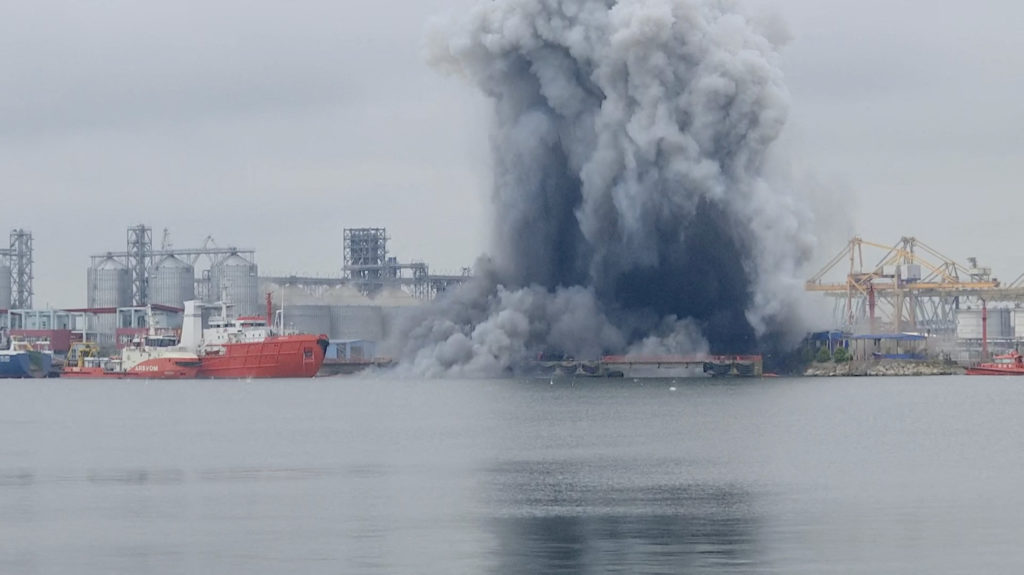
The maritime incident occurred a week after a Russian aerial drone that was part of an attack on Ukraine went astray and struck an apartment building in Romania's eastern Danube port city of Galati, injuring two people in the NATO member country.
Robert Irvine is best known to Food Network audiences as the host of Restaurant: Impossible, which he hosted for 22 seasons. The series ended its run in 2023, but the network is rebooting the franchise as Restaurant Impossible: Last Call with chef Aarón Sánchez and Canadian restaurateur Jen Agg. With the new series set to premiere July […]
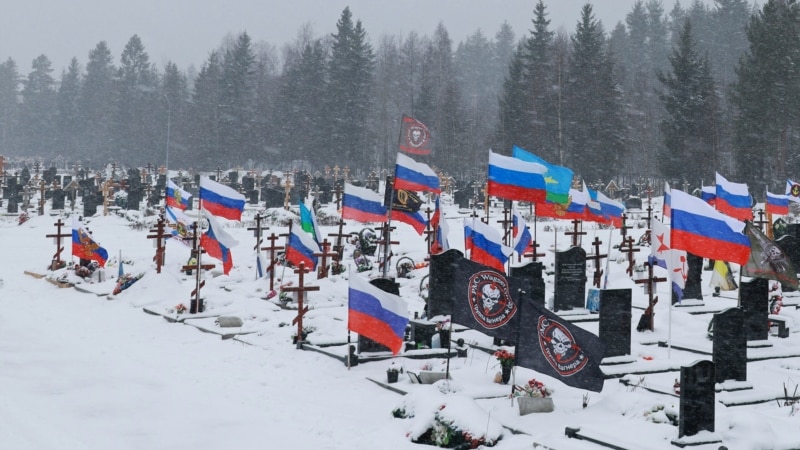
Nearly 500,000 Russian soldiers are estimated to have been killed in Moscow’s full-scale invasion of Ukraine since it began in 2022, a top British intelligence official has said, as the conflicts grinds to a near stalemate.
As honorees were feted at the News & Documentary Emmys on Wednesday evening, a standout moment had to do with the upheaval at CBS News and 60 Minutes. Santiago Campos, a student journalist, accepted the Mike Wallace Memorial Scholarship at the ceremony in New York, expressing thanks but also calling out the network under new […]
Albanese says Australia still impacted by Middle East conflict ‘each and every day’
The prime minister, Anthony Albanese, is now on the ABC News Breakfast couch. He said Australia remains concerned about the economic impact of the turmoil in the Middle East.
Our job now is to demonstrate that we are a genuine and credible alternative to this terrible Labor government.
He’s a great supporter of the party, he’s a great supporter of Angus Taylor, I think this is a great opportunity. The Liberal party has always been what John Howard called the broad church: we like having different opinions.
We listen to everybody’s views, and we represent them.
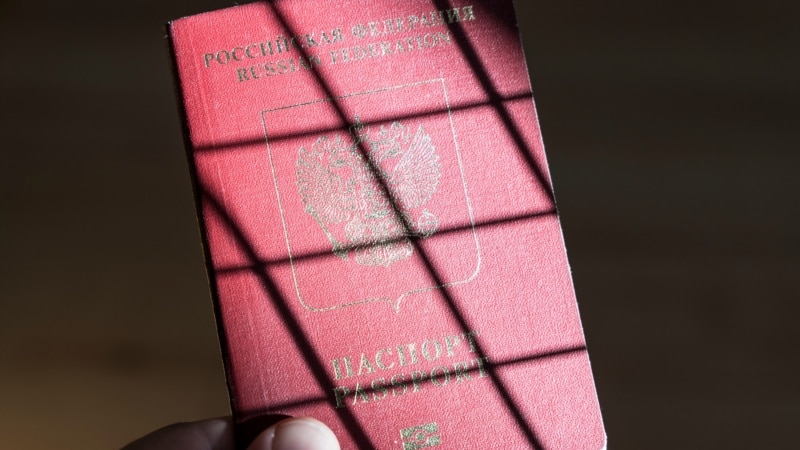
A number of European Union member states are pushing the European Commission to put forward legislation that makes it easier to deny tourist visas to Russian citizens over Moscow's full-scale invasion of Ukraine.
Voters in a city near Los Angeles appear to be the first in the nation to approve an all-out ban on data centers. About 86 percent of voters in Monterey Park, Calif., voted in favor of the measure in Tuesday’s elections, according to election results from the county clerk. The measure declares a prohibition on...

 Login
Login


 As in so many cases, watching Disney’s “Snow White and the Seven Dwarfs” was the catalyst: Domeneghini dusted off an old project from his youth, bringing on board the renowned composer Riccardo Pick-Mangiagalli, director of the Milan Conservatory, and a team of collaborators that soon had to be expanded (one of its last survivors, the cartoonist Dino Attanasio, has just died in Belgium at the age of 101.) Key figures: the illustrator Angelo Bioletto as chief designer, and the incredible Libico Maraja alongside Gildo Gusmaroli as the creators of the film’s backgrounds (perhaps the production’s greatest visual asset).
 Domeneghini managed, despite everything, to secure regular supplies of paper and the bare minimum of materials needed to continue production, thanks to his connections in high places and what appears to have been an unshakeable charisma. This did not prevent working conditions from being extremely precarious: the artists had to work under the constant threat of British Spitfires, against which no air-raid warning system proved effective. Eventually, Bornato railway station was bombed. The enterprise then moved to the nearby but more remote ‘Secco d’Aragona’, another Renaissance villa, rented from the local nobles of the same name, to isolate themselves within its walls and cultivate a vegetable patch in the gardens to feed the artists. At this point, the team organized by Domeneghini already resembled more of a travelling monastery than a film production company, and the German occupation further strengthened this sense of connection with the past. In the documentary “Una rosa di guerra”, screenwriter Lucio de Caro recalls how the community built by Domeneghini allowed him to hide from the (now in charge) German troops, paying the refuge with his skills as a screenwriter, in order to adjust sequences already produced—admirable from an artistic point of view but impossible to edit due to the absence of a prior technical script. De Caro set about the task of piecing the puzzle together as best he could, producing a sort of “retrospective” script.
 By that time, Domeneghini was operating less as a film director and more as the parish priest and mayor of a community of around two hundred people, where weddings and christenings were held. The German authorities gave way to those of the final fascist experiment, the Italian Social Republic, without ever causing Domeneghini to doubt for a moment that ultimate victory was theirs: “Then we’ll go to New York, we’ll get Walter (Disney) and bring him here to work, because he seems to be bravino”. By then, the “production company” based in Villa Secco boasted not only a vegetable garden but also chickens, pigs and even cows—creatures that lent the place a paradisiacal air when set against the backdrop of the war’s famine. According to De Caro, Domeneghini used his fascist emblems and uniforms in accordance with the tastes of the different visitors, in a performance designed to preserve his position intact. Devoting himself to the production of an animated film throughout the war seems to have helped ensure that the eventual occupation by British troops spared the director any major charges. The well-known lack of seriousness with which cartoons are usually treated actually worked in favor of their creators on this occasion.