❌

Reading view

Fisheries Dept launches β€˜no single-use plastic’ campaign at 56 marine parks across MalaysiaΒ 

Malay Mail

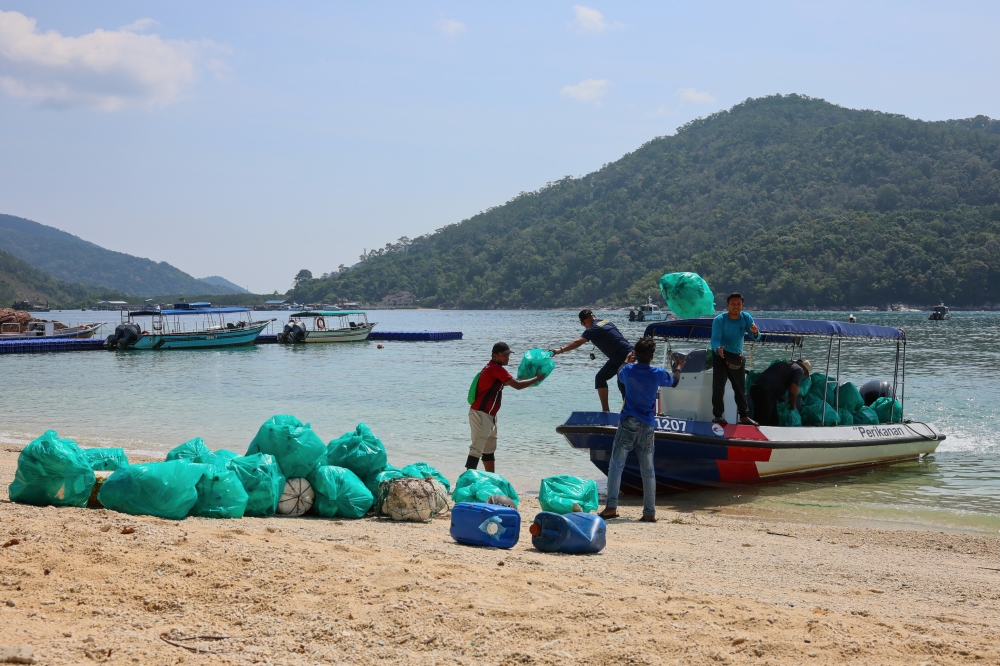
KUALA NERUS, June 8 β€” The Department of Fisheries Malaysia (DOF) is rolling out a β€œNo Single-Use Plastic” campaign at 56 island marine parks nationwide in a decisive move to protect marine ecosystems from pollution and the growing threat of microplastics.

Fisheries director-general Datuk Adnan Hussain said the campaign, launched in conjunction with World Oceans Day 2026, calls on tourists, resort operators and tourism players to rethink their use of plastic bags when visiting marine park islands.

Visitors, he added, are strongly encouraged to bring reusable containers or eco-friendly alternatives to help reduce the risk of marine contamination.

β€œWe do not encourage tourists to bring plastic bags to the islands, because these plastics will eventually be discarded, polluting the ecosystem and potentially breaking down into harmful microplastics.

β€œThis threatens not just marine life, coral reefs and seagrass but also human health,” he told reporters after the World Oceans Day 2026 celebration at Pulau Redang Marine Park here today.

Adnan said that for now, the approach focuses primarily on awareness campaigns rather than enforcement action or fines.

β€œWe are still studying the matter. If this campaign proves insufficient, appropriate regulations could be drawn up in the future,” he said.

He emphasised that single-use plastics pose a serious threat to the marine ecosystem, as they can be ingested by marine life such as turtles and also have the potential to break down into microplastics that enter the food chain.

He revealed that 548,598 visitors were recorded at Malaysia’s Marine Parks in 2025. Of that total, 64 per cent were recorded in Terengganu’s Marine Parks, which include Pulau Redang, Pulau Perhentian and Pulau Kapas.Β 

Earlier, DOF and its strategic partners, including the Department of Wildlife and National Parks (Perhilitan), Aquaria KLCC and Universiti Malaysia Terengganu (UMT), launched three programmes in conjunction with World Oceans Day 2026.

It included a coral restoration programme involving the planting of 600 coral nubbins and the release of wildlife on Pulau Redang.

Adnan highlighted that coral restoration is essential for rebuilding reef populations devastated by die-offs and bleaching.

β€œIf we don’t act now, I believe our marine parks will gradually lose their coral reefs and with them, a lifeline for the entire marine ecosystem,” he cautioned.

On a related front, Adnan acknowledged that research on microplastics in Malaysia’s commercial fish is still in its early stages, with much more data needed.

His comments follow scientific studies by the Fisheries Research Institute confirming the presence of microplastics in the marine ecosystem, including in commercial fish species, a clear signal of rising pollution in our oceans.

He said DOF has applied for funding under the 13th Malaysia Plan to expand research, in collaboration with local universities, to better assess microplastic risks in the country’s marine environment.

Also present at the event were Perhilitan director-general Datuk Abdul Kadir Abu Hashim, Terengganu Fisheries director Pang Nyukang, Aquawalk Group Bhd chief executive officer Daryl Foong, and INOS UMT director Prof Dr Zainudin Bachok. β€” BernamaΒ 

  •  

MACC launches AI-powered MACCAMPUS platform to boost anti-corruption education in universities

Malay Mail

KUALA NERUS, June 6 β€”Β The Malaysian Anti-Corruption Commission (MACC) today launched MACCAMPUS, a digital platform incorporating artificial intelligence (AI) and gamification to strengthen integrity education and anti-corruption awareness among tertiary students.

MACC Chief Commissioner Datuk Seri Abd Halim Aman said the initiative reflects their commitment to engaging university students in enhancing integrity education, corruption prevention and positive values through smartphones and information technology applications.

β€œTo ensure MACC remains capable of engaging university students consistently and effectively, it requires a more innovative, interactive and technology-driven educational approach,” he said when speaking at the Integrity Financial Literacy @ Student Anti-Corruption Programme 2026 at Dewan Sultan Mizan, UMT, here.Β 

He said MACCAMPUS would serve as a digital hub for students involved in anti-corruption initiatives, particularly members of the Student Anti-Corruption Force (AMAR), while facilitating collaboration among participants from more than 120 higher learning institutions.Β 

In addition, the application also features comprehensive learning modules with academic collaboration platforms and student networking functions, while could be expanded to support competitions, mini projects, academic forums, as well as the sharing of ideas and research among students nationwide.

Being the first anti-corruption and integrity education application of its kind to be developed by MACC, MACCAMPUS has the potential to become a technology and intellectual-based platform that integrates education, simulation, gamification, artificial intelligence and academic collaboration.

Through the application, students are expected to become more knowledgeable, confident in making ethical decisions and capable of serving as agents of change who drive a culture of integrity on campuses and in society.

Abd Halim said all university students should make full use of this application to share ideas, reflect and engage in scholarly discourse through its modules, forums and academic discussions.Β 

"This is your space to debate constructively, challenge the status quo with sound arguments and distinguish between facts and propaganda that may distort thinking," he said.

Also present at the programme were UMT Pro-Chancellor and Employees Provident Fund Board Chairman Tan Sri Mohd Zuki Ali and UMT Vice-Chancellor Prof Dr Mohd Zamri Ibrahim. β€” Bernama

Β 

  •  

Shrimp ban sparks tension as Malaysia demands answers, Thailand threatens WTO escalation over import curbs

Malay Mail

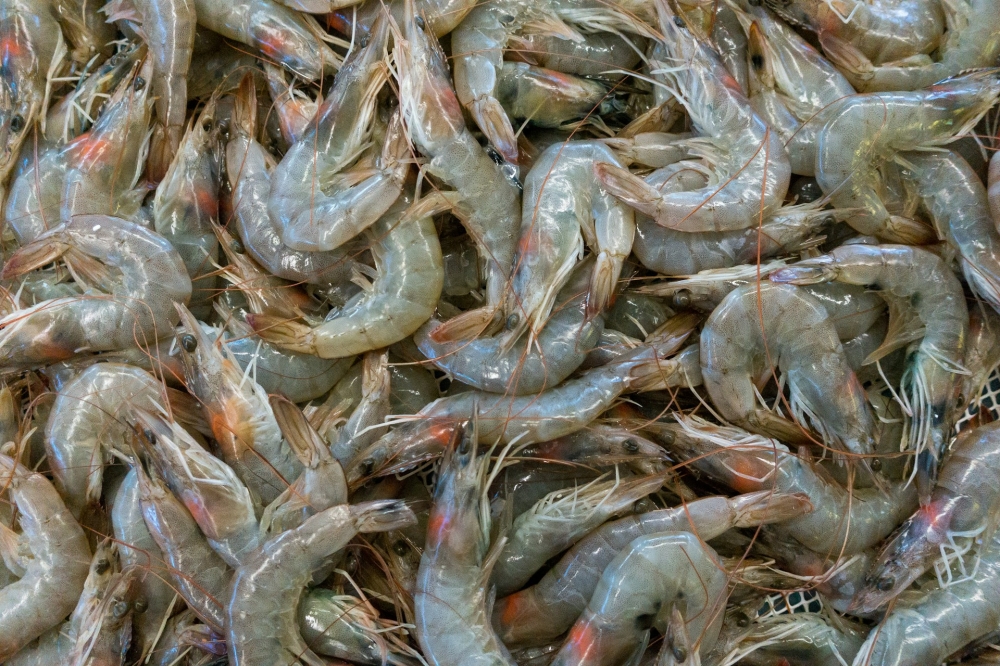
KUALA NERUS, June 8 β€” Malaysia is awaiting Thailand’s response to a questionnaire on shrimp imports before assessing the country’s compliance with local biosecurity requirements following the ongoing trade dispute involving the commodity.

Fisheries Director-General Datuk Adnan Hussain said the Ministry of Agriculture and Food Security is currently examining the matter and has requested Thailand to respond to the questionnaire submitted through Malaysia’s agricultural representative office in Bangkok.

β€œWe have asked the Thai authorities to answer the questionnaire we sent regarding shrimp imports so that they can provide the necessary clarification.

β€œOnce we receive the response, we will assess whether it meets Malaysia’s biosecurity requirements,” he told reporters after the World Ocean Day 2026 celebration at Pulau Redang Marine Park here today.

Adnan said Malaysia has also strengthened its biosecurity measures on imports of sea bass from Thailand following Bangkok’s decision to impose restrictions and conduct full inspections on Malaysian sea bass exports.

He said Malaysia now requires a Certificate of Analysis (CoA) for sea bass imported from Thailand before the product is allowed into the country.

β€œOur sea bass exports are also subjected to restrictions and comprehensive inspections by Thailand. As such, we are applying similar biosecurity measures,” he said.

When asked whether Thailand had been given a deadline to respond, Adnan said no specific timeframe had been set.

β€œWe have not imposed any deadline at this stage. Our priority is to conduct a thorough evaluation once we receive a complete response from Thailand,” he said.

On May 16, Malaysia tightened import controls on fishery products from Thailand by enforcing CoA requirements for sea bass and imposing a temporary ban on five species of shrimp effective June 1.

The affected shrimp species are Penaeus esculentes, Fenneropenaeus merguiensis, Penaeus vannamei, Penaeus monodon and Penaeus stylirostris.

Yesterday, it was reported Thailand is prepared to raise the issue of Malaysia’s temporary suspension of imports of the five shrimp species at the World Trade Organisation (WTO) and Asean forums should bilateral negotiations fail to resolve the matter. β€” Bernama

  •  
❌