
Reading view

Trump hypocritically accuses others of forced labour to justify tariffs. Sadly, the accusation is not false.
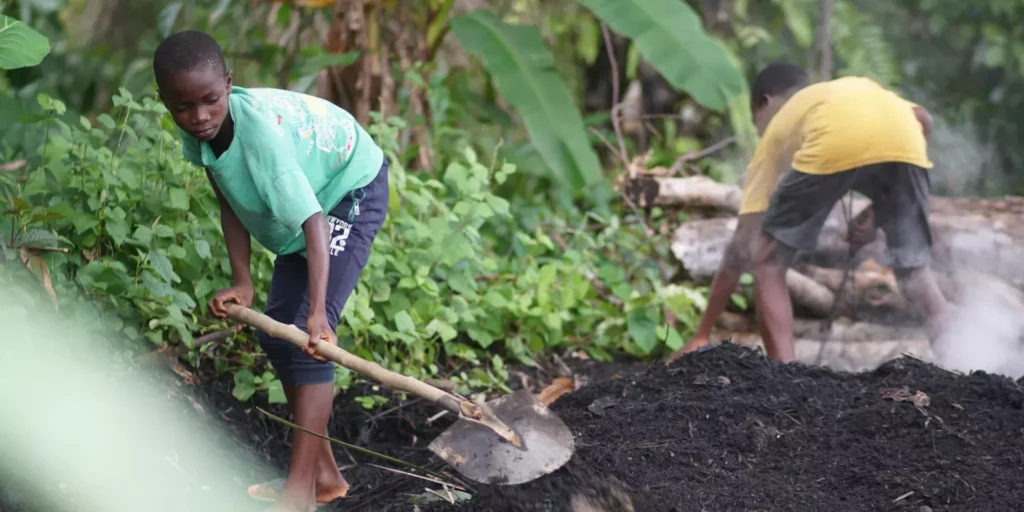
Children shovelling dirt in Sierra Leone.

The Trump administration is hypocritical when it accuses Canada and many other countries of failing to do enough to end forced and child labour around the world.

Such abuse is not a trivial matter. 

Canadians should remember the 2013 collapse of the Rana Plaza building in Bangladesh, home to five large garment factories, which supplied cheap goods to companies in the West.

Over 1,100 people died and more than 2,500 were injured in that event. Many of them were garment workers, and some produced clothing for Canadian companies, including Loblaw subsidiary Joe Fresh.

That was an abusive situation which rose to the level of an international scandal. 

But daily, beyond the headlines, many thousands of involuntary workers produce all or parts of goods we consume, in miserable and sometimes dangerous conditions.

The use of prisoners, political and otherwise, in international supply chains is routine in parts of the world (including the U.S.). 

This writer has observed children painstakingly making carpets by hand in Egypt and India. That sort of labour is, at least, relatively safe, something we could not say about all child or forced labour.

In its most recent reporting, UNICEF relates that there are over 138 million child labourers in the world. 

In one country alone, the West African nation of Sierra Leone, UNICEF reports “almost 1 in 5 children are engaged in child labour.” 

“Child labour compromises children’s education, limiting future opportunities and perpetuating an inter-generational cycle of deprivation.”

And so, the U.S. administration is not off-base in drawing the world’s attention to the scandal of forced and child labour.

However, the Trump government’s real motive is not to achieve justice; it is to find a legal way for the U.S. executive branch to bypass Congress and impose tariffs on goods from many countries, including Canada. 

The U.S. constitution clearly assigns the power to levy tariffs to the legislative branch, to Congress, not to the President.

An earlier effort denied by courts

Early in his current term Trump tried to use the 1974 U.S. International Economic Emergency Act (IEEA) as a fig leaf for his unconstitutional tariffs. 

That was a big stretch, in part because the IEEA never even mentions the word tariff. When Congress passed that IEEA it did not foresee tariffs as one of the arrows in the president’s quiver in the event of an economic emergency. 

Lower courts ruled the U.S President’s invocation of the IEEA to be entirely unfounded.

The U.S. Supreme Court, which is normally highly deferential to Trump, upheld those rulings, rendering Trump’s tariffs based on the IEEA null and void.

And so, Donald Trump and his advisors have come up with another loophole to enable them to impose tariffs without Congressional agreement: the forced labour issue.

It is hard to believe the current U.S. President cares a whit about forced labour. 

In fact, Trump’s administration has trashed the entire U.S. foreign policy and foreign aid establishment, which, in theory, could have had the expertise to monitor and document the prevalence of what is, in essence, modern-day slavery.

Shortly after assuming office, Trump cut 69 U.S. programs that deal with child labour. 

Last year, in 2025, the U.S.-based Economic Policy Institute reported on the current U.S. Labour Department’s cuts to programs that fight international human trafficking and promote labour rights.

Those cuts, says the Institute, “undermine the U.S.‘s ability to monitor foreign governments’ compliance with U.S. trade agreements, and ensure that U.S. workers will compete on an uneven international playing field, fueling a race to the bottom in the global economy.”

On June 2 of this year, in announcing the new U.S. tariffs based on forced labour in supply chains, Trump’s trade representative Jamieson Greer used almost the exact same words as did the Economic Policy Institute a year earlier.

But Greer wasn’t issuing a mea culpa for his own country. He was accusing other countries of tolerating labour abuses, as an excuse for imposing illegal tariffs on them:

“The failure of our most important trading partners to address the importation of goods made with forced labor is unacceptable. This creates a dynamic where American workers are forced to compete globally on an unlevel playing field”

Evidently a sense of irony is a quality in short supply in the current U.S. administration.

The U.S. judicial system will no doubt have its chance to rule on this ploy. 

In all likelihood, the courts will find it to be as disingenuous as Trump’s earlier effort to invoke the IEEA as justification for tariffs. 

But even if the motives for Greer’s accusation are monumentally dishonest, sadly they ring true when it comes to many countries, including Canada.

A weak law and vague reporting system

The federal New Democrats foreign affairs critic Heather McPherson has pointed out that “Canada has lagged on measures to make sure there is not forced or child labour in supply chains for decades, while other governments have acted.” 

And the Edmonton MP has added: “Past Liberal governments repeatedly promised mandatory supply chain due diligence legislation and never delivered on it.”

Canada does have the Fighting Against Forced Labour and Child Labour in Supply Chains Act, which Parliament passed in 2023.

But advocates and experts all say the legislation is ineffective.

The 2023 law includes a reporting requirement. Corporations have to report annually on their due diligence concerning forced and child labour in their supply chains – chains which sometimes stretch around the world.

Anyone can look up the reports. There are over 12,000 of them for 2025, from corporations and from other organizations. They are all available online .

If you do look, you will find numerous reports from giant Canadian and foreign companies, such as Bombardier, Loblaw, Carhatt, Levi Strauss, Walmart, Winners, and Lacoste.

Plus, there are thousands of reports from government departments and agencies, and many small and medium sized operations, such as the Pincher Creek Cooperative Association. 

Sadly, all of that verbiage amounts to rather little. 

One characteristic of almost all 12,000 plus reports is a high level of generality. 

The more than 12,000 reports almost all make a rhetorical commitment to the principles of various conventions banning modern-day slavery.

And almost all state, in a high-level fashion, the companies’ or organizations’ commitments – via training, information sharing, audits and monitoring – to faithfully uphold those principles.

But virtually none of the reports include very much in the way of facts and figures. Many do not even list all the countries that are part of their supply chains. 

To cite just one example, the multinational fashion corporation Lacoste tells us it produces and sells over 50 million items a year. Those items include clothing, footwear and accessories, and account for sales of 2.8 billion euros, or about 4.5 billion Canadian dollars.

Lacoste says it employs more than 8,500 people in 98 (!) countries. But its report does not specify whether those are directly employed or through suppliers. Nor does it name the countries. 

The report says Lacoste has a supply chain of more than 1,200 factories worldwide. Those factories specialize in everything from raw material processing to final production of garments. 

And there you have it. 

Those few numbers are pretty much the only tangible facts and figures in the Lacoste report. The rest of it consists of bland and platitudinous statements about audits, compliance, assessing, and monitoring, with nary a tangible detail. 

We have to take it all on faith. 

The only specific references in the Lacoste report to anything resembling a problem or pattern of abuse concern the production of cotton and what the report vaguely calls an “alert” concerning suppliers in Vietnam.

Lacoste says it resolved the cotton issue by limiting its suppliers to six countries, among them the U.S., Greece and Spain.

As for the Vietnam situation, Lacoste reports that when it received the (non-specific) complaint it hired the consulting firm Ulula to investigate.

Lacoste’s report does not tell us what Ulula has been investigating or what the investigation has turned up so far. Nor does it list any other action in response to the Vietnam complaint.  

So much for transparency. And Lacoste is typical in this regard. Read as many of the reports as you can and see for yourself. 

Although the 2023 Canadian legislation requires organizations and corporations to make available some sort of annual report on forced and child labour, it does not require much else. 

It is up to companies and organizations to decide what details they will put in their reports, and with how much precision. 

It is in no corporation’s interest to divulge any information that could damage its reputation or have an impact on its bottom line. In this case, the government of Canada is getting what it asks for – which is not much.

There are provisions in the 2023 Canadian law for inspections. And the government can even impose sanctions on companies and organizations that allow child and forced labour in their supply chains.

To date, the government has not provided any information on any inspections its officials might have conducted, and, so far, no sanctions have been imposed on any company or other entity.

The post Trump hypocritically accuses others of forced labour to justify tariffs. Sadly, the accusation is not false. appeared first on rabble.ca.

  •  

Here are five Canadian 2SLGBTQIA+ books to celebrate Pride Month.

Books, apple and flowers. Image credit: congerdesign/Pixabay

All Hookers Go To Heaven by Angel B.H.

All Hookers Go To Heaven is a fiction novel by Nova Scotia-born writer Angel B.H. The novel follows Mag, a sex worker from a rural Eastern Canadian town, as she navigates Purity Culture, sexuality, faith, and financial insecurity. Mag questions her conservative upbringing after she develops feelings for another girl while attending an Evangelical Missionary program for youth.

Praise for All Hookers Go To Heaven

“At once fearless and tender, this book is a sex worker heroine’s journey that shimmers with beauty, longing, fierce intelligence, emotional complexity, and bursts of wry humor,” said Chinese-Canadian writer Kai Cheng Thom. “At the heart of this deeply absorbing novel is an unforgettable protagonist whose search for the sacred within herself in a world that routinely dehumanizes and devalues sex workers is sure to linger in readers’ hearts.”  

Crooked Teeth by Danny Ramadan

Crooked Teeth is a memoir by Syrian-Canadian author Danny Ramadan. In this rejection of an oversimplified refugee narrative, Ramadan invites readers into his nuanced journey as a queer refugee. Crooked Teeth explores Damascus, Syria’s underground network of queer safe homes, the Arab Spring uprisings throughout the Middle East, and continuous threats against Syria’s 2SLGBTQIA+ community.

Praise for Crooked Teeth

“I take my hat off to Danny Ramadan and his brilliant muses. This is a mesmerizing story of growing up gay in a Muslim Syrian family, of the challenges and joys of finding and creating loving communities, and the miracle not just of physical survival but of an effervescent celebration of the human heart,” said renowned Canadian novelist Lawrence Hill. “Once I began reading, I couldn’t stop until the final page. Countless others will be thankful for this raw, idiosyncratic, utterly compelling account of Danny’s long journey home.” 

The Regulation of Desire by Gary Kinsman

The Regulation of Desire is a 2SLGBTQ+ book written by Toronto-born sociologist Gary Kinsman. At the time of its initial publication in 1987, The Regulation of Desire was recognized as the first book-length study of Canada’s sexual regulation. In the third edition of the text (published in 2024), Kinsman analyzes the role that Indigenous liberation and police and prison abolition have in 2SLGBTQIA+ politics.

Praise for The Regulation of Desire

“The 3rd edition of Regulation of Desire by Gary Kinsman is a brilliant, thoughtful and captivating text. It is one that offers us insight into his process of uncovering and disrupting the discourses and practices of whiteness, homonormativity, capitalism and neoliberalism of the contemporary white queer movement in Canada,” said University of Toronto professor Beverly Bain.

“In this new edition, Kinsman reveals how the social organizing of forgetting has worked to subvert the histories of organizing by Black, racialized, queer, trans and two-spirited people. He endeavors to address these erasures by centering the most recent revolts and uprisings by Black and Indigenous and Two-Spirit Peoples.”

a body more tolerable by jaye simpson

a body more tolerable is a poetry collection by Oji-Cree Saulteaux Indigiqueer writer jaye simpson. In a body more tolerable, simpson explores female rage, trans identity, sexuality and Indigenous grief through a series of visceral poems.

Praise for a body more tolerable

“jaye simpson’s a body more tolerable is a singular achievement. Her poetic project, at once forward-dawning and ancestral, both revolutionary and decolonizing, is given total expression in this book,” said Cree poet Billy-Ray Belcourt.

“These poems moved me immensely; there is so much beauty, feeling, and power in all of them. No one is writing like jaye simpson.”

Perfect Little Angels by Vincent Anioke

Perfect Little Angels is a story collection by Nigerian-Canadian writer Vincent Anioke. Set predominantly in Nigeria, the characters in Anioke’s Perfect Little Angels are used as a vehicle to explore themes of self-expression, religion, masculinity, marginalization and 2SLGBTQ+ identity.

Praise for Perfect Little Angels

“The stories in Perfect Little Angels are, by turns, scathing, brilliant, and incredibly compelling. Anioke’s characters wade through startling and at times violent circumstances with tender humanity; they grapple with the harsh consequences of unforgiving traditions and defiant desires,” said Nigerian-Canadian writer and director francesca ekwuyasi.

“With striking lyricism and unexpected plot twists, Perfect Little Angels is deeply moving and thoroughly enjoyable.”

The post Here are five Canadian 2SLGBTQIA+ books to celebrate Pride Month. appeared first on rabble.ca.

  •  

The heroic life of Betty Baxter, athlete and activist

On a snowy Canadian night in 1981, the athlete and coach Betty Baxter attended a mysterious meeting at a motel outside Montreal with senior administrators of the Canadian Volleyball Association. The body had made her the first woman to coach the national women’s team only a year before.

“There are rumours that you are gay, “ said one of the three men in the room sternly. “Do you deny it?” When Baxter confirmed her sexual orientation and challenged the old men convened to decide her professional fate to justify why the question was relevant, pointing out her successes as national coach, one of them, his face contorted with rage, turned and struck the wall with his fist, shouting “You never would have been given this job if I’d known that.” Baxter  became another victim of the anti-gay purges that had swept through so many dimensions of Canadian life.

Baxter left that darkly miasmic, morally squalid motel room with one chapter of her life over, and about to begin a new chapter, one that saw her become a public icon for queer communities in Canada and around the world, an eloquent spokeswoman for equality and inclusion both in sport and in civil society. She had already come a long way from her 1952 birth in small town Alberta, and was about to go even further.

Outspoken is the story of that transformation. It is also a love letter to the strenuous joys of competitive sport, and to the 2SLGBTQIA+ community that has emerged around the world in her lifetime, courageously confronting  the kind of prejudice that drove her from her first love, coaching and playing competitively,  and into the arena of public political advocacy.

Along the way, this remarkable book provides a brief and vivid account of what one of her book’s blurbs ( this one from former Olympian and U of T professor emeritus Bruce Kidd ) describes as “…the helter-skelter creation of the Canadian sports system in the frantic build up to the 1976 Olympics in Montreal…” . It also tells the story of her involvement in organizing the transformative civic events as Vancouver hosted  the third ever Gay Games in 1990.

Although Brooks, Alberta was not a hot bed of progressive politics when Baxter grew up there, she shares one memory that prefigured the leadership role she later played in the struggle for equality. Her brother John returned from time working as a tutor in Mexico to tell stories about the 1968 Olympics held in the Mexican capitol, stories that included the striking visual of two black US competitors, Tommy Smith and John Carlos standing on the medals podium with downcast heads and fists thrust into the air in what Baxter describes as “the first televised athletes’ protest against racial inequality.”

As she listened to her brother’s stories about a city lit up by Olympic enthusiasm, Baxter knew she wanted to become an Olympian. It was only later that she realized she would need to stand up for her rights and the rights of other gay athletes in exactly the way the two black athletes had stood up for theirs.

This book is an important historic document, a first person account from one of the key players in the drama of how Canada began its long and still incomplete progress toward equality and inclusion for queer people in sports and in the public square. It is also, and this will make it more impactful, beautifully written. Baxter generously names many of her first readers, friends and editors who helped her polish her text, and the collective work on the manuscript, like the collective work organizing the Gay Games and the many other equality projects that have filled her life, has been impressively successful.

Baxter writes beautifully and movingly about the joys of athletic training and achievement, in passages that reflect her life long commitment to fitness and excellence. Anyone who has ever experienced the sublime pleasure of being “in the zone” on a long run or in the midst of a hard fought game will recognize how powerfully Baxter has captured that pleasure, and the painful price the athlete pays to achieve it. She also conveys the pleasures or solidarity and shared effort on the socio-political front. All in all, this book is both beautiful to read and powerfully instructive.

In a time when authoritarian political opportunists here and abroad have mounted the ghastly apocalyptic horses of homophobia, misogyny and transphobia and are galloping the world toward a dark cliff that may take us all into the abyss, this is an important and timely book. Highly recommended.

The post The heroic life of Betty Baxter, athlete and activist appeared first on rabble.ca.

  •  

How has Russia’s full-scale invasion changed KyivPride, 2SLGBTQIA+ safety, and civil-union politics in Ukraine?

A KyivPride event in 2019.

Saba Yamani is a Kyiv-based dental professional and 2SLGBTQIA+ woman who was born in Saudi Arabia and raised in Ukraine. She speaks Ukrainian fluently, completed medical university training in Kyiv, and works at a private dental clinic. She has described being baptized in the Orthodox tradition, coming out, and living through wartime pressures on queer visibility and safety. Yamani has also spoken publicly about refugee-status hurdles, including lacking a Ukrainian passport, while continuing to build her life and career in Kyiv.

Scott Douglas Jacobsen and Saba Yamani discuss how Russia’s full-scale invasion reshaped 2SLGBTQIA+ visibility and risk in Ukraine. Yamani says large Pride marches paused for security, then reappeared with limited, tightly protected actions in Kyiv. She describes prewar and wartime harassment, including online threats and stereotyping based on clothing, and notes sharper stigma in some western regions linked to conservative religiosity. The conversation also covers civil-union advocacy: Yamani recounts a 25,000-signature petition that received a presidential reply but no immediate legal change under wartime constraints, and she emphasizes the stakes for partners’ hospital access and burial rights during active combat.

Scott Douglas Jacobsen: We will focus on the wartime LGBT experience. Has Kyiv Pride been running since the full-scale invasion?

Saba Yamani: Not in the usual way inside Ukraine, especially in the first years of the full-scale war. Large public marches were largely paused or moved abroad for safety. KyivPride later resumed a march in Kyiv under heavy security, with limited attendance.

Jacobsen: Why did they stop? What reasons were stated?

Yamani: Safety: avoiding mass gatherings that could become targets during missile or drone attacks, and reducing the risk of violent clashes.

Jacobsen: Have LGBT citizens in Ukraine been targeted before the war, to your knowledge?

Yamani: Yes. There have been attacks and threats against LGBT people in Ukraine from various extremist and anti-LGBT groups and individuals.

Jacobsen: You mentioned the Right Sector. In what way?

Yamani: Some people I associate with that label, or with far-right circles, have threatened or targeted openly gay people. During the war, many of those people are fighting; some still harass LGBT people online.

Jacobsen: What is the nature of that trolling?

Yamani: Messages such as, “Tell me where you are if you want to get stabbed.”

Jacobsen: So these are openly homophobic threats of violence.

Yamani: Yes.

Jacobsen: How do recipients feel when they read them?

Yamani: I find them funny, possibly because I am a woman. If I were a man, I might feel more threatened because the risk of physical confrontation can be higher. Some homophobic men claim they are “protective” of women; others treat women as objects to degrade. It depends on the person. As a woman, I can be more open about my queerness. I do not think I could be as open right now if I were a man.

Jacobsen: In North American culture, heterosexual men sometimes use accusations of homosexuality to police other heterosexual men, keeping them within rigid gender roles. Is that happening here as well?

Yamani: Yes. Americans have the F-slur. Here, people often use a derogatory term like “pidor” (a slur historically linked to “pederast”), aimed mostly at gay men, though it is also used as a general insult.

Jacobsen: Does it have other meanings, or is it mainly that?

Yamani: It is mainly used at gay men, but it is also used as a broad insult for someone viewed as contemptible.

Jacobsen: Research shows that when LGBTQ adolescents are exposed to this kind of language and bullying during identity formation, mental health outcomes worsen, including higher rates of depression, self-harm, and suicidal ideation and attempts. Is this also a concern in Ukraine, regardless of the war?

Yamani: Right now, I do not feel that it is as severe. The previous generation, yes, absolutely.

Jacobsen: When you say “previous generation,” what age range do you mean?

Yamani: Millennials through baby boomers. In our generation, those born in the 2000s, we have mostly been supportive of each other. At university, I met some men who considered themselves right-wing. During Pride 2019, we were seeing each other. They were banned from attending with us. When I was marching, I saw him standing on a hill above the route. We were walking through Khreshchatyk. He was watching.

He had texted me before the event, saying, “Do not go. It will be dangerous.” It was going to be dangerous because his group planned to attack us, including throwing objects.

Jacobsen: He was the only one who texted you?

Yamani: Yes. Because security and police presence were strong, the situation was mostly controlled.

Jacobsen: So the police were supportive?

Yamani: Yes. There were only two incidents. One man was pepper-sprayed in the face. We had to pass through security checks. We were told not to bring knives or other objects. We could bring water, a bag, milk, and pepper spray. Milk helps reduce the effects of pepper spray. The man who was sprayed had milk, and it helped.

One effective measure involved the metro. Stations along the Pride route were closed to the general public. After the march, we were instructed to remove rainbow clothing before entering the metro. There were three lines—green, blue, and red—and we boarded without public information about stops. There was no online information about the route.

Now, we have Telegram bots and groups that report missile and ballistic threats. Anti-LGBT groups use similar chats. If someone identifies a gay person, they message each other with the location, such as “Spotted a gay person in Pechersk district,” followed by the street name, and people gather.

Jacobsen: That raises an interesting sociological question. Ukrainian culture seems technologically capable and IT-friendly. Not at the level of Japan or South Korea, but highly digitally connected. At some point, that familiarity with technology can become sophisticated coordination. In this case, it is being used to target gay people.

The deeper psychological question is: when they identify someone as gay or queer, how do they decide? What markers are they using? Prejudice often relies on stereotypes. What does their stereotype look like?

Yamani: Every country has its styles and trends. In the 2000s, skinny jeans were popular. In the 2000s, skinny jeans were associated with gay men. Straight men wore baggy jeans. If you wore skinny jeans, you were called a slur. That was one way people targeted others. Now it has reversed. If you wear baggy jeans, you are labeled gay; if you wear skinny jeans, you are considered straight.

Jacobsen: So it is simply a shifting marker of dominant culture.

Yamani: Yes. It is about how we dress and express ourselves. Being queer in Ukraine, especially in Kyiv, is less stigmatized than it used to be. We can express ourselves openly. That also makes it easier for hostile people to identify us. In 2019, people took photos at Pride and later targeted those individuals.

Jacobsen: In a war context, people outside the country often need shorthand explanations. I sometimes use humor, such as saying, “It is cloudy with a chance of missiles,” to ease anxiety. A more direct explanation and analogy is that threat levels vary by region. Large eastern cities face greater danger, while villages in the west face less, though residential areas are still bombed. If we are speaking specifically about being openly queer, how does it vary by region?

Yamani: Western Ukraine is also difficult. Kyiv is relatively open. Western regions can be more conservative because of strong religious influence. Even Lviv has significant homophobia. That is interesting, given its reputation for historic architecture and European culture. Lviv is close to Poland, and Poland has strong conservative and Catholic traditions. Culturally, there are similarities.

Jacobsen: In Poland, Roman Catholicism plays a central role. In Western Ukraine, Eastern Christianity—both Orthodox and Greek Catholic traditions—is influential. What similarities in those religious cultures reinforce homophobia beyond ordinary prejudice?

Yamani: Even young adults our age will stare if I walk down the street with my partner. Older and younger generations both do this. If you rent an Airbnb while traveling in Western Ukraine, you cannot openly say you are traveling with your girlfriend.

Jacobsen: I have heard stories of married or common-law same-sex partners being denied hospital access when one partner is dying. That is one of the worst situations. It reflects a broader international problem for LGBTQ people. It is a recurring global issue.

Yamani: Since 2022, one of the first things we pushed for was legal change. We organized a petition and collected over 25,000 signatures, which meets the threshold for official consideration.

Jacobsen: Was that in Kyiv alone?

Yamani: I am not sure whether the signatures were only from Kyiv or from across Ukraine, but 25,000 signatures are enough to require a response from the president. He replied that he sees us and understands the issue, but under martial law he cannot change the law during wartime.

Jacobsen: Because of the martial law context?

Yamani: Yes. At the time, that was legally accurate. However, recently there was discussion of a proposal that would allow 14-year-olds to marry under certain circumstances, such as pregnancy.

Jacobsen: A side question for the transcript: has Ukraine ratified the Convention on the Rights of the Child?

Yamani: Yes, Ukraine ratified it years ago. In this recent case, the proposal did not pass. Public backlash was intense. I personally wrote that I left Saudi Arabia to avoid being forced into early marriage, and I could not believe such a proposal was being discussed here. Some women responded by asking what pregnant teenagers were supposed to do.

Jacobsen: As if abortion is not part of the discussion. Is abortion legal in Ukraine?

Yamani: Abortion is legal in Ukraine. My concern was that if such laws were adopted, it could signal a broader conservative shift, similar to what has happened in Poland regarding reproductive rights.

Jacobsen: Fourteen is a child.

Yamani: It is a child having a child. At fourteen, I was listening to pop music and worrying about celebrities. That is not an age for marriage. The proposal would have allowed minors who become pregnant to marry. In many cases, pregnancy at that age involves coercion or abuse, especially when the other person is significantly older. We are not talking about consenting adults.

Jacobsen: In many cases, that would amount to statutory rape.

Yamani: Yes. That is why the LGBTQ community was angry. We cannot obtain even civil unions, yet there was discussion of allowing children to marry.

Jacobsen: A civil union, not even marriage.

Yamani: At the same time, many LGBTQ people are serving on the front lines. People ask why they should risk their lives for a country that does not legally recognize their relationships. If something happens to them, their partner may not be allowed to visit them in the hospital or claim their body if they die.

Jacobsen: In ordinary circumstances, when people grow old and one partner dies first, that is tragic but legally straightforward. I have heard cases of same-sex couples who were together for 10-20 years and still had no legal recognition. I did not even know what to say.

Yamani: There was a positive development last year. In the district where I grew up, a court recognized the union of two men.

Jacobsen: Was that recognition by the state or by a religious institution?

Yamani: By the state. The government acknowledged their marriage.

Jacobsen: So it was recognized in civil law, not religious law. That leads back to the earlier point: what is the position of the churches? There can be a difference between official doctrine, church leadership, and ordinary believers.

Yamani: Official religious doctrine opposes same-sex relationships. Many religious people, including those serving in the war, hold that view strongly.

Jacobsen: You can prohibit something in doctrine, but that does not change the reality of people’s lives.

Yamani: Some of the harshest criticism comes from religious individuals who are fighting for the country. They justify killing in war, but object to me loving a woman. They may identify as Christian, yet they focus more on opposing same-sex marriage than on the moral implications of taking a life in combat.

Jacobsen: In their view, they believe they have a legitimate grievance against same-sex marriage, even during wartime. They may see a soldier killing another soldier as lawful under wartime conditions, while considering same-sex marriage morally wrong.

Yamani: Yes, that is their perspective.

Jacobsen: In the United States, similar arguments are made—that same-sex marriage harms the “moral fabric” of the nation. Is that reasoning common here as well?

Yamani: Yes, that is the majority argument.

Jacobsen: And what is the minority argument?

Yamani: Some say, “If you want rights, go to war and fight for them.”

Jacobsen: So the implication is that rights must be earned through military service.

Yamani: Yes. If you are not fighting, you do not deserve to demand change.

Jacobsen: Have there been formal bans on LGBTQ events or cultural expression in Ukraine, either before or after 2014 or 2022?

Yamani: It is not illegal. Events can take place, although they often require significant security. The last Pride event I attended was Kharkiv Pride last summer. It had some protection, but many men still came to shout insults and threats.

Jacobsen: You do not see many women doing that in person.

Yamani: Not in person. Mostly online.

Jacobsen: It becomes complicated online. When someone claims to be a woman posting hostile comments, that identity is difficult to verify. Anyone can misrepresent themselves.

Yamani: I read many of the comments on my posts. When women respond negatively, they say things like, “Go back to your country. Take your girlfriend and go to Africa.” I am not from Africa, but that is the insult they use.

Jacobsen: So it shifts into xenophobia.

Yamani: Yes. They say, “Stop ruining our country. We do not need this here.” They describe queerness as if it were a disease that I am bringing into Ukraine.

Jacobsen: I have heard similar sentiments from women. From my perspective, I am engaging in human rights–oriented work: interviewing, analyzing, summarizing expert views, and documenting lived experience. Having the conversation itself is sometimes framed as subversive, as if discussing LGBTQ rights is equivalent to promoting them. In some contexts where religion is dominant, the reaction can escalate into outright bans. That reflects a broader pattern of cultural and identity-based xenophobia.

Yamani: It also intersects with nationality and race. If you are not perceived as ethnically Ukrainian, and you are openly queer, the hostility can intensify. Prejudice tends to stack categories—nationality, race, sexuality—into a single narrative of “outsider.”

Ukrainians are not always considered “white” in some Western contexts. They are not always treated as fully Caucasian either. There is also a gendered expectation. Some people react with comments such as, “Why aren’t you hitting on me?” as if heterosexual attraction should be the default.

Jacobsen: This connects to a broader discussion. My background is rooted in humanist and secular humanist traditions, as well as Unitarian Universalism, Ethical Culture, and non-theistic Satanist groups. I have held memberships or leadership roles in some of these communities. Although they differ in style—humanists often being more institutionally oriented and non-theistic Satanists more individualistic—they share a similar ethical foundation: human rights, personal autonomy, and equal treatment under the law.

All of these perspectives are grounded in the scientific method and empirical inquiry. The foundation of medical and biological science is evolutionary theory, including natural selection and related developments such as kin and sexual selection. Concepts like race are frequently discussed in social terms, but biologically they reflect variation within a single species.

Yamani: That is why these conversations matter. We use terms like race, identity, and culture to describe lived realities, but we also need to examine how those categories are constructed and how they influence rights, policy, and social attitudes.

Jacobsen: Thank you very much for the opportunity and your time, Saba.

The post How has Russia’s full-scale invasion changed KyivPride, 2SLGBTQIA+ safety, and civil-union politics in Ukraine? appeared first on rabble.ca.

  •  
❌