Reading view

Lee Hsien Loong: Singapore-China ties based on shared interests, not ethnicity

Malay Mail

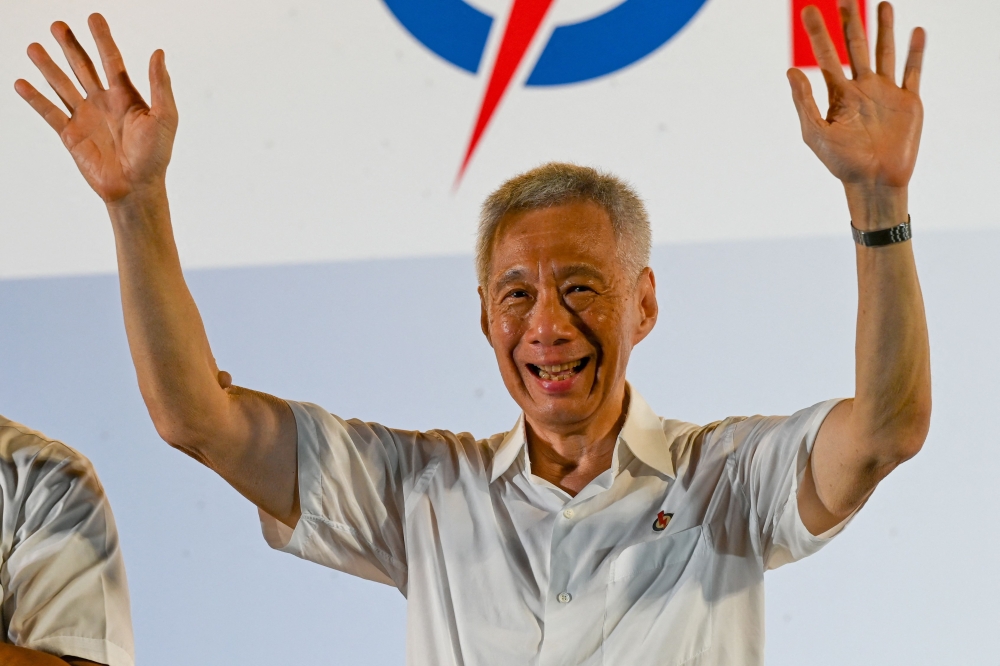
SHANGHAI, May 23 — Singapore’s relationship with China is grounded in mutual benefit, not common ethnicity, Senior Minister Lee Hsien Loong said on May 22.

“We are a Chinese-majority country, but we are a multiracial society. We are a separate country with separate sovereignty from China,” Lee told Singapore media in Shanghai, according to The Straits Times.

He added that Singapore is friends with both the US and China, and will take stances based on its own interests.

Lee noted that China is advancing quickly in AI and adapting to an ageing population — areas Singapore can learn from. In 2025, China became the largest source of fixed asset investment into Singapore, overtaking the US for the first time.

On US-China relations, Lee said stable ties are crucial for the world, but the issues are complex and “not something which can go away easily”.


  •  

Japan asks China to ensure citizens’ safety after Shanghai stabbing

Shanghai stabbing

Tokyo has asked Beijing to ensure its citizens’ safety after a stabbing in a Shanghai restaurant in which two Japanese were injured, Japan’s consulate in Shanghai told AFP Wednesday.

Shanghai skyline
Shanghai skyline. Photo: Pexels.

It is the latest diplomatic point of friction as the two countries are embroiled in a stand-off triggered by Prime Minister Sanae Takaichi’s suggestion Tokyo might intervene militarily if Beijing were to invade Taiwan.

On Tuesday, Pudong district police said on social media they had received a report that a man “was injuring people with a fruit knife in a restaurant”.

Police said the suspect, a 59-year-old surnamed Yang who was detained at the scene, had a history of mental illness.

Three people were taken to hospital, the statement said, with Japanese media later reporting two were Japanese.

Asked about the reports, the Japanese consulate in Shanghai confirmed two citizens had been hurt, adding they were receiving medical treatment.

From left: Chinese and Japanese flags.
Chinese and Japanese flags. Photos: Aboodi Vesakaran, Wikimedia Commons.

“The Government of Japan has requested the Chinese government to… clarify the facts and provide a clear explanation… (and) ensure the safety and security of Japanese nationals,” a spokesperson said in a statement.

Top government spokesperson Minoru Kihara later confirmed Tokyo had requested an explanation, adding that a consular alert had been sent out to all Japanese residents in China.

“The government will continue, while maintaining contact with the parties concerned, to provide all possible support from the standpoint of protecting Japanese nationals,” he said.

The restaurant reported to be the site of the attack, matching the police statement’s rough address, appeared calm on Wednesday.

An AFP reporter saw multiple people in grey suits, who appeared to be security, standing guard in the mall it was located in.

Police said that when Yang was detained, he had been “speaking incoherently and behaving erratically”.

AFP has contacted the Chinese ministry of foreign affairs for comment.

  •  

Bottle‑collecting bulldog Xiaobai back on the streets after poisoning scare in China

Malay Mail

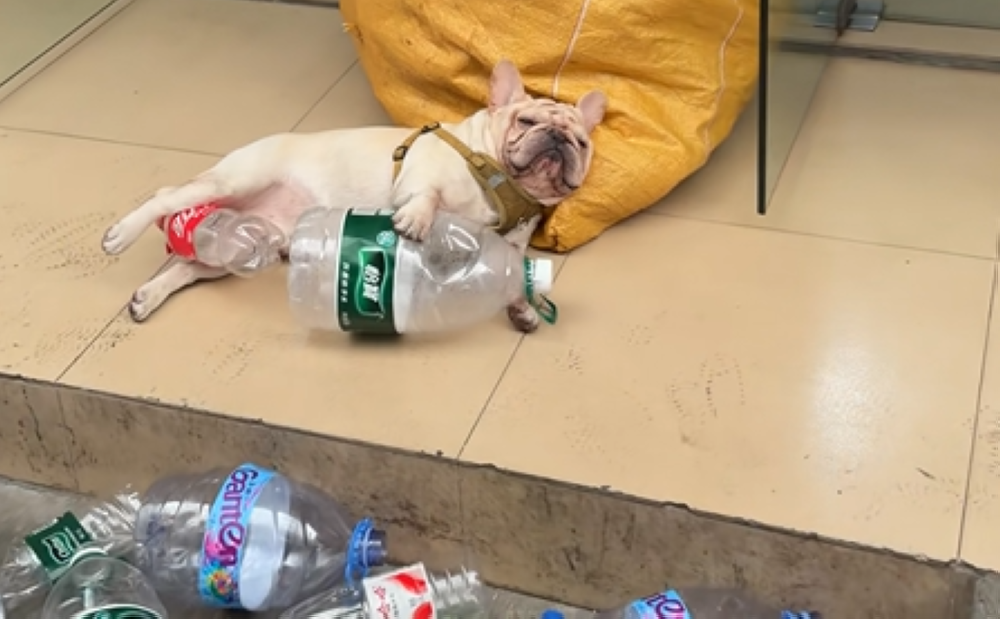
SHANGHAI, May 18 — Police in southern China have detained a man accused of trying to poison a dog that gained online fame for collecting plastic bottles.

The French Bulldog, named Xiaobai, became a social media sensation last year after videos showed it diligently gathering bottles for its owner, identified only by his surname Zhang. The account has more than half a million followers, with some clips viewed up to 10 million times, according to the South China Morning Post.

Zhang told local media that on May 7, a “good‑hearted” internet user alerted him with screenshots from an animal abuse group discussing plans to poison Xiaobai.

He said members of the group had circulated his home address and discussed using isoniazid, a drug prescribed for tuberculosis, to kill the dog. Later that day, a man dressed in white was spotted outside Zhang’s courtyard taking photographs.

Zhang reported the matter to police, handing over chat records and surveillance footage. Authorities informed him that a suspect was taken into custody on May 8. The case remains under investigation.

Before the arrest, Zhang said he had kept Xiaobai indoors. He noted the dog appeared listless during that period but became lively again once allowed outside to resume collecting bottles.

  •  

Trump, Xi banquet puts spotlight on China’s Huaiyang cuisine tradition

Malay Mail


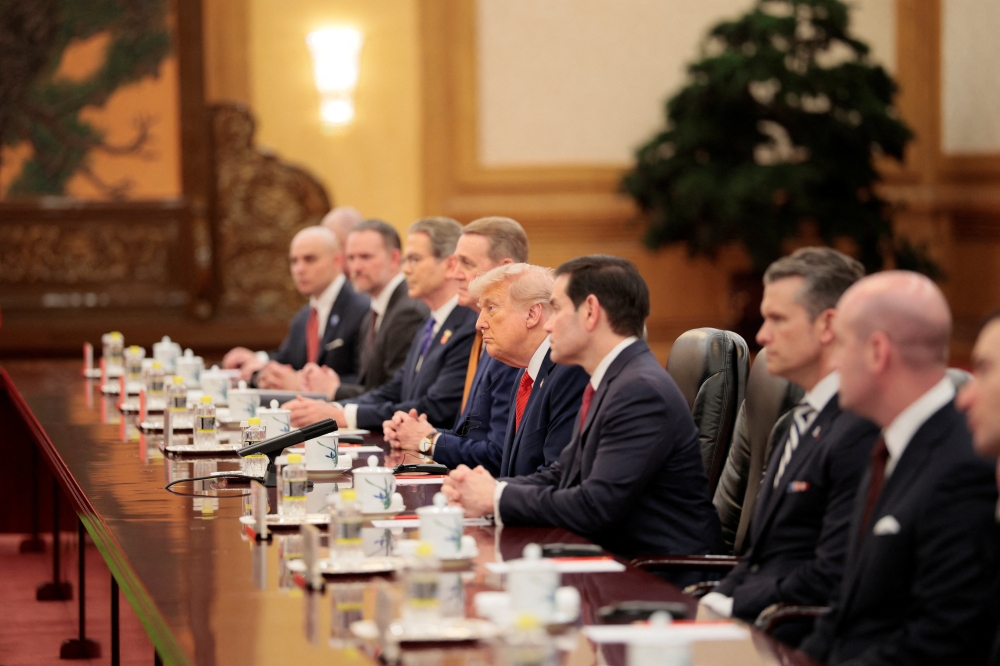
BEIJING, May 14 — When Presidents Donald Trump and Xi Jinping sit down to a lavish state banquet in Beijing today, one Chinese cuisine is likely to feature on the menu: Huaiyang food, from the ‌region surrounding Shanghai, known for its mild and subtle flavours, refined knife-work and emphasis on seasonal dishes.

For decades, China has used the powerful symbolism of food during landmark official events and when receiving distinguished foreign visitors.

In China’s modern history, famines and political turmoil that caused decades of widespread rationing turned food into a potent status symbol in Chinese culture.

“One of the key strengths of Huaiyang cuisine is its broad appeal. Its flavours are widely acceptable and accessible to most people... including international guests,” said ⁠Shi Qiang, executive chef at Gui Hua Lou, an upscale Huaiyang cuisine restaurant in Shanghai.

”From the overall philosophy of Huaiyang cuisine, state banquets are not centered on luxury ingredients; they don’t rely on expensive items, extravagance is simply not the focus.”

One of the eight major regional cuisines of China, Huaiyang cuisine has long played a starring role at major diplomatic events.

It was served at the 1949 “founding banquet” when the People’s Republic was established, at China’s 50th anniversary commemoration banquet in 1999, as well as a 2002 banquet hosted by then-President Jiang Zemin for the visiting US President George W. Bush.

Food has also featured in unexpected viral moments when foreign officials visited China in recent years.

In 2023, former US Treasury Secretary Janet Yellen joked about eating “magic mushrooms” at a Yunnan cuisine restaurant in Beijing, while then-US Vice ⁠President Joe Biden ate at a humble Beijing eatery in 2011, famed for its fried liver.

China even created a chicken dish named after US top diplomat Henry Kissinger, served to him during his secret visit in 1971, and dishes served to foreign leaders are often turned into “set banquets” by local restaurants.

Some iconic Huaiyang dishes include tender, springy “lion’s head” pork meatballs, Yangzhou fried rice, “squirrel fish” deep-fried in a sweet-and-sour sauce, and “wensi tofu” — a block of tofu sliced ⁠into thousands of fine strands.

The cuisine heavily features ingredients native to the Yangtze River basin like freshwater fish, eel, and bamboo shoots, as well as minimal seasoning to highlight their freshness.

”It’s great for banquets because it’s lighter than the food of Shandong in China’s north, not spicy like the foods ⁠of the southwest (like Sichuanese), and more approachable and less reliant on exotic ingredients than Cantonese, the big cuisine of the south,” said Christopher St. Cavish, a food writer based in Shanghai.

”In the most basic description, it’s ‘safe’. It’s the equivalent of serving chicken at a banquet in ⁠Washington, DC. No one is going to get offended or find it too hot to eat or too exotic to try.”

During Trump’s last China visit in 2017, he was served Huaiyang-style dishes like braised vegetables in soup and stewed beef with tomato — a nod to his penchant for well-done steak. — Reuters 

 

  •  

H&M to move South-east Asia hub to Kuala Lumpur, announces layoffs for 30pc of regional support headcount

Malay Mail

SINGAPORE, May 13 – H&M has announced a major restructuring of its Asia-Pacific operations, relocating its South-east Asia regional headquarters from Singapore to Kuala Lumpur and eliminating approximately 30 per cent of its regional support workforce.

The changes, formally communicated to staff on May 11 will see the majority of redundancies take place in the Singapore office. Out of a regional headcount of 256 for the former East Asia region, 78 positions will be removed.

The restructuring is part of a broader evolution of H&M’s commercial operating model, which replaces existing regional layers with four new continents. Under the new structure, the newly formed Continent Asia Pacific (APAC) will be based in Shanghai and will oversee five sales markets.

As a result, the head office for the South-east Asia sales market will be located in Kuala Lumpur, while the Northeast Asia sales market will relocate to Tokyo. The APAC continent portfolio also includes India (hub in Bangalore), Australia & New Zealand (Sydney hub), and Greater China, which will share the Shanghai hub with the continent headquarters.

Staff will undergo a calibration process by  May 21, 2026. Employees are required to complete an assessment survey nominating two priority roles, with placement decisions based on 2025 contribution ratings and recent disciplinary records instead of standard CV submissions.

Interviews and evaluations are scheduled between May 25 and June 19. Management has stated that employees will be informed of their final outcomes no later than mid-June. The consolidated structure and staff relocations are expected to be operational by July 1.

For employees whose roles are eliminated or reduced, mutual separation agreements will be proposed if an alternative position cannot be found within the new organisation. Specific details regarding separation packages will be communicated at a later date.

Internal records indicate that H&M implements similar regionalisation or structural changes on approximately an annual basis. While support functions in Singapore and Ho Chi Minh City are being offshored, and offices in Seoul and Manila are being downsized, the company has stated that all store-level operations and retail teams remain unaffected.

The broader restructuring plan was initially referenced during an internal briefing on April 16, 2026.

  •  
❌