Vintage French postcard. Editor unknown, 46. Photo by G.L. Manuel Frères, 1930s.
French singer and actress Yvonne Printemps (1894-1977) was a huge star of the European stage. She also appeared in ten international silent and sound films. A true diva, she loved the spotlight and would be seen draped in jewels, wearing enormous hats, and walking her pet dogs on leashes.
Meta has removed a series of scam ads impersonating the International Criminal Police Organization (INTERPOL) following HKFP’s enquiries.
Since-removed scam ads impersonating INTERPOL appeared on Meta platforms in recent weeks. Photo: HKFP screenshot.
The ads, targeting Hongkongers, appeared for weeks on Facebook. They urged users to get in touch with the global policing body if they wished to retrieve funds previously lost to scams – however, the ads were fraudulent.
The posts were published by a since-removed fake news outlet page called “Hong Kong Daily,” which falsely claimed to share an office address with HKFP.
Since-removed scam ads impersonating INTERPOL appeared on Meta platforms in recent weeks. Photo: HKFP screenshot.
INTERPOL told HKFP that such ads should be reported to the local police. “To confirm that INTERPOL never contacts members of the public directly, never demands money from people and never asks for bank details or any money transfer,” it said on Thursday. “Any such request or advert is fake. Members of the public should not engage and report any such emails or adverts to the local police.”
In response to HKFP on Friday, a spokesperson for the Hong Kong Police Force said they have been “actively engaging relevant authorities to verify and remove suspicious or fraudulent websites. In the process of removing such websites, cooperation with concerned parties, including various service providers, is essential. The Hong Kong Police Force is committed to safeguarding the interests of the public by working with these service providers to suppress fraudulent messages.”
The police force is part of the INTERPOL Member State of China.
Meta’s US$3.5 bn profits from scams – report
Last year, Meta banned over 3.7 million items of ad content in Hong Kong and 134 million instances globally. Also in 2025, the tech giant took down 10.9 million accounts associated with scam centres. The company owns Facebook, Instagram and WhatsApp.
A spokesperson for Meta told HKFP on Friday that ads which impersonate organisations or seek to defraud people go against its policies.
“The flagged Facebook Page and associated ads have been removed for violating our policies,” the spokesperson said. “Fighting scams on our platforms is one of our top priorities and as scammers have grown in sophistication in recent years, so have our efforts. We use AI-powered detection technology to identify and remove scam ads at scale, and we also encourage anyone who encounters suspicious ads to report them through our in-app tools.”
File photo: Tom Grundy/HKFP.
Nevertheless, according to a report by Reuters news agency, Meta earns US$3.5 billion (HK$27.4 billion) from just a portion of scam ads every six months.
Citing internal Meta documents, Reuters said that the social media company projected that 10 per cent of its 2024 revenue would come from ads for scams and banned goods, amounting to US$16 billion (HK$124.8 billion).
Other fraudulent ads, appearing to target scam victims, remained online as of Monday, according to HKFP’s checks.
A fraudulent Meta ad running on Facebook, as of May 11, 2026. Screenshot: HKFP.
One ad targeting Hongkongers, published by a page called “Law Help,” urged those “affected by online fraud or an unregulated broker” to submit their details.
Scammers have been posing as law enforcement officers to defraud victims.
In March, Nikkei Asia reported that mock police stations and banks had been set up at scam centres, used to fool victims interacting via video call.
On May 5, 1789, King Louis XVI of France inaugurated the Estates-General. The institution convened that year to address the problem of rampant inflation and the bankruptcy of the monarchy, which was deeply indebted due to a lack of revenue. Neither the nobility nor the clergy paid taxes. Not because they were short of money. Their reason for exemption was simpler and more absurd: it was their privilege.
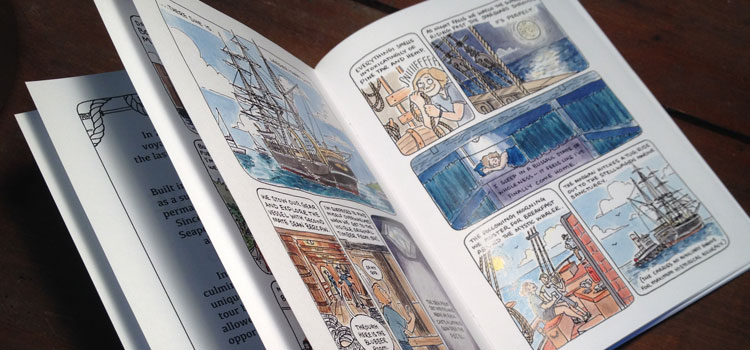
A number of fantastic ducks lined up in the month of June and I want to talk about all of them, but there isn’t time to do it in one giant post. One duck, however, took the form of appearing at the 14th International Melville Society Conference to speak about my time aboard the Charles W. Morgan eleven years ago. (You can read the comic about that trip here.)
I read Moby-Dick for the first time a handful of years ago and loved it, but I wouldn’t call myself a Melville scholar. However, attending this conference felt like a great chance to scratch the academic itch without, say, going to grad school.
I ended up spending the whole week taking visual notes, which allowed me to drop into a type of weightless, fixated attention that I’ve really missed in my caregiving life. It also helped give me something to do during panels where I felt a little, uh, out of my depth.
When I’m drawing, words just wash over me. I can pluck the ones that resonate in the moment, then step back at the end of the hour and get a picture of what I took away from the talk. I particularly loved the freedom to just wander into panels where I had no idea what the speakers were talking about, only to come away newly-enthused about some niche avenue into Melville’s work.
Time and time again the attendees emphasized how unique this conference is in its warmth and intellectual diversity. I met scientists and art historians and medievalists and printmakers and disability scholars and tall ship sailors and filmmakers and many, many professors. It was a dreamy, albeit intense, four days.
Here are the notes from every talk I attended, all drawn straight to ink during the speakers’ presentations (usually about 20 minutes per person).
The biggest takeaway was that we need embedded cartoonists at all sorts of academic conferences—and the demand is there! People were so thrilled to see this kind of work coming out of the event, and there are lots of journals hungry to publish unusual creative content alongside academic papers.
Something to pursue…eventually. Got a couple things* to wrap up first.

 Login
Login